Brand Design Portfolio Examples That Win Clients
Brand design portfolio examples are curated collections of branding work that show potential clients your creative range, process, and results. A strong portfolio speaks before you do. Keep reading to see what separates forgettable portfolios from ones that actually win business.
Key Takeaways
- portfolio examples are your most powerful sales tool, not your resume.
- Case studies that show process and outcomes outperform galleries of finished work.
- Platform choice matters: Squarespace, Wix, WordPress, Webflow, and Framer each serve different needs.
- Curate ruthlessly. Five exceptional projects beat twenty average ones every time.
- As of 2026, motion, interactivity, and brand storytelling are the new baseline expectations.
- Regular updates signal an active, growing practice to every prospective client who visits.
Understanding Brand Design Portfolios
A brand design portfolio is a curated collection of work that demonstrates a designer’s skills, creativity, and expertise in branding and identity design. It serves as a visual resume, showcasing not only finished projects but also the thought processes and strategies behind them.
What is a Brand Design Portfolio?
A brand design portfolio is a collection of visual works that represent a designer’s capabilities in creating brand identities. This includes logos, color schemes, typography, and other elements that contribute to a brand’s overall image. The portfolio should reflect the designer’s style and approach while also demonstrating versatility across different projects.
Why is a Portfolio Important?
A portfolio is crucial for several reasons:
- Attracting Clients: A strong portfolio helps designers secure new clients by showcasing their skills and previous work.
- Demonstrating Expertise: A well-organized portfolio illustrates a designer’s understanding of branding principles and design trends.
- Building Credibility: Including testimonials and case studies enhances a designer’s credibility and showcases their ability to deliver results.
“A portfolio is more than just a place to showcase your work” – David Davies, Design Director at Design by Structure, quoted in Creative Bloq’s roundup of the 15 best design portfolio examples (January 2026).
How a Brand Design Portfolio Actually Works
A brand design portfolio works by guiding a prospective client through a carefully staged experience: first impression, proof of range, depth of process, and a clear invitation to connect. Each layer serves a specific purpose, and understanding that structure is what separates a portfolio that converts from one that just exists online.
Think of it in three acts.
Act One: The Hook. Your homepage or landing view needs to communicate your positioning in under five seconds. Typography choice, color palette, and the first project thumbnail all signal who you are before a visitor reads a single word. As Creative Bloq notes, the best design portfolios “tell you exactly who made it, before you’ve read a single word.” That’s the standard.
Act Two: The Proof. This is your project gallery or case study section. Each project entry needs to answer three silent questions every client is asking: What was the problem? What did you do? Did it work? Answer all three and you’ve built trust. Skip any one of them and you’ve left doubt on the table.
Act Three: The Invitation. Your about page, contact section, and any testimonials close the loop. They transform a passive browser into an active inquiry. A weak call to action here wastes everything the first two acts built.
The mechanics also include technical architecture. Search engines index your portfolio pages, so descriptive project titles, alt text on every image, and keyword-relevant copy all contribute to organic discovery. Platforms like Squarespace and Webflow handle much of the technical infrastructure, but the content strategy is entirely yours to own.
Elements of an Effective Brand Design Portfolio
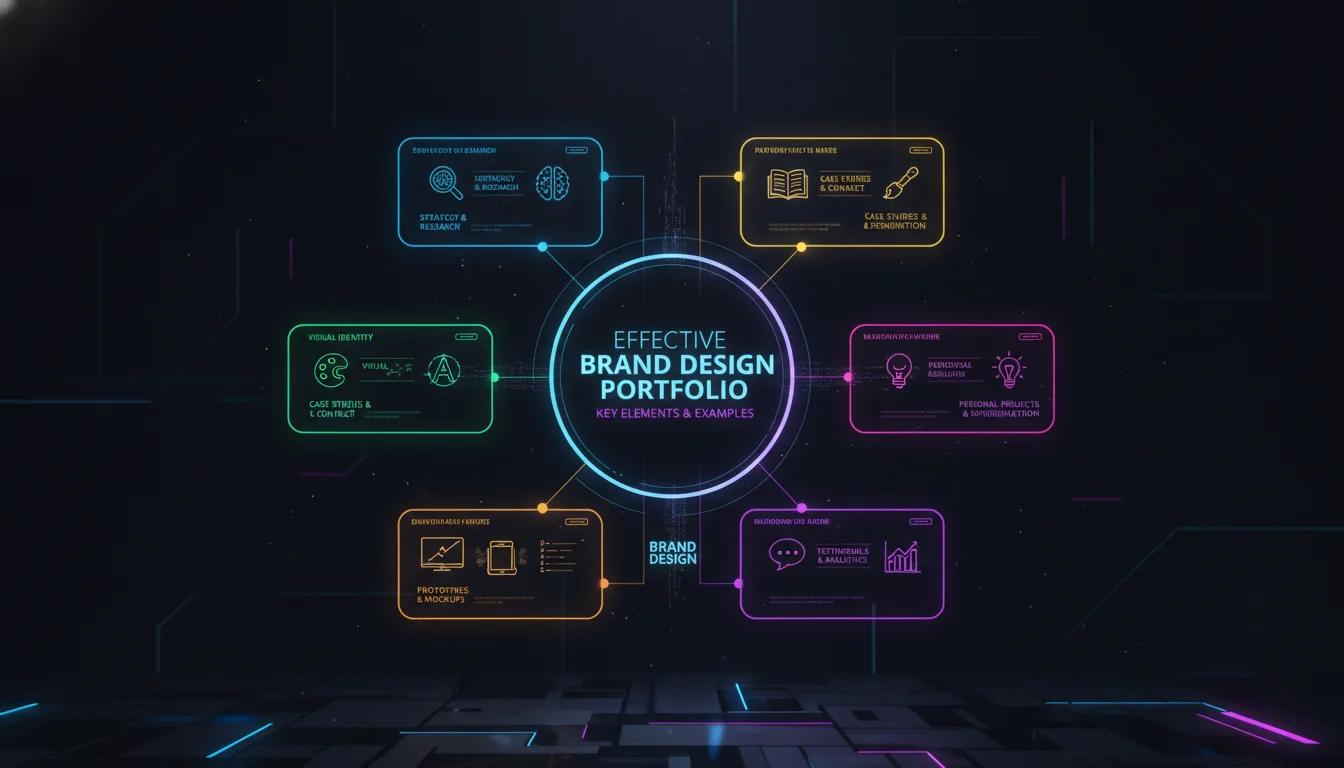
To create a compelling brand design portfolio, certain elements should be included to ensure it effectively communicates your skills and style.
1. Showcase Your Best Work
Only include projects that you are proud of and that represent your best work. Quality over quantity is essential. It’s better to have a few outstanding pieces than many mediocre ones.
2. Include Case Studies
Case studies provide insight into your design process and the challenges you faced during each project. They should include:
- Project Brief: A description of the project and the client’s needs.
- Design Process: An overview of your approach, including sketches and iterations.
- Final Outcome: Showcase the final design and explain how it meets the client’s objectives.
3. Highlight Your Design Philosophy
Your portfolio should communicate your unique design philosophy. Include a brief statement about your approach to design, what inspires you, and how you solve problems through your work.
Inspiring Brand Design Portfolio Examples

The best this type of examples share a common trait: they make the work feel inevitable. Here are standout examples drawn from the 2026 landscape, each demonstrating a distinct approach worth studying.
1. Studio Bressi
Studio Bressi’s portfolio is a prime example of how to use a clean layout to highlight branding projects. Each project is presented with high-quality images and concise descriptions, making it easy for potential clients to understand the scope of work. Built on Squarespace, it proves that restraint is a design choice, not a limitation.
2. WK Creative
WK Creative utilizes vibrant colors and engaging visuals to create an eye-catching portfolio. The use of animations adds an interactive element that enhances the user experience. Also built on Squarespace, it shows how motion can reinforce a brand’s energy rather than distract from it.
3. AllieMarie Design
AllieMarie Design’s portfolio is organized into categories, allowing visitors to navigate easily. The inclusion of client testimonials adds credibility and showcases successful collaborations. This is a strong model for designers who serve multiple niches and need to help clients self-select.
4. The Brand Doula
The Brand Doula’s Squarespace portfolio leans into personality. The name alone is a positioning statement, and the site delivers on that promise with warm photography, conversational copy, and a clear niche focus. It’s a reminder that this kind of portfolio examples don’t have to be cold or corporate to be professional.
5. Verena Michelitsch
Featured in both the Sitebuilderreport collection and Tobias van Schneider’s curated list, Verena Michelitsch’s portfolio earns its double mention. Her client roster reads like a who’s who of optimistic, tasteful brands, and her portfolio reflects exactly that sensibility. Built on WordPress, it demonstrates that platform flexibility enables a more custom visual voice.
6. Mackey Saturday
Mackey Saturday is the identity designer behind the Instagram and Oculus logos, among others. His portfolio reflects an unwavering dedication to simplicity and timelessness. There are no tricks, no animations, no noise. Just work that speaks for itself. That confidence is itself a brand statement.
7. Jesi Cason
Built on Framer, Jesi Cason’s portfolio represents the newer wave of brand design portfolio examples that use interactive, code-adjacent tools to create experiences that feel more like editorial features than traditional websites. Framer is gaining serious traction in 2026 among designers who want more motion control without hiring a developer.
“Custom case studies are the core of great branding portfolios, allowing you to design beautiful pages for each unique project and tell each project story the way you want to tell it.” – Tobias van Schneider, designer and founder, House of van Schneider.
How to Build Your Brand Design Portfolio: A Step-by-Step Approach
Building strong brand design portfolio examples from scratch requires a clear sequence. Skip steps and you’ll end up with a site that looks good but doesn’t convert. Follow this process and you’ll have a portfolio that works as hard as you do.
Step 1: Audit Your Existing Work
Lay out every project you’ve completed. Be ruthless. Ask yourself: does this represent the kind of work I want more of? If the answer is no, it doesn’t belong in the portfolio, even if you’re proud of the craft. Your portfolio is a magnet, not an archive.
Step 2: Select 4 to 8 Hero Projects
Most strong brand design portfolio examples feature between four and eight featured projects. Fewer than four feels thin. More than eight and you’re asking visitors to do too much work. Pick the projects that show range, depth, and the type of client you want to attract next.
Step 3: Build Case Studies for Each Project
For each hero project, write a case study that covers the brief, your process, the decisions you made and why, and the final outcome. Include process images: sketches, mood boards, rejected directions. Showing your thinking is what separates brand designers from production artists in the eyes of clients.
Step 4: Choose Your Platform
Match your platform to your technical comfort and creative ambition. Squarespace suits designers who want beautiful results fast. Webflow and Framer suit those who want more interaction control. WordPress suits those who want maximum flexibility and don’t mind a steeper learning curve. We cover the full comparison below.
Step 5: Write Your About Page and Design Philosophy Statement
Your about page is often the second most visited page on a portfolio site. Write it in first person, keep it focused on what you do and who you do it for, and include a clear statement of your design approach. Clients hire people, not portfolios.
Step 6: Optimize for Search and Accessibility
Add descriptive alt text to every image. Write project titles that include relevant keywords. Make sure your site loads quickly on mobile. These aren’t optional extras. They’re the difference between a portfolio that gets found and one that only exists for people who already have your URL.
Step 7: Launch, Share, and Update Regularly
Publish your portfolio and share it across LinkedIn, Behance, and any design communities you participate in. Then schedule a quarterly review. Add new projects, retire weaker ones, and refresh your about page as your positioning evolves. A portfolio that hasn’t been updated in over a year signals stagnation to prospective clients.
Website Builders for Creating Portfolios
Choosing the right platform to build your portfolio is crucial. Several website builders cater specifically to designers, offering templates and features that enhance the presentation of your work.
1. Squarespace
Squarespace is known for its visually appealing templates and user-friendly interface. It allows designers to create stunning portfolios without extensive coding knowledge. The majority of brand design portfolio examples in the Sitebuilderreport 2026 collection are built on Squarespace, which reflects its dominance among independent brand designers.
2. Wix
Wix offers a drag-and-drop interface, making it easy to customize your portfolio. It also provides a variety of templates tailored for creative professionals. Studio NinetyOne’s portfolio, featured in the 2026 Sitebuilderreport collection, is a strong example of what Wix can produce at a professional level.
3. WordPress
WordPress is a versatile platform that allows for extensive customization. While it requires more technical knowledge, it offers powerful tools for building a unique portfolio. Angello Torres, Studio MPLS, and Verena Michelitsch all use WordPress, demonstrating its staying power among designers who want full control.
4. Webflow
Webflow sits between WordPress and a custom-coded site. It gives designers visual control over interactions and animations without writing code from scratch. It’s increasingly popular among brand designers who want their portfolio site to function as a demonstration of their broader digital capabilities.
5. Framer
Framer is the newest major player in this space. Jesi Cason’s portfolio, highlighted in the 2026 Sitebuilderreport collection, shows what’s possible: fluid motion, editorial layouts, and a site that feels genuinely designed rather than templated. Framer’s growth in 2025 and 2026 has been notable among designers who want to push beyond conventional portfolio aesthetics.
6. Portfoliobox
Portfoliobox is a dedicated portfolio builder used by UI/UX designers, brand designers, art directors, and motion designers. It’s a strong option for designers who want a focused, purpose-built tool rather than a general website builder. According to Portfoliobox’s own examples page, every portfolio in their showcase was built on the platform with no custom code required.
Platform Comparison: Which Builder Fits Your Portfolio Goals?
Choosing between portfolio platforms is one of the first real decisions you’ll make. This comparison covers the options most commonly seen across top brand design portfolio examples in 2026.
| Platform | Best For | Technical Skill Required | Motion/Interaction | Customization Level |
|---|---|---|---|---|
| Squarespace | Fast, polished results | Low | Basic | Medium |
| Wix | Flexible drag-and-drop layouts | Low | Basic to moderate | Medium |
| WordPress | Full control, long-term scalability | Medium to high | Plugin-dependent | Very high |
| Webflow | Interaction-rich, design-forward sites | Medium | Advanced | High |
| Framer | Motion-first, editorial portfolios | Medium | Advanced | High |
| Portfoliobox | Purpose-built portfolio focus | Low | Moderate | Medium |
Pros and Cons of Different Portfolio Approaches
Not all brand design portfolio examples follow the same structure. There are two dominant approaches, and each has real trade-offs worth understanding before you commit to one.
Pros
- Case study-led portfolios build deeper trust. Clients see your thinking, not just your output. This is especially valuable for higher-budget projects where the client is buying strategy as much as aesthetics.
- Gallery-style portfolios create faster first impressions. For clients who make quick decisions or are browsing many designers at once, a strong visual grid can stop the scroll immediately.
- Hybrid portfolios (gallery entry, case study depth) give you both: the visual hook and the intellectual proof. This is the approach most top brand design portfolio examples use in 2026.
- Niche-focused portfolios attract better-fit clients. When your portfolio signals a specific industry or style, you stop competing on price and start competing on fit.
Cons
- Case study-led portfolios take significantly more time to build and maintain. Each project requires writing, process documentation, and careful image curation.
- Gallery-style portfolios can feel shallow to sophisticated clients who want to understand your process before reaching out.
- Hybrid portfolios require more planning and information architecture to avoid feeling cluttered or inconsistent.
- Niche-focused portfolios can limit perceived range, which matters if you’re still building your client base and need variety to attract different types of work.
A Worked Example: Building a Portfolio from Three Projects
Imagine you’re a brand designer with three completed projects: a logo and identity system for a local coffee shop, a full brand refresh for a wellness startup, and a packaging design project for an independent food brand. Here’s how to turn those three projects into brand design portfolio examples that actually convert.
Project One: The Coffee Shop Identity. Lead with the mood board that informed the color palette. Show the logo in multiple applications: on cups, signage, and social media. Write two paragraphs: one on the brief (a neighborhood cafe wanting to feel warm but modern), one on the outcome (a visual identity the owner uses across every touchpoint). Include one client quote if you have it.
Project Two: The Wellness Startup Rebrand. This one has a before-and-after story. Show the original brand, explain the problem it created (felt clinical, not aspirational), then walk through your process: competitive audit, positioning workshop, visual exploration, final system. The before-and-after format is one of the most compelling structures in brand design portfolio examples because it makes your value concrete and visible.
Project Three: The Food Brand Packaging. Packaging is inherently photogenic. Invest in good photography or mockups. Show the product in context: on a shelf, in someone’s hand, on a kitchen counter. Write about the constraints you worked within (print specs, retail requirements, budget) and how your design solved for all of them. Constraints make case studies more credible, not less.
Three projects. Three case studies. A clear about page. A contact form. That’s a portfolio ready to launch. You don’t need twenty projects. You need three that are told well.
Common Mistakes to Watch Out For
Even experienced designers make avoidable errors when building their portfolios. These are the patterns we see most often when reviewing brand design portfolio examples that aren’t converting.
Showing Work You Don’t Want More Of
Your portfolio is a brief to the universe. If you include a project type you’re tired of or a style you’ve moved past, you’ll keep attracting exactly that. Audit ruthlessly. Every project in your portfolio is a vote for the kind of work you want next.
No Process, Only Outcomes
A gallery of finished logos tells a client what you can produce. A case study tells them how you think. Sophisticated clients, the ones with real budgets, almost always want to understand your process before they reach out. Skipping process documentation is the single most common mistake in brand design portfolio examples we review.
Weak or Missing About Page
Clients hire people. An about page that reads like a LinkedIn summary (“passionate designer with X years of experience”) is a missed opportunity. Write about your approach, your point of view, and who you do your best work with. Make it feel like a conversation, not a CV.
Ignoring Mobile Experience
A significant portion of portfolio visitors arrive on mobile, particularly when a designer’s link is shared via social media or messaging apps. If your portfolio doesn’t look and function well on a phone, you’re losing inquiries before they start.
Treating the Portfolio as Finished
A portfolio is a living document. Designers who treat it as a one-time project and stop updating it signal stagnation. According to industry practice observed across the design community, portfolios updated within the past six months consistently perform better in client conversations than those that haven’t changed in over a year.
Burying the Contact Information
If a prospective client is excited by your work and can’t immediately find how to reach you, you’ve lost them. Your contact information or a clear call to action should be visible on every page, not just a buried contact page three clicks deep.
Tips for Building Your Brand Design Portfolio
Creating an effective brand design portfolio requires careful planning and execution. Here are some tips to help you build a standout portfolio:
1. Keep It Updated
Regularly update your portfolio to include your latest work. This not only showcases your growth as a designer but also keeps your portfolio relevant.
2. Optimize for SEO
Ensure your portfolio is optimized for search engines by using relevant keywords, including alt text for images, and writing descriptive project titles.
3. Seek Feedback
Before launching your portfolio, seek feedback from peers or mentors. Constructive criticism can help you identify areas for improvement and enhance the overall quality of your portfolio.
2026 Outlook: What the Best Brand Design Portfolio Examples Are Doing Now
As of 2026, the bar for brand design portfolio examples has risen considerably. Three shifts are defining what separates the portfolios that get inquiries from those that get ignored.
Motion is the new static. Platforms like Framer and Webflow have made it accessible to add scroll-triggered animations, hover states, and video loops without hiring a developer. The best brand design portfolio examples this year use motion to reveal work progressively, creating a sense of discovery rather than a flat image dump.
Brand storytelling over project listing. The shift from “here are my projects” to “here is how I think” is accelerating. Designers who frame their portfolios around a point of view, a specific client type, or a defined creative philosophy are standing out in a crowded field. Behance’s 2026 trending portfolios, including work from designers like Ramy Ayman and Le Minh with hundreds of thousands of views, consistently lead with a strong visual narrative rather than a neutral project list.
Niche positioning is winning. The Brand Doula is a perfect example. A name that signals a specific philosophy and client relationship attracts exactly the right clients and repels the wrong ones. This year, designers who have committed to a niche, whether by industry, aesthetic, or brand stage, are reporting faster client acquisition and less price negotiation than those with generalist portfolios.
Looking ahead, AI-assisted design tools are entering the workflow of most brand designers. The portfolios that will perform best in the next 12 to 24 months will be those that demonstrate strategic thinking and creative direction, the parts of the process that AI cannot replicate. Your portfolio needs to show that you’re the creative intelligence behind the work, not just the person who executed it.
Frequently Asked Questions
What is a brand design portfolio?
A brand design portfolio is a curated collection of a designer’s work that showcases their skills in branding and identity design, including logos, color schemes, and typography. It functions as both a visual resume and a business development tool, communicating creative range and strategic thinking to prospective clients.
Why is it important to have a portfolio?
A portfolio is important because it helps designers attract clients, demonstrate expertise, and build credibility in the industry. Without one, a designer is asking clients to take their word for capabilities that could otherwise be shown directly.
What should I include in my brand design portfolio?
Include your best work, case studies that detail your design process, and a statement about your design philosophy to effectively communicate your skills and approach. Client testimonials and before-and-after comparisons add additional credibility and make your value concrete.
Which website builders are best for creating portfolios?
Popular website builders for creating portfolios include Squarespace, Wix, WordPress, Webflow, Framer, and Portfoliobox, each offering unique features and templates for designers. Squarespace dominates among independent brand designers for its balance of visual quality and ease of use, while Framer is gaining ground among designers who want more motion and interaction control.
How often should I update my portfolio?
Update your portfolio at least every few months to include your latest work and retire projects that no longer represent your best or most relevant output. A portfolio that hasn’t changed in over a year can signal stagnation to prospective clients who visit multiple times before reaching out.
How many projects should a brand design portfolio include?
Most strong brand design portfolio examples feature between four and eight featured projects. Fewer than four can feel thin and limit the range you’re able to demonstrate. More than eight risks diluting the impact of your best work and asking visitors to do too much scrolling before they reach out.
Can I use templates for my portfolio?
Yes, many website builders offer templates specifically designed for portfolios, allowing you to create a professional-looking site without extensive design skills. The key is to customize the template enough that your portfolio reflects your own visual identity rather than looking like every other site built on the same starting point.
Ready to build something that actually wins clients? Contact Emin Media for a free brand consultation and let’s create brand design portfolio examples that represent your work at its best.
Enjoyed this article?
Contact Emin Media for a free brand consultation and let's create something amazing together.
Get in TouchRelated Articles

Digital Marketing for Creatives: A Bold Guide
Digital marketing for creatives builds real visibility and sales. Learn strategies for social media, SEO,…
Branding & Design Agency Tips That Actually Work
Discover branding and design agency tips to choose the right partner, set clear goals, and…

Creative Agency Pitch Deck Tips That Win Clients
Master creative agency pitch deck tips that win clients in 2026. Learn storytelling, design, and…