Brand Consistency Tips That Build Real Recognition
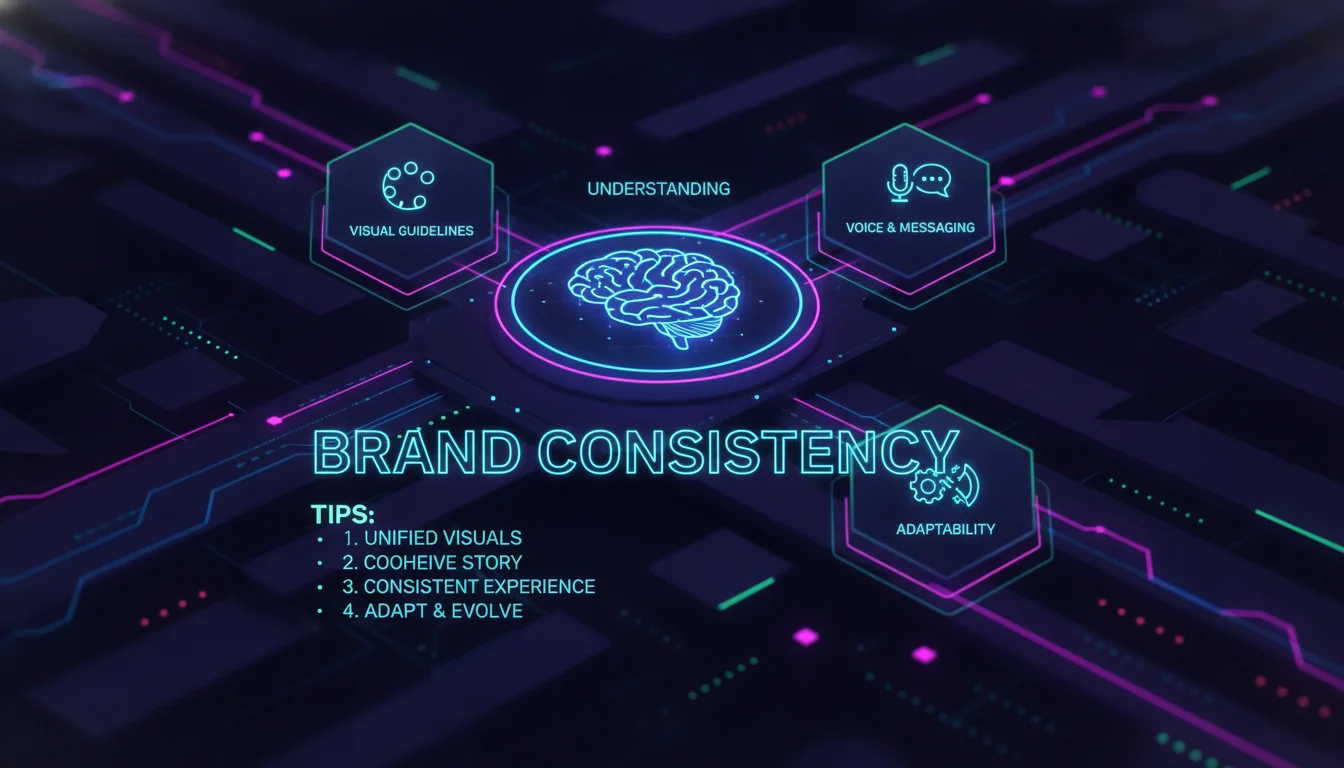
Brand consistency tips are the practical strategies brands use to present a uniform identity, voice, and message across every platform and touchpoint. Getting this right builds trust fast. Getting it wrong confuses customers before they’ve even given you a chance.
Key Takeaways
- Brand consistency tips center on aligning visual identity, voice, and messaging across every channel your audience touches.
- Clear brand guidelines act as the rulebook that keeps teams, freelancers, and partners speaking the same visual language.
- Regular content audits and employee training keep brand consistency from quietly drifting over time.
- Templates let teams move fast without sacrificing the core brand elements that make you recognizable.
- Brand research from Marq and CI HUB both point to profitability gains above 20% tied to consistent branding.
- Monitoring performance and customer feedback tells you where consistency is slipping before it costs you customers.
“Brand consistency is the glue that holds every message, visual element, and customer experience together.” – Industry Expert
Understanding Brand Consistency
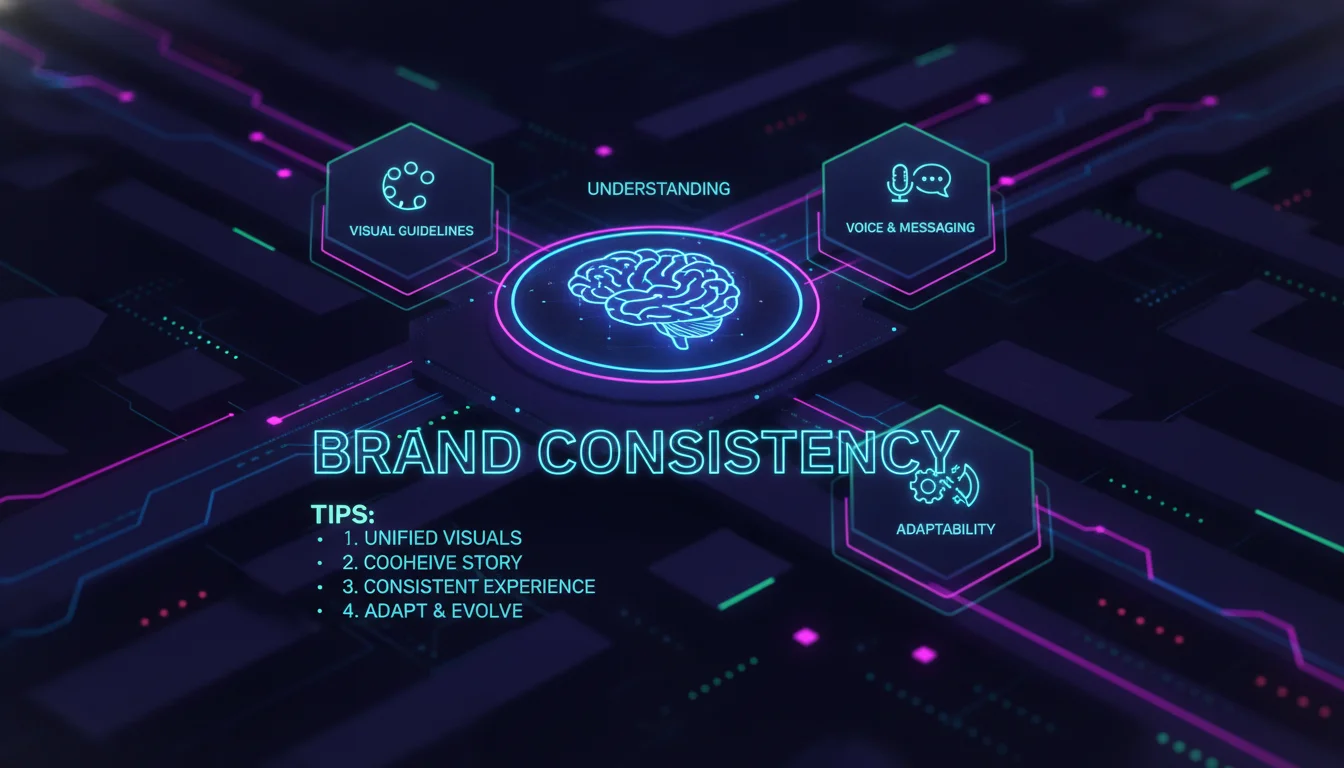
Brand consistency is the practice of presenting your brand the same way across every platform and touchpoint your customer might encounter. This includes a cohesive visual identity, a steady tone of voice, and messaging that reinforces the same promise every single time. We think of it as the difference between a brand that feels like a person you know and one that feels like a stranger wearing different masks.
Achieving this kind of alignment doesn’t happen by accident. It takes documented guidelines, trained teams, and someone paying attention to the details when things start to drift, which they always do without a system in place.
What is Brand Consistency?
Brand consistency is the alignment of every branding element, your logo, colors, typography, and messaging, into one unified identity. This consistency means customers get a predictable experience no matter where they find you, whether that’s a billboard, an Instagram story, or a customer service email.
Why is Brand Consistency Important?
Brand consistency matters because it directly shapes whether people trust you, remember you, and buy from you again. Here’s what’s at stake:
- Builds Trust: Consistent branding builds confidence, making customers more comfortable engaging with your business.
- Enhances Recognition: A recognizable brand gets remembered, recommended, and chosen over a competitor that looks the same on Tuesday and different on Wednesday.
- Increases Profitability: According to brand research from Marq, consistent branding can increase profitability by more than 20%. CI HUB reports a similar effect, noting that consistent brands can see revenue gains of up to 23%.
Key Elements of Brand Consistency
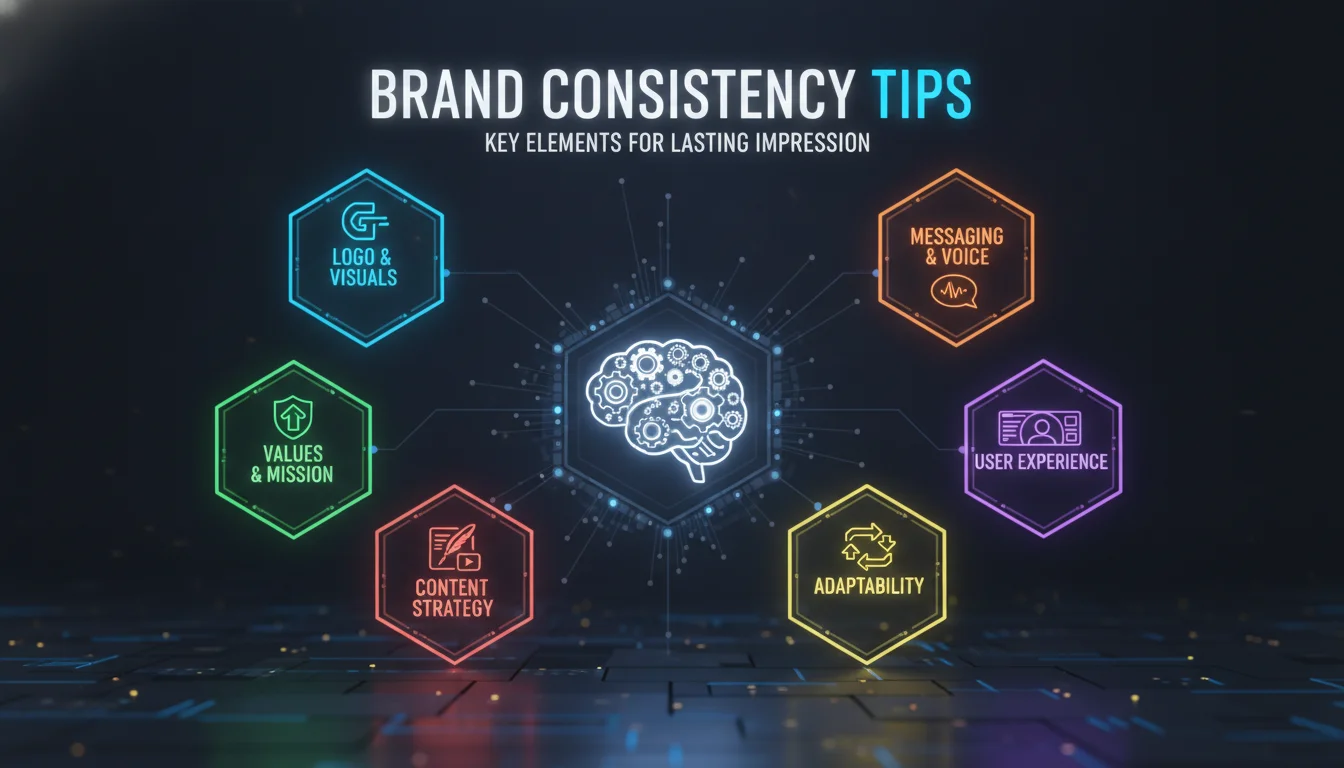
Brand consistency depends on a handful of elements moving in sync, not one flashy logo doing all the work. Here’s what has to align.
Visual Identity
Your visual identity includes logos, color palettes, typography, and imagery. Think about McDonald’s golden arches or the Starbucks siren: instantly recognizable because the visual elements never wobble. These pieces should stay stable across every marketing material so your audience recognizes you at a glance, not after squinting for three seconds.
Brand Voice and Tone
Your brand voice is how you talk to people. Apple keeps things simple and jargon-free. Nike leans motivational. Whatever your personality is, it needs to show up the same way in an Instagram caption as it does in a customer service email or a 40-page brochure.
Messaging and Communication
All messaging should tie back to your brand’s core values and promises. When your messaging stays consistent, customers understand exactly what you stand for and what they’re going to get, which shortens the distance between “I’ve heard of them” and “I’m buying this.”
How Brand Consistency Actually Works

Brand consistency works through a system of documented rules, shared assets, and repeated reinforcement, not through hoping everyone remembers the brand colors. Every touchpoint, a social post, an invoice, a trade show banner, is an opportunity to either reinforce or dilute the identity you’ve built.
Here’s the mechanic most people miss: consistency isn’t a design task, it’s an operations task. Your visual identity might be flawless on day one, but without a system to enforce it, a new hire will use the wrong blue, a freelancer will grab the old logo file, and a regional office will invent its own tagline. Brand guidelines exist to close that gap. They’re the reference document that turns “I think this looks right” into “here’s exactly how this should look.”
The second mechanic is repetition. Recognition is built through repeated exposure to the same visual and verbal cues. Every time someone sees your brand and it looks and sounds the same as last time, that’s a small deposit into a trust account. Break the pattern too often and customers start to wonder if they’re dealing with the same company at all.
Digital asset management (DAM) tools have become the backbone of this system for growing teams. Centralizing your logos, approved templates, and fonts means nobody has to guess, they just pull the current version from one source of truth.
Practical Brand Consistency Tips
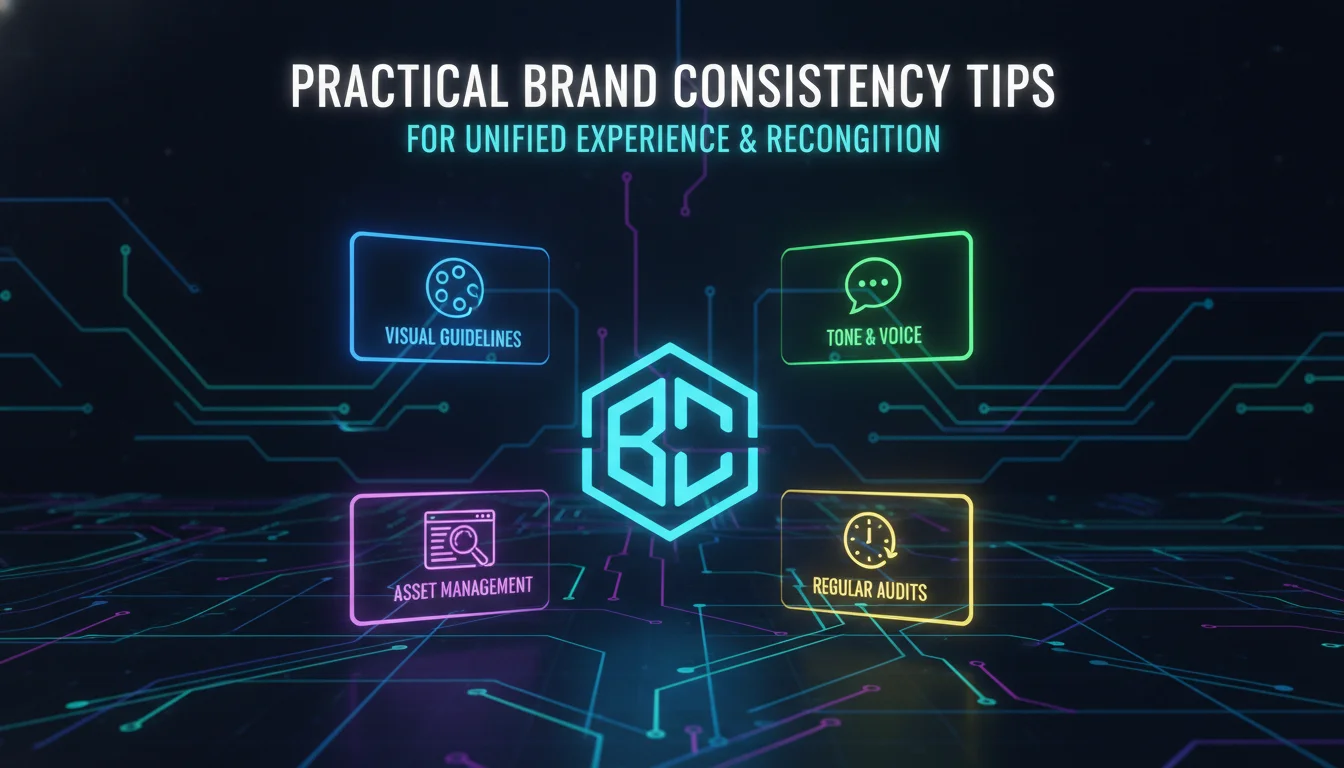
Applying brand consistency tips in the real world means building habits and systems, not just writing a style guide and hoping it gets read. Here’s where to start.
1. Develop Comprehensive Brand Guidelines
Brand guidelines serve as a reference for every branding-related project your team touches. They should include:
- Visual elements (logos, colors, typography)
- Brand voice and tone
- Messaging guidelines
2. Conduct Regular Content Audits
A content audit ensures published materials actually align with your brand guidelines instead of just assuming they do. Review your website, social channels, and marketing materials line by line to catch inconsistencies before customers do.
3. Educate Your Team
Every employee should understand why brand consistency matters and how their work affects it. Regular training sessions reinforce brand guidelines and keep everyone, from new hires to senior leadership, working from the same playbook.
How to Apply These Brand Consistency Tips Step by Step
Applying brand consistency tips works best as a sequence, not a scattered checklist. Follow these steps in order for the cleanest results.
Step 1: Audit What Exists Today
Pull every logo file, color code, font, and piece of messaging currently in use across your website, social channels, print materials, and email templates. You can’t fix drift you haven’t measured.
Step 2: Document Your Brand Guidelines
Turn your findings into one living document that defines the correct logo usage, color palette, typography, voice, and core messaging. Make it accessible, not buried in a folder nobody opens.
Step 3: Build Templates for High-Frequency Assets
Create ready-to-use templates for social posts, newsletters, presentations, and sales decks. This lets your team move fast without reinventing your visual identity every time.
Step 4: Train Every Team That Touches the Brand
Marketing, sales, customer service, and any outside agencies need the same reference materials and the same understanding of why consistency matters.
Step 5: Audit Again on a Schedule
Set a recurring calendar reminder, quarterly works for most teams, to re-check your channels against your guidelines. Brands drift quietly, then all at once.
Utilizing Templates for Consistency
Templates streamline the creation of marketing materials while keeping brand consistency intact across every asset your team produces. Here’s how to use them well.
1. Create Standardized Templates
Develop templates for frequently used assets, like social media posts, newsletters, and presentations. This lets team members create content without drifting from brand standards, even under deadline pressure.
2. Customize While Maintaining Core Elements
Let team members customize templates while keeping core brand elements locked. This balance protects creativity without putting your identity at risk.
Comparing Approaches to Brand Consistency
No single tool or method solves brand consistency on its own, so most teams combine a few approaches based on size and budget. Here’s how the common options stack up.
| Approach | Best For | Strengths | Watch-Outs |
|---|---|---|---|
| Static PDF Brand Guidelines | Small teams, early-stage brands | Cheap to create, easy to share | Goes stale fast, rarely referenced day-to-day |
| Brand Portal / DAM Software | Growing teams with multiple contributors | Centralizes assets, version control, searchable | Requires setup time and ongoing maintenance |
| Design Templates (Canva, Frontify) | Marketing teams producing frequent content | Fast turnaround, keeps core elements locked | Can feel restrictive to designers wanting flexibility |
| Agency or Creative Partner Oversight | Brands scaling quickly or entering new markets | Expert eye, catches drift early, strategic guidance | Costs more, requires clear communication of guidelines |
A Realistic Scenario: Where Brand Consistency Tips Actually Get Used
Picture a mid-size retail brand expanding from one flagship store into a multi-channel operation: website, Instagram, email, and three new regional locations. The founder designed the original logo and picked the color palette herself, and for years that was enough because she touched every piece of marketing personally.
Then the team grows. A freelance designer builds the new website using a slightly different shade of the brand’s signature green. The social media manager, hired six months later, never saw the original brand deck and starts using a font that’s close but not quite right. Each regional store prints its own signage locally, and none of them match.
Individually, none of these choices look like a disaster. Together, they make the brand feel scattered, like three different companies sharing a name. This is exactly the drift that a documented set of brand guidelines, a shared template library, and a quarterly content audit would have caught early. The fix isn’t complicated. It’s just easy to skip when nobody owns the job.
Common Mistakes to Watch Out For
Most brand consistency failures come from a handful of repeatable mistakes, not a lack of good design. Watch for these:
- Treating guidelines as a one-time document: Brands evolve. If your guidelines haven’t been touched in two years, they’re probably already out of date.
- Skipping onboarding training: New hires who never see your brand guidelines will improvise, and improvisation is where consistency dies.
- Over-customizing templates: Giving too much creative freedom on templates defeats the purpose of having them in the first place.
- Ignoring social media as a lower priority: More than 75% of consumers use social channels to evaluate brands, according to data cited by Papirfly, so treating social as an afterthought is a costly mistake.
- No single owner for the brand: When everyone is responsible for consistency, nobody actually is. Assign one person or team as the final check.
Measuring Brand Consistency
Measuring brand consistency means tracking both qualitative signals, like customer perception, and quantitative metrics tied to recognition and revenue. Here’s how to do it.
1. Monitor Customer Feedback
Customer feedback reveals how well your brand is actually landing versus how you think it’s landing. Use surveys and social media monitoring to gauge brand recognition and trust over time.
2. Analyze Brand Performance Metrics
Track key performance indicators tied to brand awareness, customer loyalty, and revenue growth. Brand research indicates that companies which maintain strong consistency see meaningful gains in these areas, so treat this data as a diagnostic tool, not a vanity metric.
3. Regularly Review Brand Guidelines
As your brand evolves, so should your guidelines. Review and update them on a set schedule to reflect any shifts in strategy, new products, or new markets.
“Brand consistency isn’t about being boring. It’s about making sure the boldest version of your brand shows up the same way every single time.” – Emin Media Team
Brand Consistency Tips for 2026 and Beyond
As of 2026, brand consistency has become harder to maintain, not easier, thanks to the sheer number of channels a single brand now touches. Short-form video, AI-generated content, influencer partnerships, and international expansion all multiply the number of hands touching your identity on any given week.
This year, the brands winning at consistency are the ones treating their brand guidelines as living systems rather than static PDFs. Cloud-based brand portals, shared template libraries, and clear ownership structures are becoming standard practice rather than a luxury for bigger companies. The near-term outlook favors teams that build consistency into their workflow tools instead of hoping people remember to check a guidelines document buried in a shared drive.
Pros and Cons
Pros
- Builds long-term trust and recognition that compounds over time
- Creates efficiency, since templates and guidelines reduce decision fatigue for teams
- Supports measurable business outcomes, including profitability gains tied to consistent branding
- Makes onboarding new team members and partners much faster
Cons
- Requires upfront investment in documentation and tooling
- Can feel restrictive to designers or marketers who want more creative freedom
- Needs ongoing maintenance, guidelines that go stale become useless quickly
- Enforcement across multiple departments or agencies takes real coordination effort
Conclusion
Brand consistency is a defining factor in whether a business builds lasting recognition or fades into the noise. By applying the brand consistency tips outlined here, from documented guidelines to templates to regular audits, businesses can strengthen trust, sharpen recognition, and support real revenue growth. A consistent brand doesn’t just look professional. It compounds into measurable business value over time.
Ready to turn these ideas into a brand system that actually holds up across every channel? Contact Emin Media for a free brand consultation and let’s build something bold together.
Frequently Asked Questions
What are the 5 C’s of branding?
The 5 C’s of branding include Clarity, Consistency, Creativity, Connection, and Community. These elements work together to define a strong, memorable brand identity.
What is the 3 7 27 rule of branding?
The 3 7 27 rule suggests it takes three seconds for a customer to form an impression, seven seconds to make a decision, and roughly 27 exposures to fully reinforce a brand message in someone’s memory.
How do you ensure brand consistency?
You ensure brand consistency by developing comprehensive brand guidelines, conducting regular content audits, training your team, and using templates that lock in core visual and messaging elements. Following these brand consistency tips consistently, rather than as a one-time project, is what makes them stick.
What are the 5 P’s of branding?
The 5 P’s of branding are Product, Price, Place, Promotion, and People. Together these elements shape a brand’s overall strategy and market positioning.
How can templates help with brand consistency?
Templates give teams a standardized format for creating marketing materials, ensuring every asset aligns with brand guidelines while still allowing some room for customization. They’re one of the fastest brand consistency tips to implement because they remove guesswork from day-to-day content creation.
Why is brand consistency important for businesses?
Brand consistency builds trust, sharpens recognition, and supports profitability. Brand research from Marq and CI HUB both link strong consistency to double-digit gains in profitability and revenue, making it one of the more cost-effective growth levers available to most businesses.
Enjoyed this article?
Contact Emin Media for a free brand consultation and let's create something amazing together.
Get in TouchRelated Articles

Digital Marketing for Creatives: A Bold Guide
Digital marketing for creatives builds real visibility and sales. Learn strategies for social media, SEO,…
Branding & Design Agency Tips That Actually Work
Discover branding and design agency tips to choose the right partner, set clear goals, and…

Creative Agency Pitch Deck Tips That Win Clients
Master creative agency pitch deck tips that win clients in 2026. Learn storytelling, design, and…