Brand Community Building: A Framework That Works
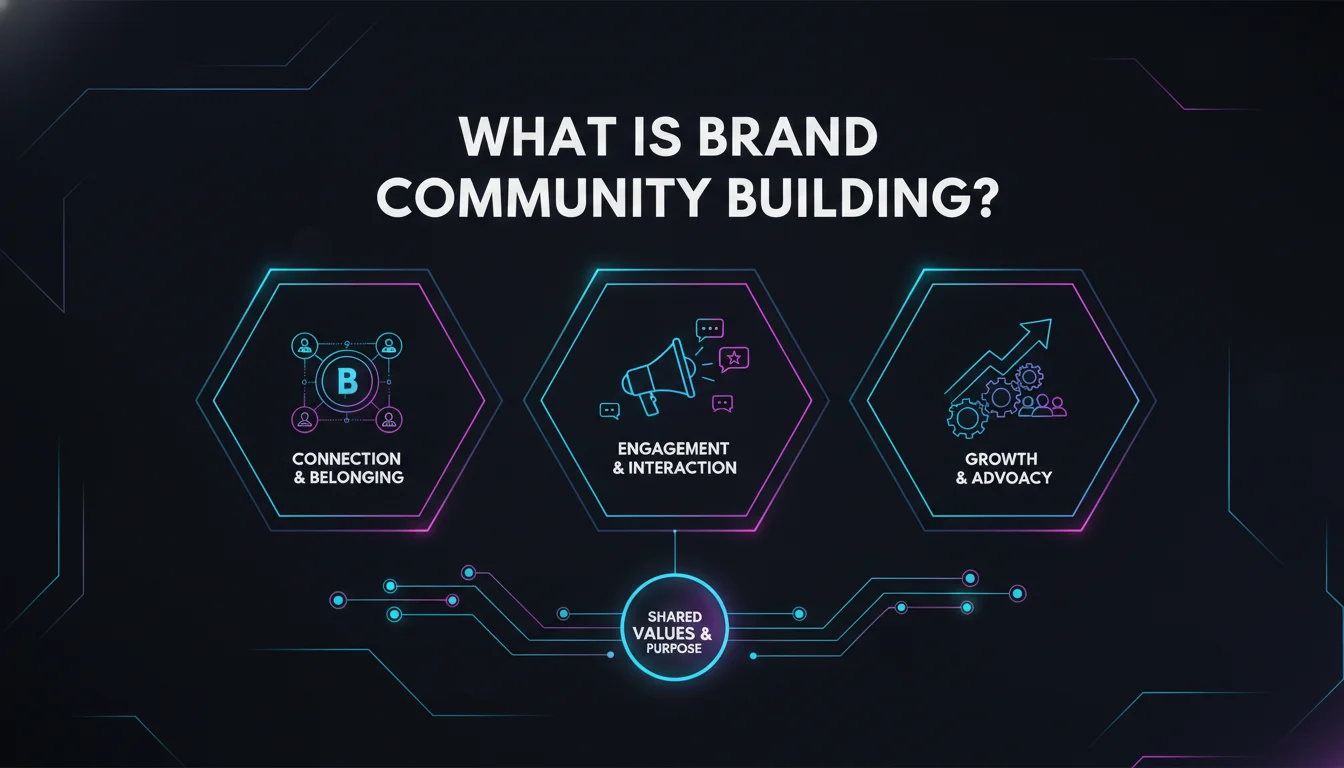
Brand community building is the practice of creating spaces where emotionally connected customers interact with each other and the brand to shape products, content, and advocacy. It shifts marketing from one-way messaging to sustained, member-driven relationships.
Key Takeaways
- Brand communities are distinct from audiences because members actively shape the brand instead of passively consuming it.
- According to Harvard Business School Online, 66 percent of companies say community significantly impacts customer retention.
- Mailchimp reports that 66 percent of brand community members say they’re loyal to their respective brands.
- A study by iHeartMedia and Pushkin Industries found nearly 50 percent of consumers feel ignored by brands, making community participation a real competitive edge.
- Three primary community models exist: fans, design partners, and interest-based groups.
- Brands succeed at community building when they act as enablers, hosts, and learners rather than broadcasters.
What Is Brand Community Building?
The Definition and Origins of Brand Community
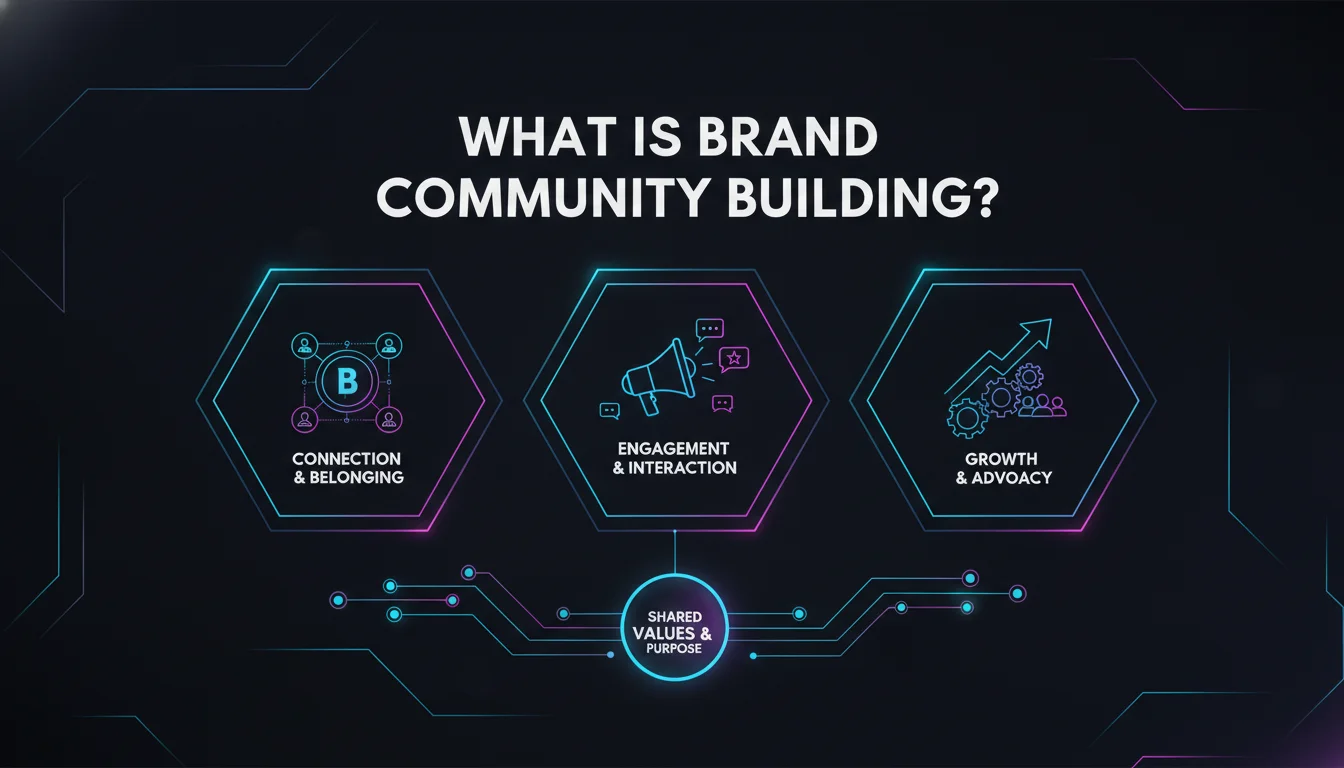
this type of building is a strategic marketing discipline focused on cultivating spaces where customers who share an emotional connection to a brand can interact with each other and the company. The term brand community was coined in 1995 by Albert Muniz Jr. and Thomas C. O’Guinn, who defined it as “a specialized, non-geographically bound community, based on a structured set of social relations among admirers of a brand.” This definition, cited by the U.S. Chamber of Commerce, roots the practice in relationships rather than geography or transactions.
A brand community isn’t a loyalty program, a follower list, or a customer database. It’s a social structure where members identify with the brand and with each other. That identification produces rituals, traditions, and a sense of shared responsibility among members. Good this kind of building focuses on designing and sustaining those relationships over time, not just launching a campaign and hoping something sticks.
Community vs. Audience
An audience follows content; a community gets involved. That’s the whole difference in one line, and it’s worth sitting with. Members of a genuine community create user-generated content, weigh in on product decisions, and defend the brand when critics come knocking. Reach and relationship are not the same thing, and content that gets scrolled past in half a second builds neither.
brand community works by creating spaces for conversation, participation, and shared values. According to DMEXCO, brands like Nike and Glossier prove that long-term connection doesn’t come from a single campaign. It comes from nurturing relationships continuously, month after month, year after year. You can buy an audience. You have to build a community.
Why Emotional Connection Matters
Emotional connection is the glue holding any brand community together. A brand community is made up of customers who feel genuinely connected to a brand, or who share an interest in its products, ethos, and success. That connection creates organic advocacy: members promote, defend, and improve the brand without anyone asking them to.
Brand community building, at its core, is about making customers feel seen instead of ignored. When people believe a brand actually gets them, and gives them a place to belong, they stick around longer and bring friends into the fold. This is the emotional engine behind every case study in this article.
“Unfortunately, although many firms aspire to the customer loyalty, marketing efficiency, and brand authenticity that strong communities deliver, few understand what it takes to achieve such benefits. Worse, most subscribe to serious misconceptions about what brand communities are and how they work.” – Susan Fournier, Researcher and Professor, Boston University
The Business Case for Brand Community Building
The business case for brand community building rests on retention data and a widening emotional gap between brands and consumers. Companies that build real community see measurably stronger loyalty than those relying purely on reach-driven marketing.
Retention and Loyalty Evidence
According to Harvard Business School Online, 66 percent of companies claim their community significantly impacts customer retention. A separate figure from Mailchimp shows that 66 percent of brand community members say they’re loyal to their respective brands. These two numbers, coming from different sources, point to the same conclusion: community participation and repeat business travel together.
The logic is simple to state and hard to execute. Loyalty runs on emotional connection, and customers stay loyal only when they feel genuinely drawn to a brand. Brand community building creates the conditions for that pull by giving members reasons to return that have nothing to do with the product itself.
The Consumer Reality Behind the Shift
Consumers today are overstimulated, and marketing channels are oversaturated past the point of diminishing returns. DMEXCO notes that today’s consumers are better informed, more skeptical, and less receptive to purely promotional messages than they were even a few years back. Reach alone doesn’t build relationships anymore. A study by iHeartMedia and Pushkin Industries found that nearly 50 percent of consumers feel ignored by brands.
That sense of disconnection is exactly where brand community building earns its keep. When close to half of consumers feel unseen, offering spaces where members are heard, answered, and invited to help shape the brand becomes a genuine differentiator. The U.S. Chamber of Commerce notes that brand communities boost loyalty, deepen relationships, and surface insights that improve marketing, product design, and customer experience.
Marketing Efficiency and Long-Term Value
Community marketing isn’t a growth hack you switch on before a launch. DMEXCO argues brands need to invest time, stay consistent, and rethink how they define success in the first place. That’s not overhead, it’s efficiency. A community that trusts a brand generates user-generated content on its own, lowers acquisition costs, and defends the brand when a crisis hits.
Brand community building also builds a feedback loop that sharpens products and messaging. Instead of pouring budget into surveys and focus groups, brands can simply listen to an active community that’s already emotionally invested in where the brand goes next.
Three Types of Brand Communities
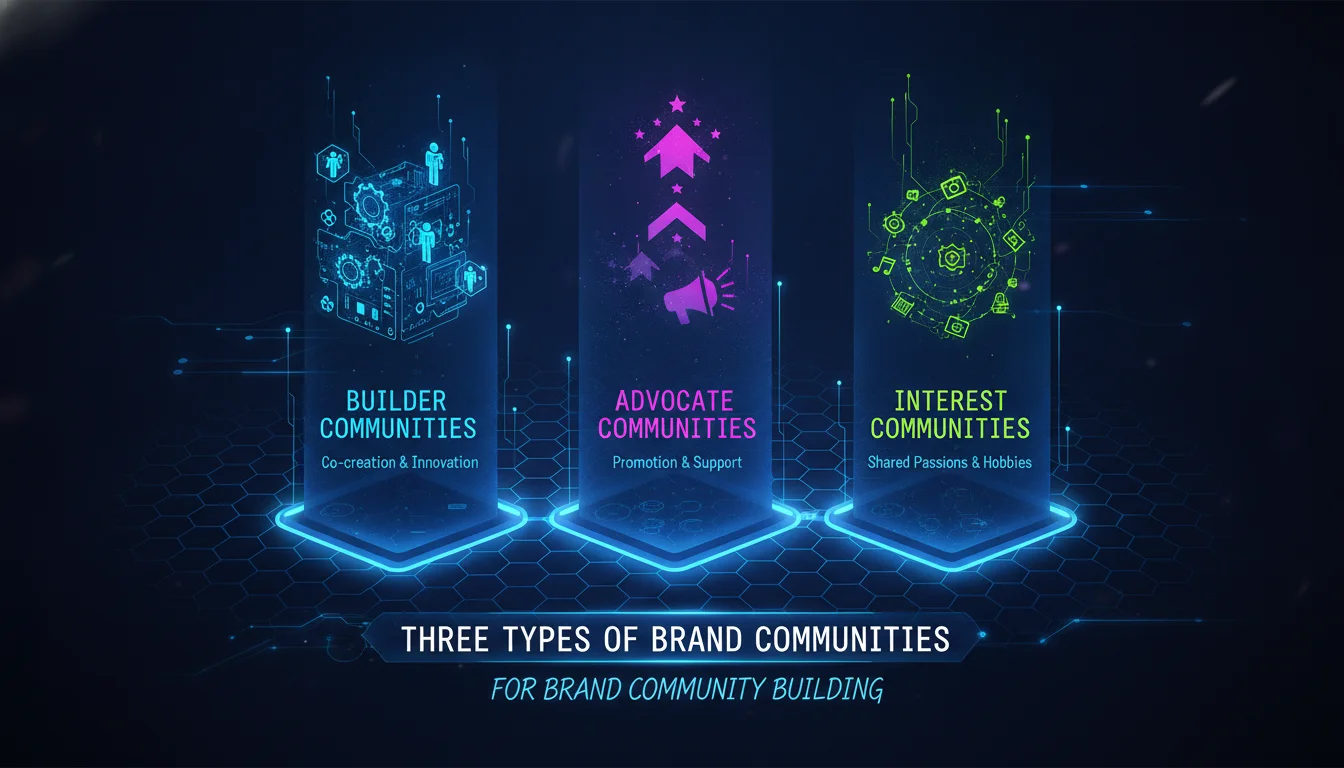
What are the three types of brand communities? Harvard Business School Professor Christina Wallace, in the online course Entrepreneurial Marketing, identifies communities driven by deep passion, communities formed through direct collaboration with the brand, and communities built around shared interests or habits. Each represents a different route into brand community building.
Communities of Fans
A community of fans channels existing passion into visible action. When people genuinely love a brand, they don’t just support it, they promote and defend it in public. Bow & Drape, an online women’s retailer featured in Entrepreneurial Marketing, is a clean example. Known for viral sparkly sweatshirts, the brand ran on a limited marketing budget and leaned on its dedicated community to fuel growth.
When a competitor copied Bow & Drape’s designs, the brand activated its fanbase instead of lawyering up quietly. Former founder and CEO Aubrie Pagano described how the community rallied to call out the larger retailer on social media and in the press. What started as a threat turned into a marketing moment, and it shows exactly how much power a fan-driven community can generate.
Communities of Design Partners
A community of design partners moves beyond customers into actual collaborators who help shape the brand’s offerings. Glossier is the textbook case. Launched originally as a beauty blog full of tips, reviews, and demos, Glossier built a following that eventually became an active, engaged community rather than a passive readership.
Using social media as an ideation space, Glossier invited followers to share feedback and product ideas. A meaningful share of that input became the foundation for bestselling products. By folding its community into the creative process, Glossier turned brand storytelling into a two-way conversation, and turned collaboration into a genuine driver of both innovation and sales.
Communities of Interest
A community of interest brings potential customers together around common passions or needs, not necessarily direct product loyalty. Brands tap into these communities through forums and shared conversations to introduce products, run campaigns, and build excitement. Nike is the standard example here.
For Nike, a community of interest connects runners and athletes around shared habits and goals rather than product affinity alone. This category-based approach lets the brand reach new audiences while staying relevant to existing customers. It works especially well when the product category already has a built-in culture or shared purpose, which running and fitness clearly do.
A Step-by-Step Brand Community Building Process
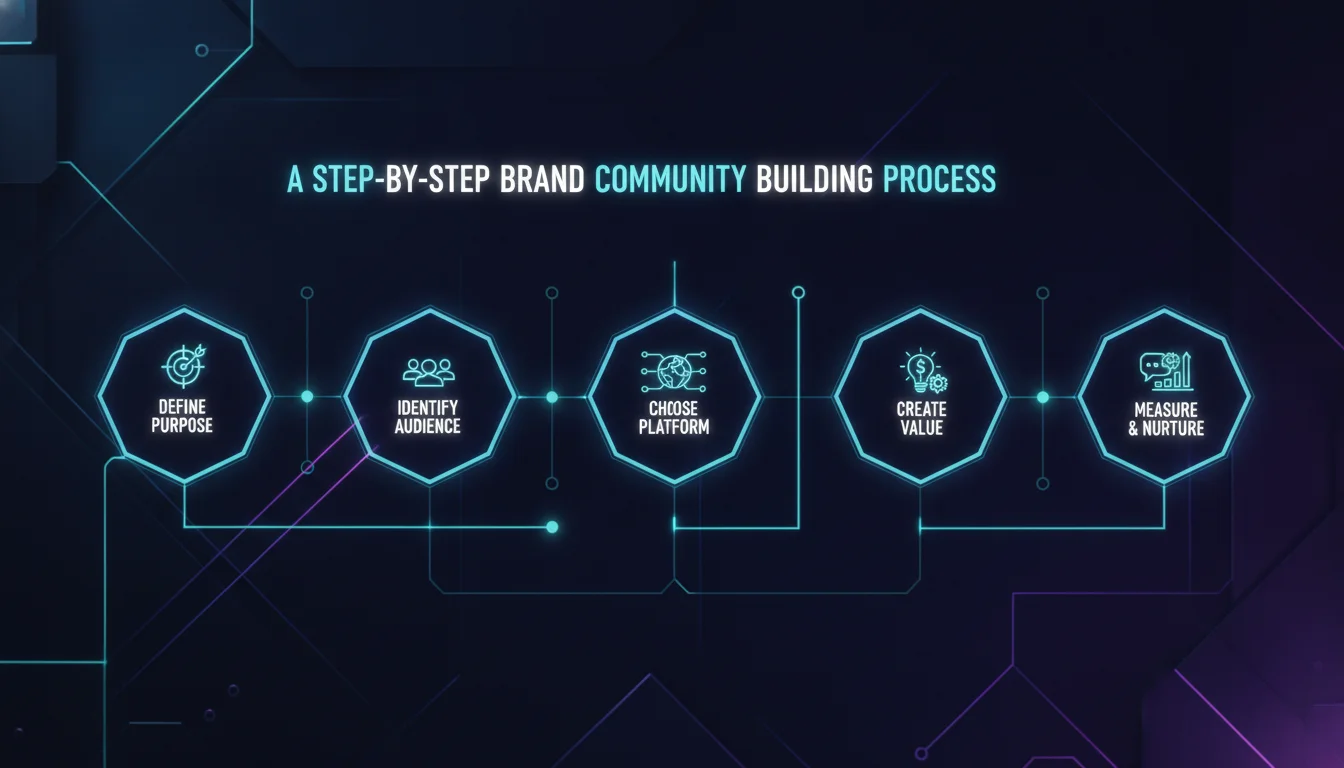
Building a brand community is a structured process, not a single activation you launch and forget. These steps combine guidance from the U.S. Chamber of Commerce, DMEXCO, and Fluer into one workable sequence.
- Define brand identity and purpose.
- Choose the right community archetype.
- Design shared experiences and participation loops.
- Shift from broadcast to moderation.
- Measure relationship health, not just reach.
Step 1: Define Brand Identity and Purpose
The U.S. Chamber of Commerce advises starting with a clear brand identity before doing anything else. If you want to build a community around your brand, you need to know what your brand actually is and what it stands for. A clear identity becomes the foundation that attracts like-minded people in the first place.
Fluer makes the same point from a different angle: a strong brand community starts with a clear purpose. Your mission and values are the glue holding the whole thing together. Define your values explicitly, then communicate them consistently across every touchpoint, because consumers increasingly gravitate toward brands that reflect their own beliefs and aspirations.
Step 2: Choose the Right Community Archetype
The three community types outlined by Harvard Business School Online give you a practical menu to choose from. If your product has fanatical superusers, a community of fans is likely your best fit. If you want customers shaping product development, build a community of design partners. If your category already carries a strong shared interest, lean into a community of interest.
This choice shapes which platforms you use, what content you create, and which metrics actually matter. Deciding early prevents the common mistake of trying to be everything to everyone, which usually ends up building an audience instead of a community.
Step 3: Create Shared Experiences and Participation Loops
Shared experiences build emotional connection and give your community something to talk about, remember, and celebrate later. Fluer notes that hosting events, virtual or in-person, builds camaraderie among members while reinforcing brand identity at the same time. Nike’s community runs and Glossier’s pop-up events are both immersive experiences that make participants feel part of something bigger than a transaction.
Participation loops are the repeatable actions that keep members engaged over time. Think user-generated content, product feedback threads, online challenges, and live events. The key requirement is that members must be able to contribute, not just consume passively. DMEXCO puts it plainly: a productive community can’t be built top-down. It needs to grow together with its members.
Step 4 and 5: Shift to Moderation and Measure Relationship Health
Communities don’t run on the old sender-receiver model. If you try to dominate the conversation, you’ll lose the community’s trust fast. DMEXCO recommends that brands listen to members and respond to them rather than pushing out messages, since in most brand community forums, the brand’s real job is moderator, not megaphone.
Traditional campaign metrics fall short here. Brand community building requires tracking participation depth, member-to-member interaction, user-generated content volume, sentiment, and retention over time. The Harvard Business School Online figure showing 66 percent of companies link community to retention is a good reminder that relationship health, not reach, should sit at the top of your dashboard.
Comparison of Brand Community Building Approaches
The table below compares the three community types from Harvard Business School Online with a values-led approach highlighted by DMEXCO. Each has a distinct mechanism, brand role, example, and primary outcome.
| Approach | Core Mechanism | Brand Role | Example | Primary Outcome |
|---|---|---|---|---|
| Community of Fans | Harnessing existing passion and advocacy | Facilitator and amplifier | Bow & Drape | Increased loyalty and vocal defense |
| Community of Design Partners | Inviting customers to co-create products | Collaborator and listener | Glossier | Product innovation and sales |
| Community of Interest | Connecting people around shared habits or passions | Category host and curator | Nike | Broader market engagement |
| Values-Led Community | Organizing around shared values beyond products | Mission steward and enabler | Patagonia Action Works | Deep identification and trust |
The Brand’s Role in Community Success
The brand’s role in community success is to enable, host, and learn rather than broadcast. DMEXCO explains that brands are becoming part of a larger whole instead of just transmitting messages downward to customers. In most brand community forums, the brand’s job is to moderate, not dictate.
Enabling
Enabling means creating a forum for exchanges and ideas within the community. The brand builds the space and the infrastructure, then steps back so members can connect with each other directly. DMEXCO cites the Adobe Community as a best-case example of exchange between members and the brand functioning as equal partners.
Hosting
Hosting means organizing online or offline events that bring members together in real time. These events create shared experiences and reinforce the community’s identity as something worth belonging to. Hosting isn’t about controlling the conversation, it’s about setting the stage so relationships can form naturally. Webinars, community runs, pop-up events, and member meetups all count.
Learning
Learning means pulling insights about your brand and products directly from community activity. The community becomes an ongoing source of feedback and market intelligence, often more honest than a formal survey. Glossier’s use of blog comments and social media to guide product development is a clear, well-documented example. Learning is what turns a community from a marketing channel into a genuine strategic asset.
Real-World Examples of Brand Community Building
Nike Training Club and Shared Purpose
With the Nike Training Club app, Nike shows how brands build long-term relationships instead of short-term campaigns. The app functions as an ongoing service and community hub, connecting users around fitness goals and shared routines rather than a single product drop. Nike also runs communities of interest to connect runners and athletes, showing how brand community building can operate on multiple layers at once.
Glossier and Co-Creation
Glossier’s path from beauty blog to product brand is one of the clearest examples of a design-partner community in action. The brand attracted readers with tips and product reviews, then invited those same readers to help shape the actual product lineup. Social media ideation led directly to bestselling products. Glossier shows how brand community building can make customers feel like co-creators instead of passive buyers.
Patagonia Action Works and Values Alignment
Patagonia Action Works is cited by DMEXCO as a best-case example of shared values that extend well beyond products. Patagonia’s community is bound by a shared commitment to environmental activism, and the brand’s values function as a rallying cry rather than a marketing tagline. This alignment between brand purpose and member identity is a hallmark of sustainable brand community building, and it’s one of the hardest things for competitors to copy.
Emerging Angles: AI Skepticism and Affinity Groups
As of 2026, two forces are reshaping how teams approach brand community building. First, growing consumer wariness toward AI-generated marketing content is pushing brands toward more human, member-led spaces where real people, not algorithms, drive the conversation. This year, that shift shows up as smaller, more curated community spaces rather than sprawling open forums.
Second, affinity groups organized around narrow, specific interests are becoming a bolder strategy than broad demographic targeting. Instead of building one big community around a brand, some companies are seeding multiple smaller affinity groups, each tied to a distinct interest or lifestyle, and letting those groups cross-pollinate naturally. It’s a more patient approach, but it tends to produce members who stick around.
Common Misconceptions and Pitfalls in Brand Community Building
Not Every Follower Is a Community
A follower count is not a community, and treating it like one is the single most common mistake we see. DMEXCO emphasizes that the defining feature of brand communities is that members are actively involved in shaping the brand’s narrative instead of just passively receiving it. An audience consumes; a community helps build. Brands that confuse reach with community will keep wondering why engagement feels hollow.
Community Is Not a Campaign
Community marketing is not a campaign format, and it’s definitely not a quick growth hack you deploy before a product launch. DMEXCO states plainly that it’s a long-term commitment to nurturing relationships. Brands that treat community as a one-off activation waste time and money, because trust simply can’t be manufactured in a single push.
Top-Down Control Undermines Trust
Susan Fournier, a researcher and professor at Boston University, found that most companies get brand communities wrong, wasting time, resources, and customer goodwill. In a piece cited by the U.S. Chamber of Commerce, Fournier wrote that few firms understand what it actually takes to achieve the loyalty, efficiency, and authenticity that strong communities deliver.
“An audience follows content; a community gets involved.” – DMEXCO, on the defining distinction in modern community marketing
The fix isn’t rigid control. It’s facilitation, active listening, and genuinely shared ownership of the brand’s direction.
Pros and Cons
Pros
- Stronger retention and loyalty, with community-driven advocacy that traditional ads can’t buy.
- A built-in feedback loop that improves products without expensive research cycles.
- Lower long-term acquisition costs as members bring in new customers organically.
- Resilience during a crisis, since an invested community will defend the brand publicly.
Cons
- Requires sustained, long-term investment; results rarely show up in a single quarter.
- Hard to control the narrative once members have real influence over the brand’s direction.
- Measurement is trickier than campaign metrics, since relationship health doesn’t fit neatly into a dashboard.
- Missteps or heavy-handed moderation can erode trust quickly and publicly.
Making Brand Community Building Sustainable
Brand community building becomes sustainable when brands measure relationships instead of reach and treat the community as a living system rather than a marketing tactic. Success requires a clear identity, shared values, genuine participation, and a real shift from broadcasting toward moderation. Evidence from Harvard Business School Online, Mailchimp, and iHeartMedia/Pushkin Industries all points the same direction: communities drive retention and loyalty while cutting into that widespread feeling of being ignored.
Updated for 2026, the brands getting this right aren’t just selling products anymore. They’re building spaces where customers genuinely belong, and that belonging is what keeps people coming back long after the campaign budget runs out. If your brand is ready to move from broadcasting to belonging, explore our branding and social media services, or check out our thinking on brand storytelling frameworks for more on turning followers into believers. Let’s build something bold. Contact Emin Media for a free brand consultation.
Frequently Asked Questions
What is a brand community?
A brand community is a space where people who share an emotional connection to a brand can engage with the company and with each other. It’s based on social relationships among admirers of a brand, not geography or transactions.
What is an example of a brand community?
Glossier’s beauty community, Nike Training Club, Patagonia Action Works, and Bow & Drape’s fan base are all strong examples. Each uses a different mechanism, whether that’s co-creation, shared values, or straightforward fan advocacy.
What is the difference between an audience and a brand community?
An audience follows content passively, while a community gets involved and actually helps shape the brand. Members create user-generated content, offer feedback, and advocate for the brand without being asked.
What are the three types of brand communities?
Harvard Business School Online identifies three types: communities of fans, communities of design partners, and communities of interest. These differ based on whether they’re driven by passion, collaboration, or shared habits.
How long does it take to build a brand community?
Brand community building is a long-term commitment, not a one-off campaign you can launch overnight. It requires consistent investment in relationships, shared experiences, and trust over time, often measured in years rather than months.
Enjoyed this article?
Contact Emin Media for a free brand consultation and let's create something amazing together.
Get in TouchRelated Articles
Digital Marketing for Creatives: A Bold Guide
Digital marketing for creatives builds real visibility and sales. Learn strategies for social media, SEO,…
Branding & Design Agency Tips That Actually Work
Discover branding and design agency tips to choose the right partner, set clear goals, and…
Creative Agency Pitch Deck Tips That Win Clients
Master creative agency pitch deck tips that win clients in 2026. Learn storytelling, design, and…