Brand Awareness Campaign Ideas That Build Recognition
Brand Awareness Campaign Ideas That Build Lasting Recognition
Brand awareness campaign ideas are strategies that increase how familiar your target audience is with your brand before they are ready to buy. The strongest approaches combine organic, paid, and experiential tactics across multiple channels to build recall, trust, and measurable business value.
Key Takeaways
- Brand awareness is the familiarity consumers have with your product or service before they are ready to buy.
- Effective campaign ideas combine organic, paid, and experiential tactics across multiple channels.
- Dove, Spotify Wrapped, and the ALS Ice Bucket Challenge succeeded because they tied awareness to a consistent brand belief or participatory moment.
- Awareness campaigns should be measured with Share of Voice, Net Promoter Score, direct traffic, and branded search, not just sales.
- A step-by-step process helps brands move from identity definition to channel selection, measurement, and optimization.
- Small businesses can start with low-cost organic tactics like tone of voice, employee advocacy, and local partnerships before adding paid spend.
When a potential customer sees your ad or reads your article, they are far more likely to engage if they already recognize your name. That is why this type of ideas deserve a permanent place in your marketing plan. This guide synthesizes proven examples from Dove, Spotify, Nike, and Airbnb with tactical frameworks from marketing research to help you design awareness campaigns that create recall and measurable business value.
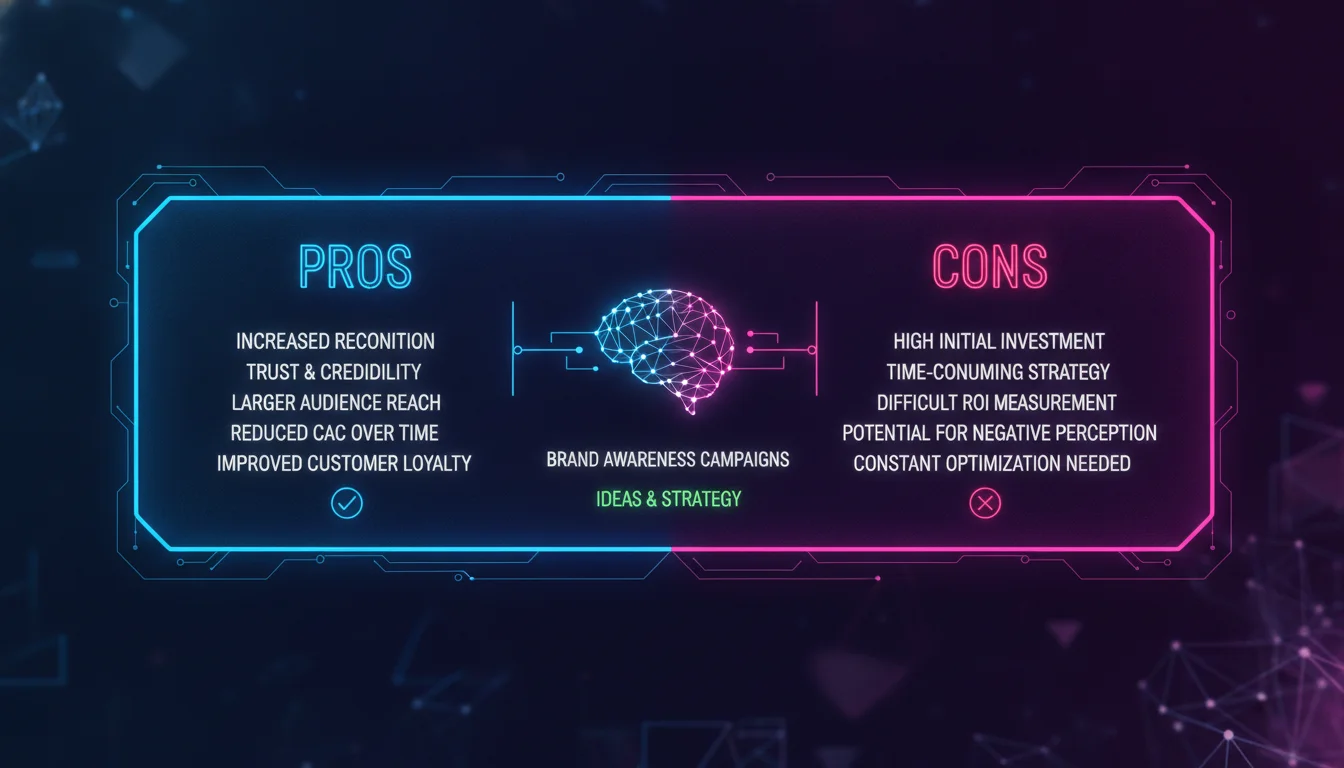
Pros and Cons of Running Brand Awareness Campaigns
Pros
- Builds long-term brand equity that makes every future marketing dollar work harder
- Increases branded search volume and direct traffic over time, which are trackable leading indicators
- Warms up audiences before paid campaigns, improving conversion rates downstream
- Organic tactics like SEO, employee advocacy, and content marketing compound in value without ongoing ad spend
- Creates emotional connections that drive loyalty and word-of-mouth referrals
Cons
- Results appear in leading indicators before revenue, which can make ROI difficult to justify short-term
- Requires consistency over months or years, not a single campaign burst
- Experiential and paid tactics require meaningful budget to reach scale
- Measuring recall and sentiment is less precise than measuring clicks or conversions
What Is a Brand Awareness Campaign?
Brand Awareness Defined
Brand awareness is the familiarity consumers have with a particular product or service. According to Attest, brand recall often means essentially the same thing. When marketers talk about brand awareness, they are usually referring to awareness within a specific target market or target audience.
Harvard Business School Online offers a broader definition: brand awareness is a measure of how familiar and recognizable a brand is to a customer, client, or other target audience. While brand awareness is commonly associated with companies, products, or services, it can also apply to personal branding. Without awareness, a brand’s value is hidden.
Brand Awareness Campaign Defined
A brand awareness campaign is a marketing campaign designed to familiarize consumers with a new product or service, or an existing one that is not well-known. For example, when a brand launches in a new country, a campaign may be needed to introduce the name and offering. According to Attest, a brand awareness campaign is usually multi-pronged, involving marketing efforts across multiple channels, rather than just one advert in a magazine or on television.
As well as introducing the product or service, a brand awareness campaign aims to communicate the values that differentiate it from the competition. Its success is not primarily judged on a sales uplift, although that might factor into it. The main aim is to increase knowledge about the brand and its products within the target audience.
Levels of Brand Awareness
There are different levels of brand awareness. Attest identifies awareness of your brand name, awareness of your product offering, and awareness of your brand attributes as distinct layers. Harvard Business School Online adds related concepts such as brand recall, which is how likely a target audience is to remember a brand without being prompted, often called unaided awareness; brand consideration, which is a target audience’s willingness to consider a given brand as an option; and brand knowledge, which covers thoughts, feelings, attitudes, and relationships regarding a brand.
The distinction matters because a campaign may build recognition without building recall or consideration. Strong this kind of campaign ideas move people through those levels, from simply knowing the name to actively considering the brand when the purchase moment arrives.
Why Brand Awareness Matters More in 2026
The Shift to Digital Buying
Brand awareness matters more than ever because consumers are increasingly shopping online rather than in-store, which makes familiarity a critical advantage. As Attest notes, if your brand recall or awareness is low, there will be fewer people searching for you and you will make fewer sales. Brand recall and awareness are central to success whether you are a new startup or an established business.
The logic is straightforward. In a digital environment, attention is not passive. A consumer types a search query, scrolls a feed, or opens an email. If your brand is already familiar, the threshold for engagement drops. If your brand is unknown, you are asking for attention while competing with dozens of recognized names.
Stand Out in a Crowded Market
Brands have never faced so much competition. Portside Advertising puts it bluntly: if your brand is only showing up when it has something to sell, you are already behind. The strongest the awareness campaign ideas do something different. They stay visible before the buying moment, shape perception early, and give people a reason to remember the name when the timing is right.
Awareness is not fluff. It is the part of the funnel that makes every later marketing dollar work harder. A paid search campaign converts better when people already recognize you. A sales team gets warmer conversations when the market already trusts the brand. A new product launch lands faster when the audience has seen your story before.
Awareness Feeds the Entire Funnel
Brand awareness is an essential component of building brand equity. Harvard Business School Professor Jill Avery, who teaches the online course Creating Brand Value, explains that through brand identity work, managers choose a name, design a logo, and create other unique features to represent the brand’s sensibility. But those markers are empty until the brand has a relationship with consumers or a cultural history.
That is why awareness campaigns should be planned for the long game. You may see lift in direct traffic, branded search, engagement, and recall before you see a clean line to revenue. Smart teams plan for that upfront instead of judging awareness work by conversion metrics alone.
Brand Awareness Campaign Ideas: Organic Strategies
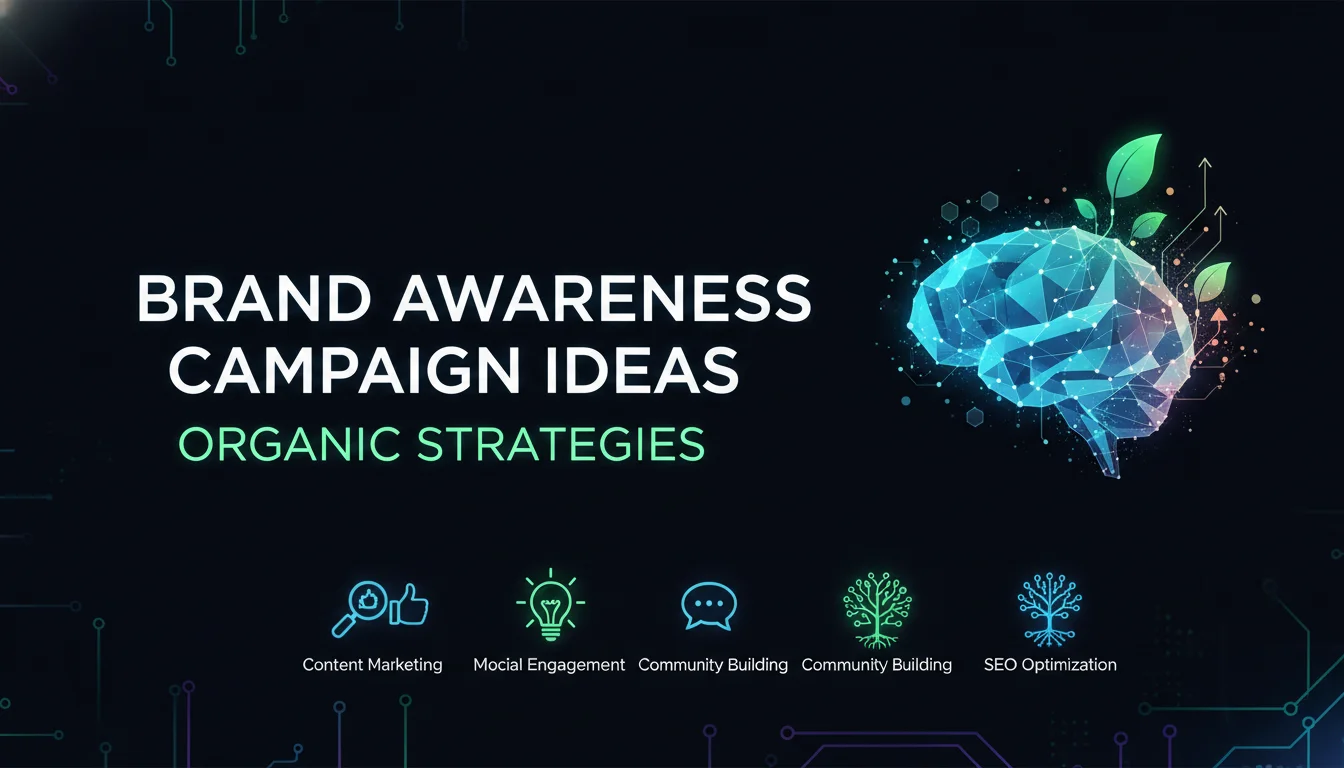
Organic ideas are free or low-cost tactics with long-term impact. Attest groups these into developing a strong tone of voice, doubling down on SEO and content marketing, being engaged on social media, sharing branded infographics, turning employees into brand ambassadors, and making guest appearances. The common thread is consistency and value delivered without direct ad spend.
Develop a Clear Tone of Voice
A clear tone of voice is one of the first brand awareness to implement because it makes your brand instantly recognizable across every channel. Attest lists it as the first of 16 ways to build a brand awareness campaign. When your tone is consistent, from customer service replies to social captions, the brand becomes familiar even at low reach.
Portside Advertising reinforces this: the best campaigns are not just loud. They are clear, repeatable, and built for the way real people absorb information over time. That usually means a simple message, a distinct visual system, and distribution across the channels your audience actually uses.
Double Down on SEO and Content Marketing
SEO and content marketing are core organic campaign ideas because they capture demand when people are searching for answers. Attest suggests doubling down on SEO and content marketing as a way to build awareness without paying per impression. Branded infographics, long-form guides, and answer-focused articles all help your brand appear before a buyer recognizes they need you.
The payoff compounds. Each piece of content that ranks for an informational query becomes a permanent awareness asset. Over time, a library of helpful content creates multiple entry points for new audiences. According to Attest, sharing your wisdom with branded infographics is a distinct tactic because visual content travels well on social platforms and in industry publications.
Turn Employees into Brand Ambassadors
Employee advocacy is one of the most underused this type of ideas available to any size organization. Attest lists turning employees into brand ambassadors as an organic strategy with high trust potential. Employees already have networks that extend beyond your brand’s owned channels, and their voices often feel more authentic than corporate messaging.
This can include sharing company news, participating in social campaigns, speaking at events, or writing guest posts. When employees become visible, the brand becomes more human. The key is to provide clear guidelines and content prompts rather than forcing participation.
Brand Awareness Campaign Ideas: Paid and Influencer Strategies
Paid this kind of campaign ideas require budget but offer scalable results. Attest groups influencer marketing, paid ad campaigns, and retargeting in this bucket. These tactics are most effective when they amplify an already coherent brand identity rather than trying to build one from scratch.
Make the Most of Influencer Marketing
Influencer marketing is a powerful strategy for reaching new audiences through trusted voices, and it belongs in any serious list of brand awareness campaign ideas. Attest recommends making the most out of influencer marketing, and Harvard Business School Online specifically mentions partnering with influencers as part of a product launch or marketing campaign. The key is relevance: an influencer’s audience should overlap with your target market.
Influencer campaigns can take many forms, from sponsored posts to takeovers to long-term ambassadorships. The awareness benefit comes from the implicit endorsement. When a trusted creator uses your product, their followers notice. This is especially valuable for newer brands that have not yet built their own audience.
“The name, logo, and design are all markers of the brand intended to communicate its meaning. But, the brand does not yet have a relationship with consumers or a cultural history, so these markers are empty.” – Harvard Business School Professor Jill Avery, Creating Brand Value
Run Paid Ads and Retargeting
Paid ads remain a direct way to buy visibility, but they work best when paired with organic awareness. Attest includes paid ads and retargeting among its 16 strategies. Paid ads introduce your brand to new audiences, while retargeting keeps your brand in front of people who have already engaged but not converted.
Retargeting is particularly useful for awareness because it reinforces familiarity. A prospect who visited your site once and then sees your ad on another platform begins to recognize the brand. That repetition builds the recall that later shortens the path to purchase.
Start Partnerships with Relevant Businesses
Partnerships and co-branding are brand awareness campaign ideas that draw on someone else’s audience. Attest lists starting partnerships with relevant businesses as an experiential strategy, while Harvard Business School Online recommends collaborating and co-branding with complementary businesses. The logic is simple: you borrow reach from a partner whose customers are likely to value your brand too.
These partnerships can include joint webinars, bundled offers, co-hosted events, or shared content. The awareness gain is mutual, and the cost is often lower than a solo paid campaign. The key is choosing partners whose values and audience align with your brand.
Experiential and Community-Driven Brand Awareness Campaign Ideas
Experiential brand awareness campaign ideas are interactive, community-driven, and memorable. Attest groups referral programs, using your branding everywhere, partnerships, contests, giveaways, industry features, and offline marketing into this category. These tactics create moments people remember and share long after the campaign ends.
Pop-Up Shops and Brand Activations
Pop-up shops and brand activations are among the most tangible brand awareness campaign ideas because they convert brand identity into a physical experience. Blanka Brand suggests a pop-up beauty store as a creative way for private label beauty businesses to get noticed. The Cvent brand activation forum adds that pop-up shops in high-traffic areas create a sense of urgency and exclusivity, often featuring limited-edition products.
These activations work because they give people something to feel, not just see. Immersive environments, interactive installations, and themed spaces allow attendees to fully experience your brand. The memory created in a pop-up often outlasts a social media impression by weeks or months.
Product Sampling and Demos
Product sampling and live demonstrations are brand awareness campaign ideas that build recall through direct sensory experience. According to the Cvent brand activation forum, allowing attendees to try your products firsthand through samples, live demonstrations, or hands-on trials showcases the unique features and benefits of your offerings in a way no screen can replicate.
For beauty, food, or consumer goods brands, sampling is especially powerful. A person who tries your product once and enjoys it becomes a walking word-of-mouth channel. Pair sampling with a social share mechanic and the awareness radius expands well beyond the event itself.
Contests, Giveaways, and Referral Programs
Contests, giveaways, and referral programs are classic community-driven brand awareness campaign ideas that turn your existing audience into a distribution network. Attest lists organizing contests and giveaways and starting referral programs among its 16 strategies. Cvent adds interactive challenges and games that encourage participation and reward winners with exclusive prizes or experiences related to your brand.
Referral programs turn existing customers into brand advocates. When a customer refers a friend, the brand gains awareness inside a trusted relationship. The ALS Ice Bucket Challenge, highlighted by Portside Advertising, worked for a similar reason: it mixed a simple action with a social invitation and a clear cause, making the activity itself drive visibility.
Don’t Forget Offline Marketing
Offline marketing is still a thing, even in a digital world. Attest explicitly includes it as a strategy. Cvent recommends product sampling and demos, where attendees try your products firsthand, as well as live demonstrations that showcase features and benefits. These tactile interactions build awareness in ways that a screen cannot replicate.
Local partnerships, outdoor advertising, community events, and printed materials all reinforce the brand in the physical world. For regional businesses, offline marketing can be more efficient than digital ads because it reaches a concentrated geographic audience with less competition for attention.
“Awareness is not fluff. It is the part of the funnel that makes every later marketing dollar work harder.” – Portside Advertising, Brand Awareness Campaign Examples That Work (2026)
How to Build a Brand Awareness Campaign Step by Step
The best brand awareness campaign ideas fail without a process behind them. A structured approach turns scattered tactics into a coherent campaign. Here is a five-step framework you can apply whether you are a startup or an established brand.
- Step 1: Define your brand identity, mission, and values.
- Step 2: Identify your target audience and where they already spend time.
- Step 3: Select a mix of organic, paid, and experiential tactics.
- Step 4: Launch the campaign across channels with consistent messaging.
- Step 5: Measure Share of Voice, NPS, direct traffic, and branded search, then optimize.
Step 1: Define Your Brand Identity
Your brand must exist before you can build awareness of it. Harvard Business School Online advises solidifying your personal or business brand image and ensuring it is informed by the mission, goals, and values you want it to embody. Without that foundation, a campaign will generate impressions but not recognition.
This step requires answering basic questions: What do we stand for? What do we sound like? What visual system is unmistakably ours? A clear brand identity is the anchor for every awareness tactic that follows.
Step 2: Select the Right Tactical Mix
No single channel builds awareness alone. Attest recommends a multi-pronged approach that includes organic strategies like SEO and employee advocacy, paid strategies like influencer marketing and retargeting, and experiential strategies like partnerships and offline events. The mix should reflect your budget, timeline, and audience behavior.
A small business might start with a clear tone of voice, local partnerships, and employee ambassadors before adding paid ads. A larger brand might run influencer campaigns, pop-up activations, and retargeting simultaneously. The goal is consistency across every touchpoint.
Step 3: Launch, Measure, and Optimize
Launch the campaign, then measure what matters. Portside Advertising notes that brand awareness is easier to measure today than it used to be, but it still does not behave like a bottom-funnel lead gen push. You may see lift in direct traffic, branded search, engagement, and recall before you see a clean line to revenue.
Use tools like Share of Voice, Net Promoter Score, and branded search volume to track progress. Compare performance across channels, double down on what is working, and refine what is not. Awareness building is iterative, not a one-off event.
Measuring Brand Awareness Campaigns: Metrics and Comparison
Share of Voice (SOV)
Share of Voice is a metric that illustrates your place in the market compared to competitors, making it one of the most direct ways to evaluate brand awareness campaign ideas. According to Blanka Brand, it is one of the most typical ways to measure brand awareness. You can measure SOV by how your brand performs in Search Engine Results Pages (SERPs), organic social mentions, shares, and follows.
This metric is especially useful for competitive benchmarking. If your SOV is low, your brand is underrepresented in conversations where your competitors appear. A well-executed awareness campaign should slowly increase your share of the relevant conversation.
Net Promoter Score (NPS)
Net Promoter Score is a metric that surveys customer loyalty and likelihood to recommend your brand or product to their networks, friends, and followers. Blanka Brand recommends NPS as a way to measure brand awareness and sentiment. It captures not just whether people know you, but whether they would advocate for you.
NPS works best when measured over time. A rising NPS alongside rising awareness suggests that your brand is not only becoming more familiar but also more trusted. That trust is what eventually converts awareness into revenue.
Direct Traffic and Branded Search
Direct traffic and branded search are leading indicators of whether your brand awareness campaign ideas are actually working. Portside Advertising notes that awareness campaigns may produce lift in direct traffic, branded search, engagement, and recall before revenue. When people type your brand name directly into a search engine or visit your site without a referral, they are demonstrating recall.
These metrics are easy to track in analytics platforms. A steady increase in branded search volume means your awareness campaign is working. You can also track social engagement and share of voice to see how conversations about your brand are growing.
| Approach | Examples | Best For | Primary Metric |
|---|---|---|---|
| Organic | Tone of voice, SEO, employee ambassadors | Long-term recall, low budget | Branded search, engagement |
| Paid | Influencer marketing, paid ads, retargeting | Scalable reach, new audiences | Impressions, click-through, direct traffic |
| Experiential | Pop-up shops, contests, offline sampling | Memorable, community-driven | Social shares, SOV, NPS |
Brand Spotlight: Three Campaigns Worth Studying
Real brand awareness campaign ideas are best understood through the lens of campaigns that actually worked. These three examples, each highlighted by Portside Advertising, show how different approaches can achieve the same goal: making a brand impossible to forget.
Dove Real Beauty. Dove’s platform worked because it built a recognizable point of view around self-image, representation, and confidence, then stayed consistent for years. The creative evolved, but the central belief stayed intact. That helped Dove become associated with a specific emotional territory instead of just another personal care brand. The lesson: awareness gets stronger when your campaign stands for something larger than the immediate offer.
Spotify Wrapped. Wrapped is a campaign people wait for, share, and talk about without being asked twice. It works because it turns user data into personal storytelling and makes the audience part of the campaign itself. Not every brand has Spotify’s tech stack, but the underlying idea is accessible: if you can package customer behavior, milestones, or community participation into something genuinely interesting, awareness can travel far beyond your owned channels.
ALS Ice Bucket Challenge. The challenge became a cultural event because it mixed a simple action with a social invitation and a clear cause. You did not need a big explanation to understand it. People could join fast, nominate others, and connect the activity to a mission. The campaign worked because the action and the purpose were tightly connected. Virality alone is not a strategy, but purpose-driven participation is.
Putting It All Together: Making Brand Awareness Campaign Ideas Work
The most effective brand awareness campaign ideas are not one-off stunts. Dove’s Real Beauty platform worked because it built a recognizable point of view and stayed consistent for years. Spotify Wrapped worked because it turned user data into personal storytelling and made the audience part of the campaign itself. The ALS Ice Bucket Challenge worked because the action and the purpose were tightly connected.
Each of those examples succeeded through synthesis: a clear brand belief, a simple participatory action, and consistent distribution. Your brand does not need to be provocative or viral to build awareness. It needs to be clear, repeatable, and present across the channels your audience actually uses.
Start with your brand identity, choose a mix of organic, paid, and experiential tactics, and measure recall through SOV, NPS, direct traffic, and branded search. Over time, those brand awareness campaign ideas become a system that makes every later marketing dollar work harder.
Ready to build something bold? Contact Emin Media for a free brand consultation and let’s design a campaign that makes your brand impossible to ignore.
Frequently Asked Questions
What is brand awareness?
Brand awareness is the familiarity consumers have with a particular product or service. It measures how recognizable and memorable a brand is within a target market, and can apply to companies, products, services, or personal brands.
What is a brand awareness campaign?
A brand awareness campaign is a marketing campaign designed to familiarize consumers with a new or little-known product or service. It usually spans multiple channels and aims to increase knowledge and recall rather than drive immediate sales.
How do I measure brand awareness?
Measure brand awareness using Share of Voice, Net Promoter Score, direct traffic, and branded search volume. These metrics track recognition, trust, and recall over time and are more reliable than short-term sales data for evaluating awareness efforts.
What are some brand awareness campaign ideas for small business?
Small businesses can use a clear tone of voice, local partnerships, employee advocacy, referral programs, and targeted social media engagement. These organic tactics are low-cost and compound in value over time without requiring significant ad spend.
What is the difference between brand awareness and brand recognition?
Brand awareness is the overall familiarity with a brand, while brand recognition is the ability to identify a brand when prompted by a visual or verbal cue. Brand recall is a subset of awareness that involves remembering a brand without any prompting at all.
Does increasing brand awareness actually pay off?
Yes. Higher brand awareness leads to more branded searches, warmer sales conversations, and better conversion rates for paid campaigns. The payoff often appears in leading indicators like direct traffic and NPS before it shows up as direct revenue.
Enjoyed this article?
Contact Emin Media for a free brand consultation and let's create something amazing together.
Get in TouchRelated Articles
Digital Marketing for Creatives: A Bold Guide
Digital marketing for creatives builds real visibility and sales. Learn strategies for social media, SEO,…
Branding & Design Agency Tips That Actually Work
Discover branding and design agency tips to choose the right partner, set clear goals, and…
Creative Agency Pitch Deck Tips That Win Clients
Master creative agency pitch deck tips that win clients in 2026. Learn storytelling, design, and…