Brand Ambassador Program: Build & Scale in 2026
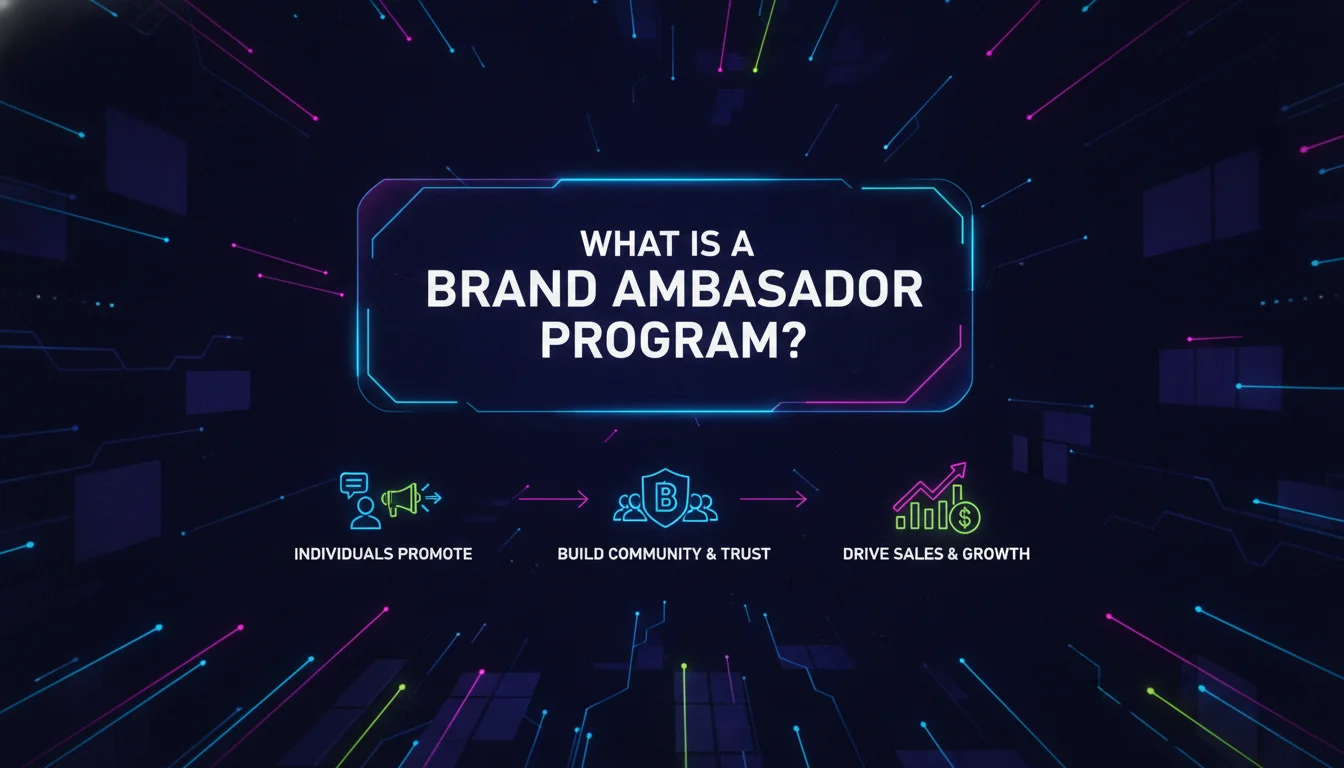
Brand Ambassador Program: Build, Join, and Scale in 2026
A brand ambassador program is a structured initiative that mobilizes loyal customers, creators, or professionals to promote a brand through content, community engagement, and referrals. The strongest programs in 2026 combine upfront gifting or flat fees with performance commissions and automation to drive measurable revenue.
Key Takeaways
- A ambassador program turns long-term advocates into a repeatable marketing channel, not a series of one-off posts.
- Leading programs in 2026 combine upfront gifting or flat fees with performance commissions to keep partners engaged beyond the first post.
- Automation is the difference between a scalable program and a manual bottleneck.
- Metrics like click-out rate, new customer acquisition, and UGC asset volume prove program value to leadership.
- Brands should plan for a 9-to-12-month testing window before expecting consistent revenue impact.
What Is a Brand Ambassador Program?
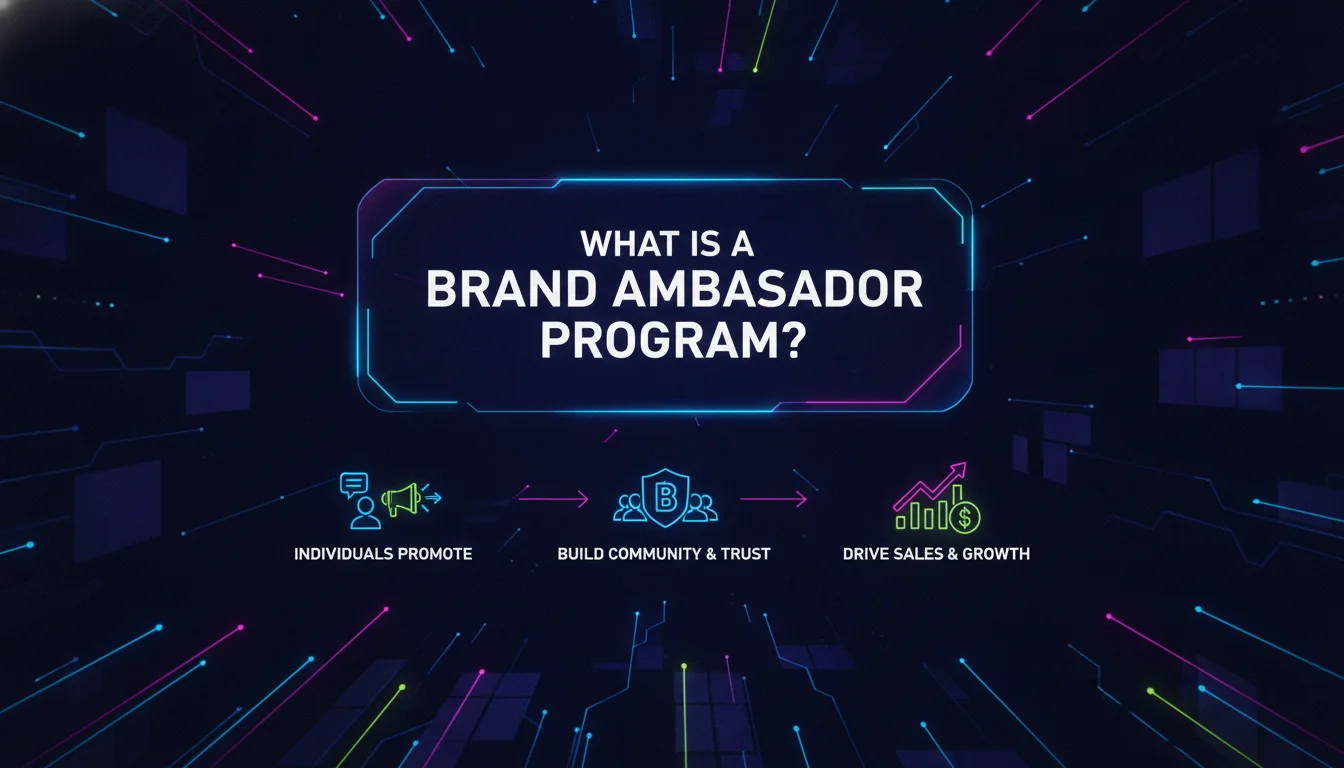
A this type of program is a formal system for identifying, onboarding, and managing advocates who promote a company over an extended period. Unlike a one-time influencer post, it creates repeatable advocacy with clear incentives, communication cadences, and performance tracking.
Brand Ambassador vs. Influencer vs. Affiliate
A brand ambassador is a long-term advocate who represents a brand through ongoing content, community engagement, and product use. An influencer is often hired for a single campaign or short-term partnership, while an affiliate typically earns a commission on sales generated through a tracked link. A modern this kind of program frequently blends all three roles, layering commission on top of gifting or flat fees.
Why Brands Invest in Ambassador Programs in 2026
Community-led advocacy directly affects conversion, retention, and revenue. According to Forbes data cited by Skeepers, a meaningful share of brand community members report feeling loyal to the company, and a significant portion of customers say being part of a community influences their decision to engage or purchase. The same research shows that most companies with active communities say those communities directly contribute to higher customer retention.
Core Components of a Modern Brand Ambassador Program
A sustainable brand ambassador includes five components: a defined ambassador profile, an incentive structure, onboarding workflows, automated communication, and performance measurement. Without these pieces, advocacy becomes a series of disconnected posts instead of a compounding asset.
Types of Brand Ambassador Programs
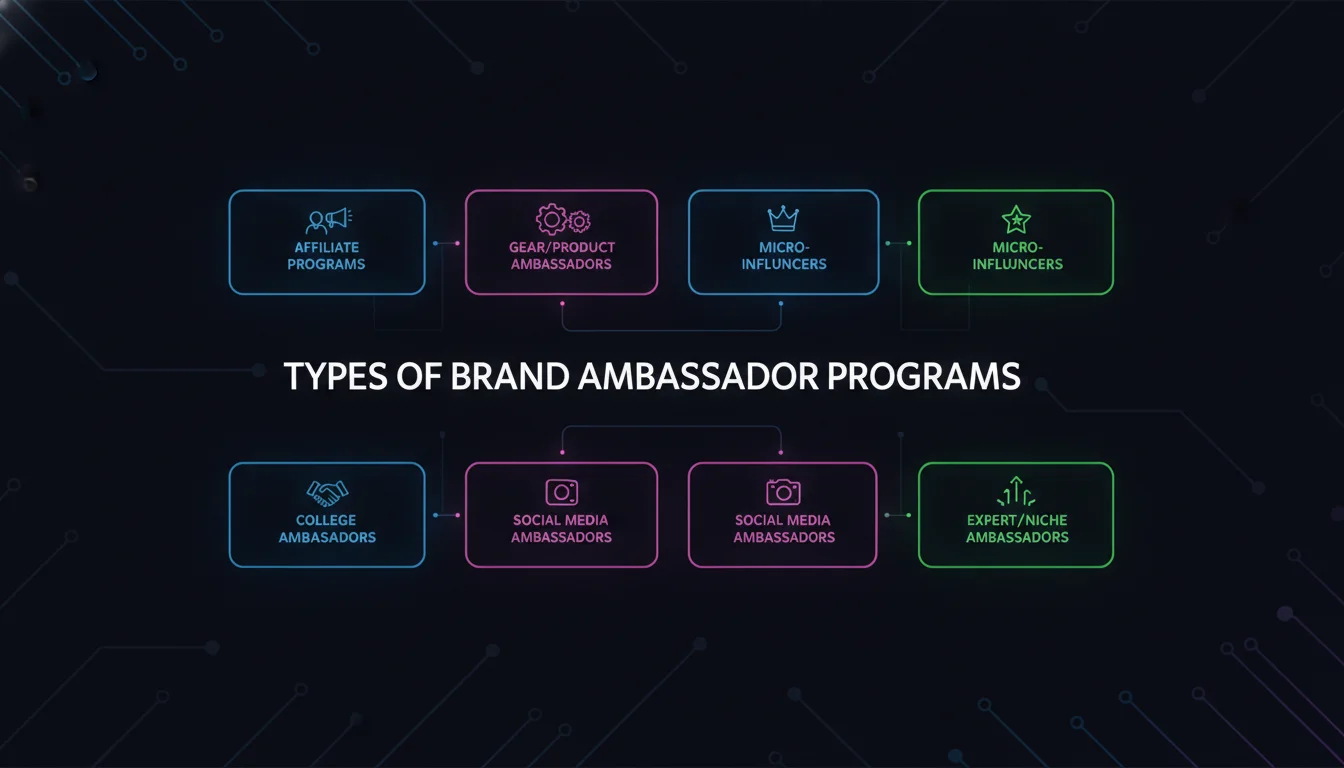
Not all programs operate the same way. The strongest programs align their structure with brand maturity, product type, and the creator segment they want to reach.
Gift-Based Programs
A gift-based ambassador program seeds free product to creators in exchange for organic content. This model is common in beauty, skincare, and lifestyle categories. According to Influencer Gift Form, many programs start with free product, then add commission or paid campaigns as creators prove out. Tower 28 Beauty and Saie are examples of brands that use gift-first approaches alongside creator affiliate options.
Commission-Based and Hybrid Programs
Commission-based programs reward ambassadors with a percentage of sales generated through their unique links. Hybrid programs add an upfront flat fee or gifting baseline, then layer performance commission on top. According to impact.com, creators now expect an upfront flat fee or gifting as a baseline, and performance commission keeps them promoting long after the first post. Huda Beauty runs a dual-track program with a creator tier paying 20% commission and an affiliate tier paying 5%.
Exclusive Community Programs
Some brands build invitation-only or application-based communities with events, early access, and paid contracts. Sephora Squad selects creators for a 12-month paid contract with gratis boxes, Squad-only events, and early access. On and CELSIUS also run community-oriented ambassador programs focused on movement, lifestyle, and local engagement.
| Program type | Primary incentive | Typical requirements | Example brands |
|---|---|---|---|
| Gift-based | Free product seeding | Micro or nano creators, content focus | Tower 28 Beauty, Saie |
| Commission-based | Percentage of sales commission | Established audience, affiliate link | Huda Beauty affiliate track, Glossier |
| Hybrid | Upfront flat fee or gifting plus performance commission | Proven creators, longer term | impact.com clients such as UPLIFT Desk and Pink Lily |
| Exclusive community | Paid contract, events, early access | Professional or high engagement | Sephora Squad, On, CELSIUS |
What a Brand Ambassador Program Looks Like in Practice
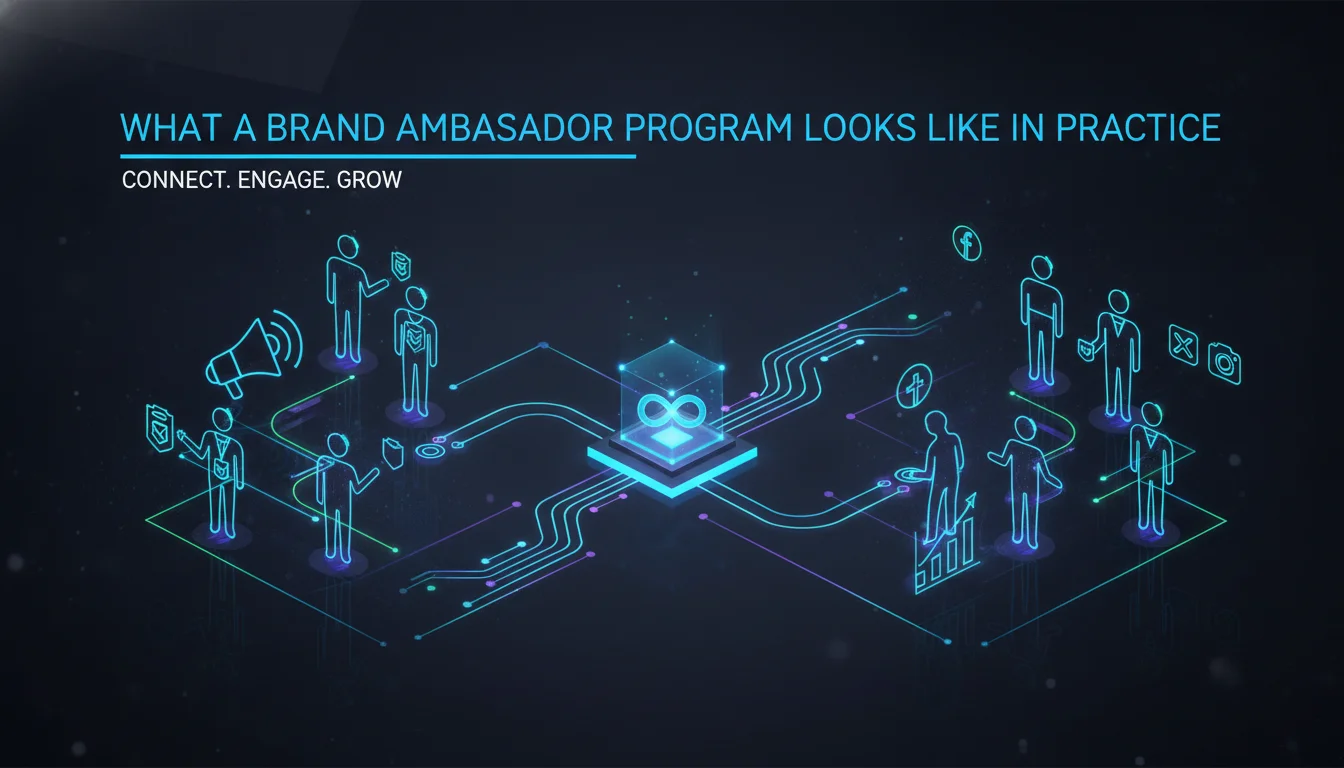
Real programs reveal what works because they have already filtered for authenticity, engagement, and operational fit. Studying them helps brand managers and creators understand how different models produce different outcomes.
CELSIUS and the Lifestyle Ambassador Model
CELSIUS positions its this type of program around a lifestyle dedicated to Living Fit. The brand says its ambassadors include weekend warriors, certified personal trainers, professional and non-professional athletes, and people following a healthy regime. CELSIUS chooses ambassadors based on enthusiasm and community engagement, both locally and virtually. Social media skills, content creation, and writing are important, but above all CELSIUS looks for inspiration and active involvement.
Pixi Beauty and Charlotte Tilbury in Beauty
Pixi Beauty runs an ambassador program for affiliates and creators, inviting applicants to submit an application. Charlotte Tilbury splits its approach into two tracks: a Partnerships Programme for websites and blogs that earn commission, and Magic Beauty Stars for professional makeup artists and beauty content creators. Magic Beauty Stars offers an introductory 15% off for clients and followers plus commission.
On and the Sport Community Model
On runs an ambassador program for people who ignite the human spirit through movement. Ambassadors inspire local communities through running, training, or sport. Benefits include special access to community experiences, latest products, and early updates. On stated that applications closed January 12, 2026 for the current cycle.
Glossier and the Micro-Creator Playbook
Glossier pioneered the modern influencer-first approach and still runs one of the most studied programs in beauty. The Generation Glossier Affiliate prefers creators in the 1K to 10K follower range with high engagement and strong aesthetic alignment. Accepted creators earn 10% commission plus a 15% audience discount, and applications are reviewed within 3 to 5 business days. The program is a textbook example of how a brand can build community at scale without requiring massive follower counts.
How to Build a Brand Ambassador Program Step-by-Step
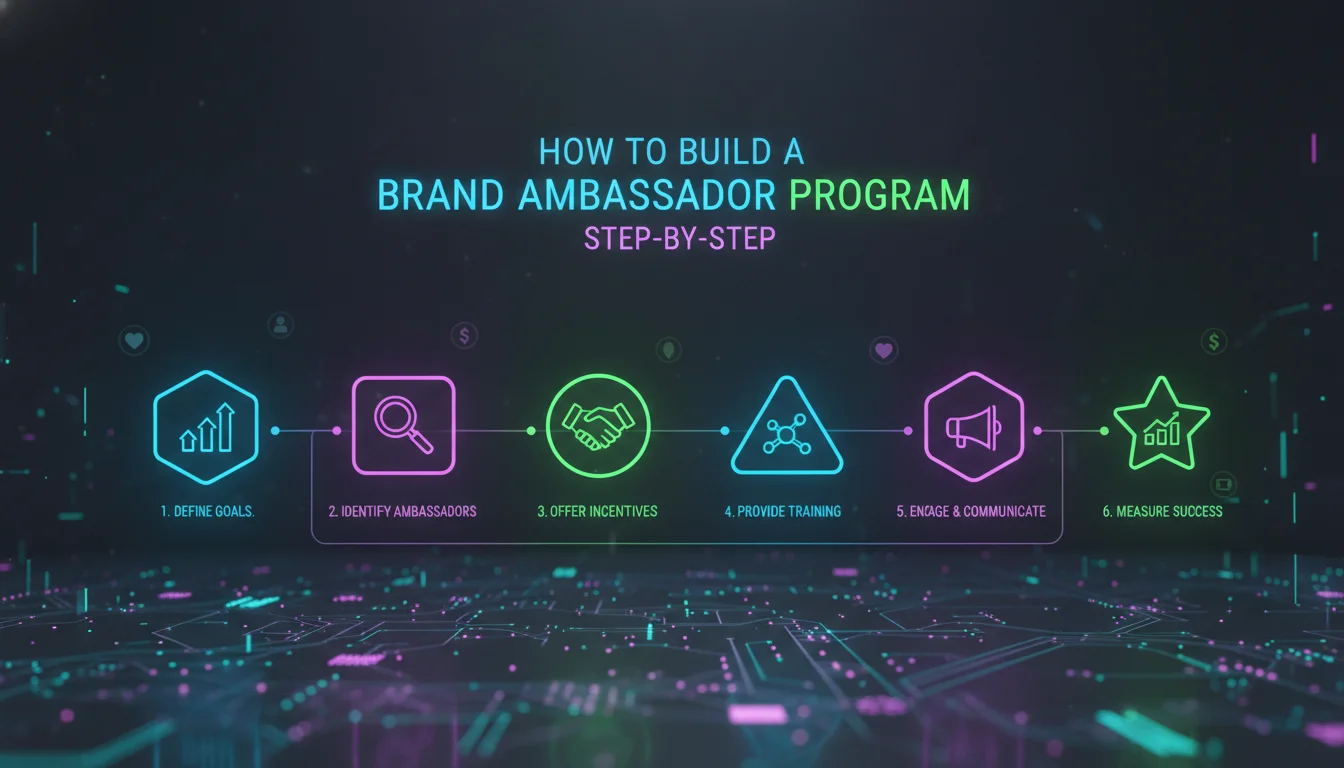
Building a this kind of program is an operational challenge more than a casting challenge. According to impact.com, ambassador programs do not fail from bad casting. They fail from bad systems. The following process turns advocacy into an infrastructure that compounds.
Step 1: Define Your Ideal Ambassador Profile
Start with existing brand momentum. Identify the loyal customers or organic fans who already talk about the brand, then define the behaviors you want to encourage. CELSIUS, for example, selects for passion, community engagement, and content creation rather than follower count alone. A clear profile prevents wasted recruitment and misaligned partnerships.
Step 2: Choose the Right Incentive Structure
Incentives determine long-term behavior. Impact.com recommends a baseline of upfront flat fee or gifting, with performance commission layered on top. Tiered commission structures give every partner a reason to level up, turning consistent performers into elite revenue drivers. Huda Beauty pays a higher creator commission of 20% and a lower affiliate commission of 5%, while Glossier offers 10% commission plus a 15% audience discount.
The Seven-Step Launch Sequence
Use this sequence to launch without falling into manual chaos.
- Step 1: Document goals and the metrics that will define success, such as click-out rate, new customer acquisition, and UGC asset volume.
- Step 2: Identify the ideal ambassador profile based on existing customers and community behavior.
- Step 3: Decide on the incentive structure, including gifting, flat fees, commission, or tiered rewards.
- Step 4: Set up tracking links, onboarding workflows, and a self-managed partner portal so ambassadors can access assets and performance data.
- Step 5: Launch a pilot with a small group of high-fit partners before scaling.
- Step 6: Nurture the community with regular communication, drip campaigns, and incentives.
- Step 7: Measure performance, identify top performers, and automate re-engagement for dormant partners.
Pros and Cons of Running a Brand Ambassador Program
Pros
- Repeatable revenue channel. A well-built program compounds over time instead of resetting after every campaign.
- Authentic content at scale. Ambassadors generate UGC that brands can repurpose across paid and organic channels.
- Lower cost per acquisition. Hybrid models with gifting plus commission carry far less upfront risk than flat-rate influencer deals.
- Community trust. Peer-to-peer advocacy consistently outperforms brand-direct messaging for purchase decisions.
- Scalable with automation. Once infrastructure is in place, a small team can manage hundreds of active partners.
Cons
- Slow to show ROI. Impact.com recommends a 9-to-12-month testing window before expecting consistent revenue impact.
- Operationally demanding at launch. Without automated onboarding and tracking, programs collapse under their own volume.
- Ambassador churn is real. Without nurturing cadences, partners go dormant after one or two posts.
- Attribution complexity. Proving incremental value to leadership requires clean tracking data and dashboard visibility.
How to Join a Brand Ambassador Program
For creators and customers, joining a brand ambassador begins with research and a strong application. Open programs change frequently, so applying while programs are open matters more than waiting for the perfect moment.
Application Requirements and What Brands Look For
Requirements vary by brand and category. Huda Beauty requires a minimum of 1K followers on Instagram or TikTok, US residency, and age 18 or older. Glossier prefers creators in the 1K to 10K follower range with high engagement and aesthetic alignment. CELSIUS asks for passion and community engagement above all. On asks applicants to demonstrate how they inspire local communities through movement.
Free, Gift-Based, and Open Programs in 2026
According to Influencer Gift Form, there are more than 65 open ambassador programs across 10 categories, updated for 2026. Beauty is the most active gifting category by a wide margin. Many programs start with free product, then add commission or paid campaigns as creators prove out. Bookmarking directories and applying weekly is a practical approach.
Building a Creator Profile That Gets Accepted
Brands consistently look for engagement, content creation skills, writing, and authentic brand alignment. A strong profile shows consistent posting, a clear niche, and genuine product use. Instead of chasing every program, target brands that match existing content and audience interests. According to Pixi Beauty, the process starts with submitting an application. Brands then evaluate fit.
Measuring a Brand Ambassador Program’s Performance
Measurement separates a nice-to-have community from a revenue-driving channel. Leadership buy-in depends on clear metrics that show incremental value.
Metrics That Matter
Impact.com identifies three metrics that prove incremental value to leadership: click-out rate, new customer acquisition, and UGC asset volume. Click-out rate measures how effectively ambassador content drives traffic. New customer acquisition captures growth beyond existing audiences. UGC asset volume quantifies the content library the program creates.
Attribution and ROI
Accurate attribution requires tracking links, dashboard visibility, and clean data. UPLIFT Desk found that manual tracking and fragmented spreadsheets created bottlenecks that obscured performance. By migrating to automated platform tracking, the brand cut vetting time and eliminated administrative backlogs. This freed the team to focus on relationships with top performers who, according to Affiliate Coordinator Norman Scott, live and breathe the brand.
Using Automation to Scale Measurement
Automation removes manual workload and improves measurement. Impact.com customer success manager Paige Brown says that once a ambassador program is established, automation takes over the manual workload, allowing the team to manage the community hands-free. For a team of two managing 800 inbound applications, automation is not a convenience. It is the only way the program survives its own success.
“Once your ambassador program is established, automation takes over the manual workload, allowing your team to manage the community hands-free.”
Paige Brown, Customer Success Manager, impact.com
Common Mistakes That Stall a Brand Ambassador Program
Most stalled programs share the same underlying issue: they treat advocacy as a series of transactions instead of as an operational system. Avoiding these mistakes is more important than recruiting more creators.
Treating Advocacy Like a Transaction
The traditional model hands a partner a tracking link, ships a product, and hopes they post. Jake Cohen, Senior Customer Success Manager at impact.com, says this only keeps partners engaged for one or two posts. Restarting recruitment from scratch every time a partner goes dormant drains budget and momentum.
“Brands that set up a this type of program without a solid foundation around how to run and communicate with their ambassadors often find it becomes unsustainable.”
Jake Cohen, Senior Customer Success Manager, impact.com
Scaling Without Infrastructure
UPLIFT Desk’s program initially ran through a manual, five-person internal approval chain that left creator pitches frozen in spreadsheets for up to a week. This operational friction delayed decisions and frustrated applicants. The fix was not more people. It was automated platform tracking and self-managed partner portals.
Ignoring Ambassador Nurturing
Pink Lily demonstrates how nurturing works at scale. The DTC women’s boutique uses automated newsletters to re-engage dormant partners, targeting ambassadors who have not driven a sale in 90 days. Regular drip campaigns, incentives, and community building keep partners active far beyond the first post.
What Effective Programs Share
Successful this kind of programs share three traits. They start with existing brand momentum rather than trying to manufacture advocacy from nothing. They provide upfront value through gifting or flat fees, then layer performance commission on top. And they automate the administrative work that otherwise consumes team bandwidth.
Next Steps for Brands and Creators
Brands should audit current manual processes and identify where automation can remove bottlenecks. Creators should research open programs in their niche and build a portfolio of authentic content. Whether building or joining, the goal is the same: long-term advocacy that compounds rather than one-off posts that fade.
Ready to build something that actually lasts? Contact Emin Media for a free brand consultation and let’s design a program your audience will want to be part of.
Frequently Asked Questions
What is a brand ambassador program?
A brand ambassador is a structured initiative that recruits and manages long-term advocates who promote a brand through content, referrals, and community engagement. It differs from one-off influencer campaigns because it builds ongoing relationships and repeatable systems.
How do brand ambassador programs work?
Programs typically provide incentives such as free products, flat fees, or commissions in exchange for content creation and promotion. Brands track ambassador performance through links and dashboards, then optimize recruitment and rewards over time.
Do brand ambassador programs pay?
Many programs start with gifting, then add performance commission or paid campaigns as creators prove out. Exclusive community programs such as Sephora Squad offer paid 12-month contracts with additional benefits like gratis boxes and early product access.
How do I join a brand ambassador program?
Review the program’s application requirements, ensure your audience and content align with the brand, and submit an application through the brand’s official page. Some programs, such as On, have specific application windows that close on set dates.
What are the best free brand ambassador programs?
Gift-based programs from brands like Tower 28 Beauty and Saie offer free product in exchange for organic content. Directories such as Influencer Gift Form list over 65 open programs across 10 categories for 2026, with beauty being the most active gifting category.
What is the difference between a brand ambassador and an affiliate?
A brand ambassador focuses on long-term advocacy and content, while an affiliate primarily earns commission on tracked sales. Many modern ambassador programs combine both roles by layering commission on top of gifting or flat fees.
Enjoyed this article?
Contact Emin Media for a free brand consultation and let's create something amazing together.
Get in TouchRelated Articles
Digital Marketing for Creatives: A Bold Guide
Digital marketing for creatives builds real visibility and sales. Learn strategies for social media, SEO,…
Branding & Design Agency Tips That Actually Work
Discover branding and design agency tips to choose the right partner, set clear goals, and…
Creative Agency Pitch Deck Tips That Win Clients
Master creative agency pitch deck tips that win clients in 2026. Learn storytelling, design, and…