Best Video and Photo Camera in 2026: Top Picks
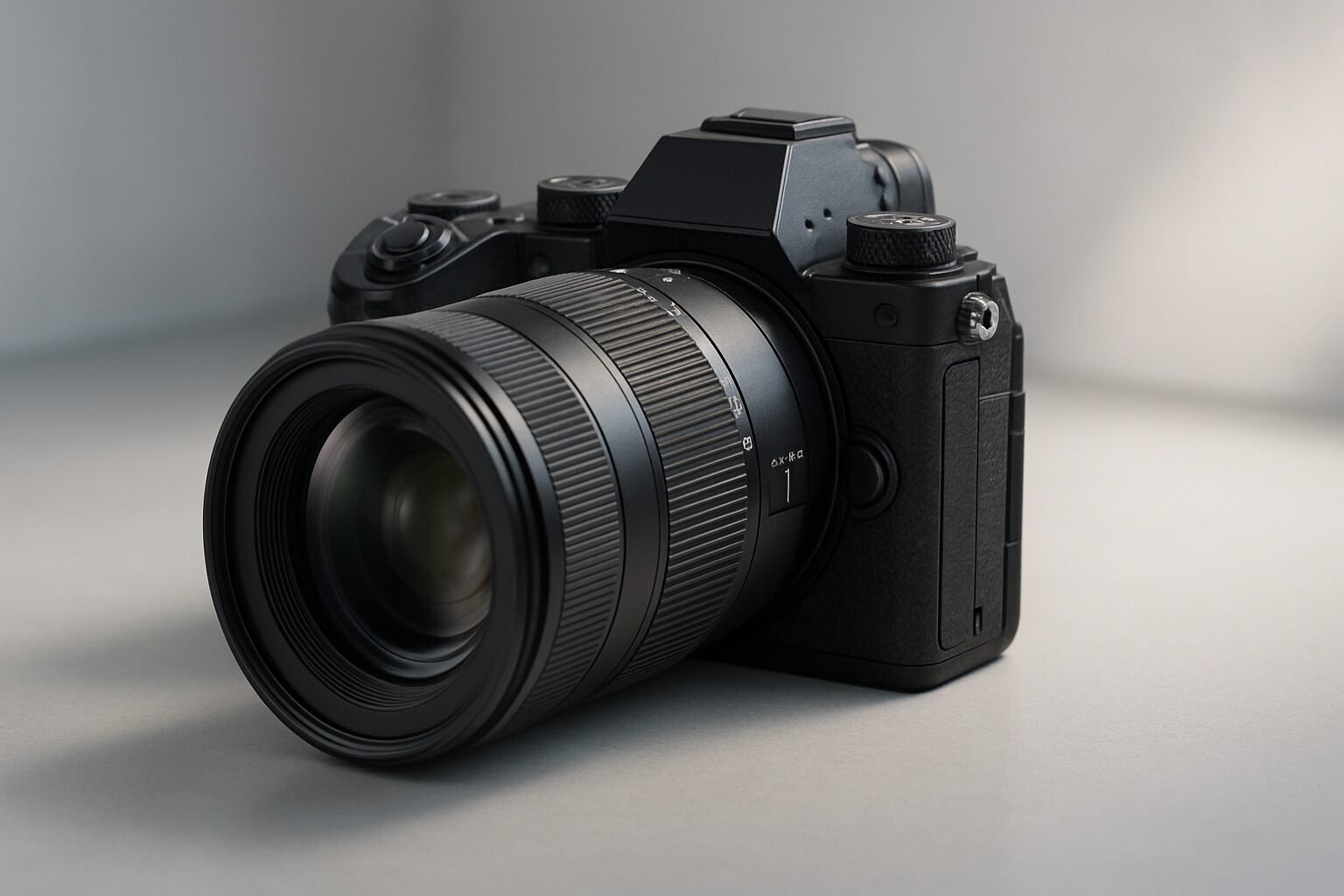
The best video and photo camera is a single body that captures high-resolution stills and professional-grade video without forcing you to choose between the two. Our top pick for 2026 is the Nikon Z8, with a 45.7MP stacked sensor and 8K internal recording.
Key Takeaways
- The Nikon Z8 is the most complete hybrid camera in 2026, combining a 45.7MP stacked full-frame sensor with 8K60 internal recording and no overheating in typical use.
- Sony’s A7 IV remains the benchmark for value at $1,999.99, offering oversampled 4K video and a massive lens ecosystem.
- Budget shooters can now access 10-bit 4:2:2 video and AI autofocus for under $1,000, thanks to cameras like the Sony ZV-E10 II and Canon R50 V.
- Lens mount ecosystems, thermal management, and codec support matter as much as megapixels when choosing the photo camera.
- The sweet spot for a complete hybrid setup sits between $1,500 and $3,000 body price, with total kit costs running 50-70% higher.
What Defines the Best Video and Photo Camera?
A truly unified hybrid camera is one that never forces you to choose between stills and motion. It must deliver high-resolution raw files and oversampled video from the same sensor, with fast, reliable autofocus across both formats. As of 2026, the this type of camera is defined by four criteria: sensor flexibility, video codec support, heat management, and lens ecosystem.
Sensor Size and Resolution
Full-frame sensors in the 24-50MP range dominate the hybrid segment. As The Cotswold Photographer notes, the Nikon Z8’s 45.7MP stacked full-frame sensor pulls double duty, providing 8K video with no crop while preserving high detail for large prints. Even at 24MP, the Panasonic S5II holds its own, using a partially stacked sensor to reduce rolling shutter and deliver 6K open-gate footage. For travel, Fujifilm’s X-T5 packs a 40MP APS-C BSI CMOS sensor into a 557g body, balancing resolution with portability.
Autofocus Performance
Subject detection algorithms now cover people, animals, birds, vehicles, and even insects. Sony and Canon lead in AI-powered tracking, but Nikon’s 3D-tracking on the Z8 has closed the gap considerably. According to Pascal Basel’s 2026 camera guide, Sony’s ZV-E10 II features “AI-powered autofocus among the best, with excellent subject tracking and eye autofocus,” helping vloggers stay sharp while moving. Fujifilm’s X-M5, while impressive in image quality, still struggles with focus pulsing in video, making it less suitable for run-and-gun work.
Video Features and Codecs
Look for 10-bit 4:2:2 color depth, log profiles (S-Log3, N-Log, F-Log2), and high frame rates. Internal 4K 120p and 6K open-gate recording are increasingly standard in the $2,000-plus tier. The Canon R50 V, at only $649, records 10-bit HDR PQ, proving that advanced video codecs are trickling into entry-level cameras. The Panasonic S5IIX adds internal ProRes 422 HQ and external raw output, cementing its role as a budget-conscious video workhorse.
Top Picks for the Best Video and Photo Camera in 2026
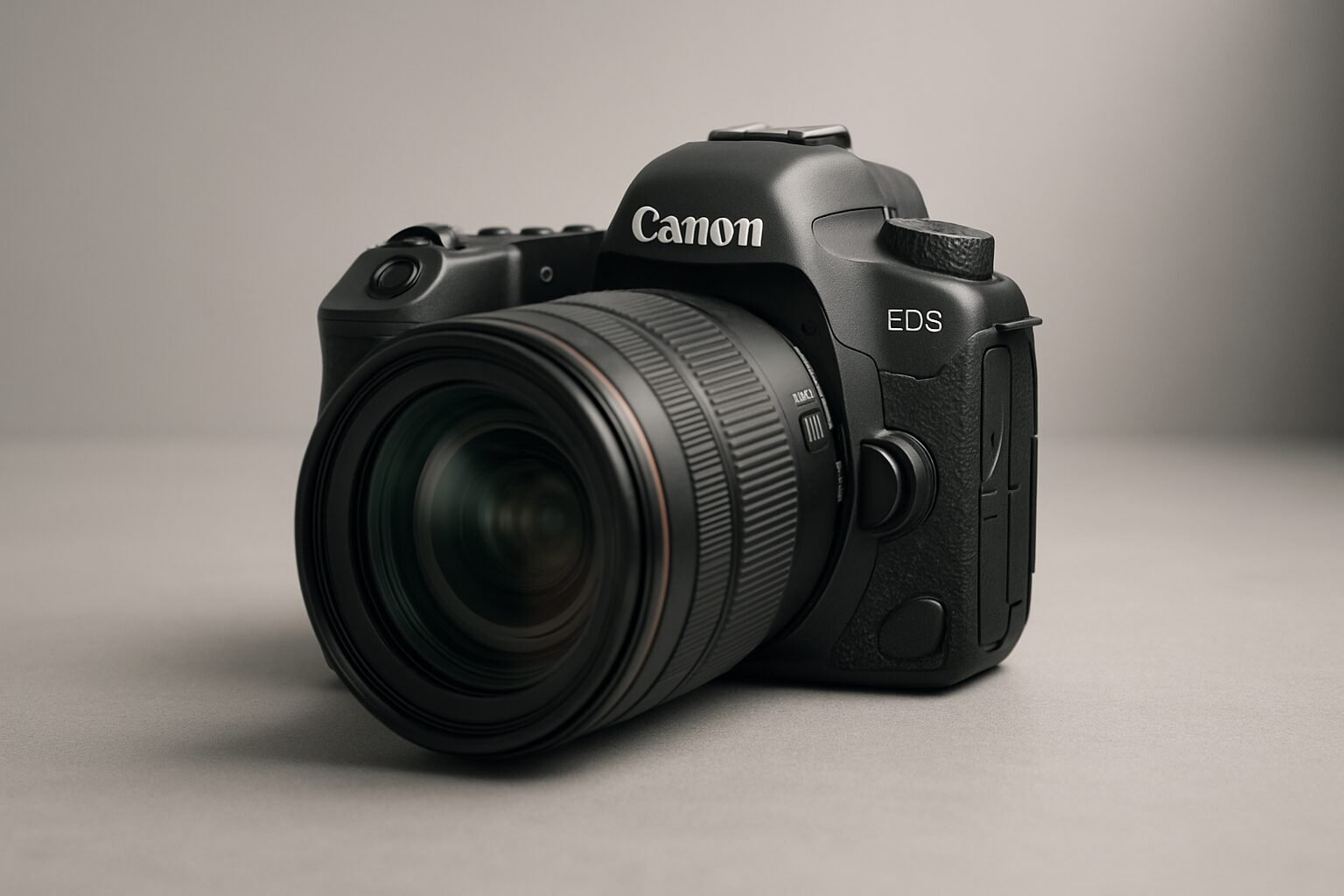
After evaluating dozens of current models, we identified five cameras that excel at both disciplines. The table below summarizes their core specifications.
| Model | Sensor & Resolution | Video Capability | IBIS | Weight | Price (Approx.) |
|---|---|---|---|---|---|
| Nikon Z8 | 45.7MP Full-Frame Stacked | 8K60 internal, 4K120 | 5-axis (6 stops) | 910g | ~$3,999 |
| Sony A7 IV | 33MP Full-Frame | 4K60p, 10-bit 4:2:2 | 5-axis (5.5 stops) | 659g | $1,999.99 (body) |
| Fujifilm X-T5 | 40MP APS-C BSI | 6.2K30p, 4K60p | 5-axis (7 stops) | 557g | $1,699 |
| Panasonic S5II | 24MP Full-Frame | 6K30p open gate, 4K60p | 5-axis (6.5 stops) | 740g | $1,999 |
| Sony ZV-E10 II | 26MP APS-C | 4K60p, 10-bit 4:2:2 | Digital only | 377g | $998 (body) |
Prices are approximate and may vary by retailer. Weights include battery and memory card where applicable. All models support log profiles and mic/headphone jacks except the ZV-E10 II, which lacks a headphone jack.
Best All-Around Hybrid: Nikon Z8
The Nikon Z8 inherits the Z9’s stacked sensor in a smaller, 910g body, making it our top recommendation for hybrid shooters. It captures 45.7MP stills at up to 20fps and records 8K60 video internally without overheating in typical use. Dual native ISO at 800 and 6400 gives it strong low-light performance for both photo and video. The Z8’s 3D-tracking autofocus is remarkably sticky, and the body handles a 70-200mm f/2.8 without feeling front-heavy. For professional wedding, event, and commercial work, it is the this kind of photo camera you can buy at the $3,999 price point.
Best Value Full-Frame: Sony A7 IV
Sony’s A7 IV continues to dominate the mid-range. With a 33MP sensor, 4K60p video, and S-Log3 support, it handles mixed shooting assignments without breaking a sweat. The 5-axis IBIS provides up to 5.5 stops of compensation, and dual card slots (CFexpress Type A and SD) add reliability on paid shoots. Weighing just 659g, it travels well yet performs confidently on client work. Its popularity means a vast lens ecosystem and strong second-hand availability, which matters when you’re building a kit over time.
Best for Travel and Content Creation: Fujifilm X-T5
At 557g, the X-T5 is the lightest high-resolution camera on our list. Its 40MP X-Trans CMOS 5 HR sensor yields stunning stills, while 6.2K 30p and 4K 60p video satisfy serious video needs. Fuji’s film simulations let creators bake in a look without grading, and the weather-sealed body handles dusty trails and sudden rain. The 5-axis IBIS has been improved to 7 stops, allowing sharp handheld long exposures. The Cotswold Photographer calls its dedicated dials a “photographer’s camera” experience, and we agree completely.
Pros and Cons of Hybrid Cameras
Every the video and photo camera involves trade-offs. Understanding what you gain and what you give up helps you buy with confidence rather than regret.
Pros
- One body for everything: Shoot a client portrait session in the morning and a brand video in the afternoon without switching systems.
- Cost efficiency: A single $2,000 hybrid body replaces what would have been a $1,500 stills camera plus a $1,500 video camera five years ago.
- Shared lens ecosystem: Every lens you buy works for both photo and video, maximizing your investment.
- Rapid firmware improvements: Manufacturers like Sony and Nikon regularly push free firmware updates that add autofocus modes, new codecs, and extended recording limits, meaning your camera gets better over time.
- Resale value: Popular hybrid bodies like the Sony A7 IV hold strong second-hand value, often selling for 60-75% of retail after two years of use.
Cons
- Thermal limits on compact bodies: Smaller mirrorless cameras can overheat after 30-40 minutes of continuous 4K60p recording in warm environments.
- No IBIS on budget models: Entry-level options like the Sony ZV-E10 II rely on digital stabilization only, which crops the frame and reduces image quality.
- Battery life suffers during video: Continuous 4K recording drains batteries roughly 2-3x faster than shooting stills, so budget for at least two spare batteries per shoot.
- Lens costs add up fast: A complete hybrid kit with two quality lenses can easily reach $4,000-$6,000, even when the body itself costs under $2,000.
The Hybrid Heat Test: Why Video Thermals Matter
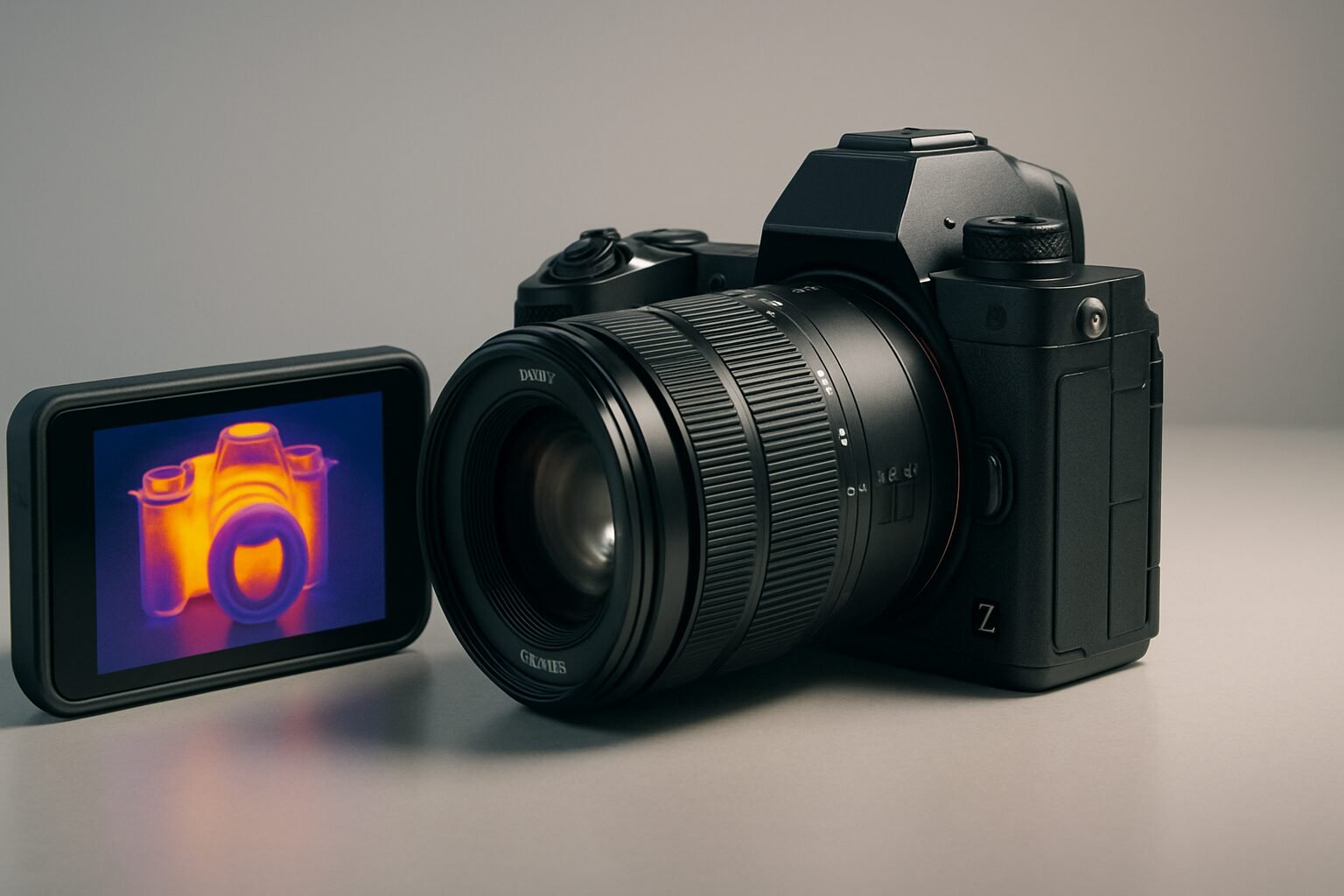
One overlooked factor when choosing the best video and photo camera is heat management. Recording high-bitrate video stresses the processor and sensor, and cameras that overheat will shut down mid-shoot, leaving you with neither video nor photo capability. In 2026, manufacturers have tackled this with active cooling or redesigned heat sinks, but many compact bodies still struggle.
Overheating Risks in Hybrid Cameras
The Canon R50 V includes a built-in cooling fan specifically to prevent thermal shutdown during long livestreams or 4K recordings. Without such solutions, smaller mirrorless bodies like the Sony ZV-E10 II can overheat after 30-40 minutes of continuous 4K60p recording in warm environments. Even full-frame flagships like the Sony A7 IV have a thermal cutoff timer, though firmware updates have extended those limits. When buying a hybrid camera, check user reports on overheat thresholds for your typical work. A stills camera that doubles as a video tool should never force you into 15-minute recording limits.
Solutions and Workarounds
Pro-level cameras such as the Nikon Z8 and Panasonic S5II offer robust thermal designs that allow unlimited 4K recording. If your budget leans toward compact models, consider shooting in shorter clips, using an external recorder via HDMI, or investing in a third-party cooling fan. Testing from Pascal Basel confirms that the ZV-E10 II’s revamped sensor dramatically reduces rolling shutter, but he still recommends an external fan for extended video work.
“The best hybrid cameras of 2026 aren’t just about resolution or frame rates. Thermal engineering is the invisible spec that separates cameras you can rely on from cameras that let you down at the worst moment.” – Pascal Basel, camera reviewer and filmmaker
Lens Mount Ecosystems: The Hidden Decider for Hybrid Shooters
The best video and photo camera is only as good as the glass you attach to it. A camera body may offer class-leading specs, but if its lens mount limits your options or forces you into expensive native glass, you risk outgrowing the system. Mirrorless mounts are not just physical interfaces. They dictate flange distance, electronic communication, and autofocus speed during video transitions.
Native vs Adapted Lenses
Sony E-mount’s decade-long head start means there are over 200 native autofocus lenses, plus a thriving used market. Canon’s RF mount, while newer, has grown rapidly, and you can adapt EF lenses with a $99 adapter that preserves full autofocus, a real benefit for photographers upgrading from DSLRs. Nikon’s Z mount has the widest throat at 55mm and the shortest flange distance, allowing excellent adapted performance from F-mount glass via the FTZ II adapter. Micro Four Thirds, used by OM System, has the most extensive telephoto options, which is why wildlife hybrid shooters favor the OM-1 Mark II with its 20MP stacked sensor.
Best Mounts for Dual-Format Work
For shooters who split time equally between photo and video, Sony E-mount and Nikon Z are the safest bets. Both support speed-boosters for adapting cinema glass, and third-party manufacturers like Tamron and Sigma release lenses with smooth, silent autofocus motors critical for video. Canon’s RF mount is excellent but remains largely closed to third-party autofocus lenses, limiting your choice unless you stick to Canon glass. Fuji’s X-mount shines for compact prime lenses that match the X-T5’s retro character but lacks the volume of third-party video-optimized zooms.
Firmware Updates and Computational Photography: The Specs You Can’t See in a Box
Two factors that rarely appear on spec sheets can dramatically change how a camera performs over its lifetime: firmware updates and computational photography modes.
How Firmware Changes the Game
Sony pushed a major firmware update to the A7 IV in 2023 that added AI subject recognition and extended video recording limits, effectively making a two-year-old camera competitive with newer releases. Nikon did the same for the Z8, adding bird and vehicle detection modes post-launch. According to camera industry observers, manufacturers now treat firmware as a product feature rather than a bug fix, meaning the best video and photo camera you buy today may perform significantly better in 12 months without spending a dollar. Before buying, check each brand’s firmware update history. A brand that updates frequently is a brand that protects your investment.
Computational Photography Modes Worth Knowing
Live ND (neutral density) simulation, available on OM System bodies and select Panasonic models, lets you shoot with cinematic motion blur without physical ND filters, saving $200-$400 in filter costs. High-resolution composite modes, found on the Fujifilm X-T5 and OM-1 Mark II, merge multiple frames to produce files exceeding 100MP, useful for architecture and product photography. These modes blur the line between hardware capability and software intelligence, and they represent where the best video and photo camera category is heading through 2026 and beyond.
“Computational photography is no longer a smartphone trick. The OM-1 Mark II’s Live ND and High-Res Shot modes give hybrid shooters creative tools that used to require an entirely separate kit.” – OM System product documentation, 2024
Budget-Conscious Hybrid Cameras That Don’t Compromise
The barrier to entry has never been lower. Several cameras under $1,000 now offer 10-bit 4:2:2 recording and phase-detect autofocus, features that were professional-only just three years ago. The following models prove that finding the best video and photo camera on a tight budget is genuinely possible.
Under $1,000: The Best Starter Models
The Sony ZV-E10 II ($998, body only) leads the pack with 4K60p in 10-bit, S-Log3, and class-leading subject tracking. Its rolling shutter has been vastly improved over its predecessor, and the ability to load LUTs directly into the camera simplifies color grading for beginners. It lacks IBIS, so pair it with optically stabilized lenses like the Sony 10-20mm f/4. The Canon R50 V ($649) includes a cooling fan, 4K30p no-crop, and Canon’s reliable Dual Pixel autofocus, ideal for long livestreams and vlogging. For stills-first users who occasionally film, the Nikon Z50 II (under $1,000 with kit) offers 4K up to 30fps, 10-bit with N-Log, and access to a large catalog of affordable F-mount lenses via the FTZ adapter.
$1,000-$2,000: Feature-Packed Performers
Stepping into the mid-range, the Panasonic S5II ($1,999) is an exceptional value for filmmakers who also shoot stills. It shoots 6K open gate, letting you reframe vertically for social media, and its 5-axis IBIS delivers remarkably stable handheld footage. The Sony A7 IV ($1,999.99, body) remains a benchmark for hybrid work, while the Fujifilm X-T5 ($1,699) offers a retro-styled experience with 40MP resolution and film simulations. Canon’s EOS R6 Mark II ($1,999) rounds out the group with excellent burst speeds and Dual Pixel autofocus that excels in video.
Step-by-Step Guide to Choosing Your Best Video and Photo Camera
Even with the recommendations above, the right camera depends on your specific needs. Follow this process to narrow down your options with confidence.
Step 1: Define Your Primary Use Case
Are you a wedding photographer who needs 30-minute ceremony clips, or a YouTuber filming 60-minute interviews? If you shoot more stills, prioritize resolution and autofocus speed. If video dominates, focus on 10-bit codecs, IBIS, and heat tolerance. Hybrid shooters should give equal weight to both, and be honest about which format pays the bills.
Step 2: Set a Realistic Budget
Body-only prices range from $579 (Canon R50) to $3,999 (Nikon Z8), but the sweet spot sits between $1,500 and $3,000. Factor in at least one zoom lens ($400-$1,200), an extra battery ($50-$80), and a fast memory card ($60-$200). A complete hybrid setup typically costs 50-70% more than the body price alone.
Step 3: Consider Battery Life for Your Workflow
Battery life varies significantly across hybrid bodies. Stills-focused cameras typically rate 300-500 shots per charge, while continuous 4K video drains the same battery in 60-90 minutes. The Nikon Z8 and Panasonic S5II use larger battery formats (EN-EL18d and DMW-BLK22 respectively) that outlast compact bodies by a wide margin. If you shoot all-day events, budget for 2-3 spare batteries at $50-$80 each, or invest in a USB-C power bank that supports in-camera charging.
Step 4: Test Before You Buy
Ergonomics matter more than any spec sheet suggests. The Nikon Z8’s deeper grip feels secure with a 70-200mm f/2.8, but the Fujifilm X-T5’s retro dials may appeal to photographers who dislike menu diving. Rent your top two candidates for a weekend shoot to test hand-feel, menu logic, and video autofocus in real-world conditions. Most rental platforms charge $50-$100 per weekend, which is a small price compared to a $2,000 buying mistake.
Frequently Asked Questions
What is the best professional camera for photography and video?
The Nikon Z8 is the top professional hybrid, delivering 45.7MP photos and 8K60 video with no recording limits in typical use. Its stacked sensor and dual native ISO enable exceptional low-light performance for both stills and motion work.
What is a good camera for filming and photography on a budget?
The Sony ZV-E10 II at $998 provides 4K60p 10-bit video, reliable AI tracking, and access to a large E-mount lens selection. The Canon R50 V at $649 adds a built-in cooling fan for extended shoots and is an excellent first best video and photo camera for creators just starting out.
Do I need IBIS for hybrid shooting?
IBIS is highly beneficial for handheld video and low-light stills, but not essential if you use a tripod or optically stabilized lenses. Many budget cameras omit IBIS to reduce cost, yet still produce smooth footage with digital stabilization modes.
Which brand has the best autofocus for video?
Sony currently leads with AI-based subject tracking, followed closely by Canon and Nikon. Fujifilm and Panasonic have improved significantly but still trail slightly in video-specific focus reliability, particularly in low-contrast scenes.
Can mirrorless cameras overheat during video recording?
Yes, many mirrorless cameras have thermal limits for 4K60p or higher resolutions. Models with built-in fans or robust heat sinks, like the Canon R50 V and Nikon Z8, can record for extended periods without shutdown, while compact bodies may cut out after 30-40 minutes in warm conditions.
Is full-frame necessary for the best video and photo camera?
Not always. APS-C and Micro Four Thirds cameras can deliver professional results, especially when you prioritize depth of field control, body weight, and lens cost. Full-frame excels in low-light performance and shallow depth of field, but the gap has narrowed considerably as of 2026.
Ready to build a creative setup that performs as well on set as it does on location? Contact Emin Media for a free brand consultation and let’s figure out exactly which tools belong in your kit.
Enjoyed this article?
Contact Emin Media for a free brand consultation and let's create something amazing together.
Get in TouchRelated Articles
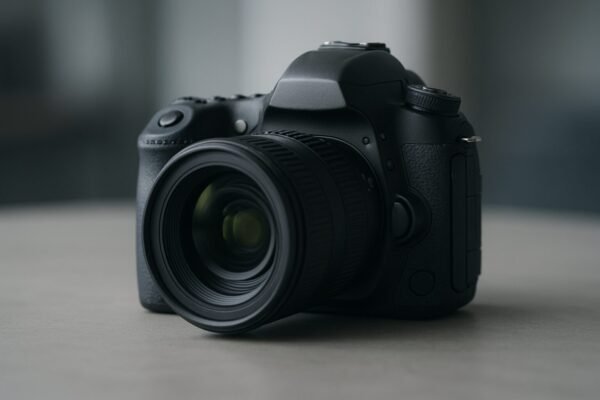
Best Professional Digital SLR Camera Guide 2026
Find the best professional digital slr camera in 2026. Compare Nikon D850, Canon 5D IV,…
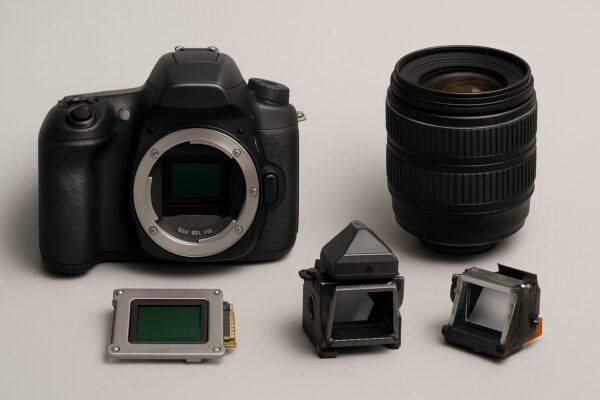
Parts of a Digital Single Lens Reflex Camera Guide
Explore every part of a digital single lens reflex camera: lens, mirror, sensor, shutter, and…
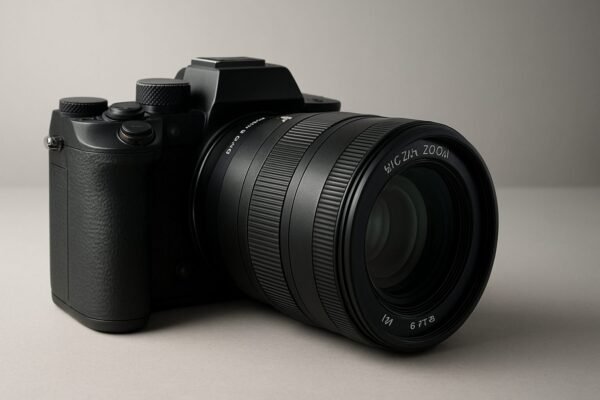
Best Digital Zoom Cameras 2026: Top Picks & Tips
Find the best digital zoom camera for 2026. Compare top picks from Sony, Nikon, and…