Best Social Media Campaigns Examples 2026
The best social media campaigns examples are coordinated, time-bound marketing efforts that turn brand messages into cultural moments people actually want to share. As of 2026, the gap between forgettable posts and campaigns that move markets comes down to three things: emotional clarity, creative precision, and measurable intent.
Key Takeaways
- The campaigns examples share one trait: they give audiences a reason to participate, not just watch.
- Viral campaigns are engineered around cultural timing and emotional resonance, not luck.
- Personalization at scale, like Spotify Wrapped’s 200 million+ user reach, is now a baseline expectation.
- Every campaign worth running has defined KPIs before the first post goes live.
- Technology, from AR filters to AI-personalized content, is reshaping what engagement looks like in 2026.
- Budget discipline matters: even lean campaigns can outperform expensive ones when the creative idea is sharp.
What Makes a Social Media Campaign Actually Work
A social media campaign works when it connects a specific business goal to a specific human feeling. That sounds simple. It isn’t. Most brands confuse activity with strategy, posting consistently without a campaign architecture that ties content to outcomes.
According to HubSpot’s marketing research, campaigns with clearly defined objectives before launch consistently outperform those built reactively. The difference isn’t budget. It’s intention.
Key Elements of Successful Campaigns
- Clear Objectives: Define what success looks like before you create a single asset.
- Target Audience Insight: Know not just who your audience is, but what they care about this week.
- Creative Content: Visuals and copy that stop the scroll, not just fill the feed.
- Measurement Framework: KPIs set in advance, tracked in real time, reviewed honestly after.
Types of Social Media Campaigns
Social media campaigns fall into four broad categories, and the best ones often blend two or more:
- Awareness Campaigns: Introduce a new product, brand, or idea to a cold audience.
- Engagement Campaigns: Pull existing followers deeper into the brand world through interaction.
- Conversion Campaigns: Drive a specific action, whether that’s a purchase, sign-up, or download.
- Community-Building Campaigns: Create a sense of shared identity among customers over time.
Viral Campaign Examples That Redefined the Playbook
The best social media campaigns examples that go viral aren’t accidents. They’re built on cultural insight, emotional hooks, and mechanics that make sharing feel natural. Here are three that set the standard.
1. Spotify Wrapped
Every December, Spotify turns raw listening data into a personal story. The 2025 Wrapped campaign engaged over 200 million users within its first day, according to Spotify’s own platform data. That number matters because it wasn’t driven by paid media alone. It was driven by people who genuinely wanted to share their results.
The creative genius here is structural. Spotify took something it already had, user data, and reframed it as a gift. Each user received a personalized visual story they could post directly to Instagram Stories or TikTok. The brand didn’t ask people to talk about Spotify. It gave them something worth talking about.
“Wrapped works because it makes the user the hero of the story. Spotify is just the stage.” – Creative industry analysis, Campaign Magazine, 2025
2. Coca-Cola’s Share a Coke
The Share a Coke campaign replaced the iconic Coca-Cola logo with popular first names on bottles. Originally launched in Australia in 2011 before rolling out globally, it remains one of the most studied best social media campaigns examples in marketing history. The mechanic was brilliantly simple: find your name, photograph it, share it. Personalization drove social sharing at a scale that traditional advertising couldn’t replicate.
What made it endure across multiple market relaunches was the emotional trigger. Finding your name on a Coke bottle felt like a small, personal win. That feeling translated directly into user-generated content across Facebook, Instagram, and Twitter.
3. Dove’s Real Beauty Campaign
Dove’s Real Beauty campaign, running in various forms since 2004, challenged the beauty industry’s visual standards by featuring real women instead of professional models. According to Nielsen brand research, campaigns built on authentic representation consistently generate stronger long-term brand loyalty than aspirational imagery alone.
The campaign sparked genuine cultural conversation about self-image, body standards, and advertising’s responsibility. Two decades later, it’s still cited in Cannes Lions case studies as a benchmark for purpose-driven brand storytelling.
Innovative Best Social Media Campaigns Examples Using Technology
The best social media campaigns examples of 2026 use technology not as a gimmick, but as a storytelling tool. Brands that get this right create experiences that feel personal even at scale.
1. Calvin Klein’s Euphoria Elixirs
Calvin Klein partnered with artist Rosalía for the Euphoria Elixirs fragrance launch, creating a campaign built around immersive visual storytelling and cultural relevance. The content felt more like a short film series than a product advertisement. By aligning with a cultural figure whose aesthetic matched the brand’s direction, Calvin Klein generated organic engagement across Instagram and TikTok without relying on traditional media buys.
2. Nike’s Community Fitness Campaigns
Nike’s community-focused campaigns consistently invite local audiences to share their fitness journeys using branded hashtags. These campaigns work across at least 3-4 major platforms simultaneously, including Instagram, TikTok, and YouTube. The approach builds brand loyalty not through product features, but through shared identity. When someone posts their morning run with a Nike hashtag, they’re not promoting Nike. They’re expressing who they are.
3. Airbnb’s #LiveThere Campaign
Airbnb’s #LiveThere campaign repositioned the brand from accommodation provider to cultural experience enabler. By encouraging travelers to share authentic local experiences rather than tourist highlights, the campaign generated thousands of pieces of user-created content that felt editorial, not promotional. The campaign ran across Facebook, Instagram, and YouTube, targeting audiences in more than 20 countries.
Lesser-Known Campaigns Worth Studying
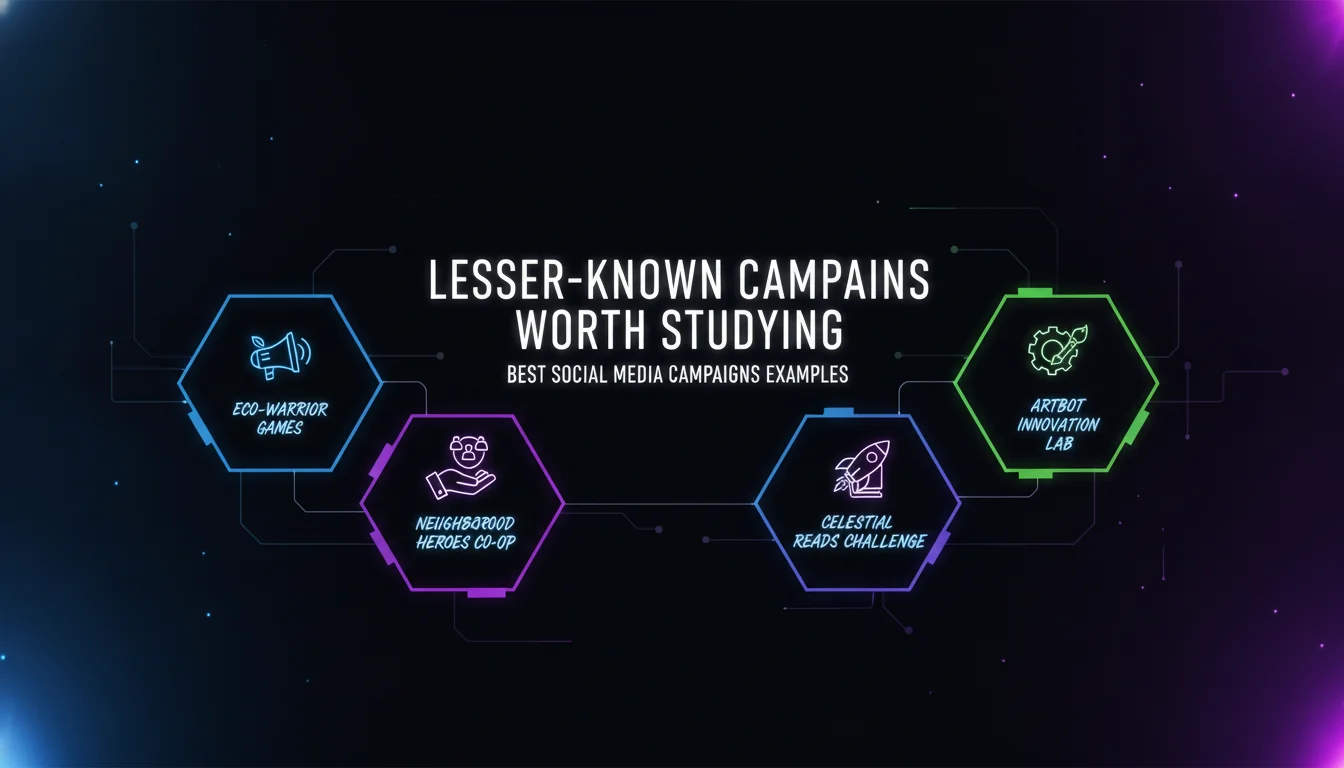
The best social media campaigns examples aren’t always from Fortune 500 brands. Some of the sharpest creative work comes from mid-size brands with tighter budgets and more creative freedom.
Wendy’s Twitter Roast Strategy
Wendy’s turned its Twitter account into a cultural phenomenon by adopting a sharp, irreverent voice that roasted competitors and engaged fans directly. The brand’s social team operated with unusual creative autonomy, responding to mentions in real time with wit that felt genuinely human. According to AdAge reporting, the strategy generated earned media coverage worth multiples of the original social budget, proving that voice and timing can outperform production value.
Always #LikeAGirl
Always reframed a phrase used as an insult into a statement of strength. The campaign launched with a video that asked people to demonstrate what it means to run, throw, or fight “like a girl,” then revealed the cultural conditioning behind the answers. The video accumulated tens of millions of views organically and won multiple Cannes Lions awards. It’s a textbook example of how a brand can own a cultural conversation without forcing a product message.
Campaign Costs and ROI: What to Actually Expect
Budget reality is where most campaign planning falls apart. Understanding the cost structure of social media campaigns helps brands allocate resources where they’ll generate the strongest return.
Campaign budgets typically range from a few thousand dollars for a focused micro-influencer push to several million for a full-scale multi-platform production. According to industry benchmarks from HubSpot and Sprout Social, brands that invest in pre-campaign audience research see 2-3x better performance on conversion-focused campaigns compared to those that skip the research phase.
Key cost categories to plan for:
- Creative Production: Photography, video, copywriting, and design. Often the largest single line item.
- Paid Distribution: Boosted posts, paid social ads, and influencer fees. Typically 40-60% of total campaign spend for awareness campaigns.
- Platform Tools: Scheduling, analytics, and social listening software. Budget roughly $100-$500 per month for mid-tier tools.
- Measurement and Reporting: Often underbudgeted. Plan for at least 10% of total campaign spend on analytics and post-campaign review.
ROI calculation for social campaigns should account for both direct conversions and brand equity gains. Not every campaign is designed to sell something immediately. Awareness campaigns build the pipeline that conversion campaigns later close.
Measuring Success in Social Media Campaigns
Measuring success means connecting campaign activity to business outcomes, not just vanity metrics. Reach and impressions tell you how many people saw your content. Engagement rate, conversion rate, and ROI tell you whether it mattered.
Key performance indicators worth tracking:
- Engagement Rate: Likes, shares, comments, and saves relative to reach. Industry benchmarks vary by platform, but most practitioners consider 1-5% a healthy range for organic content.
- Conversion Rate: The percentage of users who took the desired action after seeing campaign content.
- Reach and Impressions: Total unique accounts reached versus total content views.
- Return on Investment (ROI): Revenue or value generated relative to total campaign spend.
- Share of Voice: How much of the conversation in your category your brand owns during the campaign window.
“The brands that win on social aren’t the ones with the biggest budgets. They’re the ones who measure the right things and adjust faster than their competitors.” – Sprout Social Industry Index, 2025
Pros and Cons of Running Social Media Campaigns
Social media campaigns offer significant creative and commercial opportunities, but they come with real trade-offs worth understanding before you commit budget and time.
Pros
- Massive reach potential: Platforms like Instagram, TikTok, and YouTube collectively reach billions of active users monthly, giving even small brands access to large audiences.
- Precise targeting: Paid social allows targeting by age, interest, behavior, location, and lookalike audiences, making budget allocation more efficient than most traditional channels.
- Real-time feedback: Campaign performance data is available within hours, allowing creative and budget adjustments mid-flight.
- User-generated content: Well-designed campaigns generate organic content from participants, extending reach beyond paid distribution.
- Brand storytelling at scale: Social platforms support video, audio, image, and interactive formats, giving creative teams more tools than any previous media channel.
Cons
- Algorithm dependency: Organic reach on most platforms has declined significantly over the past 5 years. Campaigns increasingly require paid support to reach even existing followers.
- Creative fatigue: Audiences on high-volume platforms like TikTok and Instagram see thousands of pieces of content daily. Standing out requires consistent creative investment.
- Measurement complexity: Attributing sales or brand lift directly to a specific social campaign remains technically difficult, especially across multi-platform efforts.
- Reputational risk: Public-facing campaigns can attract negative attention or be hijacked by critics. Brands need crisis response plans before launching anything at scale.
- Short attention windows: Most social content has a lifespan measured in hours, not days. Campaigns require sustained content production to maintain momentum.
Comparison of Best Social Media Campaigns Examples
| Campaign | Brand | Year | Engagement | Key Feature |
|---|---|---|---|---|
| Wrapped | Spotify | 2025 | 200M+ users (Day 1) | Personalized data storytelling |
| Share a Coke | Coca-Cola | 2011 (global rollout) | Massive user-generated sharing | Name personalization |
| Real Beauty | Dove | 2004 (ongoing) | Sustained brand loyalty | Authentic representation |
| Euphoria Elixirs | Calvin Klein | 2026 | High organic engagement | Cultural relevance + artist partnership |
| #LikeAGirl | Always | 2014 | Tens of millions of organic views | Cultural reframing |
| Twitter Roast Strategy | Wendy’s | 2017 (ongoing) | Earned media multiplier effect | Real-time brand voice |
How to Build Your Own Campaign Using These Lessons
Studying the best social media campaigns examples is only useful if you extract transferable principles. Here’s how to apply what the best brands do to your next campaign, regardless of budget size.
Step 1: Define the single human truth your campaign will own. Every great campaign is built on one insight about how people feel, what they want, or what they believe. Spotify Wrapped owns the feeling of being seen. Dove’s Real Beauty owns the desire to be accepted. Find your brand’s version of that truth.
Step 2: Choose platforms based on where your audience already is. Don’t spread across 6 platforms because they exist. Pick 2-3 where your target audience is most active and build content native to each one.
Step 3: Build a participation mechanic. The campaigns that spread are the ones that give audiences something to do. A hashtag challenge, a personalized result to share, a question worth answering. Passive content gets consumed. Participatory content gets shared.
Step 4: Set your KPIs before you create anything. Decide what success looks like in measurable terms. Engagement rate targets, conversion goals, reach benchmarks. Without these, you can’t optimize mid-campaign or learn anything useful afterward.
Step 5: Plan your paid amplification budget alongside your creative budget. Organic reach alone rarely moves the needle for new campaigns. Budget for paid distribution from the start, not as an afterthought when organic performance disappoints.
For more on building brand campaigns that connect creatively and commercially, explore our work on social media branding strategy and content marketing strategy on the Emin Media blog. You can also see how we approach campaign development on our services page.
Frequently Asked Questions
What are some good social media campaigns?
Some of the most studied best social media campaigns examples include Spotify Wrapped, Coca-Cola’s Share a Coke, Dove’s Real Beauty, Always #LikeAGirl, and Wendy’s Twitter strategy. Each demonstrates a different approach: personalization, cultural reframing, authentic representation, and real-time brand voice.
What is the 3 3 3 rule in social media?
The 3 3 3 rule suggests structuring your content mix around three content types: posts that inform, posts that entertain, and posts that promote your products or services. The goal is a balanced presence that doesn’t feel like a constant sales pitch to your audience.
What is the 5 5 5 rule on social media?
The 5 5 5 rule recommends publishing five educational pieces, five entertaining pieces, and five promotional pieces in a given content cycle. Like the 3 3 3 rule, it’s a framework for maintaining variety and keeping audiences engaged across different content modes.
What are the 10 most popular social media platforms?
As of 2026, the most widely used platforms include Facebook, Instagram, TikTok, YouTube, WhatsApp, LinkedIn, Snapchat, Pinterest, Reddit, and X (formerly Twitter). Monthly active user counts shift regularly, but these 10 have maintained dominant positions across global markets.
How can I measure the success of my social media campaign?
Measure success through KPIs set before launch: engagement rate, conversion rate, reach, share of voice, and ROI. The most important step is defining what “success” means for your specific campaign objective before you start, not after you see the numbers.
What makes a social media campaign go viral?
Viral campaigns typically combine a strong emotional hook, a clear participation mechanic, and timing aligned with a cultural moment. According to creative industry analysis from Cannes Lions case studies, the most shared campaigns give audiences a way to express something about themselves, not just react to a brand message.
Enjoyed this article?
Contact Emin Media for a free brand consultation and let's create something amazing together.
Get in TouchRelated Articles
Digital Storytelling for Brands: The Complete Guide
Digital storytelling for brands builds real audience connections through narrative. Learn proven techniques, formats, and…
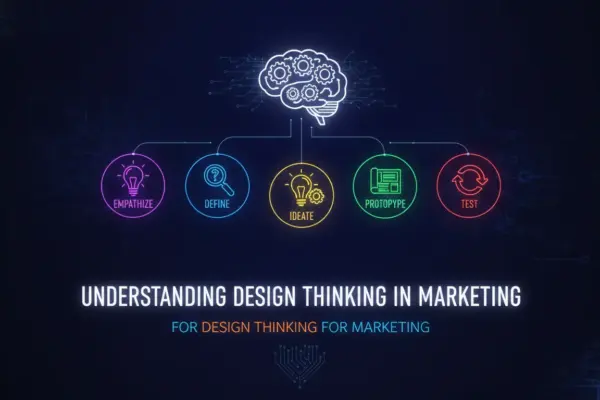
Design Thinking for Marketing: A 2026 Guide
Design thinking for marketing builds campaigns around real user needs. Learn the 5 phases, common…
Creative Direction for Video Shoots: A Complete Guide
Master creative direction for video shoots with proven steps, tools, and strategies that build brand…