Best Branding Campaigns 2026: What Actually Worked
The best branding campaigns 2026 has produced are defined by one shared quality: they respect the audience’s intelligence. From Anthropic’s self-aware Super Bowl spot to Dove’s unfiltered Reddit reviews, the work that broke through this year chose honesty over gloss.
Key Takeaways
- Radical transparency was the year’s most powerful creative strategy. Brands that admitted flaws or mocked their own category earned disproportionate trust.
- Iconic assets, used inventively, outperformed new brand-building. Heinz, Coca-Cola, and BIC proved that consistency over time creates marketing shortcuts.
- Debranding works only from a position of cultural strength. Guinness and Coca-Cola stripped back their identities because audiences could fill in the blanks.
- Unlikely co-branding partnerships generated organic conversation that paid media budgets couldn’t replicate.
- PR-oducts replaced traditional ads as the most shareable, press-worthy format of the year.
- AI became both a creative tool and a creative subject, with the most effective brands treating it honestly rather than breathlessly.
Why Branding Campaigns Still Matter in 2026
Strong branding is the difference between a company that gets scrolled past and one that earns a place in the cultural conversation. As of 2026, consumer skepticism is at record highs, attention is fractured across more platforms than ever, and AI-generated content floods every feed. In that environment, memorable human creativity isn’t just nice to have. It’s a competitive advantage.
What Is a Branding Campaign?
A branding campaign is a coordinated series of marketing activities designed to shape how a brand is perceived. Unlike a direct-response ad, it focuses on long-term emotional connection, differentiation, and trust. The best campaigns don’t just sell a product. They communicate a point of view.
How 2026 Shifted the Definition of ‘Best’
For years, awards went to high-budget, cinematic spots. But this year’s most celebrated work, according to industry round-ups from Famous Campaigns and Marketing Dive, leaned into honesty, utility, and cultural tension. Less polish. More ideas that could stand on their own.
“Everyone’s trying to figure out how to be honest, but the struggle is that, for certain brands, that’s been a root in their core and in their DNA, and some are having to decide how to do it when sometimes their output hasn’t been overtly that.” – David Palmer, Executive Creative Director, Thinkingbox
The Top Trends Defining the Best Branding Campaigns 2026
Looking across the standout work from January through June, four clear patterns emerge. They explain not just what worked, but why it worked.
Hyper-Real Honesty: Brands Come Clean
Radical transparency became a strategic advantage in a year saturated with deepfakes and AI fabrications. Dove’s r/eal Reviews campaign invited Reddit users to critique its Intensive Repair 10-in-1 Serum Mask, then published the feedback unfiltered on product pages and social media. According to The Global Creative Review, February 2026, Dove promised to publish that feedback without editing, a move that built trust through genuine vulnerability.
Anthropic’s Super Bowl commercial, Can I get a six pack quickly?, also turned honesty into a brand asset. Created by agency Mother, the spot poked fun at the unsettling nature of AI assistants, with a human-sized Claude bot milling around a gym. The tagline: “Ads are coming to AI. But not to Claude.” It directly acknowledged public discomfort while separating the brand from ad-cluttered competitors. Marketing Dive reports that the campaign helped Anthropic win the Super Clio award for the most creative Super Bowl commercial of the year.
“They’re not hiding the machine. This feels approachable, it feels humorous, it feels like something that’s delighting me and takes down the suspicion and the mistrust.” – Allison Arling-Giorgi, Head of Brand, Method1
Iconomics: Leveraging What You Already Own
Some of the most efficient campaigns of the year required no new brand-building at all. Just clever use of existing assets. Heinz redesigned its fry box for the first time in 75 years so it actually holds ketchup, a functional twist on a shape consumers already recognized instantly. Coca-Cola turned its contour bottle into a chopstick, and BIC reimagined its hexagonal Cristal pen as a designer lamp at Maison Objet.
These acts of “iconomics,” as Famous Campaigns describes them, prove that consistent brand assets kept visible over decades become shorthand for the brand itself. The case against redesigning everything every three years has never been clearer.
Debranding: When Less Logo Means More Impact
In a counterintuitive move, several famous brands stripped their identities back and bet that consumers would fill in the blanks. Guinness cut a pint-shaped silhouette into a beer mat for the Six Nations. No wordmark. Every viewer knew exactly who was behind it. Foster’s swapped its own logo for swearwords in a cheeky pub campaign. McDonald’s New Zealand stripped its outdoor advertising back to little more than menu item names, trusting brand fame to do the rest.
Coca-Cola’s stadium activation “You Must Love Coke” went furthest: it used no red elements at all, relying entirely on the color association fans already carry. As Famous Campaigns notes, debranding only works from a position of strength. For brands that have earned genuine cultural fame, it’s a powerful demonstration of confidence. For everyone else, removing the logo just leaves an ad nobody can place.
Strange Bedfellows: Co-Branding with Tension
Another hallmark of the best branding campaigns 2026 produced was the partnership nobody saw coming. Absolut Vodka and Tabasco launched Absolut Tabasco, merging two flavor giants into a product that made sense once you tasted it. Heinz and Heineken paired in a six-pack where the sixth bottle was quietly swapped for a Heinz condiment, calling it “the match we’ve all been waiting for.” Liquid Death and e.l.f. Cosmetics brought back a black-metal frontman to sell lip balm. LEGO and Crocs produced a wearable brick clog.
The friction between the partners generated organic conversation that no paid media could replicate. Two logos that don’t obviously belong together create cognitive dissonance. That dissonance demands attention.
PR-oducts: When the Product Is the Campaign
Many of the most talked-about entries in the best branding campaigns 2026 weren’t ads at all. They were objects. KitKat made a wrapper that blocks phone signals, turning “have a break” into a physical, functional item. KFC stuffed a puffer jacket with real pickle juice and gherkins to promote its Pickle Mania menu. The Devil Wears Prada gave cinema-goers a handbag-shaped popcorn bucket. Supreme released a branded coffin alongside an ATM, a boxing ring, and a Dualit toaster. De’Longhi commissioned Simon Weisse, the model maker known for The Grand Budapest Hotel, to build miniature café installations around its coffee machines.
These PR-oducts are photographable, reviewable, and inherently social. They earn press coverage that a traditional spot simply cannot. As Famous Campaigns points out, the weak version is merch for merch’s sake: a logo drop with no idea underneath. The strong version makes the product itself tell the brand story.
The Role of AI in 2026’s Best Branding Campaigns
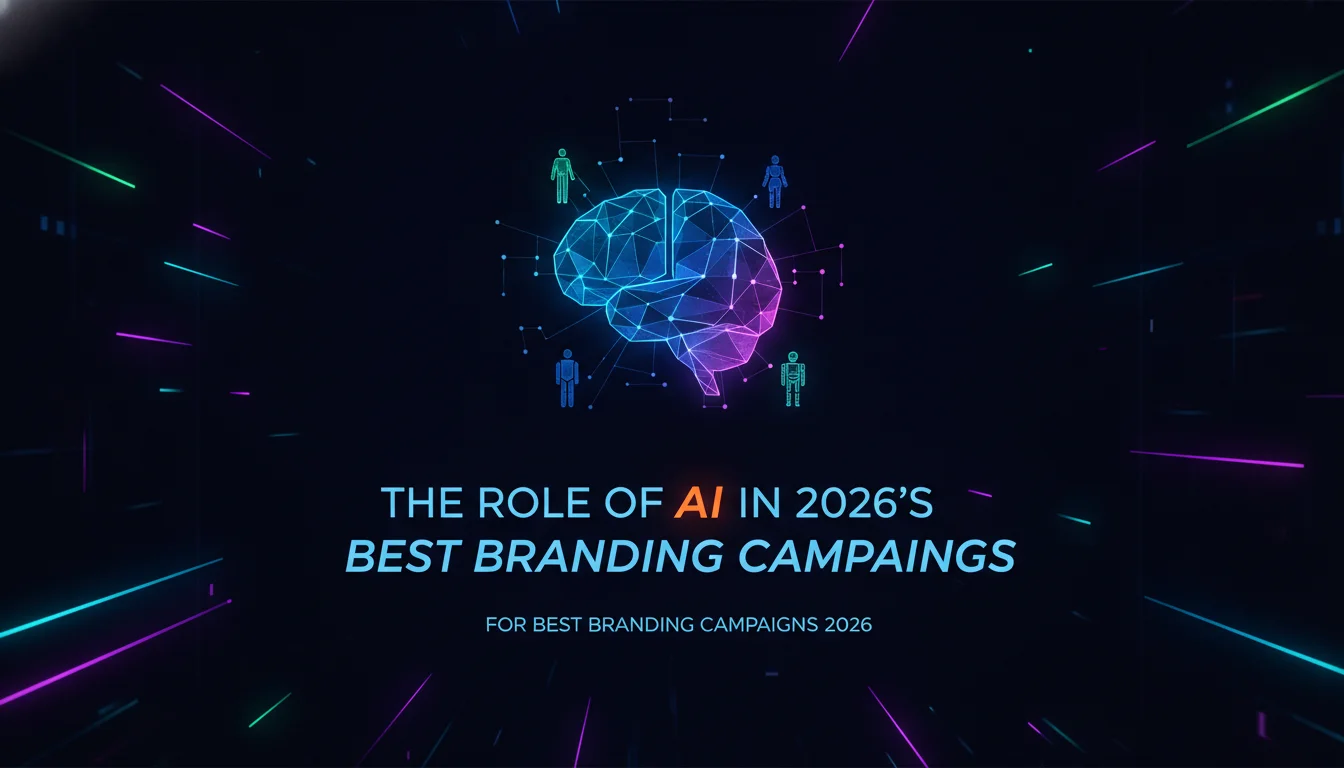
AI was both a creative tool and a creative subject this year. The brands that handled it best were the ones that didn’t pretend it wasn’t there.
AI as the Punchline, Not the Promise
Anthropic’s Super Bowl spot succeeded because it made AI the butt of the joke: an uncomfortable avatar following a gym-goer through his workout. This human-centered approach demystified the technology while reinforcing the brand’s privacy credentials. In a landscape where much of the industry hypes AI relentlessly, defiance became the most refreshing creative stance.
When AI Gets Meta
Equinox’s “Question Everything But Yourself” campaign, created with agency Angry Gods, used AI-generated imagery and then built the entire campaign around questioning what’s real. It repositioned the gym as a place for grounded, physical truth. The message: even in an AI-saturated world, the body remains a final authentic frontier.
Cultural Moments and Seasonal Campaigns That Stood Out
The year’s calendar gave brands rich opportunities to show up in ways that felt timely rather than opportunistic.
America250 and the World Cup
Coca-Cola’s America250 campaign walked the tightrope of patriotism without partisanship, using the brand’s long-standing association with shared moments: picnics, sports, reunions. It celebrated the US semiquincentennial without wading into the political tensions that marked the broader cultural moment. Meanwhile, Nike and Adidas used the World Cup as a global stage for their ongoing sports branding rivalry, with the tournament serving as the year’s most watched competitive arena.
Lunar New Year and Olympic Tie-Ins
Panda Express released an animated Lunar New Year film set in San Francisco, earning local love and genuine emotional resonance. Eli Lilly, an official Olympic sponsor for Milano Cortina 2026, produced Never Over, created by Wieden+Kennedy Portland. The film blended archival athletic footage with medical research imagery, structured around the scientific method. There was no product mention. Instead, as The Global Creative Review notes, the edit moved through repetition: train, test, refine, repeat. Rather than touting a product, it positioned Eli Lilly as a partner in human perseverance.
BMW Spain’s ‘Moving Landscapes’
Worth noting among the year’s automotive branding: BMW Spain launched “Moving Landscapes,” a campaign that stepped away from gleaming car shots and open highways to focus on something harder to photograph: the joy of being in motion. It’s a reminder that even category-defining brands can find fresh creative territory by focusing on feeling rather than feature.
Pros and Cons of the Dominant 2026 Branding Approaches
Pros
- Honesty builds durable trust. Campaigns like Dove’s unfiltered reviews create loyalty that outlasts a single campaign cycle.
- PR-oducts generate earned media at scale. A well-conceived physical object can earn press coverage and social sharing that paid placements can’t match.
- Iconomics is cost-efficient. Brands with strong existing assets can create high-impact work without building new equity from scratch.
- Co-branding with tension multiplies reach. Two audiences become one, and the friction between brands does the creative heavy lifting.
- Debranding signals confidence. When it works, stripping back the identity proves the brand has achieved genuine cultural fame.
Cons
- Debranding requires earned fame first. Smaller brands that strip their identity risk creating ads nobody can attribute.
- PR-oducts can feel hollow without a real idea. A logo on a limited-edition item is merch, not a campaign.
- Honesty campaigns require organizational courage. Publishing unfiltered criticism, as Dove did, demands genuine commitment from leadership, not just the marketing team.
- Strange-bedfellow partnerships can misfire. Without a real creative tension or shared audience, a co-brand feels like a logo swap rather than a story.
Measuring Success: What Makes a Campaign ‘Best’?
The best branding campaigns 2026 produced weren’t just creative. They created measurable business impact. While each had different KPIs, common threads run through the work:
- Earned media and cultural conversation: The most successful campaigns, like the Heinz-Heineken pairing or Liquid Death’s lip balm, generated press and social buzz without heavy media spend.
- Brand recall and mental availability: Debranding stunts by Guinness and McDonald’s New Zealand tested whether consumers could identify the brand even when logos were removed. Positive recall lift proved the strength of their underlying assets.
- Trust and loyalty metrics: Dove’s unfiltered reviews campaign aimed to deepen trust, a metric that correlates with long-term market share according to brand research.
- Product sales or trial: PR-oducts like the KitKat signal-blocking wrapper often led to immediate sell-outs and extended social sharing well beyond the launch window.
Comparison of Notable Branding Campaigns of 2026
| Brand | Campaign / Tactic | Trend Category | Why It Worked |
|---|---|---|---|
| Anthropic (Claude) | Super Bowl ad mocking AI assistants | Radical Honesty | Addressed consumer AI skepticism head-on with humor; differentiated from ad-filled competitors. |
| Dove | r/eal Reviews with Reddit | Transparency | Earned trust by publishing unfiltered, sometimes critical, customer feedback. |
| Coca-Cola | America250 stadium activation “You Must Love Coke” | Debranding | Relied on deep-seated brand color association to create a participatory sporting moment. |
| Heinz | Redesigned fry box; co-pack with Heineken | Iconomics / Strange Bedfellows | Functional redesign made the brand useful in a new context; odd pairing generated media coverage. |
| KitKat | Phone signal-blocking wrapper | PR-oduct | Gave physical form to the “have a break” promise, making the product a social object. |
| Liquid Death & e.l.f. | Black-metal lip balm | Strange Bedfellows | Absurd pairing sparked meme-driven coverage and expanded reach into beauty communities. |
| Eli Lilly | Olympic film “Never Over” | Cultural Moment | Aligned the brand with scientific perseverance, not product, creating emotional resonance. |
| Guinness | Pint-shaped silhouette beer mat for Six Nations | Debranding | Subtle branding provoked consumer recognition without a logo, signaling cultural confidence. |
How to Apply These Lessons to Your Own Branding Strategy
Not every company has Coca-Cola’s century-old assets or Supreme’s cult following. But the principles behind the best branding campaigns 2026 has shown us are scalable. Here’s how to start.
Step 1: Audit Your Existing Brand Assets
List every shape, color, sound, and symbol your audience already associates with your brand. Ask: can any be given a new use or meaning? Iconomics starts with inventory, not invention.
Step 2: Find the Tension in Your Brand Story
Consumers trust brands that acknowledge their own contradictions. Dove’s willingness to show imperfect reviews, or Anthropic’s mockery of its own AI, creates relatability. Identify the aspect of your brand you’re most defensive about. That’s often your strongest creative territory.
Step 3: Create a Physical or Shareable Product Launch
PR-oducts don’t need to be as elaborate as KitKat’s signal-blocking wrapper. Even a limited-run, quirky item that embodies your brand promise can generate social content and press. The key: the product itself tells the brand story.
Step 4: Partner with an Unlikely Ally
Look at brands in adjacent or even distant categories that share your audience but not your product. The friction of two mismatched logos creates attention, as Heinz and Heineken proved. The partnership should have a real creative tension, not just a shared desire for press coverage.
If you’re ready to build a campaign with this kind of strategic backbone, explore what Emin Media’s branding and creative services can do for your brand. You might also find our thinking on brand storytelling and digital campaigns useful as you plan your next move.
The Uniting Thread of the Best Branding Campaigns 2026
One pattern stands above technology or budget: every campaign on this list respects the consumer’s intelligence. Whether stripping away the logo, admitting imperfections, or injecting absurdist humor, they all start from a place of honesty. In a year of AI hype, culture wars, and fractured attention, the brands that won did so by being unignorably real.
Stop trying to sell to people. Start respecting them. The selling takes care of itself.
Ready to build something that earns attention rather than buying it? Contact Emin Media for a free brand consultation and let’s create your next bold campaign together.
Frequently Asked Questions
What are the top trends in branding campaigns for 2026?
The most significant trends in the best branding campaigns 2026 produced are radical honesty (Dove’s unfiltered reviews), iconomics (Heinz fry box redesign), debranding (Guinness’s pint silhouette), and co-branding with creative tension (Heinz and Heineken). Each trend reflects a broader consumer demand for authenticity over polish.
Why is honesty so important in 2026 branding?
Consumers are saturated with AI-generated content and misinformation. Marketing Dive reports that transparency helps brands cut through the noise and build long-term trust. Brands that acknowledge flaws or contradictions earn a credibility that no production budget can manufacture.
What is a PR-oduct?
A PR-oduct is a branded physical item designed primarily to generate press coverage and social sharing, like KitKat’s phone-blocking wrapper or De’Longhi’s miniature café installations. Unlike traditional merch, a true PR-oduct has a clear brand idea underneath it, not just a logo on an object.
How can smaller brands implement debranding tactics?
Debranding requires strong brand recognition first, so smaller brands should build consistency around their core visual and verbal assets before attempting it. Once an identity is genuinely distinctive, a temporary or partial removal can create curiosity. Without that foundation, removing the logo just leaves an ad nobody can place.
Which brand had the most successful Super Bowl campaign in 2026?
Anthropic’s “Can I get a six pack quickly?” ad won the Super Clio award and is widely cited as the most creative Super Bowl commercial of the year. Created by agency Mother, it succeeded by making AI the subject of the joke rather than the hero of the story.
Are strange-bedfellow partnerships risky?
They can be, but the risk is often outweighed by the organic conversation they generate. The key is pairing brands with a real creative tension or a genuinely shared audience, not just a logo swap. Absolut Tabasco and the Heinz-Heineken six-pack both worked because the combination made immediate sensory sense once you encountered it.
Enjoyed this article?
Contact Emin Media for a free brand consultation and let's create something amazing together.
Get in TouchRelated Articles
Digital Marketing for Creatives: A Bold Guide
Digital marketing for creatives builds real visibility and sales. Learn strategies for social media, SEO,…
Branding & Design Agency Tips That Actually Work
Discover branding and design agency tips to choose the right partner, set clear goals, and…
Creative Agency Pitch Deck Tips That Win Clients
Master creative agency pitch deck tips that win clients in 2026. Learn storytelling, design, and…