What Is a Digital Creator? 2026 Career Guide
- Digital creators produce multimedia content (video, blogs, podcasts) to build an audience online.
- The global creator economy was valued at $205.25 billion in 2024 and continues rapid growth.
- Success requires a mix of content production, marketing, and business skills.
- Key monetization channels include ad revenue, brand sponsorships, and selling digital products.
- Facebook’s Professional Mode labels users as “digital creators” and unlocks analytics and monetization tools.
- Following a 6-step process niche selection, platform setup, content planning, creation, distribution, and monetization builds a sustainable career.
A digital creator is a professional who produces and distributes multimedia content across online platforms such as YouTube, Instagram, and TikTok. This role blends creative skill with strategic audience building and real business thinking.
Key Takeaways
- The what is digital creator question has a clear answer: it’s a content professional who builds audience-driven media businesses online.
- The global creator economy hit $205.25 billion in 2024 and is projected to grow at roughly 22% annually through 2028.
- Successful creators earn from 5 to 7 distinct revenue streams, not just ad revenue.
- Facebook’s Professional Mode is the most common first encounter most people have with the formal “digital creator” label.
- Building a sustainable audience typically takes 1 to 3 years of consistent, strategic output.
- AI tools like ChatGPT, Midjourney, and Descript are now standard parts of the creator workflow as of 2026.
What Is a Digital Creator?
Definition and Core Role
A digital creator is a person who conceptualizes, produces, and publishes original content in digital formats for a specific audience. Unlike casual social media users, digital creators treat their output as a strategic asset. They use platforms like Facebook, YouTube, and TikTok to reach audiences that can number in the millions. According to Grand View Research, the global creator economy was valued at $205.25 billion in 2024, proving that what is digital creator is a serious profession, not a hobby.
“The global creator economy was valued at USD 205.25 billion in 2024, highlighting the massive economic potential for individuals building digital audiences.” Grand View Research
Digital Creator vs. Influencer
The difference between a digital creator and an influencer comes down to primary intent. A digital creator builds a loyal audience through educational or entertaining content in a specific niche. An influencer’s main objective is to shape purchasing decisions and drive trends. A digital creator might publish in-depth tutorials on video editing; an influencer might showcase products in lifestyle posts. Most professionals blend both roles, but understanding what is digital creator clarifies that audience value comes first.
| Aspect | Digital Creator | Influencer |
|---|---|---|
| Primary Goal | Create valuable content to build a community | Drive purchasing decisions and brand awareness |
| Content Focus | Educational, entertaining, or niche-specific | Lifestyle, product reviews, sponsored posts |
| Monetization | Ad revenue, courses, memberships, sponsorships | Brand deals, affiliate marketing, product endorsements |
| Audience Relationship | Trust built through consistent value | Influence over follower purchase behavior |
Key Characteristics of Successful Digital Creators
Top creators share three defining traits. First, consistency: posting on a regular schedule for years, not weeks. Second, adaptability: adjusting to algorithm changes on platforms like Instagram Reels or YouTube Shorts without losing their voice. Third, a business mindset: treating content as a product and tracking metrics like watch time, engagement rate, and click-through rates. Creators who monitor these numbers make smarter decisions about what to produce next.
Types of Digital Creators and Content Formats
Video Creators and YouTubers
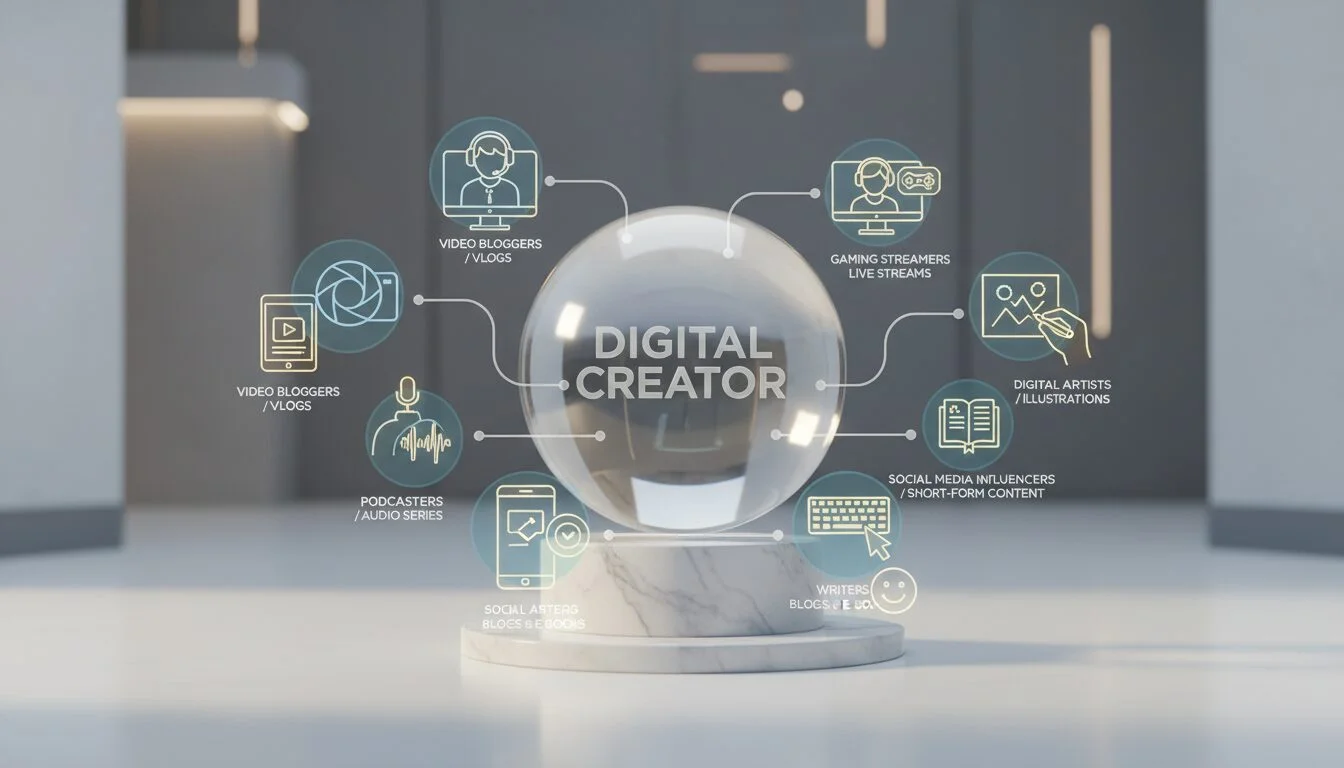
Video remains the most dominant format, with YouTube reporting over 2 billion monthly logged-in users. Creators on YouTube earn from ads, memberships, and Super Chats. Short-form video on TikTok and Reels has seen explosive growth, with some creators gaining 1 million followers in under six months by posting daily. Whether producing long-form educational content or viral clips, video creators must master editing tools like Adobe Premiere Pro or CapCut.
Bloggers and Writers
Written content still drives significant traffic through search engines. Bloggers who understand keyword research and on-page SEO can build audiences of 100,000 monthly readers within two years. Newsletters have become a direct monetization tool; platforms like Substack allow creators to charge $5 to $15 per month for premium content. The key is consistency: posting at least 2 to 3 times per week during the first year to build a loyal readership.
Podcasters and Audio Creators
The audio format has surged, with over 460 million podcast listeners worldwide. Digital creators in this space produce episodes covering niches from true crime to business strategy. Monetization comes from sponsorships, where rates often range from $18 to $50 CPM (cost per thousand listens), and listener support through services like Patreon. Professional podcasters typically invest in a quality microphone like the Shure SM7B and editing software such as Audacity or Adobe Audition.
Online vs. Offline Content: Why Digital Wins for Reach
Traditional content creators print journalists, TV hosts, radio personalities operate within fixed distribution channels that cap their audience. A what is digital creator answer always includes this distinction: digital creators own their distribution. A YouTube channel, newsletter, or podcast feed belongs to the creator, not a network. That ownership means global reach from day one, with no gatekeepers deciding who gets airtime. The tradeoff is that discoverability requires active SEO and algorithm literacy, skills that offline creators rarely need.
The Digital Creator Economy: Market Size and Opportunities
Industry Growth Statistics
The numbers behind what is digital creator reveal a booming sector. The $205.25 billion valuation in 2024 is projected to grow at a compound annual rate of roughly 22% through 2028, according to Grand View Research. Platforms like Facebook have over 3 billion monthly active users, giving creators unmatched distribution potential. Career research from TealHQ notes that a significant share of Gen Z considers becoming a digital creator a viable career path, reflecting a broader cultural shift in how people think about work.
Monetization Avenues for Creators
Digital creators can generate income through at least 5 distinct channels. The YouTube Partner Program splits 55% of ad revenue with creators. Brand sponsorships pay between $500 and $20,000 per post depending on audience size and engagement. Selling digital products online courses, e-books, or templates provides scalable income with margins that can exceed 90%. Affiliate marketing commissions typically range from 5% to 30% per sale, and fan subscriptions through Patreon or Facebook Subscriptions deliver recurring monthly income.
“A digital creator is the CEO, founder, and chief strategist of their own media company. Every video, newsletter, or course is a strategic asset designed to serve a specific audience.” Adapted from industry analysis
Brand Partnerships and Sponsorships
Brands spent an estimated $30 billion on influencer marketing in 2025, a large portion directed at digital creators. Long-term partnerships outperform one-off sponsored posts in both value and audience trust. Creators with engagement rates above 3% can negotiate monthly retainers of $2,000 to $10,000. To attract those deals, creators must present media kits with audience demographics, average views, and past campaign performance metrics.
Essential Skills for Becoming a Digital Creator
Content Production Skills
What is digital creator work without production craft? Not much. Creators need proficiency in at least three production areas: video editing, graphic design, and copywriting. Editing software like Final Cut Pro or DaVinci Resolve delivers professional-quality output at minimal cost. Design skills can be built using Canva, which as of 2026 counts over 170 million monthly active users for its templates and AI tools. Strong copywriting for headlines, descriptions, and captions directly impacts click-through rates and, by extension, monthly revenue.
Marketing and Promotion Skills
Distribution mastery separates creators who grow from those who stall. Creators must learn platform algorithms: TikTok evaluates watch time and replays heavily, while YouTube weighs click-through rate and session duration. SEO knowledge is critical for discoverability; tools like TubeBuddy or VidIQ help identify keywords with meaningful monthly search volume. Email marketing remains a top retention channel, with open rates often above 20% for well-curated newsletters, according to industry benchmarks from HubSpot.
Business and Entrepreneurial Skills
Financial literacy separates hobbyists from career digital creators. Tracking expenses, tax deductions, and revenue streams is non-negotiable. A freelance creator should set aside 25% to 30% of income for taxes and invest in professional tools. Negotiation skills affect sponsorship rates; creators who supply detailed performance reports often secure contracts worth significantly more than those who don’t. Project management tools like Notion or Trello help maintain the 4-pillar workflow strategy, production, distribution, and monetization that high-earning creators follow.
How to Start as a Digital Creator in 6 Steps
Step 1: Choose Your Niche
Select a niche where you have genuine expertise and passion. A focused niche keto recipes, software tutorials, or personal finance for freelancers attracts a loyal audience faster than a general lifestyle channel. Research competition using Google Trends and aim for topics with meaningful monthly search volume but moderate competition. Specificity is your competitive advantage when you’re starting from zero.
Step 2: Set Up Your Platforms
Start with one primary platform where your target audience already spends time. For long-form video, YouTube is dominant; for short-form, TikTok or Instagram Reels; for professional content, LinkedIn. Optimize profiles with a clear bio, professional photo, and links to other channels. Facebook’s Professional Mode instantly converts a personal profile into a creator account, unlocking analytics and monetization features. This is one of the most practical first steps for anyone exploring what is digital creator in real life.
Step 3: Plan Your Content Strategy
Build a content calendar covering at least 3 months of topics, formats, and publishing dates. Research shows that creators who batch-produce content save meaningful time and maintain consistency far better than those who create reactively. Use a mix of evergreen and trending content to balance steady search traffic with viral potential. A written strategy also forces clarity on who you’re creating for and why.
Steps 4 to 6: Create, Distribute, and Monetize
Step 4: Produce high-quality content. Invest in a decent microphone and lighting; production quality signals professionalism. Step 5: Distribute across platforms and optimize each post for its algorithm. Cross-promote on social media and collaborate with other creators to reach 500 to 1,000 new followers per collaboration. Step 6: Monetize through ads, sponsorships, and digital products. Start when you hit platform eligibility thresholds YouTube requires 1,000 subscribers and 4,000 watch hours in the past 12 months to join the Partner Program.
Digital Creator Tools and Software
Video and Audio Editing Tools
The right software can cut editing time significantly. Here is a comparison of popular options used by digital creators at different experience levels.
| Tool | Pricing | Best For | Key Feature |
|---|---|---|---|
| Adobe Premiere Pro | $22.99/month | Advanced video editors | Multi-cam editing, Lumetri Color |
| Final Cut Pro | $299.99 one-time | Mac users | Magnetic timeline, ProRes RAW |
| CapCut | Free / $7.99/month Pro | TikTok/Reels creators | AI captions, templates, music library |
| Audacity | Free | Podcasters on a budget | Multi-track recording, noise reduction |
Graphic Design and Writing Tools
Canva is the industry standard for quick thumbnails and social graphics, with paid plans at $12.99/month unlocking brand kits and AI image generation. For professional design work, Adobe Photoshop starts at $20.99/month. Copywriting tools like Grammarly Premium help eliminate errors, while Hemingway Editor improves readability. BuzzSumo helps surface trending topics, with annual plans starting at $199/month.
Analytics and Scheduling Platforms
Measuring performance is non-negotiable for any serious digital creator. Google Analytics provides free, granular data on website traffic. Social media management tools like Buffer or Hootsuite offer scheduling and analytics for $12 to $99/month depending on the number of accounts. For creators who want to build formal marketing skills, the Coursera Digital Marketing Specialization from the University of Illinois has recorded over 420,965 enrollments and can be completed in roughly 4 months.
What Is Digital Creator on Facebook?
Understanding Facebook’s Professional Mode
Most people first encounter the what is digital creator label when Facebook tags their profile after they activate Professional Mode. This free feature transforms a personal profile into a public-facing creator page, enabling access to professional analytics, monetization tools, and content discovery features. Unlike a Facebook Page, Professional Mode keeps your existing friends while allowing anyone to follow your public updates. It’s the lowest-friction entry point into the formal creator economy.
Monetization Opportunities on Facebook
Facebook offers several ways to earn. In-stream ads pay $8 to $10 CPM for creators who meet the threshold of 10,000 followers and 600,000 total minutes viewed in the last 60 days. Stars allow fans to send virtual gifts during live streams, with creators receiving approximately $0.01 per star. Subscriptions deliver recurring monthly income, typically $4.99 per subscriber after Facebook’s cut. Branded content partnerships let creators tag business partners for transparent sponsored posts.
Tips for Growing a Facebook Audience
Post consistently at least once daily and use a mix of formats: text, images, video, and Reels. Meta prioritizes short-form video in feeds, so Facebook Reels carry a distribution advantage right now. Engage with comments within the first hour to boost post visibility. Collaborate with other creators in Facebook Groups; the platform’s algorithm rewards community interaction and can meaningfully increase organic reach for active participants.
Pros and Cons of Becoming a Digital Creator
Pros
- Income flexibility: Successful creators earn from 5 to 7 revenue streams, reducing dependence on any single platform or sponsor.
- Global reach from day one: A YouTube channel or newsletter reaches international audiences without a network deal or distribution budget.
- Low startup cost: A smartphone, free editing tools like CapCut and Audacity, and a Canva account at $12.99/month are enough to start.
- Ownership of your audience: Email lists and owned platforms give creators direct access to followers, independent of algorithm changes.
- Scalable income: Digital products like courses and templates sell repeatedly with margins that can exceed 90%.
Cons
- Slow initial growth: Building a sustainable audience typically takes 1 to 3 years of consistent output before meaningful income arrives.
- Platform dependency risk: Algorithm changes on YouTube, TikTok, or Instagram can cut reach overnight, regardless of content quality.
- High skill demand: What is digital creator work in practice? It’s five jobs at once: writer, editor, marketer, analyst, and business owner.
- Income volatility: New creators may earn $0 to $500/month for the first year, making financial planning essential.
- Burnout risk: The pressure to post consistently across multiple platforms is real; without systems, creative fatigue sets in fast.
Future Trends for Digital Creators in 2026 and Beyond
The Rise of AI in Content Creation
AI tools like ChatGPT, Midjourney, and Descript now automate scripting, image generation, and video editing. As of 2026, a growing majority of creators report using AI to accelerate their workflows. A digital creator who uses AI for repetitive tasks can free up 10 to 15 hours per week for strategy and audience engagement. Authenticity remains the differentiator; audiences still prefer human storytelling over purely algorithm-generated content.
Short-Form Video Dominance
Platforms are increasingly rewarding vertical short-form video. TikTok’s growth pushed YouTube to prioritize Shorts, which now average 50 billion daily views. Instagram Reels consistently outperform photo posts in reach and engagement. For any digital creator, mastering quick storytelling in 15 to 60 seconds is now a required skill, not an optional one.
Building Sustainable Creator Businesses
The shift from one-off sponsorships to diversified income is accelerating. Successful digital creators in 2026 typically earn from 5 to 7 different revenue sources, including courses, membership sites, merchandise, and licensing deals. Business registration, contracts, and intellectual property protection are becoming standard practices. Those who treat creation as a long-term business rather than a gig will capture the most value from the creator economy’s continued growth.
Want to build a brand that stands out in the creator economy? Explore our branding and content services or read our guide on digital marketing strategy to see how we help brands grow. Let’s build something bold together.
Frequently Asked Questions
How do digital creators make money?
Digital creators typically earn through ad revenue, brand sponsorships, affiliate marketing, selling digital products like courses and templates, and fan subscriptions. Top creators diversify across 5 to 7 income streams to reduce platform dependency and smooth out revenue volatility.
What is the difference between a digital creator and an influencer?
A digital creator focuses on producing valuable content to build a community around a specific niche, while an influencer primarily aims to shape purchasing decisions and drive brand awareness. The two roles often overlap, but the starting point differs: creators lead with content value, influencers lead with audience trust and reach.
What tools are essential for a new digital creator?
Essential starter tools include a smartphone with a good camera, free editing software like CapCut or Audacity, Canva for design, and a social media scheduling tool like Buffer. As income grows, investing in Adobe Premiere Pro at $22.99/month or Final Cut Pro at a one-time cost of $299.99 makes production significantly faster.
How much do digital creators earn?
Earnings vary widely based on audience size, niche, and monetization strategy. New creators may earn $0 to $500/month, while established ones can exceed $10,000/month through diversified income streams. Some full-time creators reach that threshold within 12 to 18 months; for most, it takes closer to 2 to 3 years.
What does “digital creator” mean on Facebook?
It’s a label Facebook assigns to users who activate Professional Mode on their personal profile. It signals a public figure or content producer and unlocks analytics dashboards, monetization tools like in-stream ads and Stars, and follower features that standard personal profiles don’t offer.
How long does it take to become a successful digital creator?
Building a sustainable audience typically takes 1 to 3 years of consistent posting. Success depends on niche specificity, content quality, and active marketing. Some creators reach full-time income in 12 to 18 months; others take longer. The creators who treat what is digital creator as a business question, not just a creative one, tend to get there faster.
Enjoyed this article?
Contact Emin Media for a free brand consultation and let's create something amazing together.
Get in TouchRelated Articles
Digital Storytelling for Business: 2026 Playbook
Digital storytelling for business explained: frameworks, tools, mistakes to avoid, and a 2026 playbook to…

Startup Marketing: A Practical Growth Guide (2026)
Startup marketing is your roadmap to customers and revenue. Learn proven strategies, budgeting tips, and…

Facebook Digital Creator: The 2026 Complete Guide
Become a facebook digital creator in minutes. Explore monetization tools, pro tips, and step-by-step setup…