How to Become a Digital Creator in 2026
How to become a digital creator is the process of building, publishing, and monetizing original content across platforms like YouTube, Instagram, and Facebook. Read on for the exact framework we use with clients at Emin Media.
Key Takeaways
- Digital creators build businesses around original content and engaged audiences.
- Choosing a specific niche is the single most important early decision you’ll make.
- Monetization works best as a stack: ad revenue, sponsorships, and digital products together.
- Facebook’s 3 billion monthly active users make it one of the most accessible platforms to start on.
- Most creators need 6 to 18 months of consistent effort before earning a livable income.
- Structured learning, like Coursera’s Digital Marketing Specialization (4.7 stars, 23,000+ reviews), can compress your learning curve significantly.
What Is a Digital Creator?
A digital creator is a professional who produces original content, such as videos, blogs, graphics, and podcasts, to build an online audience and a business around it. Unlike casual social media users, digital creators publish with intention: every piece of content serves a brand, a community, or a revenue goal.
Digital Creator vs. Content Creator
The term “content creator” is broader and includes people who produce offline material like magazine features or billboard campaigns. A digital creator works exclusively in the online space. According to Coursera, this distinction matters because the tools, platforms, and growth strategies differ significantly between the two worlds.
Digital Creator vs. Influencer
Both build online followings, but the focus is different. Digital creators center their work on the content itself: its educational value, entertainment, or craft. Influencers center their work on their personality and use it to promote brands. A digital creator might share a recipe to teach technique; an influencer would feature a specific spice brand within that same recipe. The lines blur over time, but the starting orientation shapes everything.
Why Learn How to Become a Digital Creator in 2026?
The creator economy is one of the fastest-growing sectors in media, and 2026 is still early enough to build real leverage. Facebook alone reports over 3 billion monthly active users, according to Backstage, giving any new creator an immediate addressable audience at zero cost to reach. Influencer marketing as a category is projected to surpass $20 billion in value by 2027, per industry tracking data, and brands are actively shifting budgets away from traditional media toward creator partnerships.
The Growing Creator Economy
The low barrier to entry is real. A smartphone, a decent internet connection, and a clear point of view are enough to start. Many creators begin as a side project, test their content, and transition to full-time once income stabilizes. The flexibility to work from anywhere and set your own schedule is a draw that traditional careers simply cannot match.
Flexibility and Creative Freedom
Unlike a salaried role, digital creation scales with your effort and creativity rather than your hours logged. Build a library of content that earns while you sleep. That asymmetry is what makes the creator path genuinely different from freelancing or consulting.
How to Become a Digital Creator: The Four-Pillar Framework
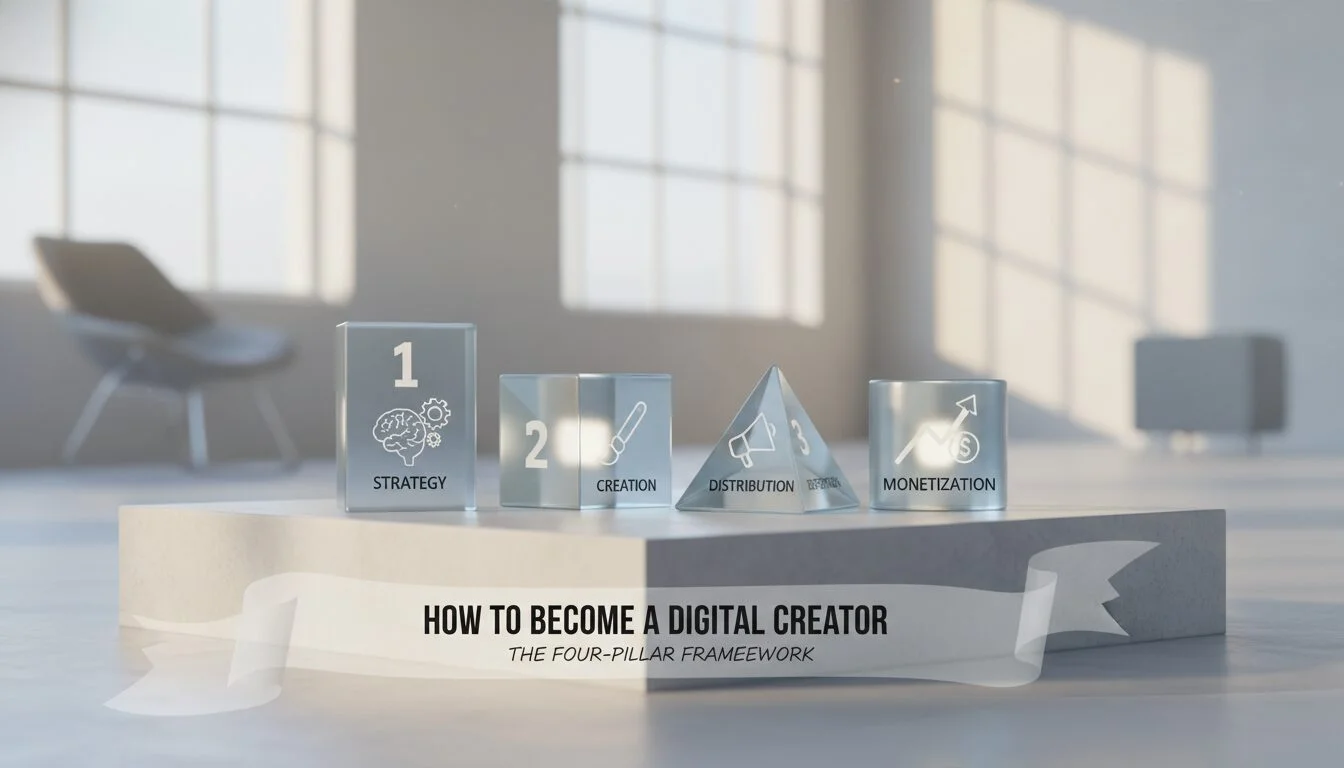
Understanding how to become a digital creator starts with a repeatable structure. At Emin Media, we organize the entire journey into four pillars: niche and brand, content creation, community building, and monetization. Each pillar feeds the next. A clear brand attracts the right audience, quality content keeps them engaged, an active community builds loyalty, and strategic monetization converts that loyalty into revenue.
“The Digital Marketing Specialization on Coursera holds a 4.7-star rating from over 23,000 reviews, reflecting the quality of structured education for aspiring creators. With over 421,000 learners enrolled across its six courses, it remains one of the most validated entry points into the field.”
Realistic Timelines
Coursera’s Digital Marketing Specialization can be completed in as little as four months at a beginner pace. Building a full-time creator career takes longer: most practitioners report needing 6 to 18 months of consistent effort before generating meaningful income. Structured learning compresses the early confusion, but there is no shortcut past the reps.
How to Choose Your Niche

Choosing your niche is the most consequential early decision in how to become a digital creator, and most people rush it. A niche is a specialized segment of the market where you can own a clear position. The more specific, the better. A channel about “travel” competes with thousands; a channel about “solo travel in Southeast Asia on a budget” owns a lane.
Evaluating Your Passions and Expertise
Your niche should sit at the intersection of what you love, what you know, and what has a viable audience. If you enjoy gardening and have real experience, go narrower: urban container gardening, or organic pest control for apartment balconies. Specificity is a competitive advantage, not a limitation. One creator in the Modern Millie community built an entire brand around the “Black in Japan vlogger” identity and attracted a highly engaged audience precisely because of that specificity.
Market Research and Validation
Before committing, validate the idea. Use Google Trends, Facebook Groups, and YouTube search to see what people are actively asking. Look for gaps: if few creators are covering a topic with real depth, that gap is an opportunity. Spend two to four weeks researching before you film a single frame.
Essential Skills for Digital Creators
Developing the right skills accelerates how to become a digital creator from concept to career. You do not need to master everything at once. Pick one content format, get competent, then layer in the rest.
Content Creation Skills
You need fluency in at least one format: video editing, graphic design, writing, or audio production. Tools like Canva for graphics and CapCut for video have made these skills accessible without expensive software. Beyond technical ability, storytelling principles and platform best practices matter more than production polish, especially early on.
Business and Marketing Skills
Creating great content is half the job. The other half is knowing how to brand yourself, read your analytics, and understand SEO well enough to get discovered. Coursera’s six-course specialization covers keyword research, digital advertising, and marketing analytics, skills that translate directly into growing a creator business rather than just a hobby channel.
Building Your Brand and Online Presence
Your brand is the sum of every impression your content makes, and consistency is what makes those impressions stick. With Facebook’s Professional Mode, even an individual profile can access creator tools, analytics, and monetization features across a platform with 3 billion monthly active users.
Creating a Consistent Brand Identity
Choose a name, a color palette, and a tone of voice. Use the same profile photo and bio across every channel. This cohesion means a viewer who finds you on Instagram and then searches for you on YouTube immediately recognizes the same creator. That recognition builds trust faster than any single piece of content can.
Optimizing Your Social Media Profiles
Each platform rewards different signals. On Facebook, enable Professional Mode to access analytics, a dedicated “follow” button, and monetization eligibility. On YouTube, craft channel art and descriptions loaded with relevant keywords. On Instagram, switch to a professional account to unlock audience insights. These are free upgrades that cost you nothing except five minutes of setup.
Step-by-Step: Setting Up Facebook Professional Mode
Facebook Professional Mode is one of the fastest ways to start how to become a digital creator without building a separate Page from scratch. Here is the exact setup process:
- Open your Facebook profile and tap the three-dot menu below your cover photo.
- Select “Turn on Professional Mode” from the dropdown options.
- Choose your category (e.g., Digital Creator, Blogger, Gamer) to signal your content type to the algorithm.
- Complete your professional profile: add a bio, website link, and contact details.
- Review your audience settings: set posts to “Public” so non-friends can follow and discover your content.
- Explore Creator Studio: access your analytics dashboard, schedule posts, and check monetization eligibility from one hub.
- Enable Stars and in-stream ads once you meet Facebook’s eligibility thresholds to start earning from your content.
Content Creation Strategies
Consistent, high-quality content is the engine of growth. Planning your content in advance is what separates creators who last from those who burn out after three months.
Planning a Content Calendar
- Brainstorm ideas: List 20 to 30 topics directly related to your niche.
- Categorize by format: Decide which ideas work best as video, blog post, or graphic.
- Schedule posts: Assign dates on a calendar, aiming for 2 to 3 posts per week to start.
- Batch creation: Set aside one full day to film or write multiple pieces at once.
- Review and adjust: After publishing, track performance and refine future topics based on what resonates.
Short-Form Video: The Fastest Growth Channel in 2026
Short-form video on Instagram Reels, YouTube Shorts, and TikTok remains the highest-reach format for new creators as of 2026. The algorithm on each platform actively distributes short-form content to non-followers, giving you organic reach that long-form content rarely generates early on. A practical approach: film one 10-minute YouTube video, cut three 60-second Reels from it, pull a quote for a text graphic, and write a short blog post from the transcript. One shoot becomes five pieces of content. Modern Millie built her 739,000-subscriber channel using exactly this kind of repurposing system.
Repurposing Content Across Platforms
One video can become a blog post, several short clips, and an audio snippet. A 10-minute YouTube video can be cut into three 60-second Reels, a blog post, and a Twitter thread. This approach is how top creators maintain a consistent presence without constant filming. It also means your best ideas get multiple chances to find the right audience.
Monetization Methods for Digital Creators
Once you have an engaged audience, monetization becomes possible through several channels that work best in combination.
| Method | Description | Platforms |
|---|---|---|
| Ad Revenue | Earn a share of ad income from your content (e.g., Facebook in-stream ads, YouTube Partner Program). | Facebook, YouTube |
| Sponsorships | Brands pay you to feature their product or service in your content. | Instagram, YouTube, TikTok |
| Affiliate Marketing | Promote products and earn a commission on sales via unique links. | Blogs, YouTube, newsletters |
| Digital Products | Sell e-books, courses, templates, or presets directly to your audience. | Gumroad, Teachable, Stan |
| Coaching/Consulting | Offer one-on-one sessions or group coaching based on your expertise. | Zoom, Calendly |
Platform Monetization Eligibility Thresholds
Each platform sets its own bar before you can earn directly. YouTube requires 1,000 subscribers and 4,000 watch hours in the past 12 months to join the YouTube Partner Program. Facebook’s in-stream ads require at least 10,000 followers and 600,000 total minutes viewed in the last 60 days. Instagram’s Creator Marketplace opens up once you have a professional account and a consistent posting history. Knowing these thresholds gives you concrete milestones to work toward rather than vague goals.
Advertising and Sponsorships
Once you reach a few thousand engaged followers, brands may approach you directly. Sponsorship deals can range from a few hundred to several thousand dollars per post, depending on your niche, audience size, and engagement rate. Tech and finance niches typically command higher rates because of the value of their audiences to advertisers.
Pricing Your Sponsored Content
A common starting framework for new creators: charge roughly $10 to $20 per 1,000 followers for a single sponsored post, then adjust based on your engagement rate and niche. Creators in high-CPM niches like personal finance or B2B software can charge significantly more. Always negotiate deliverables, usage rights, and exclusivity windows in writing before you agree to anything.
Selling Products and Services
Digital products offer the highest margins since there is no inventory to manage. Platforms like Zanfia offer zero percent platform fees on sales, which means more of every dollar goes directly to you. Many creators also build exclusive communities via Patreon or offer consulting packages once their authority in a niche is established.
Tools and Platforms for Digital Creators
Using the right tools streamlines your workflow and raises your output quality without requiring a full production team. GuideRealm, a YouTube channel with 1.91 million subscribers, built its entire brand around consistent formatting and platform-native tools rather than expensive gear.
Facebook Professional Mode
This feature converts a personal profile into a creator hub, providing analytics, monetization eligibility, and content scheduling, all without needing a separate Facebook Page. It is the fastest on-ramp for anyone starting how to become a digital creator on Facebook specifically.
YouTube and Video Creation Tools
DaVinci Resolve offers professional-grade video editing at no cost. CapCut handles short-form editing quickly on mobile. Captions.ai uses AI to automate subtitles, cuts, and pacing adjustments, making video editing faster for beginners. YouTube’s analytics dashboard then tells you exactly which content is holding attention and which is losing viewers.
Legal and Tax Considerations for Creators
Most new creators skip this section entirely, and it costs them later. Once you start earning, you are running a business, and that comes with obligations.
- Register as a business entity: An LLC (in the US) or equivalent structure in your country separates your personal finances from your creator income and provides liability protection.
- Track all income and expenses: Sponsorship payments, affiliate commissions, and product sales are all taxable. Tools like QuickBooks or Wave make bookkeeping manageable from day one.
- Understand self-employment tax: In the US, self-employed creators pay both the employee and employer portions of Social Security and Medicare taxes, which adds up quickly without quarterly estimated payments.
- Disclose sponsored content: The FTC requires clear disclosure when content is paid or gifted. Use “#ad” or “#sponsored” visibly, not buried in a caption. Non-compliance carries real financial penalties.
- Protect your intellectual property: Register trademarks for your brand name once you have traction. Use written contracts for every sponsorship deal.
Pros and Cons of Becoming a Digital Creator
Knowing the full picture before you commit is how you build a sustainable career rather than burning out in year one.
Pros
- Location and schedule independence: Work from anywhere, set your own hours, and build a business around your life rather than the other way around.
- Multiple income streams: Ad revenue, sponsorships, digital products, and consulting can all run simultaneously, reducing financial risk.
- Low startup cost: A smartphone and free editing tools are enough to start. Many creators reach their first 1,000 subscribers with zero paid promotion.
- Compounding returns: Content you publish today can generate views, leads, and income for years. A well-optimized YouTube video from three years ago still drives traffic.
- Creative ownership: You control the brand, the message, and the direction. No creative brief from a client, no approval chain.
Cons
- Income is unpredictable early on: The first 6 to 12 months rarely generate meaningful revenue. You need financial runway or a parallel income source.
- Algorithm dependency: Platform changes can cut your reach overnight. Diversifying across platforms and building an email list are the only real hedges.
- Burnout is common: The pressure to post consistently while also managing brand deals, analytics, and community engagement is genuinely demanding.
- Slow initial growth: Most channels see minimal traction in the first three months. Many creators quit precisely when they are closest to a breakthrough.
- No employer benefits: Health insurance, retirement contributions, and paid leave are entirely your responsibility once you go full-time.
Growing Your Audience and Community
A loyal community amplifies your reach through shares, comments, and word of mouth in ways that paid advertising cannot replicate. Modern Millie grew to 739,000 subscribers by consistently engaging with her audience and treating community feedback as a content brief.
Engagement Techniques
Respond to comments within the first hour of publishing, host live Q&As monthly, and create content that invites participation through polls, challenges, and direct questions. The more your audience feels heard, the more invested they become in your success. That investment shows up in the algorithm as watch time, saves, and shares.
Using Analytics to Improve
Review metrics like watch time, reach, and engagement rate every two weeks. Use those insights to double down on what works and move away from what does not. Even small adjustments, like changing a thumbnail style or shortening your intro, can produce meaningful improvements in click-through rate over time.
Common Challenges and How to Overcome Them
Every creator faces obstacles. Recognizing them early is what keeps you in the game long enough to see results.
“Becoming a content creator and eventually making money is comparable to training for a marathon. You have to be in it for the long haul, be patient, and slowly but surely you will get there.” — runwithdarren, YouTube creator
Consistency and Burnout
Creating regularly without burning out requires a sustainable schedule, not a heroic one. Batch-create content in advance, take planned breaks, and focus on quality over volume. Two excellent videos per month outperform eight mediocre ones every time.
Algorithm Changes
Platform algorithms shift constantly, but one principle holds across all of them: content that genuinely serves the audience performs best over time. Diversify your presence across at least two platforms and build an email list so you own a direct line to your audience regardless of what any algorithm decides.
Real-World Examples: How to Become a Digital Creator
Looking at working creators illustrates what the path actually looks like. Modern Millie (739,000 subscribers) and GuideRealm (1.91 million subscribers) both started from zero and scaled using the core pillars above. The difference in scale reflects different niches and strategies, but both represent sustainable full-time creative businesses built without outside funding.
Brand Spotlight: Modern Millie
Millie grew her channel to 739,000 subscribers by teaching social media and content creation strategy to other aspiring creators. She chose a narrow niche, published on a consistent schedule, and engaged deeply with her community. Her monetization stack includes digital products, brand partnerships, and a membership community. Her growth is a direct case study in how to become a digital creator by serving a specific audience exceptionally well.
Brand Spotlight: GuideRealm
GuideRealm’s 1.91 million subscribers came from detailed, utility-first how-to guides across a range of topics. Their success demonstrates that a clear, helpful format can scale even in a broad niche. Consistency and genuine usefulness are the two variables that explain their growth more than any production budget or viral moment.
Ready to build something that lasts? Contact Emin Media for a free brand consultation and let’s map out your creator strategy together.
Frequently Asked Questions
How much money do I need to start as a digital creator?
The minimum investment is a smartphone and an internet connection. Most creators start with free tools like Canva and CapCut, then upgrade to paid software as revenue grows. You do not need a studio or professional camera to publish your first 100 pieces of content.
How long does it take to make a full-time income as a digital creator?
Most creators take 6 to 18 months of consistent publishing to reach a livable income. The timeline depends on your niche’s profitability, content quality, and how quickly you layer in multiple monetization streams. Tech and finance niches often see faster returns because of higher ad rates and affiliate deal values.
Do I need to be an expert to start how to become a digital creator?
No. Many successful creators started as enthusiastic beginners documenting their learning process. Your perspective as someone actively figuring things out can be just as valuable to an audience as polished expert advice. Authenticity consistently outperforms credentials in the creator economy.
What is the biggest mistake new creators make?
Quitting within the first three months because the numbers look small. Growth in the creator economy compounds: channels that survive past the 12-month mark almost universally report that their trajectory changed significantly after consistent effort. Patience is a genuine competitive advantage.
Can I become a digital creator on Facebook specifically?
Yes. Facebook’s Professional Mode lets you set up as a digital creator directly from your personal profile, access monetization tools, and build a following among its 3 billion monthly active users. The setup takes under 10 minutes and requires no separate Page or ad budget to get started.
Is it better to focus on one platform or be everywhere?
Start with one primary platform where your target audience is most active and master it before expanding. A focused approach prevents burnout, builds a stronger community faster, and gives you clean data on what content actually works before you try to replicate it elsewhere.
Enjoyed this article?
Contact Emin Media for a free brand consultation and let's create something amazing together.
Get in TouchRelated Articles
Digital Storytelling for Business: 2026 Playbook
Digital storytelling for business explained: frameworks, tools, mistakes to avoid, and a 2026 playbook to…

Startup Marketing: A Practical Growth Guide (2026)
Startup marketing is your roadmap to customers and revenue. Learn proven strategies, budgeting tips, and…

Facebook Digital Creator: The 2026 Complete Guide
Become a facebook digital creator in minutes. Explore monetization tools, pro tips, and step-by-step setup…