Video Content for Brand Awareness: 2026 Guide

Key Takeaways
- Video content for brand awareness is one of the highest-ROI investments a brand can make in 2026.
- Different video types – storytelling, testimonials, UGC, live streams – serve distinct roles in your brand-building strategy.
- Emotional connection through video drives purchase intent and brand recall far beyond what static content achieves.
- Understanding your audience segments before production saves budget and sharpens creative direction.
- Consistent visual identity across every video builds recognition and trust over time.
- Measuring the right KPIs – retention, shares, conversion lift – tells you what’s actually working.
Video content for brand awareness is the practice of using visual storytelling to make audiences recognize, remember, and trust your brand. As of 2026, video dominates how people discover and evaluate brands online, making it the most direct path from unknown to unforgettable.
Understanding Video Content for Brand Awareness

brand awareness works by combining visual and auditory storytelling to create memories that static content simply cannot. According to HubSpot, viewers retain 95% of a message when watching a video, compared to 10% when reading text. That gap is not a minor advantage. It is the difference between a brand people remember and one they scroll past.
What is Brand Awareness?
Brand awareness is the degree to which your target audience recognizes and recalls your brand when making purchasing decisions. It sits at the top of every marketing funnel, and without it, even the best product struggles to convert. High brand awareness builds consumer trust, shortens the sales cycle, and creates the kind of familiarity that turns first-time buyers into loyal advocates.
The Role of Video in Brand Awareness
this type of awareness does three things that no other format matches:
- Capturing Attention: Video stops the scroll faster than any static image or headline. Motion, sound, and story work together to pull viewers in within the first three seconds.
- Enhancing Recall: The dual-channel experience of visuals plus audio creates stronger memory encoding. Your brand stays top of mind long after the video ends.
- Building Emotional Connections: Story-driven video triggers genuine emotion. Brands that make people feel something earn loyalty that paid ads alone cannot buy.
“Video is not just a content format. It is the closest thing to a face-to-face conversation a brand can have at scale.” – Animoto Co-Founder Jason Hsiao, via Animoto Blog
How Video Content for Brand Awareness Actually Works
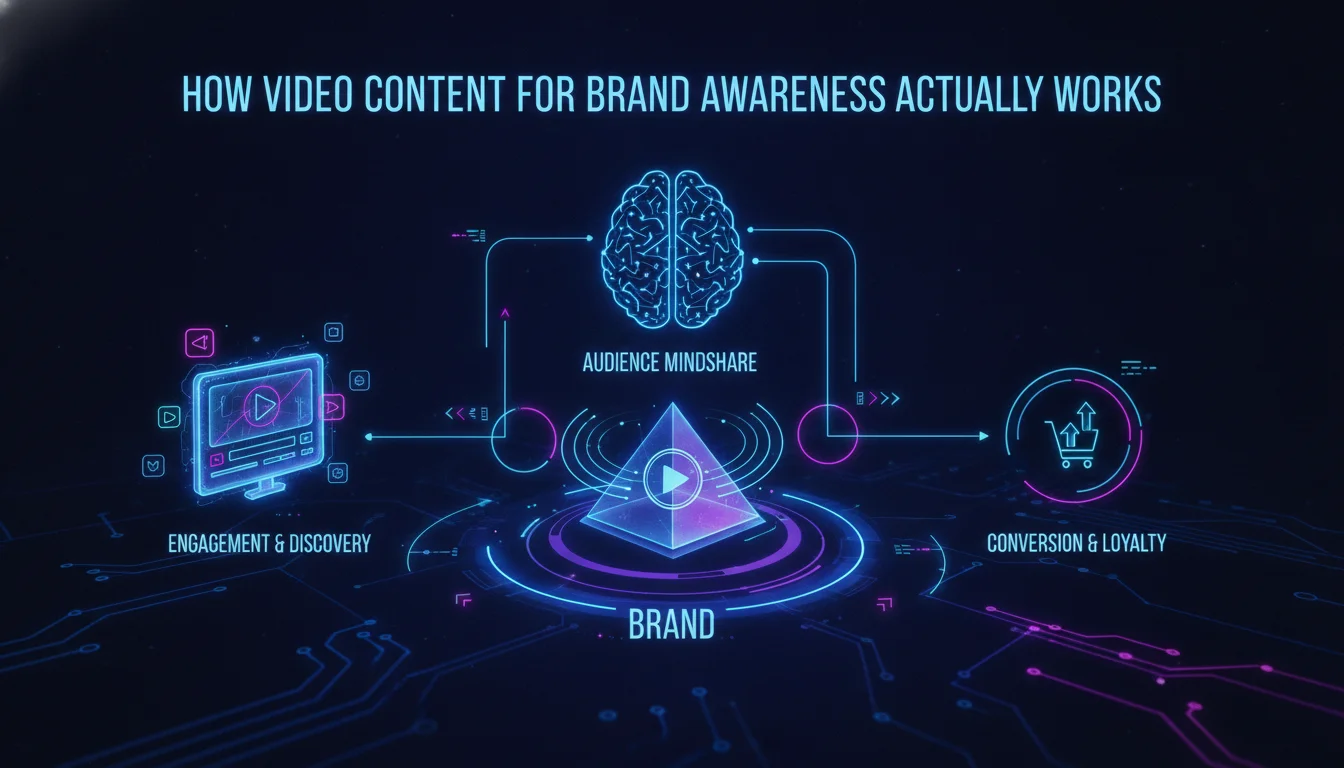
this kind of brand awareness operates through a layered psychological and algorithmic process that most brands only partially understand. Knowing the full mechanics helps you build a strategy that compounds over time rather than producing one-off spikes.
The Psychology of Video Memory
When someone watches a brand video, their brain processes it through two channels simultaneously: the visual cortex handles imagery, color, and motion, while the auditory system processes voice, music, and sound design. This dual processing creates richer, more durable memory traces than reading text alone. Brand research consistently shows that emotional arousal during video viewing significantly increases the likelihood of sharing and recall.
This is why the most effective brand videos lead with a human story rather than a product feature. The emotion comes first. The brand association follows naturally.
The Algorithmic Amplification Loop
Every major platform in 2026 – YouTube, Instagram, TikTok, LinkedIn – rewards video with organic reach that other content formats rarely receive. When your video earns strong watch time and engagement signals, the algorithm distributes it to new audiences who match your existing viewers. This creates a compounding awareness loop: better content earns more reach, which earns more data, which helps you create better content.
According to competitor research from Overskies, video now accounts for 82% of all consumer internet traffic. That figure reflects where attention lives. Brands that show up in video format are simply present where their audiences already are.
Consistent Visual Identity as a Recognition System
Brand awareness is not built by a single viral video. It is built by repeated, consistent exposure to the same visual signals: your logo placement, color palette, typography, tone of voice, and music style. Every video you publish is a deposit into a recognition bank. Over time, audiences begin to identify your brand before they even see your name on screen. That is the goal.
Types of Video Content for Brand Awareness
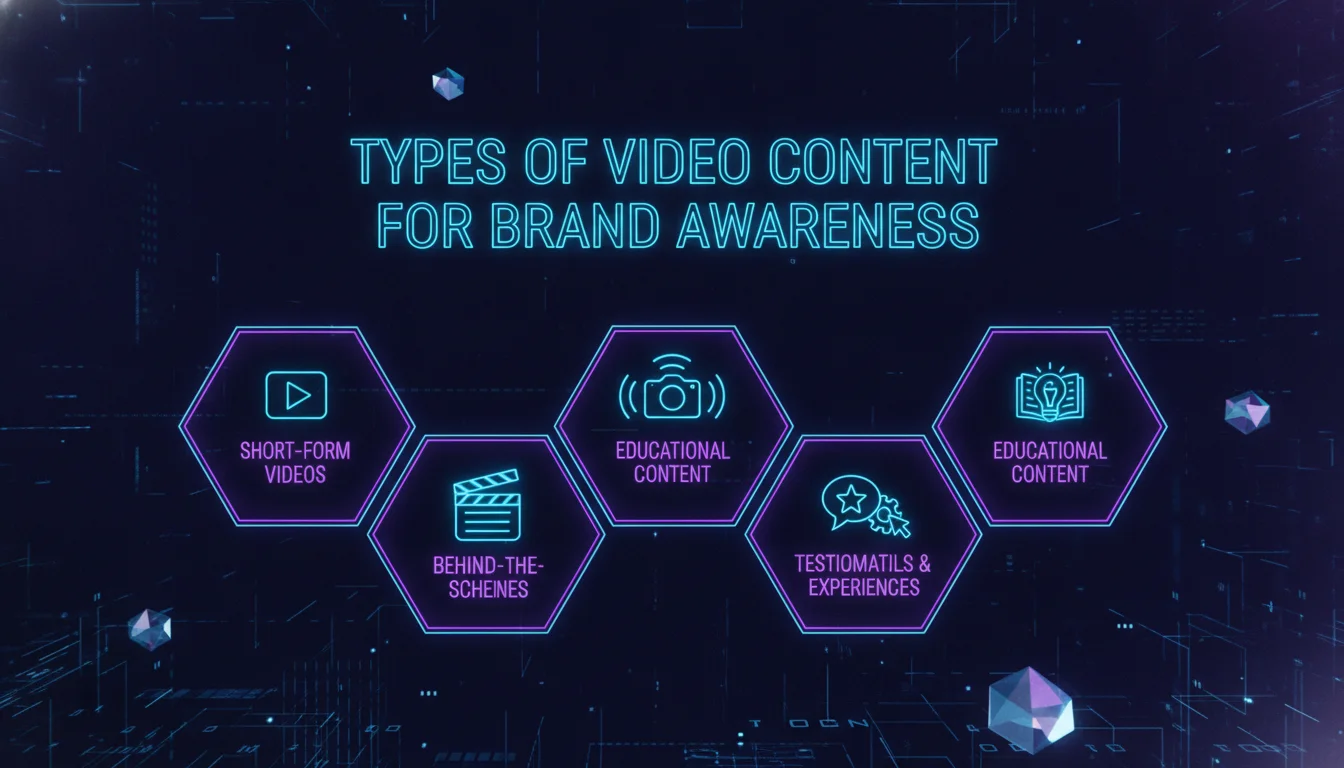
Not all the content for brand awareness serves the same purpose. Choosing the right format for the right moment in your audience’s journey is what separates strategic video marketing from random content production.
1. Brand Storytelling Videos
Brand storytelling videos narrate your origin, mission, and values in a way that makes your brand feel human and worth caring about. They highlight your unique selling proposition through narrative rather than bullet points. The best ones make viewers feel like they are meeting a person, not a company. Nike’s “Just Do It” campaign is the textbook example: personal stories of perseverance that say almost nothing about the product and everything about the brand’s identity.
2. Customer Testimonial Videos
Customer testimonial videos let real people tell your story for you. Potential customers trust peer voices far more than brand messaging, and a well-produced testimonial captures authentic emotion that a polished ad cannot replicate. These videos work especially well mid-funnel, when a prospect is evaluating options and needs social proof to tip the decision.
3. How-To and Tutorial Videos
How-to videos provide genuine value before asking for anything in return. They position your brand as the expert in your category, which is one of the most durable forms of brand awareness available. When someone searches for a solution and your brand’s tutorial appears, you earn credibility and recognition simultaneously.
4. User-Generated Content (UGC) Videos
UGC is your audience creating content about your brand from their own perspective. As PlayPlay’s research notes, a creator with 10,000 followers sharing a video about your brand puts you in front of potentially 10,000 new viewers who have never encountered you before. Authenticity is the engine here. Viewers want first-hand experience, not a polished sales pitch. Brands can encourage UGC through branded hashtags, competitions, or giveaways.
5. Live Streaming
Live video creates real-time connection that pre-produced content cannot replicate. Q&A sessions, product launches, and behind-the-scenes streams make your brand feel transparent and accessible. Live content also generates urgency: viewers show up because they know the moment is unrepeatable. This format works particularly well for brands building community around a shared interest or lifestyle.
6. Employer Branding Videos
Employer branding videos showcase your company culture and team. They attract talent, yes, but they also build brand awareness with audiences who may never apply for a job. When people see the humans behind a brand, trust increases. PlayPlay’s own quarterly recap videos consistently feature their logo, brand colors, and product references, turning internal culture content into a recognition tool for external audiences.
Video Type Comparison Table
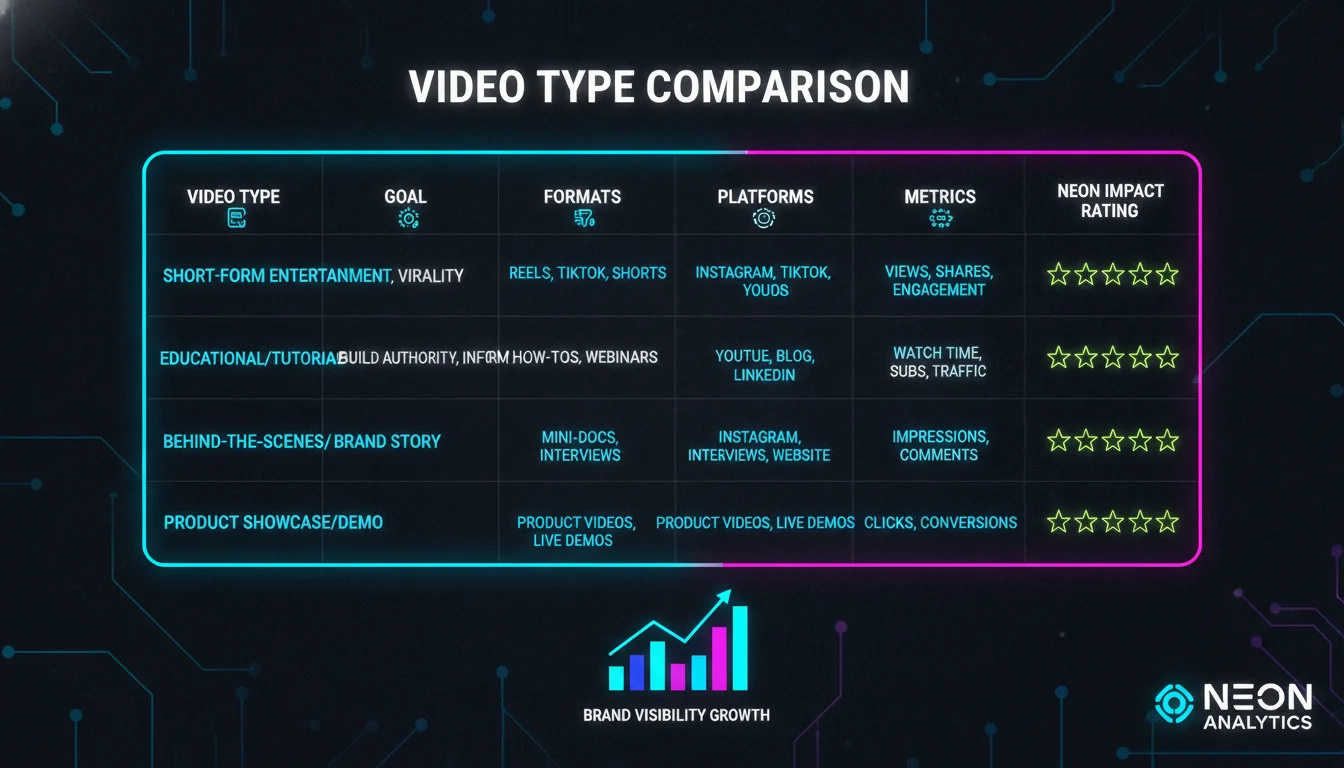
| Video Type | Primary Goal | Best Platform | Production Complexity | Awareness Stage |
|---|---|---|---|---|
| Brand Storytelling | Emotional connection | YouTube, Instagram | High | Top of funnel |
| Customer Testimonial | Social proof | Website, LinkedIn | Medium | Mid funnel |
| How-To / Tutorial | Authority building | YouTube, TikTok | Medium | Top and mid funnel |
| UGC Video | Reach amplification | TikTok, Instagram | Low | Top of funnel |
| Live Stream | Community and trust | Instagram, YouTube | Low | All stages |
| Employer Branding | Culture and recognition | LinkedIn, YouTube | Medium | Top of funnel |
How to Apply This: A Step-by-Step Strategy
awareness does not happen by accident. It requires a deliberate production and distribution process. Here is how we approach it with clients at Emin Media.
Step 1: Define Your Audience with Precision
Start with audience segmentation before you touch a camera or open an editing timeline. Map your audience by demographics, online behavior, platform preference, and content consumption habits. A millennial consumer on TikTok needs short, visually dynamic content. A B2B decision-maker on LinkedIn responds to thought leadership and case studies. The same brand message needs a different creative execution for each segment. Build audience personas and let them guide every creative decision.
Step 2: Set SMART Goals for Each Video
Every piece of video content should have a specific, measurable goal attached to it. Are you trying to increase brand search volume? Drive profile follows? Generate shares? Without a defined goal, you cannot measure success or improve. Set goals that are specific, measurable, achievable, relevant, and time-bound before production begins, not after.
Step 3: Build Your Brand’s Visual and Tonal Identity
Decide on your visual system before you shoot a single frame. This means locking in your color palette, logo placement rules, typography for on-screen text, music style, and the tone of your on-camera talent or voiceover. Every video you produce should feel like it came from the same creative family. Consistency is what transforms individual videos into a recognizable brand presence.
Step 4: Produce with Platform Intent
Shoot and edit with the destination platform in mind from the start. Vertical 9:16 for TikTok and Instagram Reels. Horizontal 16:9 for YouTube. Square 1:1 for Facebook feed. Captions are non-negotiable across all platforms, since most mobile viewers watch without sound. Front-load your strongest visual hook in the first three seconds, because that is when most viewers decide whether to keep watching.
Step 5: Distribute Across Multiple Channels
Publish your brand awareness across every platform where your audience lives, but adapt the format for each one. A three-minute YouTube brand film becomes a 30-second Instagram Reel teaser, a 15-second TikTok hook, and a 60-second LinkedIn cut. One production investment, multiple touchpoints. This multi-channel approach compounds your reach without multiplying your budget.
Step 6: Optimize for Search
YouTube is the world’s second-largest search engine. Optimizing your video titles, descriptions, and tags with relevant keywords is not optional if you want organic discovery. Create custom thumbnails that communicate the video’s value at a glance. Add chapters to longer videos so viewers can navigate to the section most relevant to them. These details separate videos that get found from videos that get buried.
Step 7: Analyze, Learn, and Iterate
Pull your performance data weekly. Watch time, audience retention curves, share rates, and click-through rates on end screens all tell you something specific about what is working. If viewers drop off at the 45-second mark consistently, your hook is not strong enough. If shares are high but conversions are low, your call to action needs work. Let the data direct your next production decision.
Strategies for Creating Effective Video Content
Beyond the step-by-step process, certain strategic principles separate brands that build real awareness from those that just produce content.
1. Define Your Audience
Understanding your target audience is the foundation of impactful this type of awareness. Segment by demographics, interests, and behaviors. Tailor your creative to each segment rather than producing generic content that speaks to no one specifically.
2. Set Clear Goals
Before production begins, establish what success looks like. Whether the aim is broader reach, higher engagement, or direct conversion lift, having SMART goals keeps your creative decisions anchored to business outcomes.
3. Optimize for SEO
Use relevant keywords in titles, descriptions, and tags. Create thumbnails that earn clicks. Promote your videos across multiple channels to maximize each piece of content’s reach and longevity.
Measuring the Impact of Video Content
Measuring this kind of brand awareness requires tracking the right signals, not just vanity metrics. Views alone tell you almost nothing. The metrics below tell you whether your brand is actually landing.
1. Engagement Metrics
Engagement metrics – views, likes, shares, comments, and saves – reveal how well your video resonates with its audience. High share rates are particularly valuable for brand awareness because every share extends your reach to a new audience organically. A video that gets shared is a video that people found worth putting their own name behind.
2. Conversion Rates
Tracking how many viewers take a desired action after watching – visiting your website, signing up for a newsletter, or making a purchase – connects your video investment to real business outcomes. This metric is essential for justifying video budgets and identifying which video types drive the most downstream value.
3. Audience Retention
Audience retention curves show you exactly where viewers stop watching. A steep drop in the first 10 seconds means your opening is not compelling enough. A gradual decline after the midpoint is normal. Use retention data to refine your pacing, hook strength, and content length across future productions.
4. Brand Search Volume
One of the clearest signals that video content for brand awareness is working is an increase in branded search queries. When more people type your brand name directly into Google or YouTube, it means your videos are creating genuine curiosity and recall. Track this in Google Search Console alongside your video campaigns.
Brand Spotlight: Campaigns That Built Awareness Through Video
Real campaigns show what is possible when video strategy and creative execution align. These examples from the competitor evidence corpus illustrate different approaches to building brand awareness through video.
Nike’s “Just Do It” Campaign
Nike’s campaign is the gold standard of brand storytelling video. Personal narratives of perseverance and achievement say almost nothing about product specifications and everything about what the brand stands for. The result is a brand identity so strong that the logo alone communicates an entire philosophy. The lesson: lead with human truth, let the brand follow.
Dove’s Real Beauty Campaign
Dove challenged conventional beauty advertising by featuring real women and their unfiltered stories. This approach built emotional resonance that traditional product advertising rarely achieves. The campaign did not just sell soap. It built a community of people who felt seen by the brand. That kind of connection drives long-term loyalty far beyond any single purchase cycle.
Apple’s Product Launch Videos
Apple’s launch videos are masterclasses in brand-consistent production. Every element – the music, the pacing, the minimal aesthetic, the voiceover cadence – reinforces the same brand identity across every release. Audiences recognize an Apple video before they see the logo. That is the power of visual consistency applied at scale.
Meta’s Employer Branding Rebrand Video
As noted in PlayPlay’s research, Meta‘s rebrand video worked in part because of a deliberate creative choice: no background music. The silence forced viewers to focus entirely on the CEO’s words, making the announcement feel weighty and credible. The strategic use of a high-profile spokesperson generated attention and lent authority to the brand change. Sometimes the boldest creative decision is what you leave out.
“When people connect with a brand story, research suggests 55% are more likely to buy the brand’s product or service, 44% will share the brand story, and 15% will make a purchase immediately.” – Superside, Brand Video Research, 2025
Common Mistakes to Watch Out For
Most brands that struggle with video content for brand awareness are not failing because of budget. They are failing because of avoidable strategic and creative errors. Here are the ones we see most often.
1. Leading with the Product Instead of the Story
The most common mistake in brand video is treating it like a product advertisement. Audiences do not share product demos. They share stories that made them feel something. If your video opens with a feature list or a price point, you have already lost the emotional hook that makes brand awareness video work. Lead with a human moment. The product earns its place in the narrative, not the other way around.
2. Ignoring the First Three Seconds
On every platform, viewers decide whether to keep watching within the first three seconds. If your opening shot is a slow logo reveal or a generic establishing shot, most of your audience will never see the rest of your video. Open with tension, a surprising visual, a bold statement, or a question that demands an answer. Earn the next 30 seconds before you ask for the next three minutes.
3. Producing Without a Distribution Plan
A great video with no distribution strategy is a tree falling in an empty forest. Too many brands invest heavily in production and then publish once to a single platform with no paid amplification, no cross-posting plan, and no community engagement strategy. Your distribution plan should be built before production begins, not bolted on afterward.
4. Inconsistent Visual Branding Across Videos
Brand awareness is built through repetition of consistent signals. If your videos use different color treatments, different logo placements, different music styles, and different tonal approaches, you are not building a brand. You are producing content. Establish a visual identity system and enforce it across every video you publish, regardless of format or platform.
5. Measuring Only Views
View counts feel satisfying but tell you almost nothing about brand impact. A video with 50,000 views and a 20% completion rate is performing far worse than a video with 10,000 views and an 80% completion rate. Focus on watch time, retention curves, share rates, and downstream brand search volume. Those are the metrics that reflect real awareness growth.
6. Skipping Captions
Most mobile viewers watch video without sound. If your video relies entirely on audio to communicate its message, you are invisible to a significant portion of your audience. Captions are not optional in 2026. They are a baseline accessibility and engagement requirement across every platform.
A Realistic Scenario: How a Mid-Size Brand Builds Awareness Through Video
Consider a sustainable home goods brand launching in a competitive market. They have a modest production budget, a clear brand identity, and a target audience of environmentally conscious millennials and Gen Z consumers primarily on Instagram and TikTok.
In month one, they produce a brand storytelling video: the founder’s origin story, shot in their workshop, explaining why they started the company and what they stand for. No product features. No pricing. Just a human story with strong visual identity: warm tones, natural textures, a simple acoustic soundtrack. They publish it on YouTube as the anchor, cut a 30-second version for Instagram Reels, and a 15-second hook version for TikTok.
In month two, they launch a UGC campaign with a branded hashtag, encouraging customers to share videos of their products in their homes. Three micro-influencers with engaged followings in the sustainability space participate, each creating authentic, unscripted content. The brand reposts and amplifies the best submissions.
In month three, they host a live Q&A on Instagram where the founder answers questions about sustainable sourcing and manufacturing. The session generates real-time engagement and gets clipped into short-form content for the following week.
By the end of the quarter, branded search volume has increased, their Instagram following has grown organically, and their YouTube channel has a small but highly engaged subscriber base. No single video went viral. But the consistent, strategic use of video content for brand awareness across multiple formats and platforms built genuine recognition with exactly the audience they wanted to reach.
This is how brand awareness through video actually works: not through one perfect video, but through a disciplined creative system applied consistently over time.
Pros and Cons of Using Video Content for Brand Awareness
Pros
- Exceptional recall: Video creates stronger memory encoding than text or static images, making your brand more memorable after a single exposure.
- Emotional resonance: Story-driven video builds the kind of emotional connection that drives loyalty and word-of-mouth, not just clicks.
- Algorithmic reach: Every major platform in 2026 prioritizes video in organic distribution, giving well-performing videos reach that other content formats rarely achieve.
- Shareability: Compelling video content gets shared across networks, extending your brand’s reach to audiences you did not pay to reach.
- Versatility: One video production can be repurposed across multiple formats, platforms, and campaign stages, multiplying the return on a single investment.
- SEO value: Video content improves dwell time on web pages and can rank independently on YouTube, creating multiple discovery pathways for your brand.
Cons
- Production costs: High-quality video production requires meaningful investment in equipment, talent, and post-production, which can be a barrier for smaller brands.
- Time to produce: A well-crafted brand video takes time to script, shoot, and edit. Brands that need to move fast may find the production timeline challenging.
- Content saturation: The volume of video content published daily across all platforms is enormous. Standing out requires genuine creative differentiation, not just consistent posting.
- Measurement complexity: Connecting video views to actual brand awareness growth requires sophisticated analytics setup and a willingness to track leading indicators rather than just direct conversions.
- Platform dependency: Algorithm changes on YouTube, Instagram, or TikTok can dramatically affect organic reach overnight, making video distribution strategies vulnerable to forces outside your control.
Challenges in Video Marketing for Brand Awareness
Understanding the obstacles helps you plan around them rather than being surprised by them mid-campaign.
1. Production Costs
High-quality video production can be expensive, particularly for smaller brands without in-house creative teams. The good news: UGC campaigns, smartphone-shot content with strong creative direction, and AI-assisted production tools have significantly lowered the floor for what quality video costs in 2026. Budget constraints are real, but they are not the barrier they once were.
2. Content Saturation
The digital environment is crowded with video. According to Superside’s research, 62% of businesses already actively use video as part of their marketing strategy. Standing out requires a genuine creative point of view, not just production polish. The brands that cut through are the ones with something specific to say, not just something expensive to show.
3. Measuring Effectiveness
Determining the real impact of video content for brand awareness on business outcomes is genuinely complex. Businesses need robust analytics tools, clear attribution models, and patience to see brand-building results that often take months to materialize in measurable ways.
The 2026 Outlook: Where Video Brand Awareness Is Heading
As of 2026, several shifts are reshaping how brands use video content for brand awareness. Understanding these trends helps you build a strategy that stays relevant rather than chasing formats that are already fading.
AI-assisted video production has moved from experimental to mainstream. Brands are using AI tools to accelerate scripting, generate B-roll, create captions automatically, and produce localized versions of the same video for different markets. This year, the brands winning with AI are not the ones replacing human creativity. They are the ones using AI to produce more creative work faster.
Short-form vertical video continues to dominate discovery on TikTok, Instagram Reels, and YouTube Shorts. But the most sophisticated brands are using short-form as a top-of-funnel awareness driver that feeds longer-form content on YouTube, where deeper brand storytelling earns higher-value audience relationships.
Interactive video is gaining traction as platforms build native tools for polls, clickable overlays, and shoppable video experiences. Brands that experiment with interactive formats now are building capabilities that will be table stakes within the next two to three years.
Authenticity continues to outperform production value in awareness metrics. Audiences in 2026 are sophisticated enough to recognize when a brand is performing versus when it is being genuine. The brands that earn real awareness are the ones willing to show imperfection, share real stories, and engage with their communities as participants rather than broadcasters.
Frequently Asked Questions
What are some creative ideas for awareness videos?
Creative ideas for video content for brand awareness include behind-the-scenes founder stories, UGC campaigns with branded hashtags, live Q&A sessions, day-in-the-life content featuring your team, and challenge-format videos that invite audience participation. The most effective ideas are rooted in your brand’s specific story and values rather than borrowed from trending formats.
What types of videos are best for brand awareness?
Brand storytelling videos, customer testimonials, UGC campaigns, and live streams are consistently the strongest formats for video content for brand awareness. The right choice depends on your audience, platform, and where you are in your brand-building journey. Early-stage brands typically benefit most from storytelling and UGC, while established brands can invest more in high-production brand films.
How can I measure the effectiveness of my video content?
Measure video content for brand awareness through audience retention rates, share velocity, branded search volume growth, and engagement depth rather than raw view counts. Conversion tracking and A/B testing different creative approaches help you connect video performance to real business outcomes over time.
What is the 3-7-27 rule of branding?
The 3-7-27 rule suggests that it takes roughly 3 interactions for someone to recognize your brand, 7 interactions to remember it, and 27 interactions to develop genuine trust and preference. Video content for brand awareness accelerates this process because each video interaction is richer and more memorable than a static ad impression, effectively compressing the timeline to trust.
How often should I create video content for my brand?
Consistency matters more than frequency. A realistic schedule you can sustain, whether that is one video per week or two per month, outperforms an aggressive pace that leads to burnout and inconsistent quality. Build a content calendar that balances production capacity with audience expectations on each platform.
What platforms are best for sharing brand awareness videos?
YouTube remains the most powerful platform for long-term video content for brand awareness because content is searchable and evergreen. TikTok and Instagram Reels drive the highest organic discovery for new audiences. LinkedIn works best for B2B brands targeting professional decision-makers. The right platform mix depends entirely on where your specific audience spends their time.
Ready to build a video strategy that actually makes your brand unforgettable? Contact Emin Media for a free brand consultation and let’s build something bold together.
Enjoyed this article?
Contact Emin Media for a free brand consultation and let's create something amazing together.
Get in TouchRelated Articles
Digital Storytelling for Brands: The Complete Guide
Digital storytelling for brands builds real audience connections through narrative. Learn proven techniques, formats, and…
Design Thinking for Marketing: A 2026 Guide
Design thinking for marketing builds campaigns around real user needs. Learn the 5 phases, common…
Creative Direction for Video Shoots: A Complete Guide
Master creative direction for video shoots with proven steps, tools, and strategies that build brand…