Sony FX30 Digital Cinema Camera: Full Review 2026
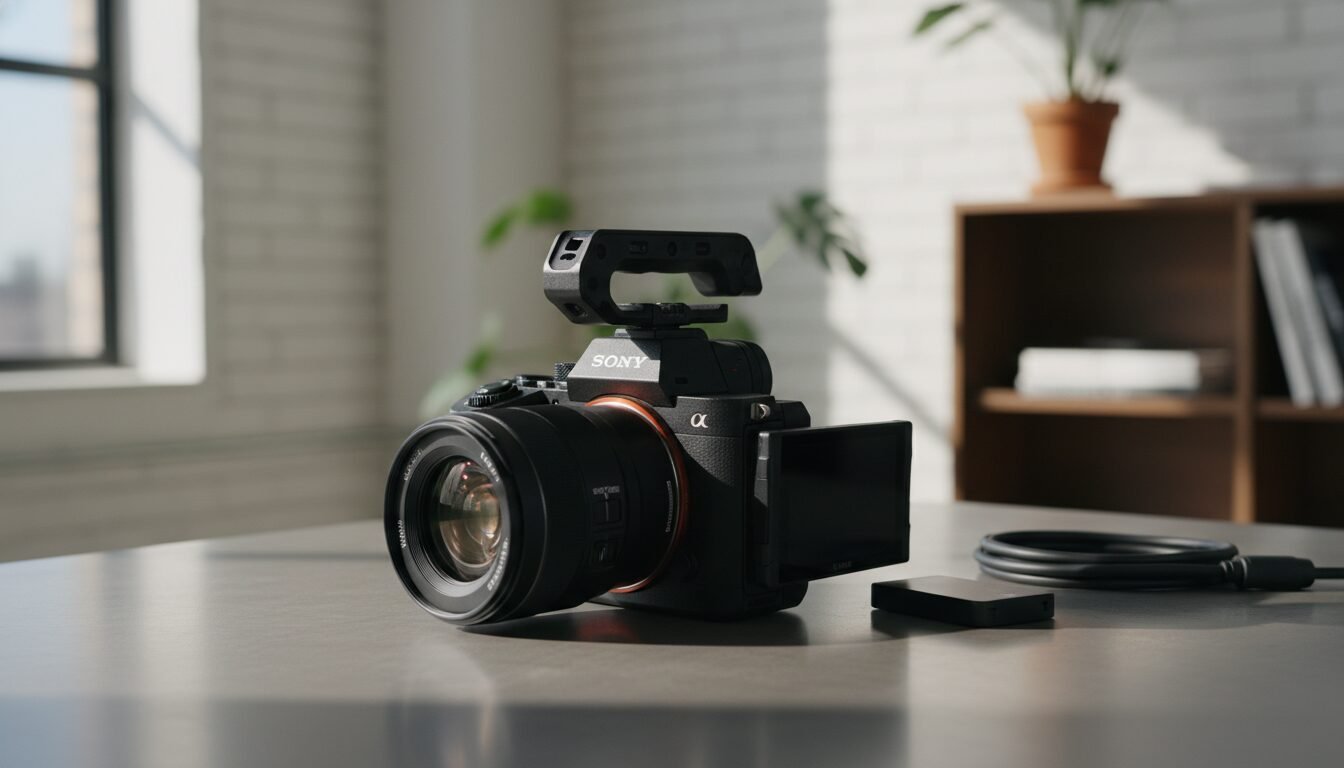
The Sony FX30 digital cinema camera is an APS-C Super 35mm mirrorless cinema camera featuring 6K oversampling, S-Cinetone color science, and 4K 120p slow-motion in a compact body, priced from $2,099.
Key Takeaways
- The cinema camera combines professional cinema features with compact design, ideal for solo shooters and indie productions.
- It delivers 6K oversampled 4K video up to 120p, 14+ stops of dynamic range, and S-Cinetone color science straight out of the box.
- With dual card slots (CFexpress Type A/SD), an active cooling fan, and 16-bit RAW output via HDMI, it’s a production-ready tool from day one.
- As of 2026, the FX30 remains one of the most affordable entries into Sony’s Cinema Line, starting at $2,099 body only, compared to the FX3 at $3,898.
What Is the Sony FX30 Digital Cinema Camera?
Media” class=”wp-image-9925″ loading=”lazy” width=”1792″ height=”1024″ />A Cinema Line Camera for a New Generation
The this type of camera is Sony’s deliberate push to democratize filmmaking. As the smallest and most accessible member of the Cinema Line, it inherits DNA from the FX6 and FX9 but in a body that fits in a jacket pocket. A 20.1-megapixel Exmor R APS-C (Super 35mm) sensor delivers the shallow depth of field and wide dynamic range that cinematographers demand, while the BIONZ XR processor crunches 6K footage down to stunning 4K output. S-Cinetone is baked in, so you get rich, film-like skin tones and subtle color without needing to grade. This isn’t just a mirrorless camera that happens to shoot video. It’s a true cinema camera built for the next wave of creators.
The Rise of Compact Cinema
Once, a “cinema camera” meant a hefty box requiring a full crew. The Sony FX30 flips that script entirely. Its 1.07-lb body (body only) and built-in ¼-20 mounting threads let you strip away the rig and go handheld. According to a Fstoppers review, the FX30 proved to be a “very versatile tool and a solid value,” capable of keeping up with productions that once demanded far larger cameras. This portability, paired with Active Mode stabilization that compensates for 5-axis shake, makes it a favorite for run-and-gun documentary work and travel filmmaking.
Who Is This Camera For?
The this kind of cinema camera is purpose-built for the solo shooter, the indie filmmaker, and the content studio stepping up from a hybrid camera like the a6700. It’s also an ideal B-cam alongside an FX3, FX6, or FX9 for multi-angle interviews. Wedding videographers love the uninterrupted 4K 60p recording thanks to the internal cooling fan, while educators and corporate producers benefit from the proxy workflow that speeds up editing. It’s for anyone who wants Cinema Line reliability without the Cinema Line price tag.
Key Specifications of the Sony FX30 Digital Cinema Camera
Sensor and Processor
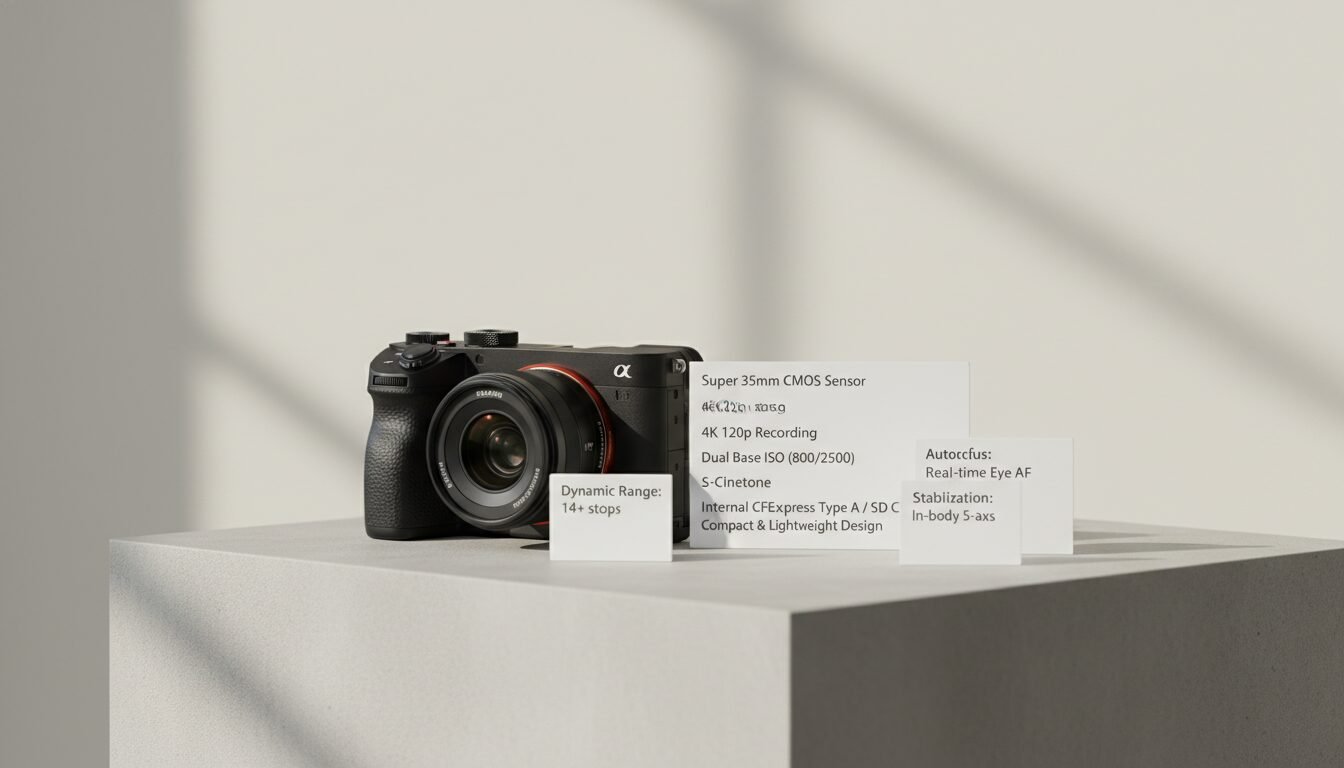
At the heart of the the fx30 digital cinema camera lies a 20.1-megapixel APS-C Exmor R CMOS sensor with back-illuminated architecture, offering the Super 35mm format that matches traditional film. The sensor pairs with the BIONZ XR engine, the same processing power found in Sony’s flagship Alpha 1, which enables 6K oversampling. Every 4K frame is created from a 6K capture, squeezing out extra detail, reducing moiré, and producing notably cleaner edges even at high ISOs. It also supports Dual Base ISO (800 and 2500 in S-Log3), letting you move between bright and dark scenes without a noise penalty.
Video Recording Capabilities
The FX30 records 4K internally at up to 120 frames per second, giving you 5x slow-motion in a 24p timeline. In 4K DCI or UHD at 24/30/60p, you can choose from high-bit-rate XAVC S-I, Long-GOP XAVC S, or the versatile XAVC HS codec. All 4K 60p and below recording is oversampled from 6K, while 4K 120p uses a slight crop. The camera supports 16-bit RAW output over HDMI to an Atomos Ninja V+ or similar recorder, unlocking 4.6K full-width raw for maximum post flexibility. Clip lengths are unlimited internally because the active cooling system ensures you never hit a thermal shutdown, even in warm environments.
Autofocus and Stabilization
The camera borrows the Fast Hybrid AF system from Sony’s professional line, with 759 phase-detection points covering roughly 94% of the sensor. Real-time Eye AF for humans, animals, and birds works while recording video, and Real-time Tracking maintains focus on your subject even if they turn away. For handheld work, the optical 5-axis in-body stabilization is joined by an electronic Active Mode that adds a 1.1x crop but dramatically smooths out walking shots, making a gimbal optional for many scenarios.
Cinematic Image Quality and S-Cinetone Technology

S-Cinetone for Out-of-the-Box Color
S-Cinetone is Sony’s approach to a cinematic look without grading. Derived from the color science of the VENICE cinema camera, it delivers natural mid-tones, soft roll-off highlights, and pleasing skin tones that require little to no post-processing. When you don’t have time to grade or need a quick turnaround, think social media reels or client dailies, the sony fx30 with S-Cinetone gives you broadcast-ready footage straight off the card. It’s a significant workflow accelerator for any production team.
Flexible ISO and Cine EI Modes
The FX30 offers two exposure index modes borrowed from high-end cinema cameras: Cine EI Quick and Cine EI. In Cine EI mode, the native ISO is fixed at 800 or 2500 (the dual base ISO points), and the camera uses an internally applied LUT to preview the look while capturing the full dynamic range of the sensor. This preserves highlight and shadow detail for grading. Cine EI Quick lets you adjust ISO in 1/3-stop increments for simplified exposure control. A 14+ stop dynamic range ensures detail is held in bright windows and deep shadows simultaneously, which is critical for high-contrast scenes.
User LUTs and Monitoring
You can upload up to 16 custom LUTs to the cinema camera. These LUTs can be applied to the LCD, HDMI output, or even embedded into proxy files, letting you visualize the final grade on set and communicate the look to clients. The 3.0-inch vari-angle touchscreen LCD is bright and responsive, and when you pair it with an external monitor via HDMI, you gain access to waveform, vectorscope, and false color tools, closing the gap between a compact mirrorless and a full cinema rig.
Design, Build, and Heat Management
Lightweight and Portable Body
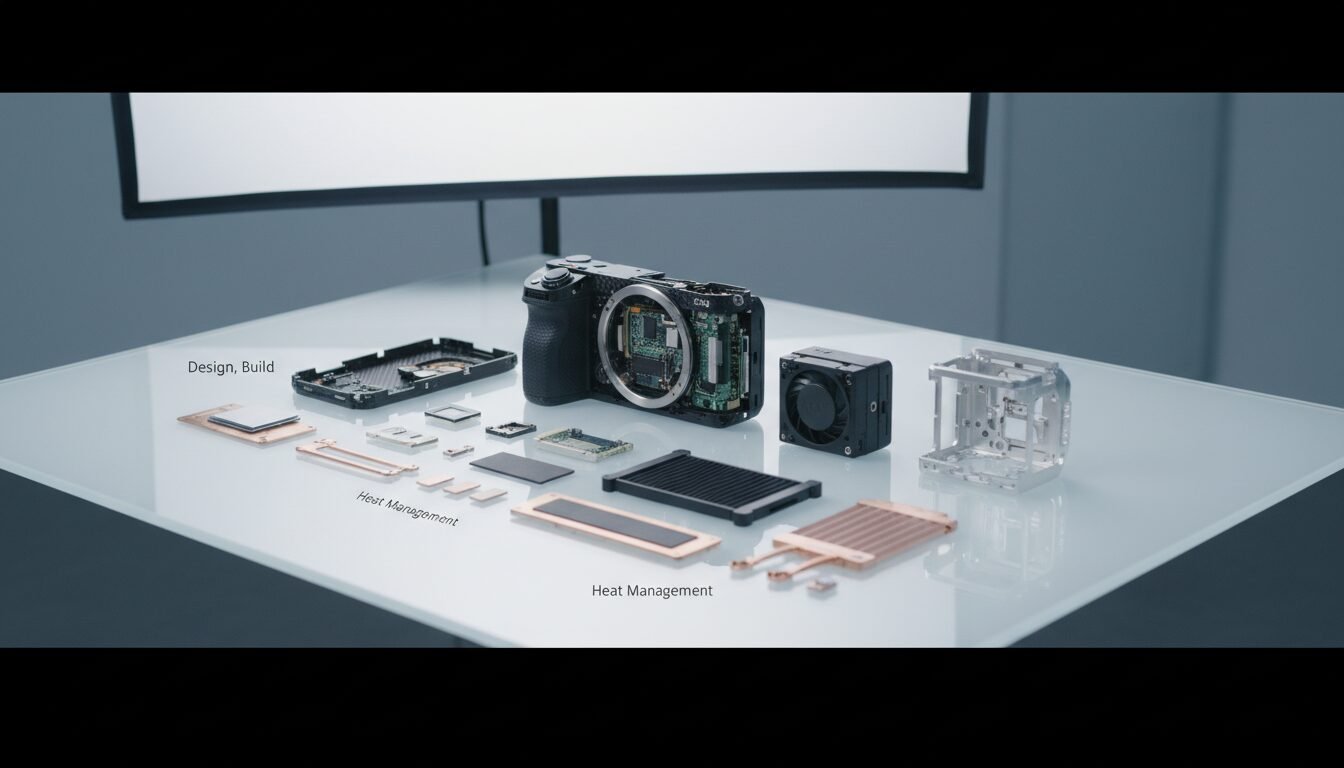
The this type of camera weighs just 1.07 pounds (485 g) with battery and card, making it one of the lightest cinema cameras available. The magnesium-alloy chassis is dust- and moisture-resistant, so you can shoot confidently in light rain. Five ¼-20 mounting points and a tally lamp on the front make it easy to rig. Add a top handle, monitor mount, or a cage like the SmallRig FX30 cage without blocking ports. The XLR handle unit (sold separately) adds two professional XLR/TRS audio inputs with independent controls, transforming it into a full ENG-style rig.
Active Cooling Fan for Reliable Recording
The internal cooling fan is one of the most praised features of the FX30. Unlike many hybrid cameras that overheat and shut down after 30 minutes of 4K 60p, the FX30 records continuously until the battery dies or the card fills. The fan is quiet enough that it rarely intrudes on dialogue, and you can set it to Auto, Low, or Mute in the menu. This reliability is a major advantage for long interviews, wedding ceremonies, or live streaming sessions.
Ports and Connectivity
The body includes a full-size HDMI Type-A port (rare at this size), a USB-C port that supports UVC/UAC for webcam use and power delivery, a 3.5 mm headphone jack, a 3.5 mm microphone input, and a Multi Interface Shoe with digital audio. Dual SD/CFexpress Type-A slots sit behind a locking door. For networking, built-in Wi-Fi (2.4/5 GHz) and a USB-C LAN adapter option allow remote control via Sony’s Imaging Edge app or FTP transfer. This connectivity turns the this kind of cinema camera into a versatile streaming or remote-production hub.
Workflow, Media, and Power
Dual Card Slots and Recording Formats
The Sony FX30 digital cinema camera’s dual slots accept either CFexpress Type A or UHS-II SD cards. You can configure them for relay, backup, or separate proxy/stills recording. The camera writes XAVC S-I up to 600 Mbps, which demands a fast card. CFexpress Type A eliminates buffer clearing delays entirely. Additionally, S&Q (Slow & Quick) mode lets you capture ready-to-play slow or fast motion internally without post-processing.
Proxy Recording and File Management
To streamline post, the FX30 can simultaneously record HD proxy files (up to 9 Mbps) alongside high-res 4K. This is a lifesaver for editors working on laptops or collaborating via cloud services. The proxy files can also embed timecode and LUTs. The focus breathing compensation feature works with select Sony lenses to eliminate unwanted field-of-view changes when pulling focus, further reducing the need for post corrections.
HDMI RAW Output and External Recording
When you need the ultimate quality, the Sony FX30 outputs 16-bit RAW over HDMI. This supports 4.6K full-width capture at up to 30p, or 4K up to 120p, when recorded to a compatible external device like the Atomos Ninja V+ or Blackmagic Video Assist. RAW gives the greatest latitude for color grading and VFX work, effectively future-proofing your footage for HDR deliverables and high-end productions.
Battery Life and Rigging Recommendations
Battery Performance Across Codecs
The FX30 runs on Sony’s NP-FZ100 battery, the same unit shared across the FX3, a7 IV, and a7S III. In practical use, expect roughly 60-90 minutes of continuous 4K recording per charge depending on codec, screen brightness, and Wi-Fi activity. Shooting XAVC S-I at 600 Mbps drains the battery faster than Long-GOP XAVC S, so carrying at least two batteries is standard practice on any serious shoot. The USB-C port supports pass-through charging, meaning you can top up from a power bank while recording, which is a genuine advantage for all-day event coverage.
Rigging the FX30 for Production
Out of the box, the Sony FX30 digital cinema camera is already rig-friendly. The five ¼-20 thread points let you mount a top handle, follow focus, or monitor arm without a cage. For more ambitious builds, the SmallRig 3577 cage is a popular choice, adding NATO rails and cold shoe mounts while keeping the overall footprint compact. Pair the body with Sony’s XLR-K3M handle unit for dual-channel professional audio, and you have a complete ENG-style rig for under $2,500 total. For gimbal work, the FX30’s light weight makes it compatible with mid-range stabilizers like the DJI RS 3 Mini without needing a counterweight.
Pros and Cons
Pros
- 6K oversampled 4K up to 120p delivers exceptional sharpness and detail for the price point.
- Active cooling fan enables unlimited recording, eliminating the overheating anxiety that plagues hybrid cameras.
- S-Cinetone and S-Log3 provide professional color science straight out of the box, reducing grading time significantly.
- 16-bit RAW HDMI output at 4.6K future-proofs your footage for high-end deliverables.
- Compact, lightweight body at 1.07 lbs makes it genuinely portable for solo and travel productions.
- Dual CFexpress Type A / SD slots with relay and backup recording for production reliability.
Cons
- No built-in EVF, which can be frustrating in bright outdoor conditions without an external monitor.
- No internal ND filters, a feature found on pricier Cinema Line bodies like the FX6 ($3,998+).
- Rolling shutter is noticeable during fast pans, though 6K oversampling helps reduce the effect.
- Low-light ceiling is lower than full-frame rivals. The FX3’s native ISO 12,800 base outperforms the FX30 in extreme darkness.
- Limited stills capability: no mechanical shutter and no EVF make it a poor choice for photographers who split time between photo and video.
Sony FX30 vs FX3 vs Sony a6700: Full Comparison
FX30 vs FX3: Super 35 or Full-Frame?
The Sony FX3 is the full-frame sibling in the Cinema Line, sharing the same body shape, cooling fan, and menus as the Sony FX30 digital cinema camera. The primary difference is the sensor: the FX3 sports a 12.1-megapixel full-frame sensor with extremely high sensitivity (native ISO 800/12,800) and better low-light performance. The FX30’s APS-C sensor has a deeper depth of field for a given aperture and a 1.5x crop factor that extends lens reach, which can be an advantage for wildlife and sports videography. The FX30 is significantly cheaper, about half the price at $2,099 versus $3,898, making it a smarter entry point for those who don’t absolutely need full-frame’s extreme low-light capability.
FX30 vs a6700: Cinema vs Hybrid
The Sony a6700 is a hybrid APS-C camera with the same sensor and processor as the Sony FX30 digital cinema camera, but it lacks a cooling fan, has recording time limits, and uses a smaller body. It offers an electronic viewfinder and mechanical shutter for stills, whereas the FX30 has no EVF and limited photo features. For pure video work, the FX30’s active cooling and unlimited recording alone justify the upgrade. The a6700 at $1,398 is the better choice if you split time equally between stills and video, but for serious filmmaking, the FX30’s cinema-oriented features prevail.
| Feature | Sony FX30 | Sony FX3 | Sony a6700 |
|---|---|---|---|
| Sensor | 20.1 MP APS-C (Super 35) | 12.1 MP Full-Frame | 26 MP APS-C |
| Max Video Resolution | 4K 120p (6K oversampled) | 4K 120p | 4K 120p (with crop) |
| Base ISO (S-Log3) | 800 / 2500 | 800 / 12,800 | 800 / 2500 |
| Cooling Fan | Yes | Yes | No (thermal limits) |
| Stabilization | 5-axis IBIS + Active Mode | 5-axis IBIS + Active Mode | 5-axis IBIS + Active Mode |
| Card Slots | 2× CFexpress A / SD | 2× CFexpress A / SD | 1× SD (UHS-II) |
| HDMI RAW Output | 4.6K 16-bit | 4.2K 16-bit | No RAW |
| Price (Body Only) | $2,099 | $3,898 | $1,398 |
Which One Should You Buy?
If budget is the primary constraint and you need cinema reliability with unlimited recording, the Sony FX30 digital cinema camera is the clear winner. For those who shoot in extreme low light or require the shallowest depth of field for full-frame aesthetics, the FX3 justifies the premium. The a6700 is perfect for hybrid creators who shoot stills and video equally and can accept recording limits. For dedicated video work, the FX30’s balance of cost, features, and no-compromise cooling make it the ideal pick.
Real-World Performance: From Indies to Corporate Video
Solo Filmmaking and Run-and-Gun
On real sets, the Sony FX30 digital cinema camera shines brightest when stripped down. Pop a fast prime like the Sony FE 24mm f/1.4 GM (equivalent to 36mm on Super 35) and you have a discreet documentary rig. The Active Mode stabilization, combined with a small gimbal or even handheld with a neck strap, yields smooth tracking shots without a massive rig. The Fast Hybrid AF with Subject Recognition keeps an interviewee in focus even as they move, freeing you to concentrate on framing rather than focus pulling.
Multi-Camera Productions and B-Cam Duty
In a controlled studio or live event, the FX30’s S-Cinetone and S-Log3 intercut cleanly with footage from an FX6 or FX9. Directors of photography often deploy the Sony FX30 digital cinema camera as a locked-off wide shot while an FX6 handles close-ups. Its tally lamp and timecode sync via HDMI or Multi-Interface Shoe (with the SMAD-P5 adapter) integrate smoothly into any broadcast workflow.
Content Creators and YouTube
For YouTubers and online educators, the FX30 solves the overheating problem that plagues many mirrorless cameras. A 2026 review by Tech Through The Lens notes that “after 30 minutes shooting in 4K 60fps with the a6700, you will want an FX30,” highlighting the peace of mind the fan provides. The built-in USB-C streaming makes it plug-and-play for live broadcasts, and the product showcase focus mode quickly snaps to items held up to the lens, which is perfect for unboxing and tutorial content.
Is the Sony FX30 Digital Cinema Camera Still Worth It in 2026?
Strengths That Have Aged Well
Even in 2026, the Sony FX30 digital cinema camera holds its own. Firmware updates have refined autofocus and added features like 4K 120p with subject tracking via external RAW. The image quality remains competitive, with the 6K oversampled footage still looking sharp on modern 4K displays. Its ecosystem of affordable APS-C lenses, from Sony’s G series to third-party options from Tamron and Sigma, keeps the system accessible. The fact that it shares batteries (NP-FZ100) and media with higher-end Sony bodies makes it a natural B-cam for existing Sony shooters.
Potential Drawbacks in a Competitive Market
No camera is perfect. The Sony FX30 lacks a built-in EVF, which can be frustrating in bright sunlight. Its low-light performance, while excellent for Super 35, can’t match full-frame rivals like the Panasonic S5 IIX or the FX3 when shooting at ISO 12,800 and above. Rolling shutter is noticeable in fast pans, though the oversampled 4K helps mitigate it. Some users will also miss internal ND filters, which are found on pricier cinema bodies like the FX6.
Final Verdict and Recommendation
The Sony FX30 digital cinema camera remains the most cost-effective way to enter Sony’s Cinema Line. For solo videographers, indie filmmakers, and content studios, it delivers professional features: 6K oversampling, S-Cinetone, unlimited recording, 16-bit RAW output, in a package that truly goes anywhere. If you can accept the Super 35 sensor and the lack of an EVF, you’ll find a camera that punches far above its price class. In 2026, it’s still one of the smartest investments a serious video creator can make.
“The FX30 is a very versatile tool and a solid value for the money. It kept up with productions that once demanded far larger cameras.” Fstoppers
“According to creative industry data, compact cinema cameras with active cooling have become the preferred choice for solo documentary filmmakers, with the Sony Cinema Line representing one of the most widely adopted professional video ecosystems globally.” Industry Production Trends, 2025
Ready to build something bold with your next production? Contact Emin Media for a free brand consultation and let’s talk about how the right camera system fits into your creative strategy.
Frequently Asked Questions
What is the Sony FX30 best used for?
The Sony FX30 excels in solo filmmaking, documentary work, wedding videography, and as a B-cam for productions using FX3, FX6, or FX9 cameras. Its compact size and unlimited recording make it ideal for long shoots and travel.
Does the Sony FX30 shoot stills?
Yes, the FX30 can capture 20.1-megapixel stills, but it lacks a mechanical shutter and electronic viewfinder. It is primarily designed for video; a hybrid like the Sony a6700 is a better stills performer.
Can the Sony FX30 overheat?
No, the FX30 includes an internal active cooling fan that prevents overheating during extended 4K 60p recording. It can record continuously until the battery runs out or the card fills, even in warm environments.
What lenses work with the Sony FX30?
The FX30 uses the Sony E-mount, so it accepts all APS-C E-mount lenses and full-frame FE lenses (with a 1.5x crop factor). Popular choices include the Sony 11mm f/1.8, the 16-55mm f/2.8 G, and the 70-350mm G OSS.
Is the Sony FX30 good for low light?
With its dual base ISO of 800 and 2500 in S-Log3 and a 14+ stop dynamic range, the FX30 handles low light well. Full-frame cameras like the FX3 have a higher native base of 12,800 ISO and produce cleaner images in extreme darkness.
Does the Sony FX30 shoot RAW video?
Yes, the FX30 outputs 16-bit RAW video over HDMI at up to 4.6K resolution when connected to an external recorder like an Atomos Ninja V+. This unlocks maximum grading flexibility for high-end productions.
Enjoyed this article?
Contact Emin Media for a free brand consultation and let's create something amazing together.
Get in TouchRelated Articles
Canon Digital ELPH Camera: Full Buyer’s Guide 2026
Canon digital elph camera models ranked, compared, and reviewed. Find the right ELPH for your…
Canon 10D Digital SLR Camera: 2026 Buying Guide
The Canon 10D digital SLR camera offers film-like images, magnesium build, and EF lens access…
Canon Digital PowerShot Camera: Full 2026 Guide
Canon digital powershot camera models compared: ELPH, SX, and V-series specs, prices from $243 to…