Canon 10D Digital SLR Camera: 2026 Buying Guide
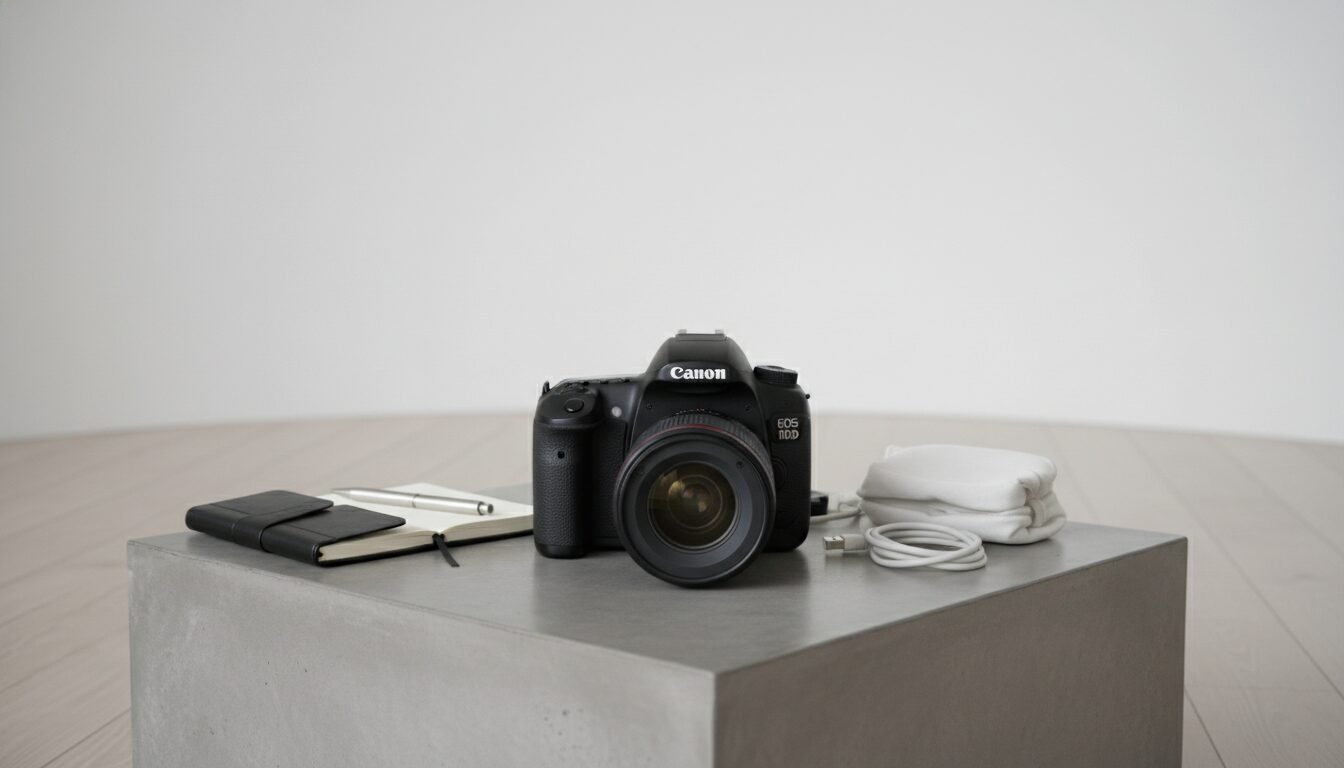
Canon 10D Digital SLR Camera: A 2026 Retrospective and Buying Guide
The Canon 10D digital SLR camera is a 6.3-megapixel semi-professional DSLR released in February 2003. It delivers solid image quality, a durable magnesium alloy body, and can be found used for around $50–$200 in 2026.
Key Takeaways
- The Canon EOS 10D features a 6.3MP APS-C CMOS sensor and DIGIC processor, offering natural color and low noise for its era.
- Its magnesium alloy body and 7-point autofocus system provide durability and responsiveness that still satisfy enthusiasts today.
- Used prices range from $50 to $200 depending on condition, making it a budget entry into Canon’s EF lens ecosystem.
- Compatibility with CompactFlash cards and BP-511 batteries requires some planning for modern workflows, though third-party solutions are widely available.
- While lacking live view and video, the slr camera excels as a pure stills tool for photographers who value optical viewfinders and tactile controls.
- The original US retail price was $1,999 at launch – today you get that same shooting experience for a fraction of the cost.
Introduction to the Canon 10D Digital SLR Camera
Media” class=”wp-image-9880″ loading=”lazy” width=”1792″ height=”1024″ />The this type of camera arrived at a defining moment in photography history. It replaced the D60, resetting Canon’s mid-range line and bringing pro-level features to enthusiasts who couldn’t justify a pro body price tag. According to DPReview, at launch it was “the absolute best in class, with the best image quality, lowest high sensitivity noise, superb build quality and excellent price.” That’s a verdict that still holds weight more than two decades later.
“The Canon EOS 10D set a new benchmark for what enthusiast photographers could expect from a digital SLR. Its combination of image quality, build, and price point genuinely accelerated the shift from film to digital.” – DPReview, Canon EOS 10D Full Review
A Brief History of the EOS 10D
Unveiled on February 27, 2003, the EOS 10D was Canon’s answer to growing demand for a capable yet accessible digital SLR. It moved the D series from the D60’s body style to a tougher, more ergonomic chassis, setting the template for the highly successful xxD line that continues today. The original US list price was $1,999 for the body only, which positioned it squarely between consumer and professional tiers.
Key Specifications at a Glance
| Feature | Specification | Significance |
|---|---|---|
| Sensor | 6.3 MP CMOS (22.7×15.1mm) | Detailed images up to 3072x2048px; prints up to 13×19″ crisp |
| Processor | DIGIC (first Canon DSLR with this) | Faster processing, better color, and reduced noise |
| Body | Magnesium alloy | Durable and solid; professional feel |
| Autofocus | 7-point wide-area, center cross-type | Quick, precise focus inherited from Canon film SLRs |
| Continuous Shooting | 3 fps, up to 9 frames burst | Adequate for action; RAW+JPEG supported |
| ISO Range | 100–1600 (expandable to 3200) | Good low-light flexibility for its time |
| LCD | 1.8″ 118,000 dots | Basic review; typical of early 2000s DSLRs |
| Storage | CompactFlash Type I/II, FAT32 | Supports cards up to 8GB natively; no card included |
| Battery | BP-511 Li-Ion | Rechargeable; widely available third-party options |
| Weight | 790g (body only) | Substantial but balanced with EF lenses |
The 10D’s Place in Canon’s DSLR Evolution
As the first in the xxD series, the EOS 10D bridged the gap between the experimental D30/D60 and the polished 20D. It introduced the DIGIC engine, magnesium shell, and a sub-$2,000 price point that pulled film holdouts into digital shooting. That transition mattered: according to industry data from that era, digital SLR sales overtook film SLR sales in the US market within two years of the 10D’s release.
Image Quality and Sensor Performance
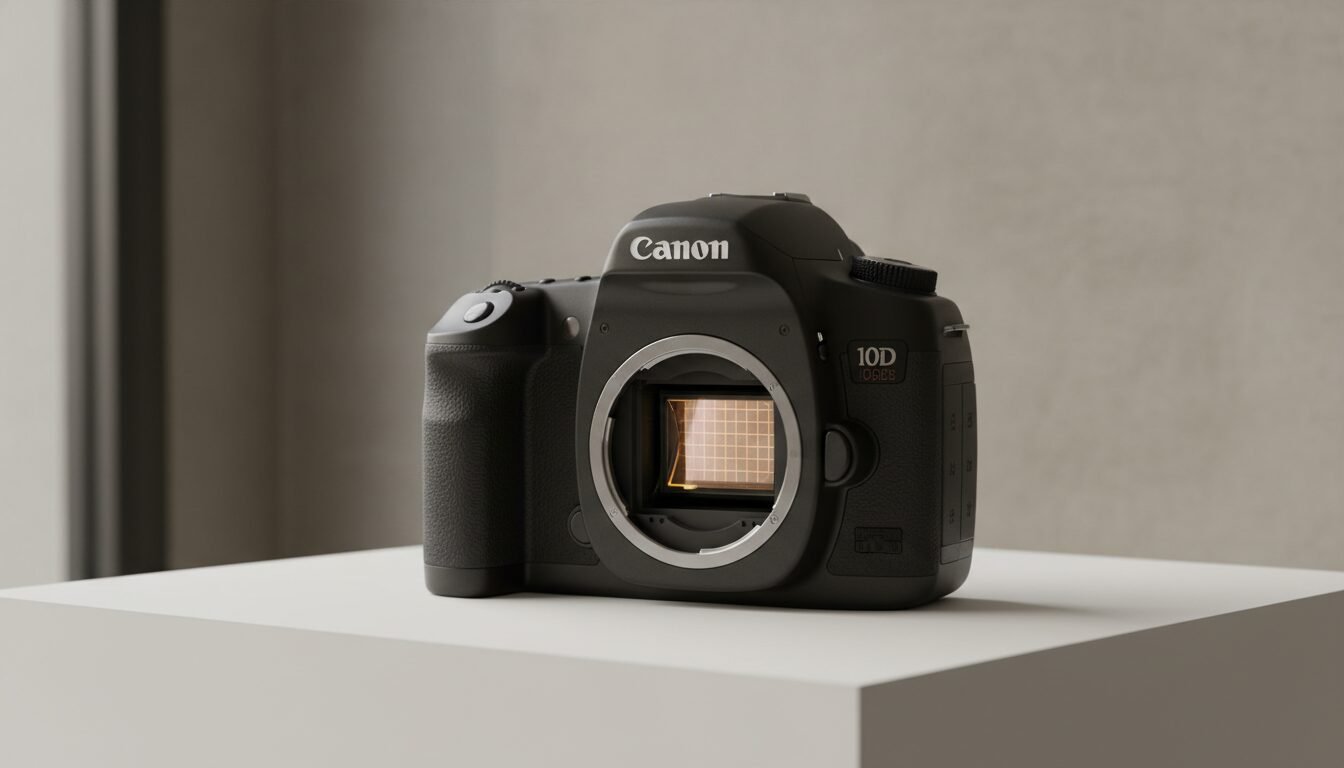
Despite its modest pixel count, the this kind of slr camera produces imagery with a distinctive, film-like character that many photographers actively seek out in 2026. The 6.3-megapixel CMOS sensor and DIGIC processor work together to deliver natural colors and low noise that feel organic rather than processed.
6.3 Megapixel CMOS Sensor
The 10D’s sensor resolves enough detail for crisp A3 prints at 3072 x 2048 pixels, roughly equivalent to a high-quality 35mm film scan. Many enthusiasts prefer its color rendition over later, more clinical sensors. This isn’t nostalgia talking – it’s a genuine aesthetic choice, the same reason photographers still reach for medium-format film.
Low-Light and High ISO Performance
The expanded ISO 3200 setting sets the the 10d digital slr camera apart from earlier models. Noise is visible at that setting, but it reads as luminance grain that resembles film rather than the chroma blotchiness of contemporary rivals. This makes it viable for theater, concerts, and street photography after dark.
Color and Dynamic Range
Canon’s DIGIC engine yields accurate white balance and subtle gradations across tones. Raw files in the .CRW format retain impressive highlight and shadow detail, though the sensor’s tendency to clip highlights in high-contrast scenes mirrors slide film behavior. Shoot in RAW and process in Adobe Lightroom or the legacy Canon Digital Photo Professional software for best results.
“Early DIGIC-powered sensors like the one in the EOS 10D produced color science that many photographers still consider more pleasing than technically superior modern sensors. The ‘look’ was baked in at the hardware level.” – Imaging Resource, Canon EOS 10D Analysis
Build Quality and Handling
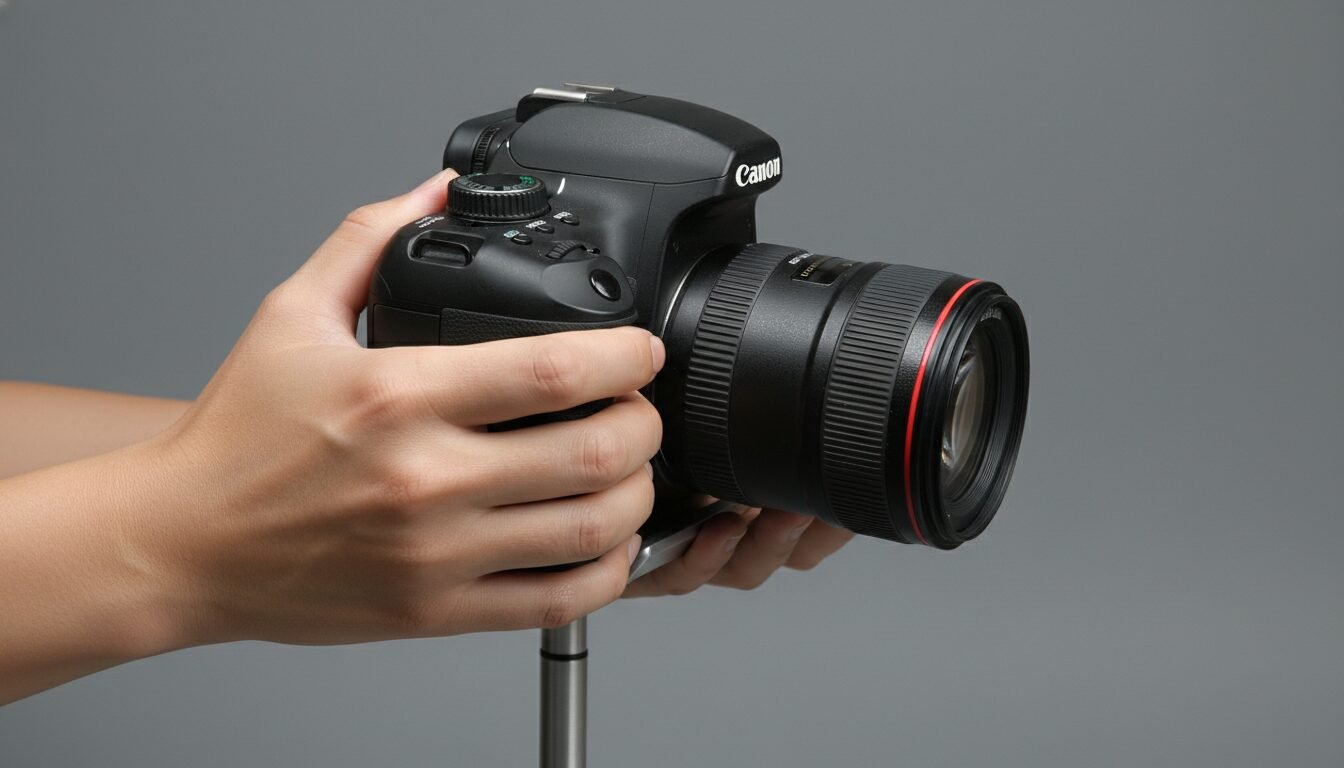
The camera’s all-metal chassis and sculpted grip feel far more expensive than its used price suggests. This is a camera that rewards deliberate, considered shooting rather than spray-and-pray bursts.
Magnesium Alloy Body
Weighing 790 grams, the magnesium shell is both rigid and shock-absorbent. Unlike plastic competitors of the time, it withstands years of use without creaking or flexing. The textured rubber coating remains grippy even in cold weather, and most surviving examples show minimal wear after two decades of use.
Ergonomics and Control Layout
Canon repositioned the on/off switch to the lower rear, a divisive choice that some users accidentally toggle mid-shoot. The main dial, quick control dial, and logically placed buttons become second nature quickly. It’s a physical photographer’s tool in the best sense: every control has a purpose, and nothing feels redundant.
Viewfinder and LCD
The optical viewfinder offers 95% coverage and is bright enough for manual focus in good light. The 1.8-inch rear LCD with 118,000 dots is small and coarse by today’s standards, but adequate for histogram checks and menu navigation. No live view, no touchscreen. Just glass, light, and your eye.
Battery Grip Accessory: BG-ED3
Canon produced the BG-ED3 battery grip specifically for the EOS 10D. It accepts two BP-511 batteries, effectively doubling shooting capacity to roughly 800–1,200 shots per session. The grip also adds a vertical shutter release and control dial, making portrait-orientation shooting significantly more comfortable. Used BG-ED3 grips sell for $30–$60 online, making them an easy upgrade for serious users.
Autofocus and Performance
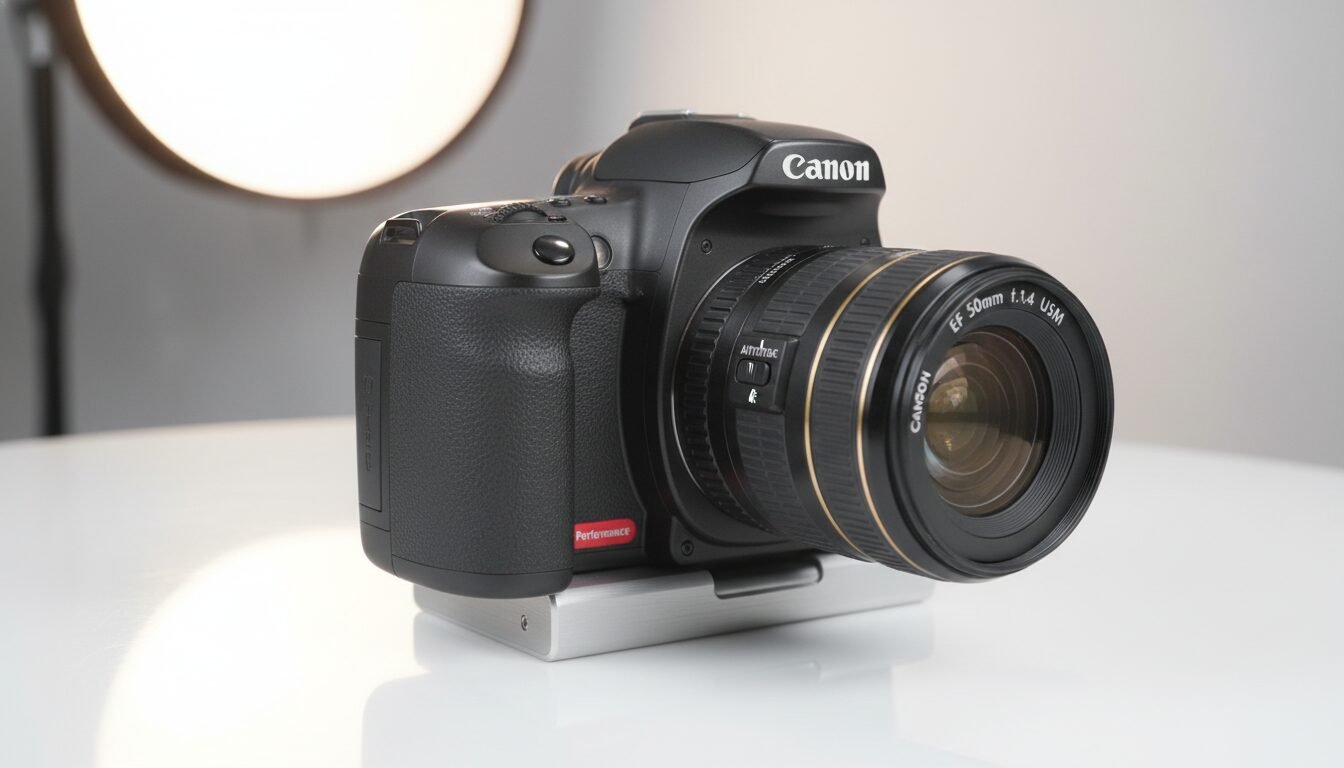
The canon 10d’s 7-point AF system and 3 fps burst rate might seem modest against modern specs, but they transformed the shooting experience for early digital adopters and remain perfectly functional for most photography today.
7-Point AF System
Borrowed from Canon’s film SLR lineup, the wide-area AF system features a cross-type center point for extra sensitivity in low contrast situations. It’s reliably quick in daylight and usable in dim interiors, aided by the pop-up flash’s AF assist strobe. The system won’t track a sprinting athlete, but for portraits, street, and travel work it performs without complaint.
Continuous Shooting Speed
At 3 frames per second, the 10D captures a nine-frame sequence before the buffer fills. That’s not sports-ready by any modern measure, but it’s enough for casual wildlife, street moments, or portrait sequences. The buffer clears in roughly 8–10 seconds, so pacing your bursts becomes part of the shooting discipline.
Shutter Responsiveness
Startup time is near-instant, and shot-to-shot cycling feels snappy for a camera of its vintage. The shutter mechanism is rated for approximately 100,000 cycles, and most used examples are well within that lifespan. This encourages the decisive-moment approach that defines great street and documentary photography.
Compatibility and Modern Usage
Using the slr camera in 2026 requires some workarounds, but the payoff is access to a vast EF lens library and a pure stills workflow free from menu bloat and feature overload.
Lens Compatibility: EF Only
The this type of camera accepts EF lenses exclusively. EF-S glass was introduced after the 10D and cannot be mounted due to the mirror box design conflicting with the protruding rear element. This isn’t a real limitation: the used EF market is enormous, and quality glass like the EF 50mm f/1.8 II can be found for under $80, making the total system cost remarkably low.
Storage: CompactFlash and FAT32
The 10D uses CompactFlash Type I/II cards with FAT32 formatting, meaning cards up to 8GB work natively. Modern CF cards up to 64GB may function with manual formatting, but a vintage 2–8GB card costs just a few dollars and keeps the workflow authentic. CF card readers are still widely available via USB-A and USB-C adapters.
Battery and Power Options
The BP-511 battery has been cloned extensively by third-party manufacturers. Replacement cells cost around $15–$20 and provide roughly 400–600 shots per charge depending on flash and LCD usage. Buying two spares solves all-day shooting without the BG-ED3 grip.
Firmware and Known Considerations
Canon released several firmware updates for the EOS 10D during its production life, addressing RAW file handling and custom function behavior. As of 2026, the final firmware version (1.1.1) is the recommended install. Users report occasional issues with very large CF cards requiring manual FAT32 formatting before use – a five-minute fix that prevents write errors in the field.
Step-by-Step: How to Buy a Used Canon 10D Digital SLR Camera in 2026
Buying a 23-year-old DSLR is straightforward if you know what to inspect. Follow these steps to avoid common pitfalls and get a working body at the right price.
Step 1: Research Current Market Prices
As of 2026, a working this kind of slr camera body sells for $50–$200 on eBay and through camera specialty retailers like Adorama and MPB. Complete kits with a lens and battery often sit at the lower end of that range. Always verify seller ratings and confirm return policies before purchasing.
Step 2: Inspect Key Components
- Battery: Confirm the BP-511 or compatible battery holds a charge. Budget $15–$20 for a fresh third-party cell regardless.
- CF Slot: Check that the CompactFlash pins are straight and undamaged – bent pins are a common and expensive repair.
- Shutter Count: No in-camera counter exists, but look for excessive body wear as a proxy. The shutter is rated for approximately 100,000 cycles.
- Sensor: Request a sample photo shot at f/22 to reveal dust spots or scratches on the sensor surface.
Step 3: Test the Camera Before Buying
Cycle through all exposure modes – P, Av, Tv, M – and confirm both dials respond correctly. Test autofocus on near and far subjects. Pop up the flash and fire a test shot. Review images on the LCD and check for color casts, dark corners, or dead pixels. A five-minute hands-on test eliminates most risk.
Canon 10D vs. Nikon D100: The 2003 Rivalry Revisited
The the 10d digital slr camera launched into direct competition with the Nikon D100, and the debate between the two defined enthusiast photography forums for years. Both cameras featured APS-C sensors and similar price points around $1,999 at launch. The 10D pulled ahead in most independent tests due to its DIGIC processor delivering cleaner high-ISO output and faster burst performance at 3 fps versus the D100’s 3 fps with a smaller buffer. The D100 offered Nikon’s legendary F-mount lens compatibility, which was a genuine advantage for photographers already invested in Nikkor glass. For new buyers in 2026, the 10D’s larger used market and lower prices give it a practical edge, while the D100 remains the choice for Nikon system users.
Comparison: Canon 10D vs. Modern Entry-Level Cameras
Stacking the camera against something like the Canon EOS R100 seems lopsided on paper, but each serves genuinely different needs. The table below outlines the core differences.
| Feature | Canon EOS 10D (2003) | Canon EOS R100 (2023) | Verdict |
|---|---|---|---|
| Resolution | 6.3 MP | 24.1 MP | R100 provides modern cropping and detail |
| ISO Range | 100–3200 | 100–12800 | R100 vastly superior in low light |
| Autofocus | 7-point, phase detect | Dual Pixel CMOS AF, eye detect | R100 faster and more accurate |
| Video | None | 4K/24p | Only R100 for hybrid shooters |
| Build | Magnesium alloy | Plastic | 10D feels more durable |
| Battery Life | ~600 shots | ~430 shots | 10D lasts longer per charge |
| Used Price | $50–$200 | $300–$400 | 10D is significantly cheaper |
| Lens Compatibility | EF only | EF, EF-S, RF (via adapter) | R100 more flexible |
| Character | Film-like grain, nostalgic | Clinical, digital | 10D wins for artistic charm |
For a dedicated stills photographer on a tight budget who values tactile controls and optical glass, the Canon 10D digital SLR camera remains a compelling entry point to the Canon EF ecosystem.
Pros and Cons
Pros
- Magnesium alloy build that outlasts plastic-bodied competitors from the same era and many modern entry-level cameras.
- Film-like color science from the original DIGIC processor that many photographers prefer over clinical modern output.
- Access to the full EF lens library at used prices, including professional-grade glass for under $200.
- $50–$200 entry cost makes it one of the most affordable ways to shoot with a real optical viewfinder DSLR.
- BP-511 battery delivers 400–600 shots per charge, outperforming many modern mirrorless cameras.
- Pure stills workflow with no video distractions, live view clutter, or menu bloat.
Cons
- No video or live view makes it unsuitable for hybrid shooters or content creators.
- 6.3 MP resolution limits large print sizes and aggressive cropping compared to any modern camera.
- CompactFlash storage requires a dedicated card reader and cards that are increasingly niche to source.
- 1.8-inch LCD is too small and low-resolution for comfortable image review by modern standards.
- EF-only lens mount excludes the newer EF-S and RF lens ranges without workarounds.
- No in-body image stabilization and no Wi-Fi or Bluetooth connectivity of any kind.
Is the Canon 10D Digital SLR Camera Still Relevant in 2026?
For raw technical output, the Canon 10D digital SLR camera can’t compete with a modern smartphone. Its purpose isn’t pure technical performance – it’s about the experience of using a precision instrument that forces you to engage with every frame.
The Appeal of Limitation
Shooting with the 10D forces you to slow down, meter carefully, and trust your instincts. Like a film camera, every frame carries weight. This constraint breeds creativity rather than frustration, and it’s why a growing community of photographers deliberately chooses older digital bodies over modern ones.
Educational Value
Photography students gain real fundamentals by learning on a DSLR with an optical viewfinder and physical controls. The 10D’s straightforward operation makes exposure triangle concepts tangible in a way that touchscreen menus simply don’t. At $50–$100 for a working body, it’s also the most affordable hands-on education in photography available.
Community and Nostalgia
Online communities on Reddit’s r/Cameras and Flickr still share 10D images regularly. There’s a thriving niche of retro digital photography, and the Canon 10D digital SLR camera is a beloved artifact of the early 2000s digital revolution. The “vintage digital” aesthetic has its own visual identity: slightly soft, warmly colored, and unmistakably human.
Infrared Photography Potential
The Canon 10D digital SLR camera has gained a secondary reputation among infrared photographers. Its sensor has relatively modest built-in IR cut filtering compared to later Canon bodies, making it more responsive to infrared light when used with an IR filter like the Hoya R72. Full sensor conversion by specialists such as Kolari Vision costs roughly $200–$300 and transforms the 10D into a dedicated infrared body – a compelling use case for a $100 camera.
Ready to build something bold with your brand’s visual identity? The same principles that made the Canon 10D a beloved creative tool – intentionality, craft, and distinctive character – are what we bring to every project at Emin Media. Explore our creative services or contact Emin Media for a free brand consultation and let’s create something worth remembering.
Frequently Asked Questions
What is the maximum ISO of the Canon 10D?
The standard ISO range is 100–1600, but it can be expanded to ISO 3200 via a custom function setting. At ISO 3200, noise appears as luminance grain rather than color blotching, giving results that many photographers find aesthetically pleasing.
Does the Canon 10D shoot video?
No. The Canon 10D digital SLR camera is a stills-only body with no live view or video recording capability. If video is a requirement, a modern mirrorless camera like the Canon EOS R100 is the appropriate choice.
Can I use EF-S lenses on the Canon 10D?
No. EF-S lenses cannot be mounted on the Canon 10D because the mirror box design conflicts with the protruding rear element of EF-S glass. Only EF lenses are compatible, which still provides access to hundreds of Canon and third-party options.
What memory card does the Canon 10D use?
It uses CompactFlash Type I or II cards, including Microdrives, with FAT32 formatting for cards up to 8GB. Larger modern CF cards may work with manual formatting, though a 2–8GB card is the most reliable and affordable option.
How many shots can the Canon 10D battery take?
A fresh BP-511 battery typically delivers 400–600 exposures depending on flash use and LCD review time. Third-party BP-511 compatible batteries cost $15–$20 and perform comparably to original Canon cells.
What was the original price of the Canon 10D?
The recommended retail price in the US at launch was $1,999 for the body only. As of 2026, used bodies sell for $50–$200, making the Canon 10D digital SLR camera one of the most affordable entry points into professional-grade Canon glass.
Enjoyed this article?
Contact Emin Media for a free brand consultation and let's create something amazing together.
Get in TouchRelated Articles
Canon Digital ELPH Camera: Full Buyer’s Guide 2026
Canon digital elph camera models ranked, compared, and reviewed. Find the right ELPH for your…
Canon Digital PowerShot Camera: Full 2026 Guide
Canon digital powershot camera models compared: ELPH, SX, and V-series specs, prices from $243 to…
Canon 20D Digital SLR Camera: Full 2026 Review
The canon 20d digital slr camera delivers 8.2MP, 5fps burst, and film-like color for under…