Canon Digital PowerShot Camera: Full 2026 Guide
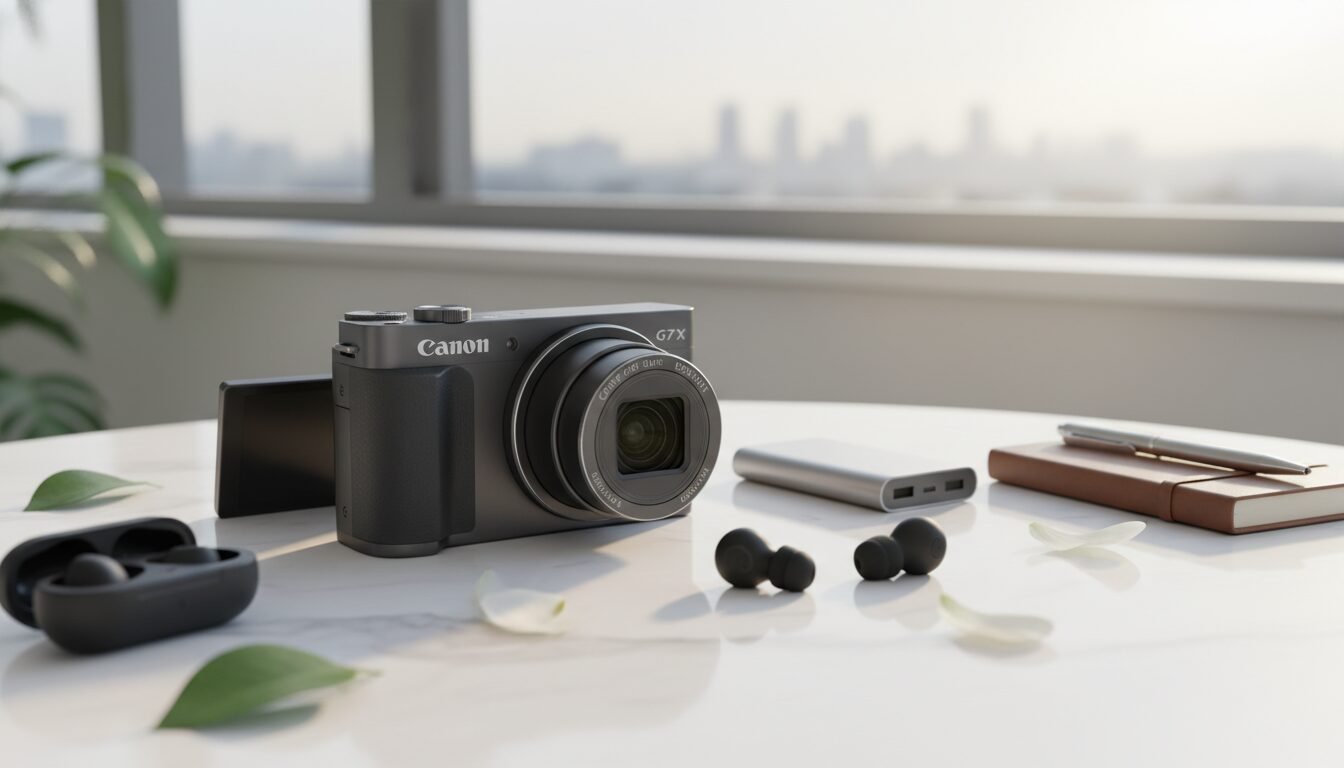
Canon digital PowerShot camera is a line of compact point-and-shoot cameras launched by Canon in 1996, built for accessible, high-quality imaging. From pocketable ELPH models to 40x superzoom SX cameras, the lineup covers every shooter.
Key Takeaways
- Canon digital PowerShot cameras blend ease of use with genuine optical quality, making them strong choices for beginners and enthusiasts alike.
- The lineup spans compact ELPH models, superzoom SX cameras, and creator-focused V-series bodies with 4K video.
- New PowerShot prices range from $379 to $979, with used models available from around $243.
- With a 30-year legacy since 1996, PowerShot cameras have proven their durability and staying power in the digital age.
- The used and refurbished market is booming: over 21,000 PowerShot listings exist on eBay at any given time.
What is a Canon Digital PowerShot Camera?
A Canon digital PowerShot camera is a compact imaging device designed to deliver optical-quality photos without requiring professional expertise. Canon introduced the line with the PowerShot 600 in July 1996. That first model packed a 0.57-megapixel CCD sensor and a fixed 50mm f/2.5 lens, storing images on PCMCIA cards. Today’s PowerShot lineup has evolved into something far more capable: 4K video, 40x optical zoom, Wi-Fi, and Bluetooth connectivity, all while keeping the original promise of making photography accessible to everyone.
History of the PowerShot Line
Canon’s PowerShot series has expanded dramatically since the mid-1990s. According to Wikipedia, the PowerShot 600 was Canon’s first consumer digital camera, and it set the template for everything that followed. Over the decades, Canon built out distinct sub-series: the A-series for affordability, the G-series for enthusiasts, the ELPH (known internationally as IXUS) for ultra-compact portability, the SX-series for superzoom reach, and most recently the V-series for video creators. Each generation pushed sensor resolution higher, shrank the body, and added connectivity features that earlier models couldn’t dream of.
Key Features That Define the Series
Every Canon digital PowerShot camera shares a few defining traits. Optical image stabilization reduces blur in low light, a real advantage over smartphone digital stabilization. Dedicated DIGIC processors deliver fast autofocus and accurate color science. Built-in Wi-Fi and Bluetooth ship on most current models, enabling instant transfers to Canon’s Camera Connect app. Optical zoom lenses ranging from 8x on entry models to 40x on the SX740 HS give PowerShot cameras a versatility that phone cameras simply cannot match without significant quality loss.
The Resurgence of Point-and-Shoot Cameras in 2026
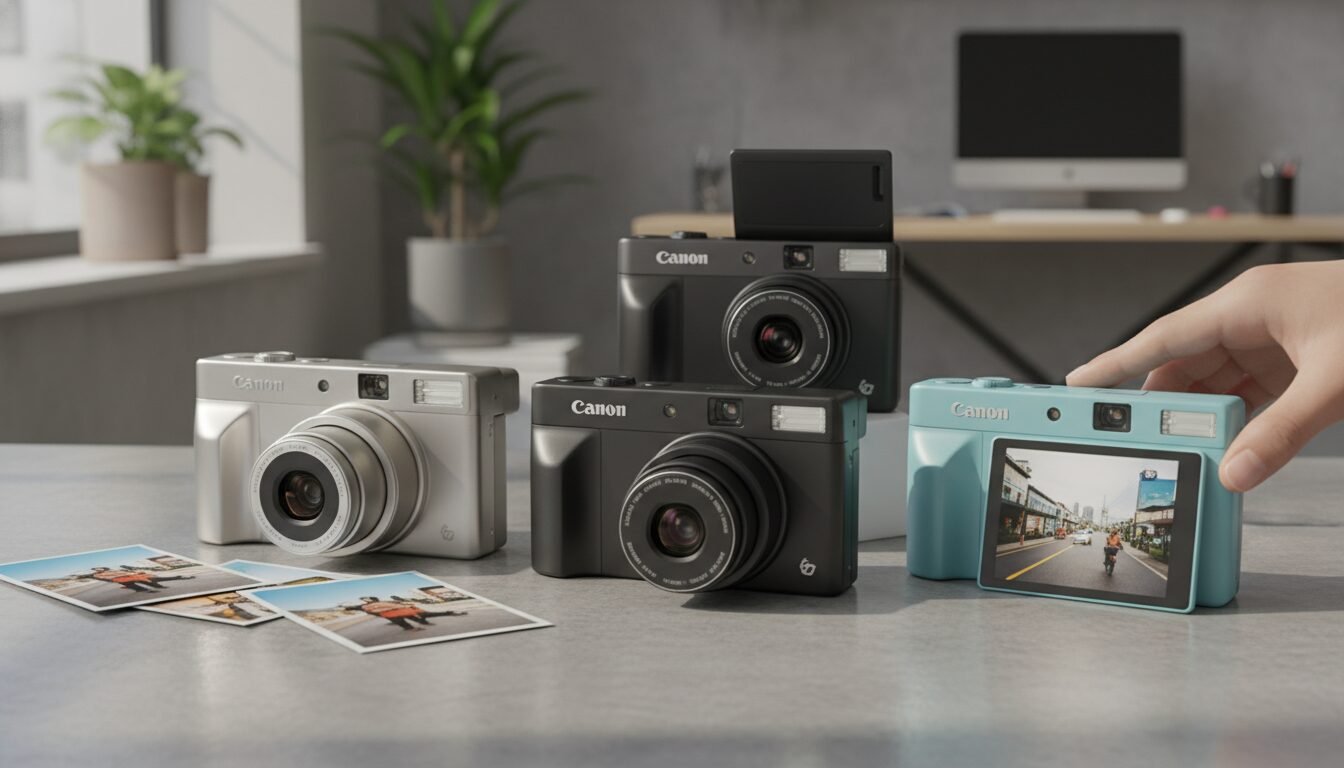
Compact cameras are making a genuine comeback after years of being overshadowed by smartphones. As of 2026, over 21,000 PowerShot listings exist on eBay, with sought-after models like the G7 X Mark II trading at multiples of their original retail price. This revival is driven by a growing appetite for authentic, less-processed images and the tactile satisfaction of shooting with a dedicated device.
Why Photographers Are Returning to Compact Cameras
Modern smartphones apply heavy AI processing to every frame, often producing unnatural skin tones and aggressively sharpened edges. A Canon digital PowerShot camera, by contrast, renders scenes with more organic fidelity straight from the sensor. Many users also find that shooting with a separate device builds real compositional instincts, skills that smartphone auto-modes tend to bypass entirely.
“The compact camera market could go the way of vinyl, with neverending slow growth.” — Canon Rumors
The Impact of Smartphone Overprocessing
One of the strongest arguments for choosing a Canon digital PowerShot camera is its resistance to computational photography excess. Phones attempt to enhance every scene automatically. PowerShot models preserve the photographer’s intent instead. This matters most in event and portrait work, where natural skin tones are non-negotiable. The optical zoom on a PowerShot also avoids the pixelated smearing that digital zoom produces on most phones, keeping distant subjects sharp and detailed.
Choosing the Right Canon Digital PowerShot Camera for Your Needs
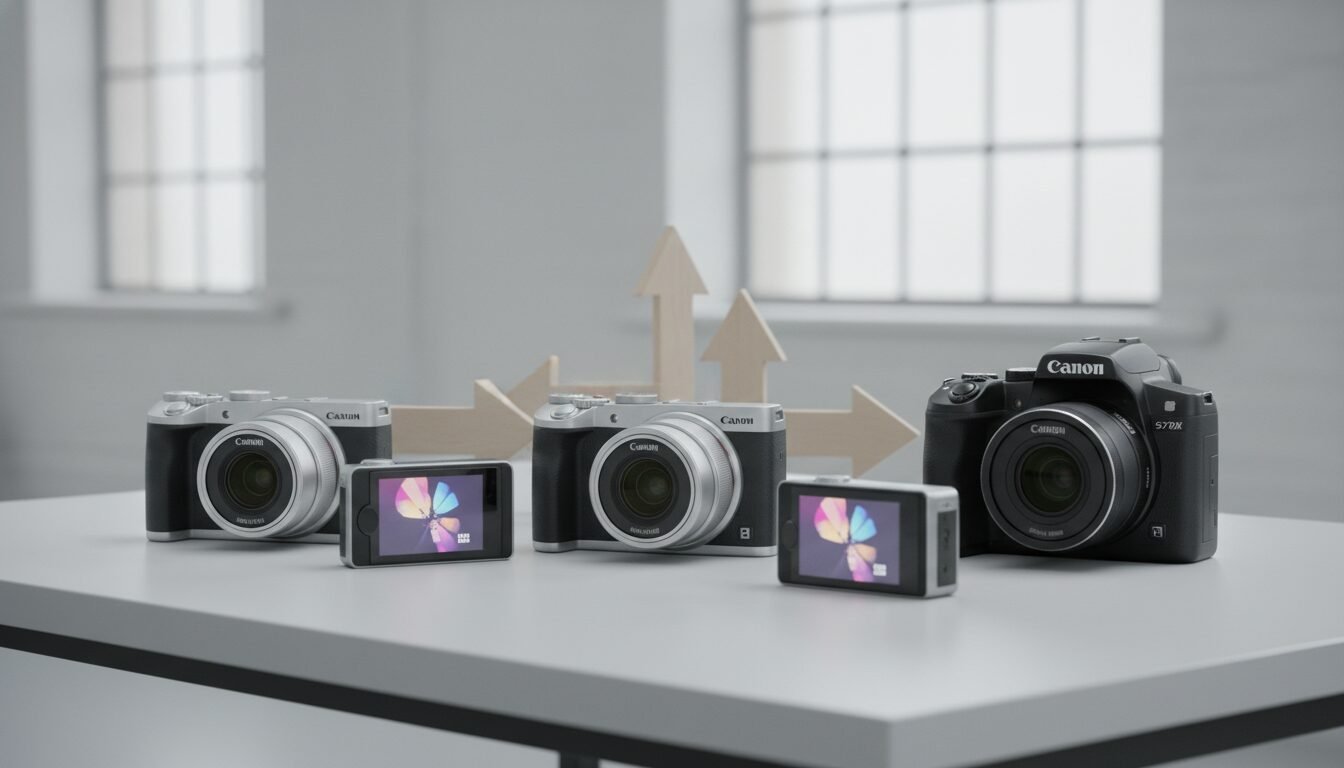
With over a dozen current models, picking the right Canon digital PowerShot camera comes down to three questions: How much zoom do you need? Will you shoot video seriously? What’s your budget? The lineup divides cleanly into the ELPH series for portability, the SX series for zoom range, and the V-series for video-first creators. Prices span from $243 for a used ELPH 180 to $979 for the flagship SX740 HS.
For Beginners: ELPH Series
The ELPH series is Canon’s entry point, and it earns its place. The PowerShot ELPH 360 HS A carries a 20.2-megapixel CMOS sensor, 12x optical zoom, and Full HD 1080p video in a body that fits any pocket. It sold over 300 units in a single month on Amazon, priced at $379.00. For family events, vacations, and everyday snapshots, it’s a no-fuss solution that outperforms any phone at its price point.
For Travel Enthusiasts: SX Series with Superzoom
Travelers who need reach should look at the PowerShot SX740 HS. Its 40x optical zoom covers a 24-960mm equivalent range, letting you photograph wildlife or distant architecture without a bag full of lenses. It records 4K UHD video and includes a flip-up screen for self-portraits. At $979.99, it replaces what would otherwise be a multi-lens kit, keeping your travel bag light and your shots sharp.
For Content Creators: V-Series with 4K Video
Canon’s PowerShot V-series targets vloggers and social media creators directly. The PowerShot V1 offers a 1-inch sensor, a built-in neutral density filter, and a vertical video mode designed for short-form platforms. According to Canon USA, the V-series is engineered as “video-first,” prioritizing audio quality and compact form together. The V1 retails at $849.00, while the V10 brings 4K vlogging down to $399.99.
Pros and Cons of Canon Digital PowerShot Cameras
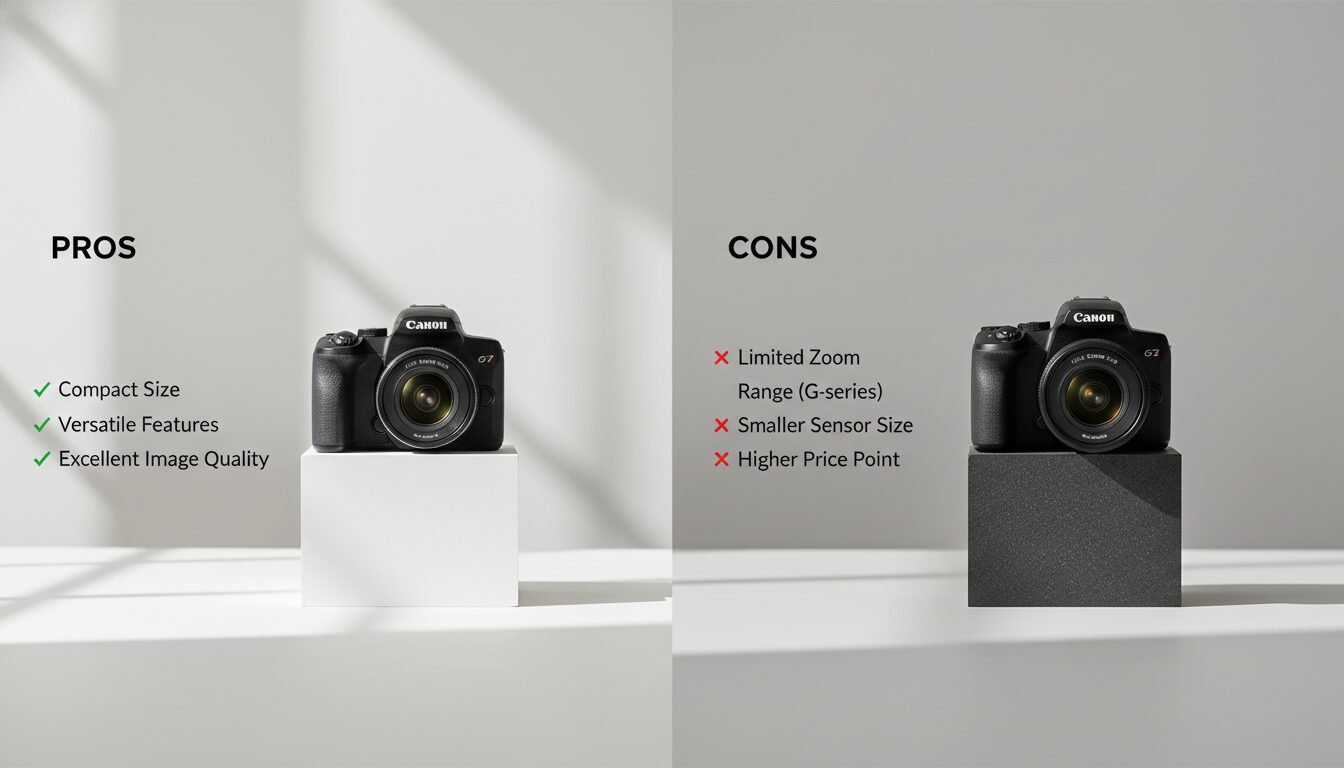
Canon digital PowerShot cameras offer a compelling mix of optical quality and portability, but they’re not the right tool for every situation. Here’s an honest breakdown.
Pros
- True optical zoom from 8x to 40x, with no quality loss at full magnification.
- Organic color science from Canon’s DIGIC processors, producing pleasing skin tones with minimal post-processing.
- Long hardware lifespan: PowerShot cameras regularly last 5-10 years with basic care, far outlasting the typical 2-3 year smartphone cycle.
- Wide price range: from $243 used to $979 new, there’s a model for nearly every budget.
- Built-in Wi-Fi and Bluetooth on current models for easy transfers via Canon’s Camera Connect app.
Cons
- No interchangeable lenses: once you buy a PowerShot, you’re committed to its built-in optic.
- Smaller sensors on ELPH models struggle in very low light compared to mirrorless or DSLR alternatives.
- Limited manual controls on entry-level ELPH bodies, which can frustrate photographers who want full creative control.
- Connectivity requires the Camera Connect app, adding a step that smartphone shooters never face.
Canon Digital PowerShot Camera vs. Smartphone Photography
A Canon digital PowerShot camera and the latest flagship phone each win in different categories. Dedicated cameras outperform phones on zoom range, optical stabilization, and dynamic range. Phones win on convenience, instant sharing, and computational tricks like night mode. Knowing which trade-offs matter to you is the real decision.
Image Quality and Authenticity
In real-world use, a PowerShot SX740 captures far more detail at full zoom than any phone, which relies on digital magnification that smears fine textures. Canon’s color science is widely recognized for producing pleasing, accurate skin tones that require less editing. As Wikipedia notes, PowerShot models have built their reputation on consistent, high-quality output. That authenticity is a key driver of the current retro camera trend among younger photographers.
Creative Control and Learning Photography
Shooting with a PowerShot encourages real experimentation. Many ELPH and SX models include Program, Shutter Priority, and Manual modes, giving users a path from auto-everything to genuine creative control. For newcomers, this hands-on progression accelerates learning in a way that smartphone auto-modes simply don’t allow.
“Bringing back the best of digital photography with a modern twist, the Canon PowerShot is the retro comeback you didn’t know you needed.” — Cute Camera Co.
Step-by-Step Guide to Buying a Canon Digital PowerShot Camera
Buying a PowerShot is straightforward once you know what to look for. Follow these steps to avoid overspending or under-buying.
- Step 1: Determine Your Primary Use. Decide whether you’ll mainly shoot stills, video, or both. Casual snapshots call for an ELPH. Zoom-heavy shooting or 4K video points toward the SX or V-series.
- Step 2: Compare Key Specifications. Look at megapixels, zoom range, video resolution, and connectivity. The comparison table below gives you a quick side-by-side view.
- Step 3: Set Your Budget. New PowerShot cameras range from $379 to $979. Refurbished or used models on eBay start around $243.99 for an ELPH 180. Always verify condition and confirm accessories are included before buying used.
| Model | Megapixels | Optical Zoom | Video Resolution | Screen | Price (New) | Best For |
|---|---|---|---|---|---|---|
| PowerShot ELPH 360 HS A | 20.2 MP | 12x | Full HD 1080p | 3.0″ LCD | $379.00 | Everyday photography, travel, beginners |
| PowerShot SX740 HS | 20.3 MP | 40x | 4K UHD | 3.0″ tilting LCD | $979.99 | Travel, wildlife, zoom-intensive shooting |
| PowerShot ELPH 180 (used) | 20 MP | 8x | 720p HD | 2.7″ LCD | $243.99 (avg. used) | Budget entry, retro aesthetic |
Top Canon Digital PowerShot Camera Models in 2026
Based on sales volume and user reviews, these three models represent the best of what the PowerShot lineup offers this year. Each targets a different shooter profile. Prices fluctuate, so always check current listings before purchasing.
PowerShot ELPH 360 HS A
The ELPH 360 remains one of the best-selling compact point-and-shoots on Amazon, moving over 300 units in a single month. Its 12x optical zoom, built-in Wi-Fi, and lightweight body make it a dependable travel companion. Available in black and silver at $379.00, it’s the easiest entry point into the PowerShot family.
PowerShot SX740 HS
For anyone who refuses to compromise on zoom, the SX740 is the answer. Its 40x optical zoom brings distant subjects into sharp focus, and the flip-up screen makes solo shooting practical. Despite the powerful lens, the body stays surprisingly portable. The combination of 4K video and Bluetooth keeps it relevant for hybrid photo-video shooters in 2026.
PowerShot ELPH 180 (Used Market Favorite)
Discontinued but far from forgotten, the ELPH 180 has found a second life among retro digital camera enthusiasts. Sites like Cute Camera Co. sell refurbished units starting at $319.99. Its 20MP sensor and 8x zoom produce vibrant, film-like JPEGs straight from the camera, which is exactly what the current generation of aesthetic-driven photographers wants.
How the PowerShot Compares to the Sony RX100 Series
The Sony RX100 series is the most direct competitor to Canon’s premium PowerShot models. Both target enthusiast compact shooters, but they take different approaches. The RX100 VII, for example, uses a 1-inch sensor across the entire lineup and prioritizes autofocus speed, making it a favorite for street and event photography. Canon’s PowerShot G7 X Mark III, by comparison, offers a similar 1-inch sensor with stronger video features and Canon’s warmer color science. The SX740 HS wins decisively on zoom range, reaching 40x versus the RX100’s fixed short-zoom lens. Budget matters too: RX100 models typically start above $700, while the PowerShot lineup offers capable options from $379 upward. For most casual shooters, the PowerShot delivers comparable image quality at a lower price point.
Maintaining Your Canon Digital PowerShot Camera
A PowerShot camera can last well over a decade with basic care. Unlike smartphones, which most users replace every 2-3 years, PowerShot hardware is built for longevity. Simple habits extend its life significantly.
Battery Care and Storage
Canon’s NB-13L and similar lithium-ion batteries degrade faster when stored fully charged or fully depleted. Keep the charge between 40% and 60% if the camera will sit unused for a month or more. Most PowerShot models deliver around 200-300 shots per charge under normal conditions, so carrying a spare battery is smart for full-day outings.
Cleaning the Lens and Sensor
Dust on the sensor shows up as dark spots in bright, evenly lit scenes. Use a blower bulb to remove loose particles first, then a microfiber cloth for smudges on the lens. Avoid touching the lens glass directly. For stubborn sensor contamination, a compact camera sensor cleaning kit costs under $15 and is worth keeping in your bag.
The Future of Canon Digital PowerShot Cameras
Canon continues to invest in the PowerShot line, with the 2025 release of the V1 signaling a clear commitment to the compact camera category. Demand for dedicated imaging tools is growing, particularly among younger demographics who want authentic photography experiences that AI-processed phone images can’t replicate.
Integrating with Modern Tech
Canon’s Camera Connect app pairs your PowerShot with smartphones and tablets via Bluetooth or Wi-Fi, enabling remote shooting, geotagging, and instant file transfer. Firmware updates delivered through the app also keep your camera current without requiring a service visit. This bridge between traditional optics and modern sharing habits is one reason the PowerShot line stays relevant.
Sustainability in Camera Design
Canon has adopted eco-friendly packaging and recycling partnerships across its camera division. The longer lifecycle of a PowerShot, often 5 or more years of active use, contrasts sharply with the 2-3 year smartphone replacement cycle. For environmentally conscious buyers, that durability is a genuine argument for choosing a dedicated camera over upgrading a phone.
Frequently Asked Questions
What is a Canon digital PowerShot camera?
A Canon digital PowerShot camera is a compact point-and-shoot digital camera that prioritizes ease of use, optical zoom, and reliable image quality. The line launched in 1996 and now spans beginner ELPH models, superzoom SX bodies, and creator-focused V-series cameras.
Is a Canon digital PowerShot camera good for beginners?
Yes. The PowerShot series offers automatic and scene modes that require no technical knowledge to use well. Its compact size, intuitive controls, and forgiving auto-exposure make it an ideal first camera for anyone new to photography.
How much does a Canon digital PowerShot camera cost?
Prices range from around $243 for a used ELPH 180 to $979 for the new SX740 HS. Most mid-range ELPH models land around $379, and the V10 brings 4K vlogging capability in at $399.99.
Can a Canon digital PowerShot camera shoot video?
Absolutely. Many models support 4K UHD video, including the SX740 HS and the entire V-series. Entry-level ELPH cameras record Full HD 1080p. V-series bodies also include vlogging-friendly flip screens and vertical video modes for short-form content.
What is the battery life of a Canon digital PowerShot camera?
Battery life varies by model and usage, but most PowerShot cameras deliver roughly 200-300 shots per charge under typical conditions. Minimizing flash use and screen brightness extends runtime. Carrying a spare NB-series battery is recommended for full-day shoots.
Are Canon digital PowerShot cameras still relevant in 2026?
More relevant than ever. The resurgence of film-like aesthetics, growing frustration with AI-processed smartphone images, and a booming used market with over 21,000 eBay listings all point to sustained demand. The PowerShot line remains a top choice for authentic, optical-quality photography.
Enjoyed this article?
Contact Emin Media for a free brand consultation and let's create something amazing together.
Get in Touch