Best Social Media Marketing Tools for 2026
Best Social Media Marketing Tools for 2026
Social media marketing tools are software platforms that help businesses schedule posts, analyze performance, and engage audiences across social networks. They range from free schedulers like Buffer to full management suites like Hootsuite and HubSpot.
Key Takeaways
- marketing tools streamline content creation, scheduling, and analytics to save time and boost engagement.
- Small businesses can save over 3,000 hours annually by adopting an all-in-one management dashboard, according to the Small Business Expo.
- Free tools like Canva and CapCut enable professional-quality visuals without a design budget.
- AI-powered tools such as ChatGPT and HubSpot’s content generator can speed up content production significantly.
- Measuring success through UTM links and Google Analytics ensures your social efforts drive measurable ROI.
What Are Social Media Marketing Tools?
A Definition and Core Functions
this type of tools are software applications that cover every stage of a social strategy, from creation and scheduling to publishing and analysis. These platforms help marketers create, schedule, publish, and analyze content across networks like Facebook, Instagram, LinkedIn, X (Twitter), TikTok, and Pinterest. According to the Agorapulse blog, a robust tool stack can range from dedicated design apps to all-in-one management dashboards. The best options unify these functions, cutting the need to log in and out of multiple accounts manually.
By centralizing tasks, these tools free up time for strategic thinking. Instead of crafting each post natively on each platform, a scheduler like Buffer or Hootsuite lets you compose once and distribute everywhere. That consistency is what builds a recognizable brand voice over time.
Why Every Business Needs a Tool Stack
Without the right this kind of marketing tools, small businesses and enterprises alike risk inefficiency and missed opportunities. As noted by the Small Business Expo, manually juggling apps can waste thousands of hours annually. By contrast, adopting even a few free or low-cost platforms can turn social media from a time-sink into a revenue driver. Tools also provide measurement capabilities so you can track which posts drive traffic, leads, or sales, then double down on what works.
The landscape is more fragmented than ever. New platforms emerge, algorithms shift, and audience behaviors evolve. the media marketing tools keep you agile, offering features like social listening to catch trends and AI to suggest optimal posting times.
The Evolution from Manual Posting to Automation
A decade ago, social media management meant logging into Facebook and Twitter separately. Today, tools have matured into sophisticated ecosystems. Platforms like Hootsuite pioneered the dashboard approach, and now tools integrate AI-driven analytics, CRM connectivity, and influencer discovery. The shift toward automation doesn’t remove the human touch. It handles repetitive tasks so marketers can focus on creative storytelling and community engagement.
Essential Categories of Social Media Marketing Tools
Content Creation and Design
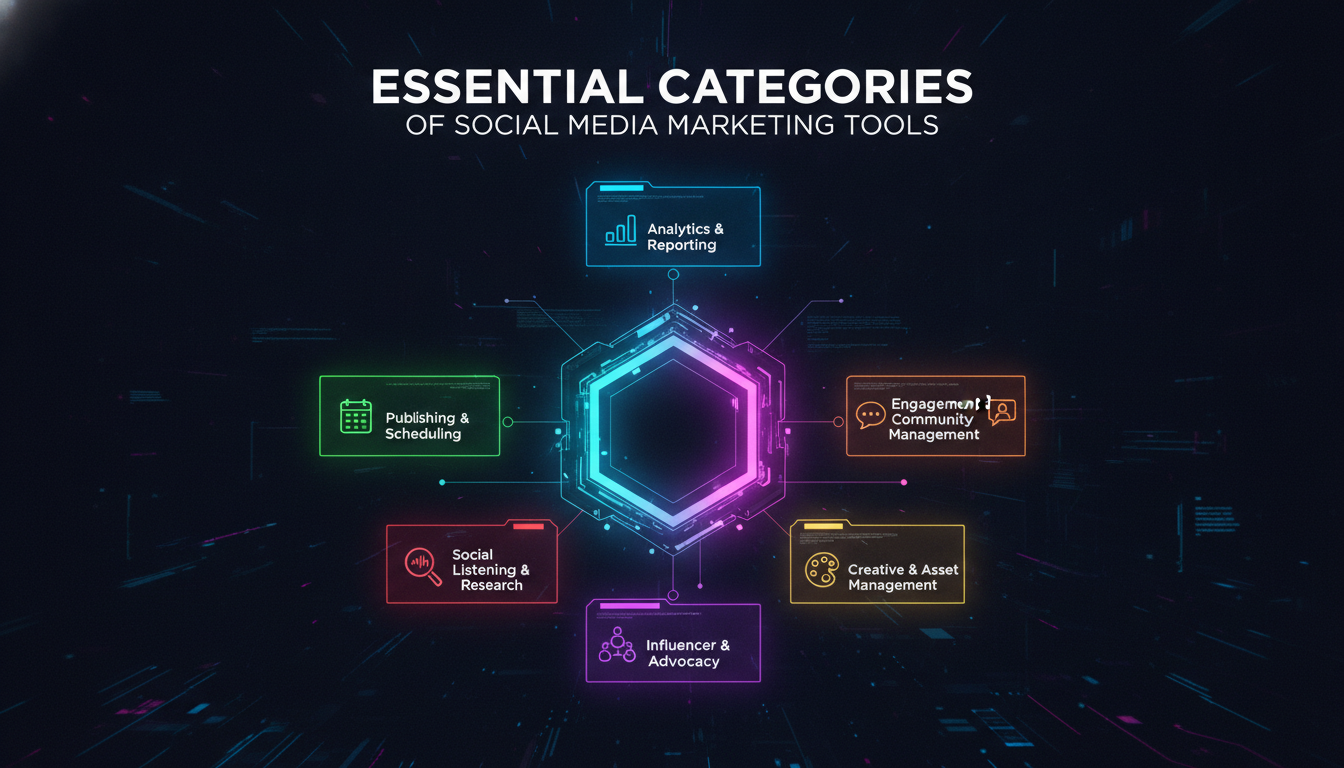
Visual content rules social feeds, and not every brand has a graphic designer on staff. This is where tools like Canva and CapCut come in. Canva offers drag-and-drop templates for posts, stories, and ads, while CapCut simplifies creating Reels and TikToks with a free video editor. Both have robust free tiers, making them indispensable for cash-strapped marketers. For more advanced designs, Adobe Express provides a solid middle ground. For infographics, Easel.ly lets anyone create data-rich visuals without design expertise.
For copywriting, AI-powered tools such as ChatGPT can generate captions, brainstorm hashtags, or draft ad copy. Human oversight is still necessary, but these tools dramatically reduce ideation time. Giphy and similar GIF libraries add another layer of visual engagement that integrates into posts and replies.
Scheduling and Publishing
Scheduling tools are the backbone of any social toolkit. These platforms let you queue posts for days or weeks in advance, ensuring a consistent presence even when you’re away. Buffer is renowned for its clean interface: you can schedule content for multiple platforms and get basic analytics. Hootsuite adds team collaboration features, making it a favorite for agencies. Agorapulse’s free version lets you schedule up to 10 posts across three profiles, perfect for solopreneurs. HubSpot’s social media management tool includes AI-powered scheduling that recommends the best times to post based on audience activity. For Twitter-focused marketers, TweetDeck remains a powerful, permanently free option for managing multiple accounts and columns.
Crowdfire is another free option that helps you discover and schedule curated content, keeping your feeds active even when you’re light on original material.
Analytics and Reporting
Without analytics, social media marketing is guesswork. Platforms with robust analytics, like Sprout Social or the reporting features in Agorapulse, show you engagement rates, follower growth, and click-throughs. Google Analytics remains a universal favorite for tracking social traffic to your website. By using UTM parameters, you can measure the exact impact of each campaign. As the Small Business Expo guide emphasizes, tracking revenue rather than likes is critical for proving ROI.
Advanced tools like HubSpot can attribute revenue directly to social posts by connecting with a CRM, creating a closed-loop reporting system that links marketing efforts to sales outcomes.
Top Social Media Management Tools Compared
Hootsuite vs. Buffer vs. Sprout Social
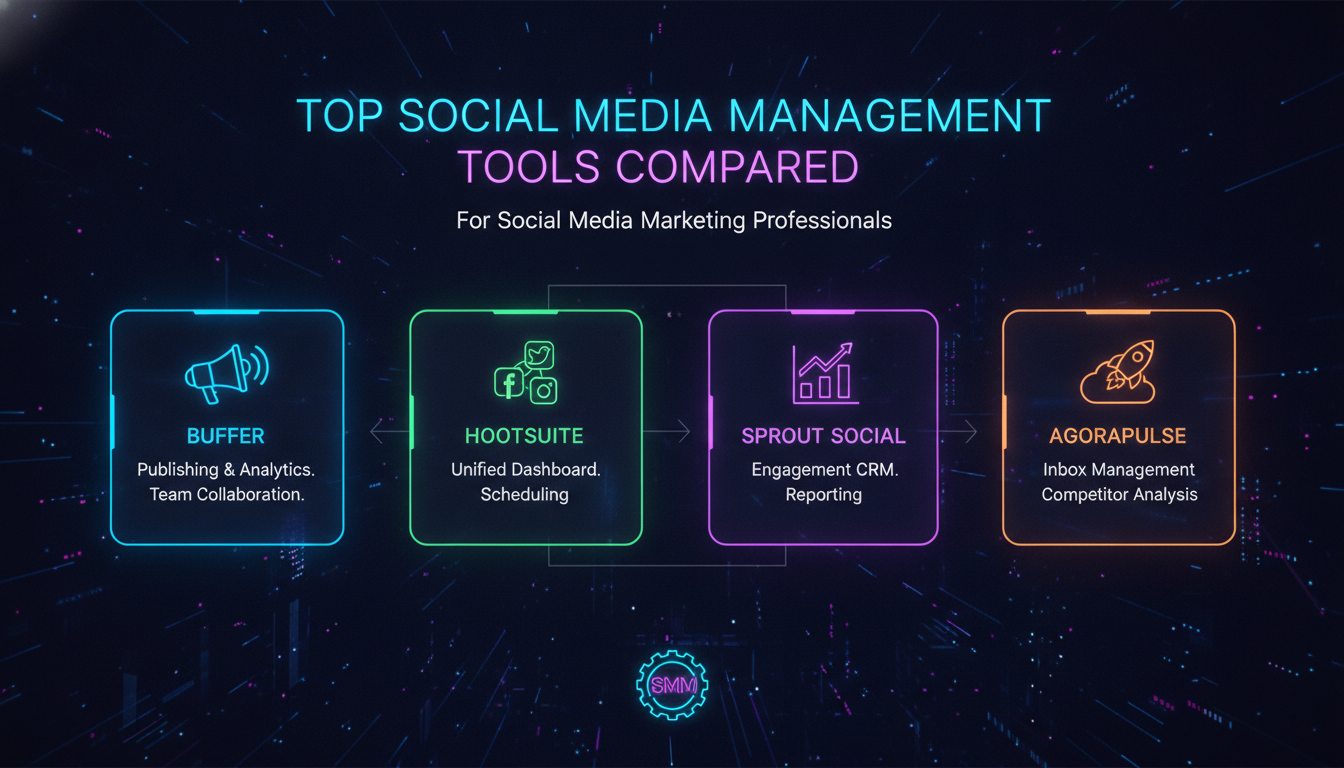
When choosing among social media for management, three names dominate: Hootsuite, Buffer, and Sprout Social. Hootsuite is the most feature-rich, offering social listening, team workflows, and support for a wide range of platforms including lesser-known networks. It’s ideal for large teams handling complex campaigns. Buffer, by contrast, prioritizes simplicity with a straightforward scheduling calendar and a browser extension for quick sharing. Its free plan remains popular among freelancers. Sprout Social sits in the middle, with strong analytics and engagement tools but a higher price point, making it suitable for enterprises that need deep reporting.
All three integrate with major platforms like Facebook, Instagram, LinkedIn, and X. Hootsuite and Sprout Social also support Pinterest and YouTube, giving them an edge for visual-heavy brands.
HubSpot and Agorapulse for All-in-One Management
HubSpot’s marketing tools are integrated into its larger CRM platform, allowing you to connect social interactions with lead data. This is invaluable for businesses that want to track a customer’s journey from first tweet to final purchase. Agorapulse offers a unified social inbox that consolidates messages, comments, and mentions, plus a free tier that supports up to 10 scheduled posts across three profiles. According to the Agorapulse blog, the free version is enough for very small setups, while paid plans unlock advanced listening and reporting.
AdsReport, a free tool from Agorapulse, specifically analyzes Facebook Ads performance, delivering key metrics like spend, impressions, CTR, and CPC without sifting through complex ad managers.
Tool Comparison Table
| Tool | Key Features | Pricing | Best For |
|---|---|---|---|
| Hootsuite | Scheduling, social listening, team collaboration, analytics | Paid plans (free trial available) | Large teams and agencies |
| Buffer | Simple scheduling, platform-specific customization, basic analytics | Free plan available; paid upgrades | Small businesses and solo marketers |
| Sprout Social | Advanced analytics, engagement tools, CRM integration | Paid plans (premium) | Enterprises needing deep reporting |
| HubSpot | AI content generator, CRM sync, multi-platform publishing, monitoring | Free tools with paid upgrades; 14-day free trial | Businesses wanting CRM-social alignment |
| Agorapulse | Unified inbox, social listening, free tier with 3 profiles and 10 posts | Free version; paid plans | Agencies and growing teams |
Pros and Cons of Using Social Media Marketing Tools
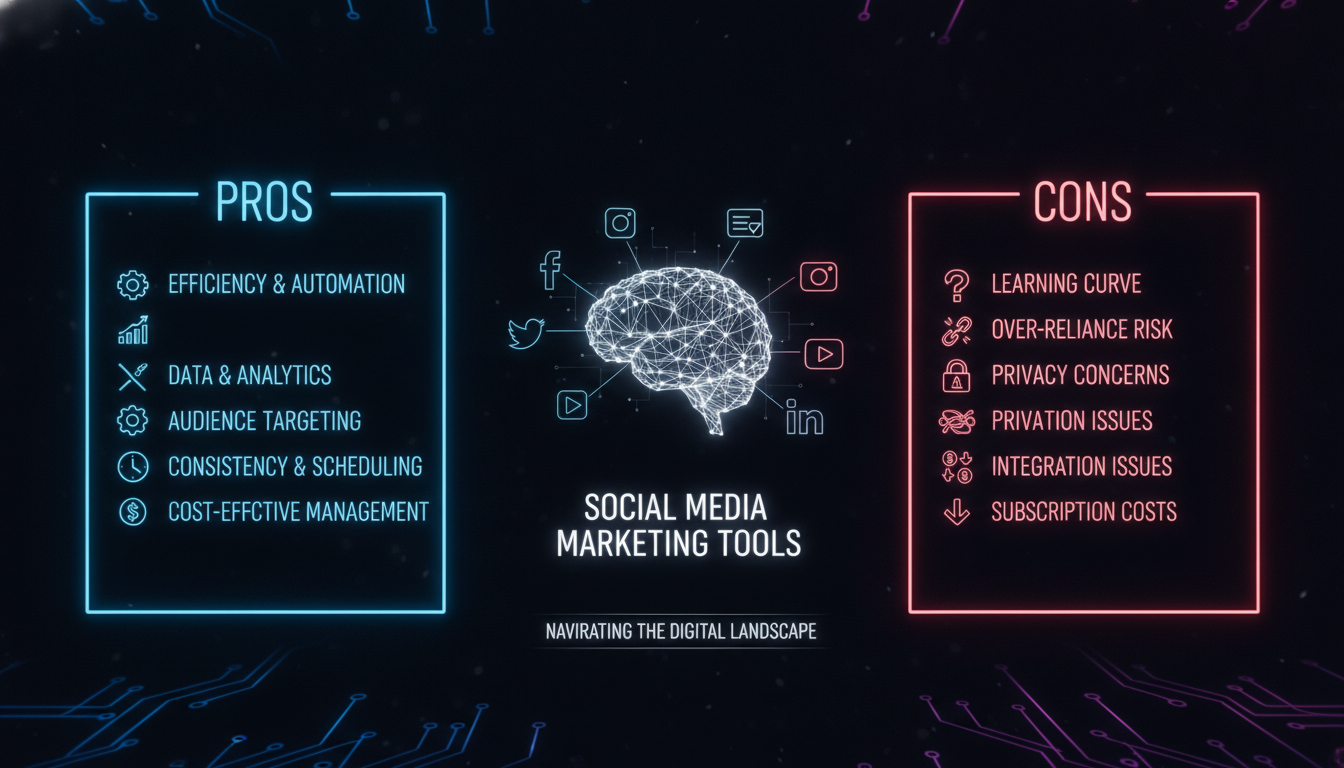
Pros
- Time savings: Scheduling and automation eliminate hours of manual posting each week.
- Consistent brand presence: Queue content in advance so your brand stays active even during busy periods.
- Data-driven decisions: Built-in analytics show what resonates, so you stop guessing and start optimizing.
- Scalability: Most platforms grow with your team, adding seats, profiles, and features as needed.
- Cost-effective entry: Generous free tiers from Buffer, Agorapulse, and Canva mean you can build a capable stack at zero cost.
Cons
- Learning curve: Full-featured platforms like Hootsuite or Sprout Social take time to master, especially for small teams.
- Cost at scale: Paid plans can become expensive quickly once you add multiple users and profiles.
- Over-automation risk: Leaning too hard on scheduling can make your brand feel robotic if community engagement suffers.
- Platform API limits: Social networks periodically restrict third-party access, which can break scheduled posts or analytics.
Free Social Media Marketing Tools Worth Your Time
Best Free Scheduling and Publishing Tools
Budget constraints don’t have to hold you back. Several this type of tools offer generous free plans. Buffer lets you connect up to three channels and schedule 10 posts per channel. Agorapulse’s free version supports three profiles and 10 scheduled posts, plus basic reporting. HubSpot’s free social tools allow publishing and monitoring, albeit with limited features. For those focused on Twitter, TweetDeck remains a powerful, permanently free option for managing multiple accounts and columns. Crowdfire’s free tier also helps with content curation and scheduling.
Bitly, a link shortener with click tracking, pairs well with these schedulers to create branded, trackable links that reinforce your identity across every platform.
Free Design and Video Editing Apps
Canva and CapCut are two tools that democratize design for any budget. Canva’s library of stock photos, templates, and fonts covers everything from Instagram posts to infographics. CapCut, owned by ByteDance, excels at short-form video, offering templates, effects, and auto-captions, all free. For infographics specifically, Easel.ly provides a drag-and-drop interface to create data visualizations that stand out in feeds. Giphy integrates with many schedulers to add trending GIFs to posts.
Loom is a free video messaging tool useful for creating quick, authentic behind-the-scenes clips or tutorials, building a more personal connection with your audience.
AI-Powered Content and Automation Tools
AI is rapidly becoming a staple across this kind of marketing tools. ChatGPT’s free tier can generate post ideas, rewrite captions, or suggest hashtags. HubSpot’s AI content assistant integrates directly into its social composer. For automation, Zapier connects your social accounts to hundreds of other apps, for example, automatically saving mentions to a Google Sheet. Quuu curates and suggests relevant content to share, keeping your feeds active. Hashtagify helps research trending and niche hashtags to expand reach.
ManyChat’s free plan lets you build simple chatbots for Instagram and Facebook Messenger, automating responses to common queries and engaging users around the clock.
Content Curation: Feedly and Beyond
Staying relevant means sharing more than your own content. Feedly is a free RSS reader that aggregates articles from your chosen sources into a single feed, making it easy to spot shareable industry news before your competitors do. Pair it with a scheduler like Buffer, and you’ve got a content curation pipeline that runs almost on autopilot. Adobe Express rounds out the creative side, offering quick-edit templates for social graphics that sit between Canva’s simplicity and full Adobe Suite complexity.
How to Choose the Right Tools for Your Strategy
Step 1: Assess Your Business Size and Goals
Not all the media marketing tools fit every team. A solopreneur might thrive with Buffer’s free plan and Canva, while a multinational agency will need Hootsuite’s collaboration features and Sprout Social’s advanced reporting. Start by auditing your current process: how many platforms do you manage? How many team members? What are your primary goals, brand awareness, lead generation, or customer service? The answers will dictate whether you need a simple scheduler or a full-featured suite.
Consider your content mix too. If video is central, CapCut becomes essential. If community engagement is your priority, a tool with a strong unified inbox like Agorapulse matters more than raw scheduling power.
Step 2: Weigh Budget Against Features
Many of the best tools have free tiers, but they often limit features. Determine which capabilities are must-haves: unlimited scheduling, analytics exports, team roles. Then compare paid plans. Sometimes, combining two free tools (Buffer for scheduling plus Google Analytics for measurement) is more cost-effective than a pricey all-in-one. The Agorapulse blog notes that while free tools can get you started, upgrading to a paid plan often unlocks crucial efficiency gains like unlimited scheduled posts and social listening.
Build your free stack in four steps. Step 1: List all the tasks you currently do manually. Step 2: Research which tools offer free tiers for those tasks. Step 3: Sign up for two or three tools that cover the most critical areas (scheduling, design, analytics). Step 4: Run a trial week, then assess whether the free features are enough or if a paid upgrade makes financial sense.
Step 3: Check Integration and Scalability
Your social media should work well together. If you use a CRM like HubSpot, a separate tool like Hootsuite might be redundant if HubSpot’s social features cover your needs. Similarly, if you rely on Canva for design, a scheduler that integrates with Canva (like Buffer) streamlines your workflow. Linktree or a similar bio-link tool can unify your social presence, directing followers to multiple destinations from a single clickable link.
Think long-term: as your follower count grows, will the tool handle increased engagement without ballooning costs? Choosing scalable solutions from the start prevents painful migrations later. Agorapulse’s paid plans, for instance, scale with team size and profile count, making them a favorite for growing agencies.
The Role of AI in Modern Social Media Marketing Tools
AI for Content Generation
Artificial intelligence is reshaping how marketing tools operate. ChatGPT can draft months’ worth of captions in minutes. HubSpot’s AI-powered social post generator suggests copy and recommends images, all within its social composer. AI-generated content still needs a human editor, but it cuts production time dramatically. For video, CapCut’s AI features auto-caption and apply trending effects, making Reels creation almost effortless.
Wordtune, a free AI writing assistant, helps refine tone and clarity so your voice stays consistent across every post and platform.
“The best social media managers use AI to handle the repetitive work, then spend their saved time on the creative decisions that actually move audiences.” – Emin Media Creative Team
AI for Analytics and Insights
AI doesn’t just create content. It analyzes performance too. Platforms like Sprout Social use machine learning to highlight peak engagement times, sentiment trends, and predict which posts will perform best. HubSpot’s platform suggests optimal posting times based on your specific audience behavior. These insights move social media from reactive to proactive, letting brands make data-driven decisions without manual number-crunching.
The Future of AI in Social Media Management
As of 2026, expect this type of tools to incorporate more generative AI: auto-generated ad creatives, chatbots that handle common DMs, and real-time trend alerts. As these features become standard, the role of the social media manager shifts toward strategy and creative oversight rather than routine execution. The tools handle the clock-watching. You handle the vision.
“According to HubSpot’s platform documentation, AI-powered scheduling recommendations are already built into their social composer, suggesting the best times to post based on your audience’s activity patterns – a feature that used to require a dedicated analyst.”
Measuring Success with Analytics Tools
Key Metrics to Track
All this kind of marketing tools worth their salt offer analytics, but which metrics actually matter? According to the Small Business Expo guide, vanity metrics like likes are far less important than conversions and click-through rates. Track engagement rates (comments, shares, saves) to gauge content resonance. For business outcomes, set up goal tracking in Google Analytics to see which social channels drive newsletter sign-ups or purchases. Agorapulse’s free reports break down post-level performance, while Sprout Social provides competitor benchmarking.
The Small Business Expo also highlights that roughly a quarter of conversations on local platforms like Nextdoor involve neighbors asking for business referrals. Maintaining an active presence there can directly influence word-of-mouth, which is harder to measure but equally vital.
Using UTM Parameters and Google Analytics
To identify exactly which social media marketing tools and campaigns drive traffic, use UTM parameters. Google’s free Campaign URL Builder lets you tag links with source, medium, and campaign name. Then, in Google Analytics’ Acquisition reports, you can filter by “social” to see aggregated traffic or drill into specific campaigns. This approach turns vague social efforts into a precisely measurable channel. The Small Business Expo article stresses this as essential for proving ROI to stakeholders.
Reporting Tools and Dashboards
Many social media marketing tools now offer automated, branded reports. Agorapulse can generate PDF reports you can white-label for clients. HubSpot lets you build custom dashboards that blend social metrics with email and ad data. For a free option, Google’s Looker Studio (formerly Data Studio) pulls data from Google Analytics and social APIs to create a unified performance snapshot that any stakeholder can read at a glance.
Brand Spotlight: Building a Lean, High-Impact Tool Stack
Here’s how a typical lean brand stack looks in practice. A founder-led e-commerce brand uses Canva for all static visuals, CapCut for product Reels, Buffer to schedule a week of content every Monday morning, and Google Analytics with UTM-tagged links to track which posts actually convert. Total monthly cost: zero. Total weekly time investment: roughly two to three hours. The result is a consistent, professional presence across three platforms without a dedicated social media hire.
Scale that up for an agency: swap Buffer for Agorapulse (paid), add Sprout Social for client reporting, layer in Zapier to automate lead capture from social mentions, and you have a professional operation that competes with teams twice the size. The tools don’t replace strategy. They free you to execute it better.
Frequently Asked Questions
What are social media marketing tools?
Social media marketing tools are software applications that help businesses and individuals manage, create, schedule, analyze, and optimize their social media presence. They typically cover functions like content creation, publishing, social listening, analytics, and engagement management.
What is the 5 5 5 rule for social media?
The 5 5 5 rule is a community engagement strategy: interact with 5 posts, leave 5 thoughtful comments, and like 5 updates each day on each platform you’re active on. It helps build genuine connections rather than just broadcasting content into the void.
What are the top 5 social media management tools?
Based on widespread industry use, the top five are Hootsuite (best for large teams), Buffer (best for simplicity), Sprout Social (best for enterprise reporting), HubSpot (best for CRM alignment), and Agorapulse (best for agencies). Each serves a different team size and budget, so the right choice depends on your specific goals.
Which are the best free social media marketing tools?
The best free options include Canva for design, Buffer or Agorapulse for scheduling, CapCut for video editing, ChatGPT for copywriting, and Google Analytics for measurement. Many of these offer robust free plans that are more than sufficient for small businesses and solo marketers.
How do social media marketing tools improve ROI?
They improve ROI by saving time through automation, providing data to refine strategy, and enabling precise tracking of leads and sales via UTM links. By focusing resources on what actually works, businesses stop wasting budget on tactics that don’t convert.
What is the difference between social media management and social media marketing tools?
Social media management tools focus on operational tasks like scheduling and monitoring, while social media marketing tools cover a broader scope including analytics, advertising, influencer discovery, and creative design. In practice, most modern platforms combine both functions into a single dashboard.
Enjoyed this article?
Contact Emin Media for a free brand consultation and let's create something amazing together.
Get in TouchRelated Articles

Visual Content Marketing Trends for 2026
Visual content marketing trends for 2026 are reshaping how brands connect. Discover AI visuals, interactive…
Brand Voice Examples 2026: Build a Voice That Sticks
Explore the best brand voice examples 2026 has to offer. Learn frameworks, archetypes, and steps…

What Are the 3 Cs of SEO? Content, Code & Credibility
What are the 3 Cs of SEO? Learn how Content, Code, and Credibility work together…