Social Media Marketing Strategy Guide 2026
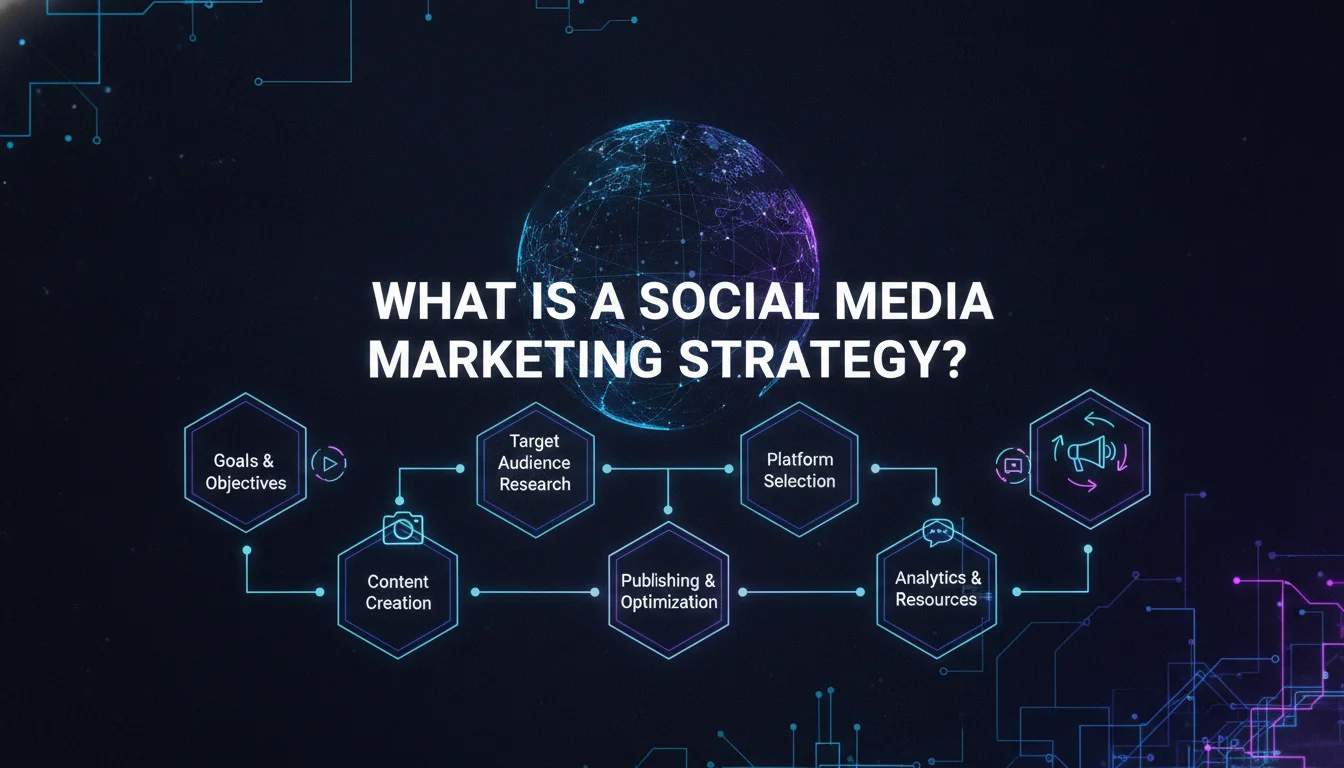
A social media marketing strategy is a documented plan that defines your goals, target audience, content, platforms, and metrics to achieve measurable business results through social media. Think of it as the blueprint that turns random posting into deliberate brand growth.
Key Takeaways
- A marketing strategy is the blueprint for all social media activities, keeping every post and campaign aligned with real business goals.
- Effective strategies are built on SMART goals, deep audience research, and data-driven decisions, not gut feelings.
- Regular analysis and adaptation keep your strategy sharp in a fast-moving digital environment.
- Frameworks like the 5-5-5 rule, the 7 C’s, and the 50-30-20 rule give your content mix structure and purpose.
- As of 2026, AI tools, short-form video, and social commerce are the three forces reshaping how brands show up on social.
What Is a Social Media Marketing Strategy?
The Core Components
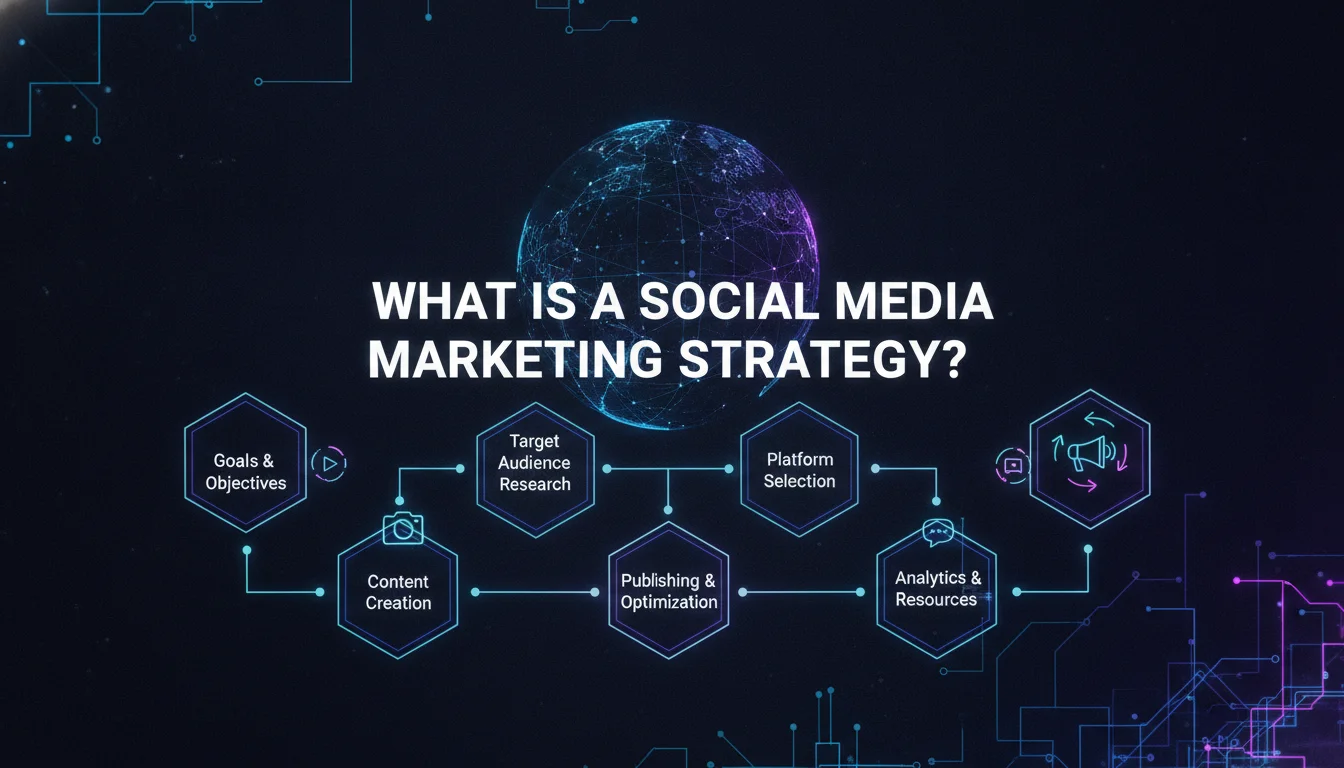
A this type of strategy is a comprehensive roadmap that outlines how a business will use social platforms to connect with its audience, build brand authority, and drive revenue. It pulls content creation, community management, paid advertising, influencer partnerships, and social listening into one unified approach. According to Sprout Social, a strategy is a documented blueprint that defines your goals, audience, content approach, platform priorities, and success metrics.
Without a strategy, social media becomes reactive. You’re scrambling to post content without direction, chasing trends instead of setting them. A well-crafted plan ensures every post, comment, and campaign works toward measurable outcomes. It’s the difference between hoping for engagement and engineering it.
Why a Documented Strategy Matters
Many brands treat social media as a series of disconnected posts. A formal strategy aligns your social efforts with broader marketing and business objectives, prevents ad-hoc decisions, reduces wasted resources, and sets clear expectations for your team. Social media managers constantly face requests to share content that doesn’t fit the brand. A documented strategy gives them a framework to stay focused on what actually serves the audience, and the authority to say no to everything else.
Why Your Business Needs a Social Media Marketing Strategy
The Data on Social Media’s Reach
The audience opportunity is enormous. According to 2025 research by Kepios, cited by Adobe for Business, social media users reached 5.24 billion worldwide. That’s a vast, engaged pool of potential customers. Without a clear strategy, you risk shouting into the void while competitors build genuine connections with those users.
Benefits Beyond Brand Awareness
A strong this kind of marketing strategy delivers far more than likes and shares. It can:
- Generate leads and sales: Through targeted ads, shoppable posts, and compelling calls-to-action.
- Improve customer service: Social platforms are now primary support channels, with consumers expecting fast, public responses.
- Build community: A deliberate engagement plan turns followers into advocates who sell for you.
- Gather market insights: Social listening surfaces customer pain points, preferences, and emerging trends before they hit the mainstream.
Pros and Cons of a Formal Social Media Marketing Strategy
Pros
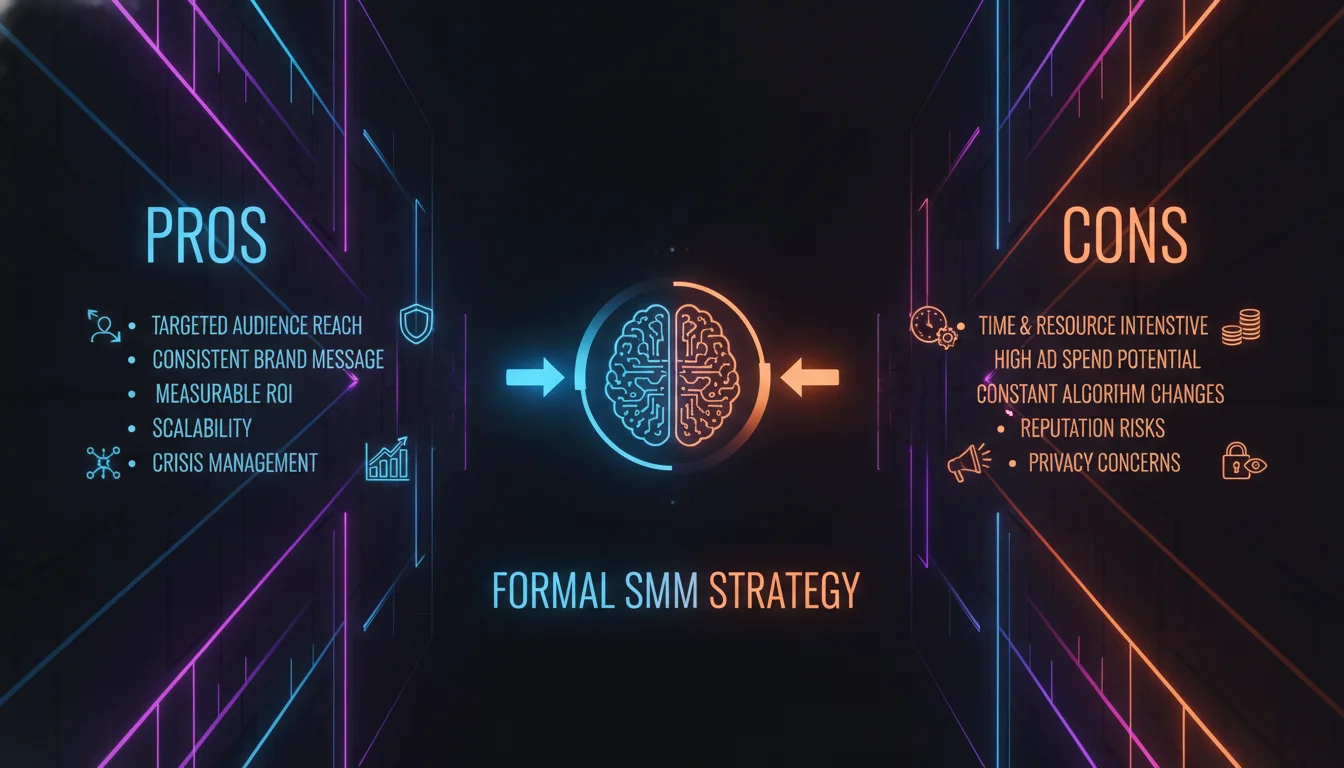
- Clarity and direction: Every team member knows what to post, why, and for whom. No more guesswork.
- Measurable ROI: SMART goals and defined KPIs make it possible to prove the value of social media investment.
- Consistent brand voice: A documented plan keeps your tone, visuals, and messaging coherent across every platform.
- Efficient resource use: Planned content and clear roles prevent burnout and eliminate duplicated effort.
- Competitive edge: Brands with a strategy respond to trends deliberately rather than reactively, which compounds over time.
Cons
- Time-intensive upfront: Building a real strategy requires audience research, goal-setting, and platform analysis before a single post goes live.
- Risk of rigidity: A plan that’s too rigid can slow your ability to respond to real-time cultural moments or algorithm shifts.
- Requires ongoing maintenance: A strategy written once and shelved becomes obsolete fast. It demands regular audits and updates.
- Resource demands: Executing well across multiple platforms requires tools, budget, and skilled people, which smaller teams may struggle to sustain.
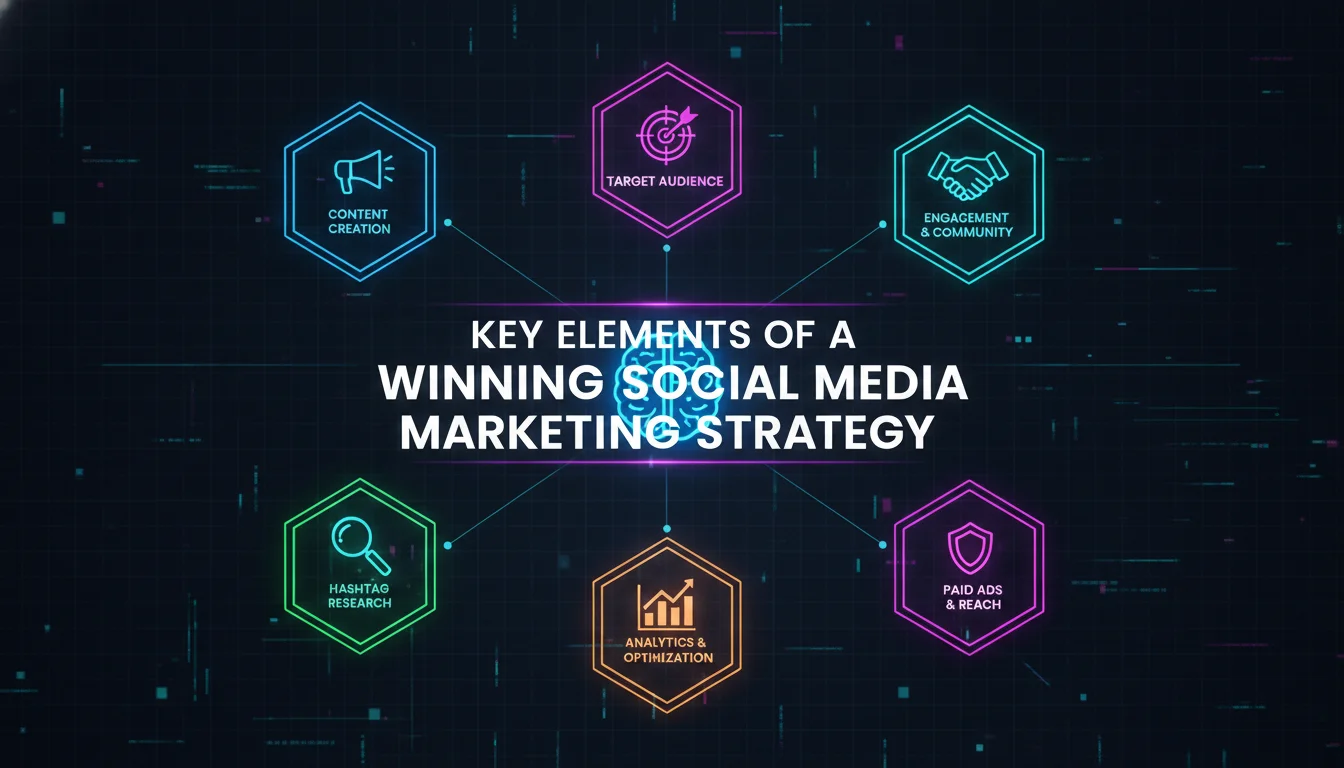
Key Elements of a Winning Social Media Marketing Strategy
Goals and Objectives
Every effective plan starts with clear, measurable goals. Vague ambitions like “increase presence” are useless. Use the SMART framework: Specific, Measurable, Attainable, Relevant, Time-bound. For example: “Increase Instagram engagement rate by 3% within Q2.” This clarity guides content choices and platform priorities, and it gives you something real to report on.
Audience Research and Personas
You can’t craft a strategy without knowing who you’re talking to. Build detailed buyer personas that include demographics, interests, pain points, and preferred platforms. Tools like Sprout Social or Hootsuite provide demographic data, but also run surveys and analyze competitors’ followers to sharpen your personas. The more specific your picture of the audience, the more relevant your content becomes.
Platform Selection
Not all platforms suit every brand. Your strategy must identify where your audience actually spends time. B2B companies often thrive on LinkedIn, while lifestyle brands tend to focus on Instagram and TikTok. Consider platform demographics, content formats, and advertising options. Spreading too thin dilutes impact. It’s better to master two platforms than to maintain a mediocre presence on six.
Content and Engagement Plan
Content is the engine of your strategy. This element defines what you’ll post, how often, and how you’ll interact with followers. A content calendar maintains consistency, while a response protocol ensures timely, on-brand customer interactions. Engagement isn’t optional. Algorithms reward active, two-way conversations, and audiences remember brands that actually respond.
How to Build a Social Media Marketing Strategy: A 7-Step Guide
Ready to create your own plan? Follow these seven steps to develop a social media marketing strategy that drives real results.
Step 1: Define SMART Goals
Start by identifying what you want to achieve. Your strategy might aim for brand awareness, lead generation, sales, or customer retention. Each goal must be SMART. For awareness, track reach and impressions. For conversions, monitor click-throughs and sales. Tie goals to the sales funnel: top (awareness), middle (consideration), bottom (conversion). This alignment keeps your social efforts connected to the buyer’s journey at every stage.
Step 2: Research Your Target Audience
Deep audience understanding is non-negotiable. Use analytics tools to gather data on current followers’ age, location, and interests. Supplement with surveys and social listening to uncover unmet needs. Build detailed personas that inform every content piece. Without this step, your strategy will lack the relevance that makes people stop scrolling.
Step 3: Choose the Right Platforms
Select platforms based on audience behavior and content strengths. If you sell visual products, Instagram and Pinterest are natural fits. If your audience seeks professional insights, LinkedIn is key. Each platform added to your plan should serve a clear purpose, not just “because everyone else is there.” Platform focus is a strategic choice, not a limitation.
Step 4: Develop a Content Strategy
Content strategy is the heart of your social media marketing strategy. Determine your mix: educational, entertaining, promotional, user-generated. Use the 50-30-20 rule as a starting point. Plan formats including video, images, text, and stories, then set a publishing cadence. A content calendar managed through tools like Sprout Social or Hootsuite ensures you maintain momentum without burning out your team.
Step 5: Plan Engagement and Community Management
Social media is a two-way street. Outline how you’ll respond to comments, messages, and mentions. Define your brand voice and set response time targets, for example, “reply within 2 hours.” Allocate team resources for community management. A responsive brand builds a loyal community, and that community amplifies your reach through organic advocacy that no ad budget can fully replicate.
Step 6: Allocate Budget and Resources
Determine what you can invest. Budgets may include ad spend, content production tools, and social media management software. Assign team roles clearly: who creates, who approves, who analyzes. Even if you start lean, a resource plan prevents burnout and ensures accountability. Clarity on roles is what separates a strategy from a wish list.
Step 7: Measure, Analyze, and Optimize
A social media marketing strategy is never finished. Use analytics platforms to track KPIs against your SMART goals. Which posts perform best? What times yield peak engagement? Regular reporting, weekly for fast-moving platforms and monthly for deeper analysis, guides iterative improvements. A/B test creatives and refine your approach continuously. The brands that win on social are the ones that treat their strategy as a living document.
Social Media Marketing Rules and Frameworks You Should Know
Several popular frameworks can sharpen your approach. None are rigid laws, but they provide helpful structure, especially when you’re building from scratch or auditing what you already have.
| Framework | Description | Best For | Example |
|---|---|---|---|
| 5-5-5 Rule | Post 5 times a day, comment on 5 posts, like 5 posts to boost engagement. | Rapid growth on X/Twitter | Engage with 5 industry accounts daily. |
| 7 C’s | Community, Conversation, Content, Curation, Connection, Collaboration, Commerce. | Complete strategy building | Nike’s community-driven campaigns. |
| 50-30-20 Rule | 50% value content, 30% curated/shared, 20% promotional. | Balanced content mix | A brand’s weekly feed: 5 tips, 3 shares, 2 sales posts. |
| 3-3-3 Rule | 3 pieces of content per day, 3 interactions, 3 DM conversations. | Daily engagement routine | Instagram: 3 stories, 3 comments, 3 DMs. |
The 5-5-5 Rule Explained
The 5-5-5 rule is an engagement tactic built for platforms like X (formerly Twitter), where consistency and visibility compound quickly. Post five times daily to stay present. Comment and like five others’ posts to join real conversations. This approach can accelerate reach when you’re launching a new strategy, but it demands significant time investment. Treat it as a growth sprint, not a permanent operating mode.
The 7 C’s of Social Media Marketing
The 7 C’s framework covers Community, Conversation, Content, Curation, Connection, Collaboration, and Commerce. Community is the hub. Conversation and content drive engagement. Curation adds third-party value. Connection personalizes interactions. Collaboration brings in influencers or partners. Commerce integrates shopping features directly into the experience. Mastering all seven gives your brand a well-rounded, audience-first presence.
The 50-30-20 Rule for Content
This rule suggests a healthy content mix: 50% original value posts (how-tos, insights), 30% curated content (industry news, user-generated content), 20% promotional (product highlights, offers). It keeps your feed from feeling like a sales pitch. Adjust ratios based on brand maturity. New brands often lean more heavily on educational content to build trust before they earn the right to sell.
The 3-3-3 Rule in Marketing
The 3-3-3 rule promotes daily consistency: share 3 pieces of content, engage in 3 meaningful interactions beyond simple likes, and have 3 direct message conversations. It’s a micro-routine that keeps your brand top-of-mind without overwhelming your team. When integrated into a larger strategy, it ensures steady community nurturing that compounds into real loyalty over time.
Influencer Partnerships and Social Commerce in 2026
Building Influencer Relationships That Actually Work
Influencer marketing has matured well past the era of paying a celebrity to hold your product. As of 2026, the most effective partnerships are built on genuine audience alignment, not follower counts. Micro-influencers, creators with smaller but highly engaged communities, often outperform mega-influencers on conversion metrics because their audiences trust their recommendations. The key is treating influencers as creative collaborators rather than distribution channels. Give them a brief, then get out of the way.
When evaluating potential partners, look at engagement quality over quantity. A creator whose audience asks questions, shares posts, and responds to calls-to-action is worth far more than one with passive followers. Build long-term relationships rather than one-off campaigns. Audiences notice when a creator genuinely uses a product versus when they’re reading from a script.
“The brands winning on social right now are the ones treating influencer partnerships like editorial relationships, not media buys. Authenticity isn’t a buzzword anymore. It’s a performance variable.” – Sprout Social, 2026 Social Media Trends Report
Social Commerce: Where Browsing Becomes Buying
Shopping directly on social platforms is no longer a novelty. Instagram Shops, Facebook Marketplace, and TikTok Shop make purchasing frictionless. The line between browsing and buying has blurred to the point where a well-placed product tag in a Reel can close a sale without the user ever visiting your website. Integrate commerce into your strategy by tagging products in posts, using shoppable ads, and streamlining the checkout experience. Every extra tap between discovery and purchase is a drop-off point.
Crisis Communication on Social Media
Every brand will eventually face a moment where something goes wrong publicly. A product recall, a tone-deaf post, a customer complaint that goes viral. How you respond on social media in those moments defines your brand more than any campaign ever could.
Build a crisis communication protocol into your strategy before you need it. Define who has authority to post during a crisis, what your response timeline looks like, and what your brand’s tone should be under pressure. Transparency and speed matter more than perfection. Audiences forgive brands that respond honestly and quickly. They rarely forgive brands that go silent or get defensive.
“Social media crises don’t wait for business hours. Brands that have a documented response protocol, including clear escalation paths and pre-approved messaging frameworks, consistently outperform those that improvise.” – Hootsuite, Social Media Best Practices Guide
Measuring the Success of Your Social Media Marketing Strategy
Key Metrics to Track
Metrics bring objectivity to your strategy. The numbers tell you what your instincts can’t. Common KPIs include:
- Reach and impressions: How many people see your content and how often.
- Engagement rate: Likes, comments, and shares relative to your follower count.
- Click-through rate: Critical for traffic-driven goals.
- Conversion rate: How many social users take a desired action, from sign-ups to purchases.
- Follower growth: Audience expansion over time as a signal of brand health.
Tools for Analytics
Native analytics from Meta Business Suite and TikTok Analytics provide a solid baseline, but a robust strategy demands more depth. Third-party tools like Sprout Social and Hootsuite offer cross-platform reporting, competitive benchmarking, and social listening in one place. Google Analytics ties social traffic to on-site behavior, closing the loop between a social post and a business outcome. Use the combination that matches your team’s capacity and reporting needs.
Trends Shaping Social Media Marketing Strategy in 2026
AI and Automation
Artificial intelligence is reshaping every aspect of how brands approach social. AI tools now generate captions, schedule posts, and analyze sentiment at scale. Chatbots handle customer queries around the clock, freeing human teams for the complex, high-value interactions that actually require judgment. In 2026, predictive analytics are further optimizing ad targeting and content timing, giving brands a sharper edge on when and what to publish.
Short-Form Video Dominance
Video continues to rule social feeds. Platforms like TikTok and Instagram Reels prioritize short, engaging clips in their algorithms, and organic reach for video consistently outpaces static content. A modern strategy must include video-first thinking: authentic, mobile-optimized, and often deliberately unpolished. Brands that still rely solely on static images risk falling behind in organic reach as platform algorithms continue to reward motion and story.
Algorithm Awareness and Platform-Specific Thinking
Each platform’s algorithm rewards different behaviors. LinkedIn favors thought leadership and conversation-starting posts. Instagram’s algorithm weights saves and shares more heavily than likes. TikTok’s discovery engine prioritizes watch time and completion rate over follower count, which is why new accounts can go viral overnight. Building platform-specific content strategies, rather than repurposing the same post everywhere, is no longer optional. It’s the baseline expectation for brands that want meaningful organic reach.
Frequently Asked Questions
What is a social media marketing strategy?
A social media marketing strategy is a comprehensive plan outlining goals, target audience, content, platforms, and metrics to achieve business objectives through social media. It serves as a roadmap for all social media activities, ensuring every post and campaign connects to a measurable outcome.
What are the 7 C’s of social media marketing?
The 7 C’s are Community, Conversation, Content, Curation, Connection, Collaboration, and Commerce. This framework helps build a complete social media strategy by covering all aspects from audience engagement to direct sales integration.
What is the 5 5 5 rule on social media?
The 5-5-5 rule suggests posting 5 times a day, commenting on 5 posts, and liking 5 posts to boost engagement. It’s a high-frequency tactic often used on X (formerly Twitter) for rapid audience growth, best applied as a short-term sprint rather than a permanent routine.
What is the 50 30 20 rule for social media?
The 50-30-20 rule recommends that 50% of your content provides value, 30% is curated from others, and 20% is promotional. This mix keeps your feed balanced, builds trust with your audience, and prevents your brand from feeling like a constant sales pitch.
What is the 3 3 3 rule in marketing?
The 3-3-3 rule involves creating 3 pieces of content, engaging in 3 meaningful interactions, and having 3 direct message conversations daily. It ensures consistent community building without overwhelming your team’s capacity.
How often should I post on social media?
Posting frequency depends on your platform and audience. A data-driven social media marketing strategy analyzes optimal times and engagement patterns to determine a sustainable schedule. Quality consistently outperforms quantity, and a well-crafted post three times a week beats a mediocre post every day.
Ready to stop posting on hope and start building a strategy that actually moves the needle? Contact Emin Media for a free brand consultation and let’s build something bold together.
Enjoyed this article?
Contact Emin Media for a free brand consultation and let's create something amazing together.
Get in TouchRelated Articles

Brand Engagement on Instagram: 2026 Guide
Master brand engagement on Instagram with proven strategies for Reels, carousels, saves, and shares. Boost…
30 Creative Marketing Campaign Ideas for 2026
Explore 30 creative marketing campaign ideas for 2026: gamification, zero-budget stunts, influencer plays, and content…

AI in Creative Marketing: The 2026 Guide
AI in creative marketing is reshaping how brands create, personalize, and scale campaigns. Discover tools,…