SMM Marketing: What It Is, How It Works & Why It Matters
Key Takeaways
- SMM marketing is the strategic use of social media platforms to connect with audiences, build brand loyalty, and drive measurable business outcomes.
- It combines organic and paid tactics across platforms like Facebook, Instagram, LinkedIn, and TikTok.
- Key benefits include increased brand awareness, precise ad targeting, and real-time customer insights.
- Success requires a clear strategy, consistent content creation, and ongoing performance analysis.
- Despite its advantages, SMM marketing demands time, budget, and careful reputation management.
SMM marketing is the use of social media platforms to promote products, engage customers, and drive website traffic. It covers both organic and paid strategies designed to build brand awareness and create meaningful connections with target audiences.
What Is SMM Marketing?
Definition and Core Concept
marketing is a form of digital marketing that uses social networking sites, such as Facebook, Instagram, LinkedIn, TikTok, and YouTube, to connect with audiences, share content, and hit marketing goals. According to Investopedia, SMM is “the use of social media platforms to build a brand, increase sales, and drive website traffic.” It marks a fundamental shift from traditional one-way advertising to interactive, dialogue-driven brand communication.
Unlike conventional marketing channels, this type of marketing enables businesses to have two-way conversations, gather real-time feedback, and cultivate communities around their brands. This interactive ecosystem transforms passive consumers into active participants. That shift is what makes social media so different from a billboard or a TV spot.
The Evolution of SMM Marketing
The roots of this kind of marketing trace back to the early 2000s with platforms like MySpace and Friendster, but it wasn’t until Facebook and Twitter gained mainstream adoption that businesses recognized the real potential. Over the past decade, the format has changed dramatically. Today, SMM covers short-form videos, Stories, live streams, and ephemeral content. The rapid rise of TikTok forced brands to rethink content strategies entirely and embrace authentic, creator-style storytelling over polished production.
As of October 2025, there were more than 6 billion social media users worldwide, according to Investopedia. That scale alone explains why smm has become non-negotiable for businesses of every size.
Why SMM Marketing Matters in 2026
In 2026, marketing is more critical than ever. With the average person spending nearly two and a half hours daily on social media, as reported by Adobe, these platforms have become the primary touchpoints for discovering brands, researching products, and making purchasing decisions. Adobe also reports that 93% of marketers worldwide now use social media for business, a clear signal of its central role in modern marketing.
this type of marketing not only supports brand visibility but directly impacts revenue. Social commerce features like Instagram Shops and TikTok Shopping are turning platforms into virtual storefronts, shortening the path from discovery to purchase in ways that no other channel can match.
How SMM Marketing Works
The SMM Action Plan
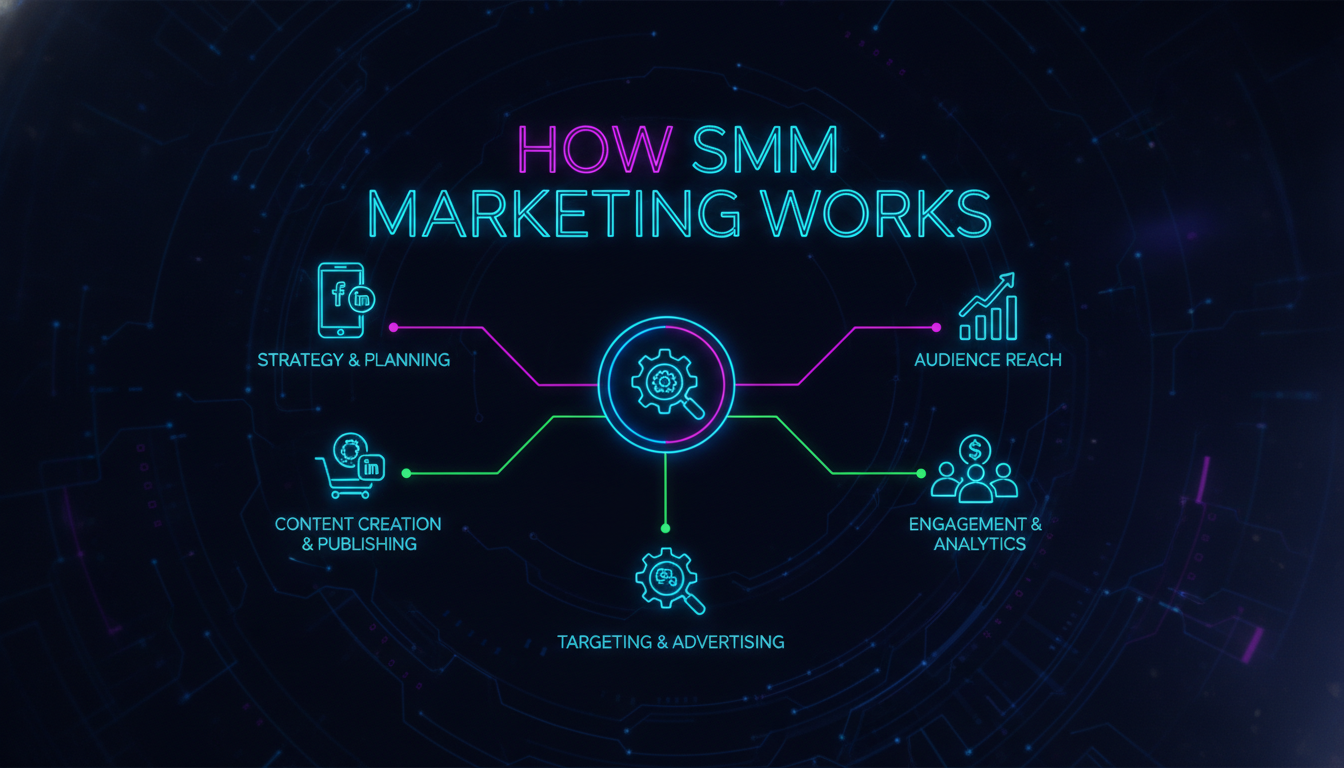
Effective this kind of marketing starts with a structured plan. Hootsuite, a leader in social media management, outlines a seven-step action plan that serves as a blueprint for campaigns:
- Align SMM goals to clear business objectives. Whether it’s increasing sales, generating leads, or boosting brand sentiment, each goal must tie back to measurable outcomes.
- Learn your target customer. Build detailed personas based on age, location, income, job title, industry, and interests. Data-driven personas ensure content resonates with the right people.
- Conduct a competitive analysis. Audit competitors’ presence, note their wins and failures, and identify gaps your brand can fill.
- Audit your current SMM efforts. Evaluate what has worked and what hasn’t. Use social listening tools to gauge sentiment.
- Create a content calendar. Schedule posts in advance, balancing promotional, educational, and engaging content. Consistency builds trust.
- Create best-in-class content. Invest in high-quality visuals, compelling copy, and platform-native formats. Authenticity often outperforms polished perfection.
- Track performance and adjust. Monitor KPIs like engagement, reach, and conversions continuously. Be ready to pivot based on what the data tells you.
This iterative process is the engine of successful smm. Without a roadmap, efforts scatter and fail to deliver real ROI.
Content Creation and Distribution
Content is the currency of marketing. The most effective strategies mix organic posts, such as educational articles, behind-the-scenes glimpses, and user-generated content, with paid social ads. Organic content builds community and trust, while paid campaigns extend reach and drive targeted actions. A balanced, platform-specific approach is essential: what works on LinkedIn (long-form thought leadership) differs vastly from TikTok (snappy, trend-driven clips).
Distribution matters just as much as creation. Scheduling tools and social media management platforms let brands maintain a consistent presence across multiple channels without constant manual effort. The goal is to meet audiences where they already are, with the right message at the right moment.
Tracking Metrics and KPIs
Measuring the impact of this type of marketing is vital for proving value and refining strategy. Common metrics include:
- Reach and impressions: How many people saw your content.
- Engagement: Likes, comments, shares, and saves that indicate genuine audience interest.
- Conversions: Desired actions such as website clicks, sign-ups, or purchases.
- Brand sentiment: The tone of mentions, whether positive, negative, or neutral.
Platforms offer native analytics (Facebook Insights, TikTok Analytics), and third-party tools like Hootsuite or Sprout Social aggregate data for cross-channel reporting. By tying these metrics back to business goals, brands can prove the real value of their social investment. Investopedia describes this as measuring “social equity,” the return on investment from social media activities tracked through engagement and conversion data over time.
Pros and Cons of SMM Marketing
Pros
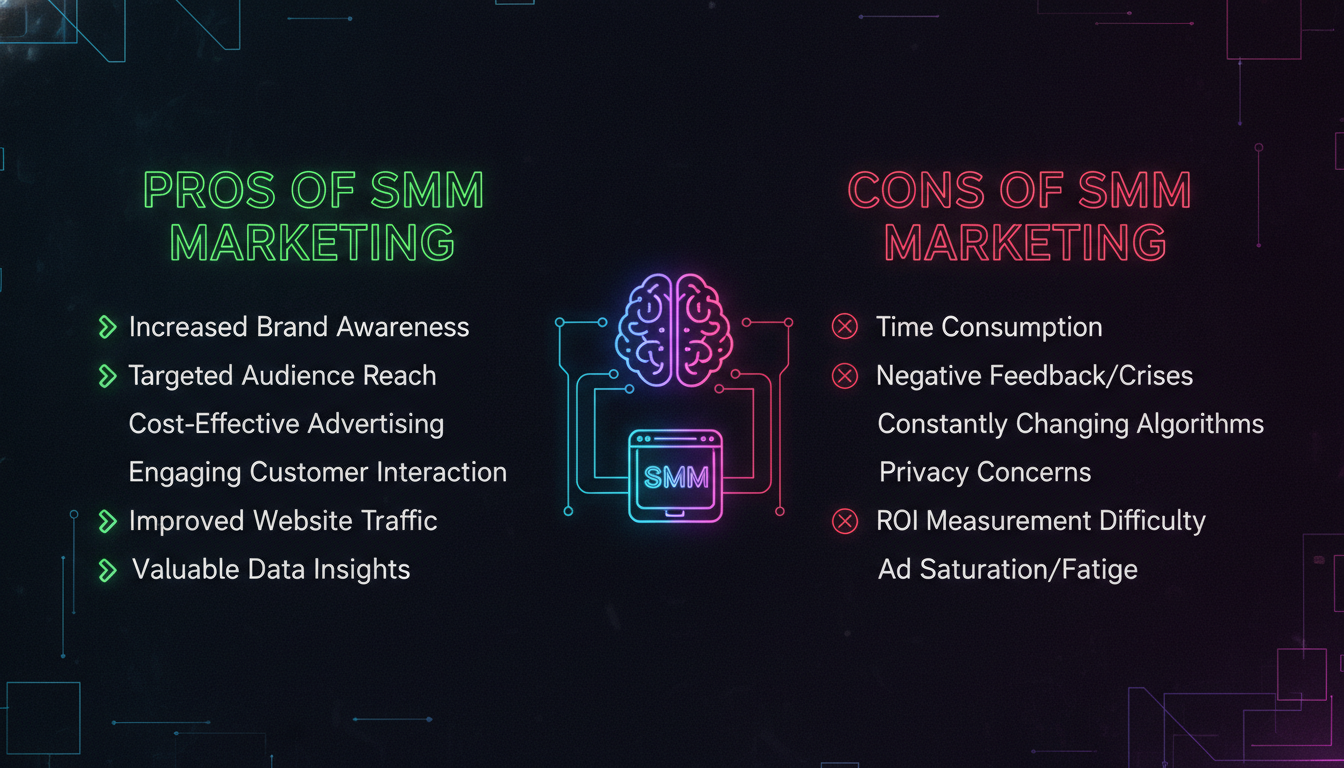
- Massive, targeted reach: Social platforms collect deep demographic and behavioral data, letting you reach the right people without wasting budget on the wrong ones.
- Cost-effective entry point: Setting up a business profile is free on most platforms, and paid ads run on flexible bidding models that work for any budget size.
- Real-time customer insights: Social listening tools surface what customers actually think, enabling rapid product improvements and personalized messaging.
- Two-way communication: Unlike TV or print, SMM creates genuine dialogue. Brands that respond and engage build loyalty that traditional advertising simply cannot buy.
- Viral amplification potential: Organic shares and recommendations create a word-of-mouth effect, what Investopedia calls eWOM (electronic word-of-mouth), that extends reach at zero additional cost.
- Social commerce integration: Features like Instagram Shops and TikTok Shopping turn content directly into sales opportunities.
Cons
- Time and resource demands: Maintaining an active, engaging presence across multiple platforms requires consistent content creation, community management, and campaign oversight.
- Reputation risk: Negative comments spread quickly. Without a crisis communication plan and a responsive tone, a single bad interaction can spiral.
- Algorithm dependency: Platforms update their algorithms frequently, and a tactic that worked last quarter may deliver minimal results today.
- Declining organic reach: As platforms prioritize personal connections over brand content, organic reach has dropped across most major channels, making paid amplification increasingly necessary.
- Measurement complexity: Attributing revenue directly to social media activity remains a challenge, especially across multi-touch customer journeys.
SMM Marketing Platforms: A Comparative Overview
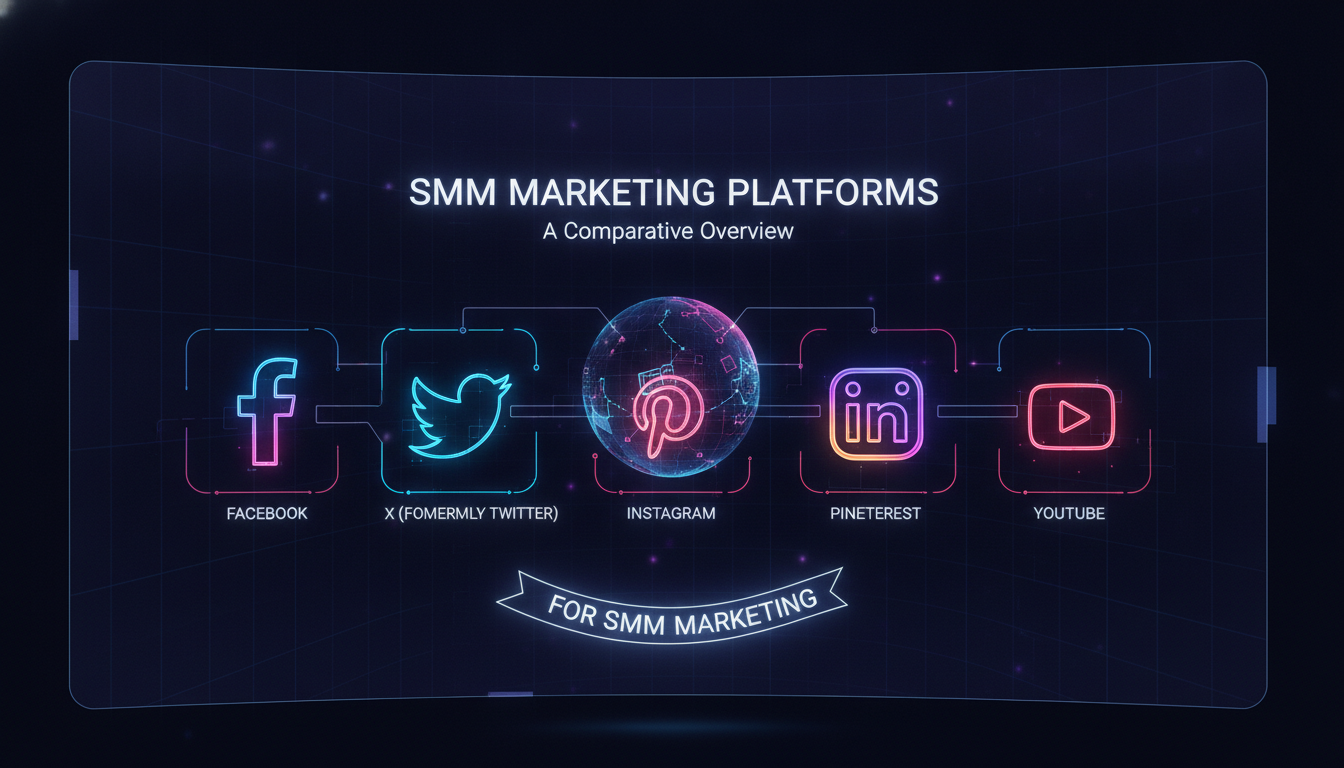
Understanding Each Platform’s Unique Role
Not all social channels are created equal. Each platform serves distinct user needs and content formats, making it critical to align your platform selection with your audience and objectives. The table below summarizes the primary uses, audience demographics, and content strengths of the major players in this kind of marketing.
| Platform | Primary Audience | Best for | Key Content Formats | Ad Options |
|---|---|---|---|---|
| Broad, ages 25–55+ | Community building, lead gen | Posts, videos, groups, events | Image, video, carousel, lead forms | |
| Younger, ages 18–34 | Visual storytelling, brand awareness | Stories, Reels, feed posts, IGTV | Photo, video, story, shopping ads | |
| Professionals, B2B | Thought leadership, recruitment | Articles, company updates, newsletters | Sponsored content, InMail, text ads | |
| TikTok | Gen Z, but expanding | Viral challenges, brand personality | Short videos, live streams | In-feed ads, branded hashtags, effects |
| YouTube | All ages, high intent | Education, product demos, SEO | Long-form video, Shorts, live | Skippable, non-skippable, bumper ads |
How Major Platforms Shape SMM Marketing
Facebook remains a powerhouse for community engagement and targeted advertising. Its vast user base and sophisticated ad manager make it ideal for brands seeking broad reach and granular audience segmentation. Groups and events foster tight-knit communities, while its marketplace integrates social commerce directly into the feed.
Instagram thrives on visual aesthetics. With features like Stories and Reels, it’s the go-to platform for lifestyle brands, influencers, and creative storytelling. Instagram Shopping tags allow direct purchases from posts, making it a natural sales channel for product-focused brands.
LinkedIn is the professional network where B2B smm flourishes. It’s unmatched for sharing thought leadership, industry insights, and company news. Sponsored InMail and lead gen forms enable direct outreach to decision-makers without the noise of a consumer feed.
TikTok disrupted the entire space with its algorithm-driven, highly engaging short videos. Brands that succeed here embrace trends, collaborate with creators, and prioritize entertainment over polish. Its expanding audience presents a significant opportunity for brands willing to experiment and move fast.
YouTube is the second-largest search engine, making it essential for long-form educational content, product reviews, and tutorials. Pre-roll and bumper ads capture viewer attention, while Shorts now compete directly in the short-video arena.
Selecting Your Platform Mix
Rather than trying to dominate every platform, successful smm marketing focuses on two or three channels where the target audience is most active. A B2B consultancy might prioritize LinkedIn and X, while a fashion label would thrive on Instagram and TikTok. Regularly reassessing platform performance ensures resources go where they yield the highest return.
Building an Effective SMM Marketing Strategy
Setting SMART Goals
Specific, Measurable, Achievable, Relevant, and Time-bound goals form the foundation of any smm marketing strategy. Instead of “increase followers,” a SMART goal looks like: “Gain 500 new Instagram followers in the next quarter by posting daily Reels and engaging with industry hashtags.” Clear goals unite teams and give everyone a shared benchmark for success.
Knowing Your Audience
Deep audience understanding separates mediocre smm marketing from outstanding work. Beyond basic demographics, psychographics, including values, hobbies, and pain points, inform content that actually resonates. Social listening and platform analytics offer a direct window into what topics engage your followers. Updating buyer personas regularly ensures your message stays relevant as trends shift.
Choosing Content Types and Formats
Diversifying content formats keeps feeds fresh and audiences engaged. A strong content mix includes:
- Educational content: How-to videos, industry insights, whitepapers.
- Entertaining content: Memes, challenges, user-generated spotlights.
- Inspirational content: Customer success stories, motivational narratives.
- Promotional content: Product launches, limited-time offers.
The 80/20 rule, 80% valuable or entertaining content and 20% promotional, is a smart guideline that prevents audiences from tuning out. It keeps your brand feeling like a resource rather than a sales pitch.
Types of SMM Marketing Content
Organic Social Media Content
Organic smm marketing relies on unpaid distribution through feed posts, Stories, comments, and direct messages. This type of content builds brand personality and fosters community. The authenticity of organic interactions often drives higher trust and loyalty than paid alternatives. That said, organic reach has declined across many platforms as algorithms prioritize personal connections, making it smart to boost top-performing organic posts with targeted ad spend.
Paid Social Media Advertising
Paid smm marketing amplifies reach through targeted ads. Common formats include sponsored posts, carousel ads, video ads, and interactive polls. Social platforms offer robust targeting options, from basic demographics to custom audiences built from website visitors or email lists. A/B testing ad creatives and optimizing for specific objectives, whether clicks, conversions, or video views, is standard practice for any serious campaign.
Influencer Marketing
Influencer marketing has surged as a key pillar of smm marketing. By partnering with individuals who have built genuine trust with a specific following, brands tap into pre-existing communities. Micro-influencers (1K to 100K followers) often deliver higher engagement rates than celebrities because their audiences feel a closer personal connection. Contracts should clearly outline deliverables, usage rights, and performance expectations to ensure a mutually beneficial partnership.
“The power of SMM is driven by the capacity of social media in three core marketing areas: connection, interaction, and customer data. Businesses can measure their social equity, the return on investment from their social media marketing campaigns.” – Investopedia
Measuring SMM Marketing Success
Key Performance Indicators (KPIs)
Without measurement, smm marketing lacks accountability. Essential KPIs vary by goal:
- Brand awareness: Reach, impressions, share of voice.
- Engagement: Likes, comments, shares, saves, click-through rate.
- Conversions: Sales, sign-ups, leads, cost per acquisition.
- Customer loyalty: Retention rate, sentiment analysis, Net Promoter Score.
Many brands track “social equity,” a concept that quantifies the return on investment from social media activities by measuring engagement and conversion data over time. It’s the clearest way to connect social activity to actual business outcomes.
Tools for Analytics
From built-in platform analytics to comprehensive management suites, a range of tools support smm marketing measurement. Popular options include:
- Native analytics: Facebook Business Suite, TikTok Analytics, LinkedIn Page Analytics.
- Social media management: Hootsuite, Sprout Social, Buffer, which consolidate data and offer cross-channel reporting.
- Social listening: Brandwatch, Talkwalker, which monitor brand mentions and sentiment in real time.
Adjusting Strategy Based on Data
Agile smm marketing adapts constantly. Review monthly reports to identify top-performing content types, optimal posting times, and audience growth patterns. If short videos generate roughly 2 to 3 times the engagement of static images on your account, shift resources accordingly. A/B testing headlines, visuals, and CTAs continuously refines performance and keeps your strategy sharp.
The Future of SMM Marketing
AI and Automation
Artificial intelligence is reshaping smm marketing at every level. AI-powered content generation, chatbots for customer service, and predictive analytics for ad targeting are becoming mainstream tools rather than experimental features. Brands that use AI can personalize interactions at scale, responding to individual customer needs in real time. The caution: over-automation can feel cold and impersonal, so maintaining a human voice in your content remains critical.
Short-Form Video Dominance
The explosion of TikTok and Instagram Reels proves that concise, engaging video is the format of the moment. Smm marketing strategies must prioritize snackable, entertaining clips that capture attention within the first few seconds. Even long-form platforms like YouTube have embraced Shorts, signaling a cross-platform shift that shows no signs of reversing.
Social Commerce Growth
Platforms are increasingly integrating shopping features, blurring the line between social interaction and e-commerce. Smm marketing will continue embedding direct purchase capabilities, with live shopping events and AR try-ons becoming standard brand tools. Brands that build seamless social storefronts will capture impulse buyers more effectively than those still treating social as a pure awareness channel.
Ethics and Transparency in SMM
As social media matures, ethical considerations are moving from afterthought to strategic priority. Audiences expect brands to be transparent about sponsored content, data usage, and community moderation. Influencer partnerships must be clearly disclosed. Brands that build trust through honest communication will outlast those chasing short-term engagement spikes. According to industry research, consumer trust is now one of the most cited factors in brand loyalty decisions, making ethical SMM a competitive advantage, not just a compliance requirement.
“SMM marketing isn’t about chasing every trend. It’s about understanding your audience so deeply that your content becomes a welcome part of their feed. Success lies in consistency, authenticity, and the willingness to evolve.” – Emin Media
Want to build a social media presence that actually moves the needle? Explore our full range of creative and digital marketing services or contact Emin Media for a free brand consultation. Let’s build something bold together.
Frequently Asked Questions
What is SMM in marketing?
SMM, or Social Media Marketing, is the practice of using social media platforms to promote a business, connect with target audiences, and achieve marketing goals such as increasing brand awareness or driving sales. It includes both organic content strategies and paid advertising across platforms like Facebook, Instagram, LinkedIn, and TikTok.
Is SMM a good career?
Yes, SMM offers strong career prospects. With social media usage continuing to grow globally, demand for skilled SMM professionals, from content creators to strategists, remains high. Roles often offer flexibility, creative variety, and competitive compensation.
What is the 5 5 5 rule for social media?
The 5-5-5 rule is an engagement strategy: spend 5 minutes liking posts, 5 minutes commenting, and 5 minutes sharing content from others each day to build community and increase your visibility. It’s a simple daily habit that compounds into meaningful audience relationships over time.
Is SMM worth it?
For most businesses, SMM is worth the investment. It provides cost-effective reach, precise targeting, and measurable outcomes that traditional advertising channels struggle to match. The key is approaching it with a clear strategy rather than posting randomly and hoping for results.
What does an SMM manager do?
An SMM manager oversees a brand’s social media presence from end to end. Responsibilities include content planning, community engagement, analytics tracking, and paid ad management, all aligned to ensure every activity supports broader business goals.
Enjoyed this article?
Contact Emin Media for a free brand consultation and let's create something amazing together.
Get in TouchRelated Articles
Digital Storytelling for Brands: The Complete Guide
Digital storytelling for brands builds real audience connections through narrative. Learn proven techniques, formats, and…
Design Thinking for Marketing: A 2026 Guide
Design thinking for marketing builds campaigns around real user needs. Learn the 5 phases, common…
Creative Direction for Video Shoots: A Complete Guide
Master creative direction for video shoots with proven steps, tools, and strategies that build brand…