Online Marketing and Advertising: Complete Guide
Online marketing and advertising is the practice of promoting products or services through internet-based channels such as search engines, social media, email, and websites. It combines strategic brand-building with paid promotion to reach and convert target audiences online.
Key Takeaways
- and advertising use digital channels like search engines, social media, and email to connect brands with the right audiences at the right moment.
- Marketing is the full strategy. Advertising is one paid tactic within it. Confusing the two leads to wasted budgets.
- According to Adobe, content marketing generates three times more leads and costs 62% less than traditional outbound methods.
- Successful online advertising requires clear goals, precise audience targeting, and continuous performance measurement.
- As of 2026, AI automation, privacy-first data strategies, and short-form video are reshaping how brands run digital campaigns.
- Ad fraud, viewability issues, and ad blocking are real challenges every digital advertiser needs to plan around.
What Is Online Marketing and Advertising?
this type of advertising refers to every tactic a brand uses to reach customers through internet-based channels, from organic content to paid placements. Understanding both sides of this equation is what separates brands that grow from brands that just spend money.
Definition of Online Marketing
Online marketing, also called digital marketing, is the process of using digital channels to connect with potential customers. According to Adobe, it covers tactics like social media marketing, email campaigns, influencer partnerships, SEO, and video content. Unlike traditional marketing that relies on broadcast and print, online marketing enables two-way communication and precise targeting. The American Marketing Association defines marketing as a business practice that involves identifying, predicting, and meeting customer needs (AMA). In the digital space, that means using data and technology to deliver personalized experiences at scale.
Definition of Online Advertising
Online advertising is a subset of marketing that involves paying to display promotional messages on digital platforms. Salesforce defines digital advertising as the strategic practice of delivering promotional content through online channels to drive specific business outcomes. Common formats include search engine ads, display banners, social media ads, and video pre-rolls. According to LinkedIn, online advertising is now the dominant channel for global media expenditures, offering trackable and measurable campaigns. While marketing covers the full customer journey, advertising specifically aims to capture attention and prompt immediate action.
How They Work Together
The most effective digital strategies treat this kind of and advertising as two sides of the same coin. Marketing builds the foundation: understanding the audience, crafting the brand message, and nurturing leads over time. Advertising then amplifies that message to a wider audience. A business might use content marketing to attract organic traffic, then deploy pay-per-click ads to retarget visitors who did not convert. That combination maximizes both reach and conversion efficiency.
Marketing vs. Advertising: Understanding the Distinction
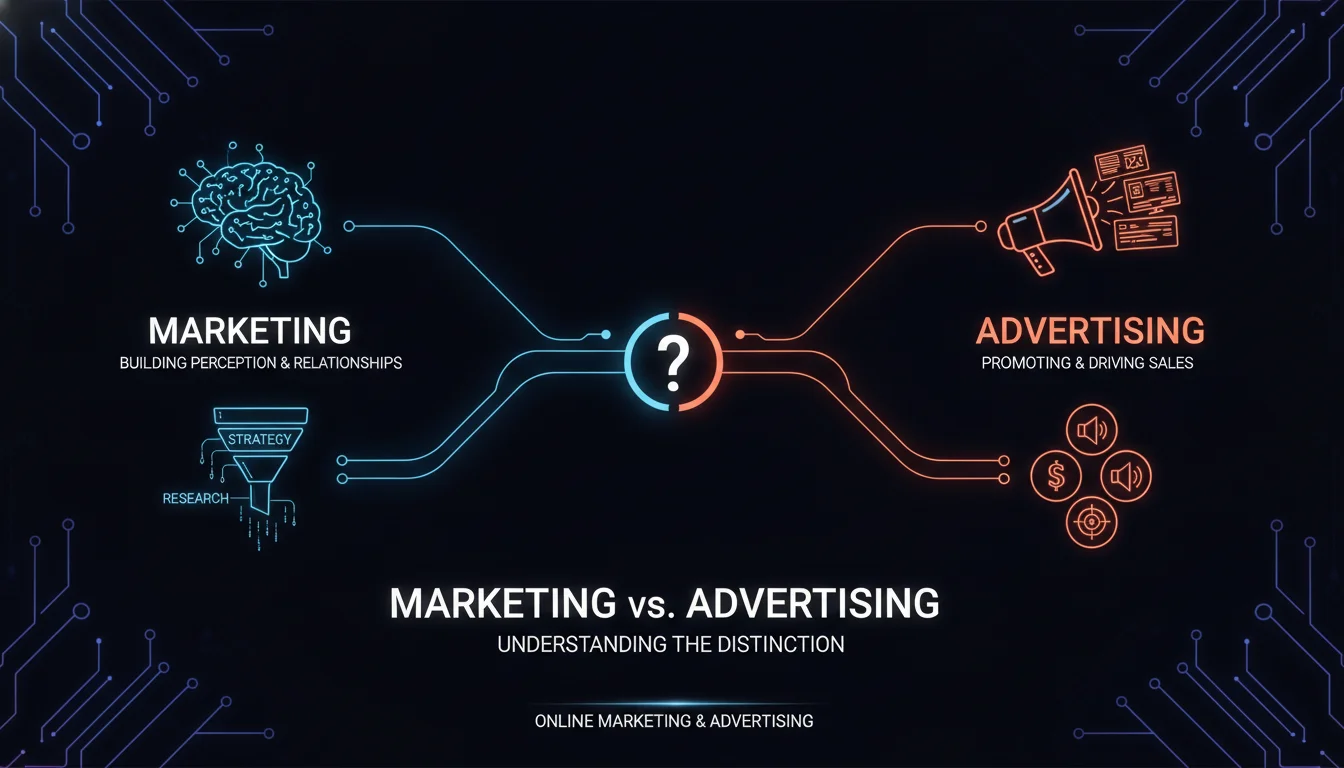
Marketing and advertising are related but not interchangeable. Knowing the difference helps you allocate budget with intention rather than guesswork.
Marketing as a Full-Spectrum Process
Marketing encompasses the entire strategy of bringing a product to market. It includes market research, product development, pricing, distribution, and promotion. The AMA highlights the importance of the marketing mix, often focused on the four Cs: client, cost, convenience, and communication (AMA). Within the marketing and advertising, this broad view ensures that every digital effort aligns with business goals and genuine customer needs.
Advertising as Paid Promotion
Advertising is one facet of the promotional mix. It involves paying for space or time to deliver a controlled message to a defined audience. Online advertising platforms like Google Ads and Meta Ads allow businesses to bid on keywords or target specific demographics. Cost models vary: CPM (cost per mille), CPC (cost per click), CPA (cost per action), CPE (cost per engagement), CPV (cost per view), and CPL (cost per lead) give advertisers flexibility based on campaign objectives (Wikipedia). This paid structure is what makes advertising distinct from organic efforts like SEO or editorial content.
Why the Distinction Matters for Your Business
Understanding the difference helps you allocate resources effectively. A startup might rely more on organic marketing to build trust, while an established brand invests in advertising for faster results. As Dr. Jessica Rogers, senior associate dean of business programs at Southern New Hampshire University, puts it:
“A key point is that depending on the target audience, some channels are more effective than others.” – Dr. Jessica Rogers, SNHU (SNHU)
By recognizing where advertising fits within the broader marketing plan, businesses can build more cohesive and efficient campaigns.
Types of Online Marketing and Advertising Channels
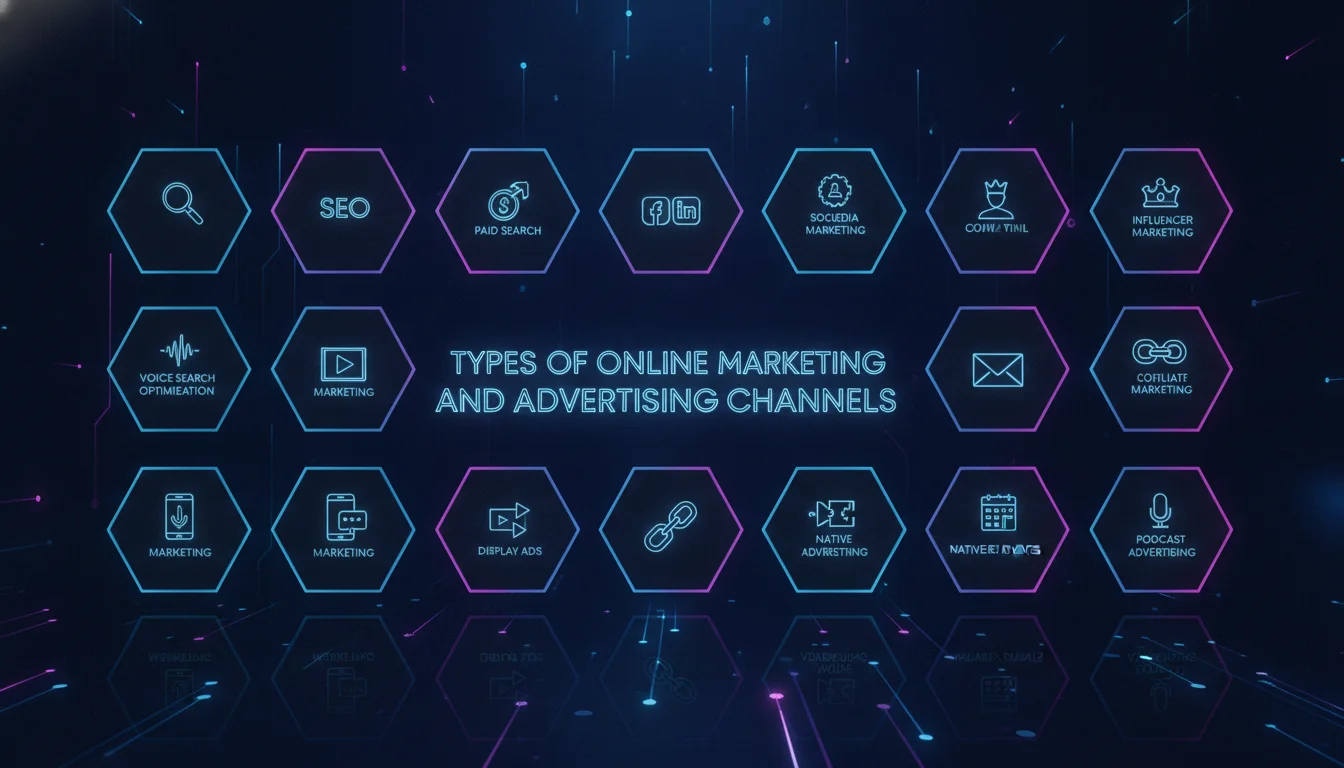
advertising span a wide range of channels, each with its own strengths, cost structures, and ideal use cases.
Search Engine Marketing (SEO and PPC)
Search engine marketing includes both organic search engine optimization (SEO) and paid search advertising (PPC). SEO involves optimizing website content to rank higher in organic results, while PPC lets businesses bid on keywords to appear in sponsored listings. These methods are foundational to digital marketing because they capture high-intent users actively searching for solutions (Adobe). Google and Meta are the top two platforms for paid search and social advertising, though the right choice always depends on where your audience actually spends time.
Social Media Marketing and Advertising
Social platforms like Facebook, Instagram, LinkedIn, and TikTok offer both organic marketing opportunities and paid advertising options. These channels excel at targeting based on demographics, interests, and behaviors. LinkedIn notes that B2B marketers especially benefit from social media’s ability to reach decision-makers during the research phase (LinkedIn). For B2C brands, Instagram and TikTok’s visual-first formats make online marketing feel native rather than interruptive.
Email Marketing and Display Advertising
Email marketing remains one of the most cost-effective tools in and advertising for nurturing leads and driving repeat purchases. It covers newsletters, promotional offers, and automated sequences tailored to subscriber behavior. Display advertising uses visual banners on websites and apps to build brand awareness, with retargeting as a particularly powerful application. Both channels are essential components of a diversified digital strategy.
Programmatic Advertising
Programmatic advertising automates the buying and selling of digital ad space using real-time bidding systems. Instead of negotiating placements manually, algorithms match your ad to the right user at the right moment across thousands of websites and apps. This approach makes this type of advertising more efficient at scale, though it also introduces complexity around brand safety and ad quality that marketers need to manage actively.
“Because the internet provides a two-way communication street, businesses no longer have to guess if their message resonated. They can utilize real-time data capabilities to see exactly how a user interacts with an ad, from the initial impression to the final click.” – Salesforce (Salesforce)
Pros and Cons of Online Marketing and Advertising
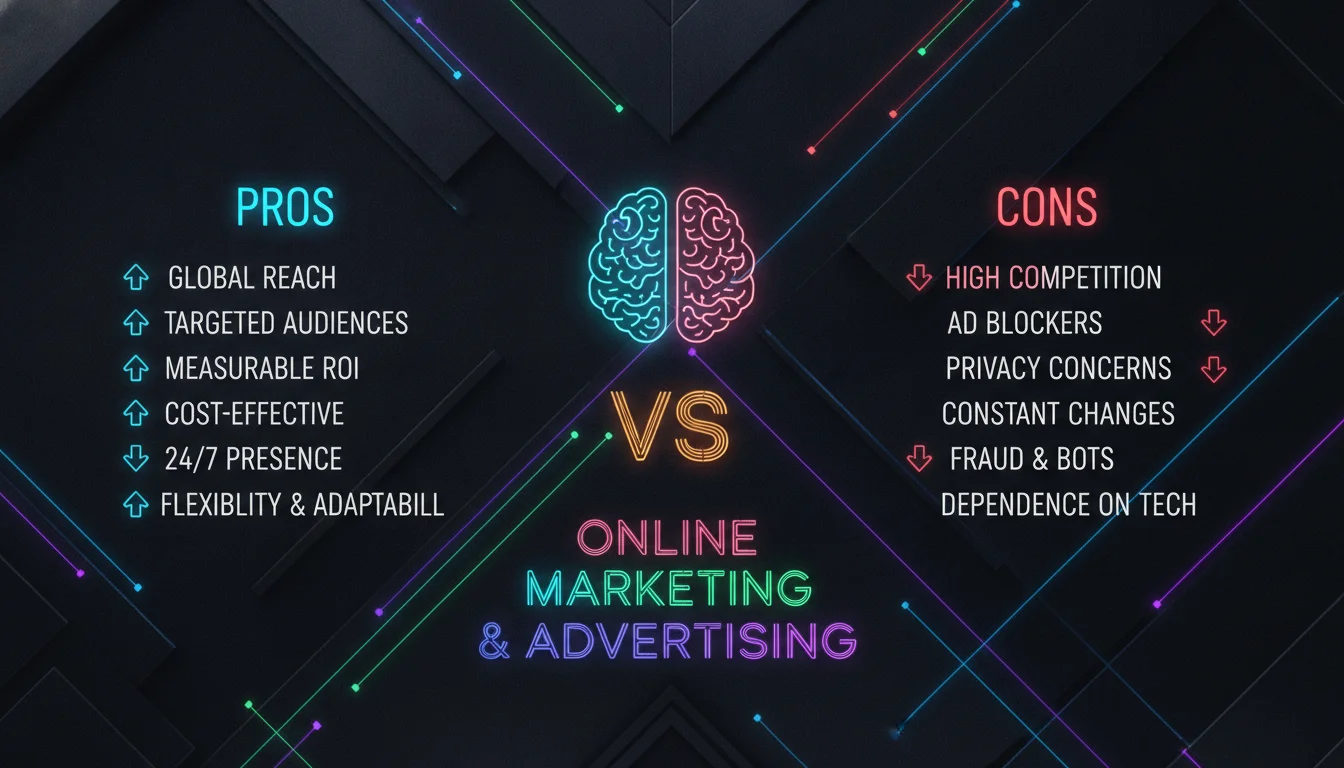
this kind of and advertising offer significant advantages over traditional channels, but they come with real challenges that every brand needs to plan around.
Pros
- Precise targeting: Reach users based on location, device, browsing history, demographics, and purchase behavior, reducing wasted spend.
- Measurable ROI: Every dollar spent can be tracked and attributed to specific actions, from clicks to conversions to revenue.
- Cost efficiency: Adobe reports that content marketing generates three times more leads and costs 62% less than traditional outbound methods.
- Speed and flexibility: Campaigns can be launched, paused, or scaled within hours, giving brands real-time control over their spend.
- Global reach: A local business can compete on a global stage with the right digital strategy and a modest budget.
- Two-way communication: Digital channels enable direct dialogue with customers through comments, messages, and reviews.
Cons
- Ad fraud and viewability: Invalid traffic, bot clicks, and ads that never actually appear on screen are persistent problems that inflate reported metrics.
- Ad blocking: A growing share of internet users install ad blockers, reducing the reach of display and pre-roll campaigns.
- Privacy regulations: Laws like GDPR and the phasing out of third-party cookies are forcing major changes to how advertisers collect and use audience data.
- Complexity and learning curve: Managing multiple platforms, bidding strategies, and analytics tools requires significant expertise or dedicated resources.
- Audience fatigue: Overexposure to ads on the same channels can reduce engagement and damage brand perception over time.
Benefits of Online Marketing and Advertising for Business Growth
The business case for the marketing and advertising is clear: it delivers measurable results at a scale and precision that traditional channels simply cannot match.
Cost-Effectiveness and Measurable ROI
One of the most compelling advantages is cost efficiency. Adobe reports that content marketing generates three times more leads than traditional outbound methods while costing 62% less. Digital platforms provide real-time analytics, so every dollar spent can be tracked and attributed to specific actions. This transforms advertising from a speculative expense into a quantifiable investment, as Salesforce puts it.
Enhanced Targeting and Personalization
Digital channels allow a level of precision that broadcast media cannot offer. Businesses can target users based on location, device, browsing history, and purchase behavior. This reduces waste and increases relevance, leading to higher engagement. Personalization, such as showing products a customer previously viewed or addressing them by name in an email, further improves conversion rates across the funnel.
Global Reach and Scalability
With the internet, a small business can compete on a global stage. Online advertising campaigns can be scaled up or down instantly, fitting any budget. Whether it is a local bakery using geo-targeted ads or a SaaS company reaching international markets, the flexibility of advertising supports growth at every stage.
Steps to Build an Effective Online Advertising Campaign
A well-structured online marketing plan starts with clear objectives and builds from there. Skip any of these steps and you are essentially guessing.
Step 1: Define Your Goals and Audience
Start by clarifying what you want to achieve: brand awareness, lead generation, or direct sales. Then define who your ideal customer is. Use analytics data and market research to build buyer personas. The AMA emphasizes that a clear market orientation and understanding of the marketing environment are critical first steps (AMA). Without this foundation, even the best creative will miss the mark.
Step 2: Choose the Right Advertising Platforms
Select platforms where your audience actually spends time. For B2B, LinkedIn is often the strongest choice. For B2C, Facebook, Instagram, and TikTok tend to deliver better reach and engagement. Consider the ad formats available, such as carousel, video, and lead forms, and each platform’s targeting capabilities. Google Ads operates on a CPC model, while display networks often use CPM. Match the platform to the objective, not the other way around.
Step 3: Create Compelling Ad Content and Optimize
Develop creative that grabs attention and aligns with your brand voice. Use strong calls-to-action and test different variations against each other. Continuous A/B testing of headlines, images, and audience segments is essential. Monitor metrics like click-through rate and conversion rate, and adjust based on what the data tells you. The brands that win at and advertising are the ones that treat every campaign as a learning opportunity.
| Advertising Model | Cost Structure | Typical Use Case | Key Advantage |
|---|---|---|---|
| Display Advertising | CPM, CPC | Brand awareness, retargeting | Visual impact, wide reach |
| Search Advertising | CPC | High-intent traffic, lead generation | Captures demand at the moment of search |
| Social Media Ads | CPC, CPM, CPE | Audience engagement, lead generation | Precise demographic and interest targeting |
| Video Advertising | CPV, CPM | Brand storytelling, product demos | High engagement, emotional connection |
| Affiliate Marketing | CPA, revenue share | Performance-based promotion | Low risk, pay-for-results model |
Challenges in Online Marketing and Advertising
this type of advertising come with real obstacles that brands need to address head-on, not ignore.
Ad Fraud and Viewability
Ad fraud is one of the most persistent problems in digital advertising. Invalid traffic from bots can inflate impression and click counts, making campaigns appear more effective than they actually are. Viewability is a related issue: an ad that technically loads on a page but sits below the fold where no human ever sees it still counts as an impression on many platforms. Smart advertisers use third-party verification tools and set viewability thresholds to protect their budgets.
Ad Blocking and Anti-Targeting Technologies
A significant and growing portion of internet users install ad blockers, which prevent display and pre-roll ads from ever rendering. Anti-targeting tools and browser privacy settings further limit the data advertisers can collect. This is pushing brands toward less interruptive formats like native advertising, sponsored content, and influencer partnerships that users are less likely to block.
Privacy Regulations and Data Collection
Regulations like GDPR in Europe and similar frameworks in other regions have fundamentally changed how brands can collect and use audience data. The phasing out of third-party cookies adds another layer of complexity. First-party data collection through email sign-ups, loyalty programs, and direct customer relationships is becoming the most reliable foundation for this kind of and advertising in a privacy-first world. Brands that build these direct data assets now will have a serious advantage as regulations tighten further.
Best Practices for Online Marketing Success
Winning at the marketing and advertising is less about finding a secret tactic and more about executing fundamentals better than your competitors.
Consistent Branding Across Channels
Your brand should be instantly recognizable whether a customer sees an ad, visits your website, or opens an email. Consistency in visuals, tone, and messaging builds trust and recall. This cohesion is especially critical in advertising, where customers interact with multiple touchpoints before making a decision.
Data-Driven Decision Making
Rely on data, not assumptions. Use tools like Google Analytics, CRM systems, and social media insights to understand what is working. Salesforce highlights that digital advertising provides real-time data capabilities to see how users interact with ads (Salesforce). That data allows for more informed decisions and smarter budget allocation across every channel.
Continuous Testing and Optimization
The digital landscape changes fast. Regularly test new channels, ad formats, and messaging angles. Even small tweaks, like button color or headline wording, can significantly shift performance. A culture of experimentation keeps your online marketing efforts ahead of competitors who set campaigns and forget them.
Measuring the ROI of Your Online Marketing Efforts
Measurement is where and advertising prove their value. If you cannot measure it, you cannot improve it.
Key Metrics to Track
Focus on metrics that align with your goals. For awareness, track impressions and reach. For engagement, measure click-through rate and time on site. For conversions, monitor cost per lead and return on ad spend. Each metric tells a specific story about campaign effectiveness, and reading them together gives you the full picture.
Tools for Marketing Analytics
Popular analytics tools include Google Analytics for web traffic, native insights from each social platform, and dedicated software like Adobe Marketo Engage (Adobe). These tools consolidate data from multiple sources, giving you a unified view of how your this type of advertising investments are performing.
Calculating Return on Ad Spend (ROAS)
ROAS divides revenue generated from ads by the cost of those ads. If you spend $100 on a campaign and generate $500 in sales, your ROAS is 5:1. This straightforward calculation helps determine the financial viability of your advertising activities and guides decisions about where to scale and where to cut.
The Future of Online Marketing and Advertising
As of 2026, online marketing and advertising are evolving faster than at any point in the past decade. Three forces are driving most of the change.
The Rise of AI and Automation
Artificial intelligence is transforming how ads are created, targeted, and optimized. AI-powered tools can predict customer behavior, personalize content at scale, and automate bidding strategies in real time. As machine learning algorithms grow more sophisticated, the efficiency of online marketing and advertising will keep improving, but so will the baseline expectations of what good performance looks like.
Privacy-First Advertising Strategies
With GDPR, cookie deprecation, and expanding data protection laws, marketers must adapt to a privacy-focused world. First-party data collection through email sign-ups and customer loyalty programs is becoming essential. Strategic online marketing and advertising will increasingly rely on building direct relationships and earning audience trust rather than tracking users across the web.
The Evolving Role of Content and Video
Content remains central, but its forms keep diversifying. Short-form video, podcasts, and interactive content are gaining serious traction across every demographic. Brands that tell compelling stories across these formats will earn attention that paid ads alone cannot buy. The integration of content with targeted advertising continues to blur the line between organic and paid strategies, and that blur is where the most creative opportunities live.
Taking the First Step
Whether you are a startup or an established brand, the most important move is to start with clarity. Define your goals, understand your audience, and experiment with channels like search ads or social media. As you gather insights, refine your approach. With the right strategy, integrated online marketing and advertising can drive growth and brand loyalty for years to come.
Ready to build something bold? Contact Emin Media for a free brand consultation and let us help you turn your digital presence into your strongest competitive asset.
Frequently Asked Questions
What do you mean by online marketing and advertising?
Online marketing and advertising is the practice of promoting products or services through internet-based channels like search engines, social media, and email. Marketing covers the overall strategy and brand-building, while advertising refers specifically to paid promotional placements within that strategy.
What are the main types of online advertising?
The main types include display ads, search ads, social media ads, video ads, affiliate marketing, and programmatic advertising. Each serves different business goals and uses distinct cost models like CPC, CPM, CPV, or CPA depending on the campaign objective.
How does online marketing differ from traditional marketing?
Online marketing allows precise targeting, real-time analytics, and two-way communication with audiences, whereas traditional marketing relies on broad channels like TV and print. It is also generally more cost-effective and scalable, making it accessible to businesses of all sizes.
Is online advertising expensive?
Costs vary widely depending on the platform, industry, and targeting parameters. Flexible cost-per-click models mean you only pay when someone takes an action, making online marketing and advertising accessible even on modest budgets. Starting small and scaling based on performance data is a proven approach.
What skills are needed for online marketing and advertising?
Key skills include data analysis, copywriting, SEO, social media management, and fluency with advertising platforms like Google Ads and Meta Ads. The most effective practitioners combine creative instincts with analytical discipline, reading performance data as fluently as they write campaign copy.
How do I measure the success of an online advertising campaign?
Success is measured using metrics like click-through rate, conversion rate, cost per acquisition, and return on ad spend. Tools like Google Analytics and platform-native dashboards provide detailed tracking so you can attribute results to specific campaigns and optimize accordingly.
Enjoyed this article?
Contact Emin Media for a free brand consultation and let's create something amazing together.
Get in TouchRelated Articles
Digital Storytelling for Brands: The Complete Guide
Digital storytelling for brands builds real audience connections through narrative. Learn proven techniques, formats, and…
Design Thinking for Marketing: A 2026 Guide
Design thinking for marketing builds campaigns around real user needs. Learn the 5 phases, common…

Creative Direction for Video Shoots: A Complete Guide
Master creative direction for video shoots with proven steps, tools, and strategies that build brand…