How to Make Brand Videos: Strategy, Tools & Process
How to make brand videos that perform is a process: start with audience strategy, write a 60-90 second story with a hook in the first 5-10 seconds, produce consistent branded visuals, and tailor versions for every channel.
Key Takeaways
- Strategy comes before scripting. Nail down your audience, desired action, and target feeling before anyone touches a camera.
- Keep brand videos tight. ECG Productions recommends 60-90 seconds with a hook in the first 5-10 seconds.
- Brand consistency isn’t optional. Fonts, colors, logo, and voice need to show up in every frame.
- Plan multiple versions, not one master file. Cutdowns, captions, crops, and platform-specific openings change how well a video performs.
- Distribution should shape your creative decisions from day one, not get bolted on after the edit.
- Test with real viewers, then refine. Feedback from colleagues and customers catches what your internal team misses.
A strong marketing video is not just a finished file. It needs a clear audience, a useful hook, the right versions, smart placement, and a reason for someone to care after the first few seconds.
– ECG Productions
What Is a Brand Video and Why It Matters
Definition and Core Purpose
A brand video is a promotional video that shows who a company or organization really is. According to Storykit’s brand video guide, it communicates a brand’s mission, values, products, services, and personality. Brand videos take many shapes, from short social clips to longer corporate films, and often blend live-action footage, animation, graphics, voiceover, and music. The style and tone should always match your branding guidelines and speak directly to your target audience.
The real goal is connection, not just information. That’s what separates a brand video from a purely transactional ad. It helps viewers understand not just what you sell, but why you exist and why any of it should matter to them.
Why Brand Videos Outperform Static Content
Brand videos outperform static content because moving images hold attention longer and communicate emotion faster than a photo ever could. Canva’s marketing video page notes that between videos and static images, video wins on engagement, which matters because social feeds reward content that keeps people watching. According to Storykit, roughly 91% of consumers say they want to see more online video content from brands, citing Oberlo data. That’s a strong signal video is one of the most effective ways to reach an audience today.
Brand videos also help companies separate themselves from competitors, strengthen their positioning, and stay top-of-mind. Done well, they boost engagement, build brand loyalty, and function as a tool across the entire customer journey, not just at the top.
Where Brand Videos Fit in the Marketing Funnel
A single brand video rarely carries the entire strategy by itself. Smart teams build multiple versions for different funnel stages: awareness, consideration, and decision. A short emotional story might build awareness at the top, while a product demo or testimonial closes the gap at the bottom. The trick is matching the video’s message, length, and call to action to exactly where the viewer sits in their journey. Our team at Emin Media builds funnel maps before a single script gets written, because a video without a funnel role is just noise.
How to Make Brand Videos: Strategy Before Production
Define Audience, Goal, and Feeling
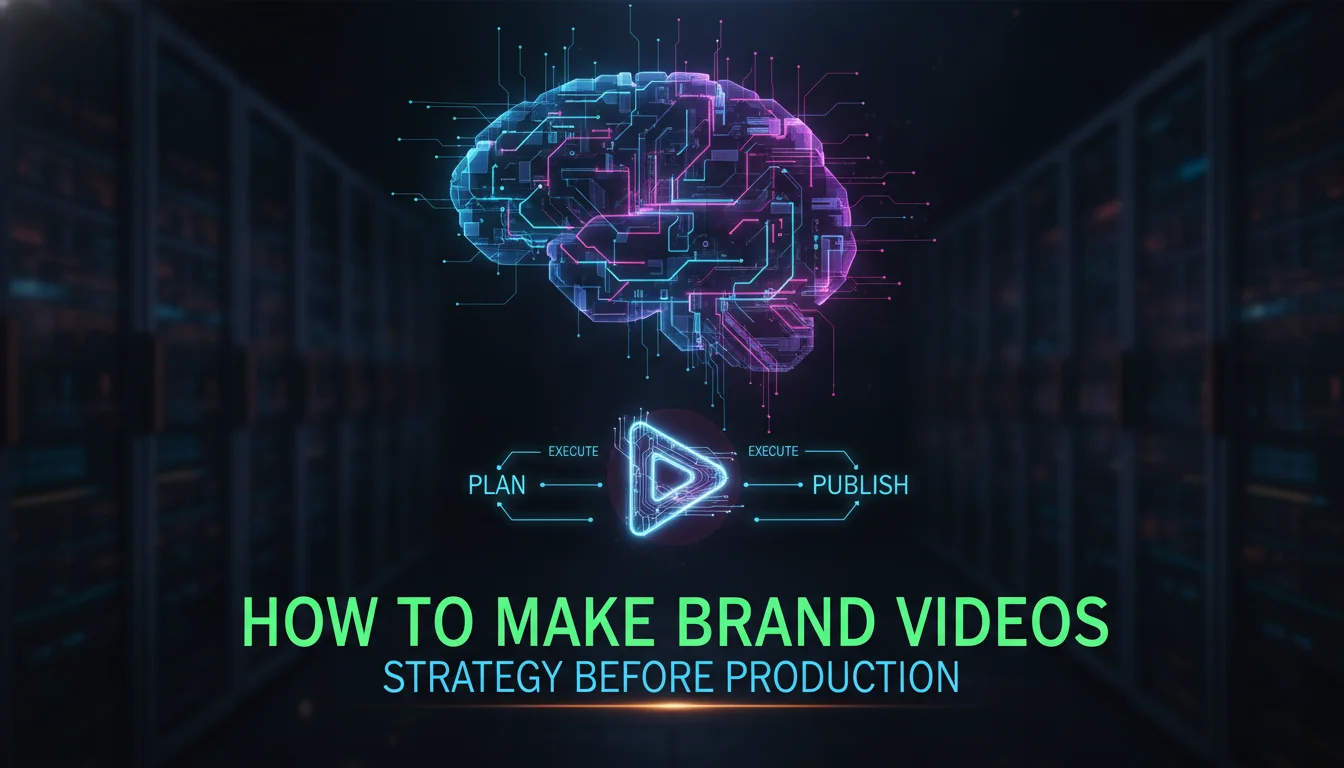
Before you write a single word or frame a shot, get clear on why you’re making this brand video. Who exactly is watching? What action should they take after? What feeling should stick around after the screen goes dark? ECG Productions emphasizes that a focused strategy shapes every production choice, from tone and visuals to distribution. A video built for new customers should look and sound nothing like one built to engage existing clients or investors.
Once your strategy is locked, the creative process turns into a series of aligned decisions instead of guesswork. This is the most important step in the entire question of how to make brand videos that move real business metrics, not just view counts.
Write the Narrative Arc and Hook
ECG Productions recommends aiming for 60 to 90 seconds, long enough to tell a real story without losing anyone’s patience. Open with a strong hook in the first 5 to 10 seconds, then build a simple arc: introduce a challenge or need, show your solution, and close with something memorable. Skip the jargon and corporate speak. Direct language paired with strong visuals wins nearly every time.
A hook is an opening question or bold statement designed to stop the scroll cold. Canva makes the same point: the first few seconds are the most important part of the entire video, because that’s the exact moment viewers decide whether to keep watching or swipe away.
Plan Versions, Placement, and Distribution First
ECG Productions warns that a marketing video usually needs cutdowns, thumbnails, captions, channel-specific openings, paid-media crops, landing-page context, and a clear path from awareness into action. Before production starts, connect the concept to where it will actually run: website, paid social, sales, broadcast, CTV, email, events, internal launch, or campaign support. This distribution-first thinking prevents expensive reshoots later and makes sure every version earns its place in the plan.
Canva’s approach backs this up. Its tools let you repurpose one video across multiple campaigns and resize it for different platforms. Plan versions from the start, not just one video and a prayer.
Pre-Production Planning and Creative Direction
Choose a Brand Video Type
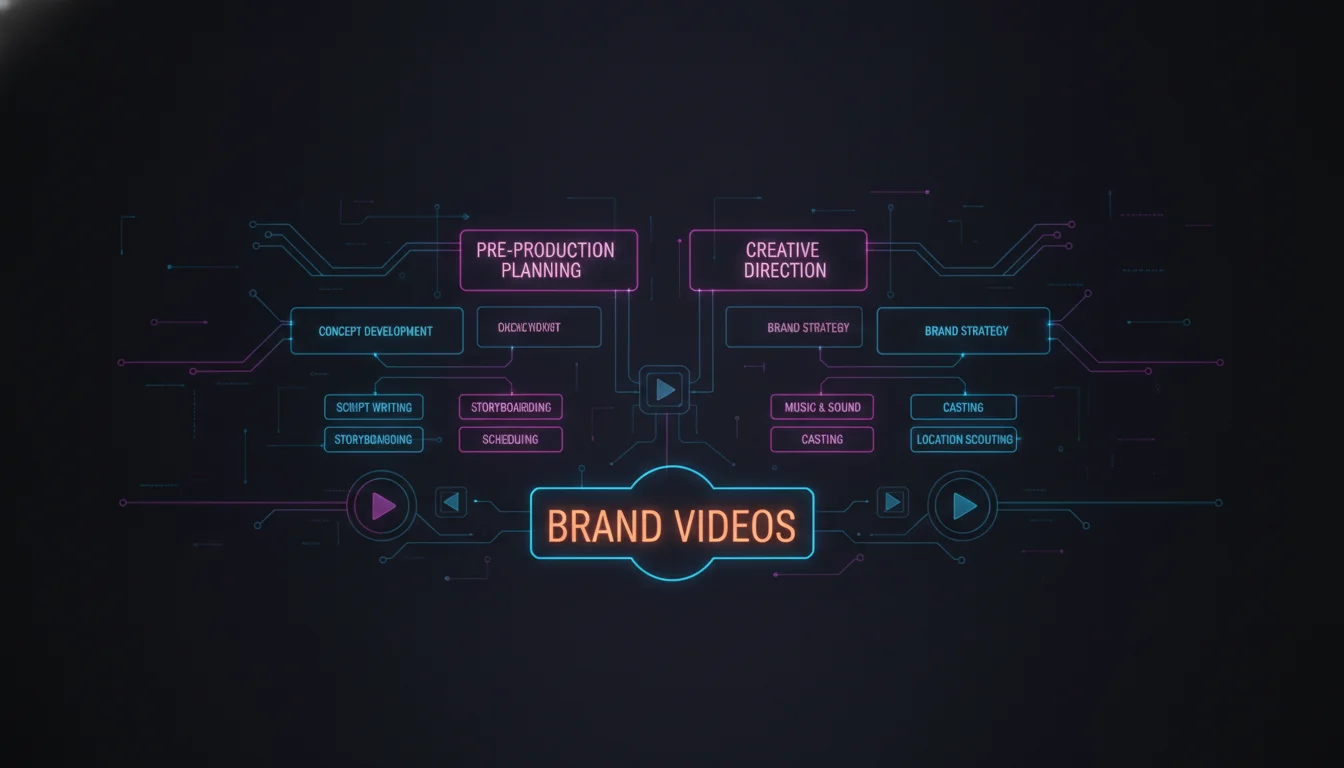
Choosing the right format is one of the earliest decisions in learning how to make brand videos that actually land. Storykit’s guide catalogs 10 types of brand videos alongside 6 real-world examples and 8 creative ideas. The exact list varies by source, but the range runs wide, from short social clips to longer corporate pieces. Brand videos can lean on live-action footage, animation, graphics, voiceovers, and music, and the style should always echo your company’s branding guidelines while speaking to your audience.
Common categories include company culture videos, product demos, customer testimonials, founder stories, and explainer animations. The right pick depends on your objective, your channel, and honestly, your available budget and time.
Build a Creative Brief
A creative brief is a one-page document that gets everyone aligned on what the video needs to achieve. It should cover the primary audience, the single core message, the desired feeling, the call to action, the length, the distribution channels, and the metric that defines success. A tight brief speeds up scriptwriting and editing and cuts down on painful revision cycles.
For example, a brief for an Instagram story might read: show how our service saves time for busy restaurant owners, 15 seconds, vertical, captions required, CTA to book a demo. Think of the brief as the bridge between strategy and actual production.
Script and Storyboard Essentials
Start your script with the hook, then move through challenge, solution, and takeaway, the exact arc ECG Productions recommends. Keep the language conversational. Storyboard every scene with a rough sketch or reference image, noting shot type, on-screen text, and duration. This visual plan catches pacing problems before you ever pick up a camera or open an editor.
Even if you’re leaning on stock footage or AI-generated clips, the storyboard still matters. It tells you exactly what to search for and how the pieces fit together. Think of a storyboard as the blueprint that keeps a brand video visually consistent from open to close.
How to Make Brand Videos: Step-by-Step Production Process
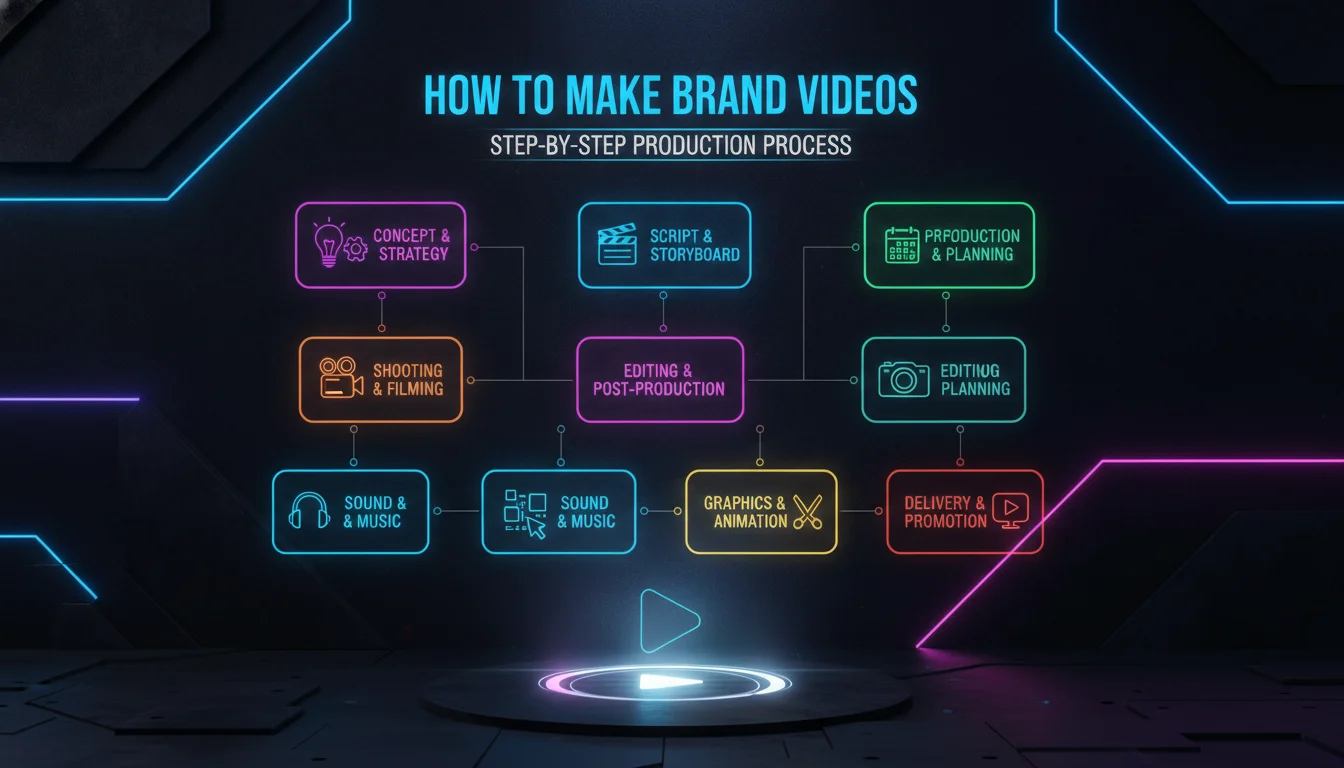
The production phase breaks down into three steps. Follow this order to avoid expensive rework later.
- Step 1: Capture or source footage. Shoot original video with a smartphone or camera, or pull from stock libraries and AI tools that match your brand’s look.
- Step 2: Edit for pace and brand consistency. Trim, merge, crop, drop in your brand fonts, colors, and logo, and keep the total runtime under 90 seconds.
- Step 3: Add captions, music, and motion graphics. Captions serve sound-off viewers, music sets the tone, and animation emphasizes the points that matter most.
Step 1: Capture or Source Footage
Canva’s marketing video maker offers a drag-and-drop editor and more than 1 million professionally-designed templates. You can upload your own clips or pull from stock footage libraries. Vimeo’s product video guide makes a similar point: quality content paired with a scalable video platform drives engagement. If original footage isn’t in the budget, start with templates and stock assets, just make sure the visuals actually match your brand’s look and feel.
Step 2: Edit for Pace and Brand Consistency
Editing is where the brand actually comes together. Use your brand’s font styles and colors, drop in your logo, and keep the message tight, two or three key points at most. Canva recommends building strong typography and compelling font pairings to reinforce recall. Trim, merge, and crop clips so the pacing feels tight and intentional. Remember: the first few seconds decide whether anyone keeps watching, so the hook goes right at the top.
Canva’s Brand Kit on Pro keeps your branding consistent across every platform you touch. Once you’re logged in, videos save automatically and can be repurposed or resized for different campaigns without starting from scratch.
Step 3: Add Captions, Music, and Motion Graphics
Captions matter because a huge share of social viewers watch with the sound off. Music sets the emotional register, and animations or stickers can punch up a specific point. Canva’s Magic Studio includes Beat Sync, which automatically matches footage to a soundtrack, Magic Video, which turns text prompts into videos, and Magic Animate, which auto-selects transitions. These AI tools speed up production, but the creative direction still needs a human behind the wheel.
DIY Tools vs. Professional Production vs. Hybrid
When DIY Tools Like Canva and Vimeo Work
DIY tools work best for simple social videos, internal updates, event recaps, and quick product teasers. Canva’s online video maker is beginner-friendly, free to start, and stocked with hundreds of free templates. Vimeo offers fast, in-browser editing and AI-powered features for teams that need speed without a production crew. If volume and consistency matter more than cinematic polish, DIY is a solid call.
When to Hire a Professional Video Team
Hire a professional team when the stakes are high, think brand anthems, broadcast spots, or CTV campaigns. ECG Productions, for example, helps marketing and brand leaders plan, produce, and distribute brand videos built to connect and convert. A professional team brings strategic thinking, cinematic craft, and distribution expertise that templates alone simply can’t replicate. This is where working with a creative partner like Emin Media pays off: we’ve seen firsthand how a clear strategic brief upstream saves budget downstream.
Comparison Table: Approaching Brand Video Production
| Approach | Best For | Typical Turnaround | Key Limitations |
|---|---|---|---|
| DIY / AI tools (Canva, Vimeo) | Social clips, internal updates, simple product teasers | Very fast; often same day | Limited advanced creative control; may look template-driven |
| Professional production (agency like ECG or Emin Media) | Brand anthems, broadcast, CTV, high-stakes launches | Longer; multiple weeks | Higher cost; more coordination |
| Hybrid (template plus custom footage/agency polish) | Recurring content at scale with consistent branding | Moderate | Requires clear brand governance to avoid inconsistency |
Distribution, Optimization, and Measurement
Tailor Versions for Each Platform
One size never fits all in brand video distribution. ECG Productions advises planning cutdowns, captions, crops, and channel-specific openings well before launch. Canva’s marketing video maker supports Facebook video ads, YouTube, TikTok, and Instagram, and lets you build square videos for different feeds. A vertical Story needs completely different framing than a 16:9 YouTube upload. Map these versions out before you export the final cut, not after.
Optimize for Search and Social Algorithms
Search and social algorithms favor content that holds attention start to finish. The first few seconds and clear captions help, but relevance matters just as much. Write descriptive titles, add relevant tags, and caption everything to make the video accessible. Vimeo notes that product marketing videos can be a make-or-break moment for potential customers, so the video’s real job is communicating value fast. Skip the clickbait; deliver on whatever the thumbnail and title promised.
Measure Performance Without Overcomplicating It
Focus on a handful of metrics that actually mean something: views, watch time, engagement, click-through rate, and conversions. If awareness is the goal, watch time and completion rate matter most. If conversion is the goal, track clicks and form fills. Use whatever analytics dashboard your platform gives you, Canva, Vimeo, and YouTube all offer one, to see which versions perform best and adjust from there.
Brand Consistency and Reusability
Use a Brand Kit and Visual Identity
A memorable brand video has to carry your identity consistently from the first frame to the last. Use your brand’s font styles and colors, and add your logo or any characters tied to your brand. Canva’s Brand Kit on Canva Pro makes this simple to maintain. Consistency across every video, regardless of topic or scope, is what builds recognition and trust over time.
According to creative industry data, brands that maintain visual consistency across every touchpoint see stronger recall and trust from their audience than those that treat each video as a one-off. Consistency isn’t a design nicety, it’s a business asset.
Repurpose One Video Into Multiple Assets
Don’t treat a brand video like a single deliverable. Treat it like a content system. Canva lets you repurpose a single video across multiple campaigns and resize it with Magic Switch. ECG Productions recommends planning cutdowns and thumbnails from the very start. That means one 60-second brand film can spin off into a 15-second social teaser, a square feed post, a Story cut, and a landing-page background loop.
Ask for Feedback and Iterate
Canva’s own guidance is direct: the best way to find out if your video works is to ask for feedback. Test teasers, demo videos, or video ads on friends or colleagues, or better yet, on actual customers. The more input you gather, the more polished your final messaging and design becomes. Then head back into your video editor and refine every detail that needs it.
Brand Spotlight: What Great Brand Video Storytelling Looks Like
Great brand video storytelling looks like a short film that could survive without a logo on screen and you’d still know exactly whose story it is. Think mood board thinking applied to motion: a consistent color palette, a recognizable typographic voice, sound design that feels intentional rather than stock. The founder-story video that opens on a real problem instead of a mission statement. The product demo that shows a genuine moment of friction being solved instead of a highlight reel. As of 2026, the brands winning attention are the ones treating every video, even a 15-second teaser, as a piece of a larger visual identity rather than a one-off asset.
Common Mistakes That Undermine Brand Videos
Mistake 1: Skipping Audience Strategy
Many teams jump straight to visuals or scripts. Without a clear audience, action, and feeling defined upfront, the video ends up generic. ECG Productions stresses that strategy shapes every single production choice that follows. Define these before production starts to avoid wasted budget and wasted footage.
Mistake 2: Making One Long Video for Every Channel
A three-minute brand film simply does not work on TikTok or Instagram Stories. ECG Productions explicitly warns that a marketing video usually needs cutdowns, captions, crops, and channel-specific openings. Planning multiple versions isn’t optional, it’s a core part of the production process itself.
Mistake 3: Ignoring Brand Consistency
If every video uses different fonts, colors, or tones, your brand becomes forgettable fast. Consistent branding is what builds recall over time. Canva’s Brand Kit exists specifically for this reason. Use your logo, brand fonts, and colors in every video, even the quick social cuts nobody thinks twice about.
Pros and Cons of DIY vs. Professional Brand Video Production
Pros
- DIY tools like Canva make it possible to learn how to make brand videos without hiring anyone or spending a production budget.
- Professional production brings cinematic quality and strategic distribution planning that templates can’t replicate.
- A hybrid model lets you scale recurring content while still calling in expert polish for high-stakes launches.
- AI-powered features like Magic Video and Beat Sync cut production time dramatically for simple assets.
Cons
- DIY videos can look template-driven if the brand kit isn’t applied carefully and consistently.
- Professional production takes longer, often multiple weeks, and costs more upfront.
- Hybrid approaches require strong brand governance, or consistency slips between the custom and templated pieces.
- Without a clear creative brief, any approach can produce a video that misses the intended audience entirely.
Conclusion: Making Brand Videos a Repeatable System
The Strategic Minimum for Your Next Video
Learning how to make brand videos isn’t a one-time deliverable, it’s a repeatable system. Start with audience strategy and distribution, write a 60-90 second story with a hook in the first 5-10 seconds, produce with consistent branding, and tailor versions for each platform. Test, measure, and refine. This strategic minimum is enough to outperform most content that starts with editing before it starts with thinking.
From First Video to Full-Funnel Program
Once you’ve built one strong brand video, repurpose it into multiple assets and map each one to your funnel. Use DIY tools for speed, bring in professional support for high-stakes moments, and lean on a hybrid model when you need to scale. According to Vimeo’s product video guide, roughly 96% of people watch product marketing videos to learn about goods or services. That audience is already waiting. Your job is showing up with a clear, on-brand story worth their time.
Ready to stop guessing and start producing brand videos that actually convert? Let’s build something bold. Contact Emin Media for a free brand consultation, and let’s map your first video to your funnel before you shoot a single frame.
Frequently Asked Questions
How long should a brand video be?
ECG Productions recommends 60 to 90 seconds, with a hook landing in the first 5 to 10 seconds. Shorter cuts work well for social feeds, while longer versions can live comfortably on your website.
What is the first step to make a brand video?
Define your audience, the action you want them to take, and the feeling you want to leave behind. Strategy always comes before script and production, no exceptions.
Can I make brand videos for free?
Yes. Canva’s marketing video maker offers free templates and a drag-and-drop editor, and you can even start without logging in. Upgrading later unlocks more advanced features like Brand Kit and Magic Switch.
How do I make a brand video without filming?
Use stock footage, AI-generated clips, animations, and templates to build something polished without a camera. Canva’s Magic Video can turn text prompts into videos, and stock libraries fill in the visual gaps.
What makes a brand video different from a product video?
A brand video communicates who the company is: its mission, values, and personality. A product video zeroes in on specific goods or services, though both often use similar tools and distribution channels.
How do I measure brand video success?
Track views, watch time, engagement, click-through rate, and conversions, then match the metric to the goal. Awareness campaigns lean on watch time; conversion campaigns lean on clicks and form fills.
Enjoyed this article?
Contact Emin Media for a free brand consultation and let's create something amazing together.
Get in TouchRelated Articles
Digital Marketing for Creatives: A Bold Guide
Digital marketing for creatives builds real visibility and sales. Learn strategies for social media, SEO,…
Branding & Design Agency Tips That Actually Work
Discover branding and design agency tips to choose the right partner, set clear goals, and…
Creative Agency Pitch Deck Tips That Win Clients
Master creative agency pitch deck tips that win clients in 2026. Learn storytelling, design, and…