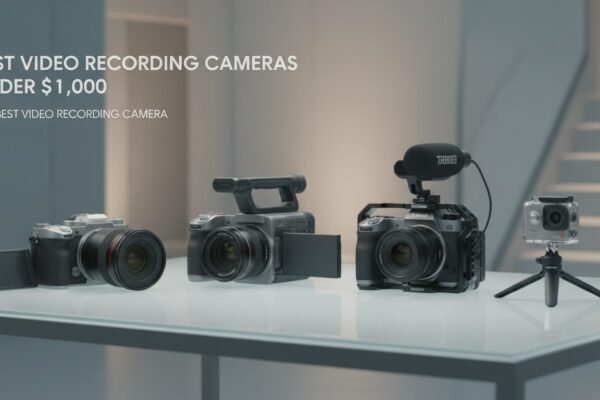
Digital Photo Camera Guide 2026: Expert Reviews & Buying
A digital photo camera is a device that captures photographs electronically using sensors instead of film. These range from pocket-sized compacts to professional mirrorless systems with interchangeable lenses.
Key Takeaways
- Digital photo cameras range from compact point-and-shoots to professional mirrorless systems, each suited to different skill levels and budgets
- Sensor size, megapixels, and lens options are the three most critical factors influencing image quality
- As of 2026, brands like Canon, Sony, and Nikon lead with advanced autofocus and 8K video capabilities
- Expect to spend $200–$500 for entry-level models and $2,000+ for full-frame pro bodies
- Mirrorless cameras have largely overtaken DSLRs in innovation and market adoption
- AI-powered autofocus and 4K/8K video recording are now standard features
What Defines a Modern Digital Photo Camera?
Media” class=”wp-image-9657″ loading=”lazy” width=”1792″ height=”1024″ />Modern cameras eliminate film by recording light on silicon sensors, offering instant preview and virtually unlimited storage. Early models captured just a few megapixels, while today’s mainstream devices deliver 20–24-megapixel images at speeds exceeding 10 frames per second.
The Evolution from Film to Digital
The shift from film to digital has revolutionized photography workflows. We can now shoot thousands of images without changing rolls, preview shots instantly, and share work within seconds rather than days. This accessibility has democratized photography for both hobbyists and professionals.
Core Components: Sensor, Processor, and Lens
Every camera relies on three essential components. The sensor converts light into digital signals, the image processor handles noise reduction and color accuracy, and the lens focuses the scene. A full-frame sensor measures 36×24mm, while a typical APS-C sensor is 23.6×15.7mm—the larger area captures more light, improving performance in dim conditions.
Why Digital Over Film Today?
Beyond instant preview and free storage, digital systems offer flexibility that film cannot match. You can adjust ISO settings per shot, review histograms in real-time, and experiment with different white balance settings without wasting expensive film stock.
Types of Digital Photo Cameras for Different Needs
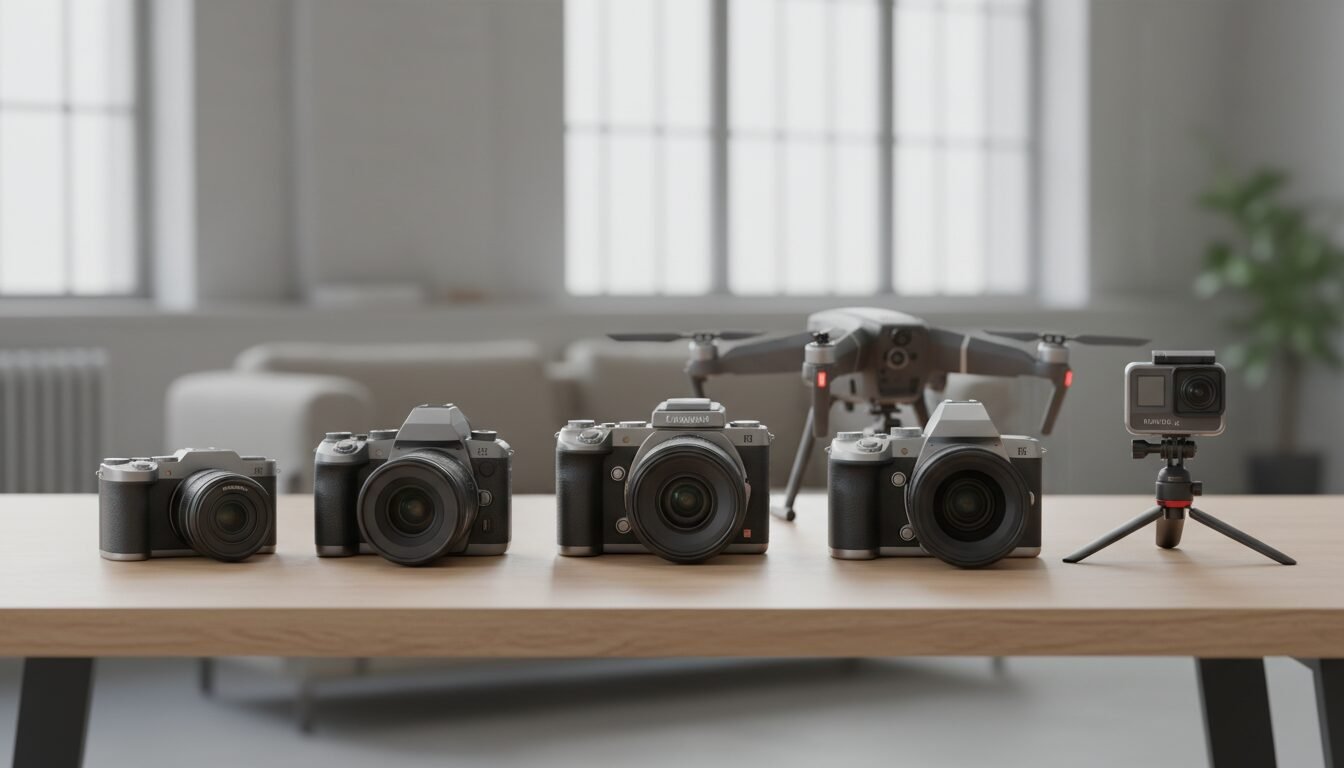
Camera types vary dramatically based on intended use, from ultra-portable compacts to professional medium format systems.
DSLR Cameras: Optical Viewfinder Tradition
DSLR bodies like the Canon EOS Rebel T7 (24MP, available in bundle kits at Walmart for around $474) still appeal to beginners who prefer an optical viewfinder and excellent battery life. The mirror mechanism provides lag-free framing, and the EF/EF-S lens system offers hundreds of affordable options.
“The Canon EOS Rebel T7 delivers 24.1-megapixel stills and Full HD video in a familiar DSLR form factor.”
Mirrorless Cameras: The New Standard
Mirrorless systems have overtaken DSLRs in innovation. Without a mirror box, they’re smaller and enable advanced features like silent shooting and real-time eye-tracking autofocus. The Nikon Z 6III, named best camera of 2026 by RTINGS.com, exemplifies this category with its 24.5MP full-frame sensor and 6K video.
Compact Point-and-Shoot and Superzoom Bridges
Fixed-lens models remain popular for travel and casual use. The Kodak PIXPRO FZ55 ($139.99 at Best Buy) and the Canon PowerShot ELPH 360 HS ($379.00 at Best Buy) offer zoom ranges that cover wide-angle to telephoto, while the retro-styled Vivitar Popsnap (available at Walmart for $30.83) appeals to those chasing the digicam aesthetic.
How Sensor Size Impacts Your Photography
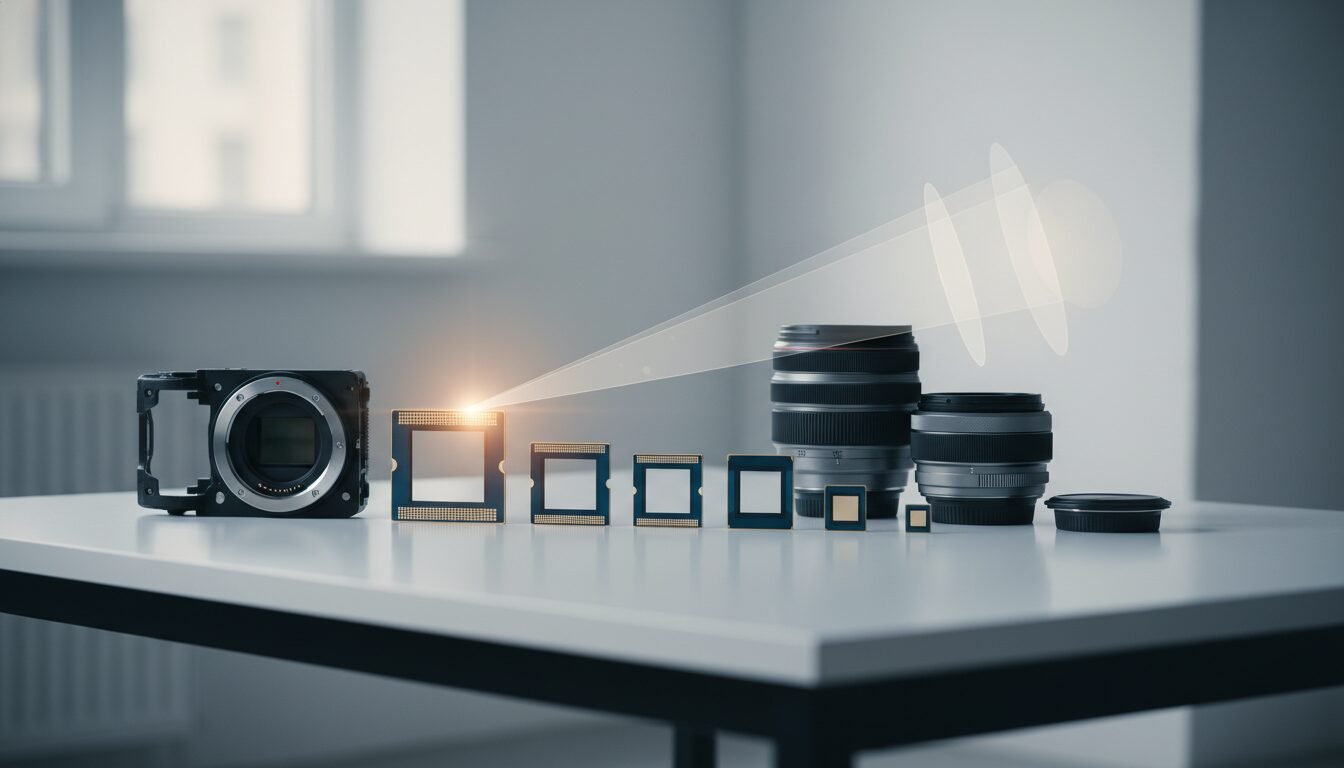
Sensor size is the single most important specification that determines image quality and performance characteristics.
The Physics of Light Collection
A full-frame sensor (36×24mm) has roughly 2.6× the surface area of an APS-C sensor (23.6×15.7mm), allowing it to capture more photons per pixel. This directly reduces noise and increases dynamic range, especially in challenging lighting conditions.
Low-Light Performance and Dynamic Range
Because larger sensors gather more light, a camera with a full-frame sensor can shoot at ISO 6400 with noise levels comparable to APS-C at ISO 3200. This is why wedding and event photographers overwhelmingly choose full-frame bodies such as the Canon EOS R5 Mark II (which boasts 45-megapixel resolution and 8K video).
Lens Compatibility and Crop Factor
When using a lens designed for full-frame on an APS-C body, a 1.5-1.6× crop factor applies, effectively narrowing the field of view. For example, a 50mm lens becomes a 75-80mm equivalent, which can be an advantage for portraits but limits wide-angle work. Mirrorless mounts like Sony E, Canon RF, and Nikon Z have made mixing sensor sizes simpler than ever.
Top Digital Photo Camera Brands Compared
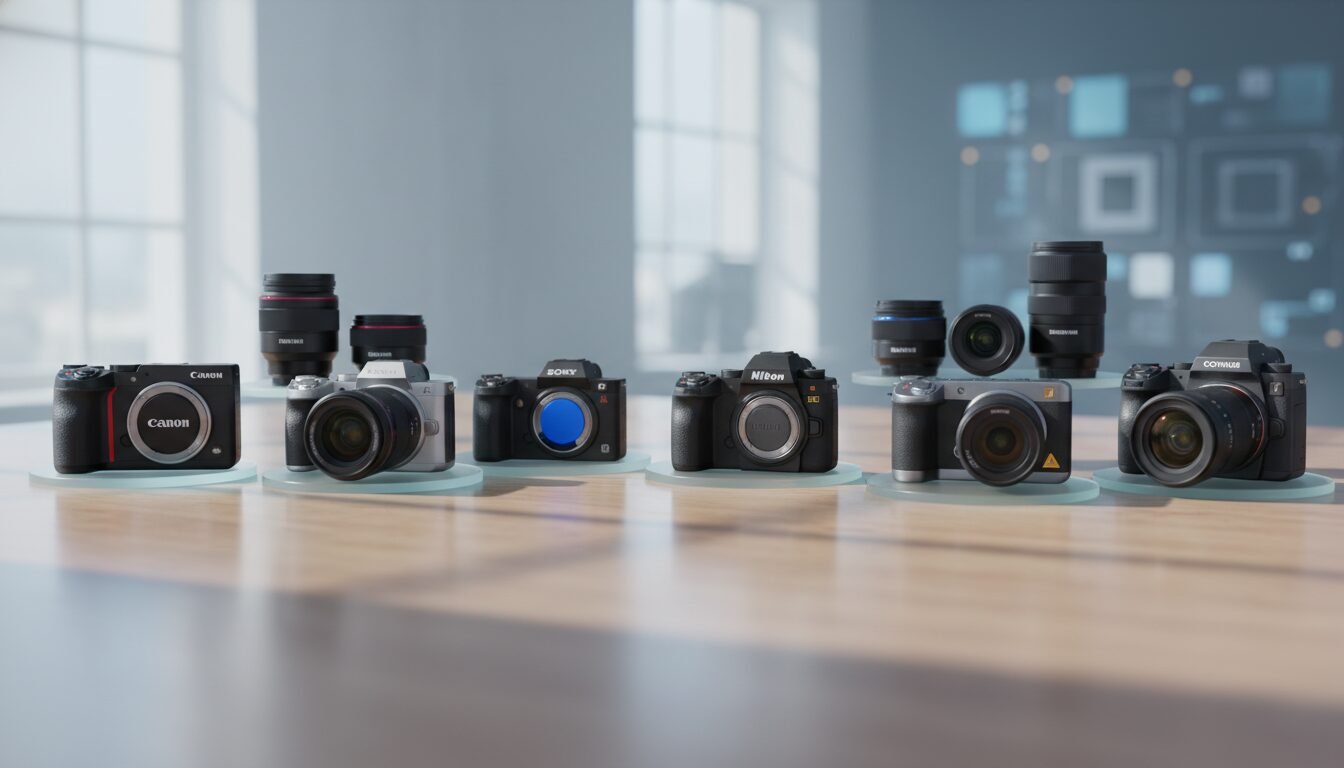
Brand choice often determines your lens ecosystem and long-term upgrade path.
Canon: Innovation and Lens Ecosystem
Canon’s RF mount, introduced in 2018, now boasts over 40 native lenses. The EOS R5 Mark II, highlighted in Best Buy’s trade-in program (up to $1,995 in credit), delivers 45MP stills, 8K video, and class-leading subject tracking. For beginners, the Rebel T7 DSLR remains one of the best-selling entry-level models on Amazon.
Sony: Autofocus Leaders
Sony’s Alpha series dominates the mirrorless market thanks to its real-time Eye AF and 759-point phase-detection systems. The Sony A6100 ($948 body-and-lens kit at Mike’s Camera) offers 24.2MP APS-C images and 4K video in a lightweight body, while the A7 IV appeals to professionals requiring 33MP full-frame quality.
Nikon and Fujifilm: Niche Strengths
The Nikon Z 6III, rated as the top camera by RTINGS, excels in video with 6K/60p internal recording. Fujifilm’s X-T5 mirrorless camera uses a 40-megapixel APS-C sensor and film simulation modes that mimic classic analog stocks. The Fujifilm instax mini Evo ($234.99 at Best Buy) bridges capture with instant printing.
Other Notable Brands
Panasonic LUMIX (S5 II with phase-detect AF), OM System (formerly Olympus, offering weather-sealed bodies), and Ricoh (GR III compact APS-C) fill specialized roles. For high-end studio work, Hasselblad’s 907X & CFV 100C (100MP medium format, $8,199 at Mike’s Camera) delivers color fidelity that rivals medium format backs costing twice as much.
Must-Have Features in 2026 Digital Photo Cameras
Modern cameras pack AI-powered features that were unimaginable just five years ago.
AI-Powered Autofocus
Look for systems that use deep-learning algorithms to detect and track human eyes, animals, and vehicles. Sony’s latest models recognize birds in flight, while Canon’s EOS R1 (the flagship at $6,299) can track a helmeted athlete in a crowded field.
Video Capabilities: 4K, 8K, and Beyond
Even entry-level mirrorless cameras now record 4K at 60fps, and many mid-range models offer 8K output. The Canon EOS R5 Mark II and Sony A7R V both capture oversampled 8K video that holds up on 32-inch professional monitors. Nikon’s Z 9 takes it further with internal 8.3K 60p RAW recording.
Connectivity and Sharing
Wi-Fi (dual-band) and Bluetooth 5.0 are standard on 2026 models. Apps like Canon Camera Connect and Sony Imaging Edge let you transfer JPEGs and RAWs directly to a smartphone for instant editing and posting. Some bodies, like the Panasonic S5 II, even support USB-C tethering to SSDs for ProRes recording.
Digital Photo Camera Price Ranges and What You Get
Understanding price tiers helps you find the sweet spot between features and budget.
Entry-Level and Budget Options (Under $500)
Budget models range from $30-$500. The Vivitar Popsnap ($30.83 at Walmart) offers 16x digital zoom and 1080p video in a pocketable body. The Kodak PIXPRO FZ55 ($139.99 at Best Buy) includes a 5x optical zoom and 16-megapixel sensor. At the top of this bracket, the Canon EOS Rebel T7 with an 18-55mm lens kit ($474 at Walmart) provides an optical viewfinder and access to Canon’s vast EF-S lens library.
Mid-Range Enthusiast Cameras ($500–$1,500)
Stepping up to $500-$1,500 unlocks APS-C mirrorless systems with electronic viewfinders and 4K/60p video. The Sony A6100 ($948 at Mike’s Camera) features a 24.2MP sensor and real-time tracking. The Canon EOS R50 ($679 body only) and Nikon Z 50 ($859 with a kit lens) are compact yet capable of professional results when paired with quality glass.
Professional Full-Frame Cameras ($2,000+)
Serious enthusiasts and working photographers invest in full-frame bodies where the sensor size delivers superior low-light performance and shallow depth of field. The Nikon Z 6III ($2,499), Sony A7 IV ($2,298), and Canon EOS R6 Mark II ($2,499) all shoot 6K oversampled 4K video and feature advanced stabilization. At the pinnacle, the Hasselblad 907X & CFV 100C ($8,199) offers medium-format resolution for commercial and fine-art work.
| Model | Sensor Type | Megapixels | Video Resolution | Typical Price |
|---|---|---|---|---|
| Canon EOS Rebel T7 | APS-C DSLR | 24.1MP | Full HD 1080p | $474 |
| Sony A6100 | APS-C Mirrorless | 24.2MP | 4K UHD | $948 |
| Nikon Z 6III | Full-Frame Mirrorless | 24.5MP | 6K oversampled 4K | $2,499 |
| Hasselblad 907X & CFV 100C | Medium Format Mirrorless | 100MP | None (stills only) | $8,199 |
“The-Digital-Picture.com, one of the longest-established review sites (20+ years), has tested over 550 lenses at more than 20,000 combinations. Their data shows that a quality lens paired with even an entry-level body can produce gallery-worthy prints.”
Pros and Cons
Pros
- Instant preview and unlimited shooting without film costs
- Superior image quality compared to smartphones, especially in low light
- Interchangeable lens systems offer creative flexibility
- Professional video capabilities with 4K/8K recording
- Advanced autofocus systems with AI-powered subject tracking
Cons
- Higher upfront cost compared to smartphone photography
- Additional weight and bulk, especially with multiple lenses
- Learning curve for manual controls and settings
- Ongoing costs for memory cards, batteries, and accessories
- Regular firmware updates and maintenance required
Step-by-Step Buying Guide for a Digital Photo Camera
Step 1: Define Your Primary Use Case
Decide what you’ll photograph most often. Portraits benefit from wide-aperture lenses and eye-tracking autofocus; travel calls for a compact, weather-sealed body; sports and wildlife demand fast burst rates and long telephoto reach. Let the use case dictate the camera type—DSLR, mirrorless, or point-and-shoot.
Step 2: Set a Realistic Budget, Including Accessories
Allocate 20-30% of your budget for accessories. A fast memory card (e.g., Lexar 256GB Pro 1800x UHS-II SDXC, often on deal at B&H), spare battery, and a protective bag are essential. If your camera uses interchangeable lenses, factor in at least one additional focal length down the road.
Step 3: Compare Key Specifications Side by Side
Use comparison tools like those on RTINGS.com or The-Digital-Picture.com to evaluate sensor size, megapixels, autofocus points, and video specs. Our table above provides a quick snapshot of four popular categories.
Step 4: Read Expert and User Reviews
Seek out detailed lab tests from respected sites. RTINGS has published over 115 camera reviews with standardized benchmarks, while The-Digital-Picture provides sharpness comparisons that reveal how a lens performs across its aperture range.
Step 5: Purchase from Authorized Retailers
Buying from authorized dealers (e.g., Best Buy, B&H Photo, Mike’s Camera, Amazon directly) ensures a valid manufacturer warranty and access to trade-in programs. Best Buy’s current trade-in promotion offers up to $1,995 for qualifying gear, making an upgrade more affordable.
Frequently Asked Questions
What is the best digital photo camera for beginners in 2026?
The Canon EOS Rebel T7 DSLR is a top choice due to its intuitive controls, 24.1MP sensor, and affordable $474 bundle price. For a mirrorless option, the Sony A6100 offers 4K video and real-time tracking in a compact body.
Do I need a full-frame digital photo camera?
Full-frame sensors excel in low light and shallow depth-of-field, but they come at a higher cost and larger size. Many enthusiasts achieve professional results with APS-C cameras like the Fujifilm X-T5 or Sony A6700. Choose full-frame only if you frequently shoot in dim conditions or want the absolute best image quality.
How many megapixels do I really need?
16-24 megapixels is sufficient for prints up to 16×20 inches and social media. Higher resolutions (30-50+ MP) benefit large-format printing and cropping flexibility. Keep in mind that more megapixels can increase file sizes and slow down burst shooting.
Can I use old film lenses on a modern digital photo camera?
Yes, most mirrorless bodies support adapters for legacy lenses. For example, a vintage Canon FD 50mm f/1.4 can be used on a Sony E-mount camera with a $20 adapter. You’ll lose autofocus and auto-aperture, but the results often have a unique character.
What is the difference between optical zoom and digital zoom?
Optical zoom uses the lens elements to magnify the subject without loss of quality. Digital zoom crops into the sensor image, reducing resolution. For any camera, always prioritize optical zoom range; digital zoom can be replicated in post-processing.
Do digital photo cameras still make sense when smartphones are so good?
Smartphones are excellent for everyday snapshots, but a dedicated camera offers larger sensors, interchangeable lenses, and optical zoom that produce significantly better detail, dynamic range, and bokeh. For serious photography or video work, the difference is unmistakable.
Whether you need a pocketable companion or a full-frame powerhouse, the camera market in 2026 offers a model for every goal. By matching sensor size, lens ecosystem, and key features to your primary use case, you can invest in a tool that will produce striking images for years to come. Contact Emin Media for a free brand consultation to explore how professional photography can elevate your visual storytelling.
Enjoyed this article?
Contact Emin Media for a free brand consultation and let's create something amazing together.
Get in Touch