Best Digital SLR Camera 2026: Top DSLRs That Still Dominate
Key Takeaways
- The Nikon D850 remains the most advanced DSLR ever made, rivaling many modern mirrorless cameras in image quality and speed.
- Pentax K-1 II stands out with 5‑axis in‑body stabilization, Pixel Shift, and Astrotracer—features rarely seen in DSLRs.
- Canon 5D Mark IV is a reliable workhorse prized for its sturdy build, Dual Pixel AF, and vast EF‑lens library.
- DSLRs still offer battery life that can last an entire shoot (over 1,000 frames on one charge) and a zero‑lag optical viewfinder.
- The used market now makes DSLRs an incredible value—a Nikon D850, for example, can be bought for around $1,600.
Best digital slr camera is a category of high‑performance DSLRs that deliver professional‑grade image quality, robust build, and optical viewfinder advantages, even as mirrorless alternatives gain popularity in 2026.
What Makes a Great Digital SLR Camera?
Media” class=”wp-image-9642″ loading=”lazy” width=”1792″ height=”1024″ />A great digital SLR camera excels in three areas: sensor performance, autofocus reliability, and physical handling. Even in 2026, these fundamentals matter more than pixel counts alone.
Sensor Technology and Image Quality
The heart of any DSLR is its imaging sensor. Full‑frame sensors, like the 45.7‑megapixel unit in the Nikon D850, capture incredible detail and dynamic range that allow large prints and heavy cropping. While crop‑sensor (APS‑C) DSLRs cost less, they still produce excellent results for most users. Modern DSLRs use backside‑illuminated (BSI) CMOS designs to minimize noise at high ISOs, keeping files clean even in low light.
Autofocus and Speed
Pro‑grade DSLRs use sophisticated autofocus modules with dozens of cross‑type points. The Nikon D850’s 153‑point AF system, for instance, delivers quick subject acquisition and tracking across the frame. Burst rates of 7 to 9 frames per second, combined with deep buffers, make these cameras suitable for sports and wildlife. A fast, accurate AF system is often what separates the best digital slr camera from an average one.
Build and Ergonomics
DSLRs are built for heavy use. Weather‑sealed magnesium alloy bodies, large optical viewfinders with 100% coverage, and deep grips make them comfortable over long shoots. The optical viewfinder uses zero battery power, shows the scene without lag, and helps in bright sun where an EVF can wash out. These tactile qualities keep many professionals loyal to DSLRs.
Top Picks for the Best Digital SLR Camera in 2026
After reviewing every major DSLR still available, three models consistently rise to the top. The table below compares how DSLRs stack against mirrorless rivals in areas where they still hold an advantage.
| Key Factor | DSLR Advantage | Mirrorless Equivalent |
|---|---|---|
| Battery Life | Often exceeds 1,800 shots per charge (Nikon D850 rated ~1,840) | Typically 300–500 shots (Sony A7IV rated ~610) |
| Viewfinder Type | Optical (OVF) – zero lag, infinite resolution, works with power off | Electronic (EVF) – can show exposure preview but has lag and battery drain |
| Lens Selection | Huge legacy lens libraries (Nikon F, Canon EF) available cheap used | Native mirrorless lenses growing, but often pricier; adapters exist |
| Used Market Value | Premium models like Nikon D850 available for ~$1,600 used | Flagship mirrorless bodies rarely drop below $2,000 used |
| Durability & Repairability | Known for decade‑long lifecycles; many third‑party repair options | Newer tech, often harder to repair; shorter product support cycles |
Now, let’s examine each of the standout DSLRs in detail.
Nikon D850: The All‑Round Champion
The Nikon D850 is widely considered the most refined DSLR ever released. Its 45.7‑megapixel BSI sensor captures remarkable detail, and the 153‑point AF system (99 cross‑type) nails focus even in dim conditions. With a standard burst of 7 fps—and 9 fps using the optional battery grip—it handles action without compromise. New units sell for about $2,500, but according to Photography Life, you can find them used for as low as $1,600.
Pentax K-1 II: The Innovative Alternative
Ricoh’s Pentax K-1 II brings features rarely found in other DSLRs: 5‑axis in‑body image stabilization, Pixel Shift for ultra‑high‑resolution stills, and an Astrotracer mode that uses GPS to prevent star trails. It’s also the only DSLR line still actively developed in 2026, making it a future‑proof choice. Priced under $2,000 new, it offers exceptional value for landscape and tripod‑based work. The biggest trade‑off is a smaller lens catalog compared to Canon or Nikon, but Pentax’s commitment to DSLR innovation is unique.
Canon 5D Mark IV: The Trusted Performer
Canon’s 5D Mark IV built a reputation as the go‑to camera for wedding, portrait, and event photographers. It combines a 30.4‑megapixel sensor with Dual Pixel AF for smooth live‑view and video focusing. While its dynamic range lags slightly behind the Nikon D850, the 5D Mark IV’s ergonomics, color science, and access to Canon’s vast EF lens lineup keep it relevant. Many working pros still prefer it for its silent confidence and proven durability.
Nikon D850: The Pinnacle of DSLR Engineering
This section breaks down exactly why the D850 earns the top spot in any ranking of the best digital slr camera options.
Image Quality and Sensor Performance
The D850’s 45.7‑megapixel full‑frame BSI CMOS sensor delivers superb dynamic range and tonal gradation. At base ISO 64, it produces exceptionally clean shadows that can be pushed four stops or more in post‑processing. This sensor resolution allows for detailed landscapes, studio prints up to A1 size, and heavy cropping while retaining sharpness. Even in 2026, few mirrorless cameras surpass this level of raw image quality.
Autofocus and Burst Shooting
Nikon’s 153‑point Advanced Multi‑CAM 20K AF system, inherited from the flagship D5, provides reliable tracking of moving subjects. Combined with 7 fps (9 fps with grip), it excels at sports, wildlife, and action—areas where earlier high‑megapixel DSLRs struggled. The optical viewfinder shows the scene with no latency, a critical advantage over electronic finders when panning with fast subjects.
Video Capabilities and Build
The D850 also records 4K UHD video using the full sensor width, with external 4:2:2 output via HDMI. Focus peaking, zebra patterns, and a tilting touchscreen make it a capable tool for video work. Its weather‑sealed magnesium body, illuminated buttons, and dual card slots (XQD/CFexpress and SD) ensure reliability in the field. This versatility is why the D850 remains a top choice across genres.
Pentax K-1 II: Unique Features You Won’t Find Elsewhere
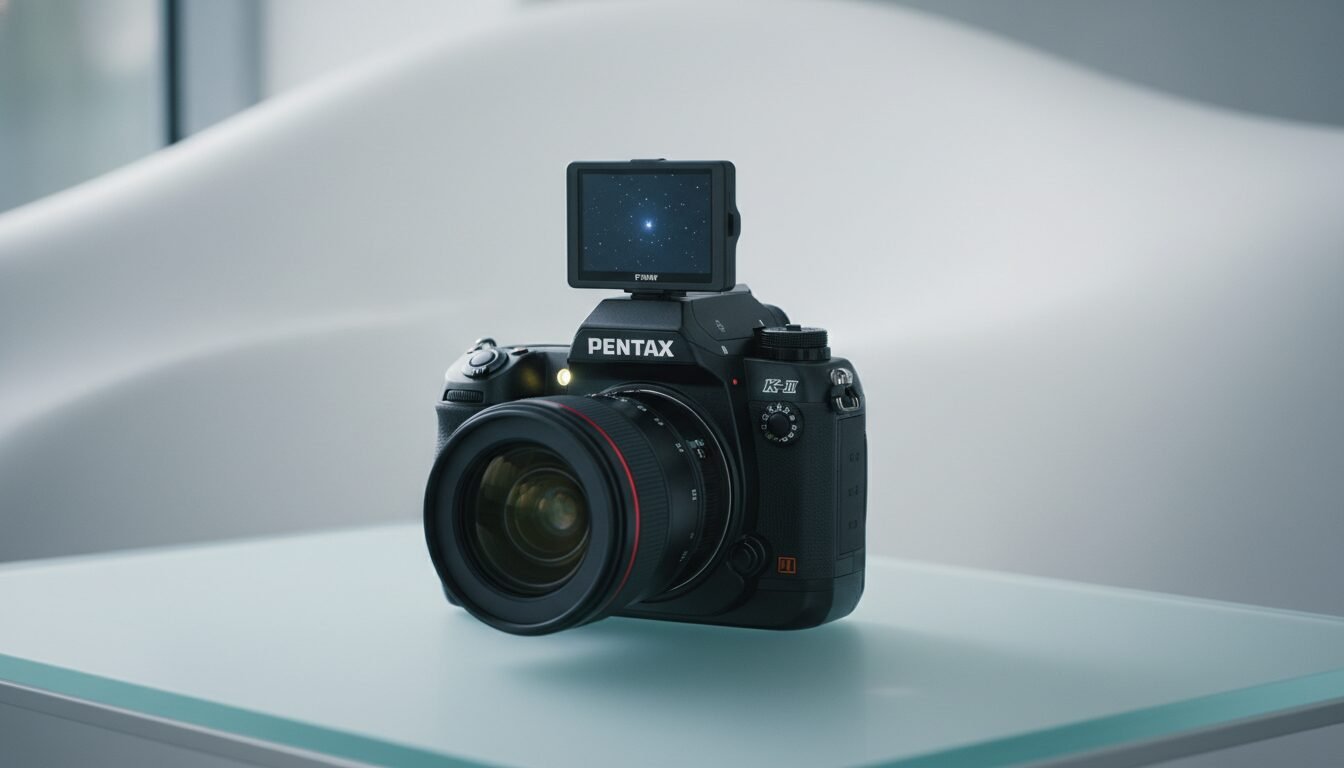
If you want a DSLR that does things no other camera can, the Pentax K-1 II deserves a close look.
In‑Body Image Stabilization and Pixel Shift
The built‑in 5‑axis shake reduction system provides up to five stops of compensation with any lens, including vintage manual‑focus glass. Pixel Shift composites four exposures, moving the sensor by one pixel each time, to create a single 36‑megapixel file with true RGB data at every pixel site—eliminating moiré and boosting detail beyond what the sensor’s rating suggests.
Astrotracer and Weather Sealing
Astrotracer uses the camera’s GPS and IBIS to track stars for up to five minutes without a separate equatorial mount, making astrophotography far simpler. Pentax’s legendary weather sealing is among the best in the industry; paired with WR lenses, the K-1 II operates in rain, dust, and freezing temperatures. These capabilities are absent in mainstream DSLR rivals.
Lens Options and Long‑Term Support
Pentax’s K‑mount has decades of compatible glass, though modern full‑frame options are fewer than Canon or Nikon. However, Ricoh is the sole manufacturer still releasing new DSLRs, meaning firmware updates and service remain available. For a photographer who values innovation over sheer lens variety, this is a compelling platform.
Canon 5D Mark IV: A Professional Workhorse
While the 5D Mark IV may not top the spec sheets, its real‑world performance keeps it in many camera bags.
Dual Pixel AF and Real‑World Performance
Canon’s Dual Pixel CMOS AF covers about 80% of the sensor in live view, delivering smooth, cinema‑like autofocus transitions during video. Through the optical viewfinder, the 61‑point AF (41 cross‑type) is fast and accurate for stills. The camera’s 7 fps burst is sufficient for most wedding and journalism work, and its metering system handles backlit scenes with finesse.
Video and Connectivity
4K video is recorded with a 1.74× crop, which can limit wide‑angle shooting, but the quality is crisp with Canon’s color science. Built‑in Wi‑Fi, NFC, and GPS simplify sharing and geotagging. For studio photographers, the 5D Mark IV fits naturally into a workflow with Canon’s Speedlite flash system and L‑series lenses.
Who Should Buy the 5D Mark IV?
This camera suits portrait and event shooters who value out‑of‑the‑box skin tones, a massive used lens market, and a body that feels like an extension of the hand. It also appeals to those invested in Canon’s EF ecosystem who want a dependable DSLR without switching to mirrorless. While it may not be the absolute best digital slr camera for spec chasers, it remains a top choice for earning a living.
Entry‑Level and Mid‑Range Digital SLR Camera Options
Not everyone needs a flagship. DSLRs are still fantastic learning tools and affordable alternatives to mirrorless, especially on the used market.
Best for Beginners: Canon EOS Rebel T7 / Nikon D3500
Entry‑class DSLRs like the Canon Rebel T7 and Nikon D3500 offer guided menus and simple controls that help new photographers master manual exposure. Both produce sharp images with kit lenses and can be bought new for under $500 with a lens. Their bright optical viewfinders and long battery life (often 1,000+ shots per charge) mean you’ll spend more time shooting and less time charging.
Best Enthusiast: Nikon D7500 and Canon 80D
For those ready to step up, the Nikon D7500 or Canon 80D (and its successor, the 90D) add weather sealing, faster burst rates, and better autofocus. These crop‑sensor DSLRs work with affordable telephoto lenses, making them powerful for wildlife and sports without breaking the bank. A used D7500 can be found for around $500–$600, a fraction of an equivalent mirrorless kit.
The Value of the Used Market
Because the industry has shifted toward mirrorless, used DSLR prices have plummeted. A Nikon D850 that once retailed for $3,500 now goes for $1,600 or less, and excellent full‑frame lenses are abundant. This creates a golden opportunity to build a professional‑grade system for the cost of a mid‑range mirrorless body. For budget‑conscious buyers, the used DSLR market may hold the actual best digital slr camera value.
Why DSLRs Still Beat Mirrorless in Key Areas
Despite the mirrorless revolution, DSLRs retain advantages that matter to many photographers. These are not nostalgic preferences—they are practical benefits you’ll notice every day.
Battery Life: Hundreds More Shots Per Charge
A mirrorless camera constantly powers an EVF or rear screen, draining the battery quickly. DSLRs, by contrast, use nearly no power for the optical viewfinder. The Nikon D850 is rated for about 1,840 shots on a single charge; mirrorless rivals often require two or three batteries to match that endurance. For event or travel photographers, this difference means shooting all day without swapping power packs.
Optical Viewfinder: Zero Lag and Real‑World Benefits
The OVF shows the world in real time, with no refresh rate, no pixel grid, and no processing delay. This is critical when tracking fast action like birds in flight or sports. It also works in bright sunlight where an EVF can struggle to be bright enough. And because the OVF draws no power, you can compose images even when the camera is turned off—a small but meaningful detail in fast‑moving situations.
Durability and Used‑Market Value
DSLRs are known for long service lives. Many professional models from a decade ago are still in heavy use today. The mechanical shutter and mirror assembly are proven designs, and independent repair shops are widely available. As a result, a used DSLR like the Nikon D850 or Canon 5D Mark IV can be a safe investment that retains more value over time than a first‑generation mirrorless body that is quickly superseded.
How to Choose the Right DSLR for Your Photography Style
Follow this three‑step process to match a DSLR to your needs without overspending.
Step 1: Define Your Budget and Needs
Start by setting a total budget that includes a body, at least one lens, memory cards, and a spare battery. If you shoot mainly landscapes or studio work, prioritize high resolution and dynamic range (Nikon D850 or Pentax K‑1 II). For sports and wildlife, fast burst rates and deep buffers matter more (Nikon D850 or Canon 7D Mark II in the used market). Be realistic: a $500 beginner DSLR will still outperform a $500 smartphone for serious creative control.
Step 2: Match Features to Photography Genres
Create a short list of “must‑have” features: dual card slots for wedding pros, in‑body stabilization for handheld low‑light shooters, or silent shooting for ceremony work. Check if the camera’s lens mount gives you access to the focal lengths you need at a price you can afford. Canon EF and Nikon F mounts have decades of glass available, often at deep discounts compared to new mirrorless lenses.
Step 3: Test Handling and Lens Ecosystem
If possible, hold a few models before buying. A camera that feels awkward and heavy will stay in the bag. Consider the total system weight—a full‑frame DSLR with a 70‑200mm f/2.8 lens is hefty, but a crop‑sensor body like the Nikon D7500 can shed pounds while keeping image quality. Finally, join online owner communities; they are a goldmine for practical tips and used gear leads.
Essential Lens Recommendations for Each DSLR System
The best digital slr camera is only as good as the glass in front of it. Here are the must‑have lenses for each platform.
Nikon D850 Lens Lineup
Start with the Nikon 24‑70mm f/2.8E VR for versatile coverage, then add the 70‑200mm f/2.8E FL VR for portraits and sports. The 14‑24mm f/2.8G is legendary for landscapes. For primes, the 85mm f/1.4G and 105mm f/2.8 Macro VR are standouts. Used F‑mount glass offers incredible value—a sharp 50mm f/1.8G can be found for under $150.
Canon 5D Mark IV Glass
The Canon 24‑70mm f/2.8L II USM and 70‑200mm f/2.8L IS III USM form the professional core. Add the 16‑35mm f/2.8L III USM for wide work. Prime lovers should consider the 85mm f/1.2L II USM (though heavy) or the sharper 85mm f/1.4L IS USM. Canon’s EF mount has the deepest used market, making it easy to build a complete kit affordably.
Pentax K‑1 II Options
Pentax’s 24‑70mm f/2.8 ED SDM WR and 70‑200mm f/2.8 ED DC AW cover most needs. The 15‑30mm f/2.8 ED SDM WR is excellent for landscapes. Pentax’s Limited primes (31mm, 43mm, 77mm) are compact and sharp. The K‑mount’s legacy includes decades of manual‑focus glass that works beautifully with in‑body stabilization.
Video Performance: DSLR vs Mirrorless in 2026
While mirrorless cameras lead in video features, DSLRs still offer solid performance for specific needs.
4K Video Capabilities
The Nikon D850 records 4K UHD using the full sensor width, avoiding crop factors that plague some competitors. Canon’s 5D Mark IV uses a 1.74× crop for 4K, which limits wide‑angle work but delivers sharp results. Neither offers internal log recording, but both provide clean HDMI output for external recorders. For serious video work, mirrorless cameras offer more features, but DSLRs handle basic 4K needs well.
Autofocus During Video
Canon’s Dual Pixel AF in the 5D Mark IV provides smooth, cinema‑like focus transitions during video recording. The Nikon D850’s contrast‑detect AF in live view is slower but usable for static subjects. Both cameras benefit from manual focus with their bright optical viewfinders for precise control. Professional videographers often prefer manual focus anyway, making DSLR limitations less critical.
Pros and Cons
Pros
- Exceptional battery life (1,500+ shots per charge) eliminates constant charging
- Optical viewfinder provides zero lag and works in bright sunlight
- Used market offers professional‑grade bodies and lenses at deep discounts
- Proven durability with decade‑long service lives and easy repair
- Vast lens ecosystems (Canon EF, Nikon F) with affordable options
- Comfortable ergonomics with deep grips and intuitive controls
Cons
- Larger and heavier than equivalent mirrorless systems
- Limited live view autofocus performance compared to mirrorless
- No real‑time exposure preview in optical viewfinder
- Fewer video features than modern mirrorless cameras
- Mirror slap can cause vibration during long exposures
- Most manufacturers have stopped developing new DSLR models
Expert Insights: What Professionals Say About DSLRs in 2026
Real users and reviewers continue to choose DSLRs for specific reasons. Here is what leading voices are saying.
“The Nikon D850 is arguably the most refined and technologically advanced DSLR that any camera company has ever made. Its sensor quality still beats many mirrorless cameras, and the used prices are criminally low.” – Nasim Mansurov, Photography Life
“It’s considered pretty universally that the best and last great DSLR was the Nikon D850. Even though newer mirrorless cameras have come out, the D850 remains the benchmark for image quality and reliability.” – Chris Gampat, The Phoblographer
Field Data from Photography Workshops
Kevin Pepper, who leads photography workshops worldwide, tracks what gear his clients bring. In his 2023 survey, 35% of attendees used Sony mirrorless cameras, 30% used Nikon (with DSLRs still common), and 25% shot Canon—and among the DSLR users, the Nikon D850 and Canon 5D Mark IV dominated. This real‑world usage shows that while mirrorless is growing, a significant portion of serious photographers still trust their DSLRs, especially for travel and landscape work where battery life and durability matter.
Frequently Asked Questions
Are digital SLR cameras worth it in 2026?
Yes, DSLRs offer exceptional image quality, long battery life, and a vast used lens market at low prices. They remain ideal for landscape, studio, and action photography where an optical viewfinder and robust build are advantages.
What is a good entry‑level digital SLR camera?
The Canon EOS Rebel T7 or Nikon D3500 are excellent starter DSLRs. Both provide guided shooting modes, produce high‑resolution images, and can be purchased new for under $500 with a kit lens.
Which camera is best, DSLR or mirrorless?
It depends on priorities. Mirrorless cameras are smaller and have real‑time exposure preview, while DSLRs provide longer battery life, lag‑free optical viewfinders, and more affordable used gear. For many, the best digital slr camera is still a DSLR if those traits align with their workflow.
Can an SLR camera be digital?
Yes, a digital SLR (DSLR) uses a digital sensor instead of film to record images. All modern SLR‑shaped interchangeable‑lens cameras with optical viewfinders are digital unless they are specifically film bodies.
What is the best DSLR for wildlife and sports?
The Nikon D850, with its 7‑fps burst (9 fps with grip), 153‑point AF system, and excellent high‑ISO performance, excels at fast action. The Canon 5D Mark IV is also a strong choice thanks to its durable build and EF‑mount super‑telephoto lens options.
How much should I spend on a used DSLR?
A flagship used model like the Nikon D850 can be found for around $1,600. Excellent crop‑sensor bodies like the Nikon D7500 or Canon 80D often sell for $400–$600. Set a budget that leaves room for at least one quality lens.
After reviewing the market, the best digital slr camera for most serious photographers remains the Nikon D850—a camera that delivers unmatched image quality, speed, and value even eight years after its release. Whether you choose that, the feature‑rich Pentax K‑1 II, or the dependable Canon 5D Mark IV, a modern DSLR will not hold back your creativity. Embrace the ruggedness, the optical immediacy, and the extraordinary deals now available as the industry shifts. In 2026, the DSLR is still a brilliant tool that can produce images rivaling any system, often at a fraction of the cost.
Contact Emin Media for a free brand consultation to discuss how professional photography can elevate your visual storytelling.
Enjoyed this article?
Contact Emin Media for a free brand consultation and let's create something amazing together.
Get in Touch