Digital Media Marketing: Strategy, Channels & Trends
Key Takeaways
- Digital media marketing is the strategic use of digital channels, including social media, video, websites, and mobile apps, to promote brands and engage audiences.
- It goes beyond basic digital marketing by focusing on the creation, distribution, and optimization of content across owned, paid, and earned media.
- Effective strategies require deep audience research, data analytics, and agility with trends like AI and short-form video.
- The field offers strong career prospects, with a 6% projected job growth for marketing managers through 2032 and a median salary of $156,580, according to BLS data cited by SNHU.
- Affiliate marketing alone was estimated at $13 billion in 2023, signaling the sector’s economic weight.
Digital media marketing is the strategic use of digital channels such as social media, video, websites, and mobile apps to promote brands, build awareness, and engage customers through targeted content creation and distribution.
The internet and mobile technology have fundamentally changed how businesses connect with consumers. According to Salesforce, 92% of Americans use the internet, and marketers must meet audiences where they actually spend their time: online. media marketing is no longer a niche tactic. It is an essential component of any modern business strategy. Below, we break down the definition, key channels, strategic frameworks, benefits, and future trends shaping this field as of 2026.
What Is Digital Media Marketing?
this type of marketing is the systematic use of digital platforms to communicate with and engage potential customers across every stage of their journey. It covers a broad range of activities, from search engine optimization (SEO) and social media management to video production and email campaigns. Unlike traditional marketing, which relies on offline channels like print and broadcast, this kind of marketing uses online platforms to target specific audiences with personalized messages.
According to Oracle, digital marketing refers to “the creation and dissemination of content through digital media channels, including websites, landing pages, social media, email, and mobile applications, and the promotion of that content using a variety of strategies across paid, earned, and owned digital channels.” This definition puts content and multi-channel thinking at the center of the discipline.
At its core, digital media is about understanding the customer journey. It involves attracting attention, nurturing leads, and converting them into loyal customers. Data plays a critical role: by analyzing user behavior, marketers can refine their approaches and achieve stronger return on investment (ROI).
The Role of Digital Media in Modern Marketing
Digital media, including social platforms, streaming services, and interactive websites, has become the primary touchpoint for consumers. Salesforce research found that 80% of marketers believe customer experience is the key competitive differentiator. How a brand presents itself across digital media directly shapes purchase decisions.
Dr. Jessica Rogers, senior associate dean of business programs at Southern New Hampshire University (SNHU), draws a sharp line between traditional and digital media: “Traditional media is a great way to reach a broad consumer base, whereas digital media has the ability to reach very specific audiences.” That precision targeting is the defining strength of media marketing.
“Traditional media is a great way to reach a broad consumer base, whereas digital media has the ability to reach very specific audiences.” – Dr. Jessica Rogers, Senior Associate Dean, SNHU
Owned, Paid, and Earned Media
A useful framework for understanding this type of marketing is the division into owned, paid, and earned media. Owned media includes channels a brand controls, such as its website, blog, and social media profiles. Paid media covers any form of advertising, from pay-per-click (PPC) ads to sponsored content. Earned media is the exposure gained organically through word-of-mouth, shares, reviews, and press mentions.
Each type plays a distinct role. Owned media builds long-term authority. Paid media drives immediate traffic. Earned media provides social proof. An effective strategy integrates all three to maximize reach and credibility.
Digital Media vs. Digital Marketing: What’s the Difference?
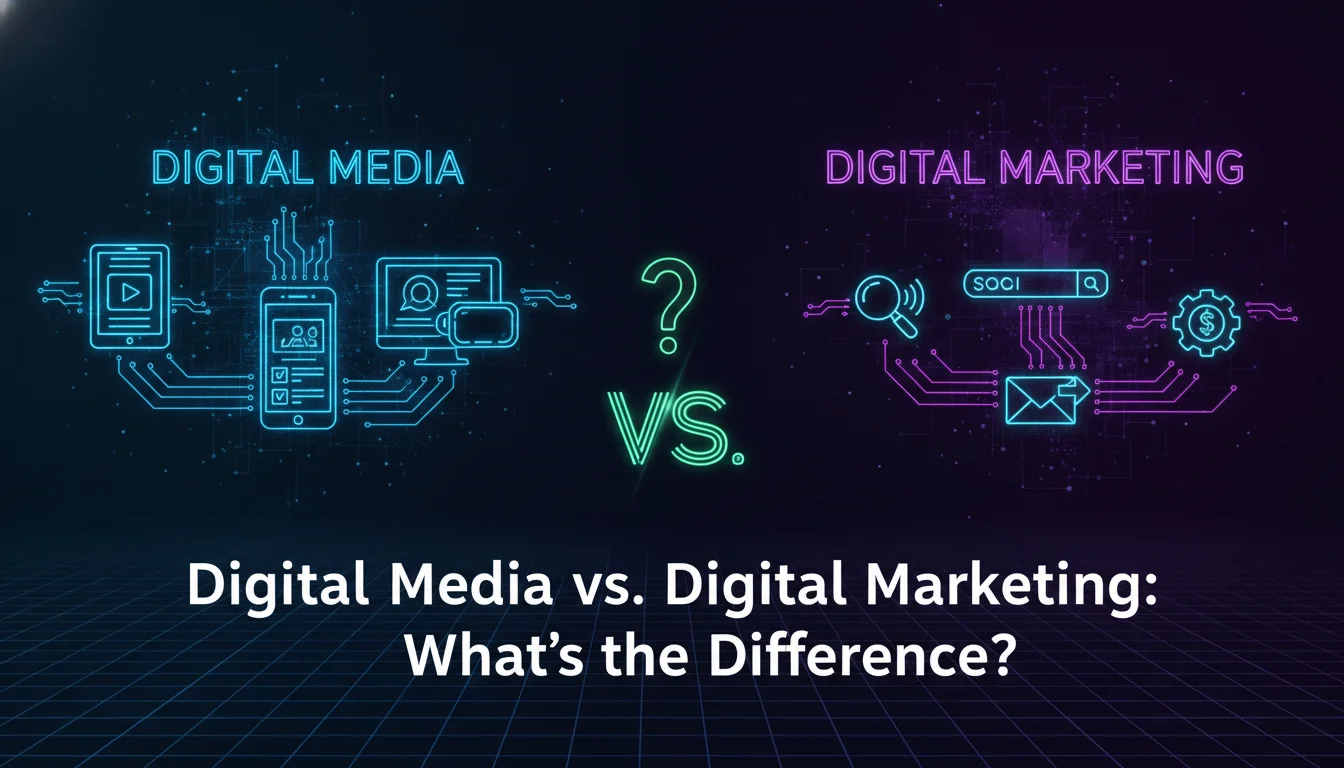
this kind of marketing sits at the intersection of two related but distinct concepts, and understanding the difference sharpens your strategy. Digital media refers to any content created, distributed, or consumed via digital platforms, including videos, podcasts, blogs, and social posts. digital media, on the other hand, is the application of marketing principles to those digital media assets to achieve specific business goals.
Champlain College Online clarifies this distinction: “Digital media is a specific field that analyzes how digital platforms can be used to communicate, create, and share ideas,” whereas digital marketing “refers to a specific use or application of digital media to strategically promote a brand and its services.” Digital media provides the vehicle. media marketing is the engine that drives brand growth.
“Digital marketing is one component of digital media. More specifically, it refers to a specific use or application of digital media to strategically promote a brand and its services.” – Champlain College Online
Comparison Table: Digital Media vs. Digital Marketing
| Aspect | Digital Media | Digital Marketing (incl. this type of marketing) |
|---|---|---|
| Definition | The creation, distribution, and consumption of content via digital channels. | The strategic promotion of products and brands using digital channels and data. |
| Focus | Content and its impact on culture, communication, and society. | Driving measurable business outcomes: leads, sales, and loyalty. |
| Key Components | Video, audio, blogs, social media posts, websites, apps. | SEO, PPC, social media marketing, email, content marketing, analytics. |
| Primary Goal | Inform, entertain, or connect audiences. | Convert audiences into customers. |
| Educational Path | Bachelor’s in Digital Media, focused on creation, design, and communication theory. | Bachelor’s in Marketing or Digital Marketing, focused on strategy, analytics, and consumer behavior. |
Where the Overlap Lives
In practice, the lines blur. A brand’s YouTube channel is a digital media asset. But a series of optimized, targeted videos designed to increase sales falls squarely under this kind of marketing. The marketer must understand both the creative possibilities of digital media and the strategic frameworks of marketing to succeed.
Key Channels of Digital Media Marketing
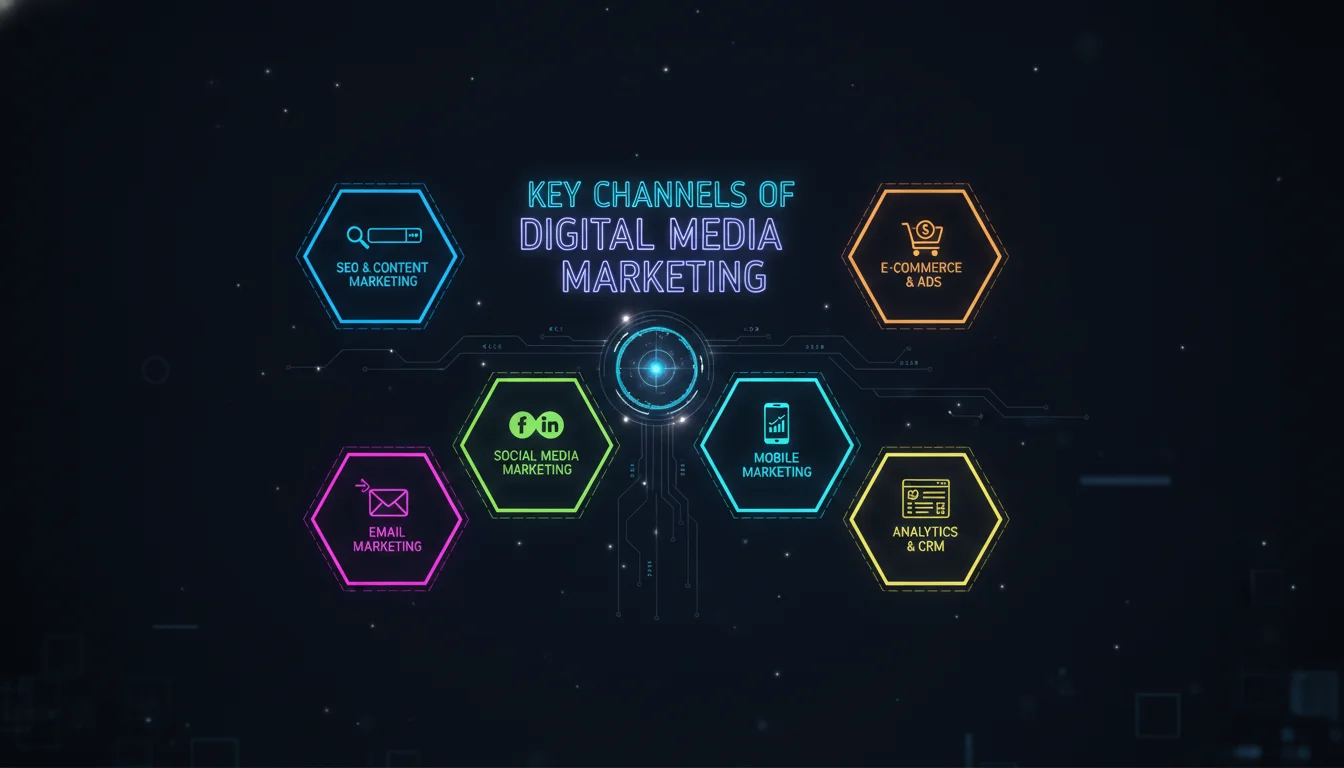
Successful digital media leverages multiple channels to reach audiences at different touchpoints. The exact mix depends on the business and its goals, but several core channels have proven essential across industries.
Social Media Marketing
Social platforms are central to any media marketing plan. Facebook remains the largest platform globally, while Instagram and TikTok attract younger demographics. LinkedIn is vital for B2B marketing. According to Oracle, each platform supports different content formats, but all are increasingly video- and image-focused. Marketers must tailor content to the platform and audience: short-form video for TikTok, professional articles for LinkedIn, and community-driven content for Facebook.
Video Marketing
Video is one of the most powerful channels available. Oracle notes that YouTube reports more than two billion monthly logged-in viewers, and both B2B and B2C buyers make purchasing decisions influenced by video. Short, engaging videos on platforms like TikTok or YouTube Shorts can rapidly increase brand awareness. Embedded videos on blogs and product pages also lift conversion rates.
Email and SMS Marketing
Email marketing remains a reliable channel for nurturing leads and retaining customers. Personalized offers and targeted newsletters can yield strong ROI. SMS marketing is gaining traction for time-sensitive promotions and transactional notifications. Both channels rely on permission-based lists and data segmentation to perform.
Content Marketing and SEO
Content marketing involves creating valuable, relevant material, including blogs, whitepapers, and infographics, to attract and engage an audience. This content is optimized for search engines to drive organic traffic. According to SNHU, content marketing works in symbiosis with other types: it feeds social media, email campaigns, and paid ads. High-quality, evergreen content continues to generate leads long after publication.
Pay-Per-Click Advertising
PPC advertising places your brand in front of high-intent audiences at the exact moment they search for relevant terms. Platforms like Google Ads and Meta Ads Manager let marketers set precise budgets, define audience segments, and measure every dollar spent. The key to effective PPC within a this type of marketing strategy is tight alignment between ad copy, landing page experience, and the audience’s stage in the buying journey. Start with a small test budget, identify your top-performing ad sets, then scale what works.
The Importance of a Digital Media Marketing Strategy
A well-defined strategy is the difference between scattered effort and compounding results. Digital Marketing Institute research found that 53% of senior marketers are spending significantly more on digital channels, yet many report a lack of talent and a clear plan. Without a strategic roadmap, campaigns become disjointed and budgets get wasted.
A this kind of marketing strategy aligns business objectives with audience needs, selects the right channels, and sets measurable KPIs. It also provides a framework for agile adaptation as trends shift, whether that means responding to the rise of AI or pivoting to a new social platform. Documenting the strategy keeps messaging consistent and resource allocation efficient.
Understanding the Customer
At the heart of any strategy is the customer. Data analytics and buyer personas help marketers understand pain points, preferences, and behaviors. The Digital Marketing Institute emphasizes using data to define channels that fit key demographics, speak the customer’s language, and create action-oriented experiences. This customer-centric approach is what separates effective digital media from generic advertising.
B2B vs. B2C Considerations
Adobe highlights key differences between B2B and B2C approaches to media marketing. B2B purchases involve longer decision cycles and multiple stakeholders, so strategies should focus on relationship building and educational content. B2C campaigns often aim for shorter sales cycles and emotional engagement through social media and video. The choice of channels and content style must reflect these dynamics from the start.
Steps to Build an Effective Digital Media Marketing Strategy
Creating a robust this type of marketing strategy follows a clear, repeatable process. Here is a step-by-step approach drawn from industry best practices:
Step 1: Set Clear Goals and KPIs
Define what success looks like before you spend a single dollar. Goals might include increasing website traffic, generating a target number of new leads per month, or boosting social media engagement. Choose KPIs that align with these goals, such as cost per lead, conversion rate, or customer lifetime value. Oracle notes that common KPIs include website traffic, email open rates, and social media engagement metrics.
Step 2: Research Your Target Audience
Use market research, customer data, and competitor analysis to build detailed buyer personas. Identify where your audience spends time online, what content they consume, and what problems they need solved. This step ensures that your digital media marketing efforts resonate with the right people rather than broadcasting into the void.
Step 3: Choose the Right Channels
Not every channel suits every business. B2B companies often prioritize LinkedIn and SEO, while B2C brands might focus on Instagram and TikTok. Consider the cost, reach, and content requirements of each channel. A multi-channel approach often works best, but concentrate resources where ROI is highest rather than spreading thin across every platform.
Step 4: Create a Content Plan
Develop a content calendar that maps out topics, formats, and publication dates. Content should be valuable, engaging, and aligned with your brand voice. Incorporate SEO keywords, trending topics, and user-generated content where appropriate. SNHU emphasizes that content marketing should provide value first, not just sell.
Step 5: Execute, Monitor, and Optimize
Launch campaigns, then track performance in real time. Use analytics tools to measure KPIs and gather insights. Review data regularly to identify what is working and what is not. A/B testing, audience segmentation, and creative adjustments can significantly improve results over time.
Pros and Cons of Digital Media Marketing
Digital media marketing offers significant advantages over traditional methods, but it also comes with real challenges worth understanding before you commit your budget.
Pros
- Precision targeting: Digital platforms let you reach users based on demographics, interests, behavior, and life events, a level of specificity impossible with mass media.
- Measurable ROI: Every action can be tracked, from impressions and clicks to sales and revenue, enabling continuous optimization.
- Cost efficiency: Digital campaigns often cost less than traditional TV or print ads while reaching a broader, more targeted audience.
- Global reach and agility: A well-crafted campaign can reach international audiences instantly, and content can be updated in real time if a message is not resonating.
- Personalization at scale: Recommending products based on past behavior, sending triggered emails, and serving dynamic ads all increase relevance and conversion rates.
Cons
- Talent gap: According to Digital Marketing Institute research, many organizations report a lack of skilled talent to execute digital strategies effectively.
- Privacy pressures: With third-party cookies phasing out and regulations like GDPR tightening, data collection strategies require constant updating.
- Platform dependency: Algorithm changes on social platforms or search engines can dramatically shift performance overnight, often without warning.
- Content volume demands: Maintaining a consistent, high-quality presence across multiple channels requires significant creative resources.
- Ad fatigue: Audiences are increasingly skilled at ignoring or blocking ads, making organic content quality more critical than ever.
Emerging Trends in Digital Media Marketing for 2026
The digital landscape evolves fast. Staying ahead requires awareness of emerging technologies and shifting consumer behaviors. Several trends are actively shaping the future of digital media marketing this year.
Artificial Intelligence and Machine Learning
AI is already automating tasks like ad bidding, content recommendations, and customer service chatbots. Generative AI tools can create copy, images, and even video, speeding up content production significantly. The Digital Marketing Institute highlights AI as a growing force, helping marketers personalize at scale and predict customer behavior. Human oversight remains essential, though, to ensure brand consistency and ethical use.
Short-Form and Interactive Video
Platforms like TikTok, Instagram Reels, and YouTube Shorts have made vertical, short-form video the dominant content format. These formats demand creativity within tight timeframes. Interactive videos with clickable elements are also gaining popularity, offering immersive experiences that boost engagement. As Oracle notes, attention spans are short, so the key is to provide great content in an engaging manner.
Privacy and First-Party Data
With third-party cookies phasing out and regulations tightening globally, marketers are shifting to first-party data collection. Building direct relationships through email sign-ups, loyalty programs, and gated content is becoming critical. Brands that transparently manage customer data will earn trust and a real competitive edge over those that do not.
What Does a Digital Media Marketer Actually Do?
A digital media marketer plans, creates, distributes, and analyzes content across digital channels to achieve specific business goals. Day-to-day responsibilities vary by role and company size, but the core work spans strategy, content production, paid media management, and performance reporting.
In practice, this means writing briefs for video shoots, managing ad campaigns in platforms like Google Ads or Meta Ads Manager, reviewing analytics dashboards, briefing designers on social assets, and adjusting messaging based on what the data shows. The role sits at the intersection of creative thinking and analytical rigor. You need both to do it well.
Dr. Jessica Rogers of SNHU captures it well: digital marketing requires “marketing savvy, strategic thinking and handling a great deal of data.” That combination is what makes skilled practitioners so valuable and relatively rare.
Careers and Education in Digital Media Marketing
The demand for digital media marketing professionals continues to grow. The U.S. Bureau of Labor Statistics projects a 6% increase in advertising, promotions, and marketing manager roles through 2032. According to BLS data cited by SNHU, the median annual salary for these positions was $156,580 in 2022. Actual salaries vary by experience, location, and industry.
Common Job Titles and Skills
Roles include Digital Marketing Manager, Social Media Strategist, SEO Specialist, Content Marketer, and Marketing Analyst. Core skills include data analysis, content creation, SEO and SEM, social media management, and basic design. Adaptability, creativity, and strategic thinking are equally valued. The field rewards people who can move fluidly between a creative brief and a performance dashboard.
Educational Pathways
Many professionals hold bachelor’s degrees in marketing, communications, or digital media. Specialized programs, such as Champlain College’s Bachelor’s in Digital Media or SNHU’s digital marketing courses, provide targeted training. Certifications from the Digital Marketing Institute, Google, and HubSpot can also boost credibility. Continuous learning is not optional in this field. It is the job.
To put the sector’s scale in perspective: affiliate marketing, one component of digital media marketing, was estimated to be a $13 billion industry in 2023, according to Influencer Marketing Hub. That figure reflects just one channel within a much larger ecosystem.
As businesses increasingly rely on digital channels, the need for skilled professionals who can bridge media creation and marketing strategy will only intensify. If you are building a career or a brand in this space, the opportunity is real and the timing is right.
Ready to put these strategies to work? Explore our full range of creative and digital marketing services or browse more brand and marketing insights on the Emin Media blog. Let’s build something bold together.
Frequently Asked Questions
What does a digital media marketer do?
A digital media marketer plans, creates, and distributes content across digital channels to build brand awareness, generate leads, and drive sales. The role combines creative content production with data analysis, paid media management, and strategic planning across platforms like social media, search, and email.
What is digital media marketing in simple terms?
Digital media marketing is the process of promoting a brand through digital channels like social media, video, websites, and email. It combines content creation with targeted advertising to reach and engage specific audiences at every stage of the buying journey.
How does digital media marketing differ from traditional marketing?
Traditional marketing uses offline channels like TV, radio, and print to reach broad audiences. Digital media marketing uses online platforms to target specific groups, measure results in real time, and personalize messages based on user behavior and data.
What are the main types of digital media marketing?
Key types include social media marketing, video marketing, email marketing, content marketing, SEO, pay-per-click advertising, and affiliate marketing. Each serves different goals across the customer journey, and the strongest strategies combine several of these channels together.
What is the salary for a digital media marketing professional?
Salaries vary based on role, experience, and location. According to BLS data cited by SNHU, the median pay for advertising and marketing managers was $156,580 in 2022, with a 6% job growth projected through 2032. Entry-level and specialist roles typically start lower, with significant upside as skills and experience grow.
Enjoyed this article?
Contact Emin Media for a free brand consultation and let's create something amazing together.
Get in TouchRelated Articles
Digital Storytelling for Brands: The Complete Guide
Digital storytelling for brands builds real audience connections through narrative. Learn proven techniques, formats, and…
Design Thinking for Marketing: A 2026 Guide
Design thinking for marketing builds campaigns around real user needs. Learn the 5 phases, common…
Creative Direction for Video Shoots: A Complete Guide
Master creative direction for video shoots with proven steps, tools, and strategies that build brand…