Digital Marketing Occupation: Roles, Skills & Career Paths
Digital marketing occupation is the professional practice of planning, executing, and analyzing online campaigns to promote products or services across channels like search, social media, and email. It spans creative, technical, and strategic roles, making it one of the most varied career fields available today.
Key Takeaways
- The marketing occupation is not one job title but a collection of specialized roles, from SEO specialist to AI marketing strategist.
- Social media manager positions are expected to grow 10% by 2028, adding roughly 33,700 new jobs, according to the Digital Marketing Institute.
- The global digital marketing market is projected to reach $1,099.33 billion by 2032, per Expert Market Research via the Digital Marketing Institute.
- Market research analyst roles are forecast to grow 8% from 2023 to 2033, adding 88,500 new positions per year, according to the Bureau of Labor Statistics.
- Certifications from Google, HubSpot, or SEMrush can substitute for a formal degree and are widely recognized by employers.
- Agency and in-house paths offer distinct trade-offs in variety, pace, and career progression.
What Is the Digital Marketing Occupation?
Defining Digital Marketing
Digital marketing is the promotion of products and services through digital channels, using the internet and mobile technology. According to the Prospects job profile, it applies both push and pull techniques to target consumers directly and indirectly. The Digital Marketing Institute describes it as a wide net of specialist skills, from social media management and content marketing to paid advertising and artificial intelligence. Think of it as the full creative and analytical engine behind every brand you interact with online.
The Scope of the Occupation
The this type of occupation is not a single job title. It is a collection of specialized roles: content writer, SEO specialist, email marketing manager, social media strategist, paid ads manager, and more. Some professionals focus on creative work like crafting scroll-stopping posts. Others live inside analytics dashboards, optimizing campaigns for measurable performance. The occupation covers both client-facing agency work and internal marketing departments at corporations, nonprofits, and startups.
Why It Matters in 2026
As digital channels expand, brands need skilled professionals to keep pace. The expansion of e-commerce and real-time analytics has made this field one of the most dynamic in the job market, as ENAE Business School highlights. Companies must measure, optimize, and scale results in increasingly competitive environments. A career in the this kind of occupation offers a rare blend of creative expression and data-driven decision-making, which is exactly why it attracts such a wide range of professionals.
Digital Marketing Occupation: Key Roles and Responsibilities
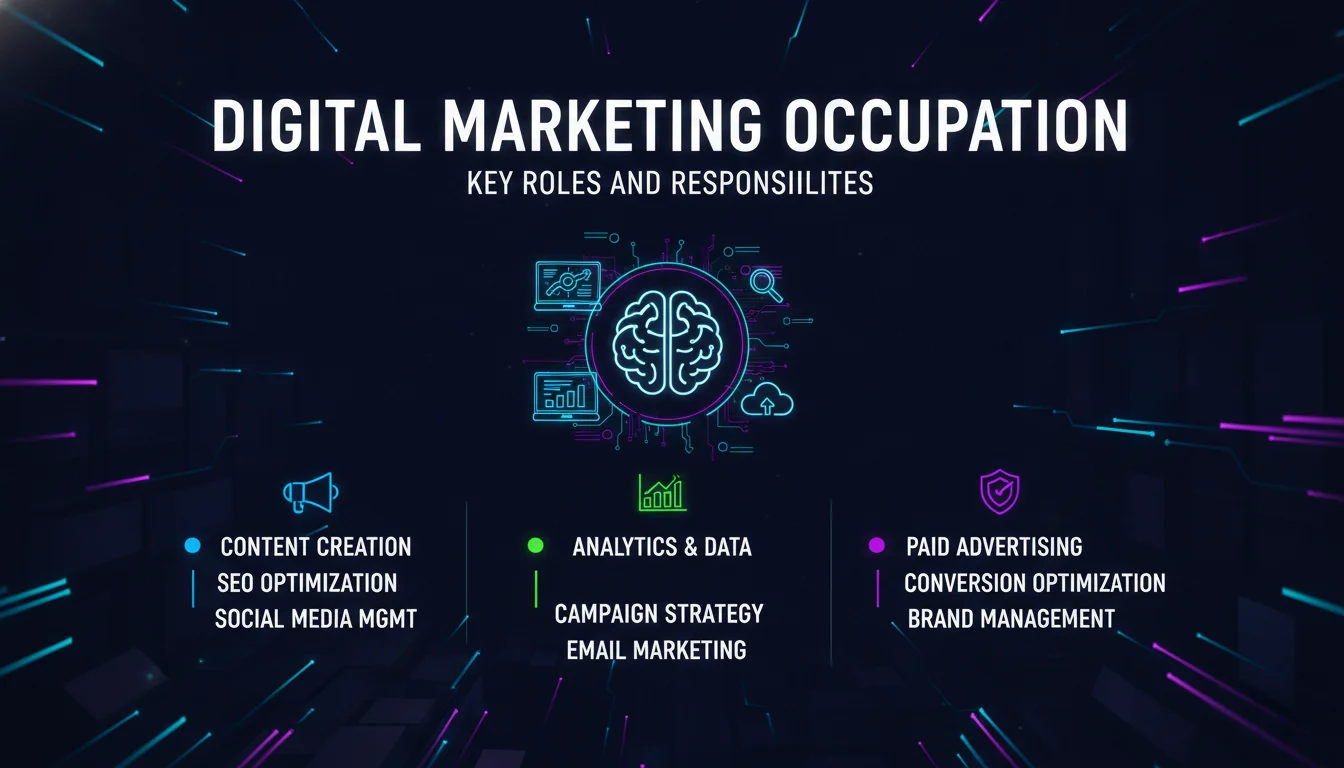
The digital marketing includes a variety of roles, each with distinct responsibilities and skill requirements. Here is a clear-eyed look at the core positions shaping the field right now.
Social Media Manager
Social media managers build a brand’s online presence across platforms like Instagram, Facebook, LinkedIn, and TikTok. They create content, engage with followers, and analyze performance metrics. According to the Digital Marketing Institute, social media manager jobs are expected to grow 10% by 2028, adding approximately 33,700 new positions. This role demands both creative instinct and analytical discipline.
SEO Specialist
An SEO specialist focuses on improving a website’s visibility in search engine results. They conduct keyword research, optimize on-page elements, and build backlinks to increase organic traffic. SEO specialists work closely with content teams to ensure every article and page aligns with search intent. It is meticulous, strategic work with compounding returns over time.
Content Marketing Manager
Content marketing managers oversee the creation of valuable, relevant content to attract and retain a target audience. They develop content calendars, manage blogs, and produce materials like whitepapers, videos, and infographics. Strong storytelling ability and a strategic mindset are non-negotiable in this role.
Email Marketing Specialist
Email marketing specialists design and execute campaigns to nurture leads and drive conversions. They segment audiences, craft personalized messages, and analyze open rates and click-throughs. Automation tools are central to scaling these efforts efficiently.
Paid Ads Specialist
Paid ads specialists manage pay-per-click campaigns on platforms like Google Ads and social media. They allocate budgets, select targeting parameters, and optimize ad performance. Analytical skills are critical for maximizing return on ad spend, and even small optimizations can move significant budget.
AI Marketing Specialist
With the rise of generative AI, some organizations now have dedicated AI marketing specialists who integrate AI tools into their strategies. They use AI for content generation, predictive analytics, and personalization at scale. This emerging role reflects how quickly the digital marketing occupation evolves, and it is one of the most watched career paths heading into 2026.
Comparing Digital Marketing Roles
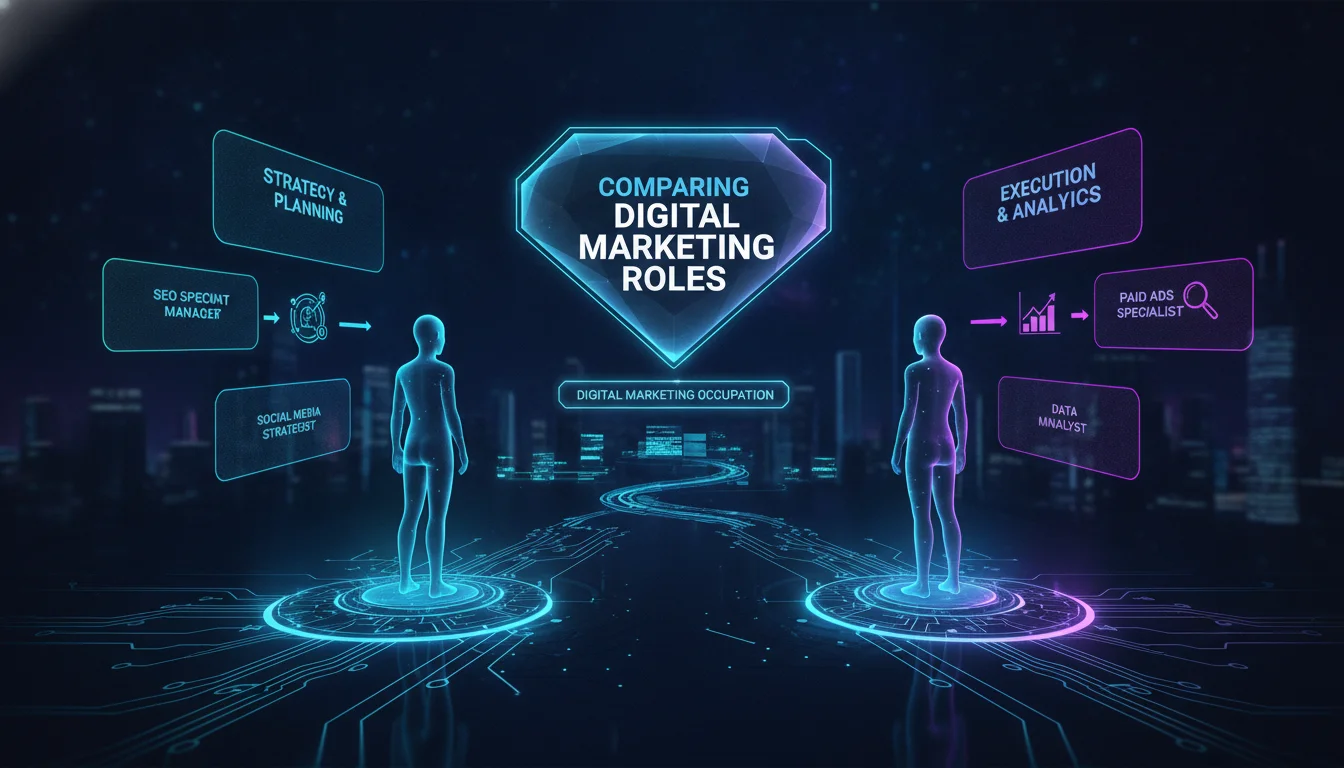
Within the digital marketing occupation, various roles require distinct skill sets. The table below provides a clear comparison to help you identify which position fits your strengths.
| Role | Primary Focus | Key Skills |
|---|---|---|
| Social Media Manager | Brand presence and engagement on social platforms | Content creation, community management, analytics |
| SEO Specialist | Search engine rankings and organic traffic | Keyword research, technical SEO, data analysis |
| Content Marketing Manager | Strategic content to attract and retain audiences | Writing, storytelling, SEO, editorial planning |
| Email Marketing Specialist | Direct communication and lead nurturing | Copywriting, automation, segmentation |
| Paid Ads Specialist | Paid campaign management and ROI | Budgeting, A/B testing, platform expertise |
| Digital Marketing Manager | Overall strategy and team leadership | Project management, analytics, cross-channel knowledge |
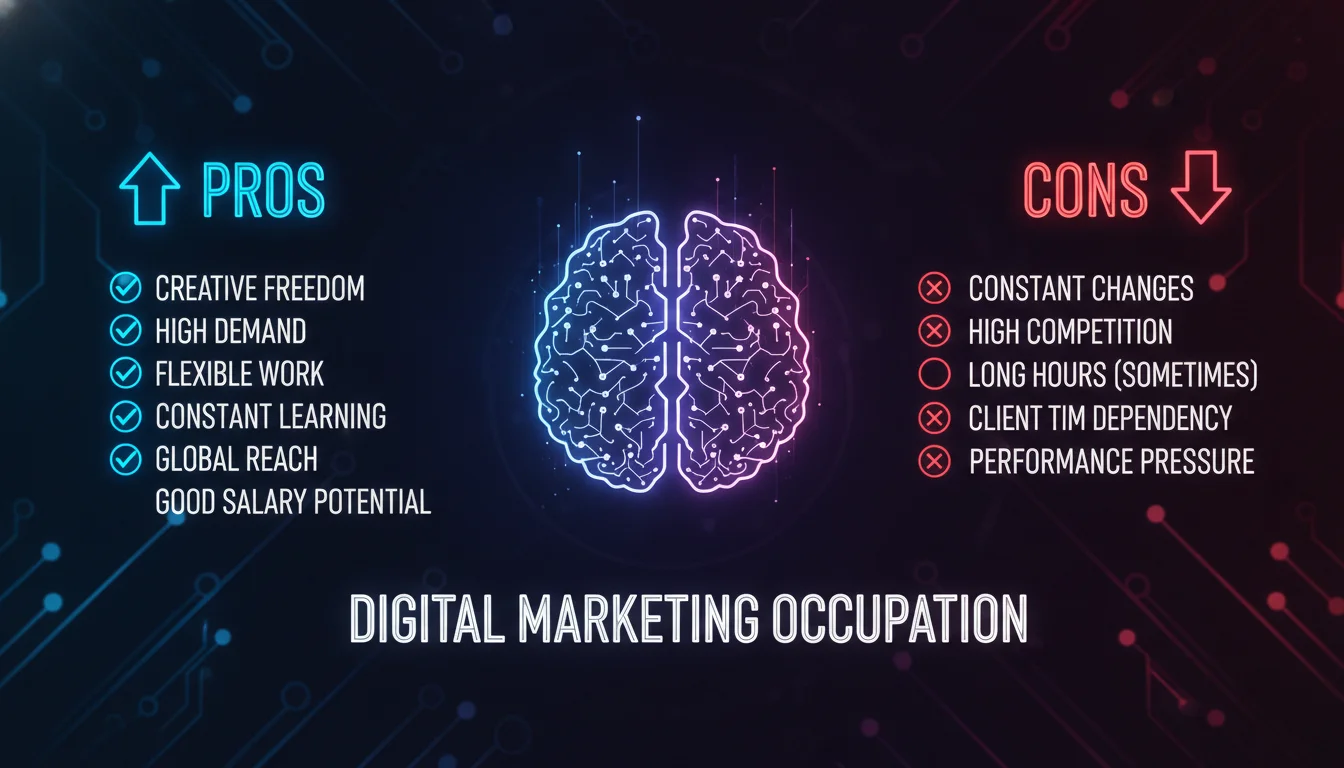
Pros and Cons of a Digital Marketing Occupation
Pros
- High demand across industries: Every sector, from e-commerce to healthcare, needs digital marketing talent, giving professionals genuine flexibility in where they work.
- Creative and analytical variety: The occupation rewards both right-brain storytellers and left-brain data analysts, often within the same role.
- Clear career progression: The path from specialist to manager to director is well-defined, with certifications accelerating the climb.
- Remote-friendly work: Most digital marketing roles can be performed from anywhere, making freelance and remote arrangements common.
- Continuous learning: If you enjoy staying ahead of trends, this occupation keeps you permanently engaged with new tools, platforms, and strategies.
Cons
- Rapid skill obsolescence: What works today in SEO or paid ads can shift dramatically after a single algorithm update, requiring constant re-education.
- Measurement pressure: Every campaign is tracked, which creates accountability but also stress when results underperform.
- Role ambiguity at smaller companies: At startups or small businesses, a single digital marketer is often expected to cover five specializations at once.
- Platform dependency: Strategies built on one platform (say, organic reach on Facebook) can collapse overnight when the platform changes its rules.
Essential Skills for a Digital Marketing Career
Creative and Communication Skills
A successful digital marketer crafts compelling messages that resonate with real people. This means copywriting for ads, social media posts, and email campaigns, as well as visual storytelling through images and video. Creativity is the engine behind a distinct brand voice. Without it, even the best-targeted campaign falls flat.
Technical and Analytical Abilities
The digital marketing occupation is fundamentally data-driven. Marketers use tools like Google Analytics, social media insights, and A/B testing platforms to measure performance and adjust strategies. According to the edX digital marketer guide, market research analyst roles are projected to grow 8% from 2023 to 2033, with 88,500 new positions added per year, reflecting strong demand for analytical skills sourced from Bureau of Labor Statistics data.
Strategic Thinking and Adaptability
Digital platforms shift fast. Professionals must think long-term while staying agile enough to pivot when trends or algorithms change. The Coursera career guide recommends asking yourself: “Can you plan long-term digital campaigns?” and “Do you enjoy measuring and improving results?” These questions help clarify whether the digital marketing occupation aligns with how you naturally think and work.
Digital Marketing Career Paths and Specializations
Choosing Your Path: Creative vs. Technical
Self-discovery is the first real step. Are you passionate about crafting content and telling brand stories? Or do you get energized by data, optimization, and performance metrics? The Coursera career guide structures this as three lenses: your creative side, your technical mind, and your strategic thinking. Knowing which lens is strongest helps you pick the right specialization within the digital marketing occupation.
From Specialist to Manager
Most digital marketers start in a hands-on specialist role, such as social media coordinator or SEO analyst. With experience, they advance to management, overseeing teams and setting strategy. The career ladder typically runs from coordinator to manager to director or head of marketing. Each step requires broader cross-channel knowledge and stronger leadership skills.
Agency vs. In-House: Two Very Different Worlds
Agency life means variety. You work across multiple clients, industries, and campaign types simultaneously, which accelerates skill-building fast. The trade-off is pace: agency work is high-pressure, deadline-driven, and often requires juggling several accounts at once.
In-house roles offer depth over breadth. You become an expert in one brand’s voice, audience, and competitive position. Career progression can be slower, but the strategic ownership is greater. Many experienced digital marketers move from agency to in-house once they have built a broad skill base and want to go deep on a single brand story.
Freelance Digital Marketing
Freelancing is a genuine third path in the digital marketing occupation. Freelancers typically specialize in one or two disciplines, such as SEO copywriting or paid social, and build a client roster over time. The upside is autonomy and flexibility. The challenge is business development: you are always marketing yourself alongside your clients. Building a strong portfolio and a clear niche makes the difference between a sustainable freelance practice and a stressful hustle.
Emerging Specializations
As technology evolves, new niches appear. AI marketing, voice search optimization, and marketing automation are growing areas as of 2026. Staying current with industry trends is not optional in this occupation. It is the price of admission for long-term relevance.
Salary Trends and Job Market Outlook
Market Growth Projections
The Digital Marketing Institute reports that the global digital marketing market is forecast to reach $1,099.33 billion by 2032, according to Expert Market Research. This expansion signals strong, sustained demand for skilled professionals across every specialization. Social media manager jobs are expected to grow 10% by 2028. Marketing manager roles are projected to add 36,600 new positions per year through 2033, per Bureau of Labor Statistics data cited by edX.
Salary Expectations
Salaries in the digital marketing occupation vary by role, location, and experience level. Industry data consistently shows competitive pay relative to other communications and business fields, with management-level positions commanding significantly higher compensation than entry-level specialist roles. Certifications and a strong portfolio can accelerate salary growth, particularly for those moving from generalist to specialist tracks.
Factors Driving Demand
The shift to online commerce, the proliferation of social media platforms, and the growing importance of data analytics all fuel demand for digital marketing talent. Companies across every industry invest in this occupation to stay competitive, which keeps the job market robust even during broader economic slowdowns.
“Digital marketing is an art. Regardless of your role, it is about addressing your audience’s pain points and delivering solutions across the right channels, at the right time.” – Digital Marketing Institute, April 2025
How to Start Your Digital Marketing Occupation
Step 1: Self-Assessment
Before anything else, evaluate your skills and interests honestly. The Coursera career guide recommends three lines of inquiry: Do you enjoy creating content? Are you comfortable with data and analytics? Can you think strategically about audience behavior? These questions help pinpoint which digital marketing role fits your natural strengths rather than forcing a mismatch from day one.
Step 2: Acquire Foundational Knowledge
Learn the basics through structured online programs. The Google Digital Marketing and E-commerce Professional Certificate on Coursera offers a solid introduction with no prior experience required. Certifications from HubSpot, SEMrush, or the Digital Marketing Institute also strengthen your resume and signal credibility to employers.
Step 3: Build Practical Experience
Create your own website or blog to practice SEO, content creation, and social media promotion in a real environment. Freelance projects or internships provide the kind of portfolio evidence that employers actually want to see. Many digital marketers start by managing social media for a small business or nonprofit, which builds both skills and professional references simultaneously.
Step 4: Network and Specialize
Attend industry webinars, join LinkedIn groups, and connect with working professionals. As you gain experience, choose a specialization, whether SEO, paid ads, email marketing, or content strategy, to deepen your expertise and sharpen your professional identity. Specialists with a clear niche consistently command stronger positioning in the job market than generalists trying to do everything.
Day-to-Day of a Digital Marketer
Typical Daily Tasks
Day-to-day work depends heavily on the role. A social media manager might schedule posts, reply to comments, and review platform analytics before lunch. An SEO specialist might spend the morning on a technical site audit and the afternoon collaborating with writers on keyword-optimized content. Despite these differences, most digital marketers share a common daily rhythm: analyze data, create or review content, and strategize for what comes next.
Collaboration and Communication
Digital marketers rarely work in isolation. They coordinate with designers, copywriters, sales teams, and executives to ensure campaigns align with broader business goals. According to the Prospects job profile, responsibilities include providing accurate reports and analysis to clients and management to demonstrate effective return on investment. Clear communication is as important as technical skill.
Continuous Learning
The digital marketing occupation demands ongoing education. Algorithm updates, new platforms, and shifting consumer behaviors mean that skills learned today may need refreshing within 12 to 18 months. The professionals who thrive long-term treat learning as a core part of the job, not an occasional add-on.
“Whether you excel in content creation, social engagement, technical optimization, or data analysis, there’s a role for your skill set in digital marketing.” – Coursera Digital Marketing Career Guide, updated August 2025
Future of the Digital Marketing Occupation
AI and Automation
Artificial intelligence is reshaping how digital marketing work gets done. AI tools assist with content generation, customer segmentation, and predictive analytics. While some repetitive tasks become automated, the human contribution to strategy, creative direction, and brand judgment remains irreplaceable. The digital marketing occupation is not shrinking because of AI. It is evolving around it.
Evolving Consumer Expectations
Consumers expect personalized experiences at every touchpoint. Marketers must use data to deliver targeted messages while respecting privacy regulations that are tightening globally. The digital marketing occupation will continue to evolve around customer-centric strategies that balance personalization with trust.
Lifelong Learning as a Necessity
To thrive in this field, digital marketers must commit to continuous skill development. Adaptability is not a soft skill here. It is a professional requirement. The practitioners who build long careers in this occupation are the ones who stay curious, stay current, and stay willing to rebuild their approach when the market demands it.
Ready to build something bold? Contact Emin Media for a free brand consultation and let’s map out your digital marketing strategy together.
Frequently Asked Questions
What occupation is digital marketing?
Digital marketing is a professional occupation focused on promoting products or services through digital channels such as social media, search engines, email, and websites. It encompasses many specialized roles, from content creation and SEO to paid advertising and data analysis, making it one of the broadest career fields in modern business.
What career can I do with digital marketing?
With digital marketing skills, you can pursue careers as an SEO specialist, social media manager, content strategist, paid ads manager, email marketer, AI marketing specialist, or digital marketing manager. Freelance consulting and agency roles are also strong options for those who prefer variety over depth in a single brand.
What is a digital marketing job?
A digital marketing job involves planning and executing online campaigns to drive brand awareness, engagement, and sales. Tasks typically include creating content, analyzing performance metrics, managing social media accounts, and reporting return on investment to clients or leadership.
What type of occupation is marketing?
Marketing is a broad professional occupation focused on understanding customer needs and promoting products or services to meet them. The digital marketing occupation is a specialized subset that uses internet-based tools, platforms, and data to execute and measure those promotional efforts.
Do you need a degree for a digital marketing career?
A degree can be beneficial but is not required. Many digital marketers enter the field through certifications from Google, HubSpot, or the Digital Marketing Institute, combined with self-study and practical portfolio work. Employers consistently value demonstrable skills and real campaign results over formal credentials alone.
Is digital marketing a good career?
Yes, the digital marketing occupation is widely considered a strong career choice due to high demand, competitive salaries, and diverse role options. The Bureau of Labor Statistics projects above-average growth for related roles through 2033, and the global market expansion signals sustained opportunity for skilled professionals at every level.
Enjoyed this article?
Contact Emin Media for a free brand consultation and let's create something amazing together.
Get in TouchRelated Articles
14 Brand Repositioning Examples That Redefined Growth
Explore powerful brand repositioning examples from Old Spice to Netflix and see the framework behind…
Brand Design Trends 2026: Motion, AI & Imperfection
Explore brand design trends 2026: motion-first identities, AI collaboration, tactile imperfection, and expressive type shaping…
Digital Marketing Agency Services: The Full 2026 Guide
Explore what digital marketing agency services actually include, what they cost, and how to pick…