Creative Director Skills: The Complete 2026 Guide
Key Takeaways
- Creative director skills combine artistic vision with leadership, strategic thinking, and business acumen.
- The role spans advertising, film, fashion, digital media, and brand marketing across every major industry.
- Salaries in London range from £40,000 for team leads to £100,000 or more at top global agencies, per Prospects.ac.uk data.
- Continuous skill development through mentorship, real-world projects, and cross-functional collaboration separates good creative directors from great ones.
- As of 2026, fluency in AI-assisted design tools and data-informed creative decisions is becoming a baseline expectation, not a bonus.
- Networking, portfolio curation, and measurable campaign results are the three fastest paths to career advancement.
Creative director skills are the combined abilities that let a senior creative professional translate a brand’s vision into compelling visual, verbal, and experiential output. These skills span leadership, design literacy, strategic communication, and team management, making the role one of the most demanding and rewarding in the creative industry.
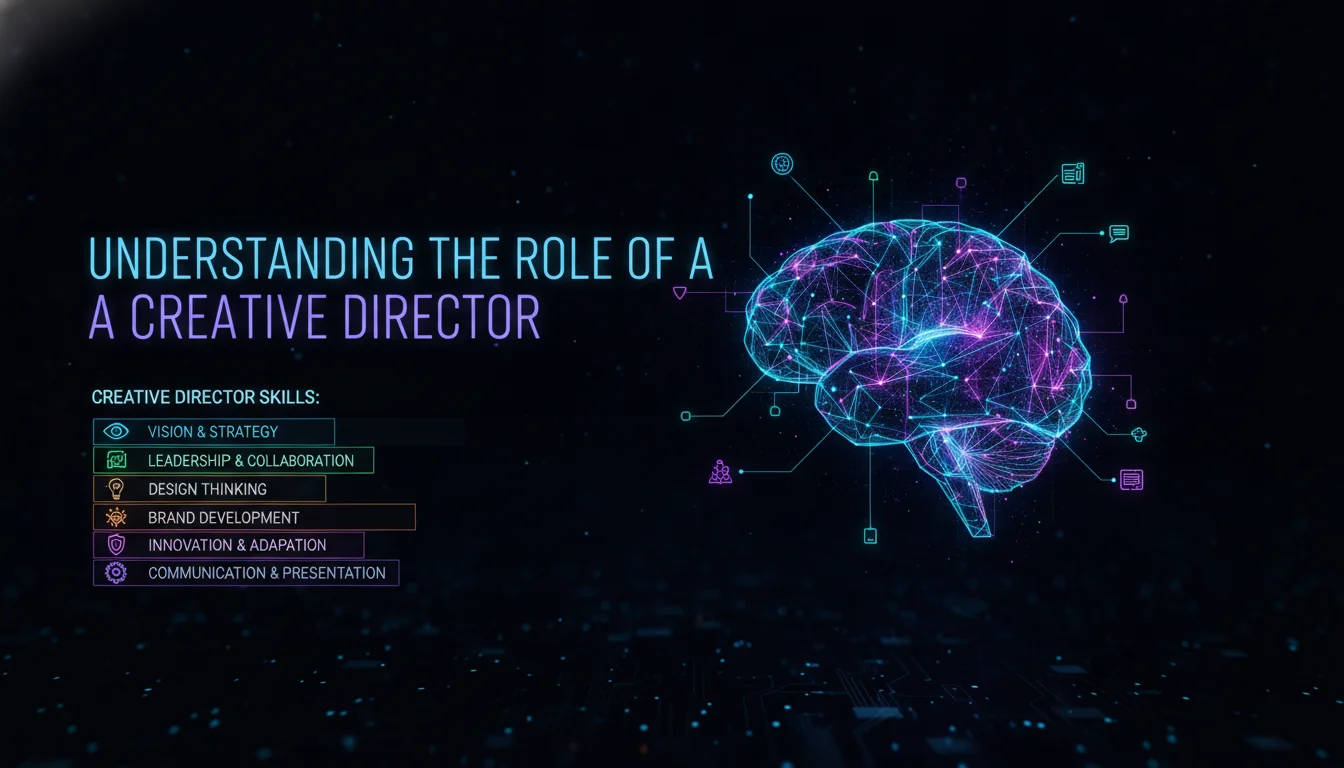
Understanding the Role of a Creative Director
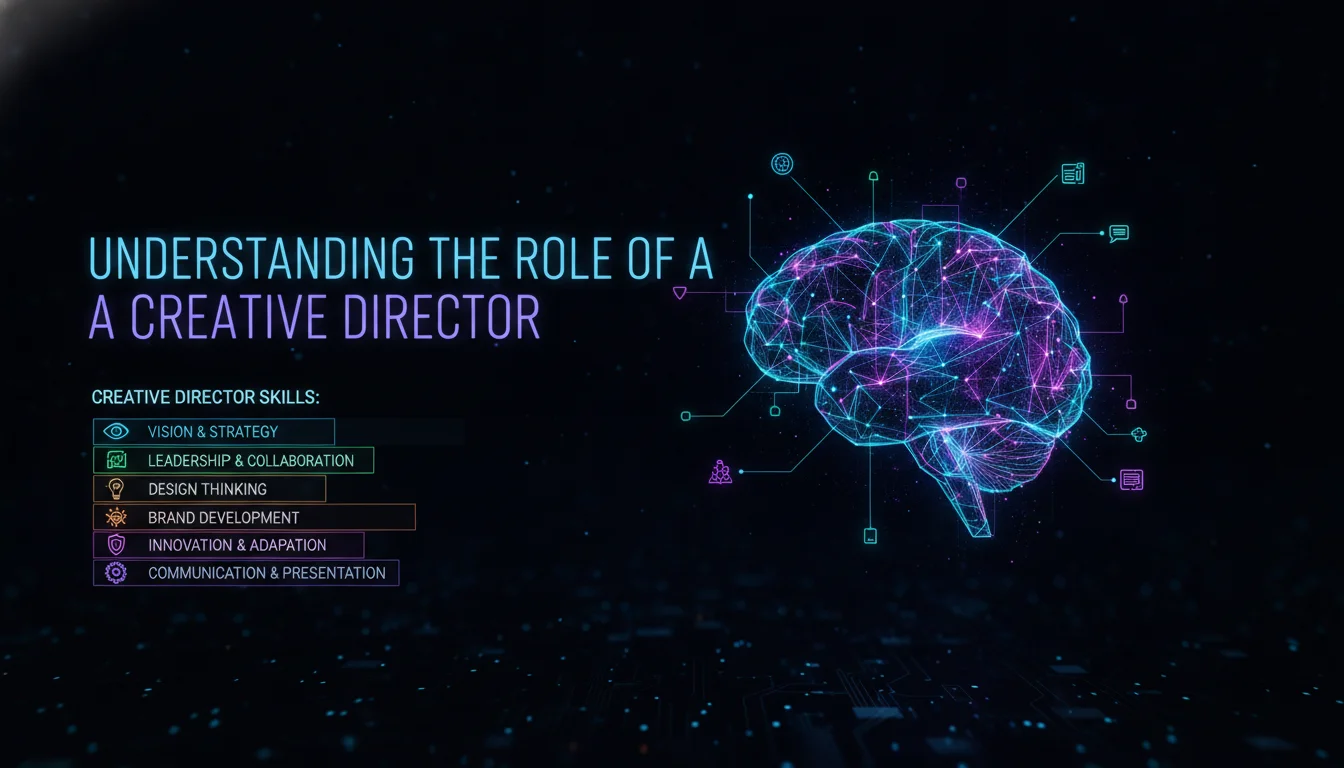
A creative director is the person who makes high-level creative decisions, oversees the production of assets like campaigns, logos, and brand experiences, and directs the multidisciplinary teams who bring those ideas to life. According to Wikipedia’s overview of the role, creative directors align design, storytelling, innovation, and commercial objectives to guide teams toward coherent, market-relevant experiences across every customer touchpoint.
This is not a purely artistic job. It’s equal parts vision and execution, inspiration and accountability. The best creative directors we’ve worked with at Emin Media carry a sketchbook in one hand and a project timeline in the other.
Key Responsibilities
- Vision Development: Crafting a cohesive creative vision that resonates with the target audience.
- Team Leadership: Leading and inspiring creative teams to achieve their best work.
- Project Management: Overseeing multiple projects simultaneously while adhering to deadlines and budgets.
- Client Communication: Pitching concepts, managing expectations, and translating feedback into actionable creative direction.
- Quality Control: Signing off on all creative output before it reaches clients or goes public.
Industries Employing Creative Directors
Creative directors work across a wide range of sectors. According to SMU’s Meadows School of the Arts career profile, creative directors are most often found in advertising, marketing, film, fashion, and digital media. Each industry demands a slightly different emphasis, but the core creative director skills remain consistent.
- Advertising: Developing marketing campaigns that engage consumers and drive measurable results.
- Film and Media: Guiding the artistic direction of films, television shows, and digital content.
- Fashion: Shaping brand identity through visual storytelling and design, from runway to retail.
- Digital and Tech: Leading UX, brand, and content teams inside product-driven companies.
- In-House Marketing: Owning the visual and tonal identity of a brand from the inside out.
Essential Creative Director Skills
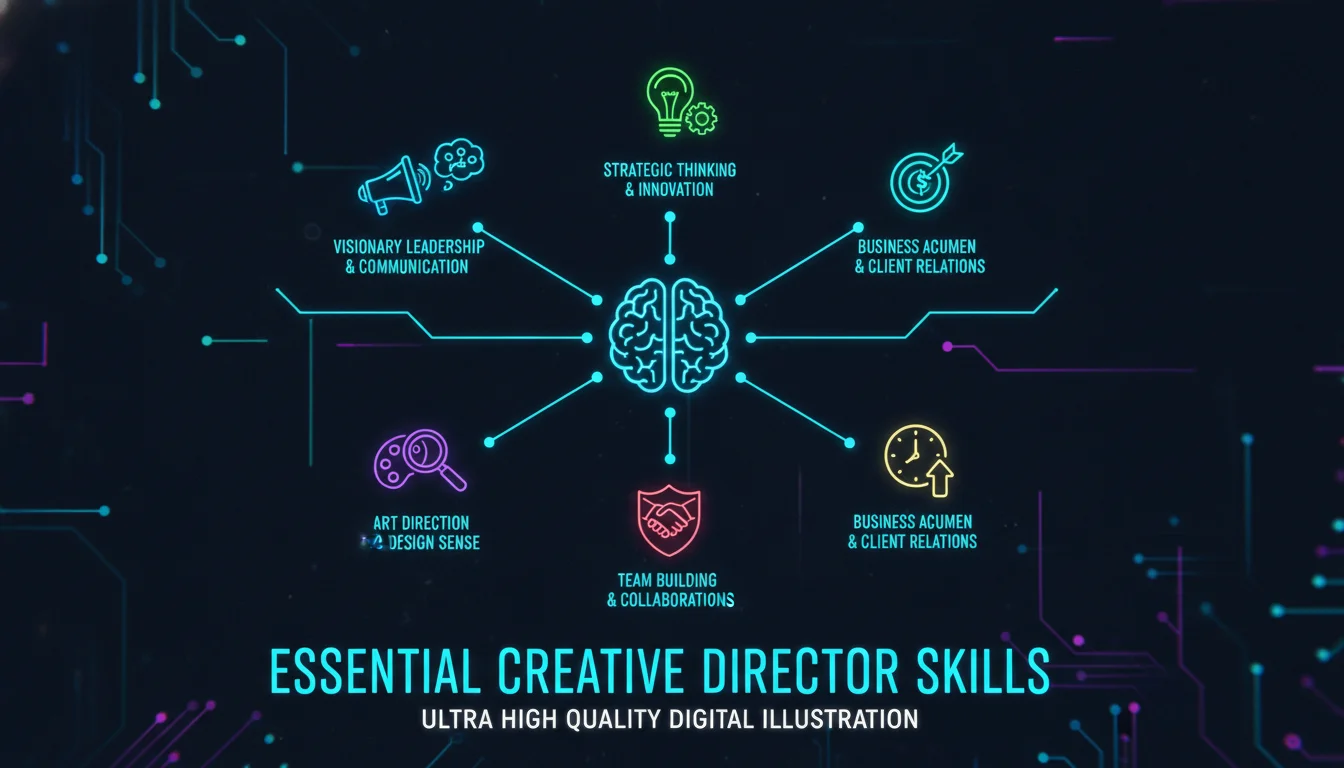
Creative director skills are not a single talent but a layered combination of creative, interpersonal, and strategic capabilities that develop over years of hands-on work. To excel in this role, you need to cultivate both the right-brain instincts of a designer and the left-brain discipline of a project manager.
Leadership Skills
Leadership is the engine of every great creative director’s output. Without it, even the most talented team produces inconsistent, unfocused work. Effective leaders inspire their teams, create space for creative risk-taking, and make decisions that keep projects moving without crushing the creative process.
- Inspiration: Motivating team members to push creative boundaries and bring their best ideas forward.
- Conflict Resolution: Addressing interpersonal challenges within teams before they affect output quality.
- Decision-Making: Making informed choices quickly, especially under deadline pressure.
- Hiring and Mentoring: Building the right team and developing the next generation of creative talent.
“As a designer, it was all about sharpening your ideas and perfecting your craft. As a creative director, you have to let go of that and focus on elevating the people around you.” – Alvin Chan, Executive Creative Director, Cheil Worldwide (via CD 101, Medium)
Communication Skills
Strong communication is the difference between a creative vision that gets built and one that gets lost in translation. Creative directors must articulate ideas clearly to designers, writers, clients, and C-suite stakeholders, often in the same afternoon.
- Verbal Communication: Clearly conveying ideas during presentations, pitches, and team briefings.
- Written Communication: Crafting compelling project briefs, creative rationales, and campaign narratives.
- Active Listening: Understanding team and client feedback deeply enough to refine creative concepts without losing the original intent.
- Presentation Skills: According to Prospects.ac.uk, creative directors need strong presentation skills to make outstanding pitches to clients and internal directors alike.
Artistic Expertise
Creative directors must possess a deep understanding of design principles, color theory, and visual composition. This doesn’t mean they need to be the best designer in the room. It means they need to know good work when they see it and articulate exactly why something isn’t working when it isn’t.
- Design Knowledge: Familiarity with various design styles, visual trends, and brand identity systems.
- Technical Skills: Proficiency in design software and tools, from Adobe Creative Suite to Figma and beyond.
- Creative Problem-Solving: Developing innovative solutions when the brief is vague, the budget is tight, or the deadline is yesterday.
Strategic and Business Acumen
This is where many talented designers stumble when they step into a creative director role. Great creative director skills include understanding the commercial side of creativity: budgets, timelines, market positioning, and ROI. SMU’s career profile notes that creative directors must handle strategic decision-making and budget management alongside their creative responsibilities.
- Brand Strategy: Understanding how visual and verbal choices affect brand perception over time.
- Budget Management: Allocating creative resources efficiently without compromising quality.
- Market Awareness: Reading cultural and industry trends to keep creative output relevant and timely.
How Creative Direction Actually Works: The Mechanics
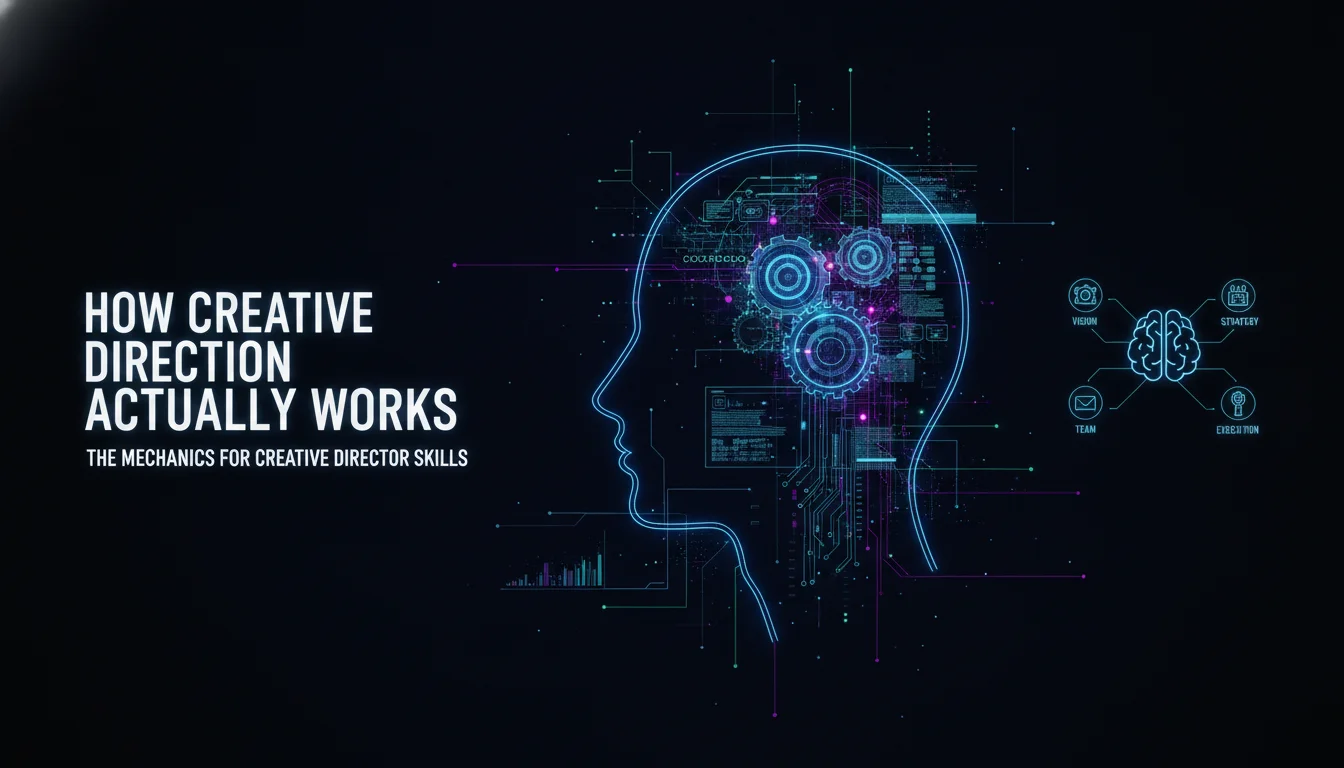
Creative direction works through a structured but flexible process that moves from brief to concept to execution, with the creative director serving as the connective tissue at every stage. Understanding this process is essential for anyone building creative director skills from the ground up.
Here’s how a typical creative project flows through a well-run creative department:
- Brief Intake: The creative director receives or co-writes the creative brief with the account or strategy team. This document defines the audience, the objective, the tone, and the constraints.
- Creative Concepting: The team generates ideas. The creative director facilitates brainstorming, challenges weak concepts, and identifies the strongest directions worth developing.
- Direction Setting: The creative director selects the concept to pursue and articulates the visual and tonal direction clearly enough that every team member can execute independently.
- Review and Feedback: As work develops, the creative director reviews drafts, provides specific and actionable feedback, and ensures consistency across all deliverables.
- Client Presentation: The creative director presents the work, defends creative decisions with strategic rationale, and manages client feedback constructively.
- Final Sign-Off: Before anything goes live, the creative director approves the final output. This is the quality gate that protects the brand and the team’s reputation.
The creative director is not just a gatekeeper. They’re the person who sets the creative standard that everyone else is working toward. That standard only holds if the director has both the taste to recognize great work and the communication skills to explain why something falls short.
How to Build Creative Director Skills: A Practical Roadmap
Building creative director skills is a long game, but it’s not a mystery. The path from designer or copywriter to creative director follows a recognizable pattern, and you can accelerate it with deliberate practice.
Step 1: Master Your Craft First
You cannot direct creative work you don’t understand deeply. Spend your early career becoming genuinely excellent at one discipline, whether that’s design, copywriting, art direction, or video production. Alvin Chan spent five years as a designer before stepping into his first senior creative role. That foundation gave him the credibility and instincts to lead others effectively.
Step 2: Seek Cross-Functional Experience
Creative directors work with strategy, account management, production, and technology teams. The earlier you understand how those departments think, the better your creative director skills will be. Volunteer for cross-functional projects. Sit in on strategy sessions. Ask the account team what keeps clients up at night.
Step 3: Lead Before You Have the Title
Start mentoring junior team members. Offer to run creative reviews. Take ownership of a project from brief to delivery. Leadership is a skill you build through repetition, not a title you receive and then figure out. The best creative directors we’ve seen at Emin Media were already leading informally long before their business cards changed.
Step 4: Build a Portfolio That Shows Thinking, Not Just Output
A creative director’s portfolio is different from a designer’s portfolio. It should show the problem, the strategic thinking behind the solution, and the measurable outcome. Include case studies. Show the brief alongside the work. Demonstrate that you understand why the work succeeded, not just that it looked good.
Step 5: Stay Fluent in Technology
As of 2026, creative directors who understand AI-assisted design tools, motion graphics pipelines, and cross-platform content production have a significant advantage. According to Prospects.ac.uk, working at the edge of new technology and grasping changes in technical innovation across multiple platforms is a core expectation of the role. This year, that means understanding how generative AI fits into your creative workflow without letting it replace your team’s original thinking.
Step 6: Invest in Continuous Learning
- Workshops and Courses: Participating in workshops to enhance specific skills, from brand strategy to motion design.
- Online Learning: Platforms like Coursera and Skillshare offer structured paths for skill development at every level.
- Mentorship: Seeking guidance from experienced professionals who’ve already navigated the designer-to-director transition.
Creative Director Skills: Comparison of Approaches
Creative directors develop their skills through different paths and working models. Understanding the trade-offs helps you choose the approach that fits your career stage and goals.
| Approach | Best For | Key Advantage | Key Trade-Off |
|---|---|---|---|
| Agency Career Path | Creatives who want broad industry exposure | Fast feedback loops, diverse clients, strong portfolio building | High pressure, long hours, less brand depth |
| In-House Brand Role | Creatives who want deep brand ownership | Consistent brand voice, strategic influence, cross-functional relationships | Narrower portfolio, slower pace of change |
| Freelance / Consultancy | Experienced directors seeking autonomy | Flexibility, varied projects, higher day rates | No team to lead, inconsistent income, self-marketing required |
| Startup Creative Lead | Directors who want to build from scratch | Full creative ownership, equity potential, rapid skill growth | Limited resources, undefined processes, high ambiguity |
Creative Director Salary: What to Expect
Salary is a real factor in career planning, and creative director compensation varies significantly by market, industry, and seniority. According to Prospects.ac.uk, salaries for graduate advertising creatives generally start from around £26,000. Experienced creative directors who manage small teams can earn between £40,000 and £60,000. At the senior end, experienced creative directors can earn up to around £100,000 in London, and potentially more where they are leading creative operations at a top global brand.
Rates vary depending on the size of the agency and geographical location. In-house roles at large consumer brands often sit at the higher end of the mid-range, while boutique agency roles may offer lower base salaries but stronger creative freedom and portfolio value.
Educational Pathways into Creative Direction
There is no single degree that produces a creative director. According to Prospects.ac.uk, most advertising agency staff are graduates, but a degree is not essential. The traditional route through a humanities or design degree followed by years of hands-on experience still holds, but graduates now reach senior creative roles from management, technology, and content strategy backgrounds too.
New job roles like content strategist, producer, and app developer are creating alternative routes to senior creative positions. Key technology skills are increasingly a fast track into the industry. What matters most is a strong portfolio, proven leadership experience, and the ability to articulate creative decisions in strategic terms.
“The role of creative director is increasingly in demand within fashion and beauty companies in the luxury sector. Each brand has an image behind it, and a creative director is the one who defines these visual elements, creating a coherent identity that resonates with the brand’s values and mission.” – Vogue College of Fashion, 2025
Networking and Collaboration
Building a robust professional network opens doors that skill alone cannot. Creative direction is a relationship-driven discipline. Clients hire directors they trust. Studios recruit directors they’ve seen perform under pressure. Your network is evidence of your reputation.
- Industry Events: Attending conferences, award shows, and workshops to meet peers and stay current.
- Online Communities: Engaging with creative communities on LinkedIn, Behance, and industry-specific forums.
- Collaborative Projects: Working with other creatives across disciplines to expand your perspective and your portfolio.
Common Mistakes Creative Directors Make (And How to Avoid Them)
Even experienced creative directors fall into predictable traps. Knowing what to watch out for is as valuable as knowing what to do right.
Holding On to the Craft Too Tightly
The hardest part of the designer-to-director transition is letting go of doing and focusing on directing. Many new creative directors keep jumping in to redesign work themselves instead of coaching their team to get there. This creates bottlenecks, undermines team confidence, and limits your capacity to lead at scale. Your job is to raise the standard of the room, not to be the best person in it.
Confusing Taste with Direction
“I don’t like it” is not creative direction. Neither is “make it pop.” Effective creative director skills include the ability to give specific, actionable feedback tied to the brief, the audience, and the brand. If you can’t explain why something isn’t working in strategic terms, you haven’t done the thinking yet.
Ignoring the Business Side
Creative directors who treat budget conversations as someone else’s problem consistently underdeliver. Understanding the commercial context of your work, including what it costs, what it needs to achieve, and how success will be measured, makes your creative decisions stronger, not weaker.
Underinvesting in Team Culture
A creative director’s output is only as good as the team producing it. Directors who focus entirely on the work and neglect the people doing it burn out their best talent. Regular one-on-ones, genuine recognition, and clear growth paths for team members are not soft skills. They are core creative director skills that directly affect the quality of what gets made.
Chasing Trends Instead of Setting Direction
Trend awareness is important. Trend dependency is a trap. The best creative directors use cultural signals as inputs to original thinking, not as templates to copy. If your work looks like everything else in the category, you haven’t directed anything. You’ve just curated.
A Worked Example: Creative Direction in Practice
Here’s a realistic scenario that illustrates how strong creative director skills play out in a real project context.
A mid-sized fashion brand approaches a creative agency for a campaign to relaunch their brand identity. The brief is vague: “We want to feel more premium but stay approachable.” The budget is modest. The timeline is eight weeks.
A creative director with underdeveloped skills might accept the brief as written, assign the team, and wait for concepts to come in. The result: three directions that all look like premium fashion clichés, none of which solve the actual tension in the brief.
A creative director with strong skills does something different. They push back on the brief first. They ask: who specifically is the target customer, what does “premium” mean to them versus to the brand, and what does the brand currently do that feels approachable that we must protect? They rewrite the brief with the account team before a single concept is sketched.
Then they run a focused concepting session with the team, not to generate volume but to find the one tension worth exploring. They select a direction, articulate it clearly in a mood board and a single-sentence creative idea, and give the team enough creative freedom within that frame to do their best work.
Eight weeks later, the campaign launches with a clear point of view, consistent visual language, and a story the brand can build on for the next three years. That’s what creative director skills look like when they’re working.
Challenges Faced by Creative Directors
The creative director role is rewarding, but it comes with real pressure that compounds over time if you don’t build the right habits early.
High-Pressure Environment
Creative directors often work under tight deadlines and high expectations. Prospects.ac.uk describes the role as one where you’ll be busy working to tight deadlines and juggling multiple projects, with a high-pressure environment that can be stressful at times. Resilience and adaptability are not optional extras. They’re survival skills.
- Time Management: Balancing multiple projects and deadlines without dropping quality on any of them.
- Client Expectations: Meeting diverse client needs while maintaining creative integrity.
- Market Trends: Staying updated with industry shifts to keep work relevant and competitive.
Team Dynamics
Managing a diverse creative team presents ongoing challenges in communication, motivation, and conflict resolution. The creative director sits at the intersection of client pressure and team capacity, which means absorbing stress from both directions.
- Conflict Management: Addressing interpersonal friction before it affects output quality.
- Motivation: Keeping team members engaged and creatively energized through long campaigns.
- Feedback Integration: Incorporating input from multiple stakeholders without diluting the creative vision.
Pros and Cons of a Creative Director Career
A career built around creative director skills offers exceptional rewards, but it’s worth being clear-eyed about the trade-offs before committing to the path.
Pros
- Creative Authority: You set the vision. Your aesthetic and strategic instincts shape the work at scale.
- Career Ceiling: The role carries fast-track promotion potential, international opportunities, and strong earning power at senior levels.
- Industry Variety: Creative directors are needed across advertising, fashion, film, tech, and beyond, giving you genuine flexibility in where you build your career.
- Cultural Impact: Great creative direction shapes how people perceive brands, products, and ideas. The work matters beyond the office.
- Team Building: Leading a creative team and watching junior talent develop is one of the most satisfying parts of the role.
Cons
- High Pressure: Tight deadlines, demanding clients, and the weight of final creative accountability create sustained stress.
- Long Hours: Major campaigns regularly require evening and weekend work. Paid overtime is rare in most agencies.
- Letting Go of the Craft: Many creative directors miss the hands-on making that defined their earlier careers.
- People Management Complexity: Leading diverse teams through creative disagreements and client pressure is emotionally demanding.
- Constant Learning Requirement: The tools, platforms, and cultural references that define great creative work shift constantly. Staying current is a full-time effort on top of the job itself.
Measuring Success as a Creative Director
Success in this role is measured through a combination of creative quality, team performance, and business impact. The best creative directors track all three.
Project Outcomes
The effectiveness of a creative director shows most clearly in the work itself and how it performs in the market.
- Client Satisfaction: Consistent positive feedback from clients on both process and output.
- Team Performance: The creativity, productivity, and retention rate of the people you lead.
- Market Impact: How campaigns perform against their stated objectives, from brand awareness to conversion.
Career Growth
Advancement opportunities signal a creative director’s growing reputation and impact in the industry.
- Promotions: Moving into executive creative director, chief creative officer, or agency partner roles.
- Industry Recognition: Awards, shortlists, and accolades from respected industry bodies like Cannes Lions or D&AD.
- Speaking and Thought Leadership: Invitations to speak at industry events and conferences are a strong signal of peer recognition.
Creative Director Skills in 2026: What’s Changing
As of 2026, the creative director role is evolving faster than at any point in the past decade. Three forces are reshaping what creative director skills need to include this year and beyond.
AI-Assisted Production: Generative AI tools are now embedded in most creative workflows. Creative directors need to understand what these tools can and cannot do, how to brief them effectively, and how to maintain originality and brand distinctiveness when the same tools are available to every competitor.
Data-Informed Creative: The gap between creative intuition and performance data is closing. Creative directors who can read campaign analytics, understand A/B test results, and use audience insights to sharpen their creative decisions are significantly more valuable than those who treat data as someone else’s department.
Cross-Platform Storytelling: A campaign that lives only on one channel is increasingly rare. Creative directors now need to think in systems: how does a brand idea translate from a 30-second video to a social post to an out-of-home execution to an interactive digital experience? That systems thinking is a creative director skill that didn’t exist in its current form five years ago.
If you want to explore how these trends are reshaping brand strategy and content production, our articles on brand storytelling and creative production services go deeper on each.
Frequently Asked Questions
What skills do you need to be a creative director?
Creative director skills include strong leadership, clear communication, artistic expertise, strategic thinking, and project management ability. You also need resilience under pressure, an understanding of industry trends, and the ability to translate a brand’s objectives into compelling creative work. According to Prospects.ac.uk, knowledge of the software and applications involved in the creative process is also a core requirement.
What are 5 examples of creativity skills?
Five core creativity skills are visual thinking, conceptual brainstorming, narrative construction, design problem-solving, and cross-medium ideation. These abilities let creative directors move fluidly between abstract ideas and concrete executions, which is the central challenge of the role.
What are the 5 qualities of a creative person?
The five qualities most consistently associated with creative professionals are curiosity, openness to experimentation, comfort with ambiguity, strong observational instincts, and the ability to make unexpected connections between unrelated ideas. Creative directors need all five, plus the leadership skills to channel those qualities in a team setting.
Is creative director a high position?
Yes, creative director is a senior role that typically requires significant experience and a proven track record of leading creative teams and delivering successful campaigns. According to Prospects.ac.uk, the role carries fast-track promotion potential and international opportunities, with salaries reaching £100,000 or more in London for those leading creative operations at top global brands.
How long does it take to become a creative director?
Most creative directors reach the role after roughly 8 to 12 years of progressive experience in design, art direction, copywriting, or a related creative discipline. The timeline varies based on the industry, the size of the organizations you work with, and how deliberately you build leadership experience alongside your craft skills.
What is the difference between an art director and a creative director?
An art director typically focuses on the visual execution of a specific project or campaign, working within a defined creative direction. A creative director sets that direction, leads the team responsible for executing it, and is accountable for the overall creative output across multiple projects simultaneously. The creative director role is broader in scope, more strategic in nature, and carries greater organizational responsibility.
Ready to build something bold? Contact Emin Media for a free brand consultation and let’s talk about what strong creative direction can do for your brand.
Enjoyed this article?
Contact Emin Media for a free brand consultation and let's create something amazing together.
Get in TouchRelated Articles
Digital Marketing for Creatives: A Bold Guide
Digital marketing for creatives builds real visibility and sales. Learn strategies for social media, SEO,…
Branding & Design Agency Tips That Actually Work
Discover branding and design agency tips to choose the right partner, set clear goals, and…
Creative Agency Pitch Deck Tips That Win Clients
Master creative agency pitch deck tips that win clients in 2026. Learn storytelling, design, and…