Brand Video Marketing Trends for 2026
Key Takeaways
- Short-form videos dominate engagement, capturing audience attention in seconds across TikTok, Instagram Reels, and YouTube Shorts.
- AI tools are reshaping video production, enabling faster content creation, autonomous remixing, and data-driven personalization at scale.
- Hyper-personalization is now an audience expectation, not just a competitive edge: tailoring content to individual preferences drives measurably higher engagement.
- Accessibility is non-negotiable in 2026, with captions, audio descriptions, and assistive technology compatibility expanding your reach.
- Cross-platform storytelling and user-generated content maximize reach by meeting audiences wherever they spend their attention.
- Credibility beats polish. In a world flooded with synthetic media, authentic proof-driven video earns trust faster than any production budget can.
Brand Video Marketing Trends for 2026
Brand video marketing trends are the evolving strategies and formats brands use to connect with audiences through video, shaped by AI, platform shifts, and changing viewer behavior in 2026.
Understanding Brand Video Marketing Trends
marketing trends refer to the evolving practices and strategies that brands employ to use video content for marketing purposes. These trends are influenced by technological advancements, consumer preferences, and platform algorithms. Staying updated with these trends is essential for brands to maintain relevance and effectively engage their target audiences. As of 2026, the pace of change has accelerated dramatically: what worked eighteen months ago may already feel dated to your audience.
Importance of Video Marketing
Video marketing is crucial for brands because it enhances engagement, improves brand visibility, and drives conversions. According to a Wyzowl report, 91% of businesses use video as a marketing tool, highlighting its significance in modern marketing strategies. Six out of ten people now prefer watching online videos over traditional television, according to research cited by Invespcro, which means your audience has already migrated. The question is whether your brand followed them.
Video content accounted for roughly 82% of all consumer internet traffic as of recent measurement periods, a figure that is approximately 15 times higher than it was in 2017. That is not a trend. That is a structural shift in how humans consume information online.
“Video is the only medium that compresses reality. A paragraph can describe what your business makes. A photo can illustrate a feature. But video is the only format that can make a viewer feel something in under ten seconds.” – Jason Schuler, Awakened Films
Key Drivers of Change
- Technological Advancements: Innovations in AI and video production tools are streamlining the creation process, from scriptwriting to final edit.
- Changing Consumer Behavior: Audiences increasingly favor video content over static media, with attention windows shrinking and selectivity rising.
- Platform Evolution: Social media platforms are prioritizing video content in their algorithms, directly influencing how brands must approach distribution.
- The Credibility Crisis: As AI-generated content floods feeds, audiences are developing sharper filters. Authentic, proof-driven storytelling is becoming the primary differentiator.
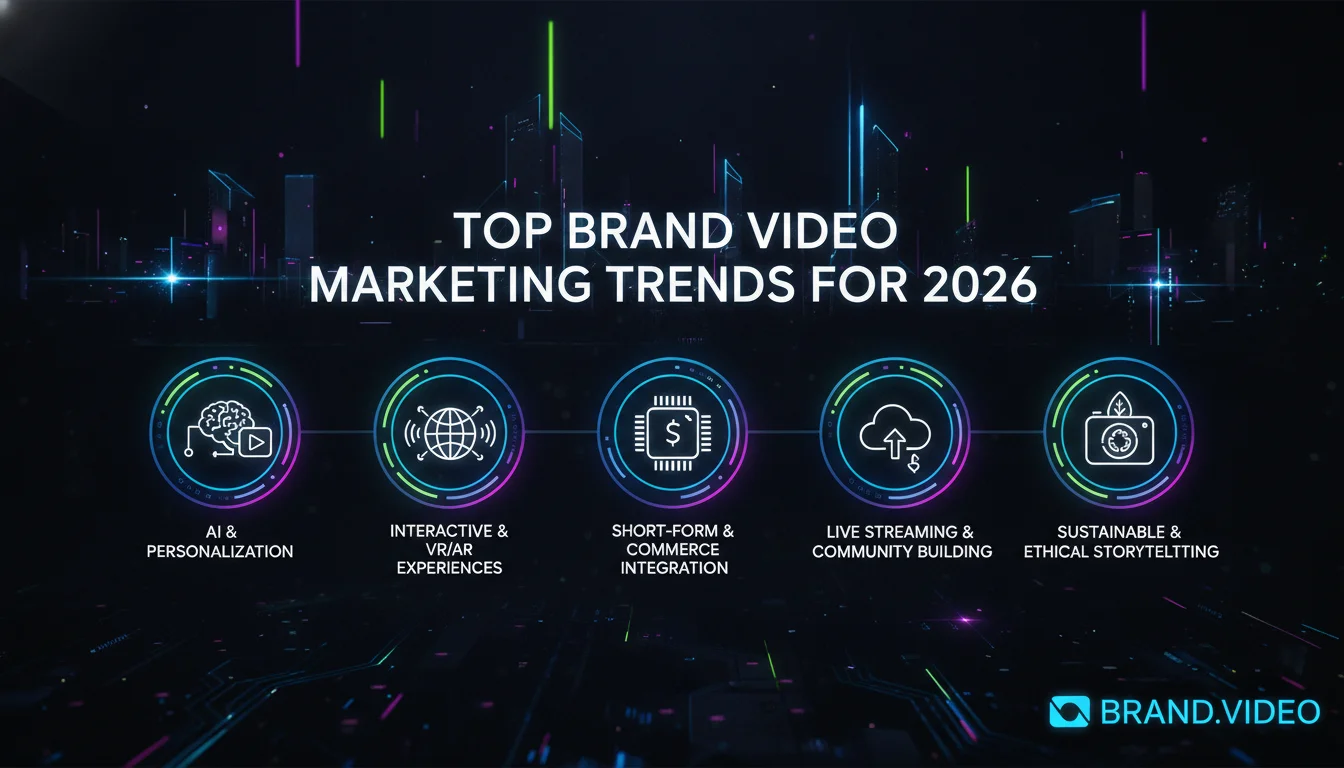
Top Brand Video Marketing Trends for 2026
1. Short-Form Video Dominance
Short-form video, typically under two minutes, is the preferred format for engaging modern audiences across every major platform. TikTok and Instagram Reels popularized this format, but in 2026 it has expanded across YouTube Shorts, LinkedIn, and even B2B channels. Brands that have not built a short-form production rhythm are already playing catch-up.
According to Dropbox’s video marketing research, 39% of viewers prefer short videos under 60 seconds, making sub-minute content the sweet spot for social distribution. That preference is not just about attention spans. It reflects how people now browse: fast, intentional, and with a low tolerance for anything that does not earn its first five seconds.
Benefits of Short-Form Videos
- Increased Engagement: Short videos capture attention quickly, leading to higher engagement rates across platforms.
- Shareability: These videos are more likely to be shared, expanding brand reach organically.
- Cost-Effective: Producing short videos often requires fewer resources compared to longer formats, making them accessible for brands at every budget level.
Challenges of Short-Form Videos
- Message Clarity: Conveying a clear, compelling message in a limited timeframe demands sharp creative discipline.
- Creative Constraints: Brevity can limit narrative depth, requiring brands to prioritize ruthlessly.
2. AI Integration in Video Production
AI integration in video production is one of the most significant brand video marketing trends reshaping the industry in 2026, automating everything from scriptwriting and editing to platform-specific remixing and performance optimization.
According to Dropbox’s research, 75% of marketers now use AI tools to streamline video production. That adoption rate signals a fundamental shift in how creative teams operate: AI is no longer a novelty tool for early adopters. It is a standard part of the production stack.
One of the most significant developments this year is autonomous video remixing. AI tools can now take a single master video file and automatically generate dozens of platform-specific variations: different hooks, alternate intros, pacing adjustments, color-grade versions, and even different emotional tones. These systems understand what performs on each channel and produce optimized assets without additional production time.
How AI Enhances Video Marketing
- Streamlined Production: AI automates repetitive tasks like captioning, resizing, and format conversion, freeing creators to focus on storytelling.
- Data-Driven Insights: AI tools analyze viewer behavior patterns and surface insights that help brands refine their content strategy in near real-time.
- Personalization at Scale: AI can generate hyper-personalized video variations based on viewer data, making mass personalization economically viable for the first time.
- Autonomous Remixing: A single hero video can become dozens of platform-optimized assets without additional shoot days.
Potential Pitfalls of AI in Video Marketing
- Over-Reliance: Brands that let AI drive creative decisions risk producing content that feels generic and interchangeable.
- Quality Control: AI-generated content requires human editorial oversight to maintain brand voice, accuracy, and emotional resonance.
- Credibility Risk: Research from Awakened Films notes that more than 20% of videos shown to new YouTube users qualified as “AI slop,” accumulating billions of views but eroding audience trust across the board.
“The brands winning with video in 2026 aren’t the ones repeating last year’s tactics. They’re the ones embracing a wave of innovation that blends creativity, intelligence, and agility to meet viewers in the moments and mediums where they’re most engaged.” – Envato Blog, March 2026
3. Hyper-Personalization of Video Content
Hyper-personalization in video marketing means using advanced AI to automatically tailor visuals, scripts, offers, and content sequences for each viewer based on their preferences and real-time context. This is one of the brand video marketing trends moving fastest from “nice to have” to baseline expectation.
As audiences increasingly ignore generic messaging, personalization boosts relevance by making every viewer feel directly addressed. Platform algorithms now prioritize engagement signals, and tailored videos perform better in feeds, improve watch-through rates, and strengthen brand authenticity. In 2026, scalable personalization is not just a competitive edge. It is becoming the price of admission.
Benefits of Hyper-Personalization
- Enhanced Engagement: Personalized content resonates more deeply with viewers, driving higher watch-through and interaction rates.
- Increased Conversion Rates: Tailoring messages to specific audience segments can significantly boost conversion performance.
- Improved Brand Loyalty: Personalized experiences build a stronger emotional connection between brands and consumers over time.
Strategies for Implementing Hyper-Personalization
- Audience Segmentation: Divide your audience by behavior, location, purchase history, or content preferences before producing variations.
- Dynamic Content Tools: Use platforms that allow real-time content adjustments based on viewer interactions and profile data.
- Incremental Testing: Even minor changes in messaging, visuals, or calls to action between segments can reveal significant performance differences.
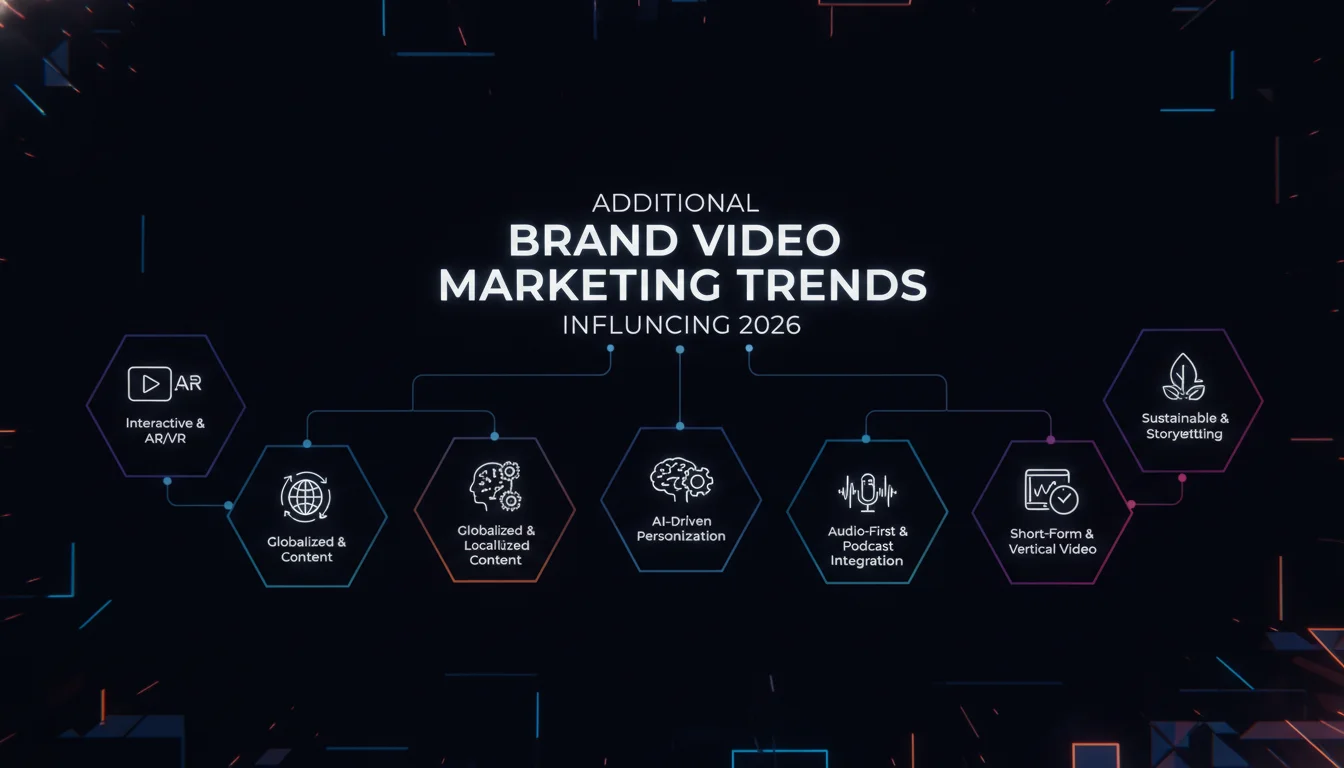
Additional Brand Video Marketing Trends Influencing 2026
4. Accessibility in Video Content
Accessibility in video content means designing every piece of video so that viewers with disabilities can fully engage with it, including through captions, audio descriptions, and assistive technology compatibility. As inclusivity becomes a genuine brand priority rather than a compliance checkbox, accessibility is shaping how leading brands produce and distribute video.
Importance of Accessibility
- Wider Audience Reach: Accessible content allows brands to connect with a broader audience, including the hundreds of millions of people globally who live with some form of disability.
- Regulatory Compliance: Many regions have regulations requiring accessibility in digital content, making this a legal as well as ethical priority.
- Enhanced Brand Image: Brands that prioritize accessibility demonstrate genuine social responsibility, which resonates with values-driven consumers.
Implementing Accessibility Features
- Captioning: Always include accurate captions. Auto-generated captions are a starting point, not a finish line.
- Audio Descriptions: Provide audio descriptions for visually impaired viewers so they receive the full narrative experience.
- Regular Testing: Test content against accessibility standards before publishing, not after complaints arrive.
5. Cross-Platform Storytelling
Cross-platform storytelling means building cohesive brand narratives that span multiple channels simultaneously, meeting audiences on the platforms where they already spend their time rather than asking them to come to you.
Benefits of Cross-Platform Storytelling
- Increased Visibility: Brands reach diverse audience segments across YouTube, TikTok, Instagram, LinkedIn, and connected TV in a single campaign cycle.
- Consistent Messaging: A unified narrative across channels strengthens brand identity and recall.
- Enhanced Engagement: Audiences who encounter your story across multiple touchpoints develop deeper familiarity and trust with your brand.
Strategies for Effective Cross-Platform Storytelling
- Content Repurposing: Adapt a single hero video into platform-native formats while preserving the core message and visual identity.
- Audience Analysis: Map where your specific audience spends time and weight your production budget accordingly.
- Integrated Campaigns: Design campaigns that reward audiences for following the story across platforms, creating continuity rather than repetition.
6. User-Generated Content as a Trust Signal
User-generated content (UGC) has become one of the most powerful brand video marketing trends of 2026 precisely because it is the antidote to the credibility crisis created by AI-generated media. When real customers create video content about your brand, they provide something no production budget can manufacture: authentic proof.
UGC works because it compresses the trust-building process. A polished brand video tells viewers what you want them to believe. A genuine customer video shows them what real people actually experience. That distinction matters more now than at any previous point in digital marketing history.
How to Build a UGC Video Strategy
- Create Shareable Moments: Design product experiences, packaging, and brand interactions that naturally inspire customers to film and share.
- Build Submission Systems: Make it easy for customers to submit video testimonials and reviews through dedicated landing pages or social prompts.
- Amplify Selectively: Curate the strongest UGC and boost it with paid distribution, treating customer voices as your most credible creative asset.
- Acknowledge Contributors: Feature creators by name and give them credit publicly. This encourages more participation and signals that your brand values its community.
7. Interactive and Shoppable Video
Interactive video content allows viewers to make choices within the video itself, clicking on products, selecting story paths, or triggering additional information without leaving the viewing experience. Shoppable video takes this further by turning views directly into purchases, making social video marketing more measurable than it has ever been.
This trend is particularly significant for ecommerce brands. When a viewer can tap a product featured in a video and complete a purchase in two steps, the gap between inspiration and transaction collapses. According to Shopify’s analysis of video marketing trends, 93% of marketers report that video has given them a good return on investment, and interactive formats are accelerating that return by reducing friction in the purchase journey.
Interactive Video Formats Worth Testing in 2026
- Shoppable Stories: Instagram and TikTok both support in-video product tagging that routes viewers directly to purchase pages.
- Branching Narratives: Allow viewers to choose their own path through a product demo or brand story, increasing time-on-content and personal relevance.
- Embedded CTAs: Place clickable calls to action at the precise moment of peak viewer interest rather than waiting until the end.
- Live Shopping Events: Real-time video commerce combines entertainment, community, and instant purchase capability in a single session.
How Brand Video Marketing Trends Actually Work: The Mechanics
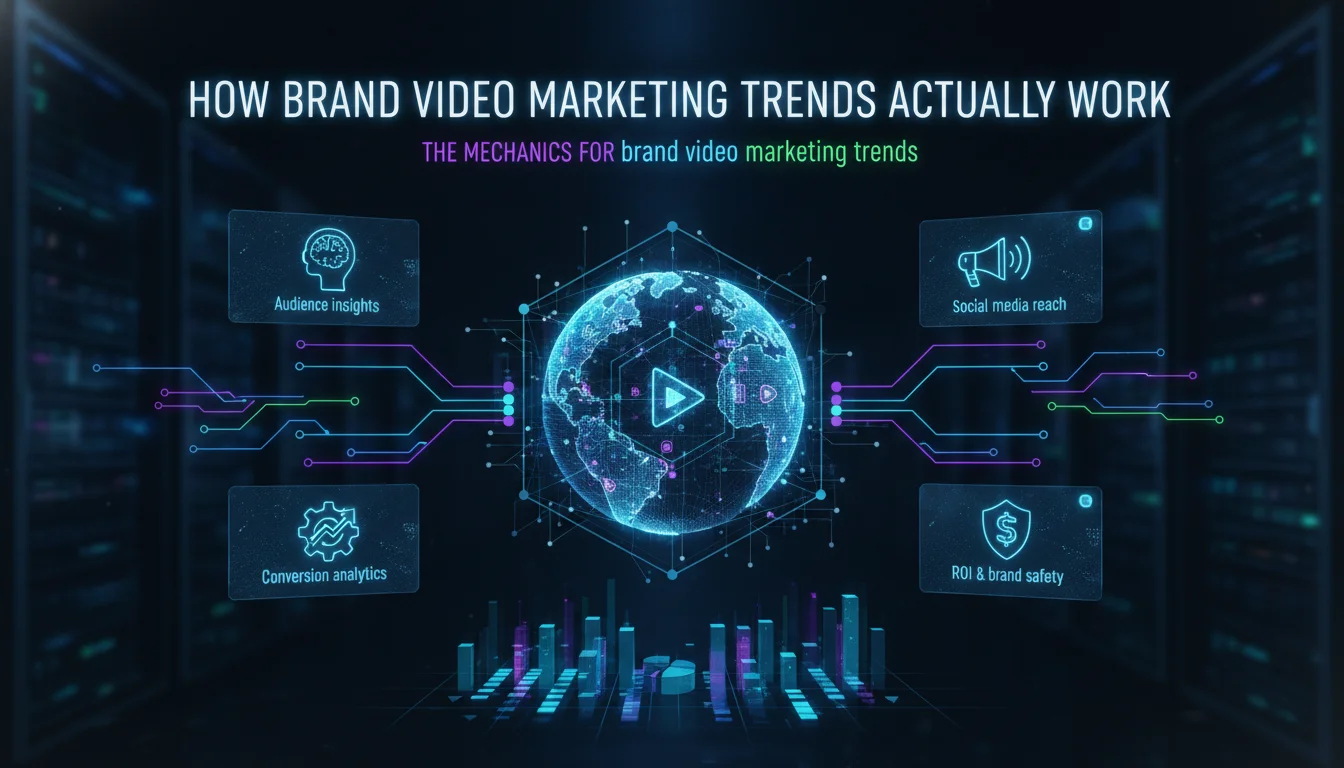
Understanding brand video marketing trends at a surface level is useful. Understanding the mechanics behind why they work is what separates brands that execute well from brands that just follow the crowd.
Every major brand video marketing trend in 2026 is driven by the same underlying dynamic: platform algorithms reward content that generates strong engagement signals quickly. Watch time, completion rate, shares, saves, and comments all feed into distribution decisions made within the first hour of a video’s life. This means the first three to five seconds of any video are not just important. They are the entire game.
Short-form video dominates because it aligns with how algorithms distribute content: fast engagement signals, high completion rates, and strong share velocity all push videos into wider distribution. AI personalization works because it increases the probability that any given viewer will find the content relevant enough to complete. UGC performs because social proof triggers a different cognitive response than branded content: it bypasses skepticism rather than trying to overcome it.
Cross-platform storytelling amplifies all of these effects by creating multiple entry points into your brand narrative. A viewer who encounters your brand first on TikTok, then sees a longer version on YouTube, then finds a customer testimonial on Instagram has had three distinct trust-building interactions before ever visiting your website.
How to Apply Brand Video Marketing Trends: A Practical Framework
Knowing the trends is step one. Building a system to act on them is where most brands stall. Here is a practical framework for applying the leading brand video marketing trends to your 2026 strategy.
Step 1: Audit Your Current Video Presence
Pull performance data from every platform where you publish video. Identify your top three performing videos by completion rate, not just views. Look for patterns in format, length, topic, and tone. This baseline tells you what your specific audience already responds to before you layer in new trends.
Step 2: Build a Short-Form Production Rhythm
Commit to a consistent short-form publishing schedule before worrying about production quality. One well-crafted 45-second video per week, published consistently, will outperform a monthly hero video that takes six weeks to produce. Start with your best-performing long-form content and extract short-form clips from it to build volume without additional shoot days.
Step 3: Integrate AI Into Your Workflow Strategically
Identify the three most time-consuming steps in your current video production process. Those are your AI integration targets. Use AI for captioning, format resizing, script drafting, and performance analysis. Keep human creative judgment in charge of concept, tone, and final editorial decisions. AI is your production assistant, not your creative director.
Step 4: Segment Before You Personalize
Hyper-personalization without audience segmentation is just noise. Map your audience into two to four distinct segments based on behavior, purchase stage, or content preference. Create one video variation per segment, changing only the hook, the specific pain point addressed, or the call to action. Measure performance differences between segments before investing in more complex personalization infrastructure.
Step 5: Build a UGC Collection System
Set up a simple submission page where customers can upload video testimonials. Add a post-purchase email sequence that invites recent buyers to share their experience on video. Offer a small incentive if your margins allow it. Review submissions weekly and identify the two or three strongest pieces to amplify with paid distribution each month.
Step 6: Measure What Matters
Track completion rate, not just views. A video with 10,000 views and a 20% completion rate is underperforming. A video with 2,000 views and an 80% completion rate is a creative asset worth scaling. Set platform-specific benchmarks and review them monthly, adjusting your content mix based on what the data shows rather than what feels right.
Brand Video Marketing Trends: Comparison of Key Approaches
| Approach | Best For | Production Cost | Time to Results | Key Risk |
|---|---|---|---|---|
| Short-Form Video | Awareness, reach, algorithm growth | Low to Medium | Fast (days to weeks) | Message oversimplification |
| AI-Assisted Production | Scale, personalization, efficiency | Low (after setup) | Medium (weeks) | Generic, soulless output |
| Hyper-Personalized Video | Conversion, retention, loyalty | Medium to High | Medium to Long | Data privacy and complexity |
| User-Generated Content | Trust, social proof, community | Very Low | Variable | Quality inconsistency |
| Interactive / Shoppable Video | Ecommerce conversion, engagement | Medium to High | Medium | Platform dependency |
| Cross-Platform Storytelling | Brand building, multi-touch reach | High | Long (months) | Message fragmentation |
Common Mistakes Brands Make With Video Marketing Trends
Chasing brand video marketing trends without a strategic foundation is one of the fastest ways to waste a production budget. Here are the mistakes we see most often, and how to avoid them.
Mistake 1: Treating Every Platform the Same
A video optimized for LinkedIn will not perform on TikTok. A TikTok-native video will feel out of place on your homepage. Each platform has its own visual language, pacing expectations, and audience behavior. Repurposing content is smart. Repurposing without adapting is lazy, and audiences notice immediately.
Mistake 2: Prioritizing Production Value Over Authenticity
The research from Awakened Films is clear: credibility is the supreme storytelling asset in 2026. Brands that invest heavily in polished production while neglecting authentic proof points are spending money in the wrong direction. A genuine customer testimonial shot on a phone will often outperform a studio-produced brand film in trust metrics.
Mistake 3: Publishing Without a Distribution Plan
Great video content with no distribution strategy is a tree falling in an empty forest. Before you hit publish, know exactly how you will seed the video, which paid channels you will use to amplify it, and what your target completion rate benchmark is. Distribution is not an afterthought. It is half the strategy.
Mistake 4: Ignoring Video SEO
Younger audiences increasingly use TikTok and YouTube as search engines. Optimizing your video titles, descriptions, and tags for search intent is as important as optimizing a blog post. If your video content is not discoverable through search, you are leaving a significant acquisition channel untouched.
Mistake 5: Measuring Views Instead of Business Outcomes
View counts feel good. They rarely tell you whether your video marketing is actually working. Track completion rates, click-through rates on embedded CTAs, and downstream conversion events. Connect your video analytics to your CRM where possible so you can see the full journey from first view to closed deal.
A Realistic Scenario: How a Mid-Size Brand Applies These Trends
Consider a direct-to-consumer skincare brand with a modest video production budget and a team of three marketers. Here is how they might apply the leading brand video marketing trends in a single quarter.
They start by filming one hero video: a 90-second founder story explaining the brand’s origin and product philosophy. From that single shoot, they extract eight short-form clips under 30 seconds each, targeting different pain points for different audience segments. They use an AI tool to generate captions, resize each clip for TikTok, Instagram Reels, and YouTube Shorts, and draft five variations of the opening hook to A/B test across platforms.
They set up a post-purchase email asking customers to submit a 30-second video review in exchange for a discount on their next order. Within six weeks, they have collected a library of authentic customer videos that they begin amplifying with a small paid budget on Meta.
By the end of the quarter, their short-form content has driven measurable growth in profile followers and website traffic. Their UGC campaign has produced a cost-per-acquisition that is roughly 2-3x more efficient than their previous static image ads. And their hero video, repurposed across platforms, has given their brand a consistent visual identity that customers recognize across every touchpoint.
This is not a hypothetical fantasy. It is a repeatable system built on the brand video marketing trends that are actually working in 2026.
Measuring Success in Video Marketing
To ensure the effectiveness of video marketing strategies, brands must implement robust measurement frameworks. Key performance indicators (KPIs) help assess the impact of video content on business objectives. Without clear measurement, even the most creative video strategy is flying blind.
Key Metrics to Track
- Completion Rate: The percentage of viewers who watch your video to the end. This is the most honest signal of content quality.
- Engagement Rates: Likes, shares, comments, and saves indicate how strongly content resonates with your audience.
- Conversion Rates: Track how many viewers take a desired action after watching, whether that is clicking a link, making a purchase, or submitting a form.
- Retention Rates: Analyze where viewers drop off within a video to identify weak points in your storytelling or pacing.
Tools for Measuring Video Performance
- Analytics Platforms: Google Analytics, native platform insights (TikTok Analytics, YouTube Studio, Meta Business Suite) provide foundational performance data.
- Heatmap Tools: Understand exactly where viewer attention concentrates and where it drops, giving you frame-level feedback on your content.
- A/B Testing: Experiment with different hooks, formats, and lengths to build a data-driven understanding of what your specific audience responds to.
- CRM Integration: Connect video engagement data to your customer relationship management system to track the full journey from view to revenue.
Pros and Cons
Pros
- Massive reach potential: Video content reaches audiences across every major platform, from mobile feeds to connected TV, giving brands more distribution surface than any other format.
- Emotional impact: Video compresses reality in a way no other medium can, building brand affinity and emotional connection faster than text or static imagery.
- AI efficiency gains: With 75% of marketers now using AI tools for video production, brands can produce more content at lower cost without proportionally increasing team size.
- Measurable ROI: Modern video analytics provide granular performance data that makes it possible to connect video investment directly to business outcomes.
- Versatility: A single video shoot can generate short-form clips, long-form content, UGC prompts, paid ads, and organic social posts simultaneously.
Cons
- Production complexity: Even with AI assistance, video requires more planning, resources, and coordination than most other content formats.
- Platform dependency: Algorithm changes on TikTok, Instagram, or YouTube can dramatically affect reach overnight, making video distribution inherently unpredictable.
- Credibility risk from AI: Over-reliance on AI-generated video content risks damaging brand trust in an environment where audiences are increasingly skeptical of synthetic media.
- Short shelf life: Trend-driven short-form content can feel dated within weeks, requiring a constant production pipeline to stay relevant.
- Measurement complexity: Connecting video views to downstream revenue requires sophisticated analytics infrastructure that many smaller brands do not yet have in place.
The Near-Term Outlook: Brand Video Marketing Trends Beyond 2026
Looking ahead, the brand video marketing trends taking shape now will define the competitive landscape through 2027 and beyond. Several forces are worth watching closely.
Connected TV advertising is growing as streaming platforms open up more sophisticated targeting options for brands. This creates an opportunity to bring the precision of digital video marketing to the living room screen, reaching audiences in a high-attention environment that mobile feeds cannot replicate.
Video search optimization is becoming a distinct discipline. As platforms like TikTok and YouTube function increasingly as search engines for younger demographics, brands that treat video SEO with the same rigor as web SEO will gain a durable discovery advantage.
The credibility premium will intensify. As AI-generated content becomes indistinguishable from human-made content at a surface level, the brands that invest in authentic storytelling, real customer proof, and transparent production will command a trust premium that no algorithm can replicate. According to research highlighted by Awakened Films, the brands that win will treat credibility as a creative layer, not just a compliance checkbox.
For brands serious about staying ahead of brand video marketing trends, the strategic imperative is clear: build systems that combine AI efficiency with human authenticity, distribute across platforms without losing narrative coherence, and measure outcomes that connect directly to revenue.
Frequently Asked Questions
What are brand video marketing trends?
Brand video marketing trends are the evolving practices and formats that brands use to connect with audiences through video content, shaped by technological advancements, platform algorithm changes, and shifting consumer preferences. In 2026, the most significant trends include short-form video dominance, AI-assisted production, hyper-personalization, user-generated content, and interactive shoppable video.
Why is short-form video so important for brands in 2026?
Short-form video captures audience attention in the first few seconds, aligns with how platform algorithms distribute content, and generates the high completion rates that push videos into wider organic reach. According to Dropbox’s video marketing research, 39% of viewers prefer videos under 60 seconds, making sub-minute content the highest-priority format for social distribution.
How does AI impact brand video marketing?
AI impacts brand video marketing by automating production tasks like captioning, resizing, and format conversion, providing data-driven insights into viewer behavior, and enabling hyper-personalization at scale. According to Dropbox’s research, 75% of marketers now use AI tools to streamline video production. The key is using AI to increase efficiency while keeping human creative judgment in charge of concept and tone.
What is hyper-personalization in video marketing and how do brands implement it?
Hyper-personalization in video marketing means using AI to automatically tailor video content, including visuals, scripts, and offers, to individual viewer preferences and real-time context. Brands implement it by segmenting audiences based on behavior or purchase history, creating targeted video variations for each segment, and using dynamic content tools that adjust in real time based on viewer interactions.
Why is user-generated content valuable for brand video marketing?
User-generated content provides authentic social proof that branded video cannot replicate, bypassing the skepticism audiences apply to polished advertising. In a media environment increasingly saturated with AI-generated content, real customer videos function as credibility signals that build trust faster and more durably than any production budget can achieve.
How can brands measure the success of their video marketing efforts?
Brands should track completion rate, engagement rate, conversion rate, and retention drop-off points using platform analytics tools like YouTube Studio, TikTok Analytics, and Meta Business Suite. The most important shift is moving beyond view counts to measuring business outcomes: click-throughs, form submissions, and revenue attributed to video-driven traffic. Connecting video analytics to your CRM gives you the full picture from first view to closed deal.
Enjoyed this article?
Contact Emin Media for a free brand consultation and let's create something amazing together.
Get in TouchRelated Articles
Digital Storytelling for Brands: The Complete Guide
Digital storytelling for brands builds real audience connections through narrative. Learn proven techniques, formats, and…
Design Thinking for Marketing: A 2026 Guide
Design thinking for marketing builds campaigns around real user needs. Learn the 5 phases, common…
Creative Direction for Video Shoots: A Complete Guide
Master creative direction for video shoots with proven steps, tools, and strategies that build brand…