Brand Marketing Strategy 2026: The Trust Playbook
Key Takeaways
- A brand marketing strategy 2026 is a system for building trust, visibility, and emotional connection across AI answer engines, social platforms, and owned channels.
- Zero-click search is now the default: according to SparkToro/Datos research, 60% of Google searches end without a click, rising to 77% on mobile.
- Human authenticity, not automation alone, differentiates brands in 2026. AI should sharpen strategy, not replace human judgment and creativity.
- Email marketing remains the most undervalued owned asset in a brand marketing strategy 2026 playbook; live experiences and brand partnerships now drive deeper community and cultural relevance.
- Strategic clarity beats tactic-chasing: audit performance before adding new channels and measure outcomes like revenue contribution and customer acquisition cost, not just activity metrics.
Brand marketing strategy 2026 is a plan for building trust, visibility, and emotional connection across AI answer engines, social platforms, and owned channels. It prioritizes human authenticity, strategic clarity, and measurable outcomes as discovery behavior keeps shifting.
What Is Brand Marketing Strategy 2026?
Defining the Core Components
A strategy 2026 is the integrated approach a company uses to define who it serves, how it positions its value, and which channels will drive the strongest returns while keeping a recognizable identity. According to Monday.com, a marketing strategy is the backbone of a growth plan: it connects target audience, value proposition, and channel selection to measurable business outcomes. This year, that definition stretches beyond traditional campaigns to include how a brand shows up in AI-generated answers, how it earns trust through consistency and flexibility, and how it turns owned channels into revenue streams that don’t depend on someone else’s algorithm.
The core components include a clear audience definition, a differentiated value proposition, an owned-media foundation like email, an AI-optimized content layer, and an integrated paid-organic system. Kedraco frames brand marketing this year as more than a logo or slogan. It’s about building trust, sparking emotion, and creating digital-first connections. That means your strategic foundation needs to be documented, measurable, and flexible enough to bend when platforms shift under you.
Why 2026 Is Different From Previous Years
2026 is different because three structural shifts are rewriting how customers discover and choose brands. First, consumers now meet brands through AI assistants like ChatGPT, Perplexity, and Google AI Overviews before they ever land on a website. Second, trust has replaced attention as the currency of brand growth: people self-select into brands that align with their values and hold steady under pressure. Third, the line between digital and physical presence has blurred, so live experiences, collectible physical products, and community moments now carry as much weight as digital ads. As Lippincott notes, 2025 was a year of seismic change that rewrote the marketing playbook, and this year rewards brands that lead with purpose and agility.
The Shift From Campaigns to Trust Systems
A this type of 2026 isn’t a stack of one-off campaigns. It’s a trust system: repeatable processes, messaging principles, and measurement loops that compound over time. That requires moving past the old creative brief into what Lippincott calls “trust briefs,” documents that define how a brand consistently shows up as authoritative, human, and aligned across every touchpoint, including AI answer engines. Brands that treat consistency as a floor and flexibility as a growth lever will beat the ones still chasing the next viral moment.
The AI Answer Engine Shift and Brand Visibility
How Much of Search Is Now Zero-Click?
Zero-click search now defines the majority of Google queries, with 60% of all searches ending without anyone clicking through to a website, according to research from SparkToro/Datos cited by The Fashion Business Coach. On mobile, that number climbs to 77%. A lot of those zero-click searches get answered by AI-generated summaries that scrape content straight from websites. That means a brand can rank on page one and still be functionally invisible if AI tools never cite it. The same source notes that zero-second visits showing up in analytics are often AI bots scraping pages, not humans bouncing, a signal that your content is being read by machines on behalf of future searchers.
“The key will be to create with taste, conviction and intention.”
, Eric Tsytsylin, Partner, Strategy at Lippincott
Optimizing for Generative and Answer Engines
Being the brand AI recommends is becoming as valuable as ranking on page one of Google. To win that spot, brands need content structured for search engines and answer engines at the same time. That means clear definitional statements, entity-rich language, and direct answers stacked right in the first paragraph. It also means your product names, differentiators, and value proposition need to be stated the same way, over and over, across the web, so AI models start treating them as settled facts. M&R Marketing puts it plainly: content has to satisfy SEO, GEO, and AEO all at once. Structure, not just keywords, decides visibility this year.
AI-Driven Content Without Losing Human Voice
The danger with AI-optimized content is that it turns polished but hollow. Consumers already sense it. Lippincott predicts “human-made” will resurface as a badge of honor and a driver of price premiums for knowledge workers and craftspeople alike. The right move for a this kind of strategy 2026 is to let AI handle research, formatting, and distribution while keeping final creative calls rooted in human judgment. Brands that pair AI efficiency with real storytelling become the ones AI tools cite, and the ones people actually trust after they click through.
Human Authenticity as the 2026 Competitive Moat
Why Does Synthetic Content Trigger Consumer Skepticism?
Synthetic content triggers skepticism because consumers are saturated with polish that no longer feels genuine. AI-generated articles, social posts, and product descriptions are everywhere now, and that gloss can strip out the texture that makes something feel real. ON Advertising frames this as the need for radical authenticity in the age of synthetic content. Brands leaning solely on automation already feel sterile; the ones blending data with genuinely human content rise above the noise. Authenticity isn’t a soft skill anymore. It’s a structural advantage.
The Role of User-Generated Content and Community
Community-driven brands and user-generated content matter because people want brands that feel like a movement, not just a product on a shelf. According to Kedraco, more than 70% of consumers choose brands that share their values. Kedraco also reports that brands which pivoted their messaging during major events saw a 30% boost in positive sentiment. That tells us authenticity is measurable: when a brand listens and responds to real-world context instead of staying scripted, sentiment moves. UGC works as social proof that no AI-generated testimonial can fake.
Trust Briefs and the Brand as a Living System
Lippincott’s 2026 trend research notes that brands are moving beyond the traditional creative brief toward “trust briefs” that build a consistent, authoritative presence across every surface. This is part of a bigger shift: brand as a living system, not a static identity. The core stays fixed, same values, same emotional center, while messaging, channels, and content style flex with culture and platform changes. A resilient the marketing strategy 2026 approach protects that core while letting the outer layers move, the same way great movie franchises keep tone and characters familiar while each new installment reflects its era.
Brands that rely solely on automation already feel sterile, while those that blend data and humanizing content rise above the noise, according to M&R Marketing’s 2026 strategy research.
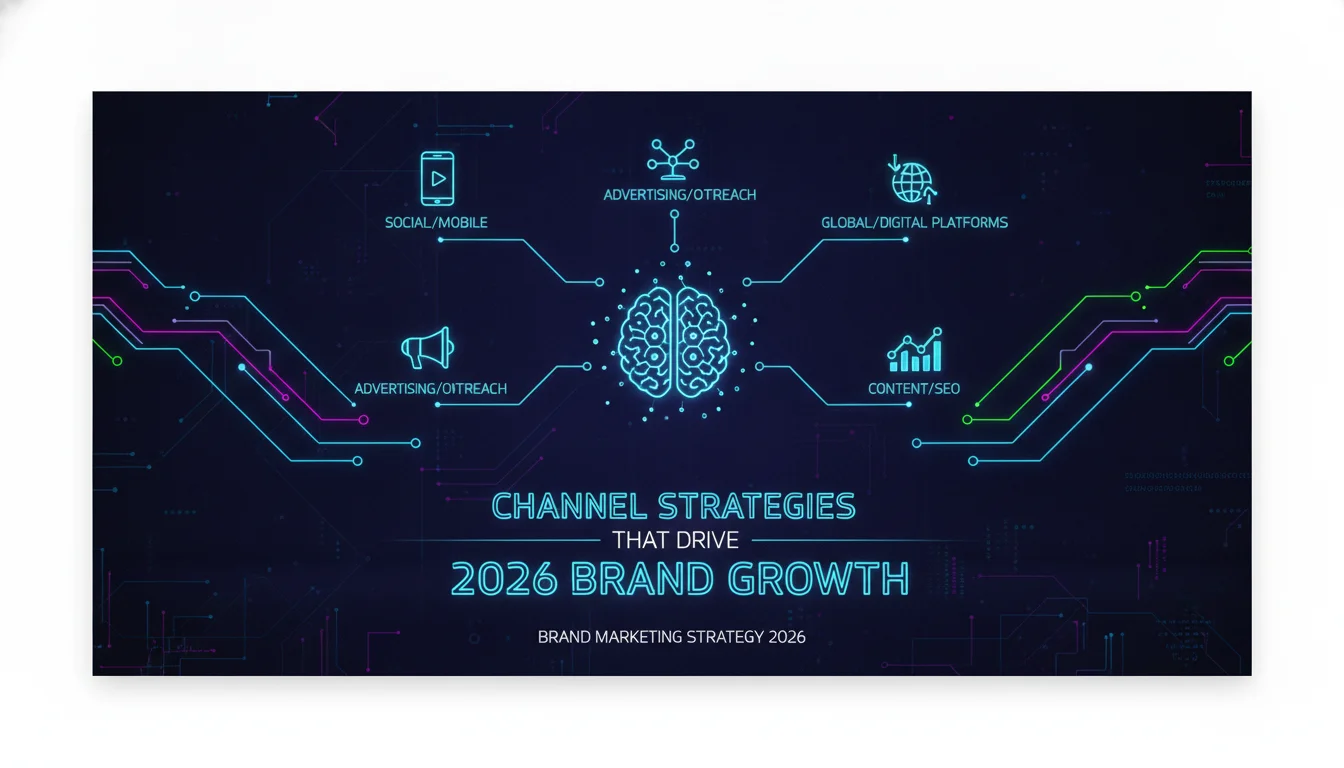
Channel Strategies That Drive 2026 Brand Growth
Why Is Email Marketing Still an Owned Growth Asset?
Email remains an owned growth asset because it’s the one channel a brand controls outright, immune to algorithm changes and AI intermediaries. The Fashion Business Coach reports working with brands that rebuilt their email strategy from the ground up and restructured how they communicated, seeing measurable gains even while social traffic stayed unpredictable. Email isn’t flashy, but it’s direct, and it’s increasingly the only channel that doesn’t answer to someone else’s platform rules. A strong program pairs lifecycle messaging, personalization, and a clear value exchange that respects privacy.
Live Experiences and Playful Physical Products
This year, brands should build at least one live experience into their marketing calendar every quarter. It doesn’t need to be big; it just needs to create real human connection. Lippincott points to the rise of collectible ephemera, physical products like Labubu and the Starbucks “bearista” that spark instant delight and lasting connection. These objects are built for display, social currency, and emotional payoff. In a digital-first world, tangible moments and objects create the kind of memory an algorithm simply can’t generate.
Brand Partnerships and Niche Audience Activation
Partnerships, once written off as expensive awareness plays, are now central to engaging niche audiences, driving interaction, and influencing purchase decisions. According to Coursera, top 2026 marketing trends include AI integration, short-form video, user-generated content, and authentic branding, with TikTok and YouTube standing out as key visibility platforms. Brand partnerships borrow the trust of another community to shortcut credibility. The most effective partnerships this year aren’t celebrity endorsements; they’re aligned collaborations with creators, niche communities, and other brands that share real values.
Building a Resilient Brand Marketing Strategy 2026 Framework
Step 1: Define Your Target Audience and Value Proposition
Start by defining exactly who you serve and why you’re uniquely valuable, before touching any tactic. Every brand marketing strategy 2026 plan starts with a strategic foundation: target audience, competitive positioning, and a value proposition specific enough to guide content but flexible enough to evolve. Skip this step and marketing turns into scattered activity that burns budget. Write down your non-negotiable brand elements, what must stay fixed, and the areas where you can flex for new platforms and trends.
Step 2: Audit Current Assets and AI Visibility
Audit what you already have before adding new channels or tools. Check your analytics for zero-second visits, which can signal AI bot scraping rather than human traffic. Ask ChatGPT, Perplexity, and Google AI Overviews direct questions about your category to see whether your brand shows up. Flag the content gaps where your brand should be the cited source but isn’t. This audit needs to cover site structure, entity clarity, and how consistently your brand message appears across the web.
Step 3: Balance Consistency with Flexibility
A resilient strategy protects the core identity while letting tactics evolve underneath it. Consistency alone isn’t enough anymore; it’s the starting line, not the finish. This year, brands need to decide which elements are truly non-negotiable, tone, values, visual identity, and where they need room to adapt to new platforms, formats, and cultural moments. Think of your brand less like a printed handbook and more like a living organism that grows and responds to its environment.
Step 4: Integrate Paid, Organic, and Owned Channels
Treat paid and organic as one system, not two separate budgets fighting for credit. M&R Marketing emphasizes that brands aligning data, creativity, and customer experience across every channel outperform the ones still working in silos. In practice, that means organic content informs paid targeting, email nurtures leads that came from social, and live experiences feed UGC that fuels the next round of ads.
Step 5: Measure Outcomes, Not Activities
Measure success through revenue contribution, customer acquisition cost, and market share growth, not vanity metrics. Activity numbers like email opens and impressions only matter if they connect to a business outcome. Monday.com’s research notes that the difference between breakthrough success and disappointing results often comes down to having a strategy that ties every campaign, channel, and decision to something measurable. This year, your reporting should answer one question: did this activity create revenue, retention, or a real competitive edge?
Comparing 2026 Brand Marketing Approaches
Strategic Trade-Offs Across Channels
The table below compares the major approaches inside a modern brand marketing strategy 2026 mix. Each has a different mechanism, best use case, and key risk. No single channel wins on its own; resilience comes from blending them based on your audience and growth stage.
| Approach | Core Mechanism | Best For | 2026 Risk or Mitigation |
|---|---|---|---|
| AI-optimized content | Structuring content for answer engines and AI citations | Brands seeking discovery in zero-click searches | Risk of sounding generic; pair with human voice |
| Human authenticity and UGC | Real stories, creator content, and community proof | Trust-building and differentiation | Inconsistent quality; needs clear brand guidelines |
| Email marketing | Owned audience communication and lifecycle messaging | Retention and predictable revenue | Often underleveraged despite strong ROI; requires consistent value |
| Live and experiential events | In-person or digital experiences that create emotional connection | Fashion, lifestyle, and community-driven brands | Higher cost and logistics; but drives loyalty and UGC |
| Brand partnerships | Collaborations that access niche audiences and cultural moments | Expanding reach without broad awareness spend | Mismatched values can damage trust; due diligence is critical |
How to Choose the Right Mix for Your Brand
Start with your strategic foundation and your audit results. If your brand is invisible in AI answers, prioritize AI-optimized content and structured data first. If trust is low, lean into human authenticity and UGC. If your email list is growing but retention lags, rebuild your automation. If your community lives only online, add quarterly live experiences to give it a body. The winning mix in a brand marketing strategy 2026 plan isn’t a fixed formula, it’s a feedback loop between measurement, customer insight, and creative conviction.
Pros and Cons of a 2026 Brand Marketing Strategy
Pros
- Builds resilience against algorithm and AI-driven discovery changes, since owned channels and trust systems don’t rely on someone else’s platform rules.
- Creates measurable ROI focused on revenue, retention, and CAC rather than vanity metrics that look good but mean little.
- Strengthens long-term brand equity through consistent trust-building instead of one-off viral bets.
- Positions the brand to be cited by AI answer engines, opening a new, largely uncontested visibility channel.
Cons
- Requires upfront investment in audits, content restructuring, and email rebuilds before results show up.
- Demands ongoing human oversight to keep AI-assisted content from feeling sterile or generic.
- Live experiences and brand partnerships carry higher logistics costs and due-diligence requirements than a simple ad buy.
- Measurement discipline (tracking CAC and revenue contribution, not just opens and impressions) takes more time and tooling to set up properly.
Topics Every Brand Marketing Strategy 2026 Plan Should Address
The Self-Aware Consumer and Algorithm Negotiation
Consumers increasingly recognize when they’re being targeted, and that awareness is changing how brands earn access to data. Lippincott’s 2026 trend research describes a “self-aware segment” of consumers who notice when suggested content mirrors their recent conversations or searches, and who start negotiating with algorithms rather than passively accepting them. That segment expects a clear answer to “what’s in it for me?” before handing over consented data. A brand marketing strategy 2026 plan should build transparency into every data touchpoint, not bolt it on after the fact.
Visual Merchandising and Seasonal Storytelling
Seasonal collections and visual merchandising still carry weight, especially for fashion and lifestyle brands, because they translate brand identity into a physical or digital shopping experience customers can feel. Pairing seasonal drops with the trust-brief approach described earlier keeps visual storytelling aligned with core brand values instead of drifting into disconnected trend-chasing. If you want a deeper look at how visual identity and campaign storytelling work together, our team breaks this down further in our branding and creative strategy articles and on our services page.
Conclusion: The Brand Marketing Strategy 2026 Imperative
The Coming Convergence of Human and Machine
The brand marketing strategy 2026 approach that wins won’t force a choice between AI and human creativity. It will use AI to sharpen distribution, targeting, and content formatting while keeping final creative judgment in human hands. Consumers already reward brands that feel human and punish the ones that feel synthetic. This convergence isn’t a passing trend; it’s the new operating system for brand growth.
Your First 90 Days
In your first 90 days, run an AI visibility audit, rebuild your email segmentation, and design one live experience for the quarter. Document your non-negotiable brand elements and draft a trust brief that guides content across every channel. Stop chasing new platforms until your strategic foundation is actually clear. Then integrate paid and organic under one measurement framework focused on revenue, CAC, and market share.
What Resilience Really Means
Resilience this year means holding a recognizable core while flexing the outer layers with culture and technology. It means being the source AI cites, the brand communities trust, and the company that measures what actually matters. The brands that balance familiarity with evolution, data with empathy, automation with authenticity, won’t just survive these shifts. They’ll define them. Ready to build a brand marketing strategy 2026 plan that actually holds up? Contact Emin Media for a free brand consultation, and let’s build something bold.
Frequently Asked Questions
What is a brand marketing strategy 2026?
A brand marketing strategy 2026 is an integrated plan for building trust, visibility, and emotional connection across AI answer engines, social platforms, and owned channels. It prioritizes human authenticity, strategic clarity, and measurable outcomes over tactical activity for its own sake.
How is AI changing brand marketing in 2026?
AI now answers customer questions before they reach a website, with 60% of Google searches ending without a click. Brands need to optimize content so AI tools cite them, while keeping human creativity as the final differentiator that AI can’t replicate.
What role does email marketing play in 2026?
Email is the most undervalued owned asset for most brands going into this year. It gives direct, algorithm-proof access to customers and drives predictable revenue when it’s structured around lifecycle messaging and personalization.
How can brands build trust in 2026?
Brands build trust by staying consistent in values, transparent in actions, and human in communication. More than 70% of consumers choose brands that share their values, and according to Kedraco’s research, authentic messaging pivots during major events can boost positive sentiment by roughly 30%.
Which channels should brands prioritize in 2026?
Priority should go to AI-optimized owned content, email, live experiences, and aligned brand partnerships. Short-form video, UGC, and TikTok/YouTube still matter for visibility, but they need to connect back to owned channels to compound value.
How do you measure brand marketing success in 2026?
Measure revenue contribution, customer acquisition cost, and market share growth rather than activity metrics like opens and impressions. A strategy that connects every campaign and channel to a specific, measurable business outcome is the one worth keeping.
Enjoyed this article?
Contact Emin Media for a free brand consultation and let's create something amazing together.
Get in TouchRelated Articles
Digital Storytelling for Brands: The Complete Guide
Digital storytelling for brands builds real audience connections through narrative. Learn proven techniques, formats, and…
Design Thinking for Marketing: A 2026 Guide
Design thinking for marketing builds campaigns around real user needs. Learn the 5 phases, common…
Creative Direction for Video Shoots: A Complete Guide
Master creative direction for video shoots with proven steps, tools, and strategies that build brand…