Brand Experience Design: Strategy, Process & Impact
- Brand experience design is a strategic practice that aligns brand identity with every customer touchpoint, from physical environments to digital interfaces.
- Emotional connection drives commercial value: 86% of consumers say they are willing to pay more for exceptional experiences, according to RIOS.
- Physical spaces still matter: engaging destinations attract at least 28% more Gen Z visitors than traditional entertainment, based on RIOS research.
- Investment is growing: companies now allocate 10-30% of marketing budgets to experiential initiatives.
- Implementation is methodical: successful programs begin with audience intent, build a messaging hierarchy, and iterate through measurement.
Brand experience design is the practice of shaping how people connect with a brand across physical, digital, and service touchpoints. It blends strategy, storytelling, and sensory design into moments that build loyalty and produce measurable results.
Key Takeaways
- experience design treats every touchpoint, physical or digital, as one coherent story rather than isolated marketing moments.
- Consumer willingness to pay more for great experiences shows this discipline drives revenue, not just goodwill.
- Physical environments still carry weight with Gen Z audiences, even as screen time keeps climbing.
- Implementation follows a repeatable sequence: intent, story, sensory design, testing, and measurement.
- The discipline sits above product design and experiential marketing. It’s the system that holds both together.
- Emotional resonance, not just visual polish, is what separates a memorable brand from a forgettable one.
At its core, this type of design translates abstract brand values into tangible, felt moments. Rather than treating design as surface-level decoration, this discipline prioritizes clarity, function, and emotional resonance. It extends far beyond a logo or a color palette, encompassing every sensory cue a customer encounters.
What Is Brand Experience Design?
Core Definition
this kind of design is a method of creating products, services, and environments with an approach that puts the brand first. According to Manypixels, the goal is to incorporate marketing into product experiences without interfering with the user’s experience. Aquent expands on this, describing it as the deliberate creation of delight and cohesion across every customer touchpoint. In practice, that means every material choice, interface element, and service interaction becomes an expression of the brand’s core values.
How Brand Experience Design Differs From Traditional Branding
Traditional branding focuses on static identity assets: logos, fonts, colors, slogans, and message consistency. This discipline moves beyond those assets to shape how people feel as they move through a brand’s world. It treats the brand not as a layer applied to products, but as a living system that guides behavior and emotion. This distinction matters because customers no longer separate a brand’s promise from how it’s delivered. A beautiful identity attached to a confusing experience undermines trust, while consistent sensory and functional cues deepen it.
The Role of a Brand Experience Designer
A brand experienceer functions as the connective tissue across stakeholders. They bring together brand strategists, spatial designers, digital product teams, and customer experience leaders so every touchpoint tells the same story. The role demands fluency across architecture, interaction design, storytelling, and service design, so no gap exists between what a brand promises and what a customer actually feels. The output isn’t simply a visual system. It’s a set of coherent signals that shape memory, trust, and preference.
“As experience designers, we create immersive experiences through multi-sensory design to tell a story of belonging, wonder, and purposeful human connection.” – Betsy Hawley, Senior Associate at RIOS
The Business Case for Brand Experience Design
Why Physical Spaces Still Matter
Physical spaces still matter because they deliver a depth of sensory engagement that screens simply cannot replicate. According to Exhibitus, the moment someone steps into a space, they start forming perceptions based on what they see and how the environment makes them feel. RIOS demonstrates this through projects like GreenStreet in Houston, a three-block district transformed into a dynamic urban corridor with a strong visual story and interactive spaces for working, dining, and entertainment. That project points to a broader pattern: place still beats pixel when it comes to lasting impressions.
Data That Links Experience to Revenue
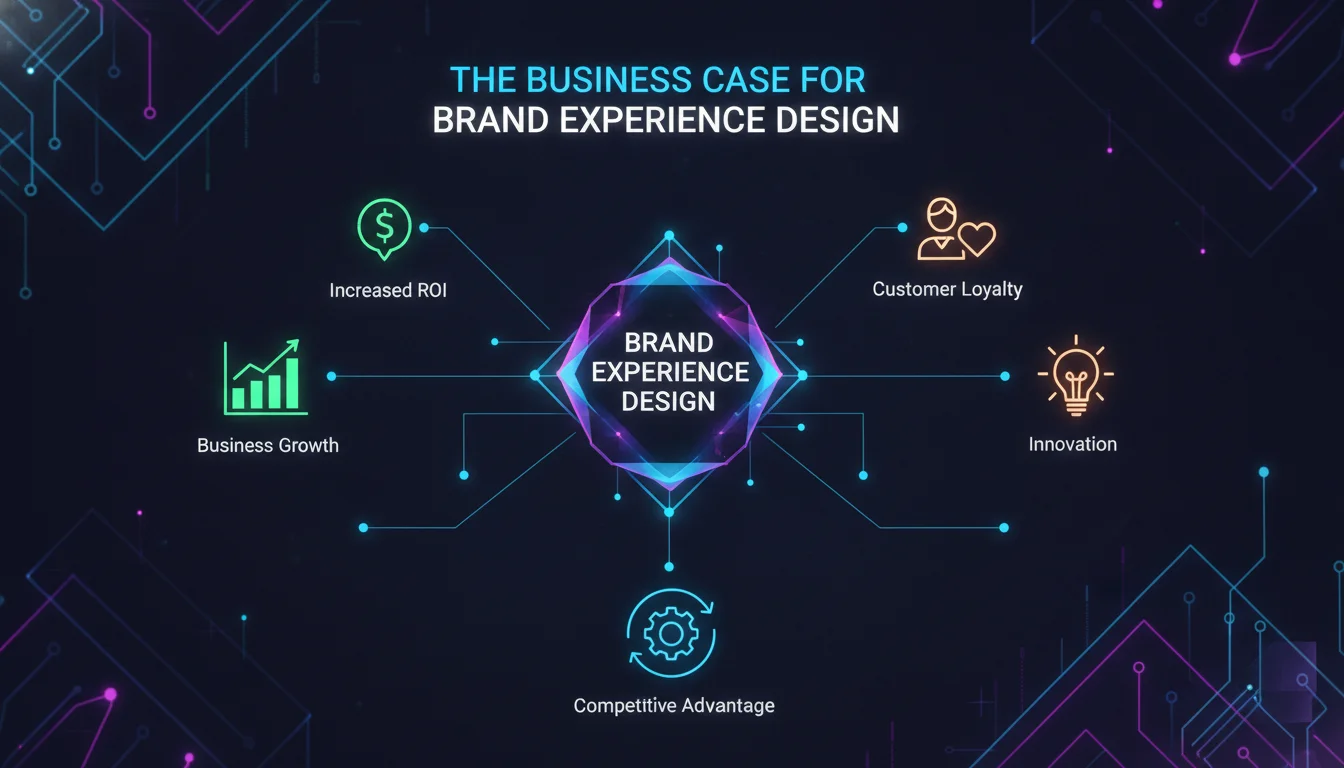
Exceptional experiences translate directly into commercial outcomes. RIOS reports that engaging destinations attract at least 28% more Gen Z visitors than traditional entertainment, a signal that younger, digital-first audiences still respond strongly to well-designed physical spaces. Companies are shifting budgets accordingly, with 10-30% of marketing budgets now allocated to experiential initiatives. The most compelling data point is willingness to pay: 86% of consumers say they’d pay more for an exceptional experience, according to RIOS. These figures show why experience design functions as a measurable growth lever, not a cosmetic add-on.
Emotional Connection Builds Long-Term Loyalty
this type of design creates value by forging emotional bonds that outlast any single transaction. When a space, event, or interface makes someone feel understood, surprised, or inspired, that feeling attaches itself to the brand in memory. This is why VML frames its work as driving desire across categories, channels, and audiences: not just creating results, but creating love. A customer who has an emotionally resonant experience is more likely to return, advocate, and forgive occasional friction, because the brand has earned a place in their identity.
Core Components of Brand Experience Design
Aesthetics and Functionality
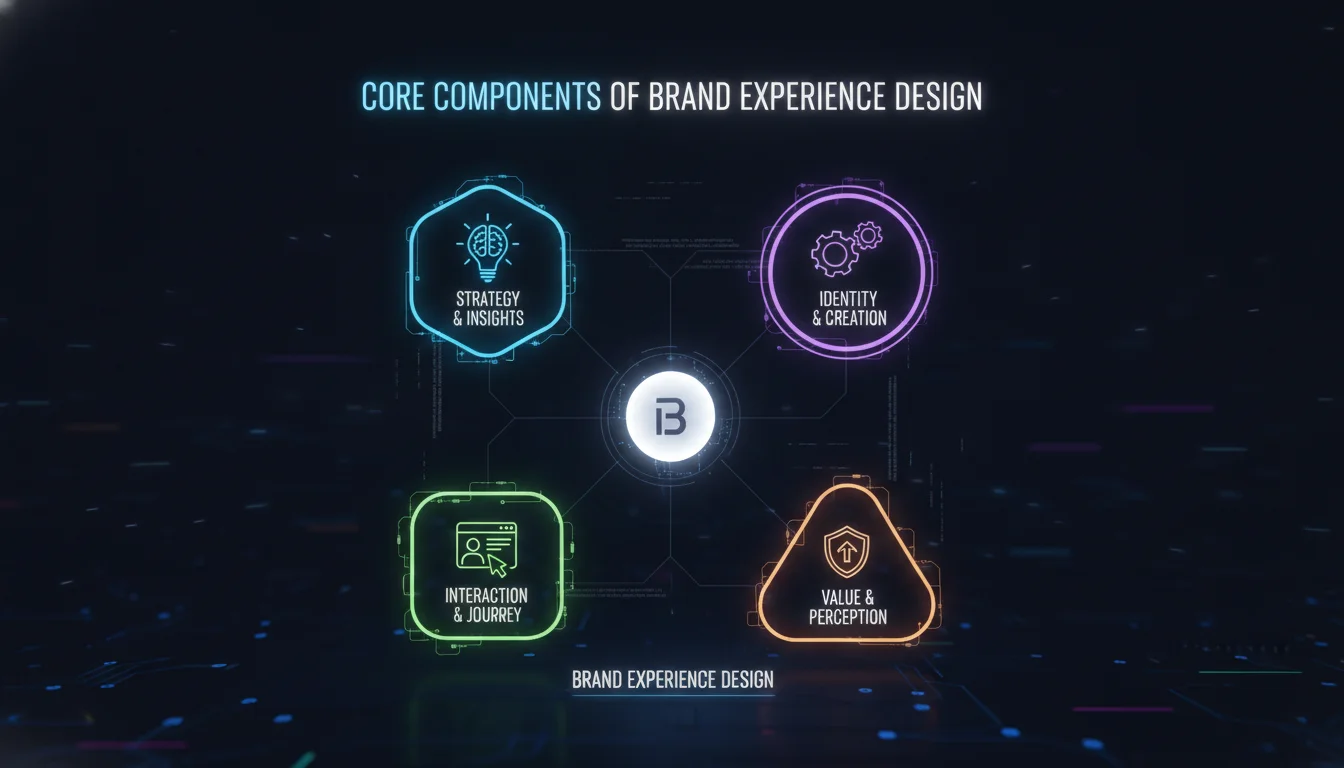
Aesthetics and functionality aren’t opposing forces. In effective work, they move together. Aquent emphasizes that how a brand looks and how it works are both vital: design must reflect brand identity while serving customers’ functional needs. A retail environment that’s visually striking but impossible to navigate fails just as clearly as one that’s efficient but emotionally flat. The strongest experiences align visual expression with operational clarity, so every choice reinforces the message while making the journey feel effortless.
Usability and Interaction
Usability is the quiet engine behind every great experience. It’s enjoyable only if it’s intuitive; confusion erodes trust no matter how beautiful the surroundings. Aquent points out that ease-of-use principles and navigable touchpoints are essential, whether that’s a digital interface, physical wayfinding, or a service script. When a customer can move through a space or complete a task without conscious effort, their attention is freed to absorb the brand’s story and emotional intent.
Emotional and Sensory Storytelling
Great work operates at the level of sensation, not just information. RIOS describes its approach as combining architecture, digital media, interaction design, and storytelling to create interconnected, multi-sensory journeys. People perceive environments as a web of sensations that goes well beyond the visual. In the Superbloom installation at Milan Design Week, RIOS portrayed nature as the main character of a spatial experience, inviting visitors into a vivid, multi-sensory exhibition. That kind of storytelling gives a brand texture and the ability to be felt, not just remembered. If your team is exploring how these ideas translate into a real identity system, our branding and creative services page walks through how we approach it.
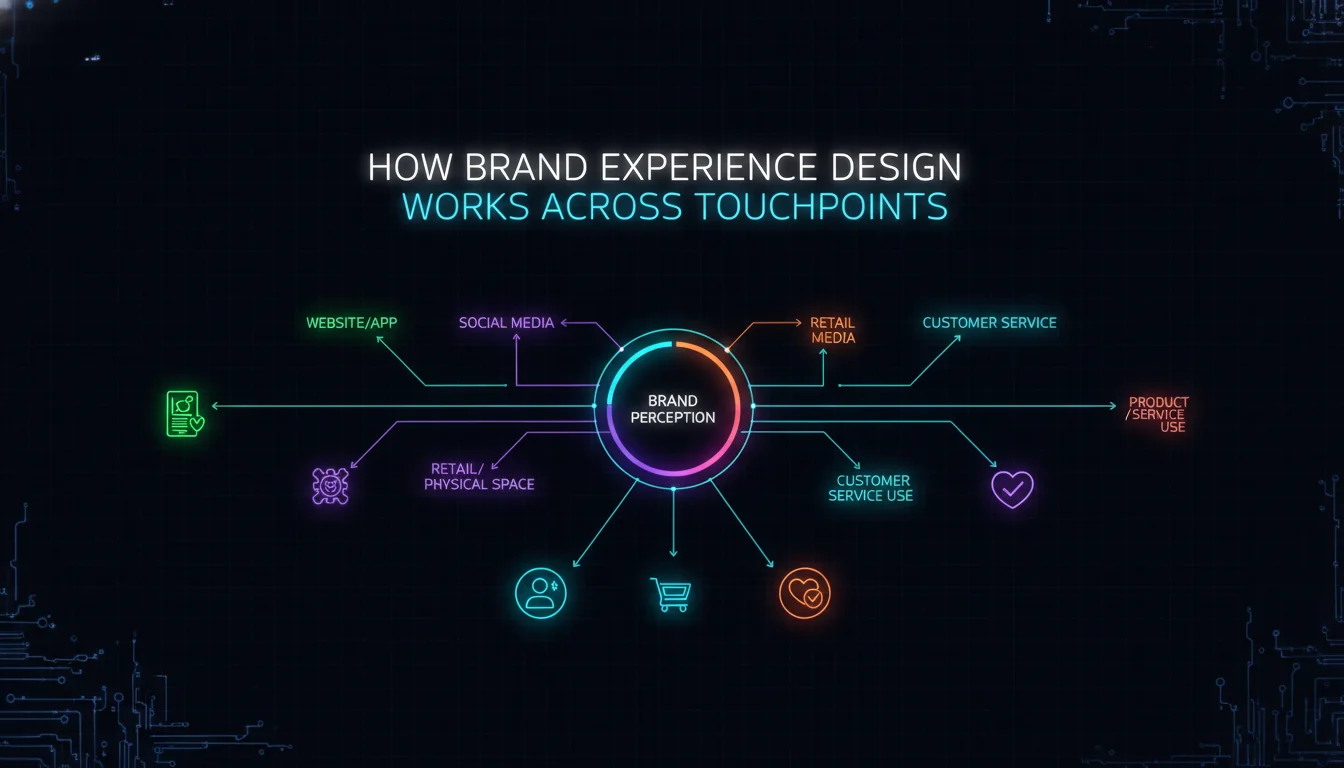
How Brand Experience Design Works Across Touchpoints
Brand-Related Stimuli
According to Manypixels, customers experience a brand through stimuli that fall into clear categories: identity elements like logos, fonts, colors, shapes, and mascots; marketing messages and the channels carrying them; physical environments like stores, pop-ups, and events; and the customer journey itself, including onboarding, personalization, and recognition moments. This discipline orchestrates all of these signals so they reinforce one story instead of sending mixed messages.
Physical Environments and Spatial Design
Physical spaces function as three-dimensional expressions of brand strategy. Exhibitus notes that this work translates brand intent into environments that feel clear, intentional, and memorable, including how a space flows, how information is presented, and how visitors are encouraged to interact. The Fit&Fun Zone at Singapore Changi Airport, designed by RIOS, shows how spatial design can deliver joy and wellness by encouraging real-world interactivity. RIOS also notes that the average user now spends 4 hours and 37 minutes on devices each day, which makes tangible, physically engaging environments even more valuable when they’re built with purpose. Interestingly, people report feeling happier after just 10 minutes of physical activity, which is part of why a layover trampoline zone works harder for a brand than another screen ever could.
Digital and Content Integration
This work isn’t limited to physical spaces. It extends into digital products, content marketing, social platforms, and service interactions. VML’s connected brand approach positions this as a system that spans advertising, social and influencer engagement, experiential entertainment, and content marketing. The goal is consistency: a customer who sees a brand on Instagram, visits a flagship environment, and then opens the brand’s app should encounter the same narrative logic and emotional temperature. When digital and physical touchpoints are designed as one system, a brand feels more trustworthy and more available. This is where a lot of our own social media and digital campaign work connects directly back to the brand strategy conversation.
Step-by-Step Process for Implementing Brand Experience Design
Implementing this work requires a deliberate sequence of decisions, not improvisation. The following five-step process synthesizes guidance from Exhibitus and Aquent into a repeatable framework.
Step 1: Define Audience Intent and Success Metrics
Start by naming what someone needs in the moment and why they showed up. Exhibitus frames this as the foundation: once intent is clear, the definition of success becomes obvious, whether that’s understanding, a conversation, a meeting, or a qualified next step.
Step 2: Build the Brand Story and Messaging Hierarchy
Determine what you want people to believe and remember after they leave. Turn that story into a clear sequence so visitors get the main idea fast, then discover proof and detail as they engage further.
Step 3: Design the Experience Across Senses and Touchpoints
Combine aesthetics, usability, and sensory storytelling to craft an environment or interface that reflects brand identity and serves functional needs at the same time.
Step 4: Prototype and Test With Real Users
Observe how people actually move, click, and respond. Refine friction points and amplify moments of delight before full rollout.
Step 5: Launch, Measure, and Iterate
Use both qualitative feedback and quantitative metrics to assess impact, then adjust the experience continuously. This closes the loop and keeps the brand from relying on static assumptions.
The process rarely runs in a straight line. Teams often revisit earlier steps as new insights emerge. The discipline lies in maintaining alignment between intent, story, and sensory execution throughout the lifecycle.
Comparing Brand Experience Design Approaches and Disciplines
Brand Experience Design vs. Product Design vs. Experiential Marketing
This discipline is often confused with adjacent fields, but the scope differs quite a bit. Product design concentrates on the functionality and usability of a specific product or feature, usually optimized around user tasks. Experiential marketing focuses on short-term campaigns, events, or activations built for immediate engagement. this kind of design encompasses both, and more, by treating every touchpoint as part of one integrated system. SMG‘s perspective reinforces this: experience design shapes the early decision-making moments that determine what products or services to launch, how they’re communicated, and what processes support them. It’s a foundational layer, not a campaign layer.
Comparison Table: Three Lenses on Brand Experience
| Dimension | brand experience | Experiential Marketing | Product Design |
|---|---|---|---|
| Primary focus | Unified brand touchpoints across space, digital, and service | Event-based activations and campaigns | Functional product features and interfaces |
| Time horizon | Long-term brand equity | Short-term engagement spikes | Product lifecycle |
| Key outputs | Environments, journeys, narratives | Pop-ups, stunts, sponsorships | Interfaces, prototypes, feature releases |
| Success metrics | Loyalty, emotional connection, willingness to pay | Attendance, social reach, immediate sales lift | Usability, adoption, retention |
Pros and Cons
Pros
- Builds emotional loyalty that outlasts a single campaign or product cycle.
- Creates consistency across teams, channels, and physical spaces that would otherwise feel disconnected.
- Supports pricing power, since customers who feel connected to a brand tend to accept higher prices for the experience.
- Differentiates a brand in a market where visual identity alone is easy to copy.
Cons
- Requires cross-functional buy-in from strategy, design, digital, and operations teams, which can slow decision-making.
- Emotional impact is harder to quantify than click-through rates or conversion metrics, making budget justification tougher.
- Physical experience investments carry higher upfront costs than a single digital campaign.
- Inconsistent execution across touchpoints can do more damage to trust than having no experience strategy at all.
Measuring the Impact of Brand Experience Design
Qualitative and Quantitative Metrics
Measuring this work requires a blend of qualitative and quantitative signals working together. Quantitatively, teams can track willingness to pay (86% of consumers say they’d pay more for exceptional experiences, per RIOS), along with visitor engagement, time spent, conversion rates, and repeat visitation. Qualitatively, feedback from on-site observations, interviews, and sentiment analysis reveals how people feel and what they remember. The challenge is that emotional connection is intangible. It doesn’t show up directly on a balance sheet, but it predicts the behaviors that do. Campaign performance data indicates that a disciplined measurement framework linking experience metrics to lifetime value and market positioning tends to outperform ad hoc tracking.
Common Challenges and How to Address Them
Aquent identifies two persistent challenges: integrating this work with current strategies and measuring its intangible effects. Integration fails when brand experience gets treated as a separate campaign rather than a governance layer for all touchpoints. The fix is embedding these principles into existing brand guidelines, product roadmaps, and service blueprints. Measuring intangibles is harder because emotional resonance doesn’t follow a simple linear path. Teams can address this by triangulating multiple sources, observational data, attitudinal surveys, and commercial lift, rather than relying on any single metric. Another challenge is maintaining consistency across fragmented teams and channels, which requires a shared brand story and a clear messaging hierarchy.
Brand experience is about more than marketing. It’s about how people feel every time they interact with your brand, from menu items and promotions to digital interfaces and service models, according to SMG.
Is Experience Design the Same as UX?
No, experience design is not the same as UX. UX typically focuses on the usability and interaction of digital products, while experience design covers physical environments, service moments, brand identity stimuli, and emotional narrative across every channel a customer touches.
Embedding Brand Experience Design Into Your Strategy
experience design is no longer a luxury reserved for flagship stores or launch events. As of 2026, it’s the system through which brands earn attention, build trust, and create preference in a crowded marketplace. Creative industry data shows a consistent pattern here: 86% of consumers will pay more for exceptional experiences, engaging destinations attract at least 28% more Gen Z visitors, and companies keep shifting budget toward experiential work. Beyond the numbers, this discipline works because it treats every interaction as a chance to deepen a relationship. For marketers, CMOs, and experience leaders, the mandate is simple: stop designing fragmented touchpoints and start designing the whole journey as one coherent, emotionally resonant brand story. If you’ve read our thoughts on brand storytelling frameworks or social strategy, you already know we think about this the same way we think about a campaign brief: everything ladders up to one feeling.
Ready to stop patching together disconnected touchpoints? Contact Emin Media for a free brand consultation, and let’s build something bold together.
Frequently Asked Questions
What is brand experience design?
Brand experience design is the practice of shaping how people connect with a brand across every touchpoint, from physical spaces to digital interfaces. It blends strategy, storytelling, and sensory design to create cohesive, memorable interactions.
Is experience design the same as UX?
No. Experience design is broader than UX. UX typically focuses on the usability and interaction of digital products, while experience design encompasses physical environments, service moments, brand identity stimuli, and emotional narrative across all channels.
What are the main components of brand experience design?
The core components include aesthetics and functionality, usability and intuitive navigation, and emotional or sensory storytelling. These elements work together to ensure every touchpoint reflects brand identity and serves customer needs.
Why are physical brand experiences still important?
Physical environments allow brands to connect directly with audiences in ways screens cannot fully replicate. According to Exhibitus, the moment someone steps into a space, they begin forming perceptions based on what they see and how the environment makes them feel.
How does brand experience design drive revenue?
It creates emotional connections that increase loyalty and willingness to pay. RIOS found that engaging destinations attract at least 28% more Gen Z visitors, and 86% of consumers say they would pay more for exceptional experiences.
What is the first step in implementing brand experience design?
The first step is defining audience intent and success metrics. Exhibitus emphasizes naming what someone needs in the moment and why they showed up, which makes the definition of success clear before design begins.
Enjoyed this article?
Contact Emin Media for a free brand consultation and let's create something amazing together.
Get in TouchRelated Articles
Digital Marketing for Creatives: A Bold Guide
Digital marketing for creatives builds real visibility and sales. Learn strategies for social media, SEO,…
Branding & Design Agency Tips That Actually Work
Discover branding and design agency tips to choose the right partner, set clear goals, and…
Creative Agency Pitch Deck Tips That Win Clients
Master creative agency pitch deck tips that win clients in 2026. Learn storytelling, design, and…