Brand Documentary Filmmaking: The Complete Guide
Brand documentary filmmaking is the craft of creating nonfiction films that tell real, human-centered stories tied to a brand’s mission, values, or cultural impact. It moves audiences beyond the transaction and into genuine belief.
Key Takeaways
- documentary filmmaking combines authentic storytelling with brand messaging to build trust, not just awareness.
- The best brand documentaries put the story first and let the brand earn its place in the narrative.
- Effective production requires a clear core message, deep pre-production research, and real human subjects.
- Documentary instincts – reading rooms, building trust fast, adapting under pressure – are now commercial assets.
- As of 2026, the Webby Awards recognize branded documentary as its own category, signaling full industry legitimacy.
- Common mistakes include over-branding the narrative, skipping pre-interviews, and underestimating post-production scope.
What is Brand Documentary Filmmaking?
this type of filmmaking is the process of creating nonfiction films that tell compelling stories connected to a brand’s mission, values, or real-world impact. Unlike traditional advertisements, these films prioritize storytelling over direct sales pitches, allowing brands to showcase their purpose and connect with audiences on a level that a 30-second spot simply cannot reach.
Defining Characteristics of Brand Documentaries
- Authenticity: Brand documentaries emphasize real stories and genuine experiences, moving away from scripted narratives.
- Emotional Connection: These films aim to resonate with audiences on a personal level, building trust and loyalty over time.
- Subtle Brand Integration: The brand is present, but it does not dominate the narrative. The story takes center stage.
Why Brands Are Embracing Documentary Filmmaking
Consumers are increasingly skeptical of overt advertising, and brands are responding by turning to documentary filmmaking as a way to build credibility and emotional connection. According to LBB Online’s February 2026 industry report, brands don’t just want things to look real anymore – they want them to feel real. This shift reflects a broader move toward authenticity in marketing, where audiences seek genuine narratives that reflect their own values and lived experiences.
“When documentary instincts guide commercial structure, audiences don’t feel marketed to – they feel invited in. That’s when a community can form that’s aligned with a brand’s values.” – Coral Brown, Director at RadicalMedia
How Brand Documentary Filmmaking Actually Works
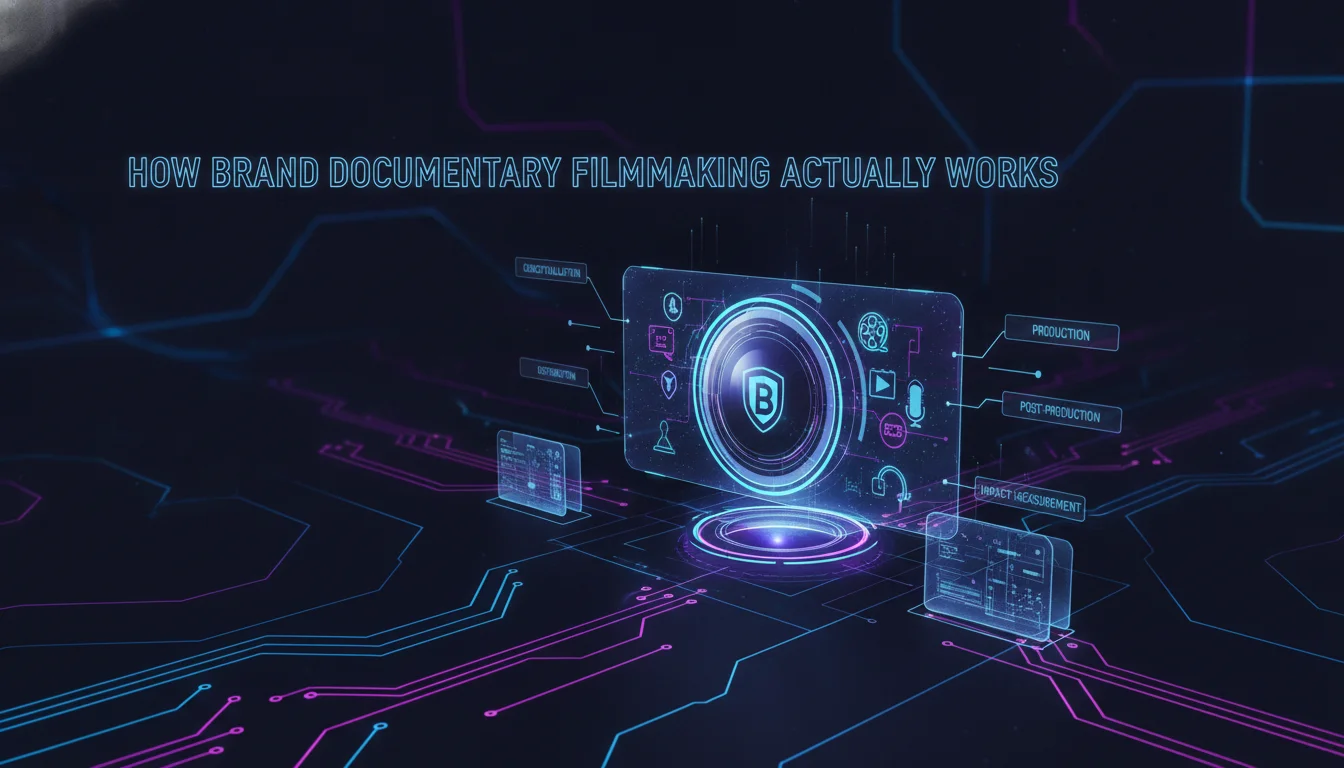
this kind of filmmaking works by borrowing the structural and emotional grammar of traditional documentary cinema and applying it to brand storytelling goals. The result is content that earns attention rather than buying it.
At its core, the process has three interlocking layers: strategic intent, cinematic craft, and distribution planning. Most brands focus only on the middle layer and wonder why the film underperforms.
Strategic intent means the brand and production team agree on what the film is actually for before a single frame is shot. Is it building brand awareness? Shifting perception? Recruiting talent? Driving press coverage? Each goal shapes different creative decisions.
Cinematic craft is where documentary instincts become commercial assets. Directors with genuine documentary backgrounds bring specific skills: reading a room quickly, building trust with subjects in hours rather than days, adapting when a planned scene falls apart, and drawing authentic performances from non-actors. As LBB Online reported in early 2026, these qualities are now actively sought by brands and agencies precisely because they produce the emotional truth that scripted content cannot fake.
Distribution planning is where most brand documentaries leave money on the table. A single feature-length film can anchor an entire campaign through cutdowns, behind-the-scenes pieces, and social-first content. Anthill Films, which has screened documentary work at hundreds of outdoor adventure film festivals, structures every production to generate multiple deliverables across broadcast, digital, and social platforms from a single shoot.
The mechanics also include a psychological dimension on set. Documentary practice is about reading expressions, sensing shifts in energy, and knowing when to lean in or step back. When a director has done the pre-interview work and built genuine rapport with subjects, unpredictability becomes instinct rather than chaos.
“Great documentary filmmaking is built on structure so that spontaneity can breathe. In branded content, that balance becomes essential. The craft lies in preparing deeply enough that real moments can unfold naturally inside that framework.” – Coral Brown, Director at RadicalMedia
The Process of Creating a Brand Documentary
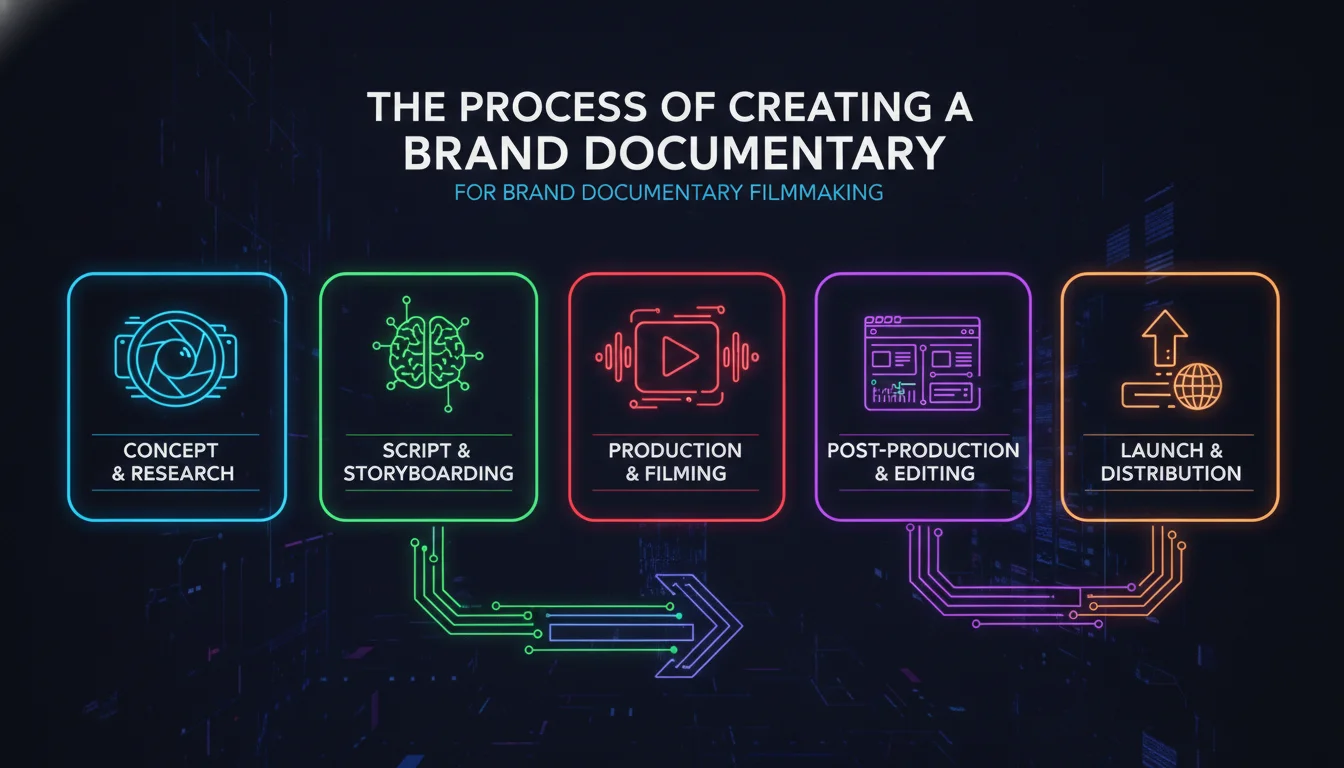
Creating a successful brand documentary involves several key steps, each requiring careful planning and honest creative judgment.
Step 1: Identify the Core Message
The first step in brand documentary is to identify the core message the brand wants to convey. This means understanding the brand’s mission, values, and the story it genuinely has the right to tell. A clear, honest message serves as the foundation for every creative decision that follows. If the message feels manufactured in the briefing room, it will feel manufactured on screen.
Step 2: Research and Development
Once the core message is established, extensive research shapes the narrative. This phase involves pre-interviews with potential subjects, location scouting, and gathering background context to inform the storytelling. Pre-interviews are not optional – they are where directors discover whether a subject can carry a story and where the real emotional material lives. Skipping this step is one of the most expensive mistakes a production can make.
Step 3: Pre-Production Planning
In this phase, filmmakers develop a detailed production plan including story treatments, shot lists, logistical arrangements, and clear agreements with the brand about which narrative elements are fixed and where creative discovery is deliberately built in. The brand message is protected; the discovery happens within it.
Step 4: Production
Production on a brand documentary looks different from a commercial shoot. Crews tend to be smaller and more nimble. Natural light and handheld camerawork are often preferred because they signal authenticity to audiences trained to spot the visual language of advertising. Directors must balance presence with craft: knowing when to observe and when to shape, without losing the emotional truth that makes the film worth watching.
Step 5: Post-Production and Editing
Editing a brand documentary is where the story is truly built. Unlike scripted content, the structure often emerges from the footage rather than from a pre-written script. Editors work with directors to find the emotional arc, identify the moments of genuine connection, and build a narrative that serves both the story and the brand’s strategic goals. Sound design, color grading, and music all contribute to the final emotional register of the film.
Step 6: Distribution and Release Strategy
A brand documentary without a distribution strategy is a film that no one sees. Release planning should include festival submissions where appropriate, digital platform strategy, social cutdowns, press outreach, and brand integration into broader campaign assets. Anthill Films structures this as a dedicated release phase covering festival strategy, broadcast deliverables, and social-first content creation.
Key Elements of Effective Brand Documentaries
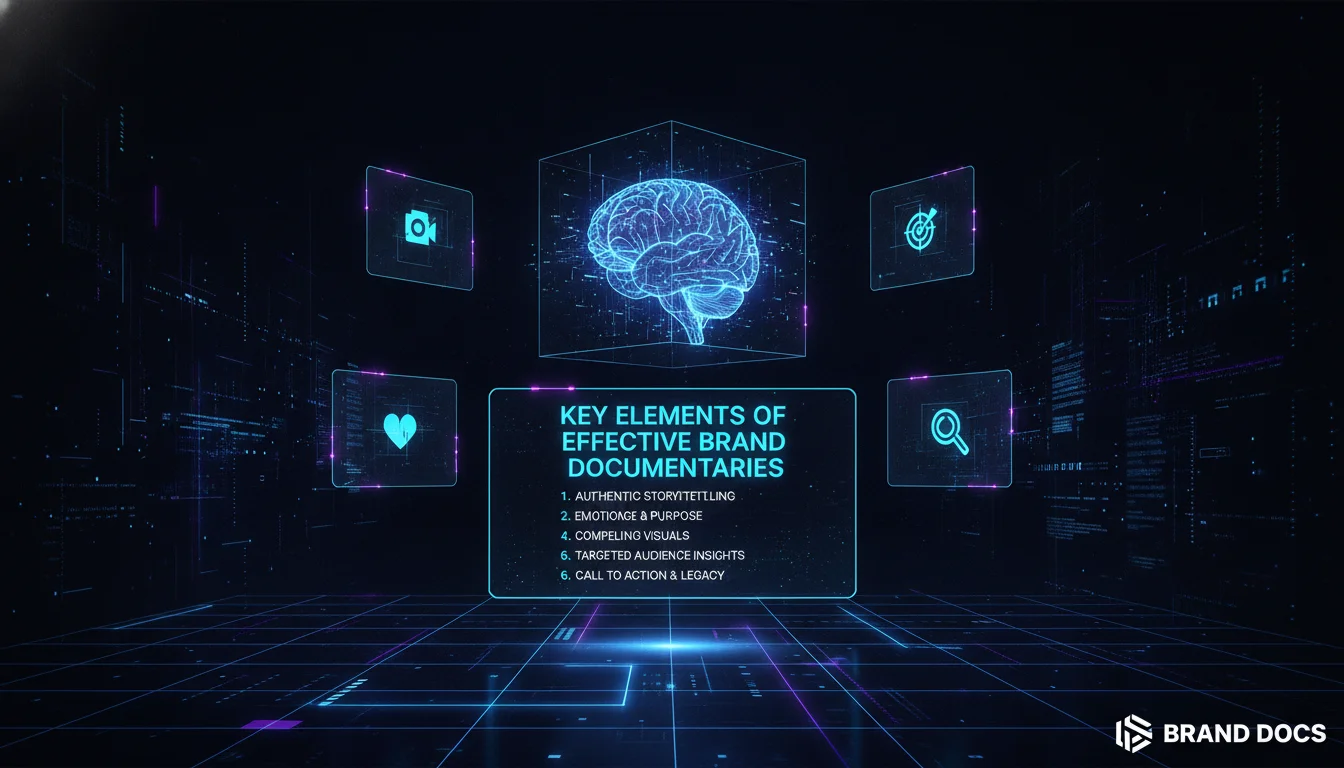
Several elements separate brand documentaries that move audiences from those that simply fill a content calendar.
Storytelling Techniques
Effective brand documentaries use character-driven narratives, emotional arcs, and relatable human experiences. The protagonist is never the brand. The brand earns its presence by being genuinely connected to the human story at the center of the film.
Cinematic Quality
High production values matter, but not in the way most brands assume. The goal is not to look expensive – it is to look intentional. Professional cinematography, considered sound design, and precise editing create a polished film that respects the audience’s time and attention. Untold Agency, a brand film production company founded in 2014, describes this as “broadcaster-level production values” applied to brand storytelling.
Authenticity and Relatability
Real people and real stories are the engine of brand documentary filmmaking. Viewers are sophisticated enough to recognize when a subject has been coached into performing emotion rather than expressing it. The director’s job is to create conditions where genuine moments can happen, then capture them with skill.
How to Apply Brand Documentary Filmmaking: A Practical Framework
Applying brand documentary filmmaking to your brand requires more than hiring a documentary crew. Here is a practical framework based on how production companies and brand teams actually make this work.
1. Audit your brand’s real stories. Before briefing any production company, spend time internally identifying the human stories that already exist inside your brand. These might be founding stories, customer transformation stories, supply chain stories, or community impact stories. The best brand documentaries are discovered, not invented.
2. Define success before you define the film. Agree on measurable outcomes: watch-through rate, press coverage, social shares, brand sentiment shift, or direct campaign attribution. Untold Agency’s production of content for Budweiser Budvar achieved 5.2 million cross-platform video views, an 88 per cent average watch-through rate, and a 12.9 per cent social engagement rate – results that came from aligning creative ambition with clear performance goals from the start.
3. Choose a director with genuine documentary instincts. Review reels for evidence of real human stories, not just polished aesthetics. Ask how the director handles unpredictability on set. Ask about their pre-interview process. The answer will tell you whether they understand documentary craft or are simply mimicking its visual style.
4. Brief the brand’s role, not the brand’s lines. Give the production team a clear brief on what the brand stands for and what it must not say or do in the film. Then step back. The most effective brand documentaries are ones where the brand trusted the story enough to let it breathe.
5. Plan for a content ecosystem, not a single film. Structure the production to generate cutdowns, social content, behind-the-scenes material, and photography alongside the main film. A single documentary shoot can fuel months of content across multiple platforms when planned correctly.
6. Build a distribution strategy before you start shooting. Know where the film will live, who will see it, and how you will drive initial viewership before the camera rolls. Festival submissions, press partnerships, and platform placements all require lead time that most brands underestimate.
Comparing Brand Documentaries to Traditional Advertising
Understanding the differences between brand documentary filmmaking and traditional advertising is essential for choosing the right tool for the right marketing goal.
| Aspect | Brand Documentaries | Traditional Advertising |
|---|---|---|
| Focus | Storytelling and emotional connection | Direct sales and product promotion |
| Audience Engagement | Long-term engagement through narratives | Short-term engagement through promotions |
| Authenticity | Real stories and genuine experiences | Scripted and controlled messaging |
| Brand Integration | Subtle and woven into the narrative | Overt and focused on product visibility |
| Production Timeline | Weeks to months of development and shooting | Days to weeks from brief to delivery |
| Content Lifespan | Long-form content with extended shelf life | Campaign-specific with defined end dates |
| Primary Goal | Trust, loyalty, and brand affinity | Conversion, awareness, and recall |
| Audience Relationship | Viewer feels invited into a story | Viewer is targeted with a message |
Successful Examples of Brand Documentaries
Several brands have used brand documentary filmmaking to build genuine audience relationships that outlast any single campaign.
Patagonia
Patagonia is the most cited example in the industry for good reason. Their environmental documentaries highlight conservation efforts that align directly with the brand’s values and mission. These films do not sell jackets. They sell a worldview, and the jackets follow. According to New Focus Films, Patagonia’s branded documentary work uncovers the connection between the clothing industry and fossil fuel dependency – content that sparks real conversation rather than just brand recall.
Red Bull
Red Bull has built an entire media operation around documentary filmmaking, producing films that showcase extreme sports and adventure culture. These films connect with the brand’s target audience not by talking about energy drinks but by living the values those drinks are supposed to represent. The brand is present in the visual language and the spirit of the stories, not in the script.
Budweiser Budvar via Untold Agency
Untold Agency’s productions for Budweiser Budvar, including the “Republic of Beer” and “Czech Stories” series, demonstrate what broadcaster-level storytelling can achieve for a heritage brand. The campaign reached 5.2 million cross-platform video views with an 88 per cent average watch-through rate and a 12.9 per cent social engagement rate – figures drawn directly from Untold Agency’s published production data.
Gillette’s “Second Shave”
Director Coral Brown, working at RadicalMedia, followed a Thai father and son before the son’s entry into monkhood. Pre-interview conversations revealed that overt physical intimacy was not culturally typical between Thai fathers and sons, and that insight reshaped the emotional language of the entire film. The result resonated nationally and sparked real conversations between fathers and sons – a textbook example of documentary instinct producing brand impact that scripted content could not have achieved.
2026 Webby Award Winners
The 2026 Webby Awards recognized brand documentary filmmaking as a distinct category under Video and Film. Winners included “Bernard’s Wear” and the People’s Voice winner “Love, Chinatown” by South Side Tours and Breakwater Studios. Nominees included work from Phillips, Fujifilm North America, and Amazon Music – a roster that signals how seriously the industry now takes this format as a creative and commercial discipline.
Common Mistakes in Brand Documentary Filmmaking
Brand documentary filmmaking fails in predictable ways. Knowing the patterns saves time, money, and creative credibility.
Over-Branding the Narrative
The most common mistake is treating the documentary as a long advertisement. When brand messaging dominates the story, audiences disengage. The brand’s role is to enable the story, not to narrate it. If your brand’s name appears more than a handful of times in the script, the balance is probably wrong.
Skipping Pre-Interviews
Pre-interviews are where directors discover whether a subject can carry a story and where the genuine emotional material lives. Skipping them to save time or budget is a false economy. Director Eliot Rausch, working at Stink Films, demonstrated the value of deep subject knowledge when legal issues forced him to recreate real stories with actors in seven days – a feat only possible because he understood the emotional truth of each story from months of prior research.
Underestimating Post-Production
Documentary editing is not linear. The story often reveals itself in the edit suite, not in the script. Brands that allocate most of their budget to production and leave minimal resources for post-production consistently end up with footage that could have been extraordinary but lands as merely competent.
No Distribution Plan
A brand documentary without a release strategy is a film that earns nothing. Festival submissions require lead time. Press partnerships need to be built before the film launches. Platform placements require technical deliverables that must be planned during production. Distribution is not an afterthought – it is half the job.
Choosing Aesthetics Over Instinct
Brands sometimes hire directors who can mimic the visual style of documentary filmmaking without possessing the underlying craft. Handheld cameras and natural light do not make a documentary. The ability to build trust with a subject in an afternoon, read a room under pressure, and find the story that was not in the brief – that is what makes a documentary director valuable in a branded context.
Treating It as a One-Off Asset
A brand documentary shoot generates far more usable material than a single film. Brands that plan for only one deliverable leave significant value behind. Every production should be structured to generate a content ecosystem: the main film, cutdowns for social, behind-the-scenes content, photography, and platform-specific edits.
A Worked Example: How a Brand Documentary Campaign Comes Together
Consider a mid-sized outdoor apparel brand that wants to build credibility with a conservation-minded audience. Here is how a brand documentary filmmaking campaign might realistically unfold.
Discovery phase: The brand and production team spend two weeks in pre-production conversations, identifying three potential story angles: a river restoration project the brand has quietly funded for three years, a community of Indigenous guides who use the brand’s gear in their work, and a solo athlete whose recovery from injury was shaped by time in the wilderness. Pre-interviews reveal that the Indigenous guides story has the strongest emotional arc and the most visual potential.
Production: A nimble crew of four spends eight days on location. The director conducts extended pre-interviews before any camera rolls. Natural light is used throughout. The brand’s products appear in the footage because the subjects actually use them – not because they were placed there. The brand’s name is mentioned twice in the entire film.
Post-production: The editor works with roughly 40 hours of footage to build a 22-minute documentary and a 4-minute social cut. The process takes six weeks. The emotional arc that emerges in the edit is different from what was planned in pre-production – which is exactly how good documentary editing works.
Release: The film premieres at two outdoor adventure film festivals before going online. Press outreach generates coverage in outdoor and sustainability publications. The social cut runs as paid content on Instagram and YouTube. The brand reports a measurable increase in brand sentiment among its target audience in the months following release.
This is not a hypothetical fantasy. It is the model that production companies like Anthill Films and Untold Agency describe as standard practice for brands willing to commit to the format properly.
Challenges in Brand Documentary Filmmaking
Brand documentary filmmaking offers real creative and commercial rewards, but it also presents specific challenges that brands and filmmakers must plan for honestly.
Balancing Brand Messaging and Storytelling
Finding the right balance between brand messaging and storytelling is the central creative tension of every brand documentary project. Filmmakers must ensure the brand’s message is woven into the narrative without overshadowing the story. The brand message is protected; the discovery happens within it.
Budget Constraints
Documentary filmmaking is resource-intensive, and budget constraints can limit the scope of a project. Filmmakers must find creative solutions to maximize resources while maintaining production quality. That said, documentary production often achieves more emotional impact per dollar than scripted commercial production, because the raw material – real human experience – costs nothing to manufacture.
Audience Expectations
As audiences become more sophisticated, expectations for quality and authenticity in brand documentaries continue to rise. Viewers who consume traditional documentary content on streaming platforms bring those standards to branded work. Filmmakers must meet those expectations or risk the film being dismissed as marketing dressed up as storytelling.
Pros and Cons of Brand Documentary Filmmaking
Brand documentary filmmaking is not the right tool for every brand or every campaign. Here is an honest assessment of where it excels and where it demands careful consideration.
Pros
- Builds genuine trust: Authentic storytelling creates credibility that traditional advertising cannot manufacture.
- Long content lifespan: A well-made brand documentary remains relevant and shareable long after a campaign ends.
- Content ecosystem: A single shoot generates multiple assets across formats and platforms.
- Emotional depth: Documentary format allows for emotional complexity that short-form content cannot sustain.
- Brand differentiation: Few brands invest in this format seriously, which means those that do stand apart.
- Cultural relevance: Films that address real social issues or human experiences connect brands to conversations that matter to their audiences.
Cons
- Time-intensive: From pre-production to release, a brand documentary takes significantly longer than a commercial campaign.
- Harder to measure directly: Brand affinity and trust are real outcomes but harder to attribute to a single film than click-through rates.
- Requires creative trust: Brands that need to control every message will struggle with the open-ended nature of documentary production.
- Higher production complexity: Real people, real locations, and real stories introduce unpredictability that scripted production avoids.
- Distribution requires investment: Getting a brand documentary seen requires a real release strategy, not just uploading it to YouTube.
Future Trends in Brand Documentary Filmmaking
As of 2026, brand documentary filmmaking is moving from a niche creative format into a recognized discipline with its own awards categories, production infrastructure, and professional community.
Increased Demand for Authenticity
Consumer skepticism toward traditional advertising continues to grow, and brands are responding by investing more seriously in documentary formats. The question is no longer whether documentary craft belongs in branded content – it is how that instinct can be applied most effectively. Directors with genuine documentary backgrounds are increasingly sought after by agencies and brands for exactly this reason.
Integration of Technology
Advancements in camera technology, aerial cinematography, and immersive formats are expanding what brand documentary filmmaking can achieve visually. Virtual reality and interactive storytelling are beginning to appear in branded documentary contexts, allowing audiences to experience stories rather than simply watch them. These tools are most powerful when they serve the story rather than replace it.
Focus on Social Issues
Brands are increasingly using documentaries to address social issues and advocate for change. This trend reflects growing awareness of corporate social responsibility and the desire to connect with audiences on topics that matter beyond the product category. The most effective examples – like Patagonia’s environmental work – succeed because the brand’s connection to the issue is genuine, not opportunistic.
The Rise of Tentpole Storytelling
Production companies like Anthill Films describe brand documentary work as “tentpole storytelling” – a single film that anchors an entire campaign through cutdowns, behind-the-scenes pieces, and social-first content. This approach is becoming the standard model for brands that want to maximize the return on a significant creative investment. A single well-made documentary can fuel a content strategy for six months or more.
Industry Recognition and Legitimacy
The 2026 Webby Awards’ dedicated “Documentary (Branded)” category signals that the industry has moved past debating whether brand documentary filmmaking is a legitimate art form. It is. The conversation now is about craft standards, distribution strategy, and how to measure the real impact of films that build brand relationships rather than drive immediate conversion.
Frequently Asked Questions
What is brand documentary filmmaking?
Brand documentary filmmaking is the creation of nonfiction films that tell compelling stories connected to a brand’s mission, values, or real-world impact. These films prioritize authentic storytelling over direct advertising, allowing the brand to build trust and emotional connection with audiences over time.
How does brand documentary filmmaking differ from traditional advertising?
Brand documentaries prioritize storytelling and emotional connection, while traditional advertising focuses on direct sales and product promotion through scripted messaging. The key difference is that a brand documentary earns the audience’s attention through a story worth watching, rather than buying attention through media placement.
What are the benefits of brand documentary filmmaking?
The primary benefits include building genuine trust and loyalty, creating long-form content with an extended shelf life, generating a content ecosystem from a single shoot, and connecting the brand to human stories that resonate on a personal level. Brands that invest in this format consistently report stronger brand affinity among their target audiences.
What challenges do filmmakers face in brand documentary filmmaking?
Key challenges include balancing brand messaging with authentic storytelling, managing budget constraints in a resource-intensive format, meeting rising audience expectations for quality, and building a distribution strategy that gets the film seen. The creative tension between brand control and documentary openness is the central challenge every production must resolve.
How much does a brand documentary cost to produce?
Production costs vary widely depending on scope, location, crew size, and post-production complexity. A focused brand documentary with a small crew and single location can be produced for a fraction of what a large commercial campaign costs, while feature-length productions with international locations and festival distribution strategies require significantly larger budgets. The best approach is to define your distribution goals first, then work backward to determine the production investment that makes sense.
What trends are shaping brand documentary filmmaking in 2026?
The major trends this year include growing demand for directors with genuine documentary instincts, the rise of tentpole storytelling strategies that generate content ecosystems from a single film, increased focus on social issues and corporate responsibility narratives, and the formal recognition of branded documentary as a distinct creative category by industry bodies like the Webby Awards.
Can you share examples of successful brand documentaries?
Strong examples include Patagonia’s environmental films, Red Bull’s extreme sports documentary work, Gillette’s “Second Shave” directed by Coral Brown at RadicalMedia, and Untold Agency’s “Republic of Beer” and “Czech Stories” series for Budweiser Budvar, which achieved 5.2 million cross-platform views and an 88 per cent average watch-through rate. The 2026 Webby Award winners in the Documentary (Branded) category – including “Bernard’s Wear” and “Love, Chinatown” – offer current benchmarks for the format.
Ready to Tell a Story Worth Watching?
Brand documentary filmmaking is not a content trend. It is a long-term investment in the relationship between your brand and the people who matter most to it. If you have a story worth telling – and most brands do, buried somewhere in their history, their people, or their impact – the question is whether you are willing to tell it honestly.
At Emin Media, we work with brands that are ready to move beyond campaigns and build something lasting. Contact Emin Media for a free brand consultation and let’s find the story your audience has been waiting to see.
Enjoyed this article?
Contact Emin Media for a free brand consultation and let's create something amazing together.
Get in TouchRelated Articles
Digital Storytelling for Brands: The Complete Guide
Digital storytelling for brands builds real audience connections through narrative. Learn proven techniques, formats, and…
Design Thinking for Marketing: A 2026 Guide
Design thinking for marketing builds campaigns around real user needs. Learn the 5 phases, common…
Creative Direction for Video Shoots: A Complete Guide
Master creative direction for video shoots with proven steps, tools, and strategies that build brand…