Short Form Video Marketing Strategy: The 2026 Playbook

A short form video marketing strategy is a structured plan for creating, distributing, and measuring sub-60-second videos to hit specific business goals across TikTok, Instagram Reels, and YouTube Shorts. It turns scattered posting into a repeatable growth engine.
Key Takeaways
- A real marketing strategy ties every clip to a business goal, not just a trend or a view count.
- Short-form video delivers strong ROI, and according to a HubSpot survey, it outperforms every other marketing format brands currently use.
- Winning requires platform-specific optimization, repurposing existing long-form content, and trend-aware storytelling that still feels like your brand.
- Track completion rate, watch time, and conversion events, not just likes, to keep refining your this type of strategy over time.
- Start on the platform where you already have traction. Master one channel before spreading thin across five.
What Is a Short Form Video Marketing Strategy?

A this kind of marketing strategy is a documented plan for using videos under 60 seconds to capture attention, build brand affinity, and drive specific actions on social platforms. Unlike posting whenever inspiration strikes, a real strategy ties video creation to business outcomes, whether that’s lead generation, product education, or community growth, and adapts content to each platform’s algorithm and audience behavior. According to the Digital Marketing Institute, short-form video typically runs 5 to 90 seconds, a window built for the instant-gratification mindset of mobile-first audiences.
The Rise of Short-Form Video Platforms
TikTok, with nearly 2 billion monthly users according to the Digital Marketing Institute, along with Instagram Reels and YouTube Shorts, has reshaped how people consume content online. These platforms now favor short, vertical video in their algorithms because it maximizes watch time and keeps people scrolling inside the app. As the Forbes Agency Council puts it, these platforms enable “creative storytelling, showcasing products or services, and building brand awareness within a few seconds.” Likes, shares, and comments give brands instant feedback that a billboard or a print ad never could.
Why Short-Form Video Demands a Real Strategy
Without a deliberate the form video marketing strategy, brands burn budget on content that never breaks through the noise. Viewers judge a video’s worth almost instantly, and every clip needs a job to do: a product teaser, a quick how-to, or a trend remix that makes the brand feel human. Strategy is what decides posting frequency, platform priority, and how you’ll measure success, turning creative output into something you can actually scale.
“Short-form videos cater to shorter attention spans by delivering content in bite-sized pieces, making it easier for users to consume, enjoy and share,” notes the Forbes Agency Council in its analysis of digital-age video marketing.
The Business Case for Short-Form Video
Short-form video delivers strong returns because it matches how people actually consume content now: fast, visual, and easy to act on. A HubSpot survey found that short-form video produces the highest return on investment of any marketing strategy brands currently use. That’s not a small claim. It’s coming from one of the most-cited research arms in the industry.
Engagement and ROI Signals
The supporting evidence keeps stacking up. Businesses using video content grow revenue roughly 49% faster than those relying only on non-video strategies, according to data cited by MKTGessentials. Engagement tells a similar story: short-form videos generate roughly 2.5 times more engagement than longer formats, a figure reported by EnterprisesLLC. That’s a real advantage in the fight for attention, not a rounding error.
Short-Form Video vs. Long-Form Content
Long-form content, the 10-plus-minute deep dives and tutorials, still wins when someone’s actively seeking detailed information. Short-form interrupts passive scrolling and delivers value fast. A smart strategy uses both, repurposing long-form pillars into a stack of short clips (more on that below). This hybrid model respects how people actually spend their time on their phones while still maximizing reach across every channel you own.
Core Components of a Short Form Video Marketing Strategy
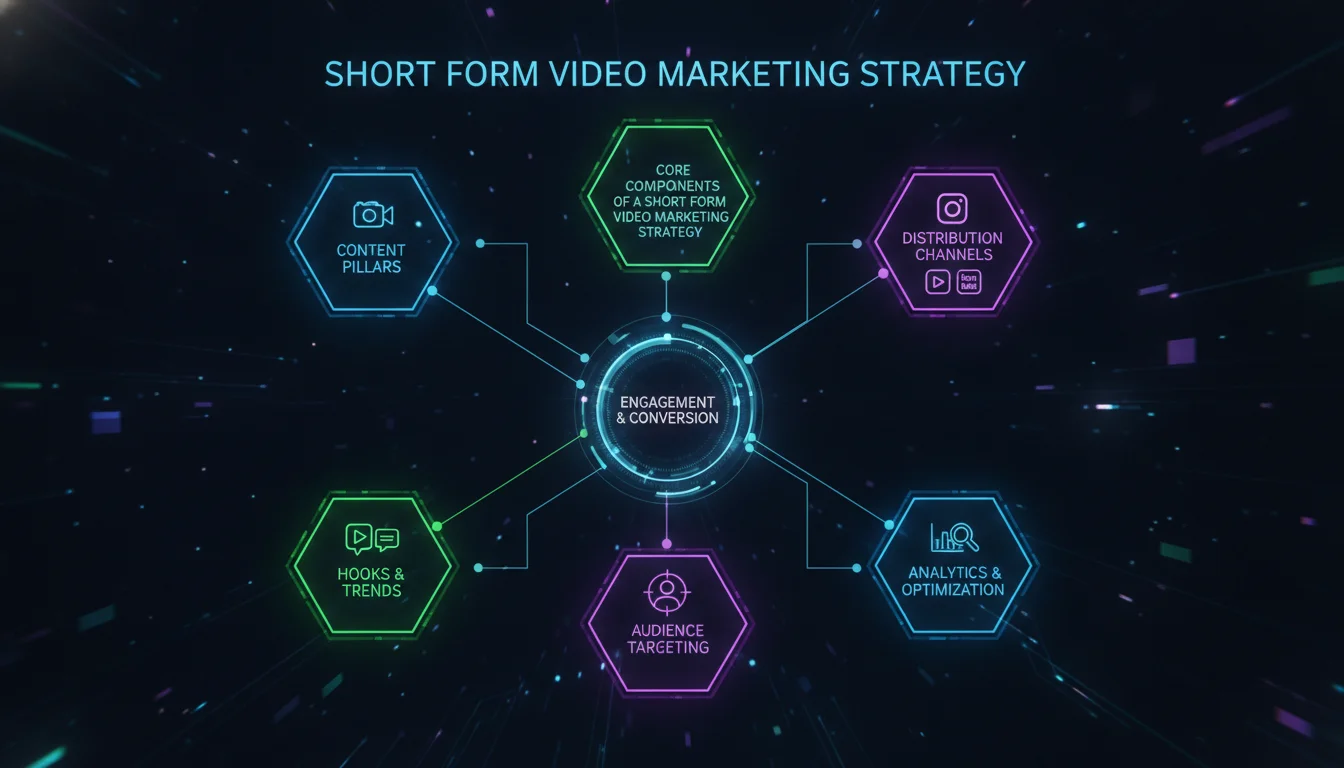
Building an effective short form comes down to three things: knowing your audience, picking the right platforms, and defining content pillars. Skip any of these and even beautifully shot videos will underperform.
Define Your Target Audience and Goals
Start by writing down exactly who you’re trying to reach and what you want them to do next. A B2B SaaS brand chasing demo requests needs completely different videos than a DTC fashion label driving Instagram Shop sales. Pull from existing analytics, customer interviews, and social listening to build real audience personas, not guesses. Then attach specific, measurable goals to each persona, like “grow website traffic from TikTok by a defined percentage this quarter” or “generate a set number of Reel-based leads monthly.” This alignment between audience and goal is the foundation of a marketing strategy that drives revenue, not just views.
Choose the Right Platforms for Your Brand
Not every platform fits every brand voice. Here’s how the three biggest short-form environments stack up:
| Feature | TikTok | Instagram Reels | YouTube Shorts |
|---|---|---|---|
| Max Length | 10 minutes (but 15-60s recommended) | 90 seconds | 60 seconds |
| Primary Audience | Gen Z, Millennials; trend-driven discovery | 25-44; visually curated, lifestyle-focused | Broad; intent-based, often search-driven |
| Best Content Types | Challenges, raw tutorials, humor, storytelling | Polished product showcases, quick tips, behind-the-scenes | How-tos, expert snippets, listicles, educational shorts |
| Monetization & Shopping | TikTok Shop, live shopping, creator marketplace | Instagram Shopping, brand partnerships, Reels bonuses | YouTube Shopping, ad revenue sharing |
| Algorithm Priority | Completion rate, rewatches, shares, trending sounds | Saves, shares, comment engagement, follower interaction | Watch time, click-through rate, search relevance |
Start with whichever platform already has an engaged audience, then expand once you’ve mastered the format. As golinden puts it, “we suggest starting with the platform where your brand already has a strong presence.” Don’t chase every shiny new app. Dominate one lane first.
Content Pillars and Storytelling Frameworks
Consistency comes from content pillars: three to five thematic buckets that reflect your brand’s value proposition. Think “Expert Insights in 60 Seconds,” “Customer Success Spotlights,” or “Trend Remixes with a Twist.” Every video should fit one pillar and follow a mini storytelling arc: hook, tension, resolution, call to action. Even a 15-second clip can land a full emotional beat if the structure is tight. The Forbes Agency Council highlights the GaryVee Content Model here, which uses a “reverse pyramid” to turn one long-form pillar into dozens of short, platform-optimized stories, a tactic we’ll break down in detail below.
How to Build Your Short-Form Video Production Process
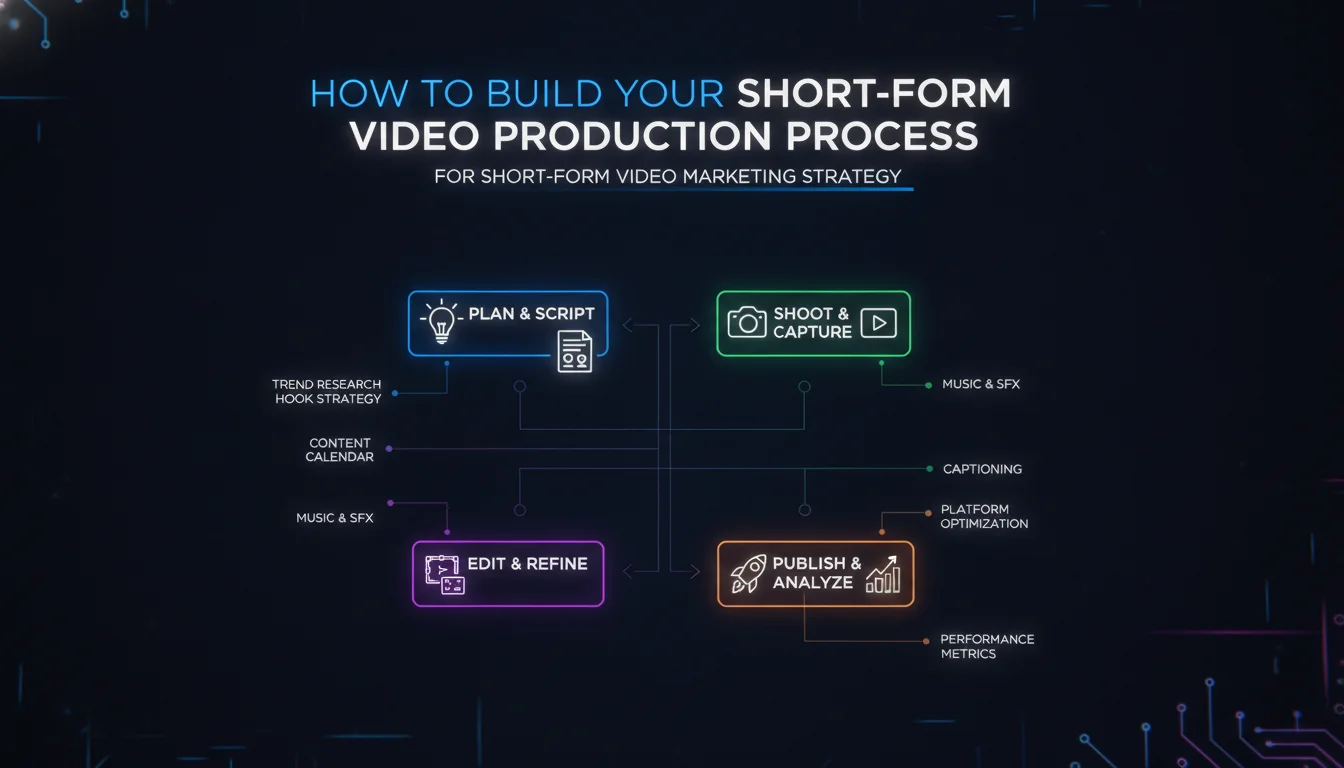
Turning strategy into finished videos requires a repeatable production rhythm. Here’s the process that keeps quality high without burning out your team.
Step 1: Research Trends Before You Film
Set aside time weekly to scan platform-native trends, industry news, and what competitors are posting. TikTok’s Creative Center, Instagram’s Professional Dashboard, and YouTube’s Trending tab all surface sounds, hashtags, and formats gaining traction right now. Don’t just copy what’s trending, remix it to fit your brand voice. A B2B software company can turn a popular dance challenge into a screen-capture product tip set to the same audio. Mine your customer FAQs and sales call transcripts too. Real questions make for searchable, high-value Shorts and Reels.
Step 2: Script and Storyboard Before Filming
Short videos still benefit from a loose script that keeps you focused. Note the hook (first two seconds), the key takeaway, and the call to action before you hit record. Use the “one video, one intent” rule: each clip should do exactly one thing, educate, entertain, or push a specific action. Even stick-figure storyboarding helps ensure visual variety and dynamic cuts. Keep faces centered and key visuals in the top two-thirds of the frame, where eyes naturally land on a phone screen.
Step 3: Produce and Edit With What You Have
You don’t need a studio to make this work. Natural light, a stable phone tripod, and a clip-on mic will improve quality more than almost any other investment. In-app editing tools like CapCut for TikTok, the native Instagram Reels editor, and YouTube Create let you add captions, effects, and trending sounds without extra software. Captions aren’t optional anymore. They boost accessibility and let people watch silently on transit or in the office. Cut dead air, trim long intros, and close with a clear CTA: “save this for later,” “follow for more,” or “link in bio.”
Optimizing Your Short Form Video Marketing Strategy by Platform
Optimizing a this type of strategy by platform means matching content style, length, and posting habits to each app’s specific algorithmic preferences. Treating TikTok, Reels, and Shorts identically is the fastest way to get buried by all three.
TikTok Strategy Essentials
TikTok’s For You Page rewards completion rate, rewatches, and shares above almost everything else. Hook viewers in the first one to two seconds with an on-screen question or an unexpected visual. Lean into native features like Duets, Stitches, and Green Screen to join existing conversations rather than starting from zero. Jump on trending sounds early, ideally within the first day or two of a trend emerging, to catch the algorithmic boost while it’s fresh. TikTok’s own “creative bravery” philosophy holds that brands blending vulnerability with curiosity build deeper community connections. Skip the over-polished ad look. Slightly raw, authentic content usually wins here.
Instagram Reels and Facebook Strategies
Reels reward content that earns saves and shares, so post directly in-app instead of cross-posting watermarked TikToks, which Instagram actively deprioritizes. The Collabs feature lets you co-author Reels with partners, instantly tapping both audiences at once. On Facebook, short-form video still performs well in groups and the mobile feed. Across both Meta platforms, keep videos vertical (9:16) and under 90 seconds, and use three to five relevant hashtags with a keyword-rich caption, since Instagram’s search now indexes captions.
YouTube Shorts and Emerging Platforms
YouTube Shorts sits at the intersection of short-form engagement and long-term search discovery. Because Shorts surface in YouTube search results and Google’s video carousels, keyword-optimized titles and descriptions matter as much as the video itself. Use the #Shorts hashtag and design a compelling thumbnail, since Shorts still show thumbnails in search even when they auto-play. Keep an eye on Threads and Lemon8 as possible expansion channels, but as golinden cautions, “at this time, it’s not yet worth your time or your marketing budget to invest in these platforms” until they prove they can stick around.
Repurposing Long-Form Content Into Short Clips
Repurposing long-form content into short clips means extracting multiple platform-ready videos from one larger piece, like a webinar or podcast, instead of creating from scratch every time. It’s the efficiency engine behind most mature this kind of marketing strategy programs and it maximizes the return on content you’ve already produced.
The GaryVee Content Model Explained
Entrepreneur Gary Vaynerchuk popularized the pillar content model, detailed by the Forbes Agency Council. You create one substantial piece, a keynote, a podcast episode, a long-form video, then systematically extract dozens of micro-content pieces tailored to each platform. A 30-minute webinar might yield several quote graphics, a handful of tip-focused Reels, a couple of TikTok challenge responses, and more. The “reverse pyramid” keeps the core message radiating outward while platform-specific context pulls viewers back to the original pillar for deeper engagement.
Tools and Workflows for Efficient Repurposing
AI-powered tools have cut repurposing time significantly, according to EnterprisesLLC. Platforms like Opus Clip, Descript, and Munch automatically identify the most engaging moments in long videos and reframe them vertically with captions already applied. Build a simple workflow: record your pillar content, transcribe and highlight the best soundbites, batch-edit a week’s worth of short clips in one sitting, then schedule them across platforms with platform-specific copy. One production day can fuel a month of content.
Measuring the Success of Your Short Form Video Marketing Strategy
Measuring the success of your short form video marketing strategy means tracking metrics tied to real business outcomes, not just likes. Vanity numbers feel good but tell you almost nothing about whether the strategy is actually working.
Key Performance Indicators to Track
Monitor these core metrics for individual videos and in aggregate over time:
- Completion Rate: The percentage of viewers who watch to the end. A high rate signals compelling content; on TikTok, aim well above the baseline for your niche.
- Average Watch Time: How long viewers actually stay. Compare against total video length to spot exactly where people drop off.
- Engagement Rate: Likes plus comments plus shares plus saves, divided by impressions. Shares and saves carry the most algorithmic weight on most platforms.
- Click-Through Rate (CTR): Taps on your link in bio or swipe-up link. Critical for any campaign meant to drive traffic.
- Conversion Events: Purchases, sign-ups, or downloads attributed to video views. UTM parameters and platform pixel tracking make this traceable.
Using Analytics to Refine Your Approach
Platform-native analytics tools, TikTok Analytics, Instagram Insights, YouTube Studio, all give you granular data worth reviewing weekly. Which hooks generate the strongest early retention? Which topics drive saves? When are your followers actually online and engaged? A/B test your intro style, video length, and CTA placement one variable at a time. If a video underperforms, check for technical issues first (bad audio, missing captions) before assuming the idea itself failed. Your short form video marketing strategy should evolve constantly based on what the data tells you. Agility beats perfection here.
Overcoming Common Short-Form Video Marketing Challenges
Overcoming short-form video marketing challenges starts with expecting them, budgeting for them, and building systems that make your strategy resilient instead of fragile.
Content Fatigue and Authenticity
With an endless stream of short videos hitting every feed, audiences develop a kind of scroll-blindness fast. Combat it by prioritizing authenticity over production perfection. Roughly 40% of marketers now rank authenticity as the top factor for retention, according to EnterprisesLLC. Show real employees, actual customer journeys, unscripted moments. Rotate your content pillars seasonally and fold in user-generated content to diversify the perspective. Reposting customer videos taps social proof while easing your own production load.
Industry data consistently shows that raw, unscripted moments now outperform polished brand ads on short-form platforms, a shift that rewards brands willing to show up as human first, marketer second.
Keeping Up With Platform Algorithms
Algorithms shift constantly and without warning. TikTok might start favoring longer watch times next quarter, while Instagram could suddenly reward a specific aspect ratio out of nowhere. Designate someone on your team to track platform announcements, test new features early, like Instagram’s recently expanded 90-second Reels format, and join beta programs when they’re offered. Build an owned channel too, an email list or a community space, so you’re never fully at the mercy of algorithmic mood swings.
Resource Constraints and Budgeting
Most teams don’t have a dedicated videographer, and that’s fine. Start lean: a smartphone, a ring light, and free editing apps can produce genuinely good content. Batch filming, shooting ten videos in one session, maximizes your time investment. If budget allows, bring on a part-time content creator or an AI-assisted editing subscription. The real key is starting imperfectly and consistently rather than waiting for perfect conditions that never arrive. An average video posted regularly beats a flawless one posted rarely, every time.
Legal and Licensing Considerations for Short-Form Video
Legal and licensing considerations for short-form video mean understanding music rights, copyright, and platform terms before you post, not after a takedown notice arrives. This is one of the most overlooked pieces of a short form video marketing strategy, and it can undo months of momentum in a single flagged post.
Most platforms offer built-in sound libraries specifically because using unlicensed commercial music can trigger a copyright strike or mute your audio entirely. Stick to platform-provided audio, licensed stock music, or original sound whenever possible, especially for paid or boosted content. If you’re working with influencers or partners, put usage rights in writing: who owns the final footage, how long you can run it as an ad, and whether it can be repurposed across other channels. A quick legal review before a campaign launches costs far less than a dispute after it goes live.
Pros and Cons
Pros
- Lower production cost per video compared to traditional commercial or long-form content
- Faster feedback loop through comments, shares, and saves lets you course-correct quickly
- Algorithms actively favor the format right now, giving organic reach a real boost
- Highly repurposable, one pillar asset can fuel weeks of platform-specific content
Cons
- Constant algorithm shifts mean today’s winning tactic may underperform in a few months
- Content fatigue is real, and audiences tune out anything that feels overly scripted
- Measurement can get messy across platforms without a unified tracking setup
- Volume demands are high; sporadic posting rarely builds the momentum this format needs
Future Trends in Short Form Video Marketing
Future trends in short form video marketing point toward deeper commerce integration, AI-driven personalization, and search-first content design as of 2026. Several shifts are already reshaping how brands need to plan.
Shoppable Video Integration: Platforms are blurring the line between entertainment and commerce. TikTok Shop already drives significant transaction volume, and Instagram continues expanding its in-app checkout features. Soon, nearly any short video could double as a point of sale.
AI-Powered Personalization: AI tools are starting to dynamically insert names, local context, or personalized offers into video content, raising the relevance bar for everyone. Automated creation tools are also getting more intuitive, cutting production time further than manual editing ever could.
Search-First Short Video: YouTube Shorts and TikTok’s growing search functionality mean short videos increasingly answer specific queries the way a blog post might. Optimizing titles, descriptions, and hashtags for search will matter as much as the video content itself this year and beyond.
Vertical Video as the Default: With video projected to account for the majority of internet traffic, per EnterprisesLLC, vertical format isn’t a trend anymore. It’s simply the default canvas for digital storytelling going forward.
Frequently Asked Questions
What exactly is a short form video marketing strategy?
A short form video marketing strategy is a documented plan for using videos under 60 seconds to reach specific marketing goals. It covers platform selection, content themes, production cadence, distribution, and measurement so every clip has a clear job to do.
How long should short-form videos be?
Most platforms favor 15 to 60 seconds. TikTok tends to reward the shorter end of that range, Instagram Reels perform well up to about 30 seconds, and YouTube Shorts cap out at 60 seconds. Match the length to your message and cut anything that doesn’t add value.
Which platform is best for short-form video marketing?
It depends entirely on your audience. TikTok excels for Gen Z discovery and trend participation, Instagram Reels works well for lifestyle and product showcases, and YouTube Shorts favors search-driven how-to content. Start wherever your brand already has traction, then expand from there.
How do I measure ROI from short-form video?
Track platform-specific metrics like completion rate, engagement rate, and click-through to your link in bio. For direct conversions, use UTM links and conversion pixels tied to actual sales or sign-ups. Then compare production cost against the value of leads, sales, or brand lift generated.
Can I repurpose long-form content into short videos?
Absolutely, and it’s one of the most efficient moves in a mature short form video marketing strategy. The pillar content model extracts multiple short clips from one long piece, and AI tools can help identify the best highlights before you edit vertically with captions. This keeps messaging consistent while stretching your production budget further.
What are the biggest mistakes in short-form video marketing?
Common mistakes include losing viewers by skipping the hook, forgetting captions, cross-posting watermarked TikToks onto Reels, ignoring each platform’s specific algorithm preferences, and measuring only views instead of actual conversion actions. Any one of these can quietly sink an otherwise solid short form video marketing strategy.
A well-built short form video marketing strategy isn’t optional anymore, it’s how brands compete for attention in 2026. Ground yours in real audience insight, platform-specific optimization, and a disciplined create-repurpose-measure cycle, and fleeting views start turning into actual customer relationships. Start small, stay consistent, and let the data steer your next move. Contact Emin Media for a free brand consultation, and let’s build something bold together.
Enjoyed this article?
Contact Emin Media for a free brand consultation and let's create something amazing together.
Get in TouchRelated Articles
Digital Marketing for Creatives: A Bold Guide
Digital marketing for creatives builds real visibility and sales. Learn strategies for social media, SEO,…
Video SEO for Creative Agencies: The 2026 Playbook
Video SEO for creative agencies is how you turn portfolio reels into search traffic. Get…
Creative Brand Photography: The Complete Guide
Creative brand photography is your visual voice. Learn how to plan shoots, find the right…