Marketing for Online: Strategy Guide 2026
Marketing for online is the practice of promoting products or services through internet-based channels like search engines, social media, and email to connect with potential customers and drive measurable business results.
Key Takeaways
- Six core channels: SEO, PPC, social media, email, content, and affiliate marketing each serve a distinct role in your strategy.
- Cost advantage is real: According to Adobe’s business blog, content marketing generates three times more leads and costs 62% less than traditional outbound methods.
- Precision beats volume: Digital tools let you target by demographics, behavior, and past purchases – something a billboard can never do.
- Small businesses win here: With over 5.35 billion internet users globally, the playing field has never been more level for lean teams with sharp strategies.
- Optimization never stops: The brands that win online treat measurement and iteration as a permanent discipline, not a one-time audit.
- Privacy is now strategy: First-party data collection and consent-based marketing are no longer optional – they are the foundation of sustainable growth.
What Is Marketing for Online?
Defining the Digital Landscape
Marketing for online encompasses all promotional efforts that use the internet and digital devices to connect with target audiences. It includes a wide range of tactics, from search engine optimization (SEO) and pay-per-click (PPC) advertising to social media engagement and email campaigns. Unlike traditional methods such as print or broadcast, online marketing lives on platforms where consumers already spend significant time: smartphones, laptops, and tablets. As the digital ecosystem evolves, businesses that fail to adapt their strategies risk becoming invisible.
The Shift from Traditional to Digital
Companies once depended on billboards, radio, and television to broadcast their messages. The internet introduced something those channels never could: a two-way conversation at scale. According to Investopedia, email became an early marketing tool, and then search engines allowed businesses to reach consumers actively seeking solutions. Today, with over 5.35 billion users online globally (per Alliance Virtual Offices), even the smallest firm needs a credible digital presence to compete.
Why Businesses of All Sizes Need It
Marketing for online levels the playing field in a way no previous media shift has managed. A small business in Eureka, California, can capture the attention of customers in Roanoke, Virginia, through targeted digital tactics alone. With 99.9% of U.S. firms classified as small businesses and over 239 million social media users in the country, per Pew Research Center data cited by Alliance Virtual Offices, the opportunity is enormous. Online efforts also deliver data-driven insights that allow rapid iteration – a capability traditional media simply cannot match.
Pros and Cons
Pros
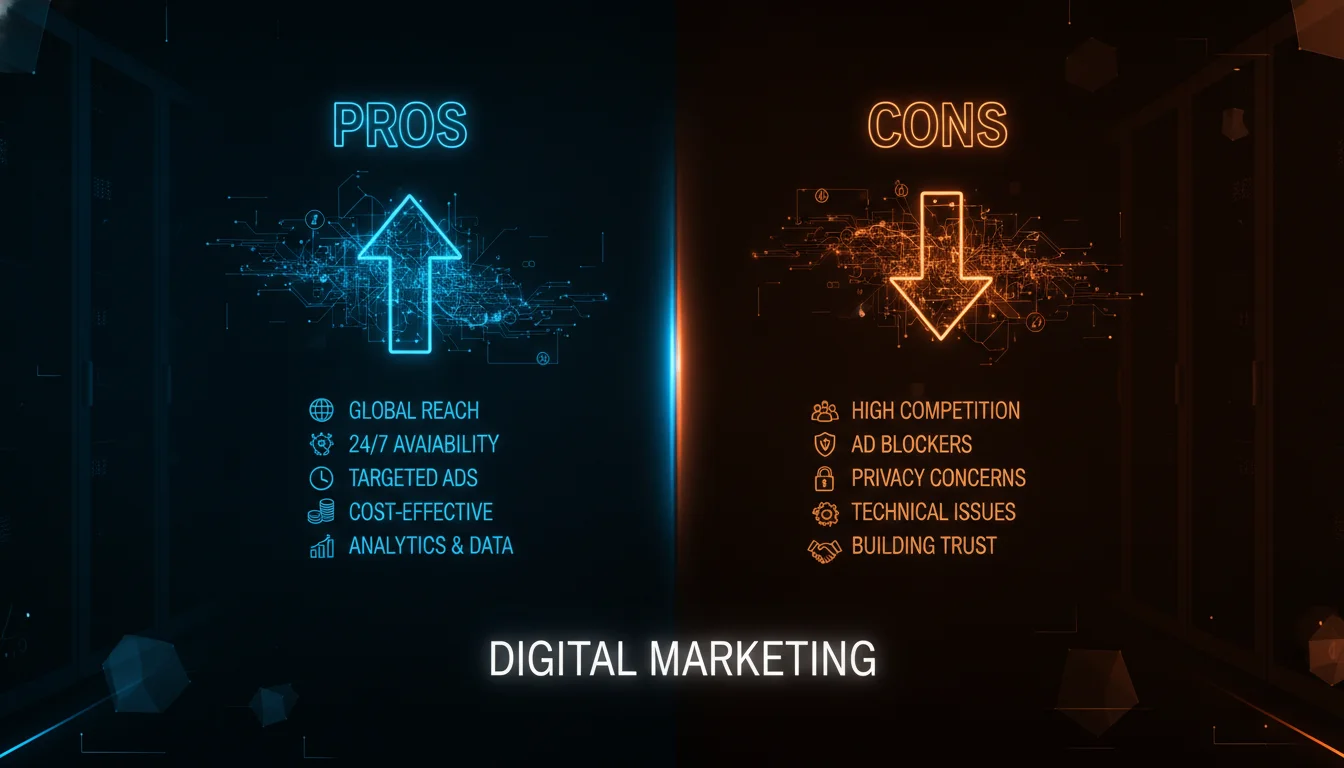
- Lower cost to entry: Content marketing costs 62% less than traditional outbound methods while generating more leads, according to Adobe’s business blog.
- Precise targeting: Reach specific demographics, behaviors, and interests rather than broadcasting to a mass audience and hoping for the best.
- Real-time performance data: Dashboards from Google Analytics, Meta Ads Manager, and email platforms show exactly what is working – and what is not.
- Global reach for local budgets: A lean team with a sharp strategy can reach customers across borders without a physical footprint.
- Scalability: Start small with organic channels, then layer in paid media as revenue grows. The model scales with your ambitions.
Cons
- Digital saturation: Users see thousands of ads daily. Standing out requires genuine creative investment, not just budget.
- Algorithm dependency: Google updates its search algorithm hundreds of times a year. A strategy that worked last quarter may underperform today.
- Privacy and compliance pressure: GDPR, CCPA, and the decline of third-party cookies demand a shift toward first-party data strategies that take time to build.
- Steep learning curve: Each channel has its own tools, metrics, and best practices. Mastering all of them simultaneously is unrealistic for most small teams.
Core Types of Marketing for Online
Search Engine Optimization (SEO)
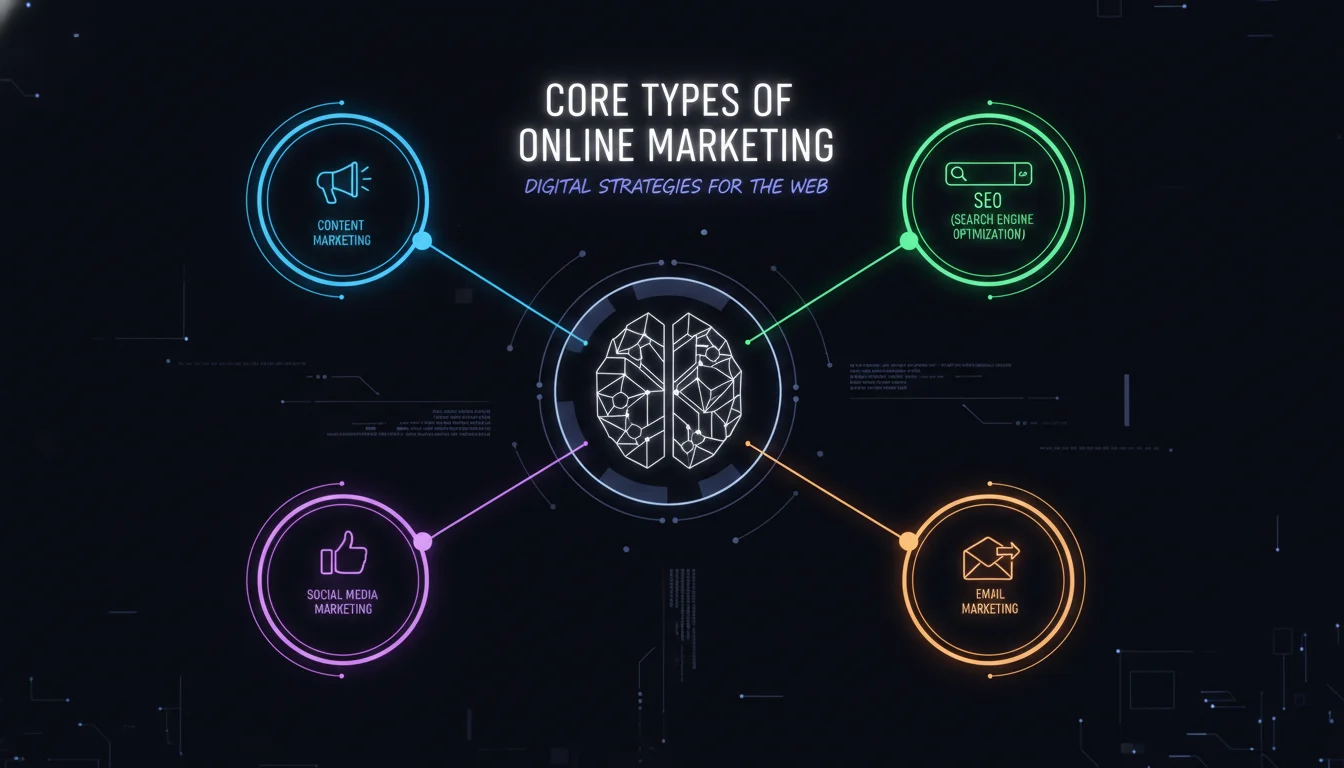
SEO is the practice of optimizing website content and structure to rank higher in organic search results. The goal is to attract visitors who are actively searching for related topics, products, or services. Effective SEO requires keyword research, quality content, technical site improvements, and link building. Results often take months to materialize, but the long-term compounding traffic makes it a foundation of sustainable online growth.
Pay-Per-Click Advertising (PPC)
PPC allows businesses to display ads on search engines or social platforms and pay only when someone clicks. Google and Facebook dominate this space, but TikTok, YouTube, and Instagram also offer robust ad systems. PPC delivers immediate visibility and tight budget control: marketers can set daily caps and target by demographics, interests, or behaviors. Costs can escalate in competitive niches without careful management, so ongoing optimization is non-negotiable.
Social Media Marketing
Platforms like Instagram, LinkedIn, and X (formerly Twitter) let brands engage audiences through posts, stories, videos, and direct messages. Social media builds brand personality and fosters community, often serving as a top-of-funnel channel. Influencer partnerships have grown rapidly alongside it. According to Influencer Marketing Hub data cited by Southern New Hampshire University, the affiliate marketing industry was estimated at $13 billion in 2023.
Email Marketing
Email remains one of the most cost-effective channels for reaching customers directly. It can nurture leads, recover abandoned shopping carts, and drive repeat purchases through personalized, automated sequences. Platforms like Adobe’s Marketo Engage help segment audiences and tailor content for higher open and conversion rates. The key is building a high-quality subscriber list and sending relevant, timely messages that people actually want to read.
Content Marketing
Content marketing focuses on creating valuable, non-promotional material – blog posts, videos, white papers, podcasts – that educates or entertains an audience. Over time, this builds trust and positions the brand as an authority in its space. Quality content also fuels SEO and social media efforts. According to Adobe’s business blog, content marketing costs 62% less than other tactics and generates three times the leads.
Affiliate and Influencer Marketing
Affiliate marketing compensates external partners for driving sales or traffic. It has become a mainstream approach on platforms like TikTok and YouTube, where creators introduce products to loyal followers. This performance-based model reduces risk for advertisers, as they pay only for actual conversions. Careful partner selection is critical: misaligned influencers can damage brand credibility faster than any ad campaign can repair it.
Mobile Marketing
Mobile marketing targets users on smartphones and tablets through SMS campaigns, push notifications, in-app advertising, and mobile-optimized content. As of 2026, the majority of web traffic originates from mobile devices, making this channel impossible to ignore. A brand that delivers a clunky mobile experience is effectively turning customers away at the door. Responsive design, fast load times, and thumb-friendly calls to action are the baseline, not a bonus.
Marketing Analytics
Marketing analytics is the discipline of collecting, measuring, and interpreting campaign data to improve decisions. It sits underneath every other channel: without it, you are running on instinct rather than evidence. Tools like Google Analytics, Meta Ads Manager, and Looker Studio aggregate performance data across channels. The U.S. Bureau of Labor Statistics predicts a 6% increase through 2032 in advertising, promotions, and marketing manager roles, per SNHU – a signal that data-literate marketers are in growing demand.
Comparing Online Marketing Channels
| Channel | What It Is | Main Benefit | Typical Cost | Time to Results |
|---|---|---|---|---|
| SEO | Organic search optimization | Sustainable traffic | Time and resource investment | Months |
| PPC | Pay-per-click ads | Immediate visibility | Variable (pay per click) | Immediate |
| Social Media | Platform engagement | Brand awareness and community | Time and content creation | Weeks to months |
| Direct subscriber communication | High ROI and retention | Low (email service provider) | Days to weeks | |
| Content | Valuable, educational material | Trust and SEO authority | Creation time | Months |
| Affiliate | Partner commissions on sales | Performance-based, low risk | Commission per sale | Varies |
| Mobile | SMS, push, in-app ads | Reach users where they live | Variable | Immediate to weeks |
| Analytics | Data measurement and interpretation | Smarter decisions across all channels | Tool subscriptions | Ongoing |
Benefits of Marketing for Online
Cost-Effectiveness and Higher ROI
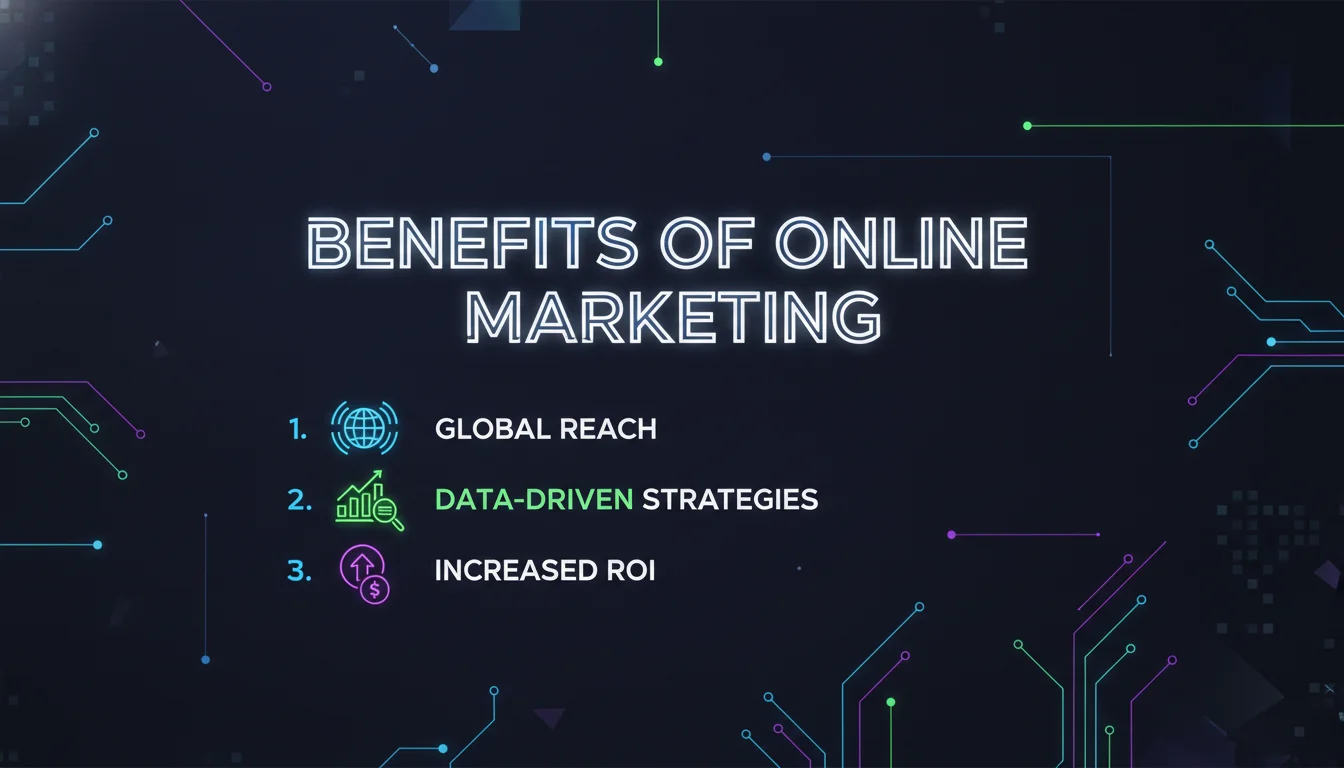
Compared to traditional advertising, online strategies consistently deliver more return per dollar spent. The 62% cost savings and triple lead generation from content marketing, documented by Adobe’s business blog, are one of the clearest examples in the industry. PPC campaigns let you start small and scale based on performance, while organic channels like SEO build value over time with minimal ongoing spend. This makes marketing for online particularly attractive for startups and small businesses operating with lean budgets.
Advanced Targeting and Personalization
Digital tools let businesses segment audiences by demographics, behavior, or past purchases with a precision traditional media cannot touch. You can serve personalized email offers, retarget website visitors with display ads, or build lookalike audiences on social platforms. As Dr. Jessica Rogers of SNHU put it: “Traditional media is a great way to reach a broad consumer base, whereas digital media has the ability to reach very specific audiences.” That precision reduces waste and increases the likelihood of conversion at every stage of the funnel.
“Traditional media is a great way to reach a broad consumer base, whereas digital media has the ability to reach very specific audiences. A key point is that depending on the target audience, some channels are more effective than others.” – Dr. Jessica Rogers, Senior Associate Dean of Business Programs, Southern New Hampshire University
Real-Time Performance Tracking
A billboard’s impact is nearly impossible to quantify. Online campaigns generate a wealth of data the moment they go live. Metrics like click-through rate, bounce rate, cost per acquisition, and conversion rate appear in real time across Google Analytics, Meta Ads Manager, and email platforms. This immediacy lets marketers pause underperforming ads and double down on winners – a practice that sits at the core of effective marketing for online.
“One of the biggest advantages of digital marketing is the ability to track and measure results in real-time. This helps businesses understand what’s working and what’s not.” – IMD Business School, Digital Marketing Guide 2025
How to Start Marketing for Online: A 5-Step Action Plan
Step 1: Define Your Goals and KPIs
Begin by clarifying what you want to achieve: brand awareness, lead generation, e-commerce sales, or customer retention. Translate these into measurable key performance indicators (KPIs) such as website traffic, cost per lead, or customer lifetime value. Clear goals keep your strategy focused and give you a concrete way to demonstrate ROI when it matters most.
Step 2: Understand Your Target Audience
Create detailed buyer personas based on research, surveys, or existing customer data. What are their pain points, online behaviors, and preferred platforms? This understanding shapes both channel selection and messaging. B2B audiences may spend their time on LinkedIn, while Gen Z consumers are far more likely to discover brands on TikTok or Instagram Reels.
Step 3: Choose Your Channels Wisely
Rather than trying to be everywhere at once, select two or three channels where your audience is most active. Allocate budget and resources accordingly. A local service business might prioritize Google Business Profile and Facebook local ads, while an e-commerce brand may invest heavily in Instagram and Google Shopping. Spreading too thin is one of the most common and costly mistakes in online marketing.
Step 4: Create Compelling Content and Campaigns
Develop content that addresses audience needs at each stage of the buyer’s journey: educational blog posts for awareness, comparison guides for consideration, and testimonials or demos for the decision stage. Ensure all materials align with your brand voice and include clear calls to action. For PPC, write tight ad copy with relevant keywords. For social media, invest in visuals that stop the scroll.
Step 5: Measure, Analyze, and Optimize
Launch your campaigns with tracking in place from day one. Use tools like Google Analytics or platform-native insights to monitor performance weekly. A/B test ad creatives, email subject lines, and landing pages continuously. Optimization is not a phase you complete – it is the ongoing discipline that separates brands that grow from brands that plateau.
Marketing for Online: Small Business Success
The Scale of the Opportunity
Small businesses often assume sophisticated online marketing is reserved for large corporations with deep pockets. The numbers tell a different story. The internet’s reach – over 5.35 billion people globally – creates an audience no single brand could exhaust. In the United States alone, 239 million people use social media, and 99.9% of firms are classified as small businesses, per Pew Research Center data cited by Alliance Virtual Offices. Your toughest competitor is not the Fortune 500. It is the business next door that already has a sharper digital strategy than you do.
Cost-Effective Tactics for Limited Budgets
Running marketing for online on a small budget is entirely achievable. Prioritize SEO and content marketing for long-term organic reach. Use free social media posting with strategic hashtags. Launch a low-budget local PPC campaign to test what messaging resonates. Email marketing platforms offer free tiers for small lists, and tools like Canva make professional-quality graphics accessible to anyone. The key is consistency and a relentless focus on high-impact activities rather than spreading effort across every available channel.
Building a Local and Global Presence
Even a hyper-local bakery benefits from a strong online presence. A Google Business Profile with photos, reviews, and accurate hours drives foot traffic. A simple website with local SEO helps you appear in “near me” searches at the exact moment someone is ready to buy. For businesses with broader ambitions, the same tactics open doors to cross-border customers. You do not need a physical store in every city to sell there.
Measuring and Optimizing Your Online Marketing Efforts
Critical KPIs to Track
Revenue is the ultimate metric, but it takes time to materialize. Leading indicators include website traffic, click-through rate (CTR), cost per click (CPC), email open rate, and conversion rate. For e-commerce, track average order value and cart abandonment rate. For lead generation, monitor cost per lead and lead-to-customer ratio. These numbers guide every optimization decision you make.
Analytics Tools and Dashboards
Google Analytics is the standard for website performance: it shows where visitors come from, what pages they view, and how long they stay. Social platforms have built-in insights, while email service providers like Mailchimp or Marketo Engage offer campaign-level reporting. Many teams use Looker Studio to combine data sources into a single view. Regular reporting keeps your strategy grounded in evidence rather than assumption.
Navigating Challenges in Online Marketing
Digital Saturation and Ad Fatigue
With the low barrier to entry, competition for online attention is fierce. Users see thousands of ads daily, leading to banner blindness and ad fatigue. The brands that cut through invest in high-quality, genuinely helpful content rather than promotional noise. Personalization and niche targeting are your sharpest tools here.
Keeping Up with Algorithm Changes
Google updates its search algorithm hundreds of times a year, and social platforms tweak their feed algorithms continuously. A strategy that worked last month may suddenly underperform. Successful marketers stay informed through industry publications, webinars, and professional communities. They also build flexibility into their plans and avoid over-relying on any single channel.
Data Privacy and Compliance
Regulations like GDPR in Europe and CCPA in California require transparent data collection and user consent. Third-party cookies are being phased out, diminishing traditional tracking methods. Marketers must shift toward first-party data strategies: collecting information directly from customers with clear opt-ins. Respecting privacy is no longer just a legal obligation – it is a brand trust signal that customers increasingly notice and reward.
The Future of Marketing for Online
AI and Automation
Artificial intelligence is reshaping campaign management at every level. Tools like Google’s Performance Max use machine learning to allocate budgets across channels, while generative AI assists in writing ad copy and producing creative assets. Marketing automation platforms can trigger personalized emails based on user behavior, nurturing leads without manual intervention. These technologies increase efficiency and allow even small teams to execute sophisticated campaigns that would have required an agency just a few years ago.
Voice Search and Visual Discovery
Voice assistants like Siri and Alexa are changing how people search, often using natural language queries rather than typed keywords. Optimizing content for voice search means answering questions concisely and using conversational phrasing. Visual search tools like Google Lens let users snap a photo to find similar products. Forward-thinking brands are already preparing their catalogs and content for these emerging discovery modes – and the ones that wait will find themselves playing catch-up.
Frequently Asked Questions
How do I start marketing online?
Begin by defining a clear goal, researching your target audience, and selecting one or two digital channels where they are most active. Create valuable content or ads, then measure results consistently to refine your approach. Starting focused beats starting everywhere.
What is the 3-3-3 rule in marketing?
The 3-3-3 rule is a content framework: share three minutes of educational content, three minutes of entertaining content, and three minutes of behind-the-scenes or personal content. The goal is to build a balanced, relatable brand presence that does not feel like a constant sales pitch.
What is the best way to market online?
There is no single best way – effectiveness depends on your audience and goals. A combination of SEO for long-term growth, PPC for quick visibility, and email for retention often forms a strong foundation. The best strategy is the one you can execute consistently and measure honestly.
What are five types of online marketing?
Five common types include search engine optimization (SEO), pay-per-click advertising (PPC), social media marketing, email marketing, and content marketing. Each serves different stages of the customer journey and works best when coordinated rather than run in isolation.
Can online marketing be done for free?
Yes. Organic tactics like SEO, social media posting, and content creation on free platforms cost only time and effort. Paid channels often accelerate results, so a blended approach tends to be most effective once budget becomes available.
Why is marketing for online important?
It allows businesses to reach a global audience, target precisely, measure performance in real time, and adapt quickly. These are advantages traditional marketing cannot replicate at comparable cost – which is why digital has become the default, not the alternative.
Ready to build something bold? Contact Emin Media for a free brand consultation and let’s map out a marketing for online strategy that actually moves the needle for your business.
Enjoyed this article?
Contact Emin Media for a free brand consultation and let's create something amazing together.
Get in TouchRelated Articles
Digital Marketing for Creatives: A Bold Guide
Digital marketing for creatives builds real visibility and sales. Learn strategies for social media, SEO,…
Video SEO for Creative Agencies: The 2026 Playbook
Video SEO for creative agencies is how you turn portfolio reels into search traffic. Get…
Creative Brand Photography: The Complete Guide
Creative brand photography is your visual voice. Learn how to plan shoots, find the right…