Marketing Automation Tools: 2026 Buyer’s Guide
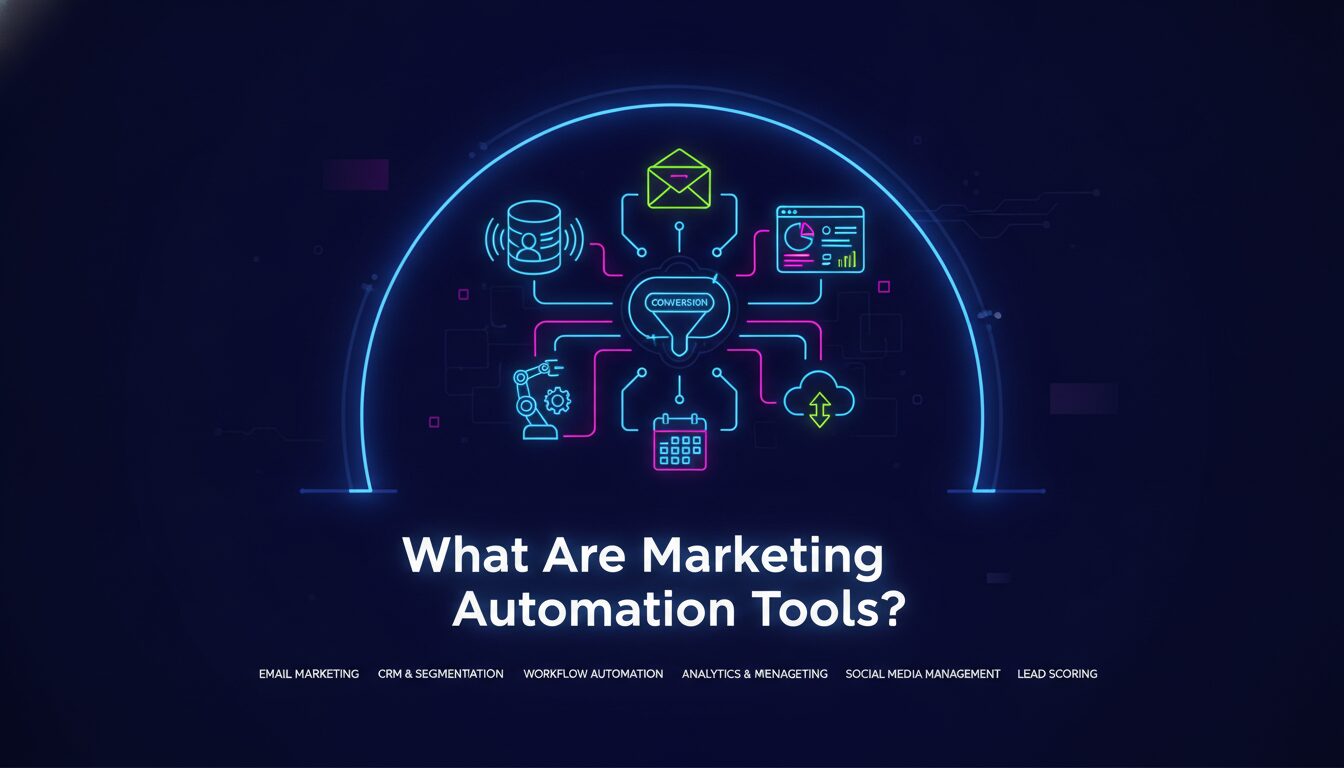
Marketing automation tools are software platforms that automate repetitive marketing tasks like email sends, social posts, and lead scoring so teams can focus on strategy instead of busywork. As of 2026, AI has turned these platforms into genuinely predictive engines.
Key Takeaways
- automation tools handle email, social, ads, and lead scoring from one dashboard, cutting hours of manual work each week.
- The right platform depends on your business size, integration needs, and budget. Options range from all-in-one suites to niche email specialists.
- AI has reshaped the category, adding predictive send times, dynamic content, and smarter lead scoring.
- Pricing spans from free plans to several hundred dollars a month, with most SMB-friendly tools landing between $12 and $20/month.
- Sales and marketing alignment improves dramatically when automation tools sync directly with your CRM.
What Are Marketing Automation Tools?
Defining Marketing Automation Tools
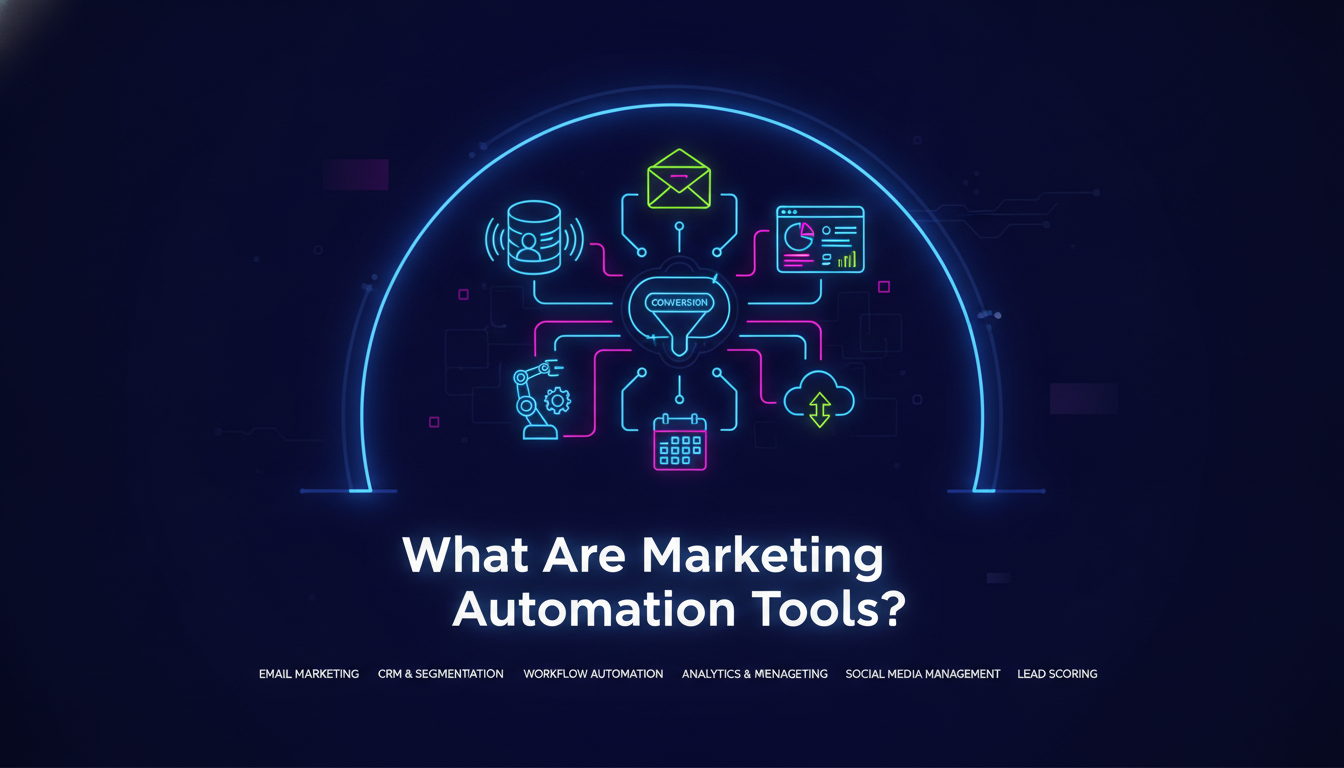
this type of tools are software platforms built to automate repetitive marketing tasks, manage campaigns, and orchestrate personalized customer journeys across channels. According to Salesforce, these systems run email campaigns, manage social engagement, analyze visitor behavior, and surface performance analytics from one hub. AI has expanded what’s possible here, enabling real-time personalization and predictive lead scoring that simply didn’t exist a few product cycles ago.
How Marketing Automation Tools Differ from CRM
CRM software manages contacts, pipelines, and customer records, while this kind of tools specialize in nurturing leads and running campaigns. The lines have blurred, though. HubSpot and ActiveCampaign now offer integrated suites covering both sales and marketing, while Brevo started life as an email tool and expanded into CRM territory. Your choice often comes down to one question: is your bigger pain point sales pipeline visibility, or campaign execution?
The Evolution of Marketing Automation Tools with AI
AI has pushed marketing automation well past their rule-based origins. Modern platforms use machine learning for predictive analytics, natural language processing for content drafts, and AI agents that manage inquiries and optimize ad spend without a human clicking every button. ActiveCampaign has rolled out AI campaign building, and Zapier now lets users build workflows from plain-language descriptions instead of manual logic trees. Even a two-person marketing team can now run campaigns that used to require a much bigger crew.
Key Features of Marketing Automation Tools
Email Marketing Automation
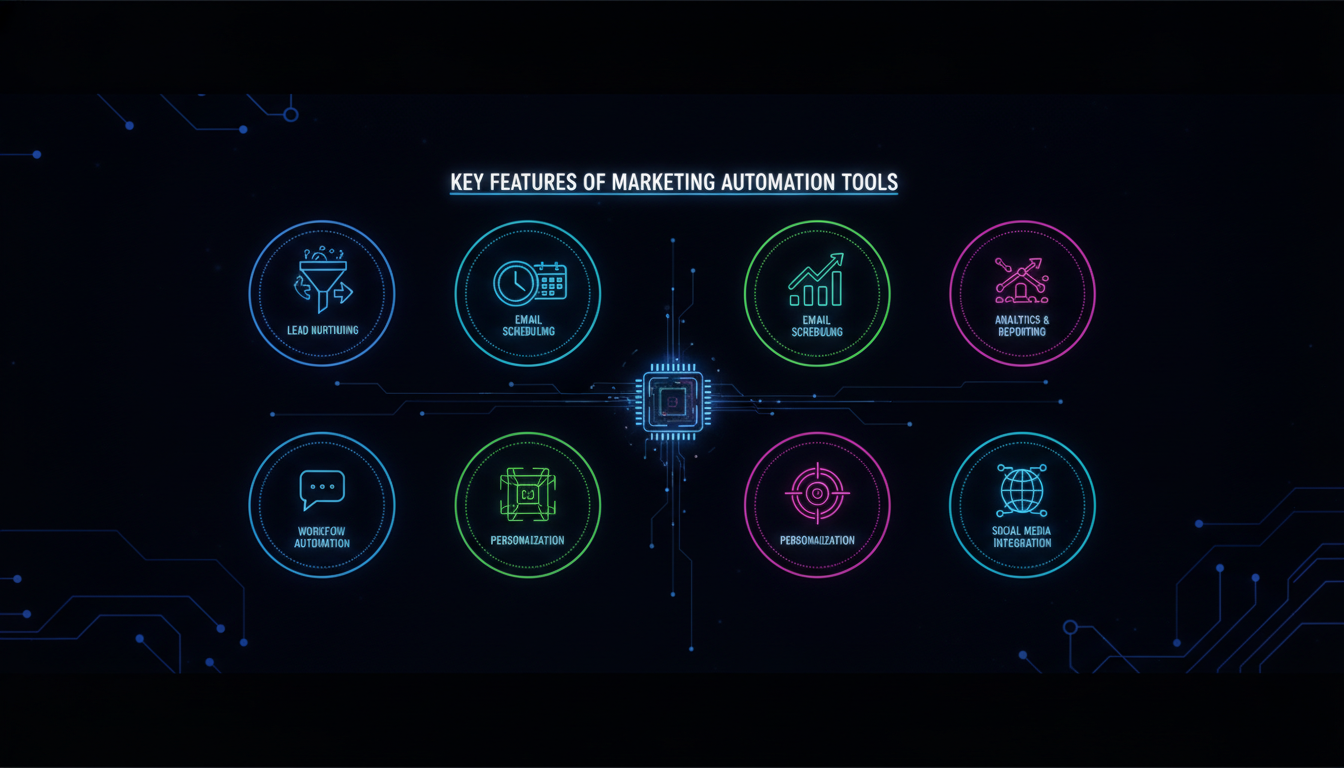
Email is still the backbone of most automation tools, and for good reason: it’s cheap, measurable, and directly tied to revenue. Platforms like Mailchimp, Klaviyo, and Brevo let you build drip sequences, trigger messages based on behavior, and segment audiences dynamically. An eCommerce store might send a personalized discount code the moment a cart gets abandoned, while a B2B company nurtures leads with educational emails timed to their stage in the buying cycle.
Lead Scoring and Management
Effective this type of tools use lead scoring to surface the prospects worth a sales rep’s time. By combining demographic data (lead grade) with behavioral signals (lead score), the software flags who’s actually ready to buy. As Salesforce explains, a lead score might reflect actions like downloading a datasheet or watching a demo, while a lead grade weighs company size and industry fit. Together, they keep sales focused on the leads most likely to close.
Analytics and Reporting
No serious marketing automation tool skips analytics. Top platforms give you customizable dashboards tracking open rates, click-throughs, conversions, and campaign ROI. Ortto stands out here, offering a unified view of multi-channel performance in one dashboard. These insights let marketers A/B test messaging, refine strategy, and actually prove value to leadership instead of guessing.
“Automation tools that integrate with your CRM, or better yet, have CRM built in, reduce workflow complications as you get all your tools to work together,” notes Zapier’s testing team in their 2026 review of marketing automation software.
Benefits of Implementing Marketing Automation Tools
Increased Efficiency and Productivity
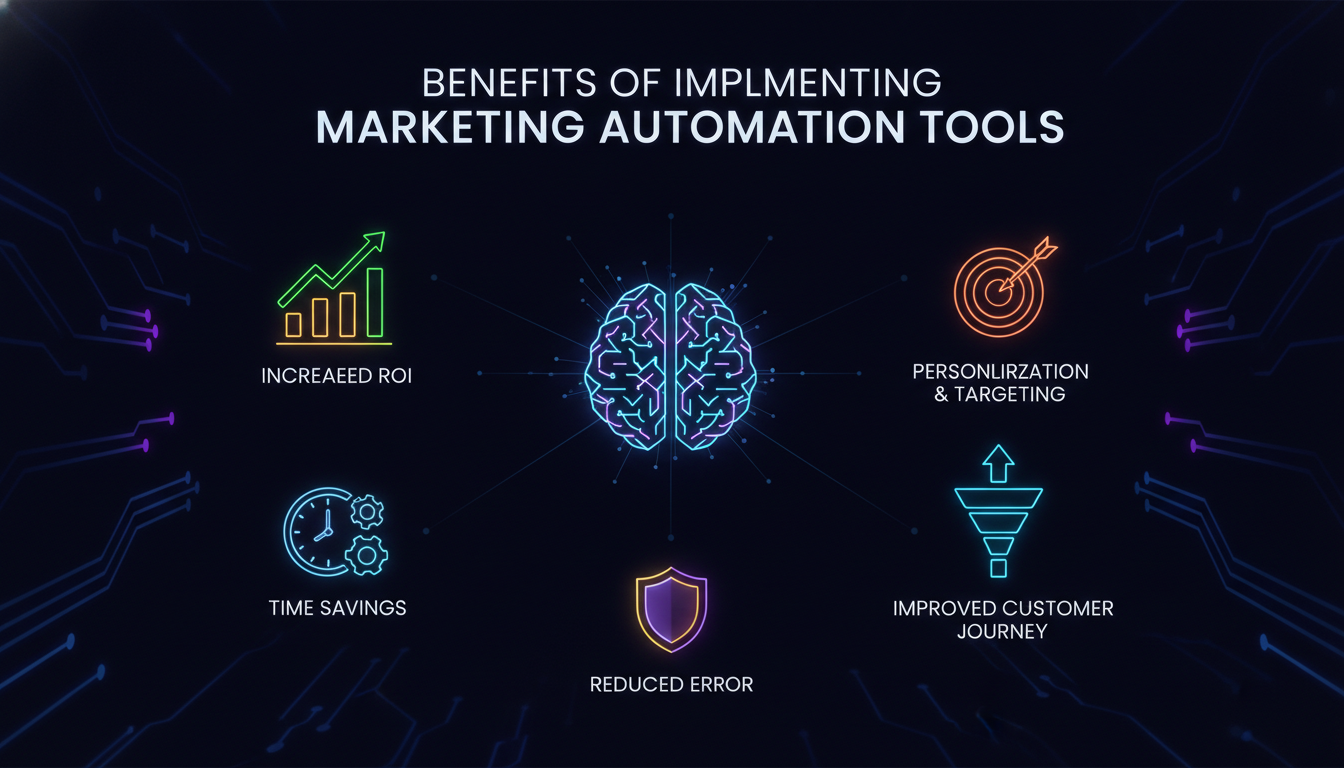
By automating routine work, scheduling social posts, sending follow-ups, updating contact lists, these platforms free up real hours every week. A lean marketing team can operate like a much bigger one without adding headcount. As one Zapier reviewer put it, automation prevents teams from wasting time on manual work that software could handle instantly.
Enhanced Personalization at Scale
Today’s consumers expect experiences that feel built for them. this kind of tools enable dynamic content that adapts to preferences, behavior, and lifecycle stage. A returning customer might see a tailored product recommendation while a new subscriber gets a welcome series. That layered personalization, spread across email, SMS, and web, drives real engagement rather than a one-size-fits-all blast.
Better Alignment Between Sales and Marketing
When your automation platform talks to your CRM, both teams finally see the same customer journey. Leads route to sales automatically once they hit a certain score, and marketing can see exactly which campaigns produce the highest-quality pipeline. That alignment cuts friction and speeds up the entire revenue cycle.
Types of Marketing Automation Tools
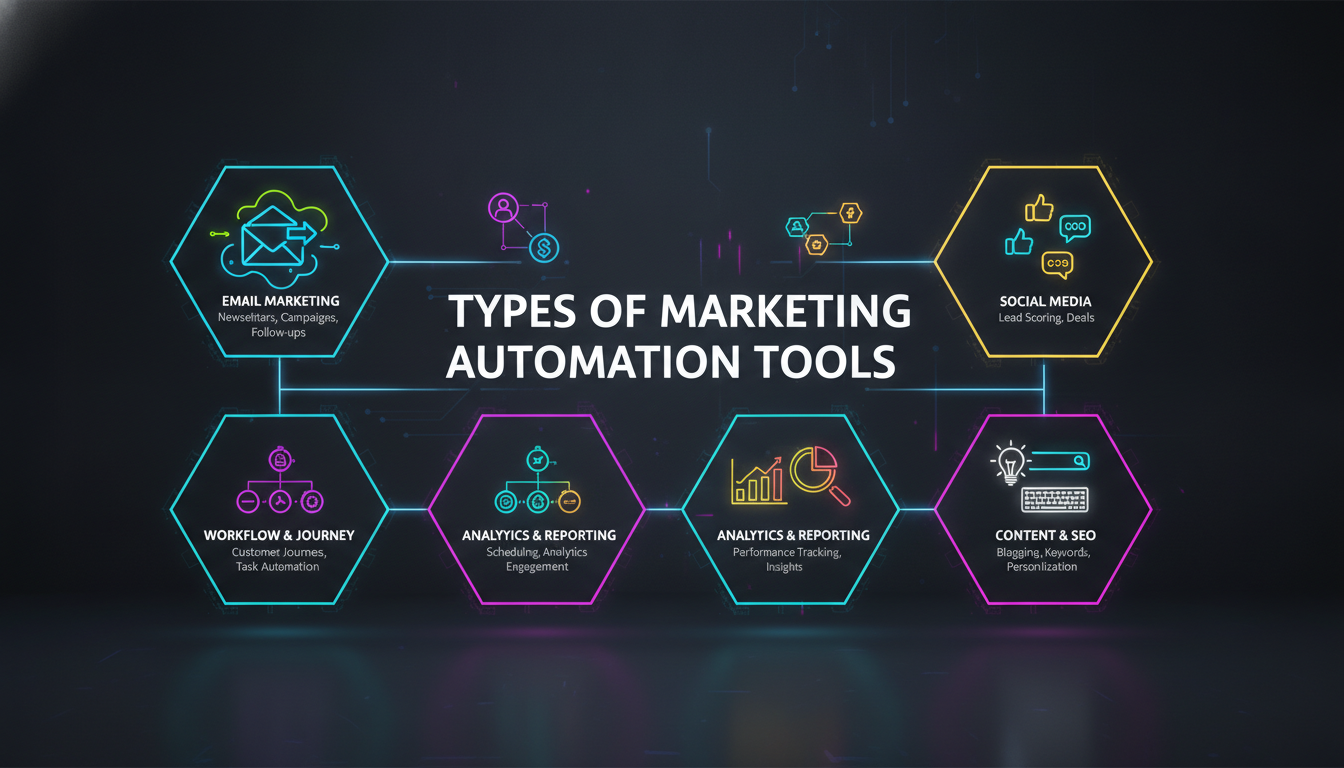
All-in-One Marketing Automation Platforms
These suites cover email, social, ads, landing pages, and CRM in one place. HubSpot remains the category leader, with a free tier that scales into enterprise territory. ActiveCampaign and GetResponse are strong runners-up, offering wide feature sets at competitive prices. If you want one source of truth and minimal integration headaches, this is your lane.
Email-Centric Marketing Automation Tools
Some platforms specialize almost entirely in email. Klaviyo gets praised for its interface and segmentation power, making it a favorite among eCommerce brands. Mailchimp has grown from a simple newsletter tool into a broader automation platform, though email remains its core strength. These options tend to be more affordable and quicker to set up than full suites.
CRM-Integrated Marketing Automation
For businesses that need deep sales and marketing alignment, CRM-first platforms with automation built in are the answer. Salesforce serves enterprises well, and Pipedrive covers sales teams with lighter needs. According to Email Vendor Selection, top picks in this category include ActiveCampaign (starting at $15/month) and HubSpot ($20/month), both blending contact management with campaign automation.
AI-Powered and Workflow Automation Tools
A newer category uses AI to automate complex workflows beyond traditional marketing tasks. Zapier connects thousands of apps and now builds workflows from natural-language prompts. Clay and Gumloop are emerging platforms combining data enrichment with campaign automation. These fit teams that need custom, cross-functional automations without a developer on staff.
How to Choose the Right Marketing Automation Tools
Step 1: Define Your Marketing Goals and Channels
Start by listing every channel you actually use, email, social, SMS, paid ads, and the outcomes you want automation to drive. A B2B company with a long sales cycle prioritizes lead nurturing and CRM sync, while an eCommerce brand needs cart-abandonment triggers and product recommendations. Because coverage varies so widely between platforms, this step narrows your options fast.
Step 2: Evaluate Integration Requirements
Your marketing automation need to play nicely with your existing stack: CRM, CMS, eCommerce platform, analytics, and more. Check whether the platform offers native integrations or leans on connectors like Zapier. HubSpot integrates natively with hundreds of apps, while Brevo offers a smaller but deeper set of connections. Weak integration creates data silos that quietly undo the efficiency you were chasing.
Step 3: Assess Pricing and Scalability
Pricing ranges from free plans to enterprise tiers costing thousands monthly. According to data from Email Vendor Selection, Brevo starts at $12/month, ActiveCampaign at $15/month, and HubSpot at $20/month, while specialized platforms like Keap can run $249/month. Look past the sticker price to how costs scale with contacts and feature tiers. Some platforms lock advanced reporting behind higher plans, which can force an unplanned upgrade the moment you start growing.
Top Marketing Automation Tools in 2026
Overview of Leading Solutions
The strongest automation tools in 2026 split into a handful of clear categories: all-in-one suites, email specialists, and workflow connectors. The table below compares pricing, best use case, and standout features across the field, verified against vendor listings and independent testing.
| Tool | Best For | Starting Price | Standout Feature | Free Plan/Trial |
|---|---|---|---|---|
| HubSpot | All-in-one marketing + CRM | $20/month | Comprehensive free tier, AI content assistant | Yes |
| ActiveCampaign | Sales & marketing automation | $15/month | AI-powered campaign builder, advanced segmentation | 30-day trial |
| Brevo (formerly Sendinblue) | Affordable all-in-one | $12/month | Unlimited contacts on free plan, SMS marketing | Yes |
| Klaviyo | eCommerce email automation | Free up to 250 contacts | User-friendly interface, powerful segmentation | Yes |
| Zapier | Workflow automation across apps | Free | Connects 5,000+ apps, AI-driven workflow builder | Yes |
| GetResponse | eCommerce SMEs | $13.30/month | Integrated webinar hosting, conversion funnels | Free plan |
| Customer.io | Powerful workflow automations | Custom pricing | Highly flexible messaging rules, real-time data | Free trial |
| Omnisend | eCommerce marketing | $16/month | Omnichannel automation (email, SMS, push) | Free plan |
Spotlight on HubSpot: A Premium All-in-One
HubSpot’s automation tools sit inside a broader platform that includes CRM, sales, service, and content management. Its visual workflow builder makes complex nurture campaigns approachable, and the AI content assistant helps draft emails and landing pages. Zapier’s 2026 review calls HubSpot the go-to for businesses ready to invest in a premium solution that grows with them.
Spotlight on ActiveCampaign: AI-Driven Campaigns
ActiveCampaign has long earned praise for its automation depth, and its AI campaign building has only strengthened that position. Users can input a goal and let the system suggest an automation path. Its predictive sending feature, powered by machine learning, times emails around when each recipient is most likely to open them, boosting engagement without extra manual work.
Integrating Marketing Automation Tools with Your Tech Stack
Building a Connected Ecosystem
No marketing automation tool works well in isolation. The real payoff comes from connecting it to your CRM, eCommerce platform, analytics, and even project management software. Zapier enables custom integrations without code, syncing data between tools like Google Ads, Salesforce, and Slack. A connected stack means every customer interaction gets captured and fed back into future decisions.
API and Native Integrations
Connectors like Zapier fill gaps, but native integrations usually offer deeper functionality and more reliability. When evaluating this type of tools, check the app marketplace or integration directory before you commit. HubSpot boasts over 1,000 native integrations, while Brevo integrates deeply with eCommerce platforms like Shopify and WooCommerce. Prioritize whatever natively supports your most critical software to cut down on sync delays.
Common Integration Pitfalls to Avoid
One frequent mistake: connecting too many tools without a data governance plan, which leads to dirty data and inconsistent customer profiles. Start with a core set of integrations tied directly to your goals, and use a master data management approach to keep records clean. Audit your integrations regularly to remove unused or broken connections slowing down your workflows.
Marketing Automation and Social Media: The Missing Piece
Social media automation extends the same logic across your organic channels, scheduling posts, triggering responses, and tracking engagement without manual babysitting. Most all-in-one platforms now include a social calendar and basic listening tools, though dedicated schedulers still edge them out on granular platform features. If your brand lives and dies by social, pair your automation platform with a specialist tool rather than settling for the bolt-on version.
Data Privacy and Compliance in Automated Marketing
this kind of tools must be configured to respect data privacy regulations like GDPR and CCPA, which govern how you collect, store, and use customer data. This means building consent capture into your lead forms, honoring opt-out requests automatically, and auditing what data your platform stores and for how long. Compliance isn’t a one-time setup. It’s an ongoing part of running any automated campaign responsibly.
Measuring ROI from Marketing Automation Tools
Key Metrics to Track
You gauge ROI from marketing automation by tracking metrics tied directly to business outcomes: conversion rate from nurtured leads, email click-through rates, lead-to-customer ratio, and customer acquisition cost. More advanced platforms offer attribution modeling showing which campaigns contribute most to revenue, which matters when you’re justifying the spend to leadership.
Tools and Dashboards for ROI Analysis
Most automation platforms include built-in analytics, but you can extend reporting with tools like Looker Studio or native CRM analytics. Ortto stands out for unified dashboards that combine data from email, SMS, and ads in one place. For the full picture, connect your automation platform to your CRM and financial systems so marketing spend and sales outcomes finally live in the same story.
Achieving a Positive ROI
The key to positive ROI is starting with a clear strategy, testing continuously, and avoiding the trap of automating a process that was already broken. Skip vague benchmark promises, every business’s baseline is different, and instead track your own before-and-after numbers closely. When implemented well, the payoff extends past cost savings into stronger customer lifetime value and brand loyalty.
According to Salesforce’s research on marketing technology, AI agents are already beginning to manage customer inquiries and optimize ad campaigns in real time, reducing the manual oversight marketing teams once needed for routine work.
The Future of Marketing Automation Tools
Hyper-Personalization and Real-Time Engagement
As AI matures, these platforms will move beyond segment-based personalization toward true one-to-one experiences. Picture a website that rearranges its layout and messaging in real time based on a visitor’s industry, role, and browsing history. Clay is already pushing in this direction, enriching lead data from multiple sources automatically and making hyper-personalization realistic for mid-market companies, not just enterprise budgets.
Expansion of AI Agents
AI agents are taking on a growing share of campaign management. These agents can adjust ad spend, pause underperforming campaigns, and generate content variations, all while sticking to brand guidelines. Salesforce has introduced AI agents that manage customer inquiries and optimize campaigns, cutting down significantly on manual oversight.
Ethical Considerations and Compliance
With more automation comes more responsibility. These platforms have to work within tightening data privacy rules like GDPR and CCPA. Expect future platforms to embed compliance checks directly into workflows, automatically scrubbing data and confirming consent. Marketers will need to balance personalization with privacy, leaning on zero-party data and transparent practices to keep customer trust intact.
Pros and Cons of Marketing Automation Tools
Pros
- Cuts hours of manual work on email sends, social posting, and contact list updates.
- Enables personalization at scale across email, SMS, and web without extra headcount.
- Improves sales and marketing alignment when integrated with your CRM.
- Provides analytics that make campaign performance measurable and easy to report on.
Cons
- Setup and integration take real time, especially for teams juggling multiple existing tools.
- Costs scale quickly as contact lists and feature needs grow.
- Automating a broken process just makes the broken process faster.
- Over-reliance on automation can strip the human warmth out of customer communication if not managed carefully.
Conclusion
automation tools have evolved from simple email schedulers into intelligent platforms that orchestrate entire customer journeys. This year, according to a report cited by Markets and Markets, the global market for these platforms is projected to grow from $3.3 billion in 2019 to $6.4 billion by 2024, and that growth trajectory hasn’t slowed. By carefully weighing your business needs, integration requirements, and budget, you can pick tools that boost efficiency and drive measurable revenue growth. Whether you land on an all-in-one suite like HubSpot, an AI-driven builder like ActiveCampaign, or a workflow connector like Zapier, the right platform frees your team to do more with less. Ready to turn your automation stack into a brand growth engine? Contact Emin Media for a free brand consultation, and let’s build something bold together.
Frequently Asked Questions
What are the top 5 marketing automation tools?
The top five this type of tools in 2026 are HubSpot, ActiveCampaign, Brevo, Klaviyo, and Zapier. HubSpot leads for all-in-one needs, ActiveCampaign excels in AI-driven campaigns, Brevo offers affordability, Klaviyo dominates eCommerce, and Zapier connects your entire stack.
What is a marketing automation tool?
A marketing automation tool is software that automates repetitive marketing tasks such as email campaigns, social media posting, and ad management. It enables personalized customer journeys and provides analytics to measure performance, acting as a central hub for multi-channel marketing.
What are the 5 marketing tools every business needs?
While needs vary, five essential marketing tools include a marketing automation platform (like ActiveCampaign), a CRM (like HubSpot), a social media scheduler (like Buffer), an analytics tool (like Google Analytics), and a design tool (like Canva). These cover outreach, relationship management, and measurement.
How do marketing automation tools help small businesses?
this kind of tools level the playing field for small businesses by automating customer follow-ups, segmenting audiences without manual lists, and triggering behavior-based emails. Many offer free plans or low-cost tiers, making enterprise-grade automation accessible on a startup budget.
Can marketing automation tools replace human marketers?
No, marketing automation enhance but do not replace human creativity and strategy. They handle execution and data processing, freeing marketers to focus on crafting compelling messages, analyzing results, and building relationships, tasks that require emotional intelligence and strategic thinking.
What is the average cost of marketing automation tools?
Costs vary widely. Basic plans start around $12 to $20 a month (Brevo, ActiveCampaign, HubSpot), while premium suites with advanced features can run well past $1,000/month. Many tools offer free trials or forever-free plans, so you can test capabilities before committing.
Enjoyed this article?
Contact Emin Media for a free brand consultation and let's create something amazing together.
Get in TouchRelated Articles

Brand Partnership Strategy: Build Alliances That Grow
A proven brand partnership strategy helps you reach new audiences, share resources, and grow faster.…

Visual Content Marketing Trends for 2026
Visual content marketing trends for 2026 are reshaping how brands connect. Discover AI visuals, interactive…

Creative Content Calendar 2026: The Complete Guide
Build a creative content calendar 2026 that drives real results. Get templates, tools, workflows, and…