Facebook Ad Creative Best Practices for 2026
Facebook ad creative best practices are the proven design and messaging principles that help advertisers build high-converting ads across Meta platforms. They cover vertical video, authentic imagery, concise copy, and clear calls-to-action built for mobile-first audiences.
Key Takeaways
- Mobile-first always wins: Vertical (9:16) and square (1:1) formats cover more screen and outperform landscape on mobile feeds.
- Hook in the first frame: Lead with your brand and key message before users tap away.
- Authentic beats polished: Real people, UGC, and mobile-shot footage consistently outperform stock imagery for recall and intent.
- Sound on, captions always: Most Stories ads with voice-over or music drive stronger results, but captions protect performance for sound-off viewers.
- Test everything, scale what works: A/B testing formats, copy, and CTAs is the only reliable path to creative improvement.
- Automation needs great raw material: Meta’s Advantage+ can optimize combinations, but only if you feed it diverse, high-quality assets.
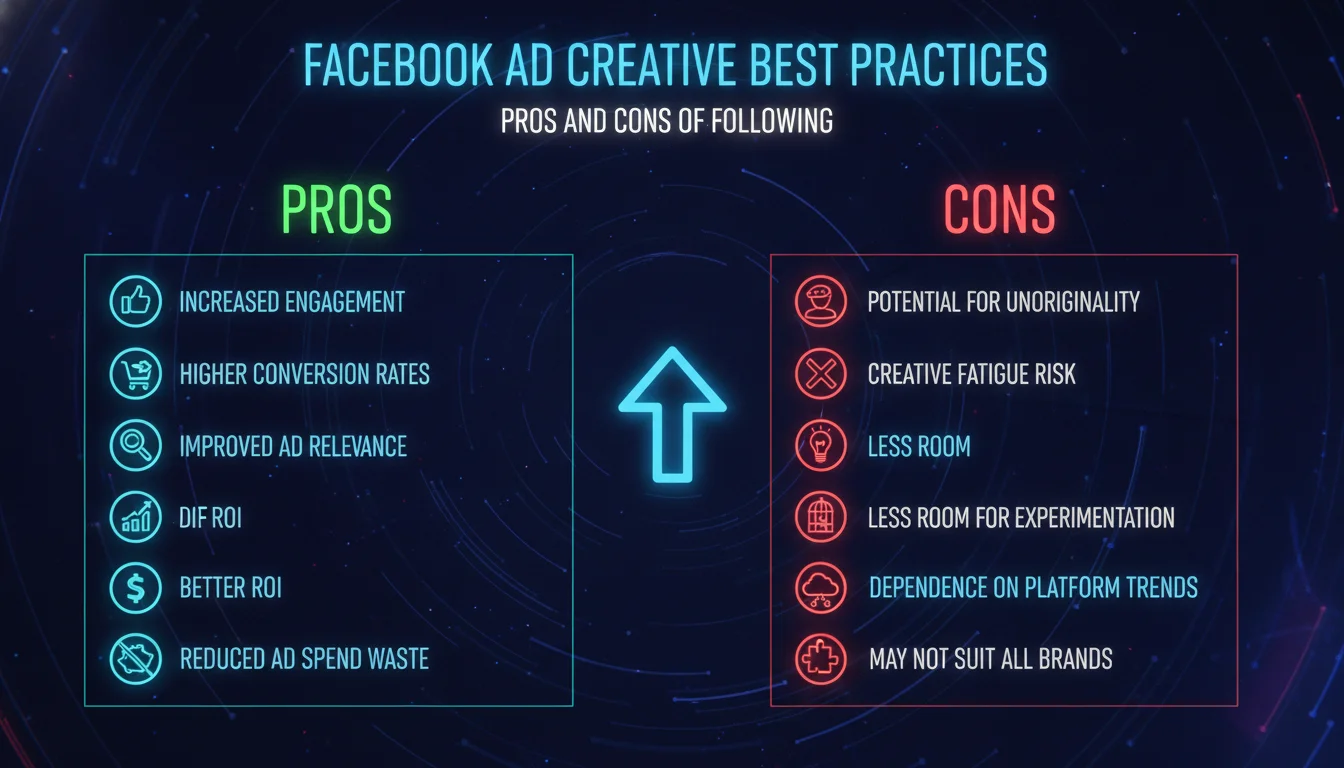
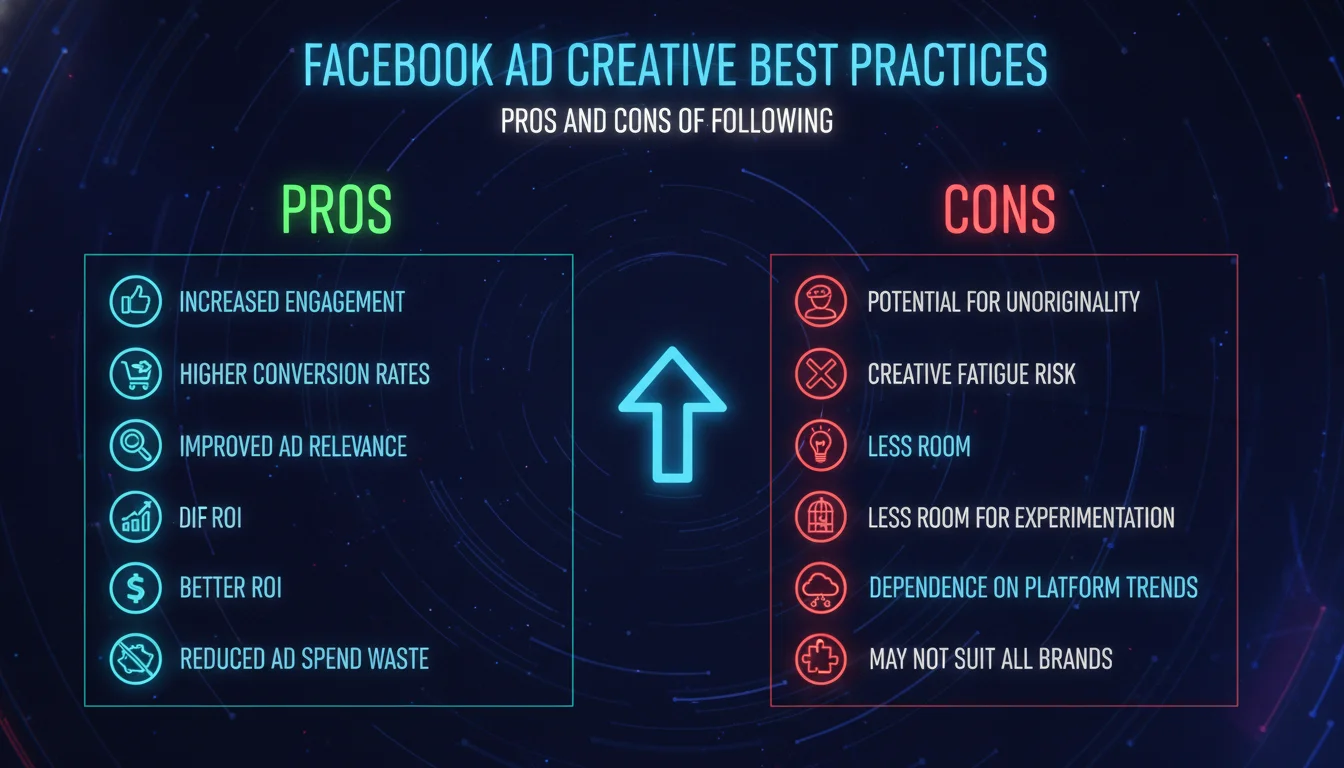
Pros and Cons of Following Facebook Ad Creative Best Practices
Pros
- Ads built to Meta’s technical specs perform better across placements without extra spend.
- Authentic visuals and benefit-driven copy build trust faster than generic brand messaging.
- Systematic A/B testing removes guesswork and compounds creative improvements over time.
- Mobile-first design ensures your creative looks intentional, not cropped, on the devices where most users actually browse.
Cons
- Producing diverse creative variations (video, image, carousel, Stories) requires real time and budget investment.
- Creative fatigue sets in faster than most brands expect, demanding a constant refresh cycle.
- Advantage+ automation works best with clean conversion data, which smaller advertisers may not yet have.
1. Visual Design and Aspect Ratios: The Foundation of Facebook Ad Creative Best Practices
Choosing the Right Aspect Ratio for Each Placement
Getting the aspect ratio right is the single fastest way to improve how your ad feels on screen. Meta’s advertising ecosystem spans Facebook Feed, Instagram Stories, Messenger, and more, each with its own optimal dimensions. According to Meta’s official guidance, using a vertical or square ratio is critical because most users hold their phones vertically. For Facebook Feed, a 4:5 vertical ratio is recommended for single-image ads, while 1:1 also works. Instagram Stories demand a 9:16 full-screen vertical to maximize immersion. Meta advises using the asset customization tool in Ads Manager to tailor assets per placement without rebuilding campaigns from scratch.
Image Resolution and Quality Standards
High-resolution images are non-negotiable in any serious approach to best practices. Meta specifies minimum pixel requirements, and its image ad guidelines urge advertisers to use the highest resolution available and avoid overly photoshopped images. Clean, sharp visuals convey professionalism and trust. Pixelation or compression artifacts can hurt perceived credibility and drag down performance before a single user reads your copy.
Branding and Consistency Across Creatives
Consistent branding, including logo placement, color schemes, and font choices, builds recognition and loyalty over time. Meta recommends showing your brand or logo early, since people engage more with familiar brands. As MediaGroupWW notes from years of agency experience, visual consistency across platforms strengthens brand awareness and produces more accurate analytics data to inform future creative decisions.
“Attention is one of the most valuable things a consumer or social media user can give your business. It’s also the prerequisite for getting followers, generating awareness, and making a sale.” – MediaGroupWW Creative Team
2. Video Ad Creative Best Practices
Video is the format most likely to stop the scroll, and applying this type of practices to video means going vertical, going fast, and going authentic.
Vertical Video and Mobile-First Design
With the majority of Facebook and Instagram browsing happening on mobile, vertical (9:16) or square (1:1) videos are essential. Meta’s guide confirms that vertical videos cover more screen space, making them more immersive and harder to ignore. Templates in Ads Manager can help you turn static images into short video ads without a production team.
Hook Viewers Fast with Motion and Sound
Motion grabs attention before a single word registers. Meta’s Stories research confirms that ads with motion tend to perform better than static ones. Adding sound, whether voice-over or music, can further enhance impact. The majority of Stories ads with sound drive better results than those without. Always include captions for sound-off viewing, because a significant portion of users browse without audio.
Short Scenes and Concise Narratives
People consume content rapidly, especially on mobile. Meta recommends fast-paced narratives with short, concise scenes. Get to the point within the first few seconds. Lead with your brand and key message to capture attention before users tap away. A slow build is a luxury mobile video simply cannot afford.
3. Image Ad Creative Best Practices
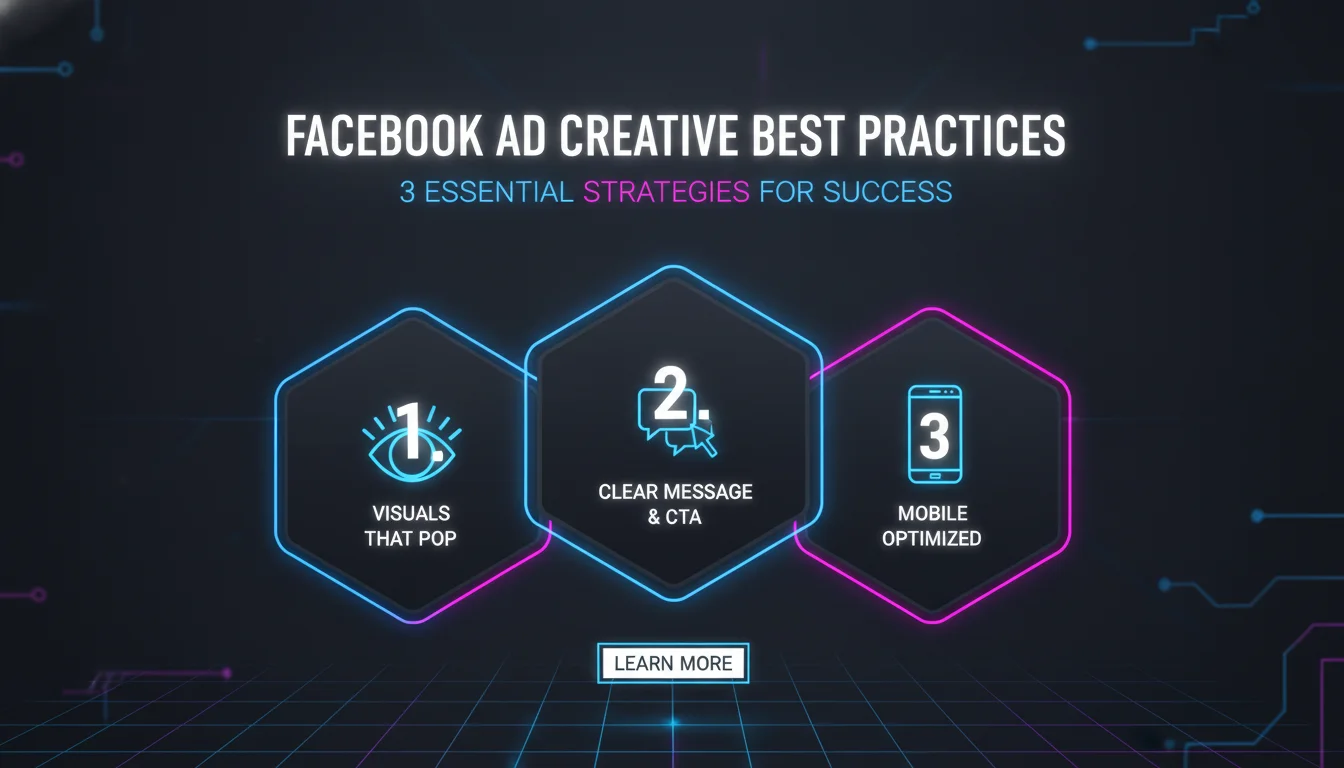
Strong image ads are the workhorses of most Meta campaigns, and this kind of best practices for images come down to three things: authenticity, clarity, and composition.
Showcasing Your Product and People
Images that feature real people using your product help viewers picture themselves doing the same. Meta advises showing people similar to your target audience in realistic settings. LeadsBridge adds that authenticity is essential: avoid stock photography and overly staged shots. User-generated content and influencer imagery can significantly boost relatability and trust, often outperforming polished brand creatives because they feel genuine.
Text Overlays: Do’s and Don’ts
While Meta no longer enforces a text-in-image limit, text overlays should still be used sparingly. Best practices call for a modern, clean font in a large enough size with a contrasting hue, and the text must not obstruct the main visual. Your message needs to be legible at thumbnail size, because feeds are scanned in fractions of a second.
Color, Contrast, and Composition
Colors influence mood and brand perception more than most advertisers realize. Meta recommends using appealing colors appropriate for the content: bright tones for a summer sale, calming pastels for a spa. Crop tightly around the focal point to avoid clutter. For multiple images, the carousel format lets you showcase several products or angles at the same cost.
4. Stories Ad Creative Best Practices
Stories demand a completely different creative mindset, and the ad creative best practices for this placement are built around speed, immersion, and native feel.
Speed and Scene-Switching in Stories
Stories are an ephemeral, full-screen medium where users tap through content at pace. Meta’s guidance is clear: keep attention with speed. Use multiple scenes with quick cuts. Short, punchy scenes outperform long, slow ones. Begin with your brand and key message upfront to make an immediate impact before the next tap.
Interactive Stickers and CTAs
Stickers like location tags, hashtags, and @mentions can make ads feel native and interactive. Meta cautions against overuse: stick to up to five interactive sticker types or one countdown sticker, and avoid cluttering with emojis, GIFs, or unnecessary elements. The call-to-action sticker should be placed strategically. Ensure roughly 14% of the top and 20% of the bottom are free from key elements so the sticker doesn’t cover them.
Sound, Text, and Focal Points
Sound on is the default for Stories, and most ads with voice-over or music see better results than silent alternatives. Use text overlays to reinforce key messages, but keep the focus on one central point. Meta’s data shows that combining centrally located text with a clear focal point can drive higher conversion metrics.
5. Copywriting and Calls-to-Action
Copy is the voice behind your visual, and applying practices to your writing means being direct, benefit-focused, and impossible to ignore.
Crafting Concise, Benefit-Focused Ad Copy
Users scan quickly, so ad text must be short, clear, and direct. Meta advises keeping copy concise to convey your message before users scroll past. LeadsBridge recommends writing benefit-driven copy that addresses customer pain points and includes a clear value proposition. Personalization, such as dynamic insertion for location or name, can lift engagement by making the ad feel less like a broadcast and more like a conversation.
Using Powerful CTAs
A clear call-to-action is essential to any effective ad. Meta offers a range of CTA buttons including “Shop Now,” “Learn More,” and “Sign Up.” Meta suggests experimenting with different CTAs to see which resonates best with your audience. In Stories, the default CTA sticker is automatically placed, but you can adjust its position. Ads with a clear, singular ask consistently outperform those with multiple, competing directions.
Testing Headlines and Descriptions
Headlines are the first text users notice. LocaliQ recommends A/B testing headlines and descriptions continuously. Even small tweaks, like adding a question, a number, or an emotional trigger, can meaningfully affect click-through rates. Always align the copy with the creative’s visual message for a cohesive experience that feels intentional rather than assembled.
6. Audience Targeting: Making Your Creative Work Harder
Even the best creative fails if it reaches the wrong people. Targeting strategy and creative strategy are inseparable in any serious approach to facebook ad.
Narrow Targeting and Audience Testing
Not everyone is your ideal customer. As LocaliQ points out, narrower targeting paired with a highly relevant ad typically produces stronger conversion rates than broad reach. That said, don’t go so specific that you choke delivery. Test different audience segments, and don’t abandon an ad that underperforms with one group before trying it with another. An ad that falls flat with cold audiences can convert well with retargeting lists.
AND-OR Logic and Retargeting
Before spending a dollar, double-check your audience logic. AND means your ad reaches people who meet all the criteria you set. OR means it reaches people who meet any one of them. Using the wrong logic can accidentally exclude large portions of your target audience or waste budget on irrelevant users. Retargeting past customers and website visitors is often the highest-efficiency use of your creative budget, since these audiences already have some familiarity with your brand.
7. Advanced Creative Strategies: UGC, Automation, and Testing
Once you have the fundamentals of best practices locked in, these advanced strategies separate good campaigns from great ones.
User-Generated and Influencer Content
Authenticity resonates in ways that polished production rarely can. LeadsBridge emphasizes that UGC and influencer content often outperform polished brand creatives because they feel more genuine and trustworthy. Properly label influencer posts as branded content to comply with Meta’s policies. Including real customer photos or reviews in carousels or image ads builds social proof that no copywriter can manufacture.
Meta’s Advantage+ Automation
Meta’s Advantage+ campaigns use machine learning to automatically test and optimize creative combinations. LeadsBridge reports that pairing Advantage+ with clean CRM and Conversions API data helps Meta’s AI better identify and reach high-intent users. Automation handles much of the heavy lifting, but you still need to provide high-quality, varied creatives for the system to test. Garbage in, garbage out applies here more than anywhere.
A/B Testing and Creative Optimization
Testing is the foundation of improvement. Meta recommends testing mobile shots against studio shots: mobile shots tend to outperform for ad recall and intent, while studio shots may drive higher brand awareness. Run split tests on formats, copy, CTAs, and audiences. MediaGroupWW advises examining where ads perform best by platform and funnel stage, then iterating accordingly. Use Meta’s A/B testing tools to make every decision data-driven rather than instinct-driven.
“Always test your ad creatives, including text, designs, and formats, using A/B or Lift Testing. Add a click-worthy CTA button and always optimize for mobile devices.” – MediaGroupWW Agency Best Practices
8. Step-by-Step Process: Building a High-Performing Facebook Ad Creative
Follow these steps to apply facebook ad creative best practices systematically, from brief to launch.
- Define Your Campaign Objective: Choose from awareness, traffic, engagement, leads, or sales. Your creative should be tailored accordingly. Awareness ads focus on brand, while conversion ads emphasize product benefits and strong CTAs.
- Know Your Audience: Build detailed buyer personas. LocaliQ suggests narrowing targeting without limiting delivery. Test different segments and use retargeting for past customers and website visitors.
- Select the Right Format: Based on your objective and where your audience spends time, choose from image, video, carousel, Stories, or Reels. For most goals, video or Stories provide the highest engagement.
- Design Visuals per Placement: Use vertical or square formats. Ensure high resolution, authentic imagery, and on-brand colors. Incorporate motion where possible.
- Write Concise Copy and a Clear CTA: Craft a headline that grabs attention, primary text that highlights benefits, and a single, prominent CTA. One ask. One direction.
- Add Finishing Touches: Include captions for video, avoid visual clutter, and preview your ad using Ads Manager’s preview tool to see how it renders on mobile and desktop.
- Test and Launch: Set up A/B tests for different creative elements. Launch with a controlled budget, monitor metrics, and scale what works. Refresh creatives regularly to avoid ad fatigue.
9. Comparing Creative Formats: A Quick Reference Table
The following table summarizes key facebook ad creative best practices by format. Use it when deciding which format fits your campaign goals.
| Format | Aspect Ratio | Motion | Text/Copy | Best For |
|---|---|---|---|---|
| Single Image | 1:1 or 4:5 | No | Short overlay, logo, strong CTA | Branding, simple offers |
| Video | 9:16 (vertical) or 1:1 | Yes | Captions, concise headline | Storytelling, product demos |
| Carousel | 1:1 (per card) | Optional | Card-specific text | Product catalogs, features |
| Stories | 9:16 | Yes | Interactive stickers, minimal text | Immersive, quick engagement |
Combining formats, like using video for initial engagement and image ads for retargeting, often yields the best overall campaign performance. This multi-format approach is one of the most underused facebook ad creative best practices among small and mid-size advertisers.
For more on building a complete brand presence across paid and organic channels, explore our full suite of creative and digital marketing services and our thinking on brand strategy and social media.
Putting Facebook Ad Creative Best Practices Into Action
Mastering facebook ad creative best practices requires a blend of art and science. By following Meta’s technical guidelines, embracing mobile-first design, and testing continuously, brands can create ads that capture attention and drive real business outcomes. As of 2026, the most successful advertisers are those who marry authentic storytelling with data-driven optimization, ensuring every creative element serves a clear objective. There is no universal formula. The path forward is to stay informed, test rigorously, and adapt as your audience’s habits evolve.
Ready to build something that actually performs? Contact Emin Media for a free brand consultation and let’s create ad creative that earns attention.
Frequently Asked Questions
What are facebook ad creative best practices?
Facebook ad creative best practices are the design and copywriting principles recommended by Meta and marketing experts to improve ad engagement and conversions. They include using vertical video, concise text, authentic visuals, and clear CTAs across formats like Stories, Feed, and Reels.
Why is vertical video important for Facebook ads?
Vertical video occupies the full screen on mobile devices, where most Facebook and Instagram users browse. It increases immersion and attention, leading to better ad recall and overall performance compared to landscape formats.
How much text should I put on a Facebook ad image?
While Meta no longer limits text on images, best practices suggest keeping it minimal. Use a clean font, contrasting color, and ensure the text doesn’t block the main visual. The message should be scannable at thumbnail size.
What is the best aspect ratio for Facebook Feed image ads?
A 4:5 vertical ratio is recommended for single-image ads in Facebook Feed, as it uses more screen space than a square. A 1:1 square ratio also works but may be less dominant in the feed.
How can I make my Stories ads more effective?
Use fast-paced, multi-scene narratives with motion and sound. Include interactive stickers sparingly, place CTAs strategically, and keep text overlays focused on one key message. Beginning with your brand in the first frame is critical.
Should I use Advantage+ automation for my ad creatives?
Advantage+ can help optimize targeting and creative combinations by automatically testing variations. It works best when you provide diverse, high-quality assets and clean conversion data from your CRM or Conversions API.
Enjoyed this article?
Contact Emin Media for a free brand consultation and let's create something amazing together.
Get in TouchRelated Articles

Creative Agency Pitch Deck Tips That Win Clients
Master creative agency pitch deck tips that win clients in 2026. Learn storytelling, design, and…
Creative Agency Service Offerings: 2026 Guide
Explore creative agency service offerings in 2026: branding, design, digital marketing, and consulting explained to…
What a Creative Direction Agency Does in 2026
A creative direction agency shapes your brand's vision, voice, and visuals. See how to choose…