Digital Marketing Wage Guide 2026
Digital marketing wage is the total compensation earned by professionals who plan and execute campaigns across digital channels. As of 2026, that figure spans from $46,268 for entry-level specialists to over $161,000 for senior managers, with a median total pay of $97,000 according to Glassdoor.
Key Takeaways
- The median total pay for digital marketing roles sits at $97,000 per year, combining base salary with bonuses and commissions.
- Entry-level specialists start between $46,268 and $54,000; senior managers can clear $160,000 in major markets.
- Massachusetts, New York, and Texas are the top-paying states for digital marketing specialists, per AAF salary data.
- Technical skills like conversion rate optimization and marketing automation consistently push compensation above the median.
- Agency, in-house, and freelance models each carry distinct pay structures worth understanding before you negotiate.
What Is a Digital Marketing Wage?
Defining Digital Marketing Compensation
A digital marketing wage covers everything a professional earns for planning, executing, and optimizing campaigns across social media, search engines, email, and websites. This goes beyond a base salary. Most employers bundle in performance bonuses, profit sharing, or commissions, and that additional layer can shift your real take-home pay significantly. Understanding the full picture matters before you accept any offer.
Components of a Digital Marketing Wage
According to Glassdoor salary data, pay for digital marketing roles breaks into two buckets: base pay ranging from roughly $52,000 to $96,000, and additional pay (bonuses, commissions, profit sharing) adding another $21,000 to $39,000 per year. So the number on your offer letter is never the whole story. Companies like Google structure their digital marketing compensation to reward outcomes, with a median total of $11,000 per month. ACI Worldwide reports a median of $88,000 annually, while freelancers on Freelancer.com earn a median $42 per hour.
“Marketing jobs will continue to grow in line with the overall economy. Expertise in digital marketing will become increasingly important as consumers continue to shift towards electronic media and companies rely more on data collected online.” – Glassdoor Economist Pay Overview
Average Digital Marketing Wage in 2026
National Averages and Medians
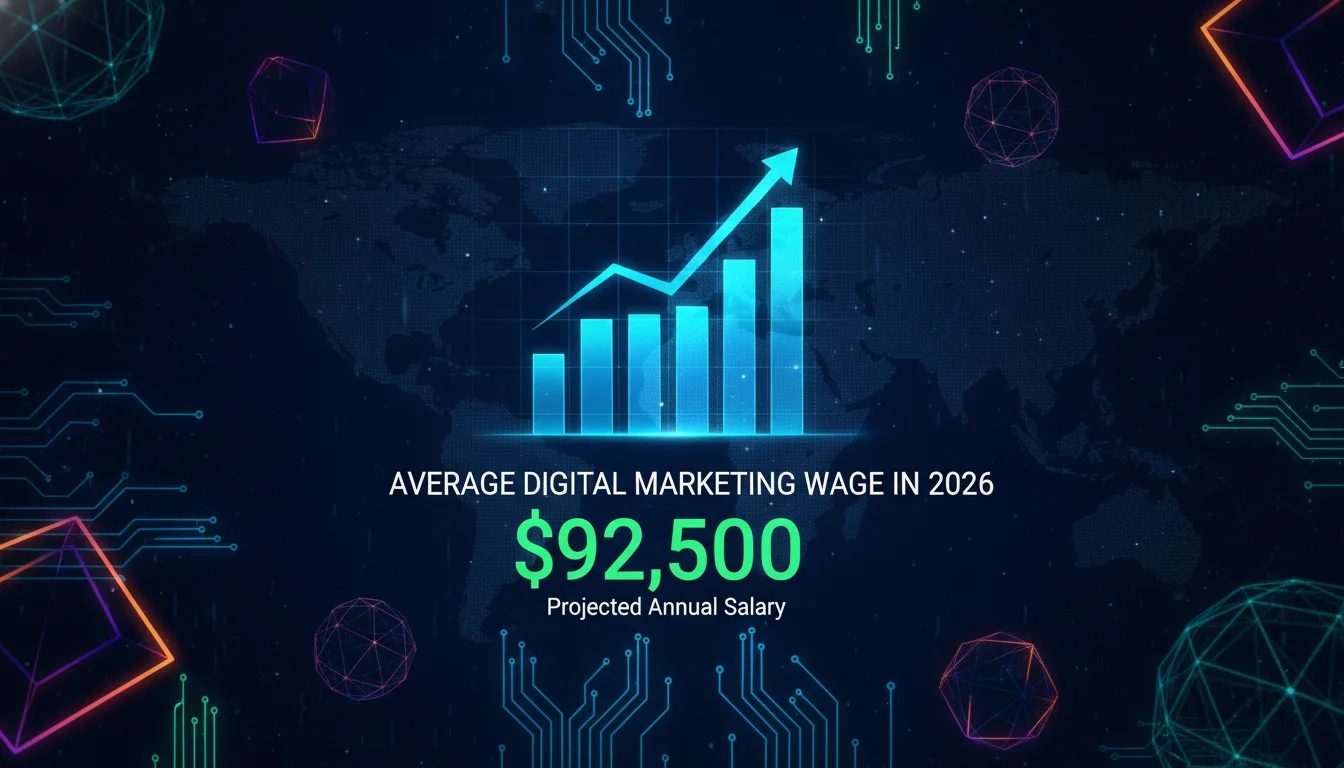
The average digital marketing wage in the U.S. falls between $64,960 and $68,366 depending on the source and methodology. The American Advertising Federation (AAF) salary survey reports an average base of $64,960 per year ($31.23 per hour) for Digital Marketing Specialists. Meanwhile, Landingi cites Glassdoor’s average base at $68,366. When total pay enters the picture, Glassdoor’s broader dataset shows a median of $97,000, with a range from $73,000 to $135,000. National averages only tell part of the story. Your personal compensation depends heavily on role, experience, and geography.
Why Different Sources Report Different Figures
Each platform surveys a different population and counts different compensation elements. The AAF focuses narrowly on specialists and reports base salary only. Glassdoor’s total pay pulls from self-reported figures across all digital marketing titles. Even within Glassdoor, the same title can yield $26,000 in Bayamón, Puerto Rico for a 1-3 year marketer, or $161,000 in San Francisco for someone with 10-14 years of experience. When you read any salary figure, always confirm whether it represents base, total, or median pay, and which sample it came from.
Digital Marketing Wage by Experience Level
Entry-Level Digital Marketing Wages
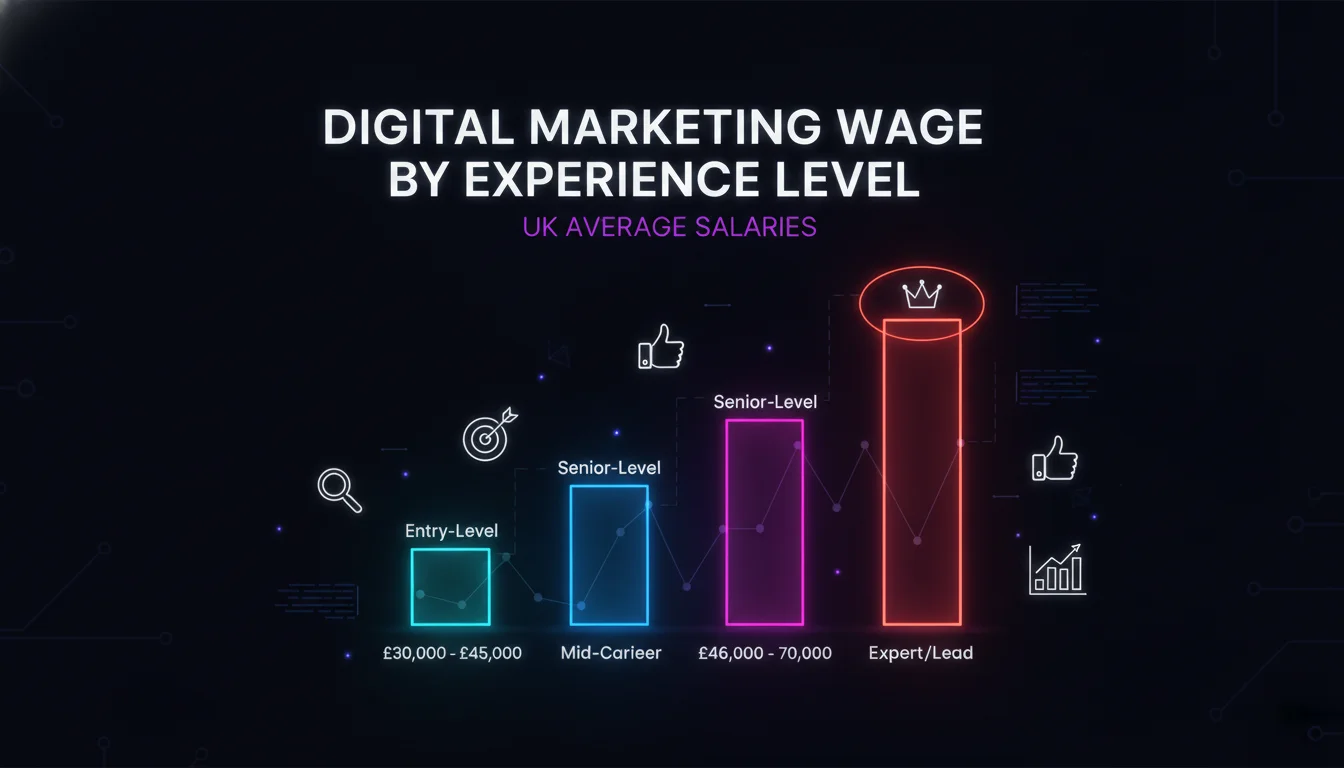
Professionals just starting out can expect compensation between $46,268 and $54,000, based on the AAF’s 10th and 25th percentiles for specialists. Glassdoor’s real-world submissions back this up: a 4-6 year marketer in Billings, MT reported $46,000-$54,000, and a 1-3 year marketer in Washington, D.C. showed $11,000-$13,000, likely reflecting a part-time or internship arrangement. A full-time entry-level role in most U.S. markets should realistically target at least $50,000.
Mid-Career Digital Marketing Wages
With 4-6 years of experience, compensation typically climbs into the $60,000-$100,000 range. The AAF’s 75th percentile for specialists sits at $71,031, while a 4-6 year professional in San Diego reported $68,000 total pay on Glassdoor. In New York City, that same experience level can command $98,000-$113,000. Mid-career is where salary growth accelerates fastest, as marketers shift from execution into strategy and team leadership.
Senior and Director-Level Wages
At 10 or more years in the field, total compensation can exceed $130,000. Glassdoor’s career trajectory data shows Senior Digital Marketing Managers earning $130,000-$219,000, and Lead Digital Marketing Managers reaching $108,000-$195,000. Real submissions confirm this: a San Francisco professional with 10-14 years reported $139,000-$161,000. These top-tier figures go to marketers who combine deep channel expertise with proven revenue impact and team leadership.
Digital Marketing Wage by Job Title
Specialist vs. Manager vs. Director
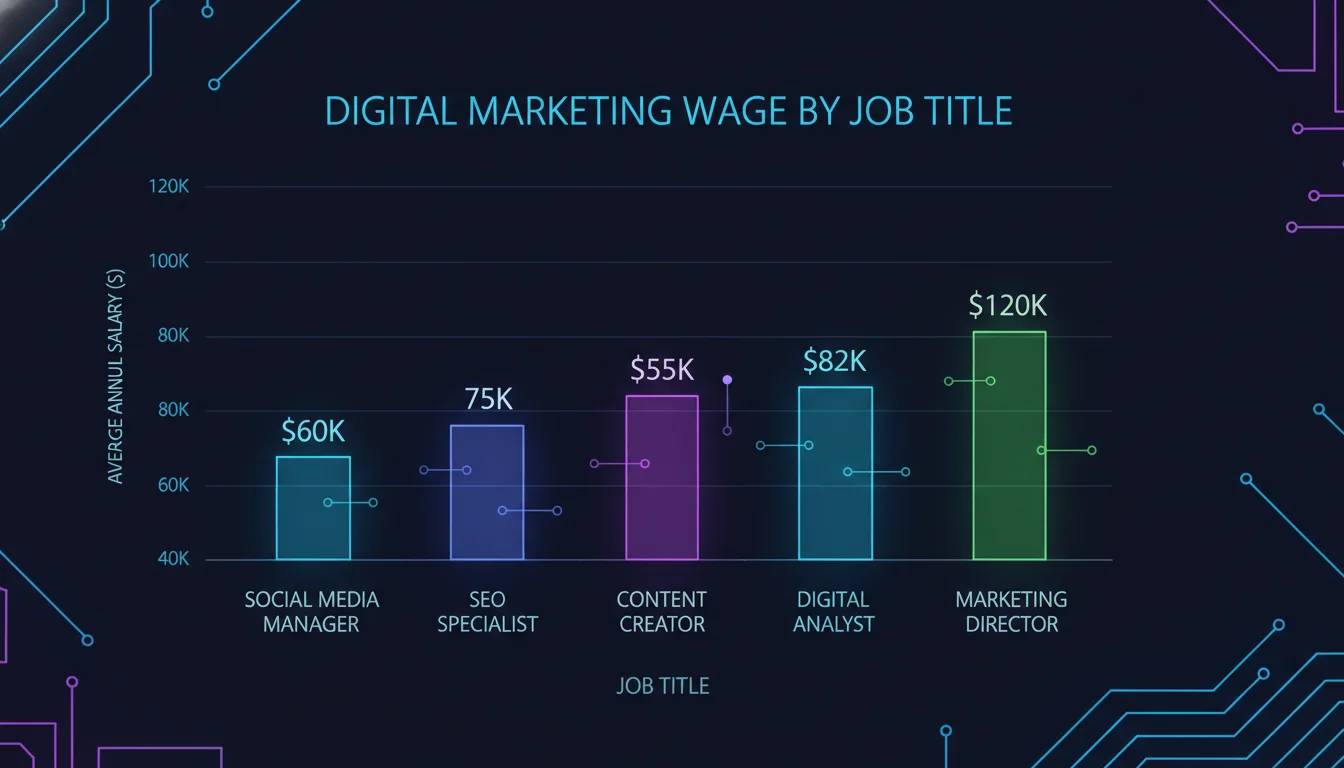
Role hierarchy shapes your earning potential more than almost any other factor. The AAF reports an average specialist wage of $64,960. Move up to Digital Marketing Manager and the median total pay jumps to $130,000, according to Coursera’s analysis of Glassdoor data. Lead and Senior Managers can see totals from $108,000 to $219,000, with the size of the team and budget under management often being the key differentiator.
Specialized Roles and Their Wages
Not all digital marketing roles earn the same. SEO specialists, social media managers, email marketers, and PPC analysts each command different compensation based on skill scarcity and revenue proximity. Highly technical roles in marketing operations or analytics frequently outpace creative-only positions in both base and bonus potential. The broader “digital marketing” label gives a median total around $97,000, but specialists who own measurable revenue outcomes tend to negotiate well above that floor.
Digital Marketing Wage by State and City
Top-Paying States for Digital Marketing Specialists
Geography is one of the most reliable predictors of what you’ll earn. The AAF salary survey identifies Massachusetts as the highest-paying state for Digital Marketing Specialists, with an average of $76,751 per year ($36.90/hour). New York follows at $74,248, Texas at $73,496, California at $73,235, and New Jersey at $71,829. These are base salary figures, so actual total compensation in these states runs higher once bonuses are factored in.
Highest-Paying Metropolitan Areas
Within states, major cities push compensation even further. New York City tops the list at $76,000 per year for specialists, ahead of San Diego, CA ($70,415) and Denver, CO ($60,584), per AAF data. Urban hubs concentrate corporate headquarters and agencies, creating fierce competition for talent and driving up both base offers and incentive packages. Even remote-first companies often adjust pay by employee location, so a New York-based remote marketer may still command more than a peer in a lower-cost region.
Comparison Table: Specialist Wages Across Top States
| State | Average Annual Wage | Hourly Rate |
|---|---|---|
| Massachusetts | $76,751 | $36.90 |
| New York | $74,248 | $35.70 |
| Texas | $73,496 | $35.33 |
| California | $73,235 | $35.21 |
| New Jersey | $71,829 | $34.53 |
Source: AAF Digital Marketing Specialist Salary Survey
Agency, In-House, and Freelance: How the Model Affects Pay
Where you work shapes what you earn just as much as what you do. In-house roles at large technology, finance, or e-commerce companies tend to offer the most competitive base salaries and structured bonus programs. Agency positions often trade slightly lower base pay for faster skill development across multiple clients and industries. Freelancers operate differently: Glassdoor data shows a median of $42 per hour on platforms like Freelancer.com, which translates to a strong annual figure for full-time equivalent work, but without the benefits, stability, or equity upside of a salaried role.
Startups occupy their own category. Base pay may sit below market, but equity compensation can change the long-term math significantly. The right model depends on your career stage, risk tolerance, and the skills you want to build fastest.
Pros and Cons of a Digital Marketing Career
Pros
- Above-average earning potential: The median total pay of $97,000 sits well above the U.S. median for all occupations, per Glassdoor data.
- Clear growth trajectory: Salary progression from specialist to senior manager is well-documented and achievable within a decade.
- Remote flexibility: Many digital marketing roles support remote or hybrid work, expanding access to high-paying markets without relocation.
- Skill-driven pay bumps: Certifications and technical specializations can accelerate compensation growth faster than tenure alone.
- Diverse career paths: You can move into SEO, paid media, analytics, brand strategy, or creative direction from a single starting point.
Cons
- High variability: Pay ranges are wide, and location, company size, and title can produce dramatically different outcomes for the same skill set.
- Constant upskilling required: Algorithm changes, new platforms, and AI tools mean your skills have a shorter shelf life than in many other fields.
- Performance pressure: Bonus-heavy compensation structures tie a meaningful portion of your income to campaign results you don’t always fully control.
- Entry-level crowding: The field attracts a large volume of applicants, making the jump from $46,000 to $70,000 competitive and credential-dependent.
Key Factors That Influence Your Compensation
Education and Certifications
A bachelor’s degree remains the standard entry requirement, and it contributes to above-average pay, as noted in the Glassdoor Economist Pay Overview. Certifications in Google Ads, Meta Blueprint, HubSpot, and Google Analytics signal hands-on competency to hiring managers. Many employers factor these credentials into initial offers and raise evaluations, especially for tactical roles where platform proficiency is directly measurable.
Industry and Company Size
Technology, finance, and e-commerce companies generally pay higher digital marketing wages than non-profits or small local businesses. Company scale matters too: a global enterprise typically offers a more competitive package than an early-stage startup, though the startup may compensate with equity. Industries with thin margins or lower digital maturity often cap wages in the lower quartiles, while data-driven, high-growth sectors push total pay well above the median.
In-Demand Skills
Technical skills that directly affect revenue, such as conversion rate optimization, marketing automation, and advanced analytics, can accelerate compensation growth faster than generalist competencies. According to multiple industry observers, landing page optimization and AI-powered campaign management are among the most lucrative specializations heading into 2026. Marketers who can both design strategy and interpret complex data often qualify for senior-level pay years ahead of peers who focus on execution alone.
“Specialists in high-impact areas, such as landing page design, testing, and optimization, often earn more because their work directly drives conversions and revenue.” – Landingi Digital Marketing Salary Report
How to Increase Your Digital Marketing Wage: Step-by-Step
Step 1: Gain High-Value Certifications
Pursue credentials tied to platforms with large ad spends: Google, Meta, Amazon. The Google Digital Marketing and E-commerce Professional Certificate builds skills across SEO, PPC, and e-commerce strategy. Candidates who complete structured certification programs often see a meaningful pay increase within their next job move, especially when paired with portfolio projects that demonstrate real campaign results.
Step 2: Specialize in a Lucrative Niche
Generalists get hired. Specialists get paid more. Focus on a high-demand area like marketing automation (Marketo, HubSpot Operations), data analytics (Google Analytics 4, Tableau), or paid media (programmatic buying). Glassdoor data shows that specialists in these fields consistently earn total pay well above the general $97,000 median. Position yourself as essential to the company’s customer acquisition engine, and your negotiating leverage grows accordingly.
Step 3: Negotiate Your Total Compensation
Many marketers leave money on the table by accepting the first offer. Research your target pay using multiple sources, not just one average. Use the AAF percentile breakdown to see where your skills place you relative to the market. When negotiating, focus on total compensation, not just base. Ask about signing bonuses, performance incentives, and remote-work stipends. A well-prepared negotiation can land you 15-30% above the posted range within the same title.
International Digital Marketing Wages: A Quick Comparison
The U.S. leads global digital marketing compensation by a significant margin. According to Landingi’s international salary research, countries like Poland, Spain, and Italy offer lower base wages but also carry lower costs of living and increasingly remote-friendly work cultures. France and Germany sit closer to U.S. entry-level figures in absolute terms, though purchasing power parity shifts the real-world comparison. For U.S.-based marketers considering remote roles with international companies, or for global brands building distributed teams, understanding these gaps helps set realistic expectations on both sides of the negotiation.
If you’re building a brand with a global audience, our team at Emin Media has worked across markets and understands how compensation strategy intersects with creative output. Explore our branding and digital marketing services to see how we approach it.
Benefits Packages: The Hidden Layer of Your Total Wage
Base salary and bonuses are only part of the picture. The AAF survey highlights that Digital Marketing Specialists commonly receive dental insurance, vision insurance, 401(k) plans, life insurance, paid time off, disability insurance, tuition reimbursement, and employee assistance programs. In competitive markets, benefits can add meaningful value to an offer that looks modest on paper. When comparing two roles, always calculate the full cost of benefits you’d otherwise pay out of pocket. A $65,000 offer with full benefits and tuition reimbursement can outperform a $72,000 offer with minimal coverage.
Frequently Asked Questions
Do digital marketers make good money?
Yes, earnings are generally above the national average for all occupations. The median total digital marketing wage sits around $97,000, and senior roles can exceed $160,000, especially in tech hubs and management positions. The Glassdoor Economist Pay Overview confirms that marketing careers offer above-average pay relative to the broader job market.
Is digital marketing a 9 to 5 job?
It can be, but many roles require flexibility to monitor live campaigns or engage on social media outside standard hours. Freelancers and agency professionals often work irregular schedules, while in-house corporate roles tend to be more predictable. The structure depends heavily on company culture and the specific channels you manage.
How much does digital marketing pay you?
Pay varies widely, from $46,268 for entry-level specialists to $161,000 or more for experienced managers in major markets. The AAF reports an average specialist wage of $64,960, while Glassdoor shows a median total pay of $97,000 across all digital marketing titles. Your actual figure depends on experience, location, and specialization.
Is digital marketing a stressful job?
It can be, given tight deadlines, data-driven performance targets, and the constant need to stay current with algorithm and platform changes. Stress levels correlate strongly with company culture, role expectations, and how well a marketer can manage competing priorities. Many professionals find the variety and measurability of the work energizing rather than draining.
What skills increase digital marketing compensation the most?
Revenue-oriented skills like conversion rate optimization, AI campaign management, and cross-channel analytics drive the highest pay bumps. Certifications from Google, Meta, and HubSpot add tangible value when negotiating a higher offer. Marketers who combine strategic thinking with data interpretation consistently earn above the median, often years ahead of peers who focus on execution alone.
Ready to build a brand that attracts top-tier marketing talent and delivers measurable results? Contact Emin Media for a free brand consultation and let’s build something bold together.
Enjoyed this article?
Contact Emin Media for a free brand consultation and let's create something amazing together.
Get in Touch