Digital Instax Camera: Best Models & Buying Guide 2026
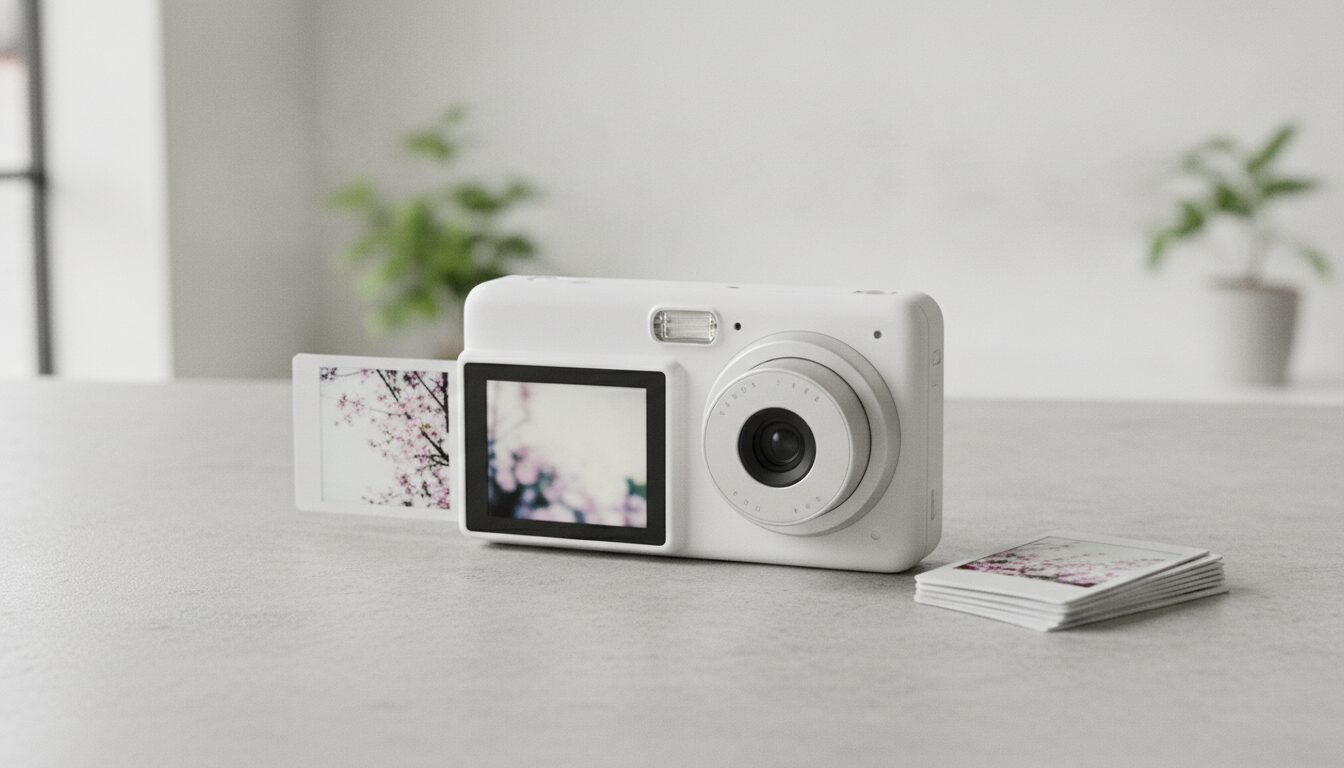
A digital instax camera is an instant camera that uses a digital sensor to capture, preview, and edit images before printing on Instax film. Models like the instax Pal and mini Evo series blend analog charm with modern digital control for a smarter shooting experience.
Key Takeaways
- instax cameras offer hybrid or fully digital experiences, blending analog charm with modern convenience.
- The instax Pal is a true digital camera that saves photos to a microSD card and prints via the companion app.
- Hybrid models like the instax mini Evo and LiPlay+ let you preview and edit before printing, reducing wasted film.
- Instant Mini film costs around $0.60–$0.70 per print from a standard 20-pack.
- Top 2026 picks include the instax mini Evo Cinema for video capture and the instax mini Evo for creative filter control.
- Hybrid cameras typically range from $150 to $410, depending on features and film format.
What Is a Digital Instax Camera?
Media” class=”wp-image-10252″ loading=”lazy” width=”1792″ height=”1024″ />A this type of camera is an instant camera that incorporates digital imaging technology so you can capture, preview, edit, and sometimes store photos before printing on Instax film. Unlike fully analog instant cameras, these devices show your image on an LCD screen, let you apply filters, and let you choose which shots to print. This cuts film waste and opens up real creative possibilities. Some models, like the instax Pal, are entirely digital and print wirelessly via a smartphone app. Hybrids like the instax mini Evo include both a built-in printer and digital storage in one body.
Defining Digital Instant Photography
Digital instant photography is the fusion of instant print technology with digital sensors and processing. Instead of exposing film directly in the camera, you capture a digital file, usually a JPEG, that you can review on a screen. The camera then uses an internal OLED printer or communicates with an app to expose Instax film. This approach gives you the tactile satisfaction of an instant print with the control and shareability of digital photography. FUJIFILM categorizes its cameras into three types: Analog, Hybrid, and Digital, with the latter two representing the this kind of camera ecosystem.
How Hybrid and Digital-Only Models Differ
Hybrid digital instaxs, like the instax mini Evo and instax WIDE Evo, feature both a lens for capturing images and a built-in printer for instant output. They also connect to a smartphone to print photos taken on your phone. Digital-only models, like the instax Pal, lack a print mechanism entirely. They function as compact digital cameras that save pictures to a microSD card and send them to an Instax-compatible printer or smartphone app for physical prints. Hybrid cameras are self-contained. Digital-only options rely on external devices for printing.
Top Digital Instax Cameras in 2026
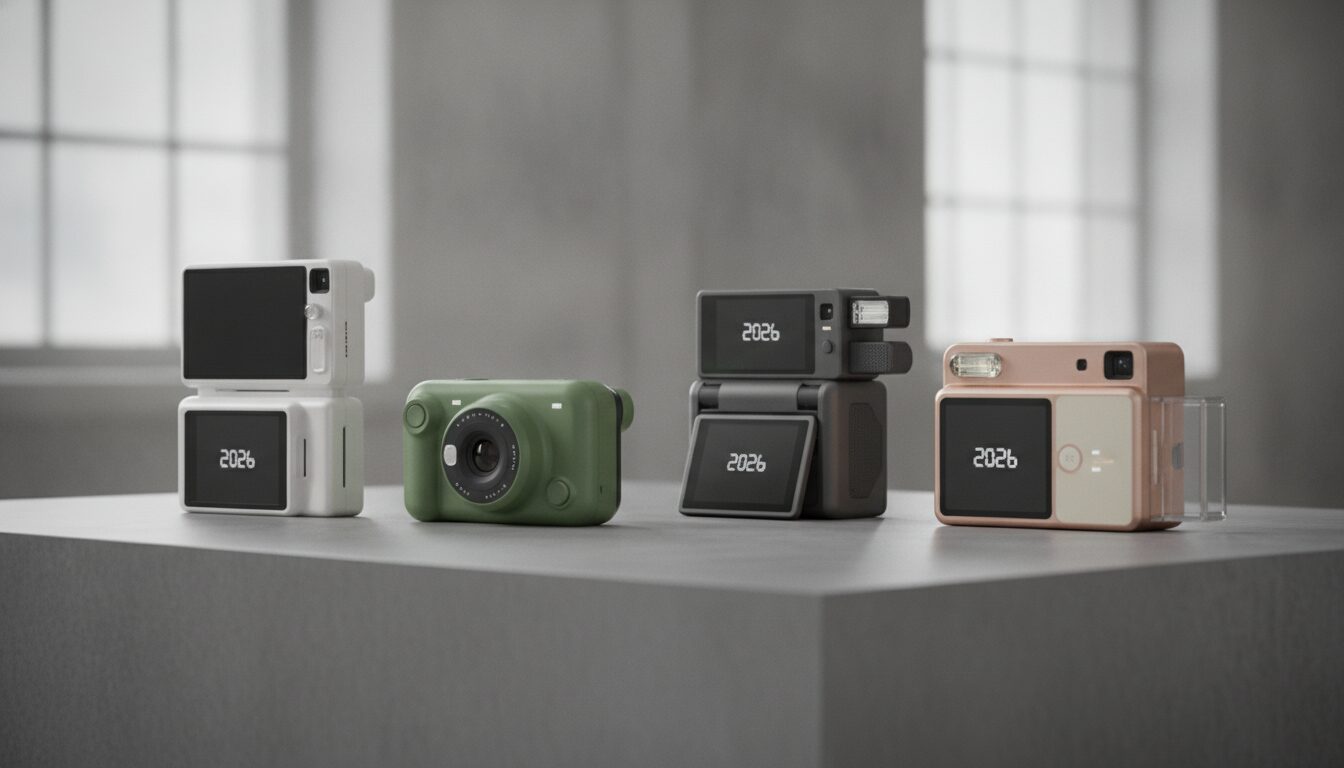
As of 2026, FUJIFILM’s instax camera lineup includes several standout models, each with unique strengths. From the pocketable instax Pal to the video-shooting instax mini Evo Cinema at $409, there’s a device for every instant-photography enthusiast. Below is a comparison of key specifications to help you decide.
| Model | Type | Film Size | Key Digital Feature | MSRP (USD) |
|---|---|---|---|---|
| instax Pal | Digital-only | Mini (via app) | MicroSD storage, app control | Bundle pricing |
| instax mini Evo | Hybrid | Mini | 10 lens × 10 film effects | $234.95 |
| instax mini Evo Cinema | Hybrid | Mini | Video recording, Eras Dial | $409 |
| instax mini LiPlay+ | Hybrid | Mini | Sound recording on prints | Varies by retailer |
| instax WIDE Evo | Hybrid | Wide | Wide-format digital hybrid | Varies by retailer |
instax Pal™: The Pocket-Sized Digital Camera
The instax Pal is a true this type of camera that breaks away from traditional instant camera design entirely. Measuring just a few inches wide, it saves every shot to a microSD card (sold separately) at resolutions up to 1920×1920 pixels and prints wirelessly through the Instax Pal app to an instax mini Link printer or instax Link Wide printer. According to WIRED, this model is ideal for those who want the flexibility of digital storage and the occasional instant print without carrying a bulkier hybrid camera. The Pal also supports motion-activated shooting and remote control via smartphone, making it a shareable, always-ready accessory.
instax mini Evo™: The Hybrid Powerhouse
The instax mini Evo is consistently recommended as the best this kind of camera for creative control. It prints at 600 DPI on Instax Mini film and offers 10 lens effects combined with 10 film effects, yielding 100 possible combinations. That’s enough to keep even seasoned photographers experimenting across multiple shoots. You can shoot, edit, and print all on the device, or send images from your phone to the camera for printing. FUJIFILM’s Instax-Rich mode enhances color saturation for a vivid, punchy look. With a classic black or brown finish, the mini Evo at $234.95 combines retro styling with modern functionality, earning it the top spot in most 2026 buyer’s guides.
instax mini Evo Cinema: Video Meets Instant Print
Released in 2025, the instax mini Evo Cinema extends the hybrid concept by adding video capture to the mix. It records short clips and lets you attach a QR code to a printed still frame so friends can scan the code to watch the video online. An Eras Dial cycles through 10 decade-themed filter effects, simulating the look of vintage film stocks from different eras. A Degree Control Dial offers 10 intensity levels for precise creative tuning. At $409, this 3-in-1 device (video camera, still camera, smartphone printer) targets content creators who want a tangible takeaway from their reels and short-form clips.
“The instax mini Evo Cinema is the most ambitious instant camera FUJIFILM has built yet. It’s not just a camera – it’s a physical link between your digital content and the real world.” – Creative technology review, 2025
instax mini LiPlay+: Sound and Print Combined
The instax mini LiPlay+ records a short audio clip with each photo and embeds a QR code on the print. Scanning the code plays back the sound, turning a static image into a mini time capsule. While not as feature-rich as the mini Evo, it remains a compact and accessible entry into the digital instax world. It includes a selfie mirror, dual shutter buttons, and the ability to print photos directly from a smartphone.
How to Choose a Digital Instax Camera
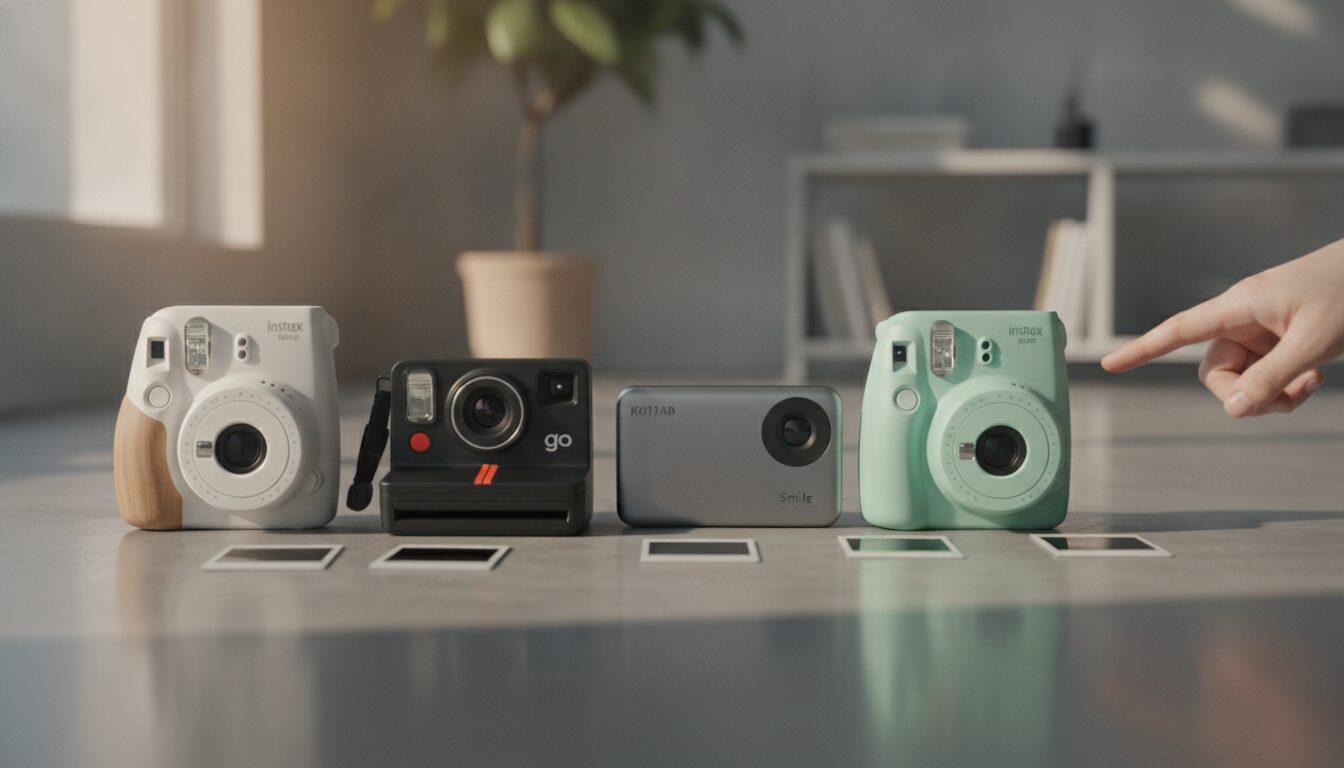
Selecting the right instax camera depends entirely on how you plan to use it. Follow these steps to find your match.
Step 1: Determine Your Print Needs
First, decide on the print size. Instax film comes in three formats: Mini (credit-card-sized, 3.4 × 2.1 inches), Square (3.4 × 2.8 inches), and Wide (4.25 × 3.3 inches). Mini film is the most widespread and costs roughly $14 for a 20-print pack, putting each shot at about $0.60–$0.70. Square film runs closer to $1.00 per print, and Wide film is slightly more. If you plan to print frequently, the lower cost of Mini may be the deciding factor. Keep in mind that some this type of cameras, like the Pal, only print Mini size through compatible printers, while the WIDE Evo uses Wide film.
Step 2: Evaluate Connectivity and Digital Features
Most this kind of cameras offer Bluetooth and a dedicated app, but the level of integration varies considerably. The instax Pal requires the app for every print, while hybrid cameras can operate independently. Check whether the camera supports direct social media sharing, remote shooting, or printing from cloud galleries. Also consider whether you want features like video, sound, or extensive filter systems. These add creative flexibility but push the price up toward the $400 range.
Step 3: Set Your Budget
Hybrid digital instaxs typically cost between $150 and $410. The instax mini Evo sits in the middle at $234.95, balancing features and cost well. If you’re just starting out with instant photography, a digital-only option like the instax Pal can be more affordable upfront, though you’ll also need a compatible printer. Factor ongoing film expenses into your budget too. Heavy users can spend $50–$100 per month on film alone, so the camera body price is only part of the equation.
Digital Instax Camera vs. Analog Instax: Key Differences
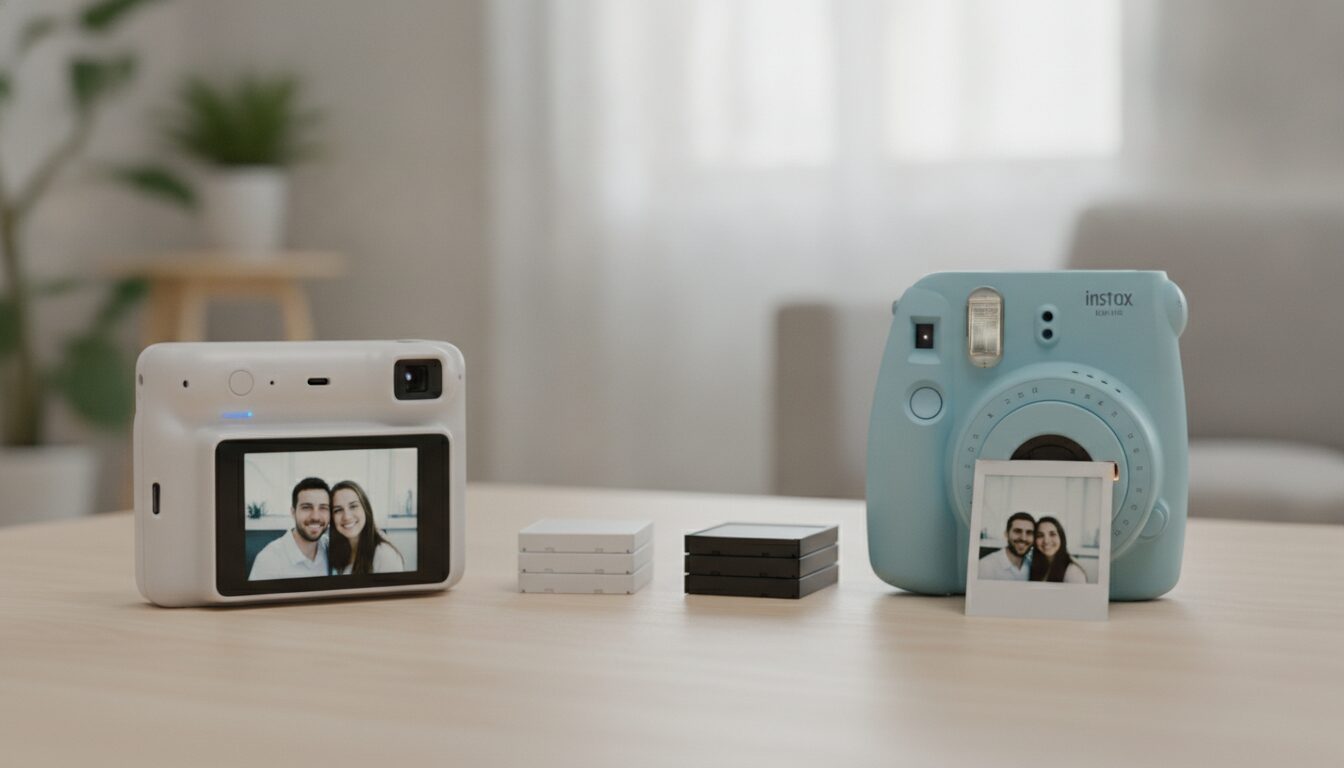
Understanding how a instax camera stacks up against a traditional analog Instax clarifies which is right for you. Both use the same Instax film, but the shooting experience and output control differ significantly.
Image Quality and Editing
Analog Instax cameras expose the film directly, so what you see through the viewfinder is roughly what you get, often with slight framing misalignments and no color adjustments. A this type of camera captures a full-resolution digital file first, letting you adjust brightness, apply filters, and crop before committing to a print. This reduces the number of wasted, poorly framed shots. As WIRED notes, the hybrid approach “gives you the best of both worlds.”
Cost Per Print
Because you can edit before printing, this kind of cameras typically waste less film, leading to a lower effective cost per usable print. With analog cameras, mistakes happen. Blurry or overexposed frames can’t be corrected, and each misprint still costs you the price of a sheet of film. The ability to preview on a screen before printing is one of the most practical advantages a digital instax offers over its analog counterpart.
“Instant photography is having a cultural moment, and the hybrid digital format is driving most of that growth. Consumers want the physical print, but they also want control over what gets printed.” – Industry analysis, Imaging Resource, 2025
The Tangible Experience
Purists argue that the delayed gratification of watching an analog print develop is part of the magic. Digital instant cameras can feel less spontaneous because you see the image on a screen first. Many users, though, appreciate the peace of mind that comes with knowing they’ll get a good print every time. It’s a personal choice between spontaneity and control, and neither answer is wrong.
Pros and Cons of Digital Instax Cameras
A instax camera offers a genuinely different experience from both analog instant cameras and standard digital cameras. Here’s an honest breakdown before you commit.
Pros
- Preview before printing: See your shot on an LCD screen and only print the keepers, cutting film waste significantly.
- Creative filter control: Models like the mini Evo offer up to 100 filter combinations without any external editing software.
- Smartphone integration: Print directly from your phone’s gallery via the instax app, bridging digital and physical sharing.
- Multimedia features: The mini Evo Cinema adds video capture at $409, while the LiPlay+ embeds audio into prints via QR codes.
- Modular flexibility: Digital-only models like the instax Pal separate capture from printing, giving you a lightweight carry option.
Cons
- Higher upfront cost: Hybrid models start around $150 and reach $409, compared to analog Instax cameras that often sell under $80.
- Ongoing film expense: Regardless of the camera type, Instax film costs $0.60–$1.00 per print, which adds up quickly for frequent users.
- App dependency: Digital-only models like the Pal require a smartphone and the instax app to print anything at all.
- Less spontaneous feel: The preview-and-edit workflow removes some of the surprise that analog fans love about instant photography.
- Battery reliance: Built-in rechargeable batteries mean a dead charge stops your session, unlike some analog models that run on AA batteries.
Creative Features of Digital Instax Cameras
Modern this type of cameras go far beyond simple point-and-shoot. They pack a range of creative tools that let you personalize every print.
In-Camera Filters and Effects
The instax mini Evo’s 100 filter combinations set the standard, ranging from soft vignettes to high-contrast monochrome. The mini Evo Cinema adds decade-themed filters via the Eras Dial, simulating the look of vintage film stocks across different eras. Even the instax Pal offers frame templates and sticker overlays through its companion app. These built-in effects eliminate the need for external editing software, making it easy to produce social-media-ready prints straight from the camera.
Smartphone Integration
All hybrid and digital instax cameras support the instax app, which enables remote control, direct printing from your phone’s gallery, and template downloading. The app can also add QR codes to prints, linking to videos or playlists. This bridges the gap between physical and digital sharing, letting one print serve as a gateway to a full multimedia experience. According to HubSpot’s consumer research, physical branded touchpoints that connect to digital content consistently outperform purely digital interactions in memorability.
Video and Sound Augmentation
The instax mini Evo Cinema records video, and the mini LiPlay+ attaches audio snippets to stills. These multimedia layers turn a simple photo into a richer memento. Picture a wedding reception print that plays a congratulatory message when scanned. That’s the kind of experience digital instax cameras are actively building toward in 2026, and it’s a direction the broader instant photography market is watching closely.
How to Use the instax mini Evo Cinema: Quick-Start Guide
The instax mini Evo Cinema is the most feature-dense digital instax camera in the current lineup. Here’s how to get your first print in under five minutes.
- Load your film: Open the film door and insert a 10-shot pack of Instax Mini film. The first frame ejects automatically as a cover sheet.
- Select your mode: Use the mode dial to choose Still, Video, or Smartphone Print mode.
- Choose your Eras Dial filter: Rotate the Eras Dial to pick one of the 10 decade-themed effects. Adjust intensity with the Degree Control Dial across its 10 levels.
- Capture your shot or clip: Press the shutter for a still or hold it for a short video clip. Review the image on the LCD screen.
- Print: Confirm the print on-screen. The camera exposes the film and ejects the print in seconds. A QR code on video prints links viewers to the clip online.
- Share digitally: The captured file is also saved internally, so you can share it via the instax app without using a film sheet.
The Future of Digital Instant Photography
The digital instax camera segment is evolving fast. FUJIFILM has already released models that print directly from its X-series mirrorless cameras, signaling deeper integration between professional digital photography ecosystems and the instant print world. Creative industry observers predict that future hybrid cameras will offer higher-resolution sensors, longer video clips, and cloud backup as standard features. The success of the instax Pal also points to a growing market for modular, dockable digital instant cameras that separate capture from printing entirely. As the line between smartphone and dedicated camera continues to blur, the digital instax camera looks set to become a lifestyle accessory that merges digital convenience with the enduring appeal of physical photographs.
At Emin Media, we work with brands and creators who understand that physical touchpoints still matter in a digital-first world. A well-designed instant print campaign can generate social sharing, emotional connection, and brand recall that purely digital content rarely achieves. Explore our creative services or read more on our blog for ideas on building campaigns that bridge the physical and digital.
Frequently Asked Questions
What exactly is a digital instax camera?
A digital instax camera is an instant camera that uses a digital sensor to capture images, which you can preview and edit before printing on Instax film. Unlike fully analog models that expose the film directly, digital and hybrid versions give you control over the final output before committing a film sheet.
Can I use the instax Pal without a printer?
Yes, the instax Pal operates as a stand-alone digital camera and stores photos on a microSD card without printing anything. To get a physical print, you need a compatible instax printer such as the mini Link or Link Wide, connected via the instax app.
Which digital instax camera has the best image quality?
The instax mini Evo produces the sharpest prints at 600 DPI, and its 100 filter combinations give you precise control over the final look. For users who also want video capability, the instax mini Evo Cinema at $409 adds that feature without sacrificing print quality.
Does the instax mini Evo Cinema print video?
No, it prints still frames from video clips rather than motion images. A QR code printed on the still frame links viewers to the video online, combining a physical print with a digital viewing experience.
Is a digital instax camera worth it over an analog one?
If you want to avoid wasted film and enjoy editing flexibility, a hybrid digital instax camera is worth the extra investment, especially given that Mini film costs $0.60–$0.70 per sheet. Analog models appeal to those who love the surprise and spontaneity of an unfiltered instant print.
How much does Instax film cost?
A 20-sheet pack of Instax Mini film typically costs around $14, making each print about $0.60–$0.70. Square and Wide film formats are slightly more expensive per print, so your choice of film size affects the long-term running cost of any digital instax camera.
Enjoyed this article?
Contact Emin Media for a free brand consultation and let's create something amazing together.
Get in TouchRelated Articles
Samsung Digital Camera: Best Used Cams to Buy in 2026
Find the best camera samsung digital cam for 2026. Compare WB350F, MV800, Galaxy Camera 2…
Nikon D5500 Price Guide: Best Deals in 2026
Find the best digital slr camera d5500 price in 2026. Used bodies from $250, kits…
Digital CCD Camera: Buyer’s Guide 2026
A digital CCD camera delivers film-like color and vintage charm. Compare top models, prices, and…