Digital and Polaroid Camera Guide: Best Hybrid Models 2026
Key Takeaways
- A digital and polaroid camera combines digital capture with instant printing, offering the best of both worlds.
- Hybrid models like the Fujifilm Instax Mini Evo let you review and edit before printing, reducing wasted film.
- Print costs range from $0.75 for Instax Mini film to less with Zink paper, making instant photo printing accessible.
- These cameras serve as both a fun creative tool and a portable printer for smartphone images.
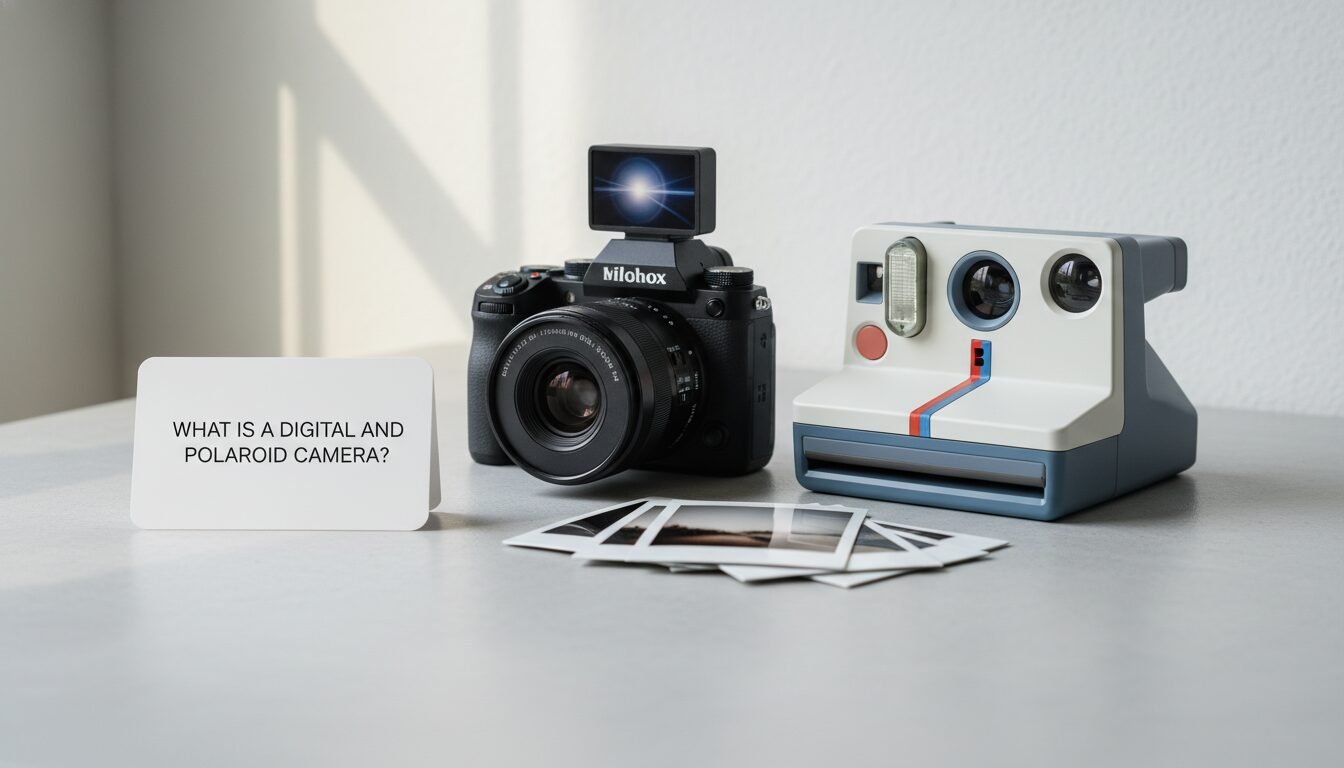
A digital and polaroid camera is a hybrid device that captures photos digitally and instantly prints physical copies using instant film or paper. By merging the convenience of digital review with the tangible joy of a printed Polaroid-style photo, these cameras have become popular for events, journaling, and creative expression.
“Instant cameras embody the magic of photography: With the press of a shutter button, you can capture the world around you and see tangible results in seconds.” — Wirecutter
What Is a Digital and Polaroid Camera?
A polaroid camera is a hybrid device that uses a digital sensor to capture an image, processes it with onboard software, and then prints it using self-developing instant film or dye-sublimation paper. Unlike a traditional Polaroid camera that exposes film directly, these hybrid models store the image first, giving you the ability to preview, apply filters, or reprint without burning through expensive film. The Fujifilm Instax Mini Evo exemplifies this approach: it records a 4.9-megapixel image, lets you crop and add lens effects, then prints on credit-card-sized Instax Mini film.
How a Hybrid Instant Camera Works
The magic happens in three stages: capture, process, and print. First, the digital sensor records your image just like any camera. Then, onboard software lets you tweak exposure, add vintage filters, or crop the frame. Finally, the thermal printer transfers your edited image onto instant film or Zink paper. This workflow eliminates the “one shot, one print” limitation of analog instant cameras while preserving that immediate gratification we crave.
The Difference Between Digital-Only and Hybrid Instant Cameras
A digital-only camera saves files to a memory card without any physical output, while a hybrid instant camera bridges the gap by offering both a digital archive and an instant print. This duality eliminates guesswork and film waste. According to Digital Camera World, hybrid cameras give you “an image that you can store and share more easily,” making them especially useful for social gatherings where guests want copies.
The Evolution from Classic Polaroid to Modern Hybrid Cameras
The Rise and Fall of Analog Instant Photography
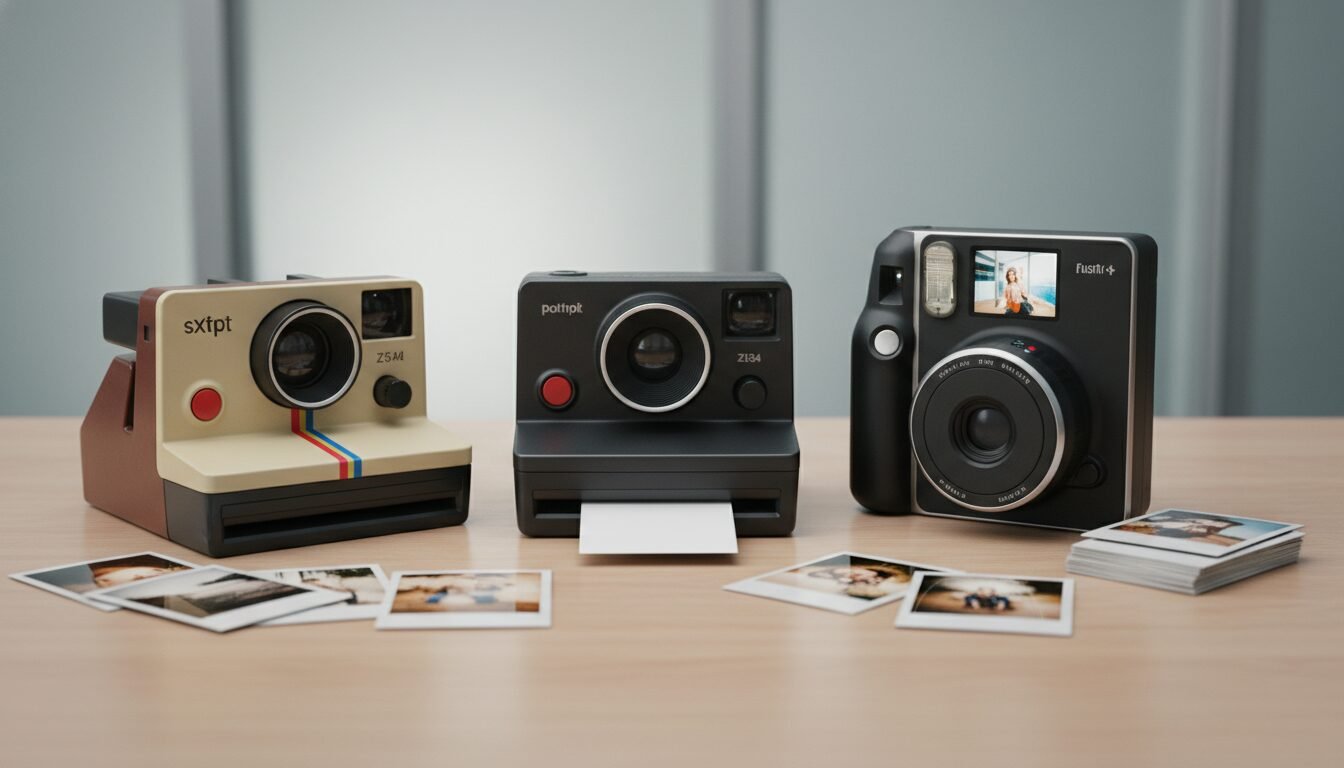
The term “polaroid camera” originally referred to analog instant cameras from the Polaroid Corporation, which peaked in the 1970s. These cameras used self-developing film packs that produced a print within minutes, but the rise of digital photography in the 1990s led to a sharp decline. Polaroid ceased film production in 2008, although the brand later revived under new ownership. Meanwhile, Fujifilm’s Instax line kept the analog instant market alive, maintaining steady growth through the 2010s.
“Having taken my first Polaroid in 1984, I’ve been in love with instant photography for decades—and the move to hybrid digital instant cameras opens up some exciting new windows.” — James Artaius, Editor, Digital Camera World
The Digital Instant Renaissance
The 2020s saw a resurgence, driven by Gen Z’s love for retro aesthetics and the desire for tangible photos in a smartphone-saturated world. Manufacturers responded by introducing these camera hybrids that combine the best of both eras. The Fujifilm Instax Mini Evo, launched in 2022, is a prime example, offering smartphone connectivity alongside genuine Instax film printing. Today, the category includes not only Fujifilm’s extensive lineup but also Kodak models that print on Zink paper, a zero-ink technology that uses heat-activated dye crystals.
Key Features to Look for in a Digital and Polaroid Camera
Print Technology: Instax Film vs. Zink Paper vs. Polaroid Originals
The type of instant media defines the look and cost of your prints. Instax Mini film produces 2.4×1.8-inch images with retro color saturation, while Instax Wide gives a 3.9-by-2.4-inch canvas. Zink Paper, used in Kodak hybrid cameras, yields 2×3-inch sticker-backed prints without chemical development, resulting in lower per-print costs. Classic Polaroid I-Type film offers the largest square format but costs roughly $2 per shot, making it less economical for casual use.
Digital Sensor and Image Quality
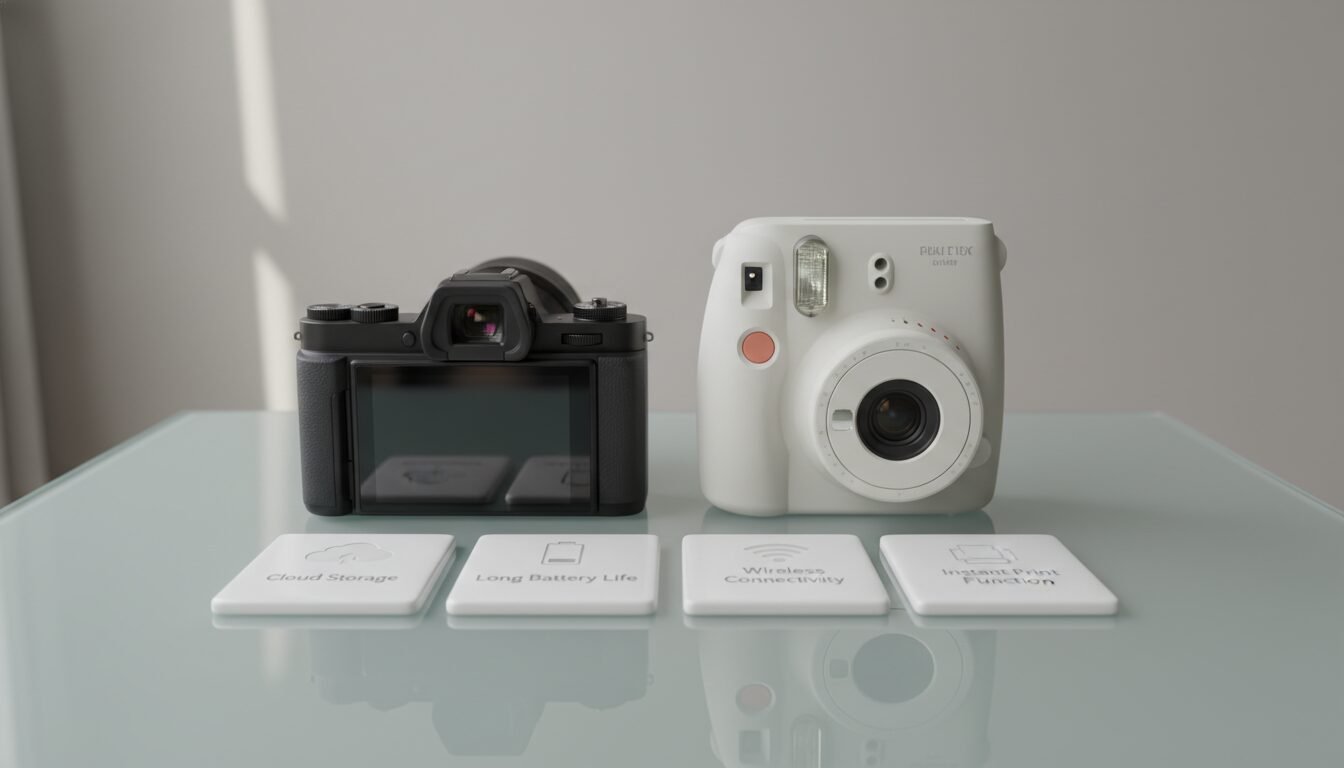
Most such polaroid camera hybrids use 4.9 to 10-megapixel sensors. While these resolutions lag behind modern smartphones, the prints are small enough that detail holds up well. A built-in LCD screen—typically 2.4 to 3.0 inches—lets you compose, review, and discard shots before committing to paper. Some models, like the Instax Mini LiPlay, even record a 10-second sound snippet that can be embedded as a QR code on the print.
Connectivity and Smartphone Integration
Bluetooth pairing with a companion app enables you to print photos directly from your phone’s camera roll. This means your the and polaroid camera doubles as a portable printer for images you didn’t take with it. The Instax Mini Evo app, for example, offers remote shooting and additional filter packs, while the Kodak app includes collage and sticker tools. This feature essentially turns the hybrid camera into a mobile photo booth for any occasion.
Top Digital and Polaroid Camera Models Compared
Feature Comparison Table
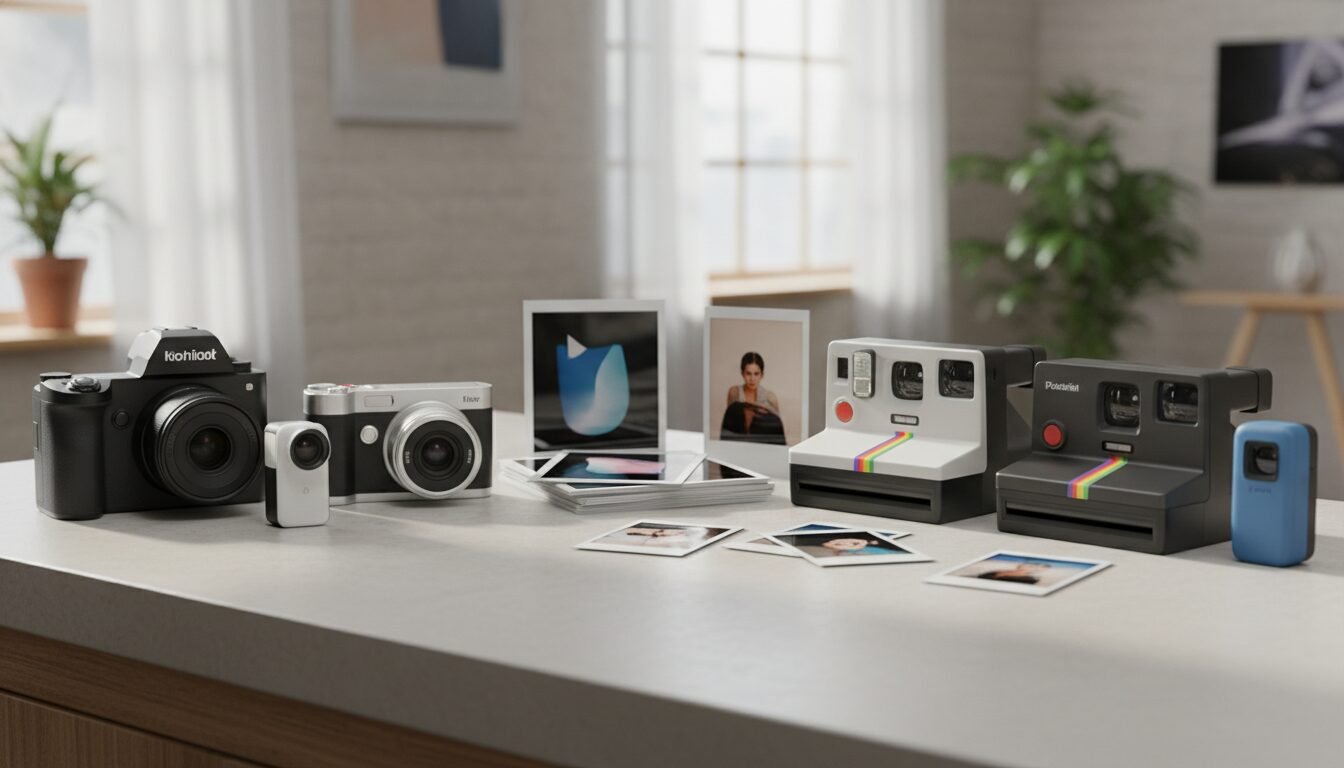
| Model | Print Technology | Sensor | LCD Screen | Connectivity | Notable Feature |
|---|---|---|---|---|---|
| Fujifilm Instax Mini Evo | Instax Mini film | 4.9 MP | 3.0″ LCD | Bluetooth, app | 10 lens effects & 10 film borders |
| Fujifilm Instax Mini LiPlay | Instax Mini film | 4.9 MP | 2.4″ LCD | Bluetooth, app, audio capture | Records 10 seconds of sound per frame |
| Fujifilm Instax WIDE Evo | Instax Wide film | 4.9 MP | 3.0″ LCD | Bluetooth, app | Larger prints, tripod mount, remote trigger |
| Kodak Mini Shot 3 Retro | Zink paper | 10 MP | 1.7″ LCD | Bluetooth, app | Sticker-backed prints, lower per-print cost |
In-Depth Look at the Fujifilm Instax Mini Evo
The Instax Mini Evo is the flagship camera from Fujifilm Instax, carrying an MSRP of $234.95. It marries a classic rangefinder-inspired design with a 3.0-inch LCD, dual shutter buttons, and a selfie mirror. The camera offers 100 possible combinations of lens and film effects, letting you dial in a vintage or modern look before printing. Once printed, the mini-sized photo develops in about 90 seconds. Its hybrid nature also means you can print images from a smartphone library, effectively turning it into a portable photo lab.
Other Notable Hybrid Cameras
The Instax Mini LiPlay provides a more compact, audio-capable alternative, often retailing around $150. For those who want bigger prints, the Instax WIDE Evo uses Instax Wide film—twice the surface area of Mini—and includes a tripod mount for stable group shots. On the Zink side, the Kodak Mini Shot 3 Retro prints on adhesive-backed paper, enabling instant stickers. All three models can also function as standalone smartphone printers, giving you versatility beyond the camera itself.
How to Use Your Digital and Polaroid Camera: Step-by-Step
Step 1: Choose Your Film and Load It
Open the film door and insert a fresh pack of compatible film—Instax Mini, Wide, or Zink. Align the yellow marks on Instax cartridges with the camera’s guides. Avoid touching the film’s dark slide; the camera will eject it automatically when you close the back.
Step 2: Frame and Capture Digitally
Compose your shot using the LCD screen. Because you’re working with a digital sensor, you can afford to experiment with angles and composition. Press the shutter halfway to lock exposure, then fully to capture. The image is saved internally, and you can review it immediately—no film exposed yet.
Step 3: Edit and Apply Effects
Use the camera’s onboard tools to crop, rotate, or apply filters. On the Instax Mini Evo, rotating the lens ring cycles through creative effects like soft focus, monochrome, or light leaks. You can also add a color border or vignette before committing to paper.
Step 4: Print When Ready
Press the print button. The analog development process begins: Instax film takes about 90 seconds to fully appear, while Zink paper prints dry instantly. Because you previewed digitally, you avoid wasting film on blurry or poorly exposed frames—a key advantage of a digital and polaroid camera.
Step 5: Share and Digitize Again
Scan the physical print with your phone to share online, or save the original digital file from the camera’s microSD card. Many companion apps let you order reprints or create collages from your digital archive.
Cost and Film Considerations: Are These Cameras Worth It?
The True Cost per Print
A twin pack of Instax Mini film contains 20 shots and costs around $17 at Amazon, translating to roughly $0.75 per print. Instax Wide film runs about $1 per exposure, while Zink paper can dip below $0.50 per sheet when bought in bulk. By contrast, traditional Polaroid I-Type film costs approximately $2 per photo. This cost advantage makes digital and polaroid camera hybrids more practical for everyday use, especially when you factor in the ability to review before printing.
Budget-Friendly Alternatives and Accessories
The Instax Mini 41, rated a top budget pick by Wirecutter, offers a pure analog experience at $101, but lacks a digital back. If you want a hybrid with digital smarts, the Instax Mini Evo’s $234.95 price includes Bluetooth and app support. Carrying cases, albums, and magnet frames—widely available from third-party brands—help protect and display your prints. For those who already own a smartphone, standalone printers like the Instax Mini Link start at $99 and can turn any photo into an instant print without a second device.
Creative Uses for Your Digital Instant Photos
Scrapbooking, Journaling, and Wall Art
Because digital and polaroid camera prints are small and sturdy, they’re ideal for memory-keeping projects. Stick them into a travel journal, arrange a photo grid on a dorm room wall, or use Zink stickers to decorate a laptop. The ability to print multiple copies from the same digital file lets you share a favorite shot with friends without giving up the original.
Using Hybrid Cameras at Events and as a Portable Printer
Weddings, birthday parties, and corporate events benefit from the immediate gratification of an instant photo booth. Pair your hybrid camera with a miniature clothesline and clothespins to create a live guestbook. When connected to a smartphone, the same camera can churn out prints of group selfies or candid shots in under two minutes, and many models offer a “party mode” that optimizes exposure for flash-lit environments.
Pros and Cons
Pros
- Preview shots before printing, eliminating film waste and bad exposures
- Store digital copies for easy sharing and reprinting later
- Lower per-print costs compared to traditional Polaroid film
- Smartphone connectivity turns the camera into a portable printer
- Creative filters and effects add artistic flair to instant prints
Cons
- Higher upfront cost than basic analog instant cameras
- Digital sensor quality lags behind modern smartphones
- Battery life requires regular charging unlike simple film cameras
- Learning curve for navigating menus and app features
Frequently Asked Questions
What is a digital and polaroid camera?
A digital and polaroid camera is a hybrid device that captures photos digitally and instantly prints them on film or paper. It combines the digital preview and storage benefits of a digital camera with the tangible, retro output of a Polaroid-style instant print.
Which is better: Instax Mini Evo or Instax Mini LiPlay?
The Instax Mini Evo offers more creative control with physical dials and 10 lens effects, while the LiPlay is smaller, cheaper, and can add sound to prints. Choose the Evo for artistic experimentation and the LiPlay for pocket-friendly, all-day casual use.
Can I use a digital and polaroid camera without film?
Yes. These cameras function as digital-only devices when no film is loaded. You can capture and store images to a microSD card, and later print them either through the camera when film is inserted or via a companion smartphone app.
How long does the print take to develop?
Instax film develops in approximately 90 seconds, while Zink paper prints are ready instantly. During development, keep the print away from direct sunlight and avoid shaking or bending it.
Are hybrid instant cameras worth the price?
For users who want the flexibility of digital review and the joy of instant prints, a hybrid camera is a cost-effective option. The ability to preview shots eliminates film waste, and the per-print cost of Instax Mini film—about $0.75—is lower than traditional Polaroid film.
With a digital and polaroid camera, you no longer have to choose between the convenience of digital photography and the magic of instant prints. Models like the Fujifilm Instax Mini Evo, LiPlay, and WIDE Evo deliver creative control, smartphone connectivity, and the unmistakable charm of a physical photo. Whether you’re documenting a wedding, crafting a scrapbook, or simply adding a dash of analog texture to your digital life, these hybrid cameras make every moment count—twice over. Contact Emin Media for a free brand consultation.
Enjoyed this article?
Contact Emin Media for a free brand consultation and let's create something amazing together.
Get in TouchRelated Articles
Good Digital SLR Camera Guide 2026: Top 5 DSLRs Worth Buying
Find the best good digital SLR camera in 2026. Compare Nikon D850, Canon 90D, Pentax…
Digital TLR Camera Guide: Chuzhao Review & Buying Tips 2026
Digital TLR camera buying guide featuring Chuzhao specs, pricing, and alternatives. Get vintage vibes with…
Digital Photo Camera Guide 2026: Expert Reviews & Buying
Find the perfect digital photo camera in 2026. Expert reviews, price comparisons, and buying tips…