Brand Marketing Ideas That Actually Build Equity
Brand marketing ideas are strategies that build emotional recognition and long-term audience loyalty, rather than chasing a single click or sale. The strongest ones create a memory, not just a moment. As of 2026, the real shortage isn’t tactics: it’s attention.
Key Takeaways
- The best marketing ideas align your USP with your audience’s actual behavior, not just trending formats.
- User-generated content is 8.7 times more impactful than influencer content, according to AMA research.
- Nano and micro-influencers consistently outperform celebrity placements on engagement, with 44% of marketers preferring them.
- Gamification is among the highest engagement-generating activities a brand can run, and it requires no coding.
- Low-budget tactics like UGC challenges, offline events, and YouTube SEO can outperform paid campaigns when executed with clarity.
- Every brand marketing idea should map back to a clear USP and a measurable goal, or it’s just noise.
Why Creative Marketing Matters in 2026
The Attention Problem Every Marketer Faces
Consumers interact with countless brands daily, whether walking down the street or scrolling social media. Most of those interactions vanish from memory within seconds. As Optimove points out, bold and unconventional this type of ideas are exactly what customers want because they break the pattern of sameness. Unlike direct response advertising, which aims for immediate clicks, brand marketing builds mental availability so that when a purchase moment arrives, your name surfaces first.
“According to a HubSpot survey, 49% of consumers say funny content is the most memorable, indicating the growing importance of creative approaches.” – Optimove
What Makes an Idea a Brand Marketing Idea Instead of Direct Response
Brand marketing is the long game of shaping how people feel about your company, product, or service. A direct response campaign asks for a click or a sale right now. A brand marketing idea creates an association, an emotion, or a memory that compounds over time. The best ones do both: they engage in the moment and build equity for the future. As Splashthat notes, the problem with creativity is that you’re bound to run out of ideas, especially if you’re a busy in-house marketer stretched thin across several campaigns. That’s why having a library of reusable this kind of ideas matters.
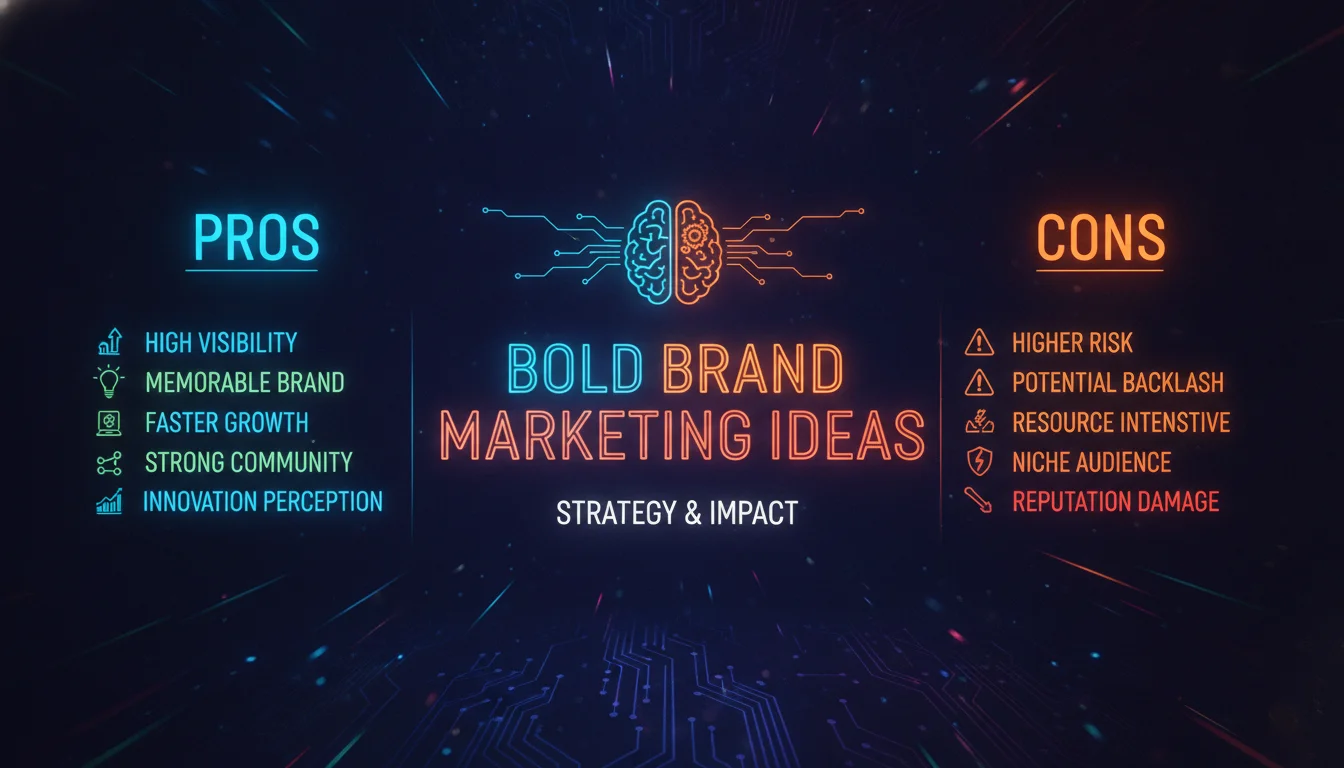
Pros and Cons of Bold Brand Marketing Ideas
Pros
- Builds lasting emotional equity that paid ads alone cannot replicate
- Low-cost tactics like UGC and gamification can generate outsized reach relative to spend
- Authentic storytelling and influencer partnerships create trust that branded content rarely achieves
- Offline activations and community events build local loyalty through personal connection
- Content marketing and YouTube SEO compound over time, delivering traffic long after publication
Cons
- Brand-building results are slower to measure than direct response campaigns
- Bold or unconventional ideas carry creative risk: a misstep can feel gimmicky if disconnected from your USP
- Influencer and event-based tactics require careful vetting to avoid misaligned partnerships
- Gamification and live events demand consistent follow-through; a one-off stunt rarely moves the needle
Brand Marketing Ideas for Low-Budget Teams
User-Generated Content and Branded Hashtags
User-generated content (UGC) is one of the most powerful brand marketing available to any team, regardless of budget. According to AMA, user-generated content is 8.7 times more impactful than influencer content and 6.6 times more effective than branded content. It works because it’s real and relatable. Airbnb’s #LiveThere campaign is a textbook example: the brand encouraged travelers to share their experiences using a branded hashtag, which boosted engagement, positive sentiment, and global brand recognition. To make UGC work for your brand, host content challenges, offer small incentives like discounts or shoutouts, and make participation easy with clear instructions and a single memorable hashtag.
Gamification Without a Developer
Gamification is the practice of incorporating gaming elements, such as points, leaderboards, rewards, and quizzes, into campaigns to engage and motivate customers. According to Optimove, it’s the highest engagement-generating marketing activity possible to create. You don’t need to write a line of code. Platforms like Optimove Minigames let you launch a Wheel of Fortune, personality quiz, or Jeopardy-style campaign with minimal setup. Atomic Wallet used a Jeopardy-style campaign about Polygon and attracted 246,000 unique players. For a lower-tech approach, create a daily Wordle-style challenge where participants guess a product, or run a prediction game with a small prize. These marketing ideas turn passive followers into active participants.
Offline Activations and Community Events
Offline marketing is far from dead. For local businesses and B2B suppliers, personal connections often drive purchasing decisions more reliably than any digital ad. According to EmailMonday, offline and in-person this type of ideas include running educational events, sharing branded swag, sending direct mail with vouchers, getting featured in local newspapers, taking part in fundraisers, using leaflets, printing business cards with something special on the back, attending trade shows, and using transit advertising. These tactics build trust through proximity and repeat exposure. A simple competition where people like and share your page to enter can also spread your brand without paid ads, as FreeAgent notes.
Brand Marketing Ideas Built on Influencer and Partner Collaboration
Nano and Micro-Influencer Strategies
Influencer marketing isn’t new, but how you use it makes all the difference. According to AMA, 44% of marketers prefer nano-influencers for their campaigns because their audiences trust them more and engagement rates are higher. Splashthat reports that 69% of social media users trust recommendations made by the people they follow rather than brands. Instead of basic product placements, try lifestyle integrations, “day in the life” features, or challenges. Involve influencers in the creative process so the content feels authentic. The HISTORY Channel’s “Stay Curious” campaign partnered with TikTok influencers and generated over 12.2 million views and 50,000 new followers, proving that the right creator on the right platform can expand reach dramatically.
Unexpected Brand Collaborations and Cross-Promotions
Borrowing trust from complementary brands is one of the most underrated brand marketing ideas for small and mid-size teams. If you sell coffee beans, partner with a local bakery for a co-branded bundle. If you run a B2B software company, co-host a webinar with a non-competing service provider that shares your audience. The key is choosing partners whose values overlap with yours, not just their audience size. According to FreeAgent, your unique selling proposition should anchor these collaborations. A carpenter with a 10-year warranty, a web designer who specializes in e-commerce, and a bakery that sources local organic ingredients each have a distinct USP that a partner can amplify.
Digital and Content-Led Approaches to Brand Building
Content Marketing and Question-Based SEO
Content marketing is one of the most durable brand marketing ideas for teams in competitive markets where paid advertising costs are prohibitive. The best approach lets customers lead your strategy. Splashthat shares a concrete example: when Gaetano DiNardi was VP of Growth at Aura, the team grew organic traffic from 0 to over 200,000 visitors in less than one year by listening to sales calls and aligning real customer problems to long-tail keywords. Long-tail queries like “how to remove your personal information from the internet” became ranking assets. This approach works because it answers the exact questions your audience is already typing, which builds brand authority that compounds over time.
YouTube SEO and Video-First Branding
YouTube SEO is an underused lever among brand marketing ideas, and the opportunity is significant. Your potential customers want more than written text: they want videos and interactive media. According to Splashthat, embedded YouTube videos enrich your blog content, and a well-optimized channel can bring consistent traffic. Focus on search terms and integrate them into titles and descriptions, then add tags, categories, cards, hashtags, and custom thumbnails to improve click-through rates. Unlike traditional SEO, there’s no risk of duplicate content, so you can be creative and align videos back to target keywords. A simple approach: turn one blog post into a short explanatory video, embed it in the article, and optimize both for the same question.
Webinars, Live Streams, and Virtual Events
Webinars and live events create a direct human connection that no static page can replicate. Splashthat argues that B2B brands need to bring the human connection back to marketing, especially as AI changes audience expectations. Buyers are spending less time on corporate websites and more time on YouTube, social media, and virtual platforms. Live hangouts are informal ways to explain complex subjects, share product updates, and give live product tours. You can collect feedback and answer questions in real time, which builds trust faster than any static content asset.
Time-Sensitive Offers and Storytelling as Brand Marketing Ideas
Flash Sales and Limited-Time Offers
Flash sales create urgency and excitement by playing on fear of missing out. According to AMA, during Black Friday 2023, consumers spent $38 billion online. A well-executed flash sale also attracts new customers who stick around long after the sale ends. To execute well, offer early access to loyal customers, limit the sale to a few hours or a single day, and promote across email, social media, and SMS. Amazon’s Prime Day is a 24-hour flash sale that offers exclusive deals to Prime members, driving both sales and memberships. When used as part of a larger brand marketing idea, flash sales introduce new audiences to your brand story rather than just discounting your products.
Storytelling Campaigns That Build Emotional Bonds
Storytelling is how brands create lasting emotional connections with customers. According to AMA, a clever, well-executed campaign doesn’t just get noticed: it sticks, gets shared, and drives results. Storytelling campaigns work because they give your audience a reason to care beyond price or features. They can be as simple as documenting the founder’s journey, showcasing customer transformations, or aligning with a cause that reflects your values. These brand marketing ideas require consistency. One emotional ad is not enough. You need a narrative arc that unfolds across channels and campaigns over time.
“Bold marketing helps brands cut through the noise and become more memorable. Gamification, cause marketing, and physical activations are among the highest-engagement tactics available to any brand.” – Optimove
How to Prioritize Brand Marketing Ideas for Your Business
Step-by-Step Selection Process
- Define your USP and elevator pitch. According to FreeAgent, an elevator pitch is your answer to “so, what do you do?” – a quick, compelling description that highlights your USP. Without this anchor, any brand marketing idea will feel scattered.
- Identify where your audience already spends time. If they’re on YouTube, prioritize video content. If they attend local events, invest in offline activations. Don’t force a tactic onto the wrong channel.
- Assess your budget honestly. Some brand marketing ideas, like UGC challenges and gamification, cost very little. Others, like large influencer campaigns or in-person events, require more resources. Start with one low-cost idea and scale what works.
- Match the idea to a measurable goal. Set a primary metric: engagement rate, email sign-ups, event registrations, or branded hashtag mentions. Brand marketing is not just about vibes.
- Run a pilot before going all-in. Test the idea with a small audience, measure the response, and iterate. The best brand marketing ideas often start as small experiments that compound over time.
Comparison Table: Brand Marketing Ideas at a Glance
| Idea Type | Resource Level | Key Advantage | Best For |
|---|---|---|---|
| User-generated content | Low | 8.7x more impactful than influencer content; builds trust | B2C lifestyle, travel, hospitality |
| Nano/micro-influencer campaigns | Low to mid | 44% of marketers prefer nano-influencers; 69% trust peer recommendations | Niche DTC, B2B thought leadership |
| Gamification (quizzes, trivia, Wheel of Fortune) | Low to mid | Highest engagement activity; Atomic Wallet attracted 246k players | Product-led brands, education, finance |
| Webinars and virtual events | Mid | Direct human connection; strong registrant-to-attendee conversion | B2B, complex products |
| Flash sales and limited-time offers | Low to mid | Urgency drives action; Black Friday 2023 online spend reached $38B | E-commerce, retail |
| Storytelling campaigns | Mid | Builds emotional bonds and memorability | Consumer brands with heritage or purpose |
| Offline activations and swag | Low to mid | Personal network effect; local trust | Local businesses, B2B suppliers |
| Content marketing and YouTube SEO | Low to mid | Compounds organic reach; Aura grew 0 to 200k visitors in under a year | B2B and B2C with search demand |
Measuring Creative Ideas Without Losing Brand Equity
The risk with bold brand marketing ideas is that they can feel like gimmicks if disconnected from your core identity. Before launching, ask two questions: Does this idea reinforce my USP? Will my audience remember the brand, not just the game or the prize? According to Optimove, most brand interactions are forgotten, which is why bold marketing must be tied to a consistent message. Use a simple dashboard to track brand mentions, sentiment, and repeat engagement over time, not just single-campaign lift.
Common Pitfalls When Executing Bold Creative Campaigns
Overcomplicating Participation
One of the fastest ways to kill a brand marketing idea is to make participation hard. If a UGC challenge requires a long form, multiple tags, and a complex hashtag, most people won’t bother. AMA advises making it easy for customers to participate: create a branded hashtag and provide clear instructions. Simplicity is a feature, not a limitation.
Forgetting the Brand’s Unique Selling Proposition
Every brand marketing idea should map back to your USP. A gamified quiz that doesn’t mention your product, a viral challenge that has nothing to do with your service, or an influencer partnership that feels forced can generate attention without building brand equity. FreeAgent shows that a USP can be as specific as a carpenter’s 10-year warranty or a bakery sourcing local organic ingredients. If your campaign could work for any competitor, it’s not a brand marketing idea: it’s just noise.
Frequently Asked Questions
What is the 3 7 27 rule of branding?
The 3-7-27 rule is a branding heuristic suggesting that repeated exposure matters at different stages of awareness. It’s often described as three exposures for awareness, seven for consideration, and twenty-seven for conversion, though the exact numbers are debated and not grounded in a single authoritative study.
What is hot in marketing right now?
As of 2026, gamification, funny and relatable content, and bold unconventional campaigns are among the most effective approaches. According to Optimove, a HubSpot survey found 49% of consumers say funny content is the most memorable, which signals where creative energy should go.
What are the top 10 marketing business ideas?
The most consistently cited include content marketing, YouTube SEO, webinars, in-person events, influencer partnerships, user-generated content, flash sales, storytelling, gamification, and offline activations. These appear across Splashthat, AMA, and EmailMonday.
What are some unique branding ideas?
Unique brand marketing ideas include game-based marketing that turns product benefits into interactive experiences, holiday lotteries with digital advent calendars, and Tinder-like swipe polls for product voting. Optimove highlights these as high-engagement tactics that most brands haven’t tried yet.
How do I market my brand with no budget?
Start with a strong USP and elevator pitch, then use free tools like social media competitions, user-generated content challenges, and YouTube SEO. HubSpot offers 22 proven marketing campaign ideas you can run without a big budget.
Which brand marketing ideas work best for small businesses?
Small businesses benefit most from low-cost, high-touch tactics: local events, direct mail, branded swag, competitions, and a single excellent social media presence. EmailMonday puts it simply: “If they know you, they’ll trust you.”
Start Building Something People Actually Remember
The best brand marketing ideas are not the ones with the biggest budgets. They’re the ones that align with your audience, your USP, and your capacity to execute consistently. User-generated content, gamification, nano-influencer partnerships, offline activations, and storytelling all have strong evidence from AMA, Splashthat, and Optimove. Pick one idea from the comparison table, define your goal, launch a pilot this week, and measure what moves the needle. By treating brand marketing as a system rather than a series of one-off stunts, you build something competitors can’t easily copy.
Ready to turn strategy into a brand people actually talk about? Contact Emin Media for a free brand consultation and let’s build something bold together.
Enjoyed this article?
Contact Emin Media for a free brand consultation and let's create something amazing together.
Get in Touch