Best Creative Marketing Campaigns of 2026
Creative marketing campaigns are strategically designed, insight-driven initiatives that shift brand perception, spark cultural conversation, and drive measurable business results. They combine a big idea, audience data, and channel-native execution into a repeatable system.
Key Takeaways
- marketing campaigns succeed when a simple human insight meets channel-native execution.
- The strongest recent work pairs cultural tension with participation: from Spotify Wrapped to personalised McDonald’s sauce pots.
- Every campaign needs a measurement plan beyond impressions. Brand lift, shareability, and operational metrics matter.
- Iconic examples like Always #LikeAGirl and Nike Just Do It remain relevant because they attack emotional barriers, not just product features.
- Without a repeatable process, creativity becomes a lottery. Structured workflows turn bold ideas into scalable systems.
- As of 2026, purpose-driven OOH and AI-powered personalization are the two fastest-growing creative directions in the industry.
What Defines Creative Marketing Campaigns?
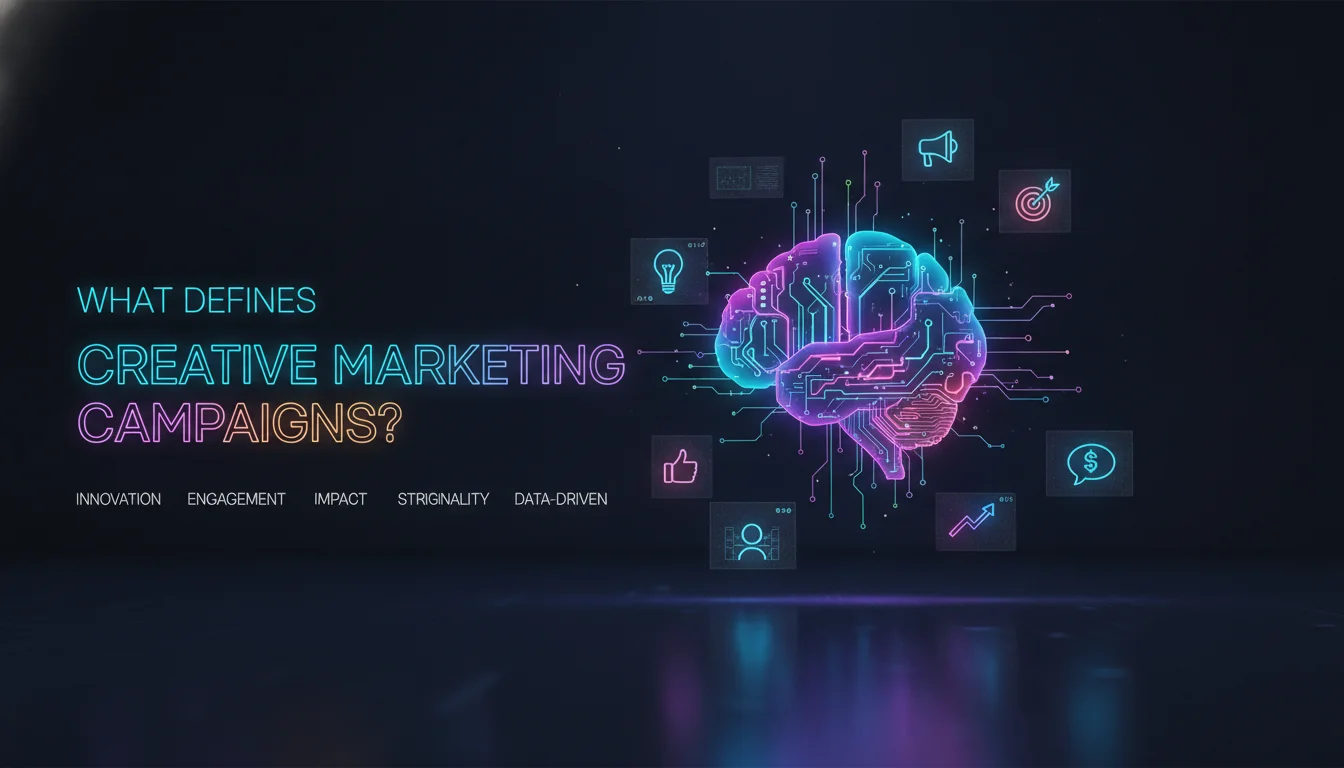
A creative marketing campaign is a coordinated, insight-led series of activations designed to change how audiences think, feel, or act toward a brand. Unlike isolated ads, a campaign provides a central creative platform that travels across channels and time.
The Anatomy of a Breakthrough Idea
A big idea is a simple, adaptable creative premise that connects a brand truth to a human tension. According to GWI, a brilliant big idea and excellent execution are essential, but a creative strategy based on the right audience insights is equally important. The this type of campaigns that endure express one clear idea in a way people genuinely want to share.
Consider the difference between a message and an idea. A message says what a product does. An idea reframes how people see themselves in relation to the product. The latter is the foundation of most effective this kind of campaigns.
Why Insight Beats Execution Alone
Execution matters, but insight determines whether the execution lands. GWI’s reporting on 2024 campaigns highlights that data plays an important part at every stage: from understanding your market and audience, to identifying the right content and channels. Without insight, a visually stunning campaign can still miss the emotional mark entirely.
An insight is a research-based understanding of consumer motivations, tensions, or behaviors. It is not a demographic description. Knowing that women make most household hygiene purchases is a purchasing behavior insight, not a creative concept. That insight enabled Old Spice to pivot its entire campaign strategy.
Creative Campaigns as Business Systems
A creative marketing campaign is also a business system with defined inputs, processes, and outputs. Adobe for Business describes legendary marketing as the high-performance engine that scales a business to new heights. The best creative marketing do not merely win awards. They shift cultural conversations, define brands for generations, and drive revenue.
Operational excellence, having the marketing automation, approvals, and data flow in place, is essential. A great idea that cannot scale across teams and channels will consistently underperform.
“A brilliant big idea and excellent execution are essential, but a creative strategy based on the right audience insights is equally important. Without that you’re basically hoping your idea will work, when knowing would be a whole lot better.” – GWI, Senior Copywriter Roger Horberry
The Strategic Foundations of Creative Marketing Campaigns
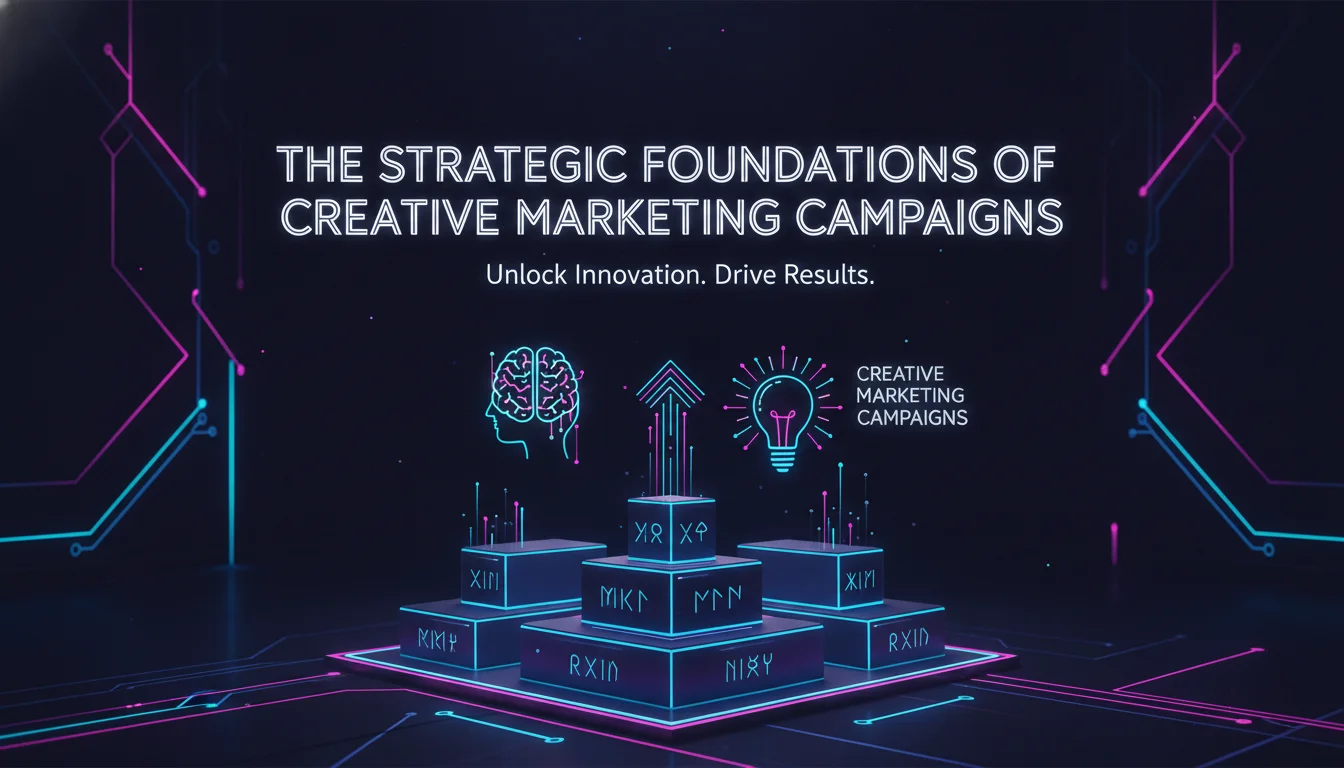
The strongest marketing campaigns are built on three interlocking foundations: audience insight, cultural tension, and channel-native design. Miss any one of them and the whole structure wobbles.
Audience Insight and Data
Every effective creative marketing campaign starts with an audience truth. GWI notes that a creative strategy based on the right audience insights is just as important as the big idea itself. Insights reveal where audiences are, what they believe, and what tensions brands can resolve.
One striking example is Orange France’s 2024 campaign. At first glance the ad looks like a highlight reel of well-known male soccer players. It is actually made using cleverly edited footage of female players scoring goals. The campaign used VFX and AI deepfake technology to superimpose men’s faces onto female athletes’ bodies, forcing viewers to confront their own biases about women’s football. This tactic worked because it was built on an insight about audience perception, not just a creative gimmick.
Cultural Tension and Emotional Truth
Cultural tension is the gap between lived reality and brand messaging. Iconic this type of campaigns often exploit this gap deliberately. Dove’s Real Beauty campaign, launched in 2004, was a direct response to the growing disconnect between traditional advertising and the reality of women’s lives. Instead of industry-standard models, Dove turned the spotlight on its actual customers.
Similarly, Always #LikeAGirl transformed a phrase that had become an insult into a beacon of empowerment. The campaign’s viral video contrasted how young girls and older individuals interpreted the phrase, demonstrating how its meaning becomes negative over time. This sparked emotional connection and global conversation, according to Adobe for Business.
Channel-Native Design
this kind of campaigns earn attention when they are designed for the channel where they first appear. Famous Campaigns, a brandzine covering the ideas and creative thinking shaping modern marketing, documents this principle daily. Netflix trapped a man in a billboard above Sunset Boulevard, turning OOH into a story. Liquid Death asked people to donate urine to cool AI data centres, turning an environmental issue into a provocative PR moment. McDonald’s crashed weddings with personalised sauce pots, making packaging a participatory event.
These examples share a common pattern: the medium is part of the message. Channel-native design means the execution would not work as well in another format. It is inseparable from the platform.
Pros and Cons of Running Creative Marketing Campaigns
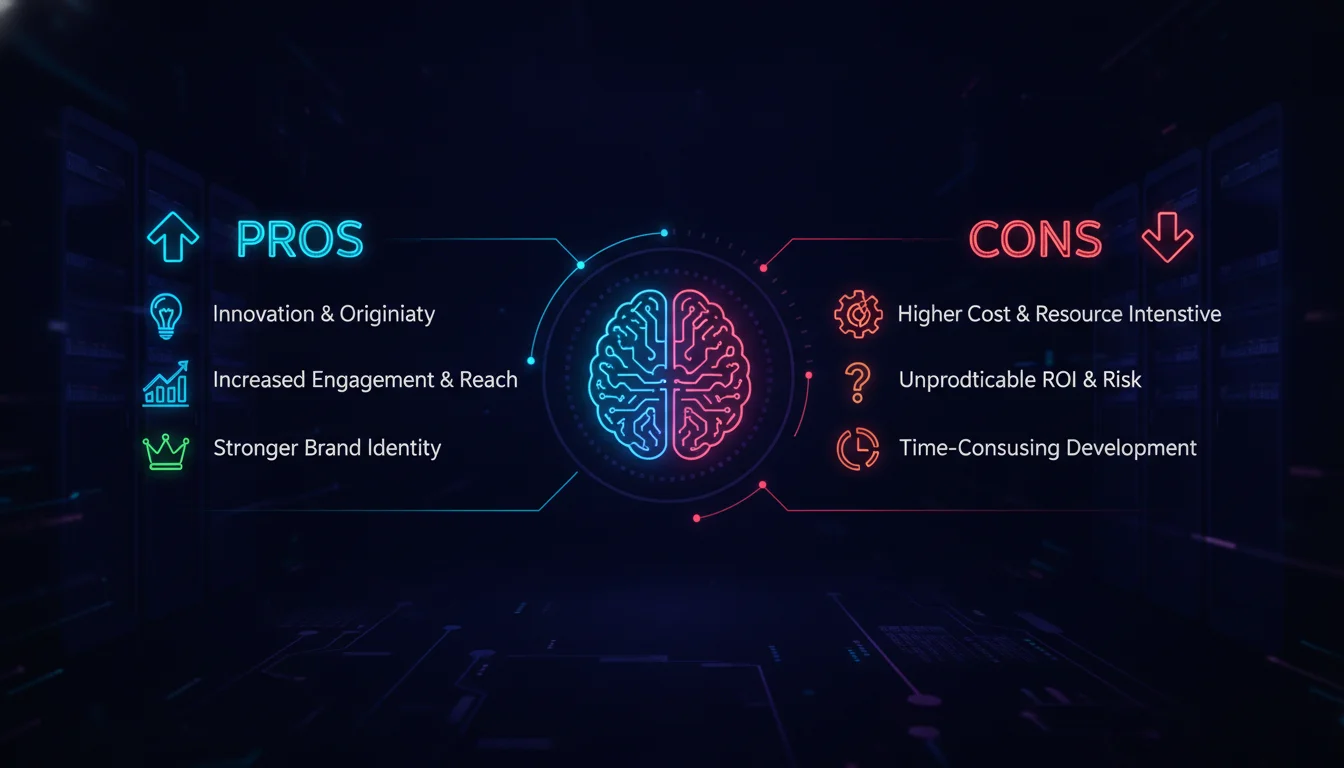
Before committing budget and team bandwidth, it helps to see both sides clearly. creative marketing offer real competitive advantages, but they also carry risks that purely performance-driven campaigns avoid.
Pros
- Brand equity that compounds: Strong creative platforms like Nike Just Do It and Dove Real Beauty build recognition and loyalty that paid media alone cannot buy.
- Earned media and organic reach: Campaigns designed for shareability, like Spotify Wrapped, generate coverage and conversation that extends far beyond the paid budget.
- Emotional differentiation: In crowded categories, marketing campaigns create distinction that product features rarely can. Feeling different matters as much as being different.
- Cultural relevance: Purpose-driven and participatory campaigns position a brand as part of the conversation, not just an advertiser interrupting it.
- Long-term ROI: According to Adobe for Business, legendary marketing serves as the high-performance engine that scales a business to new heights over time.
Cons
- Higher upfront investment: Producing channel-native creative across multiple platforms requires more time, budget, and coordination than a single-format ad buy.
- Harder to measure short-term: Brand lift and cultural impact take weeks or months to register, making it difficult to justify spend in quarterly reporting cycles.
- Execution risk: A bold idea that misfires publicly, especially one involving AI or cultural commentary, can generate backlash rather than buzz.
- Requires strategic alignment: this type of campaigns only work when sales, product, and leadership are aligned on the goal. Siloed teams produce siloed results.
Iconic Creative Marketing Campaigns That Shifted Perception
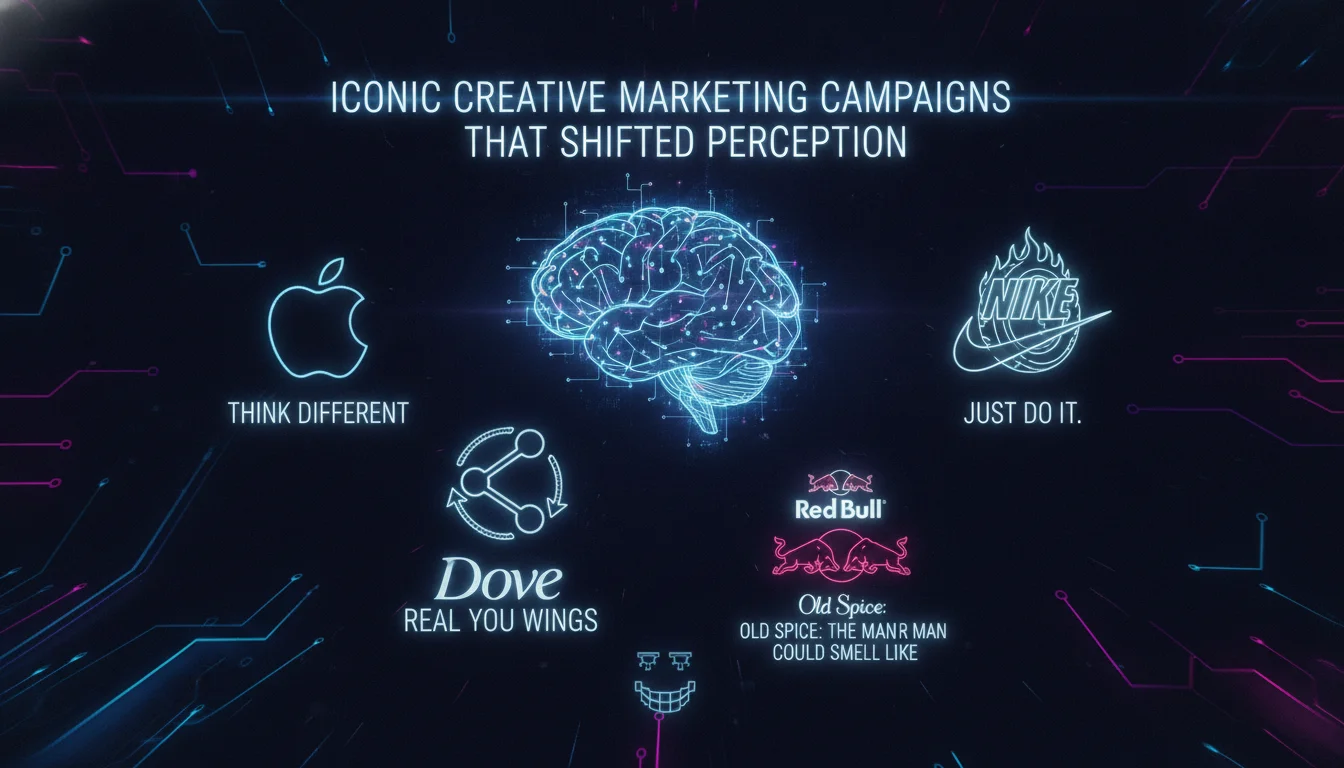
Some this kind of campaigns do not just sell products. They rewrite how an entire category is perceived. These three are the clearest examples in recent brand history.
Always #LikeAGirl
Always’ campaign is a case study in reframing a cultural phrase. Through market research on how girls perceive confidence and self-identity, the brand created a connection by showing how the phrase “like a girl” becomes negative over time. The campaign’s viral video contrasted young girls and older individuals, sparking emotional connection and global conversation.
The business result was not a product claim. It was brand loyalty built on purpose. Adobe for Business highlights that this purpose-driven approach engaged audiences on a deeper emotional level and created positive cultural impact that competitors could not replicate.
Dove Real Beauty
Dove Real Beauty is a long-running platform that launched in 2004. It moved away from industry-standard models and turned the spotlight on actual customers. The campaign integrated social conversation and user-generated content early on, inviting women to share their own definitions of beauty.
What made it work, according to Adobe for Business, was addressing a deep-seated cultural tension. Dove aligned its brand with a social mission that felt authentic, making the product a byproduct of a much larger, empowering conversation.
Old Spice: The Man Your Man Could Smell Like
Old Spice rejuvenated a stagnant brand by identifying a hidden lever in the buying process: the women in their customers’ lives. The campaign pivoted to speak directly to women, who often make household hygiene purchases, without alienating men. It leaned into absurd, fast-paced humor and a hyper-confident persona that became instantly memorable.
The takeaway for marketers is to examine secondary buyer personas. Are you only talking to the end-user, or also engaging the person who actually makes the purchase decision? This dual-audience strategy transformed Old Spice from an outdated label into a modern household staple.
Creative Marketing Campaigns That Built Timeless Brand Identity
A handful of creative marketing have done something rarer than winning awards: they have defined what a brand means across decades. These three show how that happens.
Nike Just Do It
Launched in 1988, Nike’s “Just Do It” campaign is one of the most studied marketing campaigns in history. Fitness was booming but intimidating. Nike realized its true competitor was not another brand. It was self-doubt. The line “Just Do It” cut through fear, laziness, and intimidation, and inspired action.
book180 points out that the campaign’s power came from tapping into emotional barriers, not just physical ones. The idea was endlessly adaptable and gave every piece of the campaign a clear “why.” That is why it still resonates decades later.
Spotify Wrapped
Spotify Wrapped is an annual personalization engine that turns user listening data into shareable content. It is personal, shareable, and gets people talking every single year. The campaign makes the product the hero by proving its role in users’ lives.
Ad Age reported that Spotify extended this personalization to OOH by featuring users’ playlist titles as headlines in a witty campaign across New York, Miami, and Los Angeles. The work, by Uncommon, showed that personal data can be transformed into culturally relevant outdoor creative without losing privacy.
Apple Get a Mac and the Power of Personas
Apple’s Get a Mac campaign created a long-running creative platform that personified product choice. Using two contrasting characters, the campaign made abstract technical differences feel human and approachable. Adobe for Business includes it among this type of campaigns that established a timeless brand identity.
The lesson is that a strong persona-based idea can outlive any single media cycle. When the creative idea is rooted in a universal decision, like which computer to buy, it can be refreshed and extended for years without losing its core tension.
Recent Creative Marketing Campaigns Worth Studying (2024–2026)
Updated for 2026: the most instructive recent this kind of campaigns share a common thread. They are participatory, culturally timed, and built for organic distribution first, paid amplification second.
ChatGPT Humanizes AI
OpenAI launched ChatGPT’s first big brand push in 2025. Instead of leaning into a sci-fi future angle, the campaign highlighted relatable, everyday moments where AI can play a helpful role: planning a trip, fixing a recipe, or helping at work. According to StoryChief, this repositioned AI from intimidating to accessible and human-centric.
The lesson for tech and B2B brands is to make the use case feel personal and emotional rather than simply showcasing product features. This is especially relevant as AI tools become mainstream consumer products.
Orange France’s Perspective Flip
Orange France’s viral campaign from 2024 remains a masterclass in using technology to challenge bias. The ad embedded men’s faces onto female soccer players using VFX and AI deepfake technology. The reveal forced viewers to examine their assumptions. GWI covered it as one of the best marketing campaigns of 2024, noting that the insight about audience perception, not the technology itself, was the real creative engine.
Netflix, KFC, and Experiential OOH
Famous Campaigns shows that OOH and experiential are far from dead. Netflix trapped a man in a billboard above Sunset Boulevard. KFC gave “Chicken Wine” the pairing it was waiting for. 7UP turned a Clapham pub pink for a zero-alcohol shandy launch. Domino’s turned its cult dip into garlic and herb ice cream.
These creative marketing work because they create a visual or cultural moment that people want to photograph, share, or debate. They are not simply ads. They are events.
| Campaign | Brand | Core Insight | Primary Channel | Strategic Function |
|---|---|---|---|---|
| #LikeAGirl | Always | Reframing a phrase as empowerment | Video/social | Perception shift |
| Real Beauty | Dove | Authenticity vs industry ideals | Social/UGC | Brand purpose |
| Just Do It | Nike | Motivation against self-doubt | Mass media | Timeless identity |
| Spotify Wrapped | Spotify | Personalization as shareable proof | App/OOH | Engagement |
| Orange France | Orange | Gender bias in football visuals | Video/AI | Social conversation |
A Repeatable Process for Developing Creative Marketing Campaigns
A structured process is what separates brands that produce one great campaign from brands that produce great marketing campaigns consistently. Process is not the enemy of creativity. It provides the guardrails that let bold ideas scale.
Why Process Matters in Creative Work
Creativity can feel unpredictable, but a structured process increases the odds of producing work that meets business goals. Without a repeatable process, this type of campaigns become a lottery. The brands that win consistently treat creative development as a business discipline, not a one-off sprint.
A Six-Step Framework for Creative Marketing Campaigns
- Define the business problem, not the ad format. Start with the metric you need to move: awareness, trial, share of voice, or retention. Not a channel or tagline.
- Mine audience insight from actual data. Use research to find the unspoken tension or hidden lever. GWI stresses that audience insight is the foundation of any strong campaign.
- Distill the insight into one big idea. The idea must be simple enough to explain in one sentence and adaptable enough for multiple channels.
- Design for the channel, not against it. What works on OOH may not work in social. Famous Campaigns showcases channel-native work like Netflix’s Sunset Boulevard billboard as proof.
- Build participation and shareability into the core. Personalization, UGC, or a participatory mechanic gives the campaign life beyond paid media. Spotify Wrapped is the clearest example.
- Measure against a pre-set KPI framework. Use brand lift, engagement, conversion, and operational efficiency metrics to evaluate success before the campaign launches, not after.
From Framework to Workflow
Turning inspiration into a real campaign requires a workflow that moves from idea to execution to measurement. StoryChief suggests mapping the campaign in a structured workspace so teams can plan, approve, and launch without losing momentum. The point is to treat creative marketing campaigns as repeatable business processes, not isolated creative events.
“The campaigns that break through are not just louder. They are more relevant, more participatory, and easier to share.” – StoryChief, The 27+ Best Marketing Campaigns of 2026
Measuring Creative Marketing Campaigns Beyond the Buzz
Measuring creative marketing campaigns well means going past the metrics that feel good and focusing on the ones that prove business value.
Business Metrics vs Vanity Metrics
Impressions and likes tell you whether people saw something. They do not tell you whether the campaign changed perception or drove revenue. Business metrics, including brand lift, purchase intent, customer acquisition cost, and lifetime value, matter more. A creative marketing campaign without a measurement plan is just entertainment.
Brand Equity and Cultural Impact
Some creative marketing campaigns are judged over years, not weeks. Nike’s Just Do It and Dove’s Real Beauty built brand equity that compounds over time. Cultural impact can be observed through shareability, earned media, and shifts in conversation. Those effects must still be tied back to business outcomes whenever possible.
Operational Excellence in Campaign Execution
Adobe for Business highlights that achieving operational excellence is part of campaign success. Marketing automation tools help teams manage multi-channel execution, lead scoring, and measurement. This ensures that a great creative idea reaches the right audience at the right time, consistently, across every channel in the plan.
The Future of Creative Marketing Campaigns
This year’s best creative marketing campaigns point clearly toward two directions: purpose-driven participation and AI-powered personalization. Both reward brands that lead with insight rather than production value.
Common Pitfalls to Avoid
One common failure is creativity without strategy: big stunts that generate buzz but no meaningful business outcome. Another is ignoring distribution. A brilliant campaign that never reaches its intended audience is wasted budget. A third is overlooking the ethical implications of AI and deepfake technology. Orange France’s campaign sparked debate precisely because it used AI to alter reality, which can erode trust if handled carelessly.
Emerging Directions in 2026
Campaigns of the World documents a clear shift toward purpose-driven and participatory OOH. Examples include The Slow Sign rewarding Texas drivers for following the speed limit, WWF turning TV showrooms into a wake-up call for wildfires, Polaroid making the case for analog summer, and Carlsberg turning outdoor ads into playable football goals. These creative marketing campaigns blend public infrastructure, social purpose, and play in ways that feel genuinely new.
AI will continue to play a larger role, both as a creative tool and as a subject. StoryChief notes that ChatGPT’s first brand campaign made AI feel human. Ad Age reports that Genspark pitted ChatGPT and Claude in a lemonade stand-off, a sign that AI brand rivalries are becoming consumer entertainment in their own right.
Small Brands, Big Creative Thinking
You do not need a nine-figure budget to run creative marketing campaigns that break through. HubSpot has documented 22 proven marketing campaign ideas that can be launched without a big budget or agency support. The common thread across all of them: a sharp insight and a clear participation mechanic matter far more than production spend. Small brands that focus on a single high-impact platform and design for organic shareability consistently outperform larger competitors running generic multi-channel buys.
Creative Campaigns as Systems of Insight
The most effective creative marketing campaigns are not one-off stunts. They are systems that combine deep audience insight, a clear big idea, channel-native execution, and rigorous measurement. Whether you study Dove, Nike, Spotify, or 2026’s best OOH work, the pattern is the same: insight first, creativity second, measurement always. Brands that internalize this will not just create campaigns. They will build durable cultural and commercial assets that compound in value over time.
Ready to build something that actually moves the needle? Contact Emin Media for a free brand consultation and let’s turn your next brief into a campaign worth studying.
Frequently Asked Questions
What makes a creative marketing campaign successful?
A successful creative marketing campaign combines a simple human insight, a big adaptable idea, channel-native execution, and a measurement plan tied to real business goals. It should change how audiences think or act, not just entertain them for a moment.
How do you measure the success of a creative marketing campaign?
Success is measured with business metrics like brand lift, purchase intent, customer acquisition cost, and lifetime value, not just impressions or likes. Operational efficiency and cultural shareability also matter, especially for campaigns designed to generate earned media.
What are some examples of creative marketing campaigns from 2024 to 2026?
Notable examples include Orange France’s perspective-flipping football ad, ChatGPT’s humanizing brand campaign, Spotify Wrapped’s OOH extension by Uncommon, Netflix’s Sunset Boulevard billboard, and KFC’s Chicken Wine. Each paired strong creative with a specific audience insight.
How can small brands run creative marketing campaigns without a big budget?
Small brands can focus on a single high-impact platform, use user-generated content, and design for organic shareability from the start. HubSpot has documented 22 proven marketing campaign ideas that can be run without a big budget or agency support.
What role does AI play in modern creative marketing campaigns?
AI plays roles in both creative production and campaign subject matter. Orange France used AI deepfake technology to challenge gender bias in football, while ChatGPT’s 2025 brand campaign made AI feel accessible and human by focusing on everyday use cases rather than technology features.
How often should a brand refresh its creative marketing campaigns?
Brands should refresh campaigns when audience insights shift, performance plateaus, or cultural relevance declines. Long-running platforms like Nike’s Just Do It and Dove’s Real Beauty show that a strong idea can evolve without being replaced entirely, as long as the core insight still holds.
Enjoyed this article?
Contact Emin Media for a free brand consultation and let's create something amazing together.
Get in Touch