Best Video Picture Camera 2026: Top Hybrid Models Tested
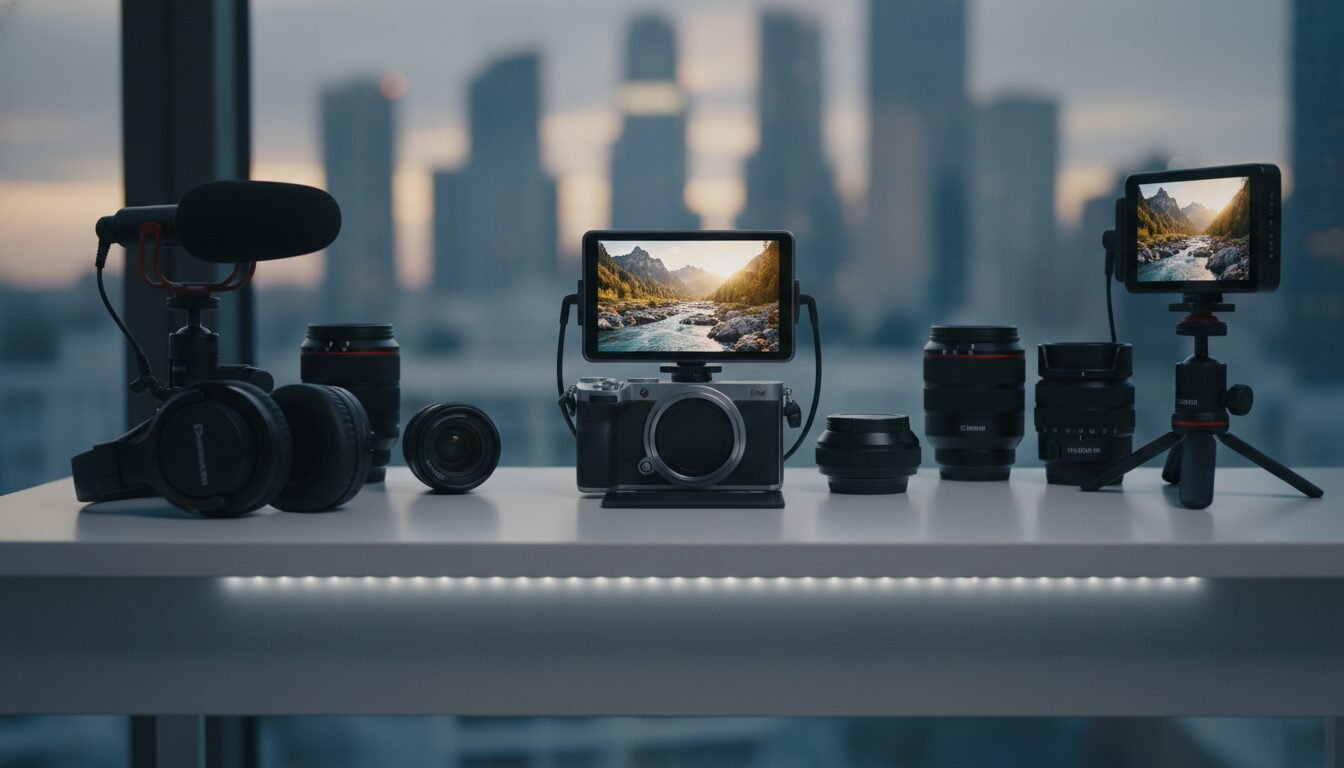
Best video picture camera is a hybrid digital camera that captures professional-grade 4K video and high-resolution stills with interchangeable lenses and advanced autofocus systems. These versatile tools eliminate the need for separate photo and video equipment, making them essential for modern content creators.
Key Takeaways
- Hybrid cameras combine 4K+ video recording with 24MP+ photo resolution in one body
- Budget options under $1,000 now offer 10-bit recording and professional autofocus
- Full-frame sensors provide better low-light performance but APS-C models are lighter and more affordable
- In-body stabilization (IBIS) is crucial for handheld video work
- Sony leads in autofocus, Canon excels in color science, Nikon offers the best lens adaptability
- Professional models now shoot 8K video while maintaining 45MP+ photo capabilities
What Makes a Great Video Picture Camera?
A great video picture camera balances exceptional video specs with high-resolution photo capabilities. The sensor determines your image quality foundation, while video features like 10-bit recording and log profiles enable professional color grading.
Sensor Size and Resolution
The sensor is your camera’s foundation. Full-frame sensors, like those in the Sony a7 series, deliver superior low-light performance and that coveted shallow depth of field. APS-C sensors, found in the Sony ZV-E10 line and Fujifilm X-M5, are smaller but enable lighter, more affordable bodies. For video work, you want at least 24MP for crisp 4K footage and large prints. Hybrid shooters often gravitate toward 33MP (Sony a7 IV) or 45MP (Nikon Z8) for maximum flexibility.
Video Capabilities: 4K, 10-bit, and Frame Rates
Any serious picture camera must deliver at least 4K 30p uncropped. Advanced models add 4K 60p and even 8K for future-proofing or cropping flexibility. The magic happens with 10-bit 4:2:2 color depth — this captures 1.07 billion colors versus 8-bit’s measly 16.7 million. Log profiles like Sony S-Log3, Canon C-Log3, and Fujifilm F-Log2 preserve maximum dynamic range. Don’t forget 120fps slow motion in Full HD for those cinematic B-roll moments.
Autofocus and Stabilization
Modern autofocus systems with AI-driven subject detection — think Sony’s Real-time Eye AF and Canon’s Dual Pixel AF II — are game-changers for both stills and video. In-body image stabilization (IBIS) reduces shake when shooting handheld; cameras with 5-axis IBIS can provide up to 8 stops of compensation. However, some budget models like the Fujifilm X-M5 skip IBIS, relying on digital stabilization that crops your image.
| Camera Model | Sensor | Max Video | IBIS | Approx. Price (Body) | Best For |
|---|---|---|---|---|---|
| Sony ZV-E10 II | APS-C 26MP | 4K 60p 10-bit | No (digital only) | $998 | Budget vlogging & hybrid |
| Canon R50 V | APS-C 24MP | 4K 30p | No | $649 | Live streaming & beginner video |
| Fujifilm X-M5 | APS-C 26MP | 6.2K open gate | No | $799–$899 | Vertical content & film sims |
| Sony a7 IV | Full-frame 33MP | 4K 60p (S35 crop) | Yes (5-axis) | $1,999 | All-round pro hybrid |
| Canon R6 Mark II | Full-frame 24MP | 4K 60p oversampled | Yes (5-axis) | $1,999 | Sports & action hybrid |
| Nikon Z8 | Full-frame 45MP | 8K 60p | Yes (5-axis) | $3,999 | Flagship photo/video |
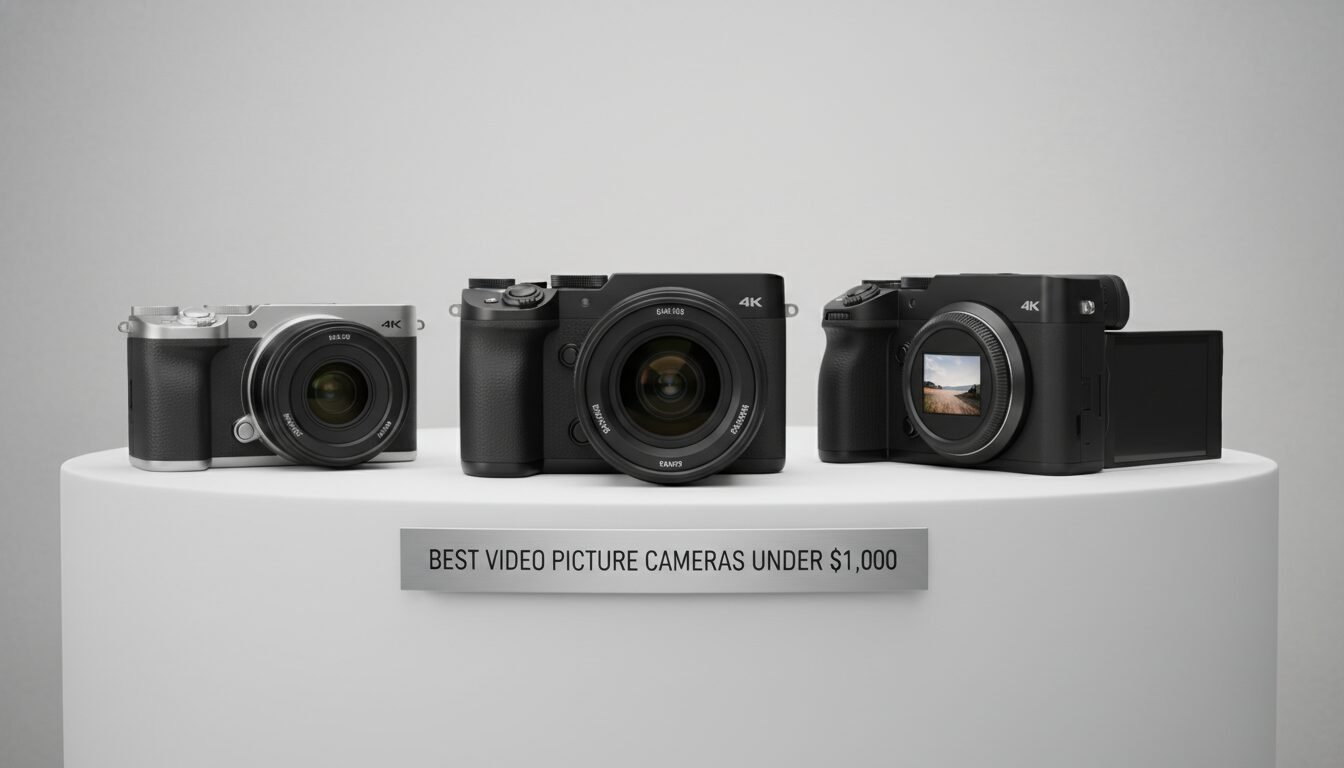
Best Video Picture Cameras Under $1,000
 Pascal Basel
Canon EOS R50 V – Built for Video Creators
Canon’s R50 V, priced around $649 body-only, is a dedicated video-first hybrid. It features a cooling fan to prevent overheating during marathon recording sessions, a flip-out screen, and streamlined live streaming capabilities. The 24MP APS-C sensor produces sharp 4K 30p footage with Canon’s rock-solid Dual Pixel AF. While it lacks 10-bit internal recording, the HDR PQ mode offers decent grading flexibility. For straight-out-of-camera colors and compact form factor, it’s a strong contender among such picture camera options for beginners.
Fujifilm X-M5 – 6.2K Open Gate on a Budget
Weighing just 350g, the Fujifilm X-M5 is a pocketable hybrid that punches way above its weight class. Its 26MP X-Trans sensor captures 6.2K open gate video, recording the full sensor area so you can crop vertical Reels or horizontal timelines from a single clip. 10-bit 4:2:2 internal recording with F-Log2 flat profile enables serious color grading, while Fujifilm’s legendary film simulations deliver gorgeous JPEGs without any editing. Autofocus is slightly less sticky than Sony’s system, but for hybrid creators who love Fuji’s color science, it’s a compelling best video picture camera choice.
Best Video Picture Cameras Under $2,000
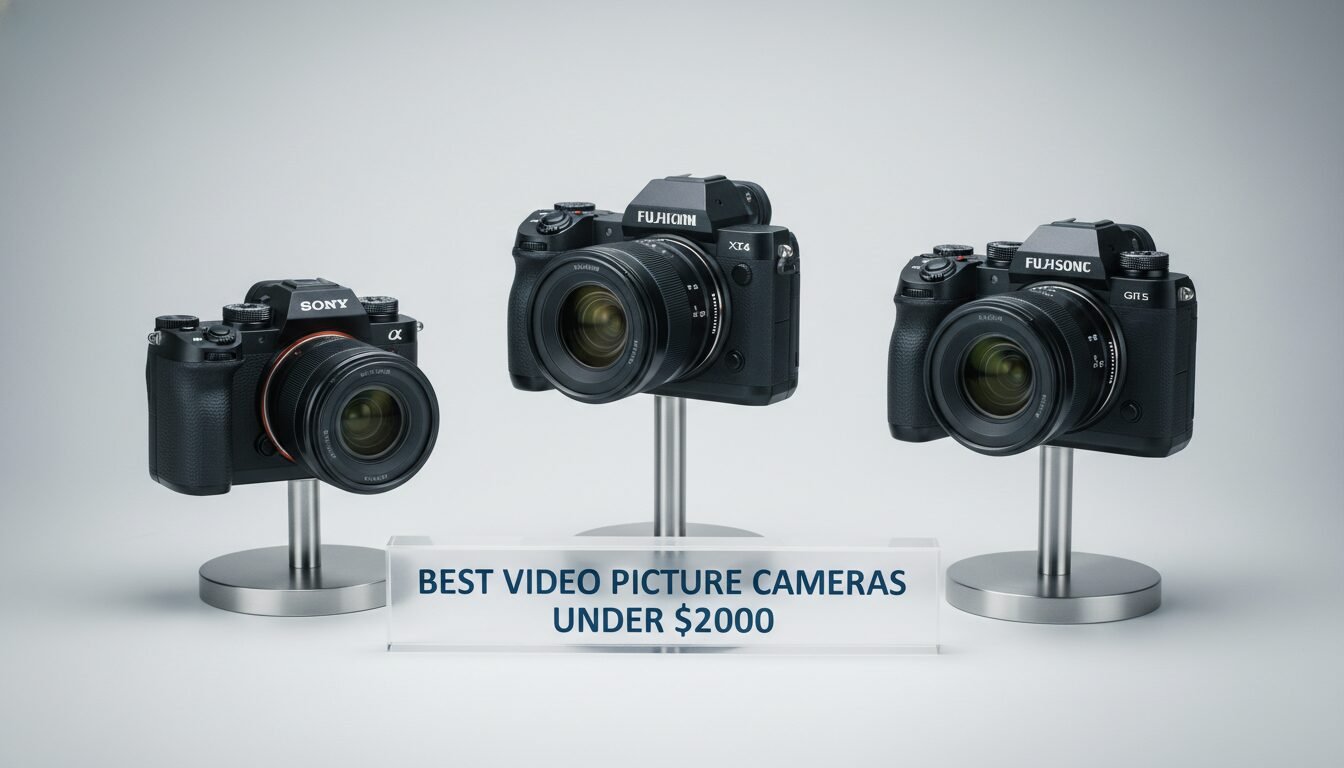
The $2,000 price point unlocks full-frame sensors and professional-grade features. These cameras represent the sweet spot for serious content creators who need both exceptional photo resolution and cinema-quality video.
Sony a7 IV – The All-Rounder Champion
The Sony a7 IV remains a benchmark hybrid even in 2026. Its 33MP full-frame sensor delivers outstanding detail for stills and oversampled 4K 30p video from the full sensor width. In Super35 mode, it adds 4K 60p capability. The 5-axis IBIS provides up to 5.5 stops of stabilization. Sony’s Real-time Eye AF works flawlessly for humans, animals, and birds. With pricing around $1,999 at major retailers according to Best Buy, it’s the go-to best video picture camera for wedding shooters and content studios.
Canon EOS R6 Mark II – Speed and Reliability
Canon’s R6 Mark II, at $1,999 body-only, is a 24MP full-frame workhorse. It shoots 4K 60p oversampled from 6K, resulting in extremely detailed footage without any crop. The Dual Pixel AF II is remarkably tenacious, and the burst rate reaches 40fps for stills. Dual UHS-II SD cards and unlimited recording (with external power) make it a solid choice for event photographers who need consistent video performance. If your definition of a best video picture camera includes speed and dual-card reliability, this is a top pick.
Nikon Z6 III – A Dark Horse for Hybrids
Nikon’s Z6 III ($2,500) is a mid-range marvel, offering 6K/60p internal raw video and 24MP stills. Its partially stacked sensor reduces rolling shutter drastically, and Nikon’s 3D tracking AF translates beautifully from their DSLR heritage. The Z mount is one of the widest available, allowing adapters for Canon EF and Sony E-mount glass, giving you enormous lens flexibility. For hybrid shooters who value video specs and don’t mind the larger body, it’s a worthy alternative to the Sony–Canon duopoly.
Best Video Picture Cameras Under $3,000
This tier brings next-generation features like 4K 120p, improved AI processors, and enhanced dynamic range. These cameras target semi-professionals who demand the latest technology without flagship pricing.
Sony a7 V – Next-Gen Hybrid Performance
Expected in 2026, the Sony a7 V builds on the a7 IV foundation by offering 4K 120p and a dedicated AI processor for even more responsive autofocus. It retains the proven 33MP sensor but improves dynamic range and color science. At an estimated $2,899, it targets semi-professionals who demand cutting-edge features. While not yet widely reviewed, early testers are already listing it as a top best video picture camera candidate.
Canon EOS R6 III – Rumored 8K Upgrade
The rumored Canon R6 III, speculated to launch at $2,799, is expected to add 8K video capability to the R6 line. Leaks suggest a 30MP sensor and C-Log2 for wider dynamic range. If you’re heavily invested in Canon RF glass, waiting for this model could future-proof your entire kit. It’ll likely compete directly with the a7 V for the best video picture camera crown under $3,000.
Panasonic Lumix S5 IIX – Video-First Hybrid
Panasonic’s S5 IIX ($2,200) is a video powerhouse with 5.9K ProRes internal recording and unlimited record times. Phase-detection autofocus finally brings it up to par with Sony and Canon systems. The 24MP full-frame sensor is less impressive for stills resolution, but industry-leading IBIS (up to 8 stops) and anamorphic support make it a filmmaker’s dream. For creators who shoot 70% video and 30% stills, it’s a cost-effective best video picture camera solution.
Professional Video Picture Cameras Over $3,000
Professional-grade hybrids offer no-compromise performance with 8K recording, 45MP+ sensors, and cinema-level features. These cameras serve photographers and videographers who refuse to accept limitations.
Nikon Z8 – 8K Video with 45MP Stills
The Nikon Z8 represents the definitive high-end hybrid approach. It captures 8K 60p internally in raw and 45MP stills at 20fps, all in a body smaller than the flagship Z9. The 5-axis IBIS, dual CFexpress slots, and no recording limits make it a true workhorse. According to DPReview, it effectively combines flagship stills power with video features that rival dedicated cinema cameras. At $3,999, it’s the pinnacle for those who refuse to compromise on either photo or video quality.
“The Z8 effectively combines the stills power of the Z9 with video features that rival dedicated cinema cameras,” notes DPReview’s team after exhaustive lab testing. DPReview
Sony a1 II – Flagship Speed and Resolution
Sony’s a1 II ($6,500) merges a 50.1MP sensor with 8K 30p video and a 30fps blackout-free burst rate. It’s overkill for most users, but for action photographers who also need video capabilities, it’s unmatched. The dual BIONZ XR processors handle massive data throughput effortlessly, and the viewfinder represents the best in class.
Canon EOS R5 Mark II – 8K Raw Powerhouse
Canon’s R5 Mark II ($3,899) records 8K 60p raw internally and shoots 45MP stills. Its improved heat management allows over an hour of 8K recording without overheating issues. Dual Pixel AF II with vehicle tracking and a refined weather-sealed body make it a professional’s tool. For Canon loyalists, it represents the ultimate expression of a best video picture camera.
Sony vs. Canon vs. Nikon: Which Ecosystem Works Best?
Choosing a camera ecosystem affects your long-term investment in lenses, accessories, and workflow. Each brand brings distinct advantages that appeal to different shooting styles and priorities.
Lens Selection and Adaptability
Sony’s E-mount boasts the widest native lens library, with over 70 first-party options and hundreds from third parties like Sigma and Tamron. Canon’s RF mount is growing rapidly but restricts third-party autofocus lenses through licensing. Nikon’s Z mount accepts almost any legacy glass via the FTZ adapter, as noted by Pascal Basel. If you own older F-mount or EF lenses, Nikon and Canon retain more of your existing investment value.
Color Science and Straight-Out-of-Camera Looks
Canon remains famous for pleasing skin tones and warm colors straight from the camera. Sony has historically been more neutral, but recent models like the a7 V offer significantly improved color science. Fujifilm’s film simulations are unmatched for JPEG shooters who want that analog look. Nikon’s N-Log and Flat profiles provide an excellent starting point for color grading.
Autofocus Reliability for Video and Stills
Sony’s AI-driven AF is widely considered the most reliable, especially for human subjects in challenging conditions. Canon’s Dual Pixel AF II is equally dependable and offers smoother transitions during video recording. Nikon has caught up significantly with 3D tracking, but still lags in some low-light scenarios. For any best video picture camera, autofocus that doesn’t hunt during recording is absolutely non-negotiable.
Essential Features That Separate Good from Great
Professional-grade features distinguish serious hybrid cameras from basic models. These capabilities determine whether your camera can handle demanding shoots and deliver broadcast-quality results.
In-Body Image Stabilization (IBIS)
IBIS compensates for handheld shake across five axes of movement. Cameras like the Panasonic S5 IIX claim up to 8 stops of stabilization, while the Sony a7 IV offers 5.5 stops. Without IBIS, you’ll rely on lens stabilization or digital crop stabilization, which reduces image quality. For run-and-gun video work, IBIS transforms your shooting capabilities.
10-bit 4:2:2 and Log Profiles
10-bit color captures 1.07 billion colors versus 8-bit’s 16.7 million, drastically reducing banding and enabling heavy color grading without artifacts. Log gammas like Sony S-Log3 preserve up to 15 stops of dynamic range for maximum post-production flexibility. Any serious best video picture camera must offer 10-bit internal recording to future-proof your creative work.
Cooling and Recording Limits
Many mirrorless cameras overheat during 4K 60p recording after 30 minutes. The Canon R50 V adds a built-in cooling fan; the Sony ZV-E10 II can record over an hour with the heat warning set to high. For long-form interviews, live streams, or event coverage, active cooling or excellent heat management becomes essential.
How to Choose the Right Camera for Your Needs
Selecting the perfect hybrid camera requires honest assessment of your shooting priorities, budget constraints, and long-term goals. The best video picture camera for you balances features with practical considerations.
Budget and Future-Proofing
Start with your total budget, including lenses and essential accessories. Under $1,000 gets you an excellent APS-C hybrid like the Sony ZV-E10 II. Around $2,000 unlocks full-frame options with IBIS and professional video specs. Over $3,000 opens 8K recording and 45MP+ sensors for maximum versatility. Consider used gear from trusted retailers like KEH Camera or B&H Photo to stretch your budget further.
Photo vs. Video Priority
Be brutally honest about your shooting split. If you create 70% video content, a Panasonic S5 IIX or Sony FX3 variant makes more sense than a photo-centric model. If you’re truly 50/50, the Sony a7 IV or Canon R6 II balance both disciplines perfectly. Prioritize features accordingly: for video work, emphasize 10-bit recording and log profiles; for photography, focus on resolution and burst rates.
Form Factor and Portability
A compact camera like the Fujifilm X-M5 is more likely to accompany you on daily adventures. Heavier full-frame bodies demand dedicated camera bags and more intentional carrying. Consider your typical shooting scenarios: travel documentation, studio work, or event coverage. The best video picture camera is ultimately the one you’ll actually want to carry and use regularly.
Pros and Cons
Pros
- Single device handles both professional photo and video needs
- Modern autofocus systems work excellently for both stills and video
- 10-bit recording and log profiles enable professional color grading
- Interchangeable lenses provide creative flexibility
- Significant cost savings versus buying separate photo and video equipment
- Compact form factor compared to traditional video cameras
Cons
- Overheating limitations during extended 4K recording sessions
- Battery life suffers during intensive video recording
- Rolling shutter can be problematic with fast camera movements
- Audio capabilities often require external microphones and recorders
- Learning curve for mastering both photo and video features
- Higher-end models carry significant price premiums
Frequently Asked Questions
What is the best video picture camera for beginners?
The Sony ZV-E10 II (under $1,000) offers intuitive controls, excellent autofocus, and 10-bit 4K 60p recording — ideal for learning hybrid shooting. Its compact size and flip screen make it perfect for solo content creation.
Do I need a full-frame camera for professional video and photos?
Not necessarily. APS-C cameras like the Fujifilm X-M5 produce outstanding professional results. However, full-frame sensors provide better low-light performance, shallower depth of field, and typically more robust video features.
How important is 4K 60fps versus 30fps?
60fps allows smooth slow motion playback in post-production and provides more flexibility for editing. If you never slow down footage or shoot fast action, 30p is sufficient for most content creation needs.
Can I use DSLR lenses on new mirrorless hybrid cameras?
Yes, via manufacturer adapters. Nikon’s FTZ and Canon’s EF-RF adapters maintain full autofocus functionality, while Sony’s LA-EA5 works with A-mount glass. Adapters provide a cost-effective way to leverage existing lens investments.
What is the best budget camera for video and photography?
The Canon R50 V ($649) or Sony ZV-E10 ($698) provide excellent hybrid performance for under $800, especially when paired with a versatile kit lens. Both offer 4K recording and reliable autofocus systems.
Enjoyed this article?
Contact Emin Media for a free brand consultation and let's create something amazing together.
Get in TouchRelated Articles
Best High Resolution Digital SLR Cameras: 2026 Buying Guide
Find the perfect high resolution digital slr camera for your needs. Compare Nikon D850, Canon…
Sony Digital SLR Camera Guide: A99 II & A-Mount Legacy 2026
Sony digital SLR camera systems offer optical viewfinders and A-mount compatibility. Compare A99 II specs,…
What is a Digital SLR Camera? Complete Guide for 2026
What is a digital SLR camera? Learn how DSLRs work, their advantages over mirrorless, and…