Best Digital Zoom Camera: Top Picks for 2026
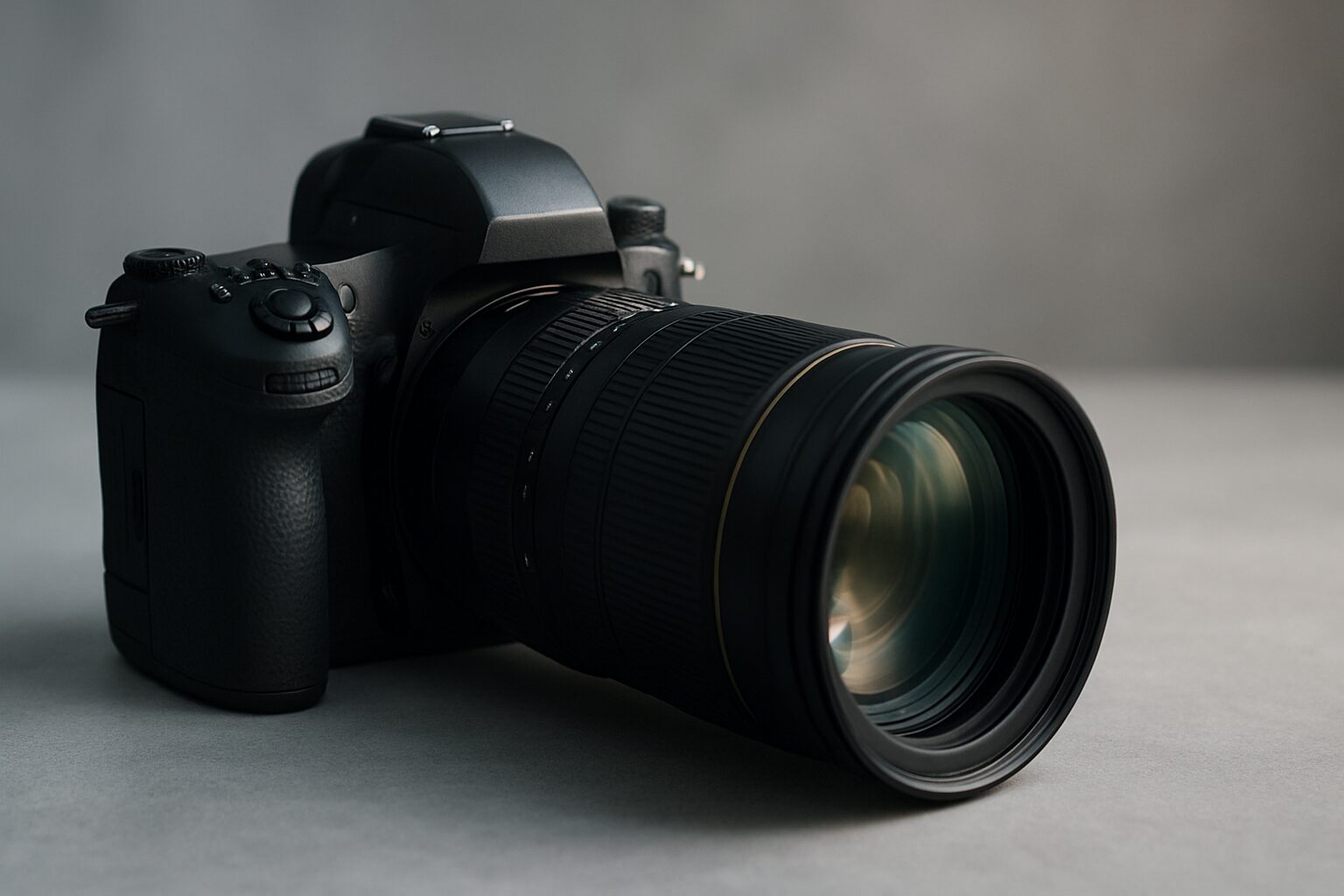
The best digital zoom camera is a fixed-lens camera that combines a long optical zoom range with a quality sensor, giving you reach and image clarity that smartphones simply cannot match. For most shooters, models like the Sony RX100 VII (8x, 1-inch sensor) and Panasonic ZS300 (15x, 1-inch sensor) hit the sweet spot between portability and performance.
Key Takeaways
- The zoom camera prioritizes optical zoom over digital zoom. Optical zoom uses real glass to magnify; digital zoom just crops and degrades your image.
- Sensor size matters as much as zoom range. A 1-inch sensor in the Sony RX100 VII or Panasonic ZS300 outperforms a 1/2.3-inch sensor in almost every real-world condition.
- Compact travel zooms (8x–30x) suit everyday shooting; bridge cameras (60x–125x) are built for wildlife and extreme telephoto work.
- Quality options span $280 to $1,300. The Kodak PIXPRO AZ528 at $279.99 covers budget needs; the Sony RX100 VII at $1,300 sets the premium standard.
- For vlogging and hybrid content creation, the Canon PowerShot G7 X III and Canon PowerShot V1 lead with flip screens and oversampled 4K video.
- As of 2026, the Nikon Coolpix P1100 holds the record for longest optical zoom on a fixed-lens camera: 125x, equivalent to 24–3000mm.
Smartphones have killed the basic point-and-shoot. But they’ve also pushed dedicated zoom cameras to evolve into something genuinely impressive. Whether you’re photographing distant wildlife, shooting sports from the stands, or documenting travel without hauling a full camera bag, a purpose-built zoom camera delivers sharper results and more creative control than any phone. We’ve reviewed and ranked the top options available in 2026, drawing on expert analysis from Digital Camera World and Amateur Photographer.
Expert Insight: “A quality zoom camera should feel like carrying a full lens kit in your pocket. One thing’s for sure – you won’t get that from a smartphone.” – Amy Davies, Photography Writer, Digital Camera World
What to Look for in the Best Digital Zoom Camera
Choosing the best digital zoom camera means understanding how zoom range, sensor size, and body design work together. Focus on optical zoom first, then match the camera’s capabilities to your actual shooting scenarios.
Optical Zoom Range and Lens Quality
Optical zoom is the real measurement of a camera’s ability to bring distant subjects closer. It uses the lens’s actual glass elements to magnify the scene before it hits the sensor, preserving full image quality. Entry-level travel zooms start around 4x; superzooms like the Nikon Coolpix P1100 reach a staggering 125x optical zoom, enough for detailed moon photography from your backyard. Mid-range compacts like the Panasonic ZS300 offer a versatile 15x zoom covering 24–360mm, ideal for most outdoor adventures. Lens aperture matters too: wider apertures like f/2.8 perform noticeably better in low light.
Sensor Size and Image Quality
Larger sensors capture more light, producing sharper and cleaner images across all conditions. The best digital zoom cameras often feature a 1-inch sensor, found in the Sony RX100 series and Panasonic ZS300, providing a significant quality boost over the 1/2.3-inch sensors in most budget superzooms. According to Digital Camera World, the Sony RX100 VII “combines a quality sensor with an impressive zoom range in a very portable casing.” For vloggers and hybrid shooters, the Canon PowerShot V1 goes further with a 1.4-inch sensor designed for oversampled 4K video. A 1-inch sensor is roughly 4 times the surface area of a 1/2.3-inch sensor, and that difference shows in every low-light shot you take.
Portability and Durability
If you’re hiking or traveling light, size and weight are critical factors. Pocketable options like the Panasonic ZS99 weigh just 332g and slip into a jacket pocket, while larger bridge cameras like the Panasonic FZ80D at 640g offer better grips and longer zoom reach. Waterproof models such as the OM System Tough TG-7 can dive to 15m (49 feet) without a housing, making them ideal for snorkeling or rainy expeditions. The Sony RX100 VII measures a remarkably compact 101.6 x 58.1 x 42.8mm, fitting in a shirt pocket while delivering professional-grade results.
Top Picks for the Best Digital Zoom Camera in 2026
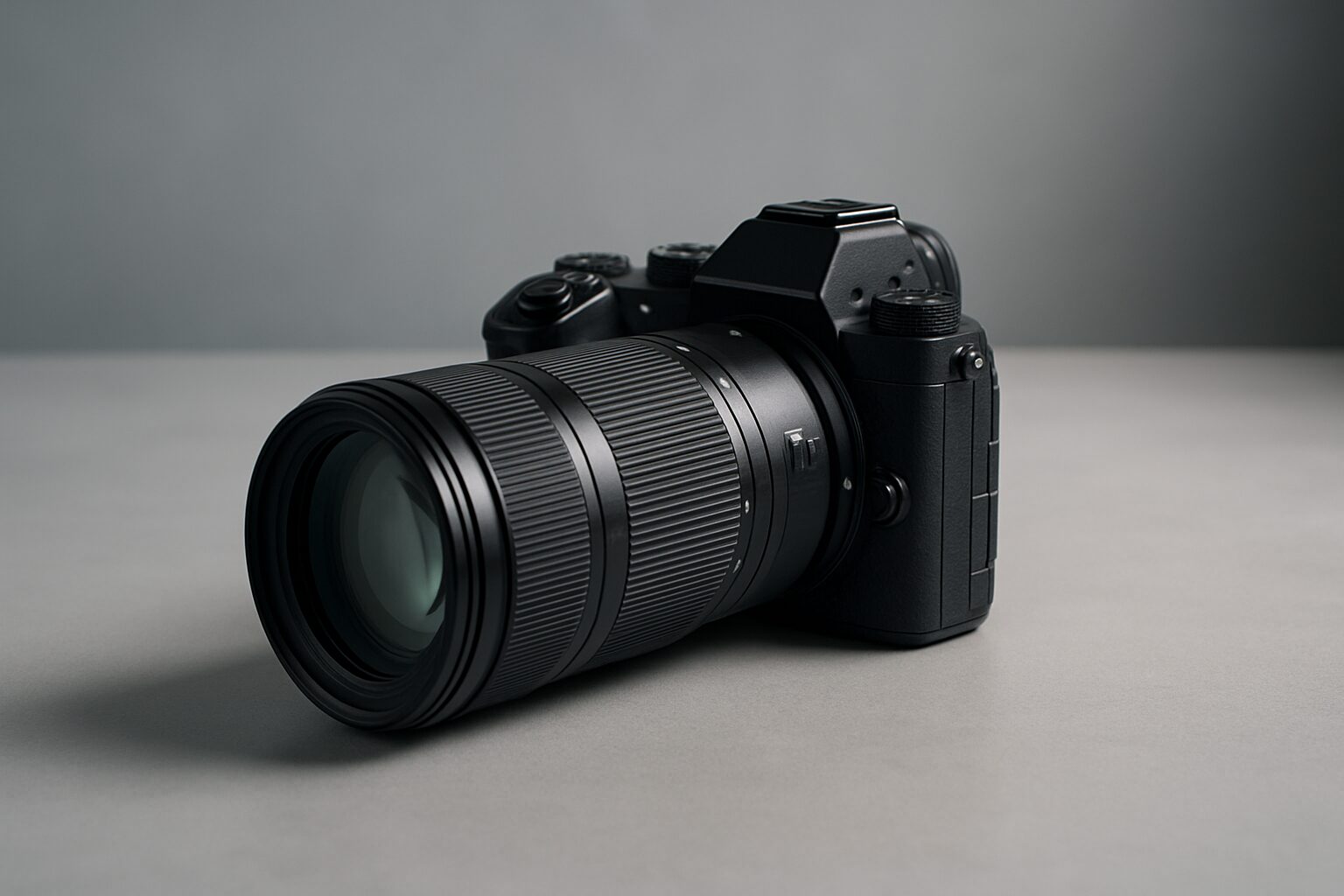
After reviewing dozens of models, our top picks cover different needs and budgets. The table below outlines the key specifications that earn each model a place among the best digital zoom cameras available right now.
| Model | Optical Zoom (35mm equiv.) | Sensor | Key Feature | Approx. Price (USD) |
|---|---|---|---|---|
| Sony RX100 VII | 8x (24-200mm f/2.8-4.5) | 1-inch, 20.1MP | Super-fast AF and burst shooting | $1,300 |
| Panasonic Lumix ZS99 / TZ99 | 30x (24-720mm) | 1/2.3-inch, 20.3MP | Affordable 30x in pocket size | Around $698 |
| Panasonic Lumix ZS300 / TZ300 | 15x (24-360mm) | 1-inch, 20.1MP | 1-inch sensor plus long zoom | $898 |
| Canon PowerShot G7 X III | 4.2x (24-100mm) | 1-inch, 20.1MP | Vlogging flip screen | $749 |
| Nikon Coolpix P1100 | 125x (24-3000mm) | 1/2.3-inch, 16MP | Longest zoom, Moon Mode | $1,099 |
| Panasonic Lumix FZ80D | 60x (20-1200mm) | 1/2.3-inch | Value bridge camera, 4K video | $435 |
| Kodak PIXPRO AZ528 | 52x (24-1248mm) | 1/2.3-inch, 16MP | Budget superzoom, Wi-Fi | $280 |
Best Overall: Sony RX100 VII
The Sony RX100 VII remains the gold standard for compact zoom cameras. Its 8x zoom might seem modest next to a superzoom bridge camera, but the Zeiss lens and 1-inch, 20.1MP sensor deliver exceptional clarity from 24mm wide-angle to 200mm telephoto. The camera uses 357 phase-detection AF points with real-time subject tracking, making it a standout for capturing moving subjects. A pop-up electronic viewfinder, 4K video, and a body measuring just 101.6 x 58.1 x 42.8mm round out a package that’s hard to beat. The $1,300 price tag reflects its premium status, but it earns every dollar.
Best for Beginners: Panasonic Lumix ZS99 / TZ99
Named ZS99 in North America and TZ99 in other markets, this compact camera squeezes a 30x zoom covering 24–720mm into a pocket-friendly body weighing 332g. Hybrid 5-axis stabilization keeps shots steady even at full telephoto reach, and a 10fps burst rate freezes fast action. Beginners appreciate the simple controls and flip-around screen for selfies and vlogging. The small 1/2.3-inch sensor does struggle in dim lighting, but at around $698, it’s a fantastic entry point into serious zoom photography.
Best Travel Companion: Panasonic ZS300 / TZ300
For travelers who want both reach and image quality, the ZS300 hits a genuine sweet spot. Its 15x zoom covers a useful 24–360mm range, and the 1-inch sensor produces noticeably sharper photos than smaller-sensor rivals. Weighing only 332g, it’s easy to carry all day without fatigue. At $898, it’s a solid investment for anyone upgrading from a smartphone who wants professional-looking travel photography without carrying a DSLR.
Best for Vlogging: Canon PowerShot G7 X III
The Canon G7 X III is purpose-built for content creators. Its 4.2x zoom (24–100mm) on a 1-inch, 20.1MP sensor keeps image quality high, while the flip-up screen, mic input, and 4K video make it a natural choice for YouTube and social media creators. At $749, it sits between budget compacts and premium options, offering the best vlogging feature set in its price range.
Best Extreme Zoom: Nikon Coolpix P1100
When reach is everything, nothing touches the Nikon Coolpix P1100. Its 125x optical zoom, equivalent to a 24–3000mm lens, lets you photograph birds in flight, distant wildlife, and even the craters of the moon. The dedicated Moon Mode optimizes settings automatically for lunar shots. The 1/2.3-inch, 16MP sensor won’t match a full-frame camera in low light, but the sheer magnification at $1,099 opens creative possibilities no compact can approach.
Compact Zoom Cameras vs. Bridge Cameras: Which Is Right for You?
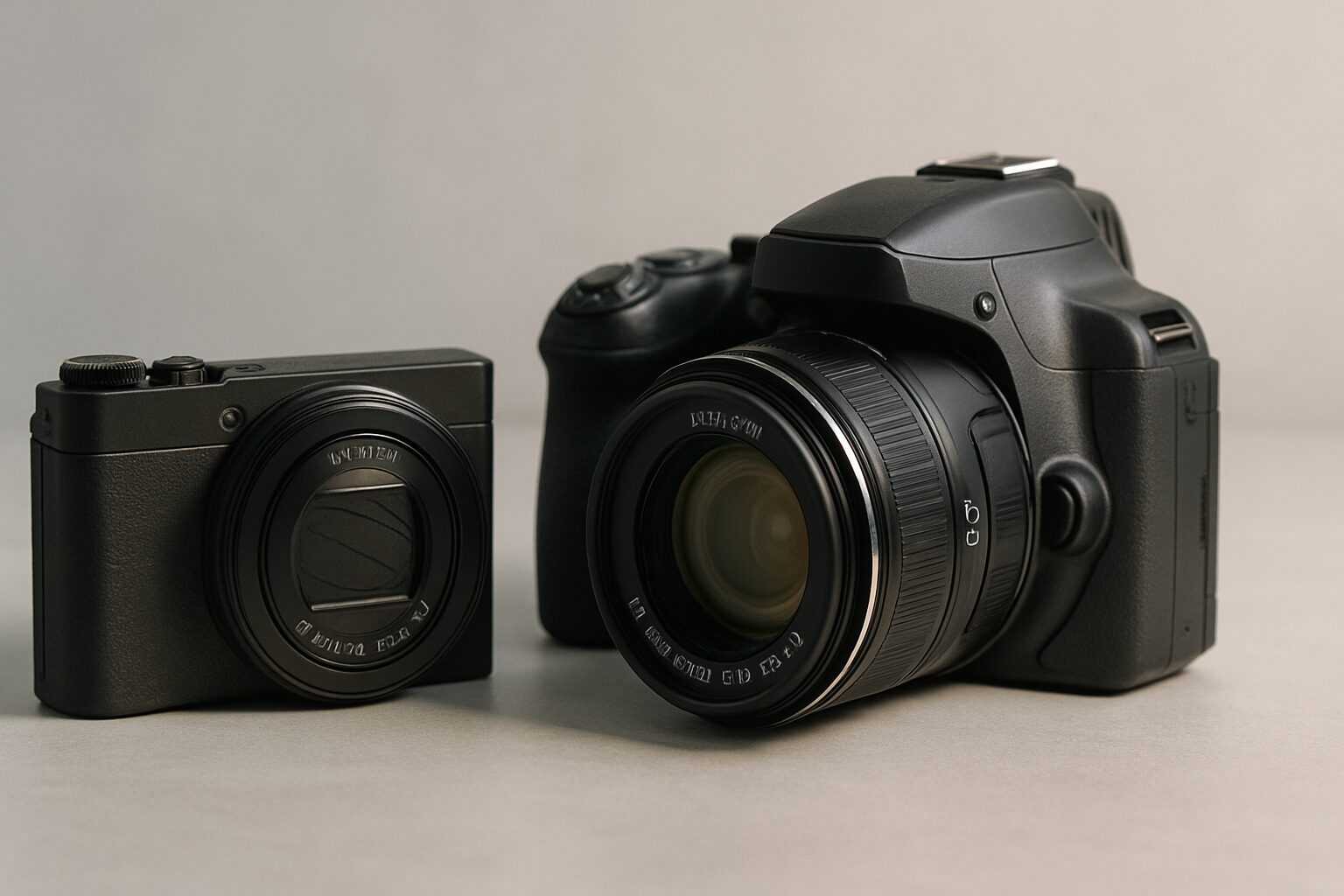
Selecting the best digital zoom camera often comes down to a choice between a pocketable compact and a larger bridge camera. Both categories have real advantages, and the right answer depends entirely on how you shoot.
Compact Zoom Cameras
Models like the Sony RX100 VII and Panasonic ZS99 emphasize portability and everyday convenience. They typically weigh under 350g and fit in a coat pocket, making them ideal for street photography, travel, and concerts. Optical zoom ranges vary from 8x to 30x, and many feature 1-inch sensors for excellent image quality. Most rely on LCD screens rather than viewfinders, but their size advantage is significant for photographers who want to travel light.
Bridge Cameras (Ultra-Zoom)
Bridge cameras, such as the Panasonic FZ80D (60x zoom) and Nikon Coolpix P1100 (125x zoom), resemble mini DSLRs with deep hand grips and electronic viewfinders. They provide extreme telephoto reach that compacts simply cannot match, but at the cost of bulk and smaller sensors. According to Amateur Photographer, bridge cameras are “designed for travel, for day-to-day photography; and anyone who cherishes simplicity and versatility.” Wildlife and sports photographers often prefer these for their long lenses and comfortable ergonomics during extended shooting sessions.
Making the Trade-Off
If you value ultimate portability and shoot mostly in cities or on quick outings, a compact zoom is the smarter choice. If your priority is photographing distant wildlife or birds, a bridge camera’s 60x or greater zoom will capture details that are simply impossible with a smaller lens. Budget also plays a role: bridge cameras like the Kodak PIXPRO AZ528 (52x, $279.99) can be very affordable entry points into extreme telephoto photography.
How Optical Zoom Differs from Digital Zoom
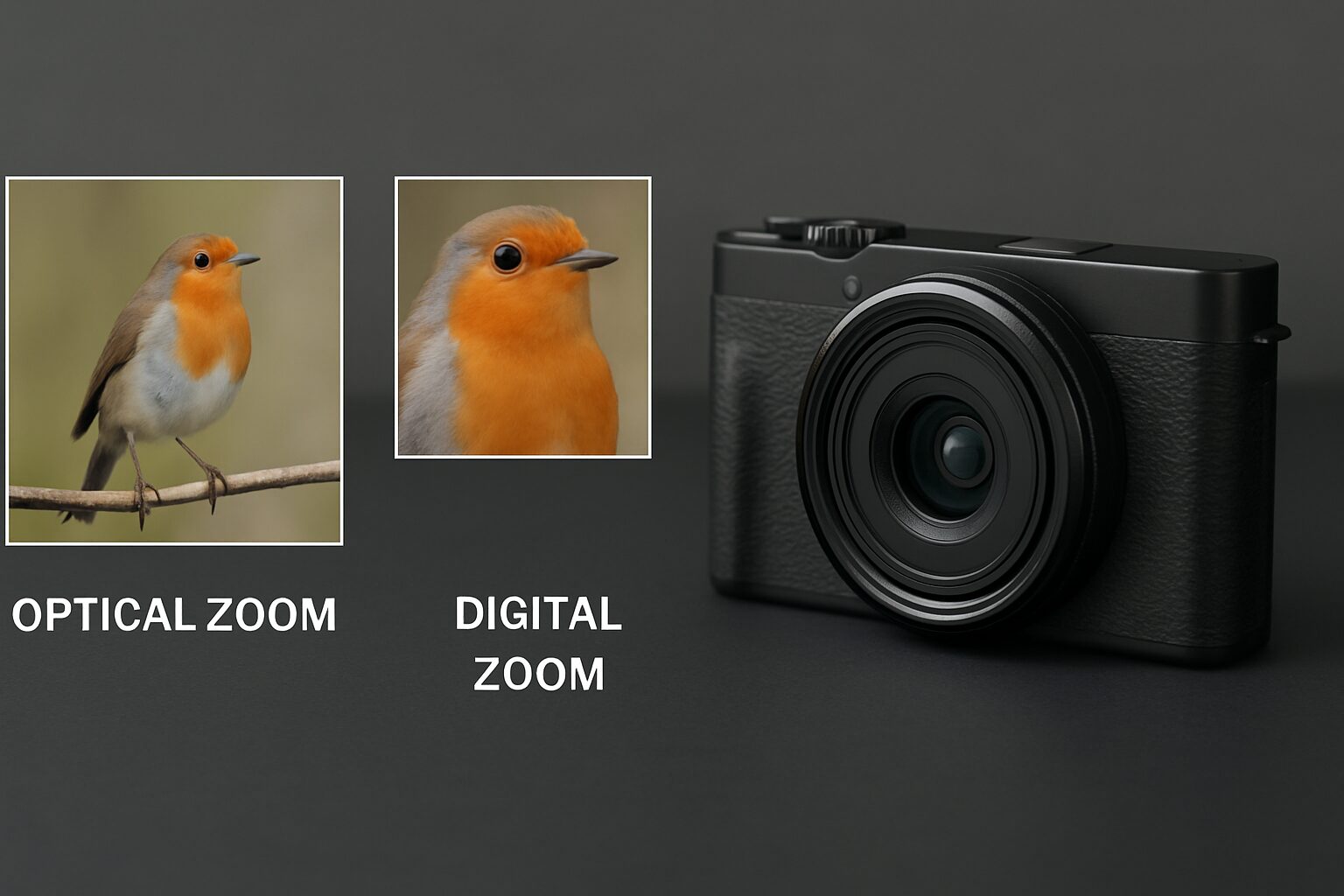
Understanding the difference between optical and digital zoom is essential when choosing the best digital zoom camera. Many manufacturers advertise inflated “total zoom” figures that combine both, which can be genuinely misleading.
Optical Zoom: Physics-Based Magnification
Optical zoom involves the lens physically adjusting its focal length to magnify the image before it hits the sensor. This is the same principle as swapping lenses on an interchangeable-lens camera. It preserves full pixel resolution and image quality, making it the only zoom figure that matters for quality-conscious photographers. When you see a camera advertised as having 30x zoom, verify that number refers to optical zoom specifically.
Digital Zoom: Software Cropping
Digital zoom is a software process where the camera crops into the center of the image and enlarges it, leading to pixelation and loss of detail. It’s functionally identical to cropping a photo on your computer, just done in-camera. When comparing cameras, always look at the optical zoom specification. Digital zoom numbers can be ignored entirely.
Hybrid Approaches and Intelligent Zoom
Some cameras use intelligent zoom systems that digitally magnify with reduced quality loss by interpolating pixel data. Sony’s Clear Image Zoom is one example, producing cleaner results than standard digital zoom. Still, optical zoom is the foundation of any best digital zoom camera worth buying. Treat intelligent zoom as a useful bonus for emergencies, not a primary feature.
Best Digital Zoom Camera for Travel and Wildlife
When you’re on the move, the best digital zoom camera balances reach with portability. Different subjects genuinely demand different gear, and knowing which category you fall into saves you from buying the wrong tool.
Travel Zooms: Versatile and Light
For cityscapes, landscapes, and street portraits, a 15x–30x optical zoom on a 1-inch sensor is the ideal combination. The Panasonic ZS300 exemplifies this: at just 332g, it covers 24–360mm, letting you shoot wide architecture shots and zoom into distant monuments without switching lenses. Its compact size means you’ll actually carry it every day, unlike heavier bridge cameras that often end up left in the hotel room.
Wildlife and Birding: Extreme Telephoto
Wildlife photography demands serious reach. The Nikon Coolpix P1100’s 125x optical zoom, equivalent to 3000mm, lets you capture birds in flight or shy animals from a safe distance without disturbing them. Its Moon Mode optimizes settings automatically for lunar shots. While its 1/2.3-inch sensor won’t match full-frame quality, the sheer magnification opens up creative possibilities that no compact travel zoom can approach.
Adventure and Weather Resistance
If your travels involve rain, sand, or water, the OM System Tough TG-7 is waterproof to 15m, shockproof, and freeze-proof. Its 4x zoom is modest, but superb close-focusing enables macro photography of tiny subjects at distances under 1cm. Pair it with a longer zoom compact for a complete outdoor kit that handles every condition you’ll encounter.
Should You Consider a Second-Hand Bridge Camera?
Second-hand high-end bridge cameras represent some of the best value in photography right now. The Sony RX10 IV, for example, features a 25x zoom (24–600mm) on a 1-inch sensor with 600fps burst capability at reduced resolution. New, it retailed above $1,700. Used or refurbished, it can be found for $600–$900, making it one of the most capable best digital zoom camera options at that price point. Similarly, the Panasonic ZS200D (also called TZ200) with a 15x zoom and 1-inch sensor appears regularly in the $400–$500 used range. When buying second-hand, inspect the lens for dust or fungus, check the shutter count if available, and confirm the battery holds a charge. Reputable sources include manufacturer-certified refurbished programs and established camera retailers with return policies.
Key Features That Set the Best Digital Zoom Cameras Apart
Beyond zoom ranges, advanced features define the best digital zoom camera experience. These are the capabilities that separate a genuinely great camera from a merely adequate one.
Image Stabilization
At high magnifications, even tiny hand movements cause blur. The Panasonic ZS99’s Hybrid 5-axis Optical Image Stabilization counters this, allowing handheld shooting at 720mm equivalent. Sony’s Optical SteadyShot in the RX100 VII ensures crisp photos at 200mm. Without effective stabilization, long zoom lenses become nearly unusable in anything less than bright sunlight.
Autofocus and Burst Speed
Fast, accurate autofocus is critical for sports and wildlife. The Sony RX100 VII uses 357 phase-detection AF points with real-time tracking, making it a standout for action photography. Burst speeds matter equally: both the ZS99 and the FZ80D shoot at 10fps, letting you capture split-second moments reliably. According to Digital Camera World, the RX100 VII has “fast and effective AF” that rarely misses a shot even on fast-moving subjects.
Video and Vlogging Tools
The Canon G7 X III and Canon PowerShot V1 are purpose-built for content creators. Flip-around screens, mic inputs, and oversampled 4K video make them the top choices for hybrid shooters who split time between stills and video. Even compact zooms like the Panasonic ZS99 shoot 4K/30p, ensuring your travel footage looks professional rather than like phone footage.
Battery Life Considerations
Battery life varies significantly across categories. Bridge cameras like the Panasonic FZ80D typically deliver 350–400 shots per charge due to their larger battery capacity. Compact cameras like the Sony RX100 VII average around 240 shots per charge, which is manageable for a day trip but worth planning around on longer excursions. Always carry a spare battery or a USB charging bank, especially for travel. The Panasonic ZS99 and ZS300 share the same DMW-BLG10 battery, which simplifies packing if you own multiple Panasonic bodies.
Budget-Friendly Digital Zoom Cameras Under $500
You don’t need to spend over $1,000 to get a capable zoom camera. Several models offer impressive zoom ranges at lower price points, though with real compromises worth understanding before you buy.
Panasonic Lumix FZ80D: The Value Bridge
Priced at $435, the FZ80D features a 60x optical zoom covering 20–1200mm equivalent, a 0.39-inch OLED electronic viewfinder, and 4K video recording. Its 1/2.3-inch sensor limits low-light performance, but in good light, the zoom reach is extraordinary for the price. The 3-inch touchscreen and 1cm macro mode add genuine versatility, making it a favorite among hikers and casual birders who want serious reach without a serious price tag.
Kodak PIXPRO AZ528
At $279.99, the AZ528 delivers a 52x optical zoom covering 24–1248mm equivalent with a 16MP sensor. Autofocus is slower than premium models and the plastic-heavy build reflects the price point, but it’s a solid option for budget-conscious shooters who rarely need video beyond 1080p. Built-in Wi-Fi lets you transfer photos to your phone on the go, which is a genuinely useful feature at this price.
Older Compacts Still Worth Buying
The Panasonic ZS200D (TZ200) with a 15x zoom and 1-inch sensor can be found for around $400–$500 used or refurbished. Though originally released in 2019, it still produces excellent images and has a premium feel that budget new cameras can’t match. Inspect the battery and lens carefully when buying second-hand, and buy from sellers with clear return policies.
Pros and Cons of Dedicated Digital Zoom Cameras
Every best digital zoom camera involves trade-offs. Here’s an honest look at what you gain and what you give up compared to smartphones and interchangeable-lens cameras.
Pros
- Optical zoom range smartphones can’t touch. Even a modest 15x optical zoom covers distances that no phone camera can match without severe quality loss.
- Larger sensors than phones. A 1-inch sensor in the Sony RX100 VII or Panasonic ZS300 captures dramatically more light than any current smartphone sensor.
- Purpose-built ergonomics. Physical zoom controls, dedicated shutter buttons, and proper grips make shooting faster and more intuitive than tapping a phone screen.
- All-in-one convenience. One camera body covers wide-angle to extreme telephoto without carrying multiple lenses or a full camera bag.
- Better video stabilization at zoom. Optical image stabilization at 200mm or 720mm is something phone cameras simply cannot replicate.
Cons
- No interchangeable lenses. You’re locked into the focal range the manufacturer chose. If you outgrow it, you buy a new camera.
- Smaller sensors than mirrorless or DSLR cameras. Even the best 1-inch sensor compact won’t match a full-frame mirrorless in low-light performance or dynamic range.
- Connectivity is improving but still behind phones. Transferring files to social media requires extra steps compared to shooting directly on a smartphone.
- Budget models compromise on sensor size. Cameras under $400 typically use 1/2.3-inch sensors that struggle in low light, which limits their versatility.
Expert Tips for Choosing Your Next Zoom Camera
To find the best digital zoom camera for your specific needs, work through these practical steps before you buy.
Step 1: Define Your Primary Use
Are you shooting travel landscapes, fast-paced sports, or backyard birds? Your subject determines the zoom range you actually need. For most casual shooters, 15x–30x is plenty. Wildlife enthusiasts will want 60x or more to capture meaningful detail from a safe distance.
Step 2: Test Ergonomics Before Buying
If possible, hold the camera in a store before committing. Pocketable models like the Sony RX100 VII can feel fiddly for larger hands, while a bridge camera’s chunky grip may be more comfortable for all-day shooting. Check menu responsiveness and button layout. A camera you enjoy using will produce better photos than a technically superior one you find frustrating.
Step 3: Consider the Ecosystem
If you already own camera gear from a specific brand, staying within that ecosystem can simplify battery and charger sharing. Panasonic uses the same DMW-BLG10 battery across several models including the ZS99 and GX series, which is a practical advantage for travelers who want to minimize what they carry.
Step 4: Prioritize Optical Zoom Over Megapixels
A 12MP camera with a 1-inch sensor will outperform a 20MP model with a 1/2.3-inch sensor in real-world image quality. Don’t be swayed by marketing numbers. Optical zoom range and sensor size are the true indicators of a camera’s capabilities, and everything else is secondary.
Industry Perspective: “Sensor size and lens quality are the two variables that actually determine image quality. Megapixel counts are a marketing metric, not a performance metric.” – DPReview Editorial Team, Camera Buying Guide
Frequently Asked Questions
Is digital zoom good for a camera?
Generally, no. Digital zoom crops and enlarges the image, reducing sharpness and introducing pixelation. Optical zoom, which uses actual lens glass to magnify, is the key metric for maintaining image quality. Digital zoom can be useful for quick framing checks, but should be avoided whenever image quality matters.
What is the longest zoom compact camera in 2026?
The Nikon Coolpix P1100 offers a 125x optical zoom, equivalent to a 24–3000mm lens, making it the longest zoom available on a fixed-lens camera. Its dedicated Moon Mode captures detailed lunar shots by automatically optimizing exposure settings.
Can a compact zoom camera replace a DSLR for travel?
In many cases, yes. A 1-inch sensor compact like the Sony RX100 VII or Panasonic ZS300 delivers image quality close to entry-level DSLRs at a fraction of the weight. They lack interchangeable lenses, but their all-in-one design is far more practical for travelers who don’t want to carry a full camera bag.
Is a 1-inch sensor really that much better than a 1/2.3-inch sensor?
Yes, significantly. A 1-inch sensor is roughly 4 times the surface area of a 1/2.3-inch sensor, capturing considerably more light. This results in less noise, better dynamic range, and sharper details, especially in low light or high-contrast scenes.
What is the best digital zoom camera under $500?
The Panasonic Lumix FZ80D at $435 offers a 60x optical zoom, an electronic viewfinder, and 4K video, making it the strongest value in this price range. The Kodak PIXPRO AZ528 at $279.99 is more affordable with 52x zoom but has fewer advanced features and slower autofocus.
Do I need a viewfinder on a digital zoom camera?
A viewfinder helps significantly in bright sunlight when the LCD screen is hard to see, and pressing the camera against your face naturally stabilizes it for sharper shots. Not all compacts include one: the Sony RX100 VII has a pop-up EVF, while the Panasonic ZS99 relies entirely on its LCD screen.
Ready to find the camera that fits your creative vision? Contact Emin Media for a free brand consultation and let’s build a visual strategy that makes every shot count.
Enjoyed this article?
Contact Emin Media for a free brand consultation and let's create something amazing together.
Get in Touch