What Is a Digital Marketing Strategist? Role & Career Guide
A digital marketing strategist is a professional who develops, implements, and oversees integrated online marketing plans that drive measurable business growth. They combine creative instinct with data analysis to guide brands across every digital channel.
Key Takeaways
- This role designs and executes cross-channel online marketing plans to drive business growth, not just individual campaigns.
- The position differs from a specialist role by taking a full, cross-channel view instead of owning one platform.
- Essential skills include data analysis, creative storytelling, and technical fluency with marketing platforms.
- Career progression typically starts in specialist roles and moves toward strategy leadership over several years.
- Demand for this kind of strategic marketing talent remains strong across tech, healthcare, finance, and retail.
What Is a Digital Marketing Strategist?
Definition and Core Responsibilities
This role belongs to a senior-level professional who conceptualizes and leads integrated digital marketing campaigns from the ground up. Unlike tactical execution roles, this person focuses on the why behind every initiative, aligning marketing activity with broader business goals. According to The Strategy Studio, these professionals “ideate, plan, and oversee all marketing strategies to help businesses expand their reach and hit their online goals.” They work across SEO, paid media, social, email, and content to build one cohesive brand presence with real ROI attached.
Core responsibilities include market research, audience segmentation, competitive analysis, channel selection, budget allocation, and performance measurement. Think of this person as the architect of the marketing plan while specialists and coordinators handle the day-to-day build.
The Difference Between a Strategist and a Specialist
The gap between these two roles comes down to scope: one owns a channel, the other owns the whole map. A specialist excels in a single domain, like an SEO specialist focused purely on organic search or a social media specialist running the platforms. The strategist sees the bigger picture and orchestrates how each channel supports one unified customer journey.
The Strategy Studio puts it plainly: while specialists focus on specific areas, strategists “look at everything as a whole.” That full-view oversight keeps campaigns working together instead of competing for the same budget and attention in separate silos.
“It’s their job to analyze KPIs, track performance across digital channels, do an audit of your current performance, determine where changes may need to be made, create a plan for future success, and more,” according to The Strategy Studio’s breakdown of the role.
The Role in Modern Business
Strategic Planning and Goal Setting
This role exists to turn business objectives into marketing plans that actually move the needle. That means auditing current digital assets, spotting the gaps, and setting SMART goals: specific, measurable, achievable, relevant, and time-bound. To do this well, someone needs a clear read on the company’s value proposition, target audience, and competitive landscape before they can craft anything that actually differentiates the brand.
They also define the KPIs for each channel and campaign so every tactic ties back to a business outcome. That high-level framing is what separates this work from execution-only roles.
Cross-Channel Campaign Management
Channel selection isn’t a coin flip, it’s a deliberate read on where the audience actually shows up at each stage of the buyer’s journey. A strong plan might lean on LinkedIn for B2B lead generation, Instagram for brand awareness, and email for nurturing existing customers. The goal is one consistent message, tailored to fit each platform’s format and the way people actually behave there.
That kind of cross-channel orchestration takes a real feel for each platform’s strengths, limits, and audience makeup. Done right, the brand’s voice stays unified while the content still flexes to maximize engagement channel by channel.
Data Analysis and Performance Optimization
Numbers are the backbone of this work. Ongoing monitoring through tools like Google Analytics, Adobe Analytics, and native social insights shows what’s actually happening, not what anyone assumes is happening. By tracking click-through rates, conversion rates, cost per acquisition, and lifetime value, gaps and opportunities become obvious fast.
This iterative loop, often called growth optimization, is where the real craft shows up. A/B testing, behavior analysis, and cohort tracking refine targeting and messaging over time, and small wins compound into something bigger.
Key Skills Needed for This Role
Analytical and Data Interpretation Skills
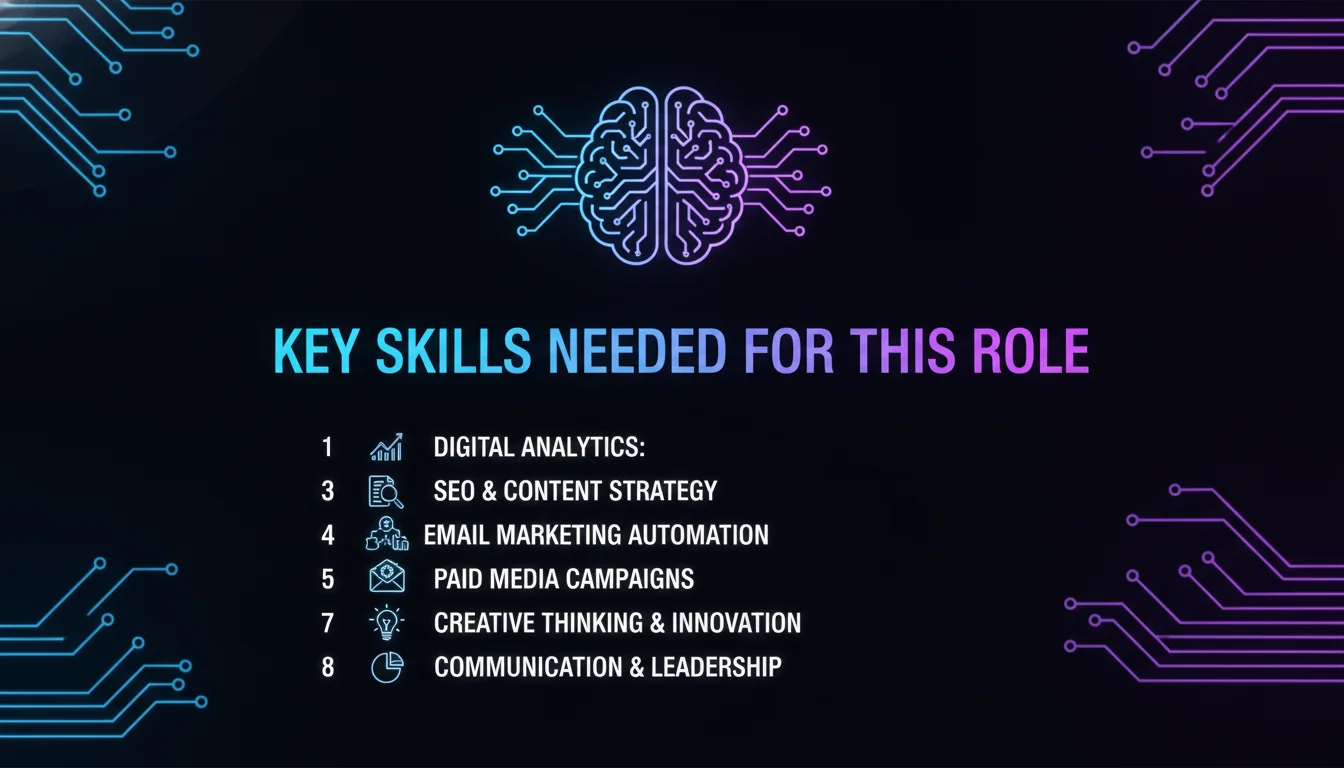
Comfort with numbers is non-negotiable here. Reading datasets for signal on consumer behavior, campaign performance, and market shifts is a daily task, not an occasional one. Baseline spreadsheet fluency (Excel or Google Sheets) is expected, and familiarity with visualization tools like Tableau or Looker is increasingly standard. Translating a messy dataset into one clear recommendation is the skill that separates good from forgettable.
Creative and Content Strategy Abilities
Data drives decisions, but creativity is what actually gets someone to stop scrolling. A sharp sense of storytelling, brand voice, and visual language matters just as much as spreadsheet skills. Close collaboration with content creators, designers, and copywriters turns strategy into campaigns that resonate emotionally, not just logically. Understanding inbound marketing principles, viral mechanics, and user-generated content helps build plans that attract attention and actually hold onto it.
Technical Proficiency and Tool Mastery
Being tech-fluent is part of the job description now. Working knowledge of SEO platforms (Ahrefs, SEMrush), paid ad managers (Google Ads, Meta Business Suite), email tools (HubSpot, Mailchimp), CRMs (Salesforce), and marketing automation software is expected even if someone else executes the daily tasks. Understanding these tools well enough to guide a team and judge campaign performance is the baseline, not the ceiling.
Communication and Leadership Skills
This work rarely happens in isolation. Cross-functional collaboration with designers, developers, sales, and executives means communication skills carry as much weight as analytical ones. Explaining the plan clearly, justifying budget decisions, and presenting results in a way that lands with leadership are constant demands. Leadership matters too, especially when mentoring junior marketers or steering a team through a multi-phase campaign.
How to Become a Digital Marketing Strategist
Step 1: Build a Strong Educational Foundation
There’s no single required degree, but most people in this role hold a bachelor’s in marketing, business, communications, or something adjacent. Coursework in statistics, consumer psychology, and digital media builds a genuinely useful foundation. Plenty of universities now offer dedicated digital marketing programs, and platforms like Coursera and edX offer relevant courses from respected institutions.
Step 2: Gain Hands-On Experience
Entry-level roles like digital marketing coordinator, SEO specialist, social media assistant, or content marketer build the practical muscle needed to move up. Most people spend three to five years across one or more disciplines before stepping into a strategy-focused seat. During that stretch, look for cross-channel projects, raise your hand for strategic work, and start building a portfolio of campaigns you can actually point to.
Step 3: Develop Strategic Thinking and Specialize
As experience builds, the focus should shift from execution to strategy. Start asking bigger questions: how does this campaign tie to company goals? What’s the customer lifetime value by channel? As EDHEC Online notes in its guide to the field, success in this role means learning to “combine creativity, analytical skills, and industry knowledge.” Seek out roles that put you in strategy sessions, budget conversations, and leadership presentations.
Step 4: Earn Certifications and Stay Current
Certifications signal commitment and give employers a quick way to gauge expertise. Well-regarded options include the Google Analytics Individual Qualification, Google Ads certifications, HubSpot Content Marketing, Meta Blueprint, and the Digital Marketing Institute’s Pro certification. Staying current also means reading trade publications like Moz, Search Engine Journal, and Adweek, since algorithm shifts and privacy rules change the playing field constantly.
Digital Marketing Strategist vs. Other Roles: A Comparison
Strategist vs. Specialist
A specialist executes within one narrow lane, whether that’s PPC, SEO, or social. The strategist designs the plan that ties all those lanes together into one story. A specialist might optimize a single campaign for cost per click; the strategist checks whether that campaign even fits the bigger customer acquisition play.
Strategist vs. Digital Marketing Manager
Managers own team leadership, resource allocation, and operational efficiency, making sure projects land on time and on budget. This role instead concentrates on long-term vision and market positioning. In plenty of organizations, the strategist reports to the manager or director, feeding insights that shape quarterly and annual plans.
Strategist vs. Digital Marketing Consultant
Consultants are usually outside advisors brought in for a specific project or window of time, offering an outside perspective and specialized expertise. This role, by contrast, is typically embedded in-house or at an agency, owning the plan from idea through optimization. A consultant advises; this person plans and often oversees execution too.
| Role | Primary Focus | Typical Responsibilities | Experience Level |
|---|---|---|---|
| Digital Marketing Specialist | Tactical execution in one channel | Manage PPC campaigns, write blog posts, schedule social media | Entry to mid-level |
| Digital Marketing Strategist | Full-view planning and cross-channel integration | Audience research, channel mix, goal setting, performance analysis | Mid to senior-level |
| Digital Marketing Manager | Team management and operational oversight | Budget control, staff supervision, campaign execution timelines | Senior-level |
| Digital Marketing Consultant | Advisory and project-based strategy | Audit, recommend, implement short-term initiatives | Senior/expert-level |
Career Path and Salary Expectations
Entry-Level to Senior-Level Progression
This career typically starts with hands-on roles like Digital Marketing Assistant or SEO Coordinator. After two to three years, most people move into Specialist positions, then into strategy-focused roles around the five-year mark. With seven to ten years under their belt, professionals may reach Senior Strategist, Director of Digital Strategy, or even CMO. The pace depends heavily on company size and how clearly someone can point to business impact they’ve driven.
Industry Demand and Job Outlook
Demand for this kind of strategic marketing talent stays strong across industries, from tech startups to healthcare and finance. As of 2026, companies keep investing in digital transformation, which keeps the need high for people who can navigate a fragmented channel landscape and actually prove results. Job boards like LinkedIn and Indeed list large volumes of related strategist and digital strategy openings in major markets on any given week, reflecting steady employer appetite for the role.
Factors Influencing Salary
Compensation varies based on location, industry, company size, and experience level. In major U.S. metro hubs, packages often include base salary plus performance bonuses. We won’t fabricate numbers here, but current, location-specific ranges are available on Glassdoor, Payscale, Indeed, and LinkedIn. Certifications, advanced degrees, and a visible track record of successful campaigns all meaningfully boost earning potential over time.
Pros and Cons
Pros
- Real variety: strategy work touches creative, data, and leadership in the same week.
- Strong demand across industries means solid job security and mobility.
- Clear path to senior leadership roles like Director of Digital Strategy or CMO.
- Work is measurable, which makes it easier to prove your value and negotiate pay.
Cons
- The learning curve is steep. You need working fluency in a wide range of tools and channels.
- Constant platform and algorithm changes mean the job never fully stabilizes.
- Cross-functional pressure is real. You’re accountable for outcomes you don’t always fully control.
- Burnout risk is real if budget and headcount don’t scale with expectations.
The Future of the Role
AI and Automation Impact
AI is reshaping this job, but it’s augmenting the work rather than replacing it. Tools like ChatGPT, Jasper, and automated bidding inside Google Ads are streamlining content drafts and campaign optimization, freeing up time for higher-level thinking, creative direction, and relationship building. Someone who masters these AI tools now will be better positioned to run hyper-personalized campaigns at scale as the tech matures further through 2026 and beyond.
Evolving Consumer Behaviors and Channels
Staying relevant here means tracking shifts in consumer behavior in near real time. Short-form video on TikTok and YouTube Shorts, voice search, and social commerce through Instagram Shops all demand a plan flexible enough to pivot fast. The deprecation of third-party cookies is pushing teams toward first-party data strategies and contextual targeting instead. Staying agile isn’t optional anymore, it’s the baseline expectation for anyone doing this work seriously.
Creative industry data shows that brands winning on social platforms right now are the ones treating short-form video and first-party data as connected priorities, not separate initiatives.
At Emin Media, we’ve watched brands try to hire one person to be a full department, and it rarely works out well. The strongest results usually come from pairing a sharp strategic mind with a creative team that can execute at speed, whether that’s in-house or through a partner like us. If you’re building out branding, video, or social campaigns and want that kind of thinking behind them, check out our services or browse more of our thinking on the Emin Media blog.
Frequently Asked Questions
What is a digital marketing strategist?
This is a professional who develops, implements, and oversees comprehensive online marketing plans to meet business goals. They combine creativity, analytical skills, and industry knowledge to drive growth across digital channels.
What is the salary of a digital strategist?
Pay varies widely by location, experience, and industry, so we won’t cite a single figure here. For current, region-specific numbers, reputable salary platforms like Glassdoor, Payscale, Indeed, and LinkedIn are the best resources.
Is a digital strategist a good career?
Yes, this path is both rewarding and in high demand as of 2026. It offers intellectual challenge, creative freedom, and a direct line to measurable business impact, with digital spending continuing to grow globally.
What is the average salary for a digital marketing strategist in the US?
Exact figures shift by market and experience level, so check real-time listings on Indeed or LinkedIn for accurate, current ranges. Bonuses and profit-sharing can add meaningfully to total compensation on top of base pay.
How do I become one?
Start with a marketing-related degree or equivalent experience, spend three to five years building hands-on skills across digital channels, and develop cross-channel strategic thinking along the way. Layer in relevant certifications and actively seek roles that push you from execution into strategy.
Ready to build a marketing plan that actually connects the dots between creative and results? Contact Emin Media for a free brand consultation and let’s build something bold together.
Enjoyed this article?
Contact Emin Media for a free brand consultation and let's create something amazing together.
Get in Touch