Best Social Media Manager Tools 2026: Full Guide
Key Takeaways
- Social media manager tools 2026 combine AI content creation, scheduling, and analytics into one dashboard, cutting hours of manual admin work.
- Entry-level plans start around $6-$20/month; enterprise-grade social media manager tools 2026 platforms can run $199+/user/month.
- Buffer wins on simplicity and small-business pricing, Hootsuite on all-in-one management, and Sprout Social on deep analytics.
- AI features like Hootsuite OwlyWriter AI and Lately‘s content repurposing can multiply content output without adding headcount.
- Always test social media manager tools 2026 options through free trials before you commit. Most platforms offer a limited free plan or a 30-day window.
Social media manager tools 2026 are platforms that combine AI-powered scheduling, content creation, and analytics into one dashboard for managing multiple social accounts. Buffer, Hootsuite, and Sprout Social lead the pack, while niche players like Later and Manychat handle specialized jobs.
Why Social Media Manager Tools Matter More Than Ever in 2026
Social media manager tools matter in 2026 because manual, spreadsheet-driven posting can no longer keep pace with the volume and speed audiences expect. According to PostClaw, roughly 89.7% of social media marketers now use AI tools daily or several times a week, citing Sociality.io’s research on AI in social media marketing. A social media management tool lets you schedule posts, engage audiences, and analyze performance across networks from a single screen. In 2026, these platforms have grown from simple calendars into full command centers that generate content, handle replies, and forecast what’s about to perform.
The Shift from Manual to Autonomous Workflows
The shift from manual to autonomous workflows means AI now drafts and adapts content instead of just scheduling it. As Marketing360 puts it, today’s top tools act as a command center for your entire digital identity. Picture a boutique owner who used to spend Sunday nights manually uploading photos to four separate apps. That grind is disappearing. AI-driven workflows generate captions, cut long-form posts into short reels, and flag optimal posting windows, freeing social media managers to focus on strategy and actual conversations with their audience.
Why Manual Management Falls Short
Manual management falls short because it creates version-control chaos, slow replies, and reporting nobody trusts. Without a centralized system, comments, DMs, and mentions pile up across Facebook, Instagram, and TikTok in separate tabs. A true tools 2026 platform solves this by pulling every inbox into one stream, which speeds up response time and keeps brand voice consistent across channels.
The Business Case for AI Integration
The business case for AI integration comes down to speed and scale. Creative industry data indicates that AI scheduling tools can lift engagement by roughly 25-40% compared to fixed posting schedules, according to Digital Applied. For social media managers juggling several client accounts, that kind of lift translates directly into scalability without hiring more staff.
“The question is no longer whether to use AI in your social media workflow, but which platform delivers the best AI capabilities for your team size, budget, and channel mix,” according to Digital Applied’s 2026 comparison of AI social platforms.
Key Features to Look for in Social Media Manager Tools 2026
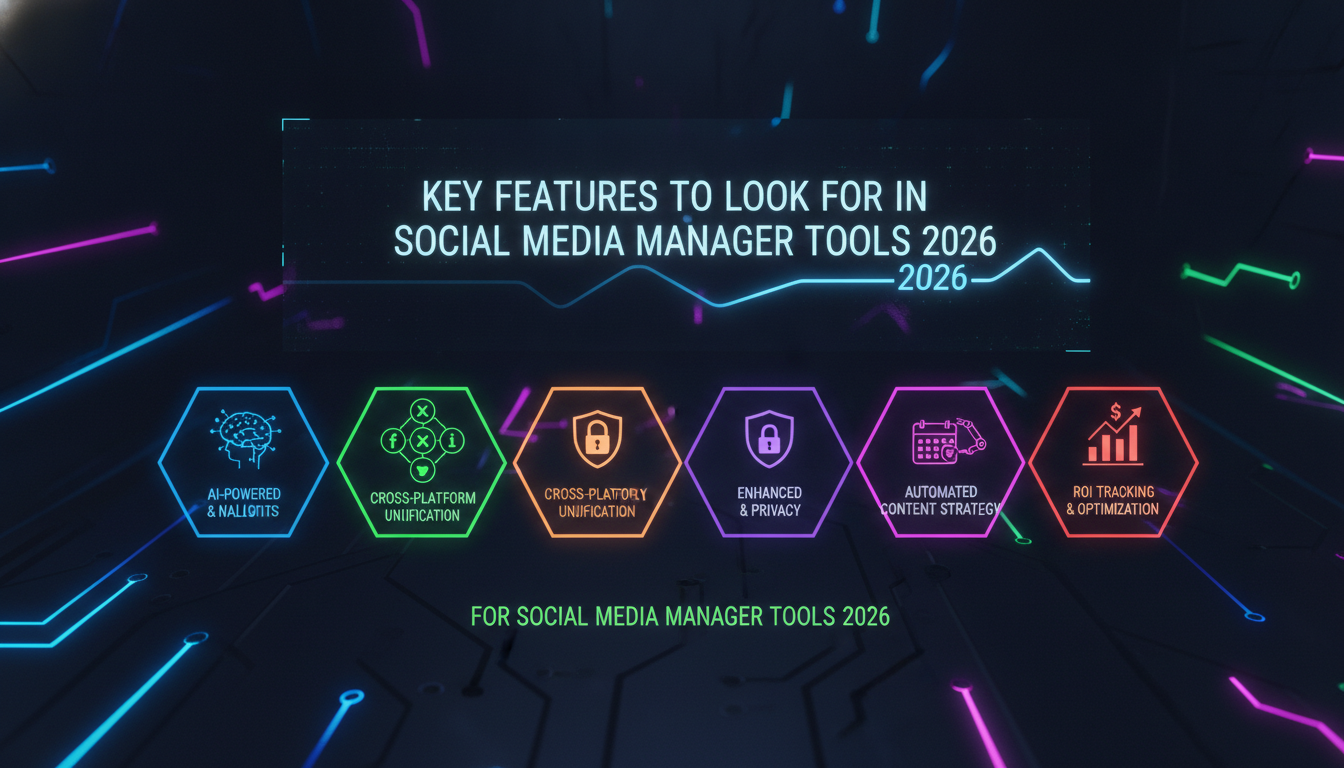
The key features to look for are a unified inbox, AI-assisted content creation, real analytics, and team collaboration built into one interface. A social media management suite integrates publishing, engagement, analytics, and collaboration so your team isn’t bouncing between five browser tabs. When you’re comparing this type of 2026 options, weigh how each feature actually reduces your daily workload, not just how it looks on a features page.
Unified Social Inbox and Engagement
A unified inbox consolidates messages, comments, and mentions from Facebook, Instagram, TikTok, and LinkedIn into a single stream. This matters for managers who need fast response times without app-switching fatigue. Hootsuite, Sprout Social, and Buffer all offer this, and Sprout Social layers in AI-powered sentiment analysis to surface urgent messages first.
AI-Powered Content Creation and Scheduling
AI-powered content creation and scheduling uses machine learning to draft captions, suggest visuals, and determine the best posting windows from historical engagement data. Hootsuite OwlyWriter AI generates platform-optimized captions, while Lately can turn a single blog post into 30+ social posts automatically, per Digital Applied. Brands using tools like this report roughly triple their content output without adding headcount.
Advanced Analytics and Custom Reporting
Advanced analytics and custom reporting turn raw engagement numbers into decisions instead of guesses. The strongest this kind of tools 2026 offer demographic breakdowns, engagement trends, competitive benchmarking, and ROI tracking. Sprout Social excels at converting data into executive-ready reports, while Buffer covers the essentials for leaner teams. Look for custom report building and automated delivery to stakeholders, so nobody’s manually copying numbers into a slide deck.
The Top Social Media Management Platforms for Every Need
The top platforms for most teams are Buffer, Hootsuite, and Sprout Social, each built for a different budget and workflow. Based on extensive user reviews and hands-on evaluations from G2 and Buffer, these three consistently rank as top choices. Each brings a distinct mix of features, pricing, and room to grow.
Buffer: Best for Simplicity and Affordability
Buffer remains the top pick for creators and small businesses thanks to its simplicity and affordable per-channel pricing, according to Buffer’s own 2026 comparison. Its clean interface, straightforward scheduling calendar, and browser extension keep costs predictable. Entry-level plans start around $6-$20 per month, making Buffer one of the most budget-friendly the media manager tools 2026 has to offer. It skips some of the deep listening and reporting found in pricier suites, but for solo managers and small agencies, the trade-off is worth it.
Hootsuite: The All-in-One Powerhouse
Hootsuite is the pick for teams that want scheduling, social listening, collaboration, and AI content creation under one roof through OwlyWriter AI. Pricing starts at $99/month, according to G2, positioning it as a mid-range solution built for growing teams. It connects with over 150 apps and supports a wide range of networks. For managers running multiple brands, Hootsuite’s customizable dashboard and approval workflows keep complex operations from turning into chaos.
Sprout Social: Enterprise-Grade Analytics and Engagement
Sprout Social is built for data-driven teams that need serious listening, sentiment analysis, and CRM-level engagement tracking. Its AI Assist delivers real-time sentiment analysis and automated response suggestions. Pricing starts at $199/user/month billed annually, per G2, which lands it in the enterprise tier. For agencies managing high-volume accounts, the reporting depth and collaboration tools often justify the spend, and Sprout Social offers a 30-day trial to test it first.
Niche Social Media Manager Tools 2026 for Specialized Tasks
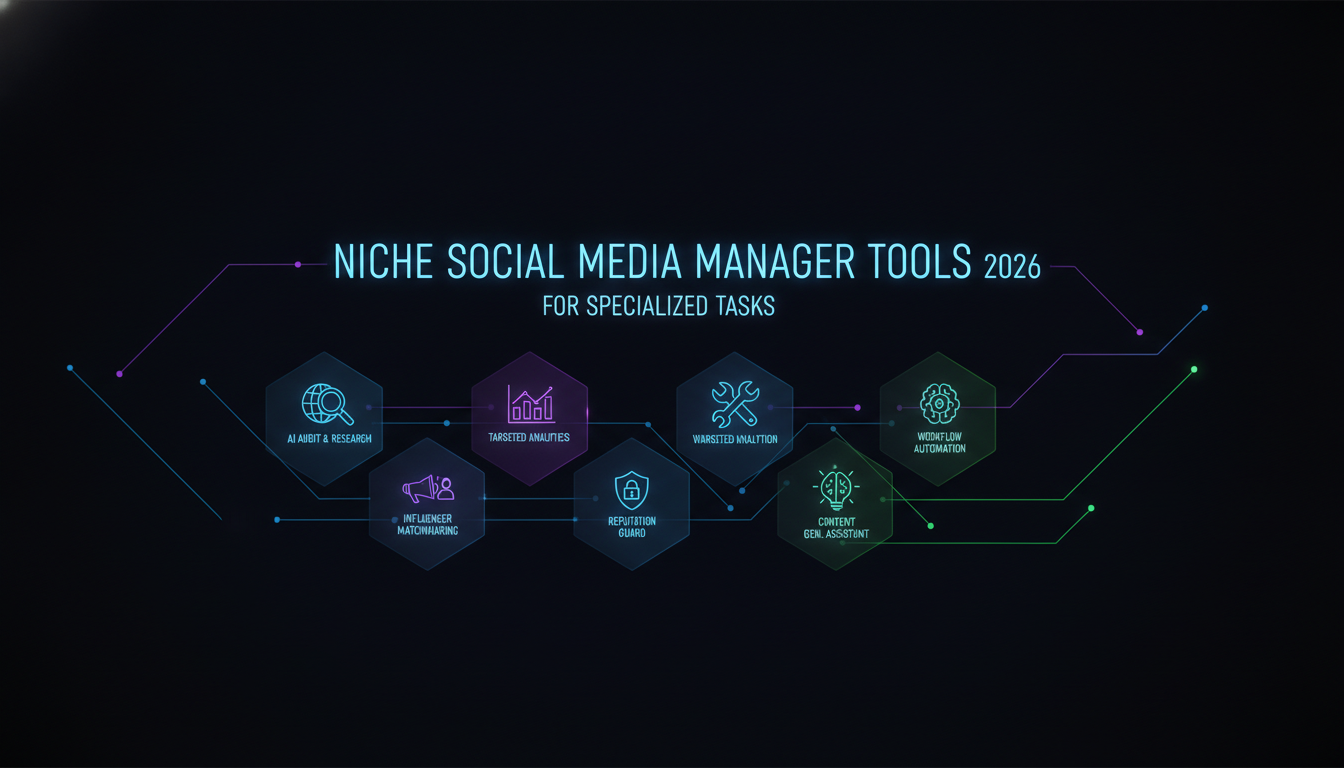
Niche tools matter because not every social media manager needs a full all-in-one suite. Specialized 2026 platforms focus on one platform or function and often go deeper than the broad suites.
Later: Visual Planning for Instagram and TikTok
Later specializes in visual content scheduling, particularly for Instagram and TikTok. Its drag-and-drop calendar and link-in-bio tool are favorites among visually driven brands and creators. It supports other networks too, but its strength stays Instagram-first. Later also offers a free plan with limited posts, so you can test it before upgrading.
Manychat: Automation for DMs and Lead Generation
Manychat focuses on automating conversations through direct messages and comments. Managers use it to build chatbots that answer FAQs, capture leads, and drive sales, which matters on platforms like Facebook and Instagram where fast replies affect reach. Manychat is especially helpful for high-volume DM and comment automation to drive lead conversion, according to Buffer. Its CRM integrations turn social engagement into an actual sales pipeline.
Tailwind: Pinterest and Email Marketing Integration
Tailwind is built for Pinterest-heavy strategies. It offers scheduling, Tailwind Tribes for content sharing communities, and email marketing tools bundled in. For managers whose clients rely on Pinterest traffic, Tailwind’s analytics and smart scheduling optimize pinning for reach. It also includes a free plan with basic features.
AI-Driven Innovations Reshaping Social Media Manager Tools
AI-driven innovation in 2026 means machine learning is now built into content creation, scheduling, and sentiment tracking across nearly every major platform, not bolted on as an extra. These features cut the time managers spend on tactical, repetitive tasks.
Generative AI for Captions and Content Repurposing
Tools like Hootsuite OwlyWriter and Jasper Social use large language models to generate on-brand captions matched to each platform’s tone and character limits. Lately goes further, analyzing long-form content like blog posts, podcasts, and videos to extract the strongest hooks and build dozens of social posts from them. Digital Applied reports that brands using Lately see roughly triple content output with no extra staff. For managers, that means steadier posting and more room for actual creative strategy.
Sentiment Analysis and Social Listening
Sentiment analysis categorizes mentions and messages as positive, negative, or neutral so managers know what needs a response now versus later. Sprout Social AI Assist and Brandwatch stand out here, tracking brand health, competitor mentions, and early signs of a brewing crisis. This lets social media managers pivot fast and back up their recommendations with real data instead of gut feel.
“AI shortens the distance between ‘we should post more’ and ‘the content is already drafted, scheduled, and ready to approve,'” notes PostClaw’s 2026 breakdown of AI tools for social media marketing.
AI-Powered Scheduling Optimization
AI-powered scheduling optimization means the software, not a gut guess, decides when your post goes live. Buffer, Hootsuite, and Sprout Social all analyze historical engagement per platform and audience segment to recommend high-performance windows. Early adopters have seen engagement improve by roughly 25-40% compared to manual scheduling, per Digital Applied. For managers juggling multiple time zones, this feature makes sure content publishes when the audience is actually awake and scrolling.
How to Choose the Right Social Media Manager Tools 2026
Choosing the right tool starts with auditing your workflow before you look at a single pricing page. A structured process matches the platform to your team size, budget, and actual pain points rather than whatever’s trending on a review site this month.
Step 1: Audit Your Social Media Workflow
Start by identifying the most time-consuming tasks in your current process. Are you burning hours scheduling cross-platform posts? Does reporting take too long to pull together? Are DMs piling up unanswered? Mapping these pain points tells you which features are non-negotiable. If client reporting is the priority, a tool like Sprout Social with deep analytics becomes essential.
Step 2: Define Your Must-Have Features and Budget
List the capabilities you actually need: AI content creation, a unified inbox, advanced analytics, team collaboration. Then set a realistic budget. Entry-level social media manager tools 2026 platforms run $6-$20/month, while mid-range options start around $49-$200/month. Factor in the number of users and social profiles too, since many platforms charge per seat or per channel.
Step 3: Shortlist and Test With Free Trials
Most platforms offer free trials or limited free plans, and Buffer’s own guide recommends testing at least two or three tools with your real content and workflow before deciding. Pay attention to ease of use, mobile app quality, and how fast customer support actually responds. Bring your team into the testing process if they’ll be using it daily. Their buy-in matters more than any feature checklist.
Step 4: Evaluate Scalability and Support
Think about where your team will be in 12 months, not just today. Will the tool handle more clients, channels, or team members without a painful price jump? Calculate the per-user or per-channel cost at your projected scale so you’re not blindsided later. Review support options too: live chat, dedicated account managers, and onboarding help matter more once you’re managing dozens of accounts instead of three.
Social Media Manager Tools 2026: Pricing and Feature Comparison
Here’s how the leading platforms stack up on price, strengths, and AI capability. Prices are approximate as of early 2026; check vendor sites for current quotes since pricing shifts fast in this category.
| Tool | Starting Price (Monthly) | Best For | Key AI Feature | Free Plan / Trial |
|---|---|---|---|---|
| Buffer | $6-$20 | Creators & small businesses | AI-suggested timing | Free plan (limited) |
| Hootsuite | $99 | All-in-one management | OwlyWriter AI caption gen | 30-day trial |
| Sprout Social | $199/user | Enterprise analytics & engagement | AI Assist sentiment analysis | 30-day trial |
| Later | $12.50 | Visual brands (Instagram/TikTok) | Best-time scheduling | Free plan (limited) |
| Manychat | $15 | DM & comment automation | Chatbot flows | Free plan (limited) |
| Tailwind | $12.99 | Pinterest & email marketing | Smart scheduling | Free plan (limited) |
Price sources: Buffer, G2, Digital Applied. Enterprise solutions like Sprinklr and Oktopost are quote-based, and neither publishes fixed pricing, so budget accordingly if you’re evaluating them.
Pros and Cons of Modern Social Media Manager Tools
The tradeoff with these platforms is real time savings against real recurring cost, and the right answer depends on your team size. Weigh both sides before you commit to an annual plan.
Pros
- Unified inboxes and dashboards cut the time spent switching between apps and platforms.
- AI content and scheduling features free up hours for strategy instead of manual posting.
- Analytics turn scattered engagement data into reports clients and leadership actually trust.
- Most platforms offer free trials or limited free plans, lowering the risk of testing.
Cons
- Enterprise-tier pricing at platforms like Sprout Social adds up fast for larger teams.
- Per-user and per-channel pricing models can create unexpected costs as you scale.
- AI-generated captions and content still need human editing to sound genuinely on-brand.
- Switching platforms later means migrating workflows, approval chains, and team habits.
Emerging Trends: What’s Next for Social Media Manager Tools
The next wave of change centers on deeper AI integration, unified dashboards, and employee advocacy features. As of 2026, three trends stand out for anyone building a toolkit that needs to last.
Deeper AI Integration Into Daily Workflows
Deeper AI integration means the software starts suggesting strategy, not just executing tasks. Expect tools that automatically adjust posting cadence around real-time trending topics, suggest A/B test variants, and draft full campaign briefs. Platforms like Sprinklr and Hootsuite are already experimenting with AI-driven campaign optimization along these lines.
The Rise of Unified Dashboards
The rise of unified dashboards reflects a move away from scattered point solutions toward one command center for everything social. As Marketing360 notes, 2026 is about consolidation, not adding more disconnected tabs to your browser. This simplifies workflows and gives teams a single source of truth for performance data instead of five conflicting spreadsheets.
Focus on Employee Advocacy and User-Generated Content
Employee advocacy is becoming a real growth channel, not a nice-to-have add-on. Tools like Oktopost for B2B and SocialChorus are building in features that let brands amplify reach through employee networks. AI is also being used to identify and curate user-generated content, turning happy customers into unpaid brand ambassadors. For social media managers, this opens a new, more authentic engagement channel worth building into next year’s strategy.
Building Your Social Media Toolkit for 2026 and Beyond
Building the right toolkit means balancing features, budget, and room to grow, not chasing whatever tool trended on your feed last week. Start by auditing your workflow, then test Buffer for simplicity, Hootsuite for breadth, or Sprout Social for depth. Niche picks like Later and Manychat fill specific gaps the big suites don’t cover as well. AI capability is now table stakes, so choose social media manager tools 2026 that use it to genuinely cut your workload, not just check a features box. Use the free trials, bring your team into the decision, and build a toolkit that scales with you into 2027 and beyond. Want a second set of eyes on your brand’s social presence before you commit to a platform? Let’s build something bold. Contact Emin Media for a free brand consultation.
Frequently Asked Questions
What are the most popular social media management tools in 2026?
Buffer, Hootsuite, Sprout Social, Later, and Manychat are among the most widely used platforms, according to industry comparisons from Buffer and G2. Each serves a different budget and team size, from solo creators to enterprise agencies.
What is the 5 5 5 rule on social media?
The 5-5-5 rule suggests leaving 5 relevant comments on 5 different posts and sending 5 direct messages daily to build organic engagement. It’s a tactic many social media managers use to boost visibility without spending on paid promotion.
What are the social media format trends for 2026?
Short-form vertical video remains dominant, with TikTok and Instagram Reels leading the way. AI-generated captions and interactive formats like polls and quizzes are also gaining ground, and most social media manager tools 2026 platforms now include templates built for these formats.
What is the 5 3 2 rule on Instagram?
The 5-3-2 rule is a content ratio: 5 pieces of curated content from others, 3 pieces of original brand content, and 2 personal or fun posts. It helps keep a feed balanced so followers don’t feel like they’re being sold to constantly.
Are there free social media management tools for small businesses?
Yes. Buffer, Later, Manychat, and Tailwind all offer free plans with basic scheduling and limited posts. These are solid starting points for small businesses or solo managers testing the waters before committing to a paid tier.
How much do social media management tools typically cost in 2026?
Pricing ranges from around $6/month for entry-level plans like Buffer to $199+/user/month for enterprise suites like Sprout Social. Mid-range tools like Hootsuite average around $99/month, and many platforms charge per user or per social channel, so costs scale with team size and account volume.
Enjoyed this article?
Contact Emin Media for a free brand consultation and let's create something amazing together.
Get in TouchRelated Articles

Digital Marketing for Creatives: A Bold Guide
Digital marketing for creatives builds real visibility and sales. Learn strategies for social media, SEO,…
Video SEO for Creative Agencies: The 2026 Playbook
Video SEO for creative agencies is how you turn portfolio reels into search traffic. Get…
Creative Brand Photography: The Complete Guide
Creative brand photography is your visual voice. Learn how to plan shoots, find the right…