Polaroid Camera and Digital Hybrids: Best of 2026
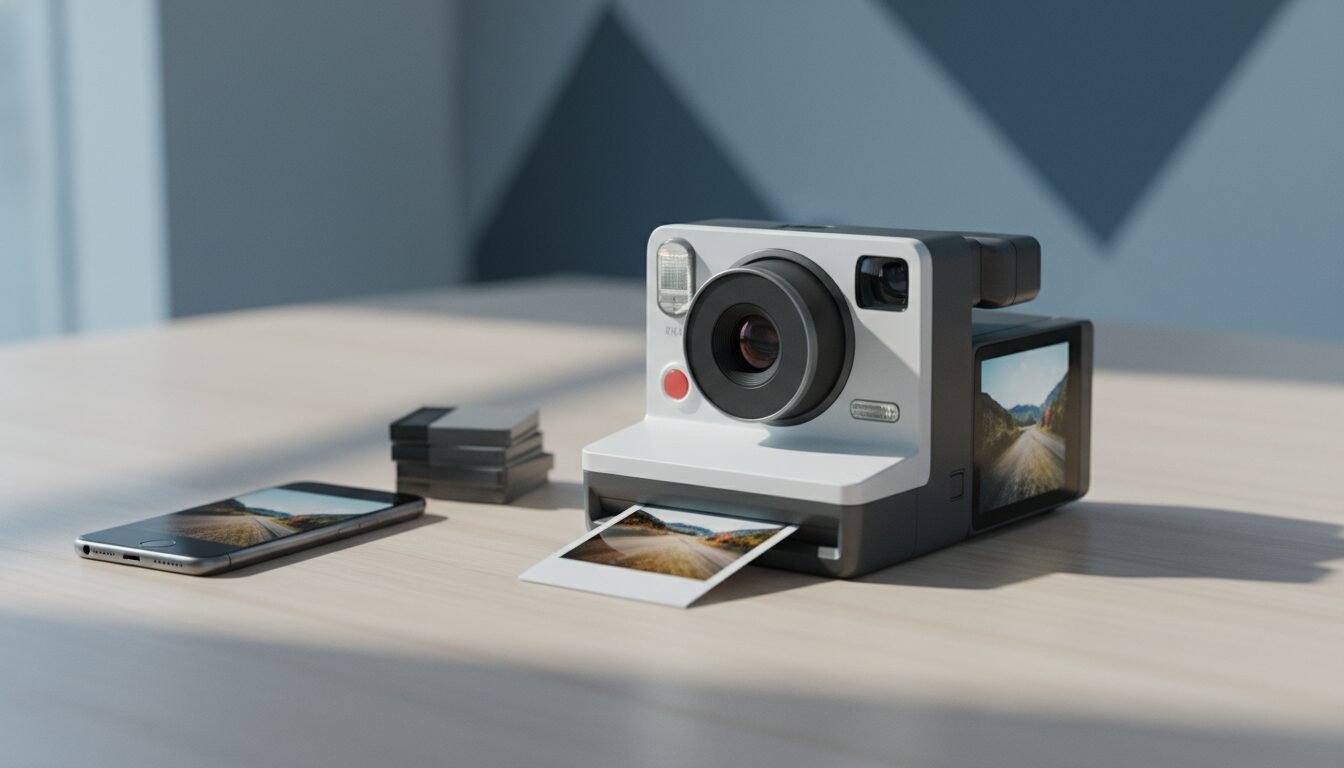
Polaroid camera and digital hybrid devices are instant cameras that capture physical prints while storing digital copies for sharing or reprinting later. They bridge analog charm with modern convenience, offering preview screens, smartphone connectivity, and creative filters.
Key Takeaways
- Hybrid instant cameras let you preview and select shots before printing, eliminating wasted film.
- Top hybrid models in 2026 include the Fujifilm Instax Mini Evo, Instax Mini LiPlay, and Polaroid I-2.
- Instax Mini film costs roughly $0.75 per print in twin packs, making it the most affordable instant film format.
- Prices range from $101 for entry-level Instax models to $599.99 for the advanced Polaroid I-2.
- Many hybrid cameras double as smartphone printers, letting you print directly from your phone’s gallery.
- Choosing between Instax and Polaroid ecosystems comes down to print size, film cost, and feature priorities.
What Is a Polaroid Camera and Digital Hybrid?
Media” class=”wp-image-9850″ loading=”lazy” width=”1792″ height=”1024″ />A hybrid instant camera is a device that merges the tactile joy of instant film with the practicality of digital imaging. Unlike traditional instant cameras that immediately eject a developing print with no digital record, a and digital hybrid stores the image internally on a memory card or internal storage, allowing you to review, edit, and reprint photos later. According to Wirecutter, global instant camera sales have grown significantly over the past five years, reflecting a broad cultural shift back toward physical photography.
The Digital Backbone of Modern Instant Photography
Digital sensors in these cameras typically range from 5 to 10 megapixels, capturing images displayed on an LCD screen before you commit to printing. This lets you apply filters, adjust brightness, or add frames on the spot. The Instax Mini Evo, for example, offers 10 lens effects and 10 film effects, producing 100 possible creative combinations. That digital foundation transforms the instant camera from a gamble into a deliberate creative tool. A polaroid camera and digital hybrid essentially eliminates wasted film, since you only print the shots you actually love.
How Hybrid Cameras Differ from Traditional Polaroid and Instax
Traditional analog instant cameras, like the Instax Mini 12 or Polaroid Now+ Gen 2, expose and develop film chemically with no digital intervention. Every shutter press costs you a print. Hybrids let you shoot freely and print selectively. They also enable features impossible in analog models: audio QR codes on prints (LiPlay), remote smartphone triggering, and direct printing from your phone’s camera roll. Purists argue that hybrids trade the raw unpredictability of true analog photography for convenience, and that’s a fair point. But for most people, the ability to preview before printing is worth the trade-off.
Top Hybrid Instant Cameras to Consider in 2026
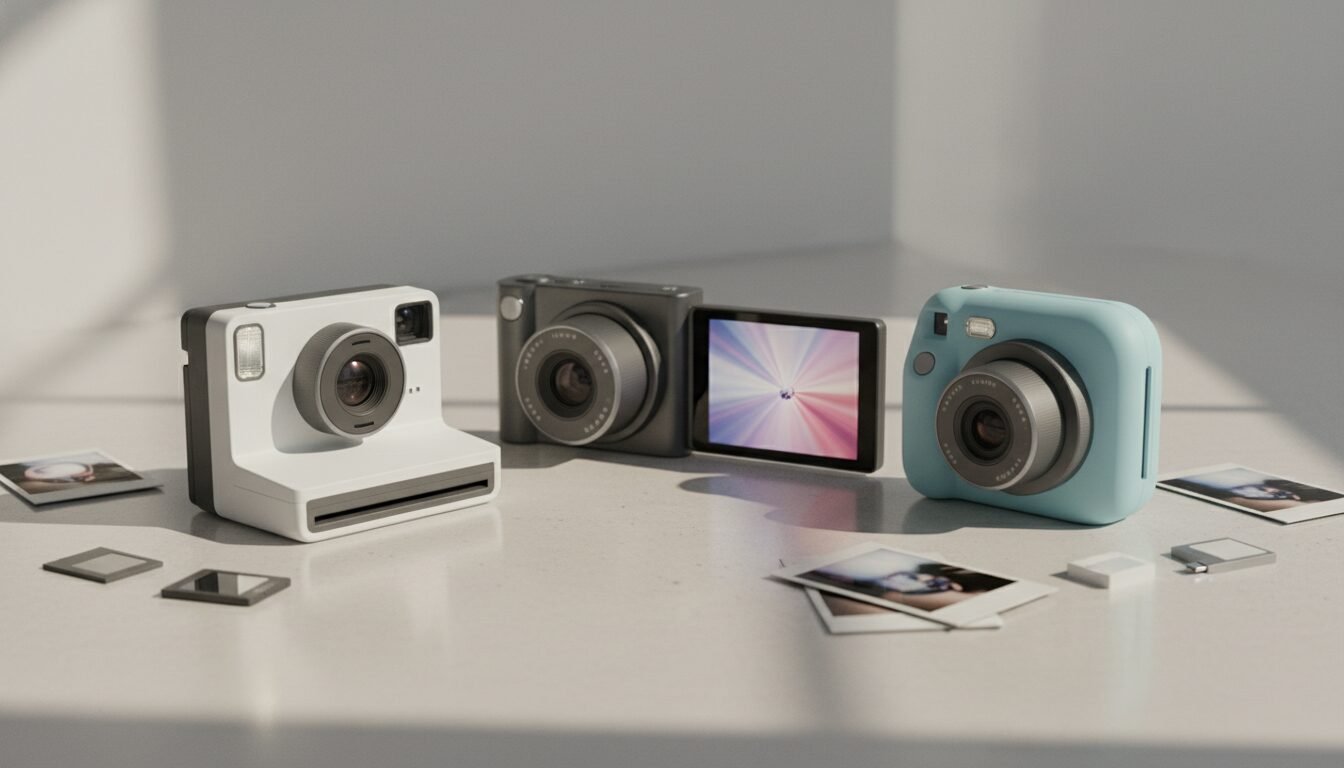
The market now offers a strong range of hybrid instant cameras across multiple price points. The standouts below balance digital convenience with physical print quality, based on hands-on testing by experts at Digital Camera World.
Fujifilm Instax Mini Evo: The Creative Powerhouse
The Instax Mini Evo is widely regarded as the best overall hybrid instant camera. Priced at $234.95 MSRP, it pairs a 10-megapixel sensor with a 3.0-inch LCD screen, letting you scroll through 100 filter combinations before printing onto Instax Mini film. It also functions as a standalone smartphone printer via the Instax Mini Evo app. Black, brown, and gentle rose color options make it a stylish choice. The polaroid camera and digital integration here is deliberate and refined, with dual shutter buttons for landscape and portrait orientations and a selfie mode aided by a front mirror.
Instax Mini LiPlay: Compact and Connected
The Instax Mini LiPlay is the most portable hybrid in the lineup, offering a compact body and an accessible entry price. It records short sound clips that embed as QR codes on prints, a feature unique to this model. The LCD screen is smaller and less sharp than the Evo’s, but the trade-off is a lightweight design that fits in a jacket pocket. According to Alison Winterroth, the LiPlay’s digital image quality is adequate rather than exceptional, yet its preview-and-reprint capability makes it a strong pick for events and parties.
Polaroid I-2: Analog Craft with Digital Controls
The Polaroid I-2 ($599.99) bridges the gap between analog craft and digital precision. It features an autofocus 3-lens system, an integrated viewfinder displaying shutter speed and aperture, and a LiDAR sensor for precise focusing. While it does not save digital image files, its digital controls, including manual mode selection and exposure compensation, represent Polaroid’s most technically ambitious camera to date. This model suits photographers who want modern precision without sacrificing the chemical magic of genuine Polaroid prints.
Fujifilm Instax Square SQ40 and Entry-Level Options
For those who prefer a larger print format, the Fujifilm Instax Square SQ40 retails at $249 and produces square prints that feel closer to classic Polaroid proportions. At the entry level, the Fujifilm Instax Mini 41 at $101 is a purely analog camera but serves as a useful reference point: upgrading to a hybrid model like the Mini Evo adds roughly $130 in upfront cost while saving significantly on film over time. Instax Square film twin packs retail for around $18, making the per-print cost competitive for medium-volume shooters.
Pros and Cons of Polaroid Camera and Digital Hybrids
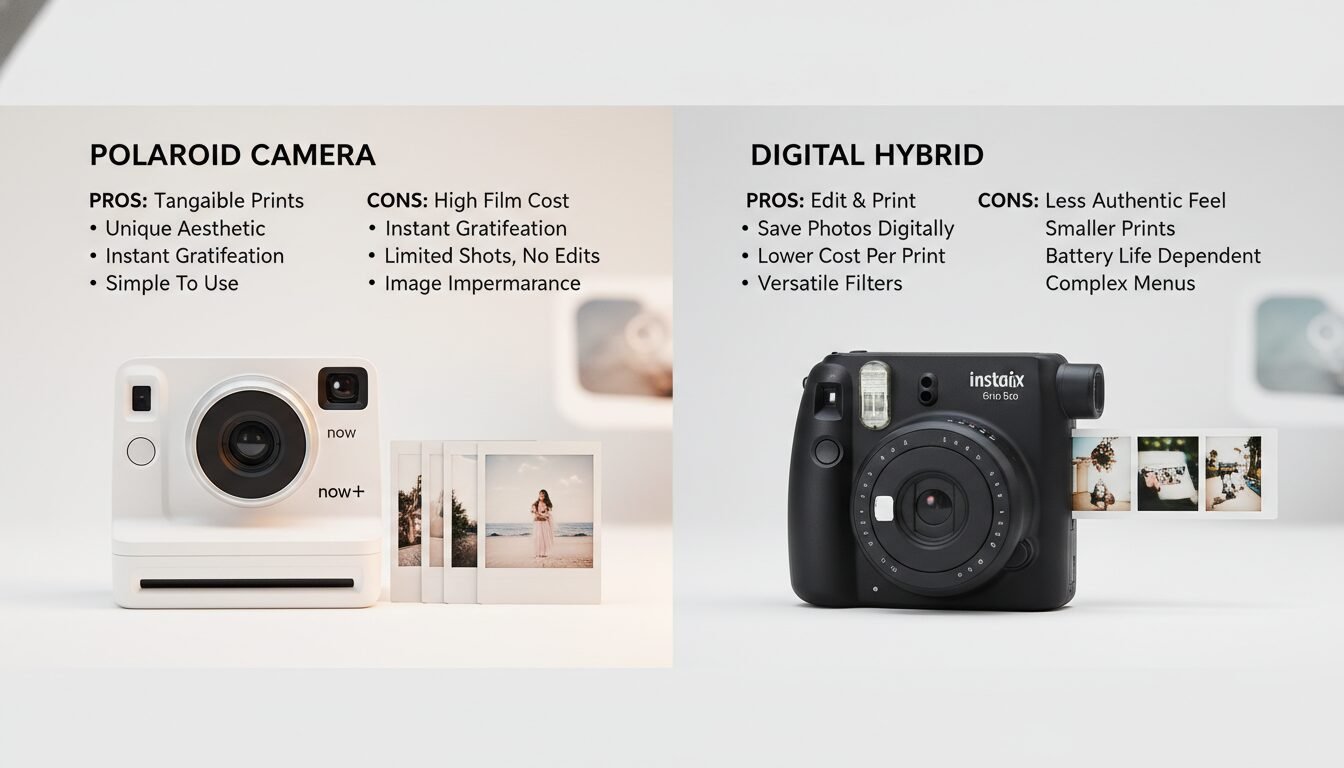
Pros
- Preview before printing: You only print shots you love, which dramatically reduces film waste and ongoing costs.
- Dual output: Get a physical print for your wall and a digital file for Instagram in a single workflow.
- Creative control: Built-in filters, brightness adjustments, and frames let you shape the image before it becomes permanent.
- Smartphone integration: Most hybrids connect via Bluetooth and companion apps, letting you print directly from your phone’s gallery.
- Reprint capability: Stored digital files mean you can reprint a favorite shot weeks later without reshooting.
Cons
- Higher upfront cost: Hybrid models start around $150-200, compared to $80-100 for basic analog instant cameras.
- Battery dependency: Digital screens and Bluetooth drain batteries faster than purely mechanical analog cameras.
- Less analog authenticity: The spontaneous, commit-to-the-shot energy of true analog photography is partially lost when you can preview and delete.
- App reliance: Some features require a smartphone and a working app, which can be a friction point for casual users.
Comparison Table: Best Hybrid Instant Cameras of 2026
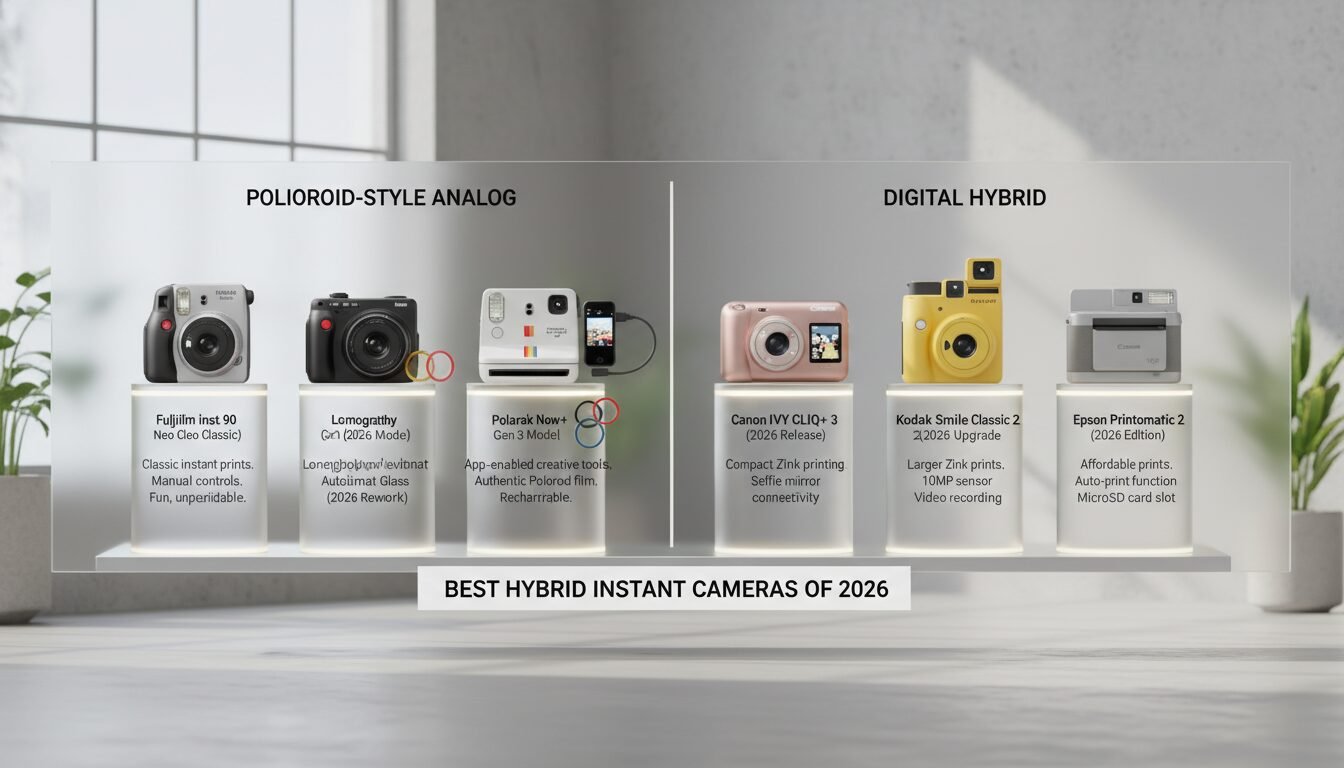
| Model | Print Type | Digital Features | Price Range | Best For |
|---|---|---|---|---|
| Instax Mini Evo | Instax Mini film | 3.0″ LCD, 100 filters, smartphone printer mode | $234.95 | Creative enthusiasts |
| Instax Mini LiPlay | Instax Mini film | 2.7″ LCD, audio QR, remote shutter | Under $200 | Portability and fun features |
| Instax Square SQ40 | Instax Square film | Square format, app connectivity | $249 | Classic proportions, group shots |
| Instax Wide Evo | Instax Wide film | Large LCD, wide-angle lens, app connectivity | $200+ | Landscapes and group prints |
| Polaroid I-2 | Polaroid i-Type / 600 film | Digital viewfinder, LiDAR AF, manual controls | $599.99 | Analog purists seeking precision |
Prices accurate as of 2026. Film cost reference: Instax Mini twin packs average $0.75 per print; Instax Square twin packs average $18 per pack.
Polaroid Camera and Digital: How Two Brands Merge Old and New
The two dominant brands in instant photography, Fujifilm’s Instax and Polaroid, interpret the fusion of analog and digital very differently. Understanding their strategies helps you pick the right ecosystem before you invest in film.
Polaroid’s Digital Evolution
Polaroid has historically favored analog purity, but recent models like the I-2 incorporate digital components for control rather than image storage. The Polaroid Snap (now discontinued) was a true digital camera with a Zink printer, but Polaroid has since refocused on analog-first devices. Their instant film is iconic, producing that signature white-bordered square image, but it costs significantly more per shot than Instax. A pack of 8 color i-Type photos retails for around $16.99, working out to roughly $2.12 per print, compared to Instax Mini at $0.75 per print. Over a year of regular shooting, that gap adds up fast.
Instax’s Hybrid Ecosystem
Fujifilm dominates the hybrid segment with at least six digitally enabled models, ranging from the Mini LiPlay to the Instax Wide Evo. All use credit-card-sized Mini film or wider formats, and the Instax Mini Evo Cinema edition extends the line with a retro aesthetic. Fujifilm’s approach is tiered: each step up adds features like larger screens, higher resolution, or deeper smartphone app integration. That makes it easy to find a polaroid camera and digital solution at almost any budget, from $101 entry-level analog to $249+ hybrid territory.
“The instant camera market has seen a genuine cultural revival, driven by younger consumers who want physical artifacts in a world of ephemeral digital content. Hybrid models are the bridge that makes that revival sustainable.” – Digital Camera World, 2025 buying guide analysis
Step-by-Step Guide to Using a Hybrid Instant Camera
Getting started with a hybrid is straightforward. Here’s a quick workflow to maximize your results and your film budget.
Step 1: Frame Your Shot
Use the LCD screen to compose your image. Many hybrids offer a selfie mirror or a flip-out screen for self-portraits. The Instax Mini Evo’s dual shutter buttons let you shoot horizontally or vertically without awkward hand positions, a small detail that makes a real difference in daily use.
Step 2: Preview and Edit
After capturing, review the image on screen. Apply built-in filters, crop, or adjust brightness. On the LiPlay, you can attach a short audio clip to the print. Only commit to printing when you’re satisfied. This selective approach can reduce film waste dramatically compared to a purely analog camera where every shutter press costs a print.
Step 3: Print or Share
Hit the print button to eject a physical Instax or Polaroid print. Alternatively, transfer the digital file via Bluetooth to your phone for social media sharing. Models like the Mini Evo also let you print photos directly from your smartphone’s gallery, turning the camera into a portable photo printer for your entire camera roll.
Video Capabilities in Hybrid Instant Cameras
Video is an emerging feature in the hybrid instant camera space worth knowing about. Some newer hybrid models, particularly in the Instax Wide Evo line, support short video capture alongside still photography. While the primary output remains a physical print, the ability to record a clip and then select a frame to print adds another layer of creative flexibility. This feature is still maturing across the category, but according to Digital Camera World, video-to-print workflows are becoming a meaningful differentiator as brands compete for the creative enthusiast market in 2026.
Creative Ways to Maximize Your Hybrid Instant Prints
Hybrid cameras aren’t just for snapshots. They open up imaginative uses that analog models simply can’t replicate.
Decor and DIY Projects
Print multiple copies of a single digital shot to create photo grids, wall collages, or custom greeting cards. The Instax Mini Evo’s reprint function makes it easy to produce identical prints without wasting film on reshoots. Because images are stored digitally, you can experiment with layouts before committing to physical displays, a workflow that feels more like graphic design than traditional photography.
Party and Event Keepsakes
Use a hybrid camera at weddings, birthdays, or corporate events as a portable photo booth. Guests snap pictures, view them instantly, and print only the best ones. The LiPlay’s audio QR codes add a personal touch: scanning a print plays a recorded message from the moment. This blend of polaroid camera and digital tech creates memories that are both tangible and shareable, which is exactly what events need.
“Instant photography at events has shifted from a novelty to an expectation. Guests want something physical to take home, and hybrid cameras deliver that without the film waste of traditional instant setups.” – HubSpot Marketing Trends, event experience research
How to Choose the Right Polaroid Camera and Digital Hybrid for You
With several strong options available, focus on three factors: print size, digital features, and total cost of ownership.
Assessing Your Print Size Preferences
Instax Mini film produces credit-card-sized prints at 2.1 x 3.4 inches, which are compact and highly shareable. Instax Wide prints measure 3.9 x 6.2 inches, better for landscapes or group photos. Polaroid i-Type film yields larger 3.5 x 4.2-inch prints with that classic white-border look. Choose based on how you plan to display or gift the photos, not just how the camera looks on a shelf.
Considering Digital Features and Connectivity
If you want to edit extensively before printing, a model with a large, high-resolution LCD like the Mini Evo is the right call. For remote shooting and easy phone integration, confirm the camera supports Bluetooth and a companion app. The Instax Mini LiPlay’s audio capture is a genuine differentiator for anyone who values multimedia memories over pure image quality.
Budget and Film Costs
The upfront camera cost is only part of the equation. Instax Mini film runs about $0.75 per print in twin packs, while Polaroid film can exceed $2 per print. Over a year of regular hobby shooting at, say, 2-3 packs per month, that difference compounds into a meaningful annual cost gap. If you plan to print frequently, a polaroid camera and digital hybrid from the Instax ecosystem will be considerably more economical over time.
Final Thoughts on Polaroid Camera and Digital Hybrids
The instant camera revival continues to accelerate, fueled by younger generations who want tangible memories in a screen-saturated world. A polaroid camera and digital hybrid delivers the best of both worlds: the instant gratification of a physical print and the flexibility of a digital file you can share, store, or reprint. Whether you choose the versatile Instax Mini Evo at $234.95, the playful LiPlay for events, or the craft-focused Polaroid I-2 at $599.99, you’re investing in a creative tool that pays for itself through reduced film waste and genuinely memorable moments. As of 2026, these devices have matured into reliable, feature-rich companions for everyday adventures and special occasions alike.
Ready to build something bold with your brand’s visual identity? Contact Emin Media for a free brand consultation and let’s create content that people actually want to hold onto.
Frequently Asked Questions
Can a digital polaroid camera save photos without printing?
Yes. Hybrid instant cameras store images on an SD card or internal memory, allowing you to print later or transfer files to a computer or smartphone. You can shoot an entire session and print selectively at any point.
What is the best polaroid camera and digital hybrid in 2026?
The Fujifilm Instax Mini Evo is widely regarded as the top choice for its 100 creative filter combinations, smartphone printing capabilities, and $234.95 price point. It balances creative depth with everyday usability better than any other model in the category.
How much does Instax Mini film cost?
Instax Mini film costs approximately $0.75 per print when purchased in twin packs, making it the most affordable instant film format available. Polaroid i-Type film, by comparison, runs roughly $2.12 per print.
Are hybrid instant cameras better than traditional instant cameras?
Hybrids offer a preview screen and digital storage, reducing wasted film and giving you creative control before committing to a print. Traditional cameras provide a purer analog experience with no electronics involved. The right choice depends on whether you prioritize convenience and economy or the spontaneous, commit-to-the-shot energy of true analog photography.
Can I print photos from my phone on a hybrid polaroid camera?
Yes. Many hybrid models, including the Instax Mini Evo and LiPlay, function as standalone smartphone printers via their companion apps. Load film, connect via Bluetooth, and print any image from your camera roll directly onto Instax Mini film.
Do hybrid instant cameras work without film?
They can capture and store digital photos without film loaded, but you need instant film to produce physical prints. This makes them useful as digital cameras even when you’ve run out of film, which is a practical advantage over purely analog models.
Enjoyed this article?
Contact Emin Media for a free brand consultation and let's create something amazing together.
Get in Touch