How to Start Digital Marketing in 2026
How to start digital marketing is the process of choosing one internet channel, building foundational skills, and practicing on a real project until results are measurable. This guide covers every step for 2026, from free tools to career paths.
Key Takeaways
- Pick one channel first. SEO, paid ads, social media, or email: go deep on one before expanding.
- You can start for free. Free website builders, organic content, and no-cost analytics tools remove every financial barrier.
- Sales and copywriting are the foundation. Every tactic, whether a Facebook ad or a blog post, is ultimately a sales message.
- Tracking turns guesswork into a system. Install Google Analytics from day one and review it weekly.
- Niche focus beats breadth. A specific specialty builds a portfolio faster and opens freelance or job opportunities sooner.
- Consistency over 90 days beats intensity for one week. Publish regularly, measure what works, and iterate.
What Is Digital Marketing and Why Start Now?
Defining Digital Marketing
Digital marketing is the use of digital channels to promote products, services, or brands and connect with potential customers via the internet. According to the Adobe for Business Blog, digital marketing uses digital channels to market products, boost brand awareness, drive traffic, and hit marketing goals. Those channels include search engines, websites, social media, email, mobile apps, text messaging, and web-based advertising.
For beginners figuring out digital marketing, the first job is recognizing which channels exist and choosing where to focus. Unlike traditional marketing, digital marketing enables precise audience targeting and real-time tracking, which means every decision can be informed by actual data rather than intuition.
Benefits of Digital Marketing
The benefits are practical, not theoretical. As the IMD business school guide outlines, digital marketing lets businesses reach a global audience, compete cost-effectively against larger rivals, target specific demographics and behaviors, and measure results in real time. These four advantages explain why companies keep shifting budgets away from TV and print.
For anyone learning this type of marketing, these benefits are the reason the skill is worth acquiring. A small brand with a sharp digital strategy can genuinely compete with players who have much larger traditional advertising budgets.
“Digital marketing is no longer optional – it’s essential. Whether you’re a start-up or a global enterprise, digital marketing offers the tools to connect with customers, build brand awareness, and drive growth in a competitive marketplace.” – Adobe for Business Blog
Digital Marketing vs. Traditional Marketing
Traditional marketing relies on broadcast media, print, and direct mail. It is often harder to measure and more expensive per impression. Digital marketing operates on internet-based platforms where every click, view, and conversion can be tracked. The IMD guide notes that digital marketing differs from offline marketing in its ability to target precisely and optimize continuously.
That difference shapes how you learn. Instead of guessing whether a campaign worked, you will use analytics platforms to make decisions based on real user behavior. That feedback loop is what makes digital marketing both learnable and measurable for beginners.
B2B vs. B2C Digital Marketing
The channel you choose and the content you create will depend heavily on who you are selling to. According to the Adobe for Business Blog, B2B decisions involve multiple stakeholders and a longer decision-making process, so digital marketing in that context should focus on building relationships and demonstrating expertise. B2C buying cycles are generally shorter, which means the messaging needs to be more immediate and emotionally resonant.
Knowing which model applies to your situation helps you pick the right channel from the start. A B2B founder will likely prioritize LinkedIn content and email nurture sequences. A B2C brand will lean toward Instagram, TikTok, and paid search. This distinction is one of the first strategic decisions in learning this kind of digital marketing.
Pros and Cons of Starting Digital Marketing
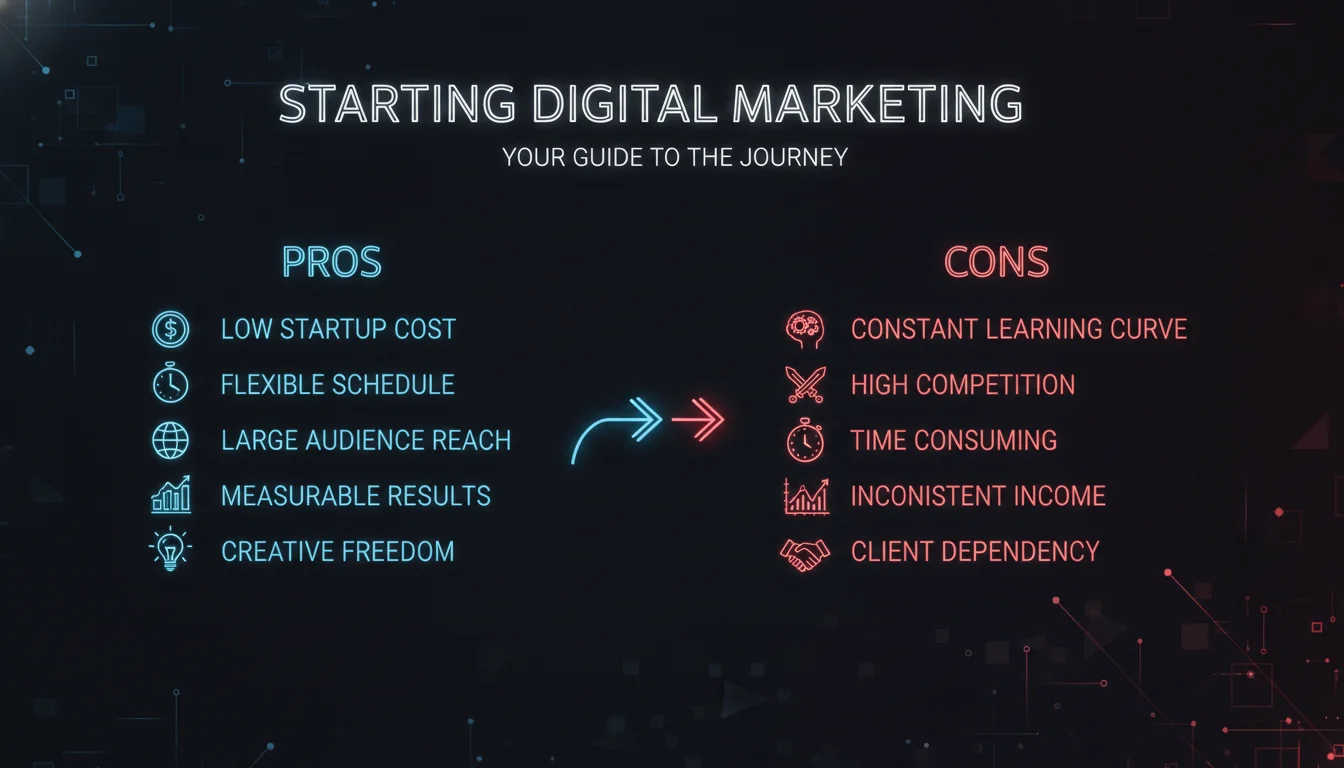
Pros
- Low barrier to entry. You can start with zero budget using free tools, free platforms, and self-directed learning resources.
- Measurable results. Every channel produces data you can act on, which accelerates learning compared to traditional marketing.
- High demand for skills. Businesses across every industry need digital marketing talent, creating strong freelance and employment opportunities.
- Flexible learning path. You can specialize in SEO, paid ads, social, or email based on your natural strengths and interests.
- No degree required. Certifications from Google, HubSpot, and Meta are widely recognized and often free.
Cons
- Steep learning curve across channels. Digital marketing is a collection of specialties, not a single skill. Breadth without depth leads to burnout.
- Constant platform changes. Algorithm updates, ad policy shifts, and new features mean ongoing learning is non-negotiable.
- Paid channels require budget to test. While organic tactics are free, paid ads need real spend to generate meaningful data.
- Results take time. SEO and content marketing can take months to show traction, which tests patience for beginners.
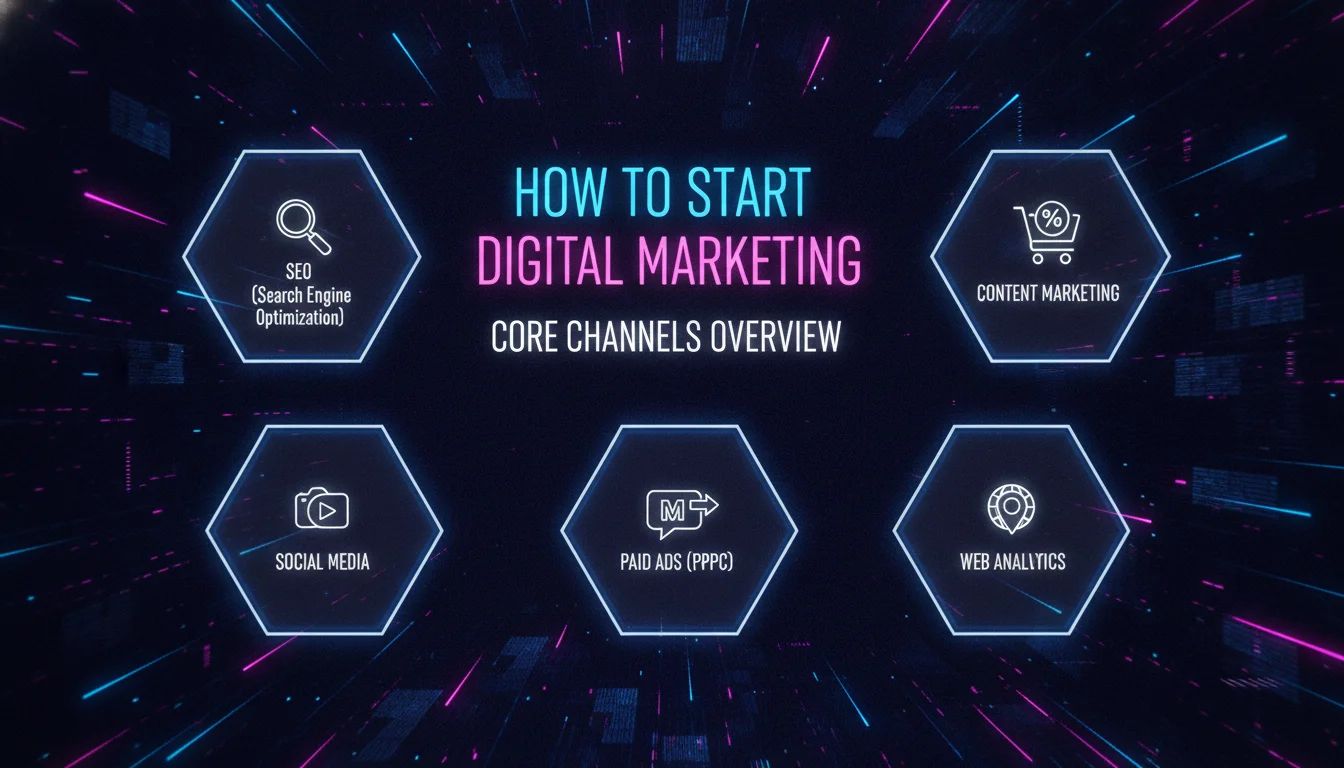
How to Start Digital Marketing: Core Channels Overview
Search and Paid Channels
Search engine optimization (SEO) is the practice of improving a website’s visibility in organic search results. SEO focuses on content relevance, site structure, and authority. Paid search, often called pay-per-click (PPC) advertising, involves platforms like Google Ads and Microsoft Advertising, where you bid on keywords to show ads above organic results.
As Rahul Ravi, a digital marketing intern at SpiderWorks Technologies, explains, the major categories include SEO, digital advertising, and social media marketing, and each represents a specialty with its own best practices. When you learn the to start digital marketing, understand this distinction early: SEO compounds over time, while paid ads deliver immediate traffic but stop the moment you stop paying.
Social and Content Channels
Content marketing is the creation and distribution of valuable, relevant content to attract and retain a clearly defined audience. Social media marketing uses platforms like Facebook, Instagram, LinkedIn, TikTok, and X to distribute that content, engage followers, and build community. Kate Hayes, whose YouTube tutorial for beginners has over 39,000 views, identifies content marketing, social media marketing, email marketing, and relationship marketing as the core forms to learn.
For beginners, content and social channels are often the best starting point because they require no ad budget. You can write blog posts, record short videos, or design graphics and publish them on your own channels. This low-cost entry point is a core reason why marketing with no money is genuinely achievable.
Email and Relationship Channels
Email marketing is the use of email to nurture leads, build relationships, and drive repeat sales. Relationship marketing focuses on turning one-time buyers into loyal customers. Both rely on owned audiences rather than rented attention from algorithms, which makes them resilient to platform changes.
Email platforms like Mailchimp and HubSpot offer free tiers for small lists. Starting to build an email list early, even before you have a product to sell, is one of the smartest moves a beginner can make when learning how to.
Skills You Need Before You Start
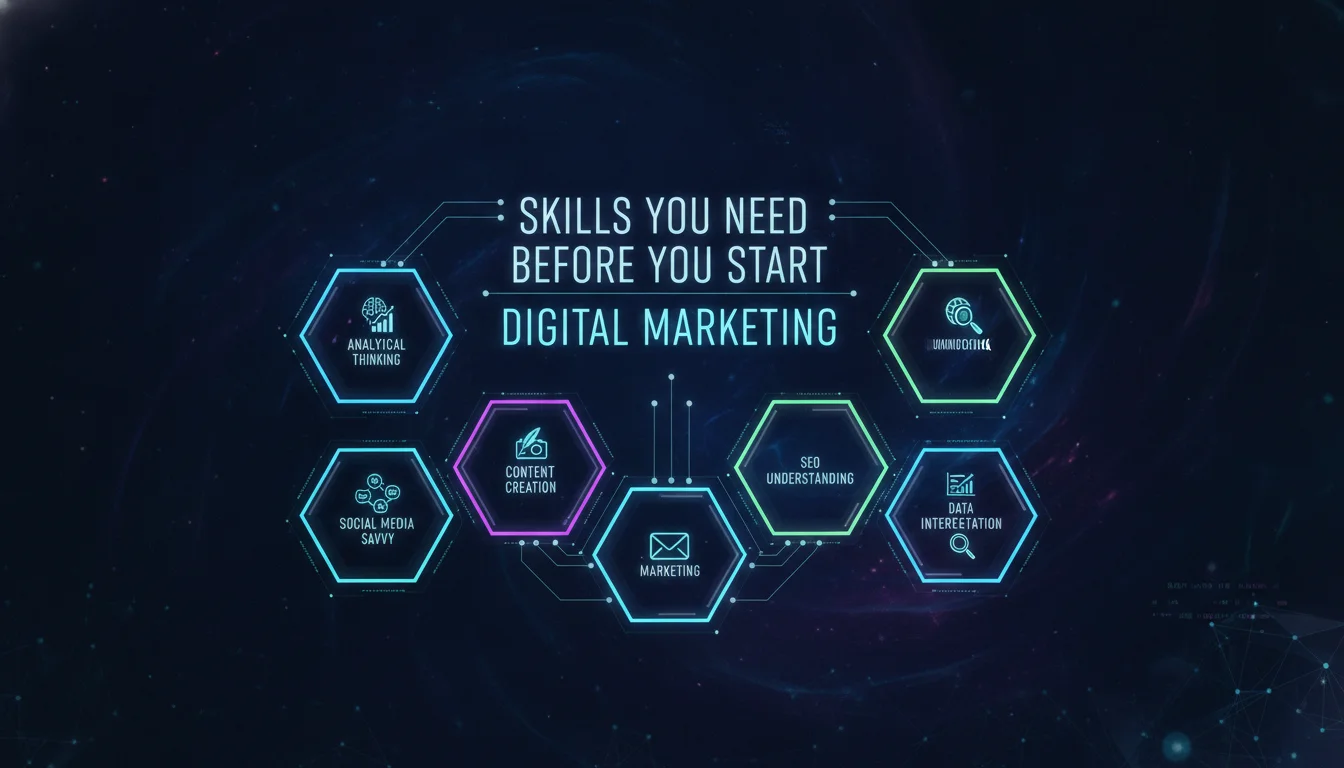
Sales and Copywriting Fundamentals
Before you learn any tool, learn to sell. Business coach Steve G, with 30 years of experience, advises on Quora to start by watching “how to sell” content on YouTube. Sales skills build your understanding of customer psychology, objections, and persuasion. Copywriting is the written form of sales: headlines, product descriptions, and calls to action.
Every digital marketing tactic, whether a Facebook ad, a blog post, or an email, is ultimately a sales message. If you can write a clear, compelling offer, you can adapt it to any channel. Treat sales and copywriting as foundational skills before you touch a single ad platform.
Analytics and Tracking
Analytics is the measurement and interpretation of data to understand marketing performance. Rahul Ravi highlights that digital marketing makes it easy to track campaigns, which allows you to adapt and drive better results. You need to know how to install tracking codes, build custom audiences, and read reports from Google Analytics or platform dashboards.
Without measurement, you are guessing. Start with free tools like Google Analytics and Google Search Console to understand traffic sources, user behavior, and conversion paths. This data-driven mindset is central to digital marketing the right way.
Technical Basics
You do not need to be a developer, but you should be comfortable with basic website setup, domain management, and tracking pixels. Rishika, a growth marketing manager, recommends creating a free website using Wix or Blogger, selecting a niche, and building basic pages using templates. This hands-on experience teaches you how websites work and how to install pixels without writing a line of code.
Technical literacy also includes understanding how cookies, pixels, and audience data power ad targeting. The more you understand the underlying mechanics, the better you can troubleshoot campaigns as you grow.
AI in Digital Marketing
As of 2026, artificial intelligence is reshaping how marketers work across every channel. AI tools now assist with content drafting, keyword research, ad creative testing, and audience segmentation. For beginners, this is mostly good news: AI lowers the production cost of content and speeds up the learning curve on data analysis.
The practical implication is that learning this type of marketing today means learning to work alongside AI tools, not compete with them. Use AI to generate first drafts, test headline variations, or summarize analytics reports. Then apply your own strategic judgment to decide what actually gets published or spent.
“The marketers who will win in the AI era are not the ones who resist the tools, but the ones who combine AI speed with human strategic judgment.” – Emin Media editorial team, based on observed campaign patterns across branding and digital clients.
How to Start Digital Marketing With No Money
Build a Free Website or Blog
You can absolutely start digital marketing with no money. Rishika specifically recommends this approach: create a free website on Wix or Blogger, find a niche you already know, and rely on templates rather than investing time in custom design. Your website becomes your practice lab, where you learn to structure pages, write meta descriptions, install analytics, and publish content without paying for hosting or a designer.
The Adobe for Business Blog reinforces that digital marketing uses websites and content to build brand awareness. With free tools, you can launch a site and start publishing within a single day. That speed of entry is one of the most underrated advantages of learning this kind of digital marketing from home.
Create Content Consistently
Content creation costs nothing but time. Start writing blog posts or recording short videos about a niche you already understand. Rishika advises choosing a topic where you have base knowledge so you can create consistent content without constant research. Consistency builds SEO authority and social proof over time.
Use free tools like Canva for graphics and CapCut or iMovie for video editing. The goal is not perfection but volume and learning. Publish at least once a week for 90 days and observe what resonates. That output discipline is central to the to start digital marketing on a budget.
Use Organic Social Media
Organic social media means using free platform features to build an audience. Create profiles on LinkedIn, Instagram, or TikTok and share your content. Engage with others in your niche. This approach builds a following you can later email or retarget with paid ads once you have budget.
Kate Hayes emphasizes relationship marketing as a core form of digital marketing, and organic social is where those relationships begin. You do not need ad spend to test messaging, learn audience pain points, and refine your offer. It is one of the smartest ways to start digital marketing without upfront investment.
Choosing Your First Digital Marketing Niche
Why Niche Focus Matters
Niche focus matters because digital marketing is too broad to learn all at once. The IMD guide outlines eight steps to start, and the early steps involve building a clear plan and understanding fundamentals before moving into advanced tactics. Trying to learn SEO, paid ads, social, email, and analytics simultaneously leads to overwhelm and a shallow portfolio.
Choose one niche, such as local SEO for restaurants, email marketing for e-commerce, or paid social for coaches, so your learning and portfolio are coherent. A niche also makes it easier to position yourself for freelance or employment opportunities. Strategic niche selection is a core part of marketing effectively.
Examples of Beginner-Friendly Niches
Some strong starting niches include local business marketing, e-commerce email flows, content marketing for B2B SaaS, social media management for real estate agents, and SEO for health and wellness blogs. These niches have clear audiences, measurable outcomes, and abundant free learning material.
Validate a niche by checking job boards, freelance marketplaces, and YouTube search demand. If businesses are already paying for that skill, it is a viable niche. This research helps you answer how to with a focus that will actually pay.
Validating Your Niche Idea
Before committing, test demand. Search Google for your niche plus “digital marketing” and see what content ranks. Join communities like r/DigitalMarketing and r/marketing to observe recurring questions. If you see the same pain points appearing repeatedly, you have a niche worth pursuing.
Validation prevents the common mistake of learning a skill nobody will pay you to apply. Even a small amount of market research before starting saves months of wasted effort.
Step-by-Step Action Plan: How to Start Digital Marketing
Phase 1: Learn and Choose
This phase is the foundation for how to start digital marketing successfully. Follow a structured plan rather than random video watching.
- Step 1: Learn the fundamentals. Watch a reputable beginner resource, such as Kate Hayes’s YouTube tutorial or the IMD guide, to understand channels and terminology before touching any tools.
- Step 2: Pick one core channel. Based on your strengths, choose SEO, paid ads, social media, or email as your primary focus. Do not attempt all four simultaneously.
- Step 3: Define your niche. Combine your channel with an industry or audience, such as “SEO for dentists” or “email marketing for online coaches.”
Phase 2: Practice and Build
Now apply what you learned on a real project. This is where how to start digital marketing moves from theory to execution.
- Step 4: Build a practice website. Use Wix, Blogger, or WordPress.com to create a simple site with a homepage, about page, and blog. Install Google Analytics and Google Search Console from day one.
- Step 5: Create content consistently. Publish two to four pieces per month that answer specific questions your niche audience is asking. Use free keyword tools or People Also Ask data for ideas.
- Step 6: Learn ad platforms. Steve G recommends learning Facebook Ads and Google Ads, installing tracking codes, and building custom audiences. Practice with small budgets or platform learning modes.
Phase 3: Launch and Measure
Turn practice into performance. This is where beginners separate themselves from people who only study.
- Step 7: Track and optimize. Use analytics to see which content drives traffic and engagement. Adjust headlines, calls to action, and targeting based on data, not gut feel.
- Step 8: Build a portfolio and network. Document your results in simple case studies. Contact digital agencies and offer your services, as Steve G suggests. Many agencies give freelance gigs to beginners who can demonstrate real skills.
This eight-step plan mirrors the approach recommended by the IMD guide and practitioner advice from Quora contributors. Learning how to start digital marketing is iterative: you test, measure, learn, and repeat.
Free and Low-Cost Tools for Digital Marketing
Website and Content Tools
Free website builders like Wix, Blogger, and WordPress.com remove the cost barrier entirely. For graphics, Canva offers a free tier with templates for social posts, presentations, and ads. For video, CapCut and iMovie are free and more than sufficient for beginner content production.
These tools mean you can launch a site, design your first social post, and record your first video without spending anything. That accessibility is one of the strongest arguments for learning how to start digital marketing right now rather than waiting.
Advertising and Analytics Tools
Google Ads and Meta Ads Manager are the two primary paid platforms to learn. Both offer free accounts and extensive learning resources. For analytics, Google Analytics and Google Search Console are essential and free. UTM parameters let you track campaign performance across channels without paying for a third-party tool.
Steve G specifically advises learning how to install tracking codes, build custom audiences, and use display marketing on Google. These skills are in high demand and transfer across employers and clients. Mastering them gives you a professional edge from the start.
Learning and Certification Platforms
Free or low-cost learning platforms include Google Digital Garage, HubSpot Academy, Meta Blueprint, and YouTube channels like Kate Hayes. Certifications from Google and HubSpot can strengthen your resume and demonstrate commitment to potential employers or clients.
The BrainStation career guide notes that digital marketing certificates are worth considering, especially when paired with a portfolio. You do not need a degree, but proof of skills matters. This is how to start digital marketing without a formal marketing education and still land real opportunities.
Comparing Digital Marketing Channels
Channel Comparison Table
The table below compares the main channels for beginners based on cost, time to results, and skill required.
| Channel | Best For | Cost to Start | Time to First Results | Key Skill |
|---|---|---|---|---|
| SEO | Long-term organic traffic | Free (time) | Months | Content and keyword research |
| PPC (Google/Meta Ads) | Immediate traffic and offer testing | Low budget | Days | Copywriting and analytics |
| Social Media Marketing | Brand awareness and community | Free organic / low paid | Weeks | Content creation and engagement |
| Email Marketing | Lead nurturing and retention | Free up to list size | Weeks | Copywriting and segmentation |
| Content Marketing | Authority and SEO support | Free (time) | Months | Writing and strategy |
How to Choose Your First Channel
If you enjoy writing and research, start with SEO or content marketing. If you like data and immediate feedback, PPC is a strong choice. If you are naturally social and visual, social media marketing may fit best. Email marketing suits those who enjoy systems and relationship building.
The key to how to start digital marketing is choosing one channel and going deep for at least 90 days. According to Kate Hayes, covering content marketing, social media marketing, email marketing, and relationship marketing gives you a full toolkit, but beginners should not try to master all of them at once.
Common Mistakes to Avoid When Starting
Trying to Learn Everything at Once
The biggest mistake is breadth over depth. Digital marketing is a collection of specialties, not a single skill. Rahul Ravi notes that each category represents a specialty with its own best practices. If you dabble in SEO, ads, social, and email simultaneously, you will remain a generalist with no portfolio depth and nothing compelling to show a potential client or employer.
Follow a focused plan like the eight-step process above. Master one channel, build a small result, then expand. Avoiding this mistake is essential when figuring out how to start digital marketing without burning out in the first month.
Ignoring Data and Tracking
Many beginners create content but never look at analytics. The whole advantage of digital marketing is measurability. Rahul Ravi highlights that digital marketing makes it easy to track campaigns, which allows you to adapt and drive better results. Without tracking, you lose the one advantage digital has over traditional marketing.
Install Google Analytics from day one. Review it weekly. Look at traffic sources, top pages, and conversion actions. Use that data to inform your next move. This is the data-driven way to prove your value and grow faster.
Career Paths and Certification
Common Entry-Level Roles
Entry-level digital marketing roles are accessible without a traditional degree. The BrainStation career guide lists popular roles including SEO specialist, paid media specialist, social media manager, content marketer, and email marketing coordinator. Many of these positions do not require a marketing degree, but they do require demonstrable skills and a portfolio.
A practice website, a few content pieces, and a small ad campaign result is often stronger than a resume alone. Agencies especially value candidates who can show they understand tracking and ROI. This is how to start digital marketing with a job in mind from day one.
Do You Need a Degree?
No. The field values skills over credentials. BrainStation’s guide addresses this directly: for most digital marketing roles, a degree is not required, though a certificate can help. Google, HubSpot, Meta, and BrainStation offer certificates that are widely recognized and often free or low cost.
Focus on practical projects. A free HubSpot or Google certification combined with a live website and real analytics data is a compelling combination for entry-level interviews. This approach answers how to start digital marketing without an expensive degree and still compete for real roles.
Building a Portfolio That Gets Hired
Start with your practice website. Write case studies for each project: what you did, what you measured, and what improved. Include screenshots of analytics and ad dashboards. Even if your numbers are small, the ability to show a clear process and honest results matters more than impressive-looking vanity metrics.
Then network. Steve G suggests contacting digital agencies and offering your services. Many will give you small gigs that build references and experience. Over time, those gigs turn into full-time roles or freelance clients. A strong portfolio is the proof that you know how to start digital marketing and can actually execute it.
Your First 90 Days of Digital Marketing
Immediate Action Steps
Learning how to start digital marketing does not require months of preparation. Today, choose one channel, define a niche, and sign up for a free website builder. Tomorrow, publish your first piece of content. Within a week, install analytics. Within 90 days, you will have a body of work and real data that proves your capability to anyone who asks.
The key is consistency and measurement. According to the Adobe for Business Blog, digital marketing is no longer optional. It is essential. The sooner you start, the sooner you build a skill that businesses in every industry need right now.
Measuring Progress and Next Steps
Track leading indicators: number of published pieces, website sessions, email subscribers, or ad click-through rate. Do not chase vanity metrics. Connect every number to a business outcome like leads or sales. After 90 days, decide whether to double down on your channel, add a second channel, or pursue a certification to formalize your skills.
This approach, learn, apply, measure, iterate, is how to start digital marketing successfully in 2026 and build something that compounds over time. If you want expert guidance on strategy, branding, and execution, contact Emin Media for a free brand consultation and let’s build something bold together.
Frequently Asked Questions
How do beginners start digital marketing?
Beginners should pick one channel, such as SEO or social media, build a free practice website, and create content consistently. Measure results with free analytics tools like Google Analytics and Google Search Console from the very first week.
Can I start digital marketing with no money?
Yes. You can build a free website on Wix or Blogger, create organic content, and use free analytics tools without any ad budget. Learning the fundamentals and building a portfolio requires time, not money.
Can I teach myself digital marketing?
Yes. Many practitioners are self-taught using free resources like YouTube, Google Digital Garage, and HubSpot Academy. Structured self-study combined with consistent practice on a real project is a proven path to proficiency.
How much does it cost to start digital marketing?
You can start for zero dollars using free tools and platforms. If you choose paid ads for practice, a small daily budget is enough to learn campaign basics. Certifications from Google and HubSpot are free or very low cost.
How long does it take to learn digital marketing?
You can learn the fundamentals in a few weeks, but building real proficiency takes several months of consistent practice. Entry-level job readiness typically requires a portfolio, basic analytics skills, and at least one completed campaign to discuss in interviews.
What is the best channel to start with?
SEO and content marketing are best for long-term organic growth with no budget. Paid ads give faster feedback but require some spend. Choose based on your strengths: writing and research favor SEO, data and speed favor PPC, creativity and personality favor social media.
Enjoyed this article?
Contact Emin Media for a free brand consultation and let's create something amazing together.
Get in Touch