How to Find a Branding Agency: 2026 Guide
Key Takeaways
- Define your brand goals before contacting agencies to ensure alignment and measurable outcomes.
- Research through multiple channels: online directories like Clutch and Agency Spotter, referrals, and social proof.
- Evaluate agencies on strategy, not just design. A logo is not a brand.
- Ask the right questions about process, measurement, and communication before you sign anything.
- Watch for red flags such as template-based work and overpromising timelines.
- Use a structured comparison to make a confident, criteria-driven final decision.
How to find a branding agency is the process of defining your brand objectives, researching candidates through directories and referrals, then evaluating portfolios and strategy to identify the right creative partner.
Most brand owners approach this search backwards. They open a portfolio, fall in love with a color palette, and sign a contract before asking a single strategic question. That’s how you end up with a beautiful logo attached to a brand nobody remembers. This guide gives you a structured, decision-ready framework for branding agency that actually moves your business forward. We’ve drawn on insights from Treebird Branding, Clutch, Agency Spotter, and Awesomic to build something you can actually use.
What a Branding Agency Actually Does
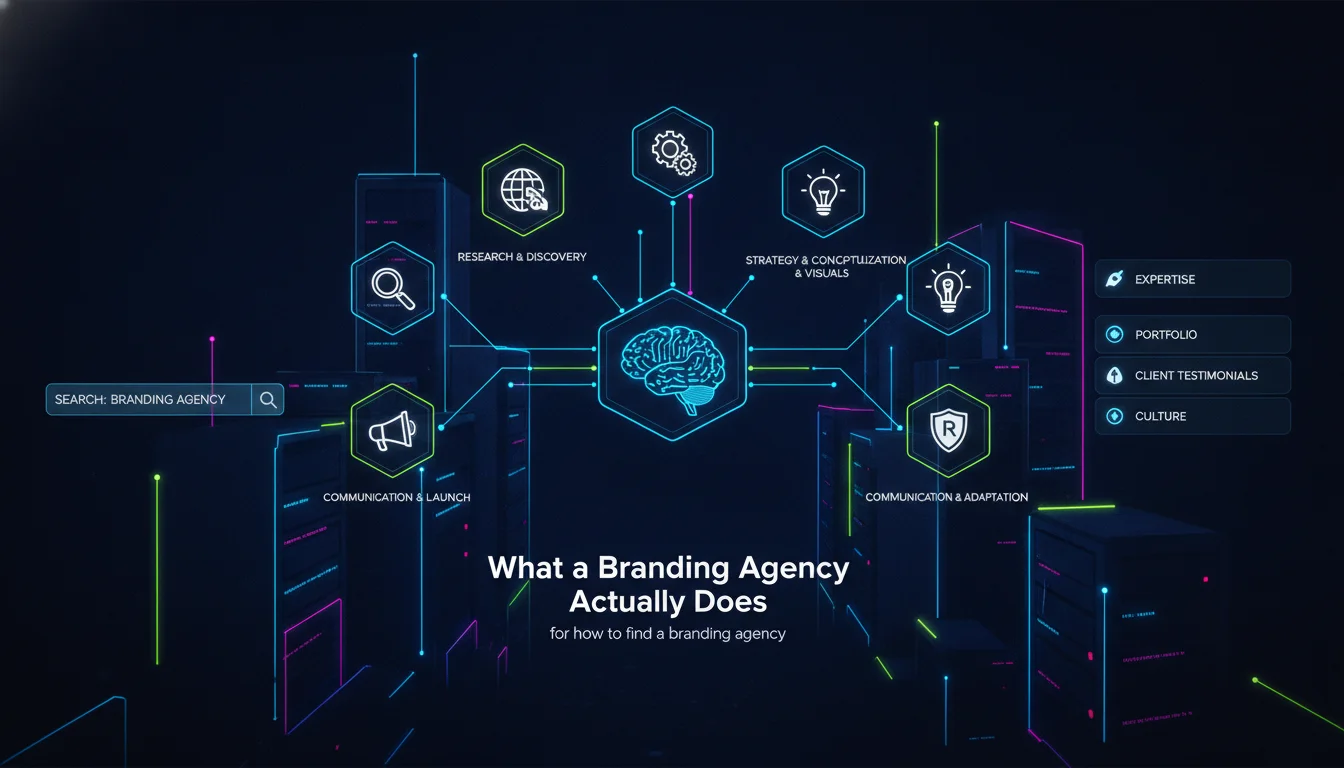
A branding agency is a specialized partner that helps businesses create, refine, or relaunch their brand identity to connect with target audiences. According to Awesomic, the most widely accepted definition describes a branding agency as a business skilled in the creation or relaunching of brands, also known as rebranding, to visually communicate the company’s originality, voice, and values. That’s a clean definition, but the reality is richer than it sounds.
Core Services Offered
Most full-service branding agencies go well beyond logo design. Their work typically spans brand strategy, naming, visual identity systems, messaging frameworks, website design, and brand guidelines. Some agencies, like Branding Los Angeles, also integrate public affairs, digital marketing, social media, influencer marketing, and experiential marketing to ensure brand consistency across every touchpoint. The key is matching the agency’s service range to your specific needs, whether that’s a complete rebrand or a targeted visual refresh.
Agency vs. In-House: Which Is Right for You?
Awesomic notes that an in-house brand manager may be better suited for maintaining a brand as the business grows, while an agency is the stronger choice for building a brand from scratch or executing a major repositioning. Agencies bring specialized expertise, fresh outside perspective, and dedicated creative resources that internal teams rarely have on standby. If your brand challenge requires strategic depth or cross-channel integration, an agency is usually the faster, more efficient path.
Pros and Cons of Hiring a Branding Agency
Pros
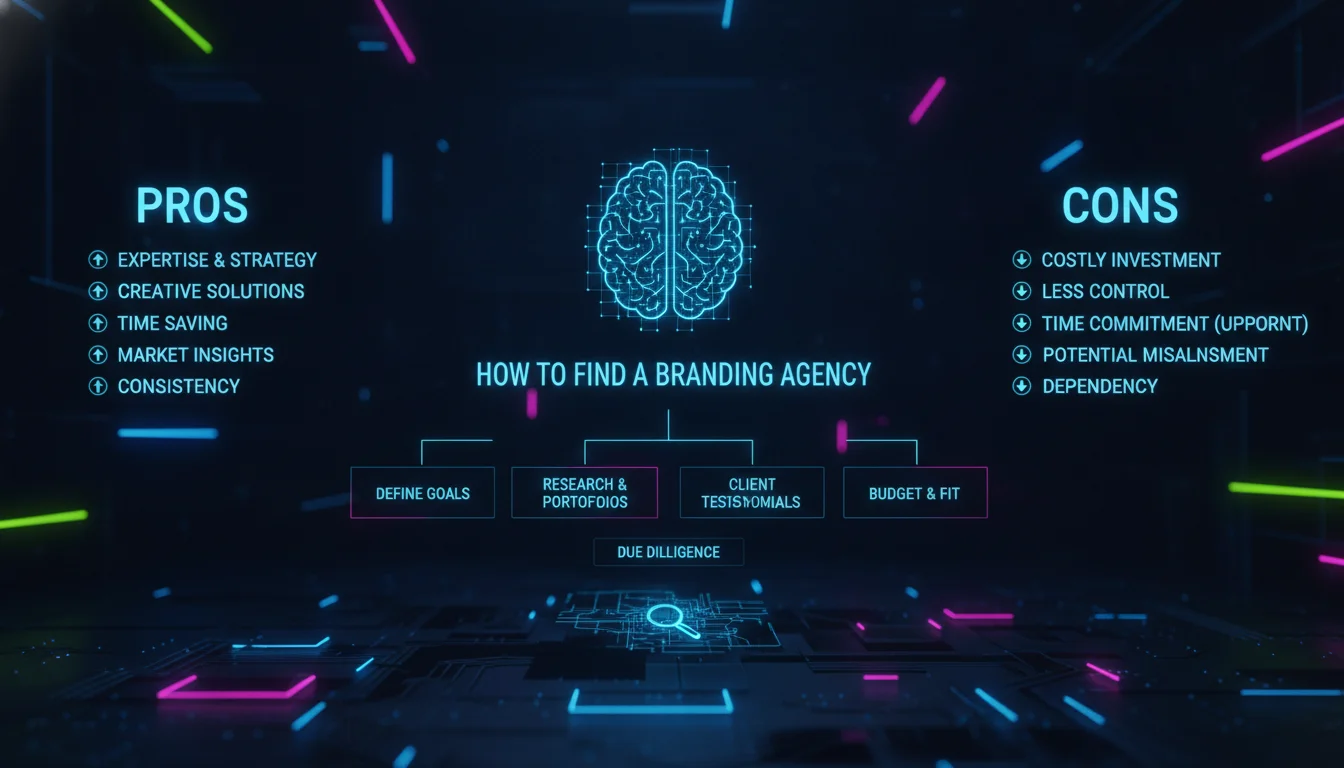
- Strategic depth: A good agency brings research, positioning frameworks, and competitive analysis your internal team may not have bandwidth for.
- Creative objectivity: Outside eyes catch blind spots. Agencies aren’t emotionally attached to how things have always been done.
- Integrated execution: The best agencies align brand identity, website, social media, and campaigns so every touchpoint feels like the same company.
- Speed to market: Dedicated agency teams move faster than stretched internal resources on complex brand projects.
- Specialized tools and talent: Access to senior strategists, designers, copywriters, and production resources under one roof.
Cons
- Cost: Quality branding work is a significant investment. Boutique studios and top-tier firms operate at very different price points.
- Knowledge transfer: Agencies don’t live inside your business. Onboarding takes time, and some nuance always gets lost in translation.
- Dependency risk: Without solid brand guidelines and internal ownership, brands can drift after the engagement ends.
- Variable quality: Not every agency that looks impressive in a pitch delivers at that level in execution.
Why Your Search Process Matters More Than the Portfolio
The search process itself is a signal. How you approach finding a branding agency shapes the quality of partner you attract and the clarity of the brief you bring them.
The Problem with Portfolio-First Thinking
Many businesses start their agency search by asking to see a portfolio, but that’s often the wrong first move. As Treebird Branding explains, the portfolio is important, but it shouldn’t be your first question. Real value comes from understanding whether the agency can diagnose your business challenges, ask the right questions, and develop strategy before any design work begins. A beautiful portfolio without strategic depth often produces branding that looks polished but fails to drive results.
Strategy Before Design
A reliable branding agency should spend as much time asking questions as presenting ideas. Treebird Branding is direct about this: great creative isn’t pulled from a template. It’s uncovered through conversation, research, and thoughtful positioning. The agency must understand your competitors, ideal customers, differentiators, and long-term goals before creating any visuals. When an agency leads with strategy, the resulting brand is cohesive, authentic, and aligned with business objectives.
The Cost of a Disconnected Brand
Assembling your branding from multiple vendors, one for logos, one for websites, one for social media, produces a predictable mess. Treebird Branding describes the outcome clearly: your website doesn’t sound like your social media, your social media doesn’t reflect your brand, and advertising drives people to a site that wasn’t built to convert. A strong brand requires every interaction to feel like it came from the same company. That’s why selecting a partner who manages brand strategy and execution together is so critical.
Defining Your Branding Goals Before You Start
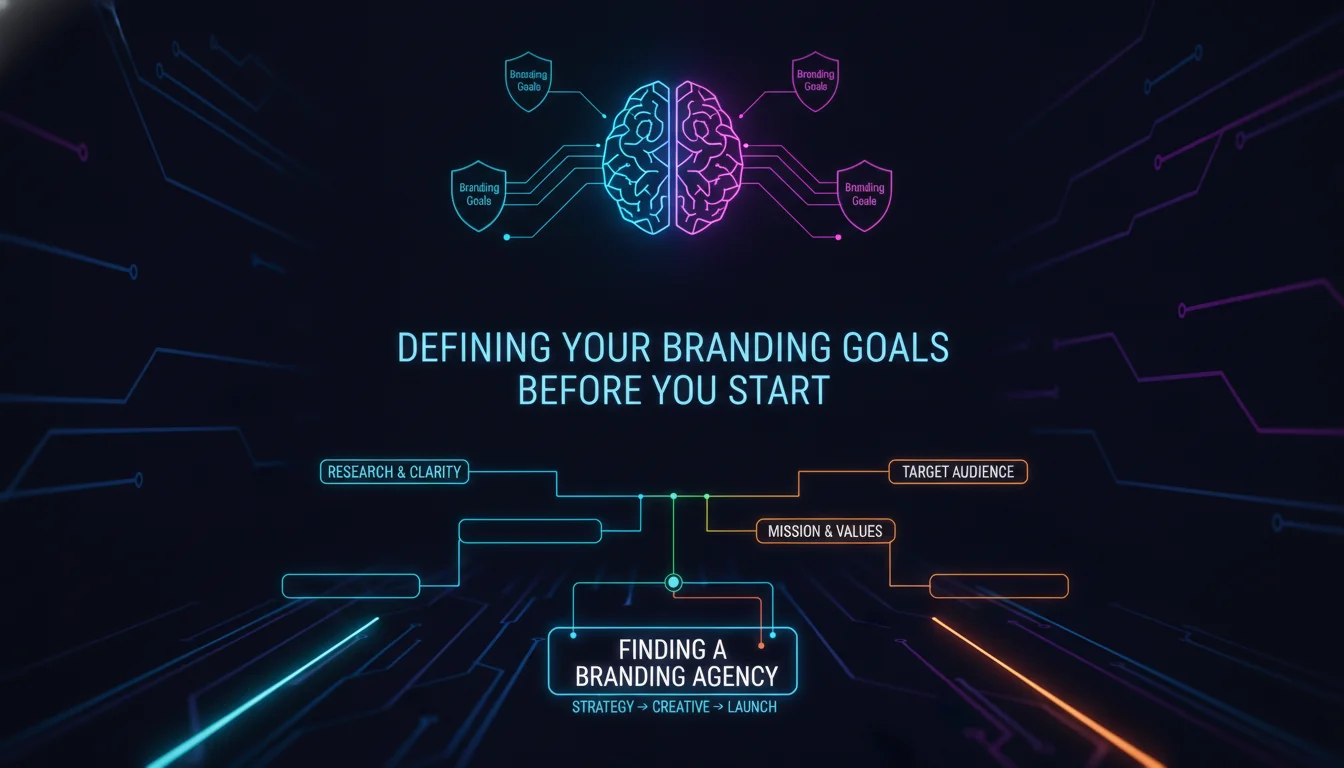
Defining your goals before you start the search for a branding agency is the single most important thing you can do to protect your budget and your timeline.
Clarify Your Objectives
Are you launching a new brand, repositioning an existing one, or refreshing a visual identity? As branding consultant Chad Daly noted on Quora, launching or repositioning a brand can be overwhelming because consumer behavior has changed, making differentiation more difficult. Write down your specific goals: increasing brand awareness, improving conversion rates, entering a new market. These become your evaluation criteria later.
Identify Your Brand’s Current State
Conduct an honest audit before you reach out to anyone. What’s working? What isn’t? What do customers actually say about you? Treebird Branding advises that a professional agency should understand your positioning, value proposition, messaging, personality, and customer experience before ever opening design software. Having this self-assessment ready makes the discovery process faster and more productive for everyone involved.
Set a Realistic Budget and Timeline
Without a budget range, you risk falling for an agency you can’t afford or underinvesting in something critical. Branding projects vary widely in scope and cost. A clear understanding of your financial parameters helps you filter candidates early. Define your timeline too: do you need a full rebrand in three months or a phased rollout over a year? These constraints shape every decision in the agency selection process.
How to Find a Branding Agency: The Research Phase
Knowing how to find a branding agency starts with knowing where to look. The best candidates rarely come from a single source.
Online Directories and Marketplaces
Start your search with reputable online directories. Clutch maintains a ranked list of top branding companies with verified client reviews and ratings, updated through August 2026. Agency Spotter lets you filter agencies by service type, location, and industry, giving you structured comparison data including project examples and pricing indicators. These platforms save time and give you a broad view of the market before you commit to any conversations.
Referral Networks and Communities
Word-of-mouth remains one of the most reliable methods for finding a branding agency. Rg Enzon, founder of Enzon Media, recommends on Quora that you seek referrals from colleagues and industry experts who specialize in branding work, then validate those referrals through reviews on Facebook and Google. Professional communities on LinkedIn, local business associations, and industry forums can surface candid recommendations and warnings that no directory algorithm will show you.
Social Media and Professional Networks
Social platforms are underrated discovery tools. Follow branding thought leaders on LinkedIn, Instagram, and X. Pay attention to agencies that share case studies, strategic insights, and original thinking rather than just self-promotion. Engaging with their content gives you a real sense of their expertise and communication style before you ever book a call. Agencies that demonstrate authority through content are usually the ones that take strategy seriously.
How to Find a Branding Agency: Evaluation and Shortlisting
Once you have a list of candidates, the real work of how to find a branding agency begins: evaluating each one against consistent criteria rather than gut feeling alone.
Portfolio Review and Case Studies
Review portfolios with a critical eye. Look for work in your industry or with similar business models, but also assess the diversity of their creative output. According to Quora contributor Rg Enzon, choose a branding agency with a wonderful portfolio of completed campaigns, because they will only be as successful for you as their past clients have been. Go deeper than visuals: examine case studies for measurable outcomes. Did the rebrand improve brand recognition, generate leads, or reduce customer acquisition costs? The best agencies can articulate the business impact of their work, not just the aesthetic choices.
Client Testimonials and Reviews
Verified client reviews reveal an agency’s reliability, communication habits, and project management quality. Clutch and Google Reviews are the most useful platforms for unfiltered feedback. Look for patterns: do clients consistently praise strategic thinking? Are there recurring complaints about missed deadlines or scope creep? A few negative reviews are normal. Recurring themes are not. Ask the agency directly for references you can contact for a deeper conversation.
Team Expertise and Cultural Fit
The people assigned to your account matter as much as the agency’s reputation. Ask about team seniority, experience, and stability. Will you work with the principals who pitched you, or a junior team? Cultural fit is equally important. The agency should understand your industry’s nuances and share your values. A good working relationship requires mutual respect and open communication, so trust your instincts during the interview process.
Key Questions to Ask Before Hiring a Branding Agency
Asking the right questions is how you separate strategic partners from vendors who are just selling deliverables.
Process and Methodology
Ask the agency to walk you through their typical branding process step by step. A solid process includes discovery, research, strategy development, creative concepting, refinement, and delivery of brand guidelines. Ask how they involve clients at each phase. Treebird Branding is clear that the agency should spend as much time asking questions as presenting ideas. If they can’t articulate a clear methodology, they’re likely relying on intuition rather than strategy.
Measurement and ROI
How does the agency define success? What metrics do they track? While branding can be difficult to measure directly, a professional agency should connect brand work to business outcomes: lead generation, customer loyalty, or market share growth. Ask for examples of how they’ve measured the impact of past projects. Agencies that sidestep measurement questions are usually more focused on aesthetics than results.
Communication and Collaboration
Clarify how often you’ll meet, who your main point of contact will be, and what tools they use for project management. Ask about their feedback process: how many revision rounds are included? What happens if you disagree with a creative direction? A clear communication plan prevents misunderstandings and keeps the project on track from day one.
The Cost of Branding Services: What to Expect
Cost is one of the first questions people ask when figuring out how to find a branding agency, and it’s also one of the hardest to answer without context.
Pricing Models
Branding agencies typically use three pricing models: fixed-fee project pricing, hourly rates, or retainer agreements. Fixed-fee projects are common for defined scopes like a brand identity package. Retainers suit ongoing brand management. Hourly rates are less common for full branding engagements but may apply to consulting or advisory work. The model you choose depends on your project’s nature and your budget flexibility.
Factors That Influence Cost
Agency size and reputation play a significant role. Larger, award-winning firms command higher fees than boutique studios. Geographic location matters too: agencies in major markets like New York, Los Angeles, and Atlanta often charge more than those in smaller cities. Project scope is the biggest cost driver. A full rebrand with naming, visual identity, and website will cost significantly more than a logo refresh. Be specific about your deliverables when requesting proposals so you can compare quotes accurately.
Budgeting for Value, Not Just Price
The cheapest option is rarely the best value. A poorly executed branding project can damage your business reputation and require expensive remediation later. Instead of focusing solely on price, evaluate the potential return on investment. A strong brand can command premium pricing, attract better customers, and reduce marketing spend over time. Choose an agency that can demonstrate how their work creates measurable business value, not just a polished deliverable.
Red Flags to Avoid When Selecting a Branding Agency
Knowing how to find a branding agency also means knowing what to walk away from. These warning signs show up early if you know where to look.
Overpromising and Guaranteed Results
Be cautious of any agency that guarantees specific outcomes, such as doubling your sales in six months. Branding is a long-term investment with no guaranteed short-term returns. Overpromising usually signals a lack of understanding of your business or a willingness to say anything to close the deal. A trustworthy agency will be honest about uncertainty and focus on process, not false promises.
Template-Based Work and Lack of Strategy
Treebird Branding warns against agencies that rely on templates rather than custom work. A generic logo or brand identity will fail to differentiate you in any competitive market. If an agency jumps straight to design questions without asking about your business goals, competitors, or target audience, that’s a major warning sign. Strategy must precede design. Otherwise, branding becomes decoration instead of a business tool.
Poor Communication and Transparency
If an agency is slow to respond during the sales process, that behavior will continue after you sign. Look for transparency in pricing, timelines, and team assignments. Avoid agencies that are vague about who will actually do the work or that hide behind jargon. A reliable partner communicates clearly, sets expectations upfront, and takes ownership of challenges rather than deflecting them.
Step-by-Step: How to Find a Branding Agency from Start to Finish
Step 1: Define Your Branding Needs
Document your project scope, goals, budget, and timeline before reaching out to anyone. Write a brief that includes your current brand challenges, target audience, competitive landscape, and desired outcomes. The more specific you are, the more useful the responses you’ll receive from potential agencies. This internal clarity also prevents scope creep once the engagement begins.
Step 2: Build a Long List of Candidates
Use online directories, referrals, and social media to compile a list of 10 to 15 agencies that seem relevant. Check their websites, social profiles, and recent work to confirm they’re active and reputable. At this stage, you’re casting a wide net, not evaluating deeply. Include a mix of large firms, boutique studios, and niche specialists to keep your options open.
Step 3: Shortlist Based on Fit and Expertise
Narrow your list to 3 to 5 agencies by reviewing portfolios, client reviews, and service offerings. Prioritize agencies with experience in your industry or with similar business models. Reach out to each shortlisted agency with your brief and request a proposal or introductory call. Pay close attention to how quickly and thoughtfully they respond. That responsiveness is a preview of what working together will feel like.
Step 4: Conduct Interviews and Ask Questions
Schedule discovery calls with each agency. Use the key questions outlined earlier to assess their process, measurement approach, and communication style. Ask for case studies relevant to your situation and request references. Take notes and compare answers across agencies. This step is where you separate strategic partners from vendors who are just selling deliverables.
Step 5: Evaluate Proposals and Make a Decision
Review formal proposals carefully, including scope, deliverables, timeline, and pricing. Use a comparison table to score each agency on multiple criteria. Involve key stakeholders in the decision to ensure alignment. Trust both the data and your instincts. The right agency should feel like an extension of your team, not a contractor you’re managing from a distance.
Comparing Branding Agencies: Evaluation Criteria Table
To make a structured decision when figuring out how to find a branding agency, evaluate each shortlisted candidate using consistent criteria. The table below outlines common research methods and their trade-offs.
| Method | Pros | Cons | Best For |
|---|---|---|---|
| Online Directories (Clutch, Agency Spotter) | Verified reviews, structured data, easy filtering | May not capture niche expertise; some listings are paid placements | Initial research and shortlisting |
| Referrals from colleagues | Trusted firsthand experience, cultural insight | Limited pool; may not match your exact needs | High-stakes projects needing proven reliability |
| Social media and content marketing | Shows agency’s thinking and strategic authority | Time-consuming; requires discernment | Evaluating strategic depth and communication style |
| Freelance platforms | Lower cost, quick access to talent | Inconsistent quality; limited strategic support | Simple logo or visual refresh projects |
Using the Table to Score Agencies
Assign weights to each criterion based on your priorities. If strategic depth is critical, give higher weight to agencies discovered through content marketing and referrals. Score each agency from 1 to 5 on factors like industry experience, portfolio quality, communication, and price. Customize the table with additional criteria such as cultural fit or technical capabilities specific to your sector.
Making the Final Decision
After scoring, schedule a final conversation with your top two agencies. Confirm details like project team, timeline, and contract terms. Don’t rush the decision. A branding engagement is a significant investment, and the onboarding process sets the tone for everything that follows. Start with a clear kickoff to align expectations before any creative work begins.
Contract Considerations Before You Sign
One area many brand owners overlook when learning how to find a branding agency is what happens after the handshake. The contract protects both sides.
Before signing any agreement, clarify ownership of all creative assets. You should own the final brand identity outright, including logo files, brand guidelines, and any custom typefaces or illustrations created for your project. Ask specifically about intellectual property transfer language in the contract.
Confirm the revision policy in writing. How many rounds of revisions are included? What triggers additional fees? Scope creep is one of the most common sources of conflict in agency relationships, and a well-written contract prevents most of it. Also confirm kill fees: if the project is cancelled mid-way, what does each party owe?
“People do business with those they know, like, and trust. And trust takes some time to build.” – Mark Mehling, Marketing Strategist, via Quora
That trust-building starts with a transparent contract, not just a warm pitch meeting.
Industry Trends Shaping Branding in 2026
As of 2026, the branding landscape has shifted in ways that directly affect how to find a branding agency worth hiring.
AI and Automation in Branding
Artificial intelligence is changing how branding agencies operate, from data analysis to content generation and design iteration. AI can accelerate research and produce design variations faster than ever before. But it cannot replace human strategic judgment or emotional storytelling. Agencies that integrate AI tools wisely, while keeping human creativity at the core, are better positioned to deliver original, efficient work. When evaluating agencies, ask directly how they use AI and whether it enhances or replaces original thinking on your account.
Integrated Branding and Social Media
The line between brand identity and social media strategy continues to blur. Treebird Branding specifically identifies the frustration of hiring separate vendors for logos, websites, and social content, which leads to a disjointed brand experience across every channel. Modern agencies increasingly offer integrated services that align brand identity with social media content, influencer marketing, and digital campaigns. Look for partners who understand how brand consistency plays out across all platforms, including TikTok and whatever emerges next.
Multi-Cultural and Niche Expertise
As markets grow more diverse, agencies with multi-cultural and niche expertise are in higher demand. Branding Los Angeles, for example, positions itself as a leading multi-cultural strategic branding agency, serving industries including medical, retail, law, dental, and real estate. A specialized agency can bring deeper understanding of regulatory constraints, audience nuances, and competitive dynamics within your sector. Consider whether a niche specialist might serve you better than a generalist firm.
“Agencies worth their salt run as fast as they can simply to keep up with what’s new, what’s working, and the cultural influences of the day.” – Denise Kohnke, Marketing Strategist, via Quora
That cultural awareness is exactly what separates a branding agency from a design shop.
Finding the right creative partner is one of the most important decisions your brand will make. If you’ve been searching for how to find a branding agency that combines strategic depth with creative originality, start with clarity on your goals, do your research systematically, and evaluate on strategy first. The right partner won’t just make your brand look better. They’ll make it work harder.
Ready to build something that lasts? Contact Emin Media for a free brand consultation and let’s create a brand that resonates, differentiates, and grows with your business.
Frequently Asked Questions
How much does a branding agency cost?
Branding agency costs vary widely based on project scope, agency reputation, and location. A simple logo refresh may cost a few thousand dollars, while a full rebrand with strategy, naming, and website can cost tens of thousands or more. Always request detailed proposals so you understand exactly what’s included before committing.
What is the 3-7-27 rule in branding?
The 3-7-27 rule is a guideline about first impressions and brand consistency. It suggests that people form an impression within 3 seconds, need 7 interactions to remember a brand, and require 27 interactions to build trust. While not a hard science, it underscores the need for consistent, repeated brand exposure across every channel.
How to choose a branding agency?
Choose a branding agency by first defining your goals, then researching candidates through directories, referrals, and social media. Evaluate portfolios for strategic depth, ask about process and measurement, and confirm cultural fit. Use a structured scoring comparison to make a final decision rather than relying on gut feeling alone.
What are the 5 C’s of branding?
The 5 C’s of branding are Company, Customers, Competitors, Collaborators, and Climate. They represent the key factors to analyze when developing a brand strategy. A strong agency will examine all five before creating any visual or messaging work for your brand.
Where can I find a good branding service?
You can find a good branding service through online directories like Clutch and Agency Spotter, referrals from colleagues, and professional networks such as LinkedIn. Social media platforms and industry communities also surface valuable recommendations that directories often miss.
What questions should I ask a branding agency before hiring?
Ask about their process, how they measure success, who will work on your account, and how they handle communication and revisions. Also ask about past project outcomes and request references you can contact directly. These questions reveal whether the agency is a true strategic partner or just a vendor selling deliverables.
Enjoyed this article?
Contact Emin Media for a free brand consultation and let's create something amazing together.
Get in TouchRelated Articles
Best Creative Content Creation Agency Guide 2026
Find the best creative content creation agency for your brand in 2026. Compare top providers,…
Branding Agency Near Me in NC: 2026 Guide
Looking for a branding agency near me in NC? Compare top-rated firms, real pricing, and…
CM Smart Digital Marketing: Strategy, Campaigns & Agencies
CM smart digital marketing is your blueprint for measurable growth. Explore strategy frameworks, agency models,…