Digital Storytelling for Business: 2026 Playbook
Key Takeaways
- Digital storytelling for business builds emotional connections that plain facts and features can’t match.
- Effective narratives make brands memorable, and campaign performance data indicates real engagement and conversion gains.
- Multimedia elements (video, audio, interactive features) improve audience retention far beyond text alone.
- Knowing your audience before you write a single word is non-negotiable for compelling narratives.
- Measuring impact through analytics and testing turns storytelling from guesswork into a repeatable growth channel.
- As of 2026, short-form video and dark social sharing are reshaping how brand stories actually spread.
“Storytelling is the most powerful way to put ideas into the world today.” – Robert McKee
Digital storytelling for business is the strategic use of narrative techniques across digital channels to communicate a brand’s values, mission, and personality. It builds emotional connections that plain product messaging can’t, helping brands cut through the roughly 10,000 brand messages a person sees daily, according to brand research cited by the Digital Marketing Institute.
Understanding Digital Storytelling
Digital storytelling is the practice of conveying a message using digital tools and multimedia rather than a single static format. It blends text, images, audio, video, and interactive features into narratives built to move an audience, not just inform them. Think of it less as a brochure and more as a short film with a point of view. This isn’t new territory. Libraries, universities, and public health organizations have used digital storytelling for community engagement and education for years, per the American Library Association. What’s changed is the business case: brands now treat narrative as a growth lever, not decoration.
Definition of Digital Storytelling
Digital storytelling combines multiple content forms to deepen the narrative experience. The core building blocks include:
- Text: Written narratives that provide context and detail.
- Images: Visual elements that enhance understanding and evoke emotion.
- Audio: Soundtracks or voiceovers that add texture to the story.
- Video: Moving images that capture attention and convey messages fast.
- Interactive Features: Polls, quizzes, and clickable content that invite participation.
The Importance of Digital Storytelling in Business
In a business context, digital storytelling for business does three things well: it builds connection, shapes identity, and improves recall. Here’s how each plays out.
- Engagement: It connects brands with audiences on a deeper level, building loyalty and trust.
- Brand Identity: Storytelling communicates values and mission, shaping how a brand is perceived in a crowded market.
- Information Retention: Audiences remember stories far more reliably than they remember bullet-point facts.
How Digital Storytelling Actually Works
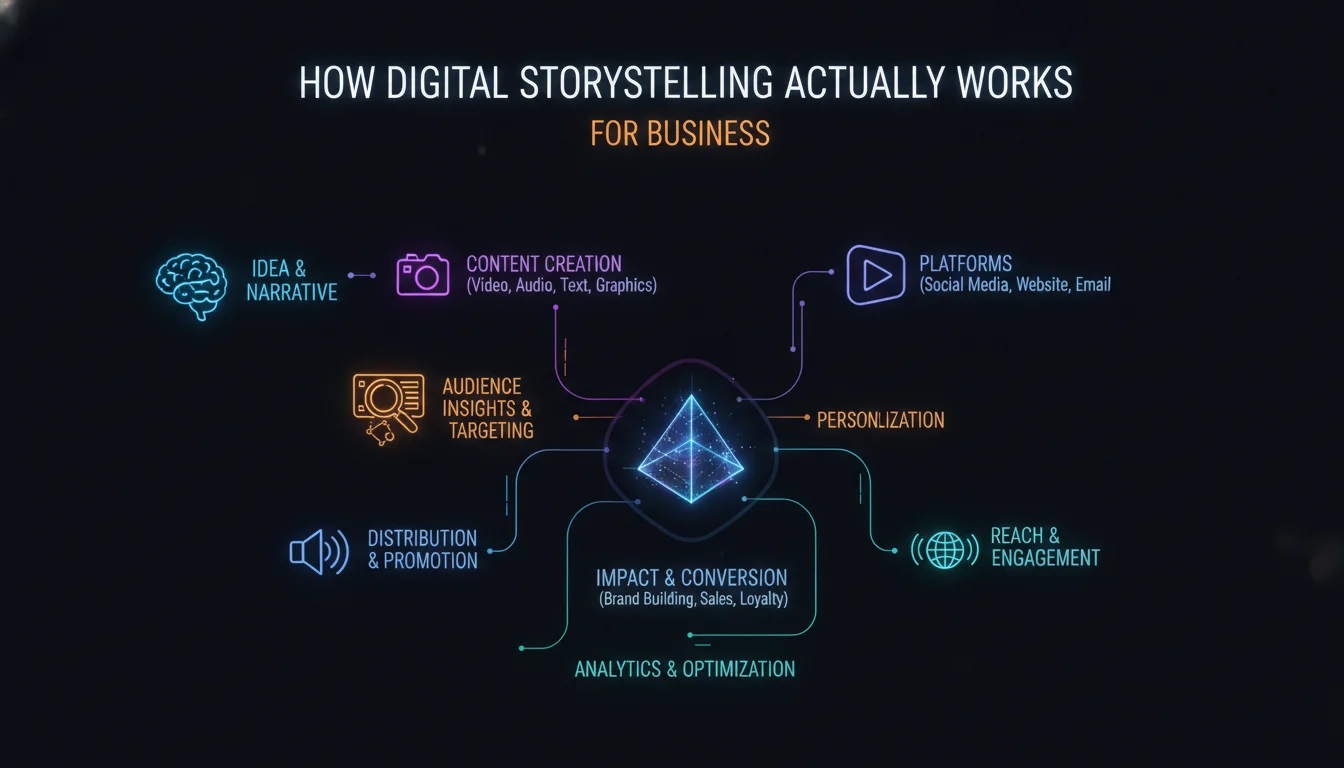
Digital storytelling works by pairing narrative structure with sensory, multimedia delivery so the brain processes a message as an experience rather than a claim. When a story activates the same neural regions as lived experience, the message sticks in a way that a spec sheet never will. That’s the mechanism agencies and creative teams are leveraging when they build campaigns around a customer’s journey instead of a product’s feature list.
The engine has three moving parts. First, a narrative arc: a relatable challenge, a turning point, and a resolution where the brand plays guide, not hero. Second, sensory reinforcement: visuals, sound, and pacing that make the story easier to feel and recall. Third, distribution logic: matching format to platform, because a story built for a 30-second vertical video won’t land the same way as a 1,500-word case study. Miss any one of these three and the story falls flat, no matter how good the writing is.
“Brand storytelling isn’t just a regular definition of marketing. It is how we take every opportunity to do marketing in the right way to the right audience, and with the heart, not with the head.” – Ekaterina Walter, marketer and DMI author
Key Components of Digital Storytelling
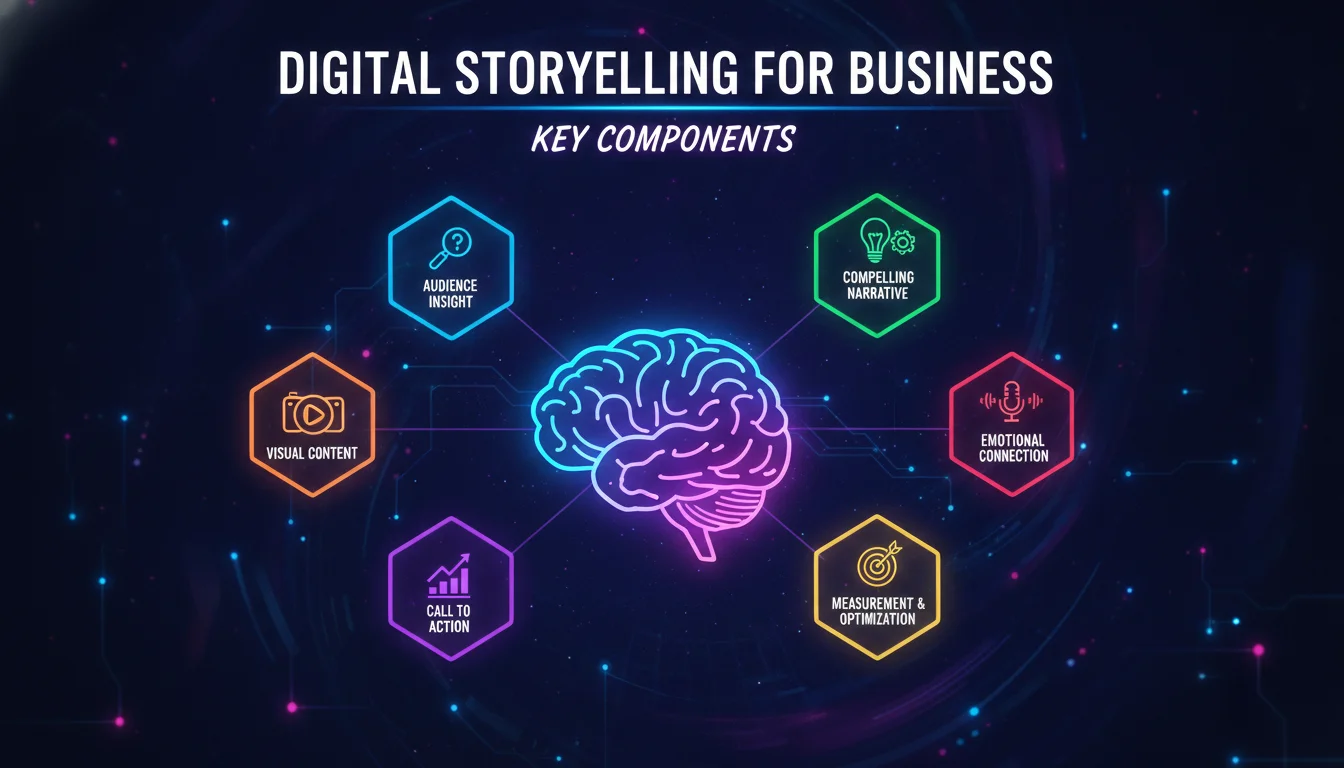
To create impactful digital stories, businesses need to nail a few key components before touching a camera or a keyboard.
1. Audience Understanding
Knowing your audience is fundamental to effective storytelling. This involves:
- Identifying Target Demographics: Understanding who your audience is, their preferences, and behaviors.
- Gathering Insights: Running surveys or interviews to learn about their experiences and expectations.
- Creating Personas: Building detailed profiles of your ideal customers to tailor stories accordingly.
2. Crafting the Narrative
Narrative structure is what separates a story from a list of facts. A compelling story typically includes:
- Conflict: A challenge or problem that resonates with the audience.
- Resolution: A solution or outcome that highlights the brand’s value.
- Call to Action: An invitation to engage further, whether through a purchase, subscription, or share.
3. Utilizing Multimedia Elements
Incorporating varied media types strengthens the storytelling experience:
- Videos: Short, engaging clips that convey complex messages quickly.
- Infographics: Visual representations of data that simplify information.
- Interactive Content: Quizzes or polls that invite audience participation and feedback.
Benefits of Digital Storytelling for Businesses
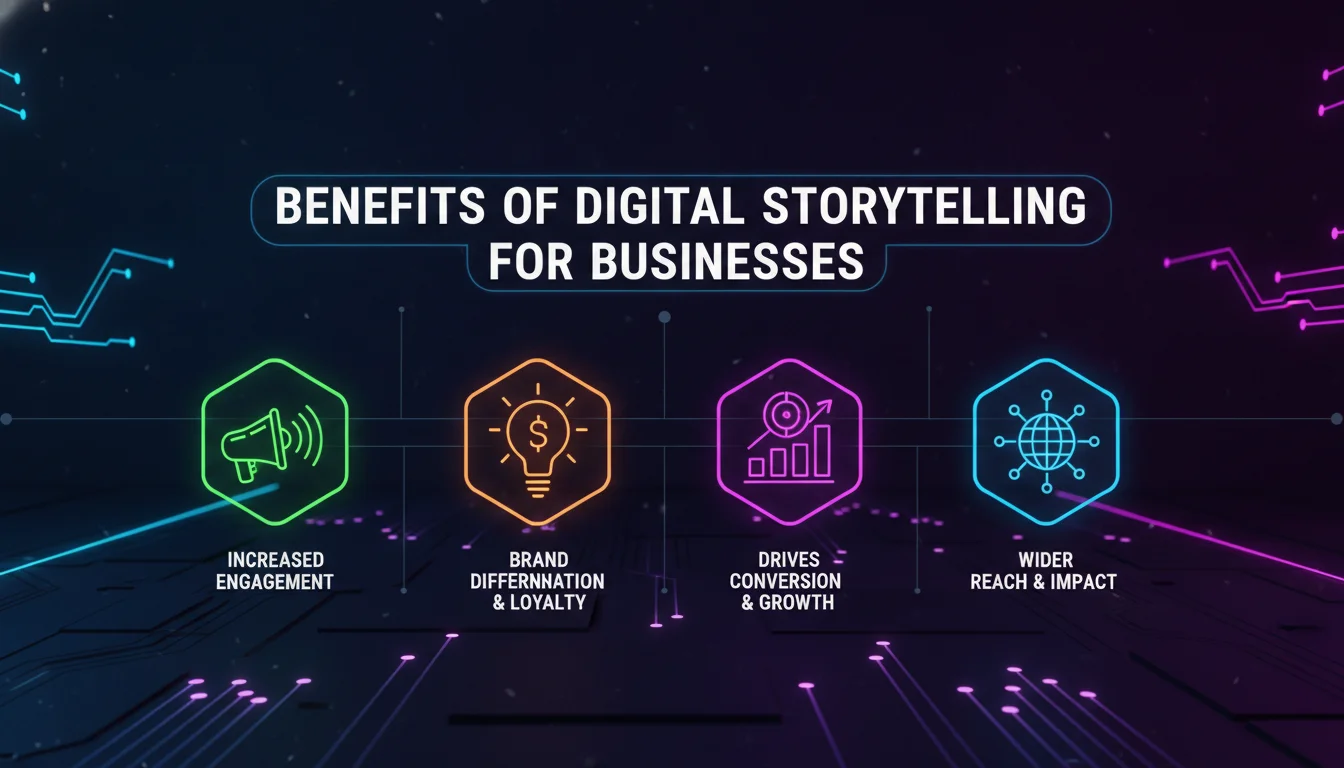
The benefits of digital storytelling for businesses show up in engagement, memory, and trust, three things that directly influence revenue over time.
1. Enhanced Engagement
Digital storytelling boosts audience engagement measurably. Campaign performance data indicates brands using storytelling see average engagement increases of around 23% and conversion improvements near 19%, according to the Digital Marketing Institute. Stories create emotional connections that resonate in a way features and specs simply don’t.
2. Improved Brand Recall
Stories are easier to remember than facts, full stop. Brand research shows people remember stories roughly 22 times longer than facts alone, which means storytelling isn’t just charming, it’s a genuine recall mechanism your marketing team can lean on.
3. Increased Trust and Loyalty
When brands share authentic stories, they earn trust instead of demanding it. According to Digital Marketing Institute data, 92% of consumers prefer ads that feel like stories, while only 33% trust traditional advertising. That gap is the whole argument for investing in narrative over interruption-based ads.
How to Apply Digital Storytelling: A Practical Roadmap
Applying digital storytelling for business starts with listening, not producing, and moves through five concrete steps you can run this quarter.
1. Mine Real Stories First
Interview five customers about their journey with your brand. Read through support tickets for moments of transformation. Ask your team why they chose to work with you. These raw materials, not brainstorm sessions, are where authentic brand narratives actually come from.
2. Define Your Brand’s Voice
Your voice should be consistent everywhere your story shows up. This involves:
- Establishing Tone: Deciding whether your brand voice is formal, casual, humorous, or something else entirely.
- Consistency: Keeping the same voice across channels to reinforce identity.
- Authenticity: Being genuine enough that your audience trusts what they’re hearing.
3. Match Format to Platform
Short 2-3 minute videos tend to earn strong shares on social platforms, while written narratives between roughly 1,200-2,000 words still perform well for SEO and thought leadership, provided they’re broken into scannable sections. Instagram and Facebook Stories work well for behind-the-scenes content and testimonials; LinkedIn rewards personal professional narratives over company announcements.
4. Leverage Social Media and User-Generated Content
Encourage customers to share their own stories about your brand. User-generated content does double duty: it’s authentic, and it multiplies your reach without multiplying your production budget.
5. Measure and Optimize
Track what’s actually working through:
- Analytics Tools: Using platforms like Google Analytics to track engagement and conversion rates.
- Feedback Mechanisms: Collecting audience feedback through surveys or comments.
- A/B Testing: Experimenting with different storytelling formats to see what resonates.
Comparing Digital Storytelling Formats
Choosing the right format depends on your goal, your audience’s platform habits, and your production budget. Here’s how the major formats stack up.
| Format | Best For | Production Effort | Typical Strength |
|---|---|---|---|
| Short-form video (2-3 min) | Social feeds, emotional storytelling | Medium to high | High shareability |
| Long-form written narrative | SEO, thought leadership, case studies | Low to medium | Search visibility, depth |
| Interactive content (polls, quizzes) | Social engagement, feedback loops | Low | Two-way participation |
| User-generated content | Trust-building, community | Low (brand side) | Authenticity at scale |
| Infographics/data visuals | Simplifying complex information | Medium | Fast comprehension |
The Role of Emerging Technology in Digital Storytelling
Emerging technology is expanding what digital storytelling for business can look like, from AI-assisted editing to immersive formats like VR and AR. Higher education programs are already using immersive learning and gamification to teach visual literacy, and that same toolkit is filtering into marketing departments. AI tools now help teams draft, personalize, and repurpose narrative content faster than a traditional production pipeline allowed. The EdTech and creative technology market is projected for substantial growth in the coming years, according to industry forecasts, which signals sustained investment in the tools that power interactive and immersive storytelling.
As of 2026, dark social sharing (stories passed along in private messages, group chats, and closed communities) has become a channel brands can’t fully measure but can’t ignore either. The near-term outlook favors brands that build modular stories: one core narrative, reformatted for video, written long-form, and bite-sized social snippets, rather than three unrelated campaigns.
Examples of Successful Digital Storytelling
Several brands have proven what strong narrative execution can do for a business.
1. Dove’s Real Beauty Campaign
Dove shifted its brand from a commodity soap to a cultural movement through its Real Beauty campaign. By sharing real stories of women’s experiences with beauty standards, Dove grew sales from $2.5 billion to $4 billion, according to data reported by the Digital Marketing Institute.
2. Airbnb’s Belong Anywhere Narrative
Airbnb used user-generated content to tell the stories of hosts and guests, creating a sense of community around the brand. This narrative approach is credited with helping the company reach a $75 billion valuation.
3. Nike’s Athlete Stories
Nike focuses on the challenges athletes face rather than shoe technology alone. By showcasing personal stories of triumph, Nike reinforces its brand message and connects with audiences on an emotional level, an approach the Digital Marketing Institute points to as a model for customer-as-hero storytelling.
A Worked Example: Small Brand, Big Story
Picture a regional skincare company launching a new product line. Instead of leading with ingredient lists, the team interviews three long-time customers about how a skin condition affected their confidence. One story, about a customer who stopped avoiding photos after finding a routine that worked, becomes the spine of the campaign.
That single narrative gets cut into a 90-second video for social, a longer written case study for the blog and SEO, and a handful of quote graphics for Stories features. The result isn’t three campaigns, it’s one story wearing three outfits. This is digital storytelling for business in miniature: one authentic experience, reformatted for where the audience already spends time.
Common Mistakes in Digital Storytelling
The most common mistake is making the brand the hero instead of the customer. When a business centers itself in every story, audiences tune out fast, because nobody wants to watch a company praise itself for three minutes.
- Skipping audience research: Producing polished content nobody asked for and nobody needed.
- Ignoring platform fit: Publishing the same asset everywhere instead of adapting format to each channel’s habits.
- Chasing production value over authenticity: A rough, honest customer testimonial often outperforms an overproduced ad.
- No measurement plan: Launching a story campaign without defining what success even looks like.
- Burying the call to action: A great story that never asks the audience to do anything is a missed opportunity.
Metrics That Matter for Brand Storytelling
The metrics that matter most are engagement rate, completion rate, conversion lift, and share/save rate, because each tells you something different about how the story performed. Engagement rate shows whether the story caught attention. Completion rate (especially on video and Stories formats) shows whether it held attention. Conversion lift tells you whether attention translated into action. Share and save rates indicate whether the story was compelling enough for someone to pass it along, which is often the strongest signal of resonance.
Pros and Cons
Pros
- Builds emotional connections that generic advertising can’t replicate.
- Improves long-term brand recall compared to fact-based messaging.
- Scales across formats, one core story can become video, blog, and social content.
- Strengthens trust, since audiences generally prefer narrative-driven ads over traditional advertising.
Cons
- Requires real time and creative resources to do well, not just a content calendar.
- Harder to measure than direct-response advertising, especially for brand-level impact.
- Risk of inauthenticity if a story feels manufactured rather than sourced from real customers or employees.
- Can get lost in content overload if the narrative angle isn’t genuinely distinct.
Challenges in Digital Storytelling
Even strong storytelling programs run into friction, and it’s worth naming it plainly.
1. Content Overload
With so many brands competing for attention, standing out is hard. Businesses need unique angles and genuinely authentic stories, not just more content, to capture audience interest.
2. Resource Constraints
Creating high-quality digital stories takes time, expertise, and budget. Many businesses need to invest in training or bring in outside creative support to produce content that actually performs.
3. Measuring Success
Determining the effectiveness of storytelling efforts can be complex. Businesses need clear metrics and KPIs defined upfront, not retrofitted after the campaign ends.
What This Looks Like Going Into 2026
This year, the brands winning with digital storytelling for business are the ones treating narrative as infrastructure, not a one-off campaign. That means a repeatable process for sourcing real stories, a modular content system that reformats one narrative across channels, and a measurement habit that ties storytelling directly to business outcomes rather than vanity metrics. Updated for 2026, the expectation isn’t just
Enjoyed this article?
Contact Emin Media for a free brand consultation and let's create something amazing together.
Get in TouchRelated Articles

Startup Marketing: A Practical Growth Guide (2026)
Startup marketing is your roadmap to customers and revenue. Learn proven strategies, budgeting tips, and…

Facebook Digital Creator: The 2026 Complete Guide
Become a facebook digital creator in minutes. Explore monetization tools, pro tips, and step-by-step setup…
How to Become a Digital Creator in 2026
Learn how to become a digital creator in 2026: pick your niche, build your brand,…