Digital Sony Camera: Complete 2026 Buyer’s Guide
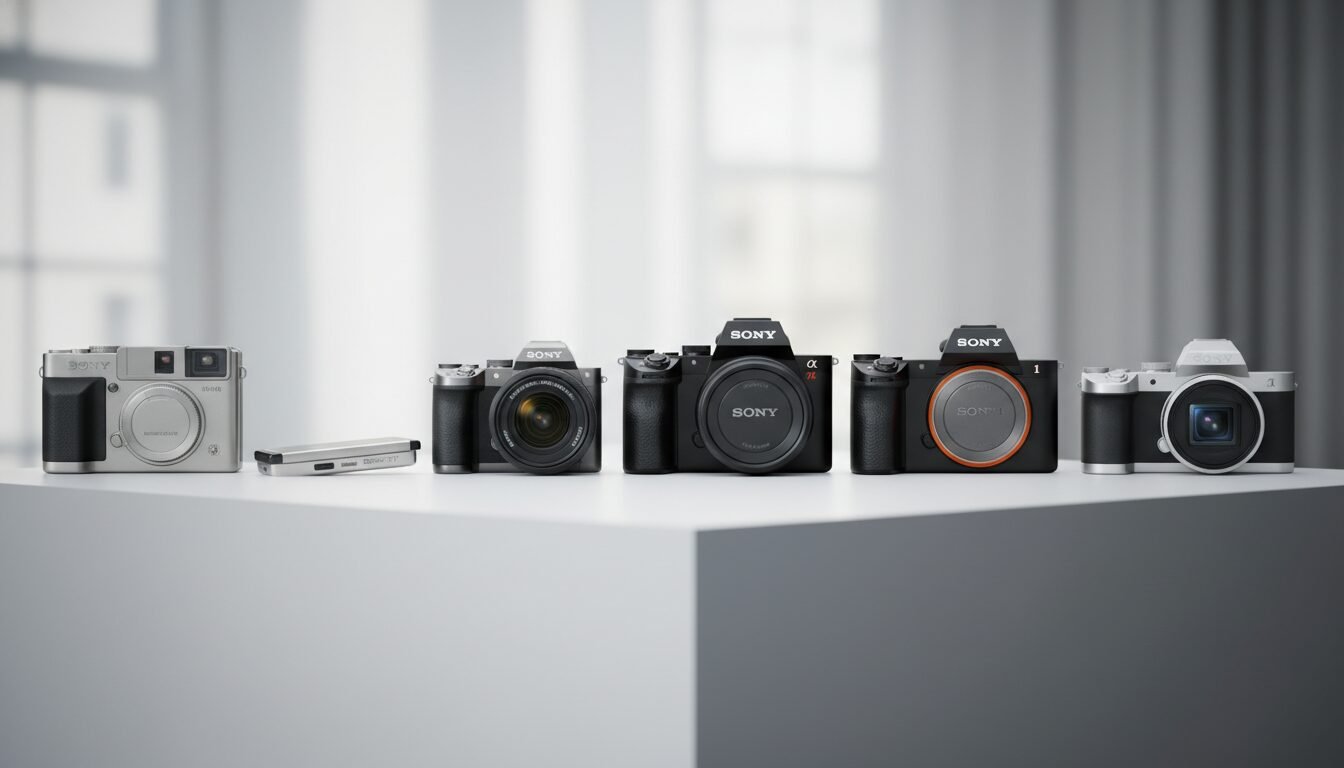
A digital Sony camera is any imaging device from Sony that captures photos and video using electronic sensors. From the compact Cyber-shot to the full-frame Alpha mirrorless lineup, Sony builds cameras for every skill level and budget.
Key Takeaways
- The Sony Alpha full-frame series leads in resolution (up to 61MP on the Alpha 7R VI) and speed (up to 30fps on the Alpha 9 III).
- Compact Cyber-shot and ZV cameras deliver powerful features in pocketable designs built for travel and vlogging.
- APS-C models like the Alpha 6700 and ZV-E10 II balance price and performance for enthusiasts and content creators.
- Always match lens mount, sensor size, and video capabilities to your specific photography or video style.
- Sony’s 2026 lineup ranges from $599 to $6,999, covering every serious budget.
- Sony E-mount is the most extensive mirrorless lens ecosystem, with over 300 native lenses available as of 2026.
The Evolution of Digital Sony Cameras
Media” class=”wp-image-9778″ loading=”lazy” width=”1792″ height=”1024″ />Sony’s digital camera history stretches back to 1988, when the company released the MVC-C1, the first consumer-use Mavica that stored images on 2-inch floppy disks. That early electronic still camera featured auto-strobe, fast successive shooting, and a self-timer, laying the foundation for everything that followed.
“Sony’s Mavica prototype played a key role in the 1984 Los Angeles Olympics, transmitting images via phone lines for newspaper coverage, a revolutionary step at the time.” Sony Corporate History
From Mavica to Mirrorless
The Mavica era proved that digital imaging had a real future. Each generation pushed the format further: higher resolution, faster processing, smarter storage. By the mid-2000s, Sony had enough momentum to challenge the DSLR establishment head-on.
The Cyber-shot and Alpha Revolution
In 1996, the DSC-F1 became the first Cyber-shot camera, introducing a rotating lens and built-in flash. A decade later, Sony launched the DSLR-A100, its first Alpha digital SLR. The shift to mirrorless followed, and today the Alpha 7 series holds the number-one market share in US full-frame mirrorless sales from 2021 onward, according to NPD Group data cited by Sony.
Key milestones include the 2003 DSC-F828, the world’s first consumer camera with an 8.1-megapixel four-color filter CCD, and the 1999 DSC-F505K with a 5-stop Carl Zeiss Vario-Sonnar zoom lens. These weren’t incremental updates. They were category-defining moments that shaped how the entire industry thought about compact imaging.
Digital Sony Camera Comparison: 2026 Models at a Glance
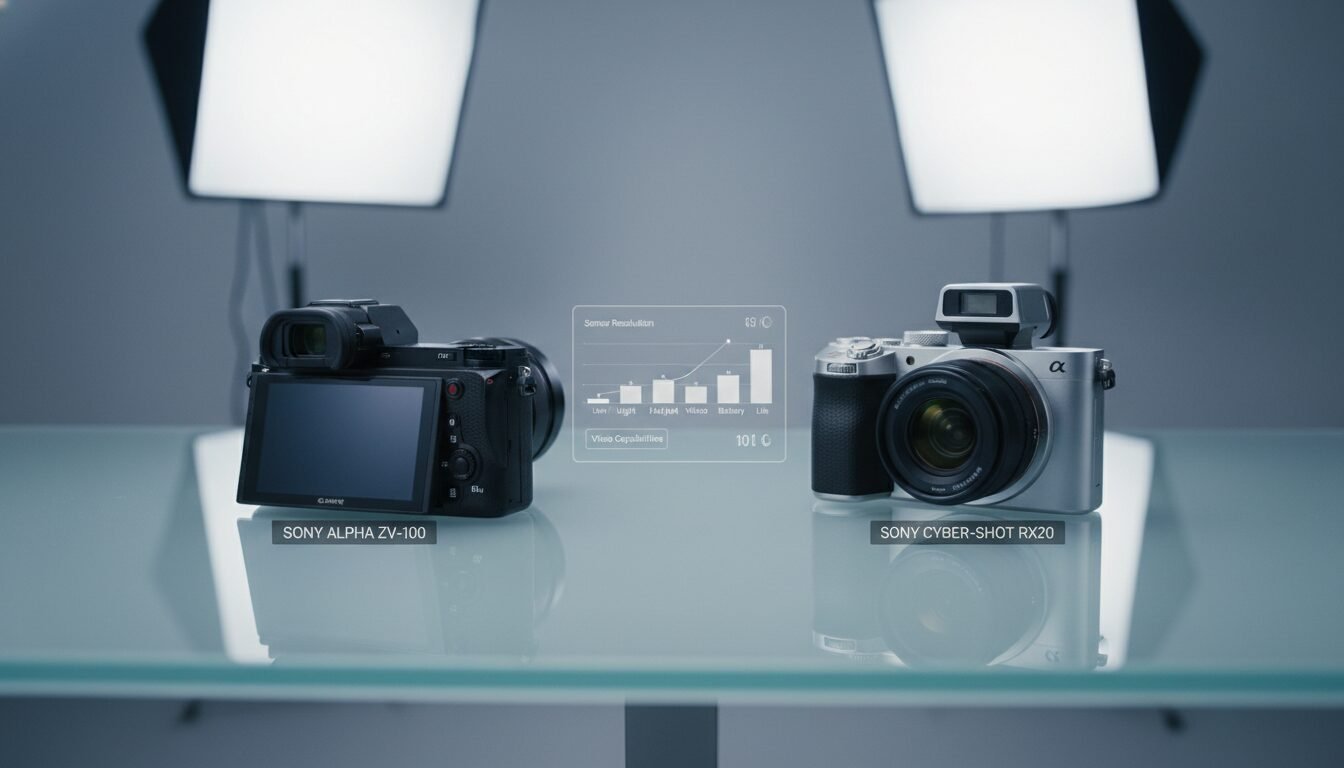
Choosing the right digital Sony camera starts with understanding what each model is actually built for. The table below maps the full 2026 lineup by sensor, resolution, price, and ideal use case.
| Model | Sensor | Resolution | Price (MSRP) | Best For |
|---|---|---|---|---|
| Alpha 1 II | Full-frame | 50.1MP | $6,999.99 | High-speed sports, wildlife |
| Alpha 7R VI | Full-frame | 61MP | $4,499.99 | Studio, landscape, detail |
| Alpha 7 V | Full-frame | 33MP | $2,899.99 | Hybrid stills/video |
| Alpha 7 IV | Full-frame | 33MP | $1,999.99 | Enthusiast hybrid |
| Alpha 9 III | Full-frame | 24.2MP | $6,399.99 | Professional sports |
| Alpha 6700 | APS-C | 26MP | $1,499.99 | Travel, family, vlogging |
| ZV-E10 II | APS-C | 26MP | $1,199.99 | Content creators |
| Cyber-shot RX100 VII | 1-inch | 20.1MP | $1,499.99 | Pocket-sized travel |
Pros and Cons of Buying a Digital Sony Camera
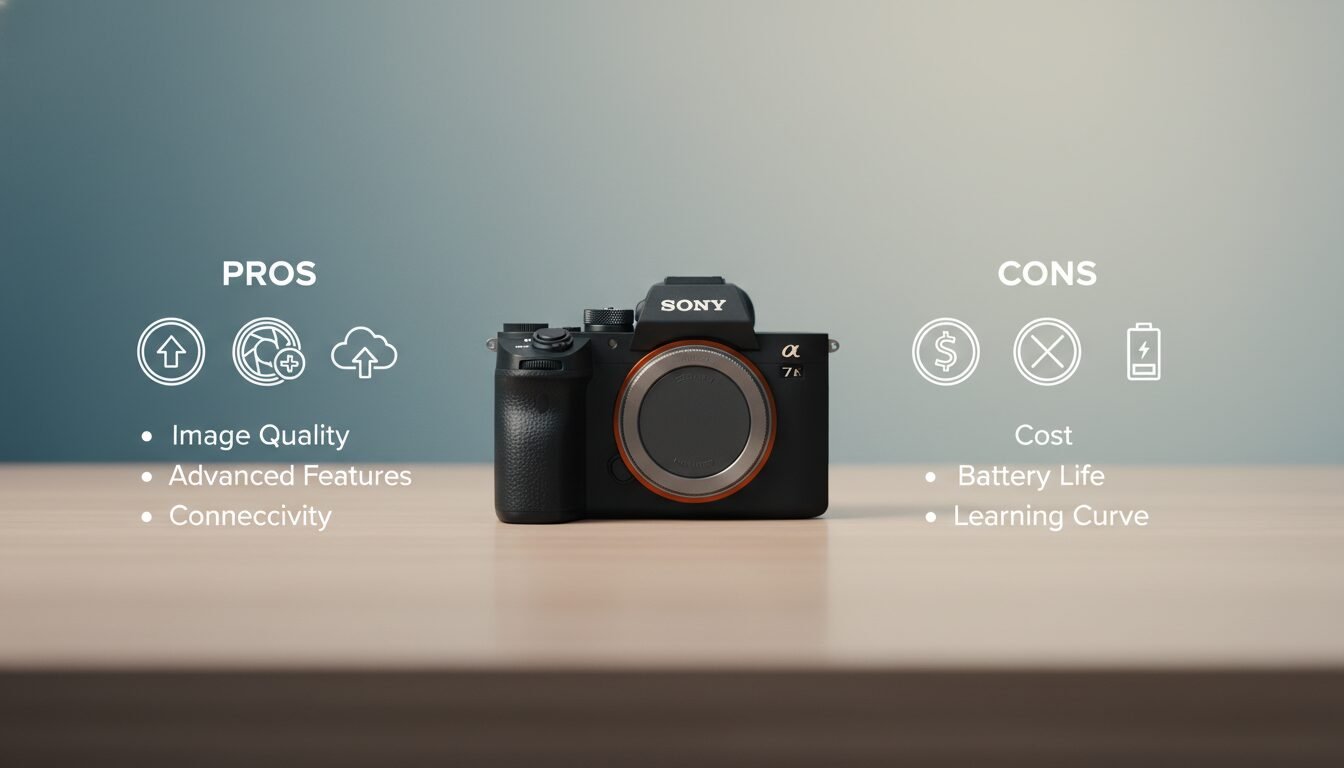
Every digital Sony camera comes with real strengths and genuine trade-offs. Here’s an honest look at both sides before you commit.
Pros
- Industry-leading autofocus: Sony’s real-time Eye AF and subject tracking set the standard that competitors now chase. The Alpha 9 III performs up to 120 AF calculations per second.
- Widest mirrorless lens ecosystem: With over 300 native E-mount lenses available as of 2026, you’re never locked into a narrow selection.
- Exceptional video performance: From 4K/60p on the Alpha 7 IV to 8K on the Alpha 1 II, Sony covers every video format a creator or filmmaker needs.
- Compact bodies with pro-grade specs: The ZV and Cyber-shot lines prove you don’t need a large camera to get professional results.
- Strong resale and used market: Sony Alpha bodies hold value well, making the used market a smart entry point for budget-conscious buyers.
Cons
- Menu complexity: Sony’s menu systems have historically been deep and non-intuitive, though recent models like the Alpha 7 V have improved navigation significantly.
- Battery life: Most Sony mirrorless bodies deliver fewer shots per charge than comparable DSLRs. Carrying spare batteries is standard practice.
- Premium lens pricing: Sony G Master lenses are exceptional, but they carry price tags to match. Budget-friendly third-party options from Tamron and Sigma help close the gap.
- Entry cost: Even the most affordable interchangeable-lens digital Sony camera starts at $849 with a kit lens, which is a real barrier for first-time buyers.
Understanding Digital Sony Camera Types
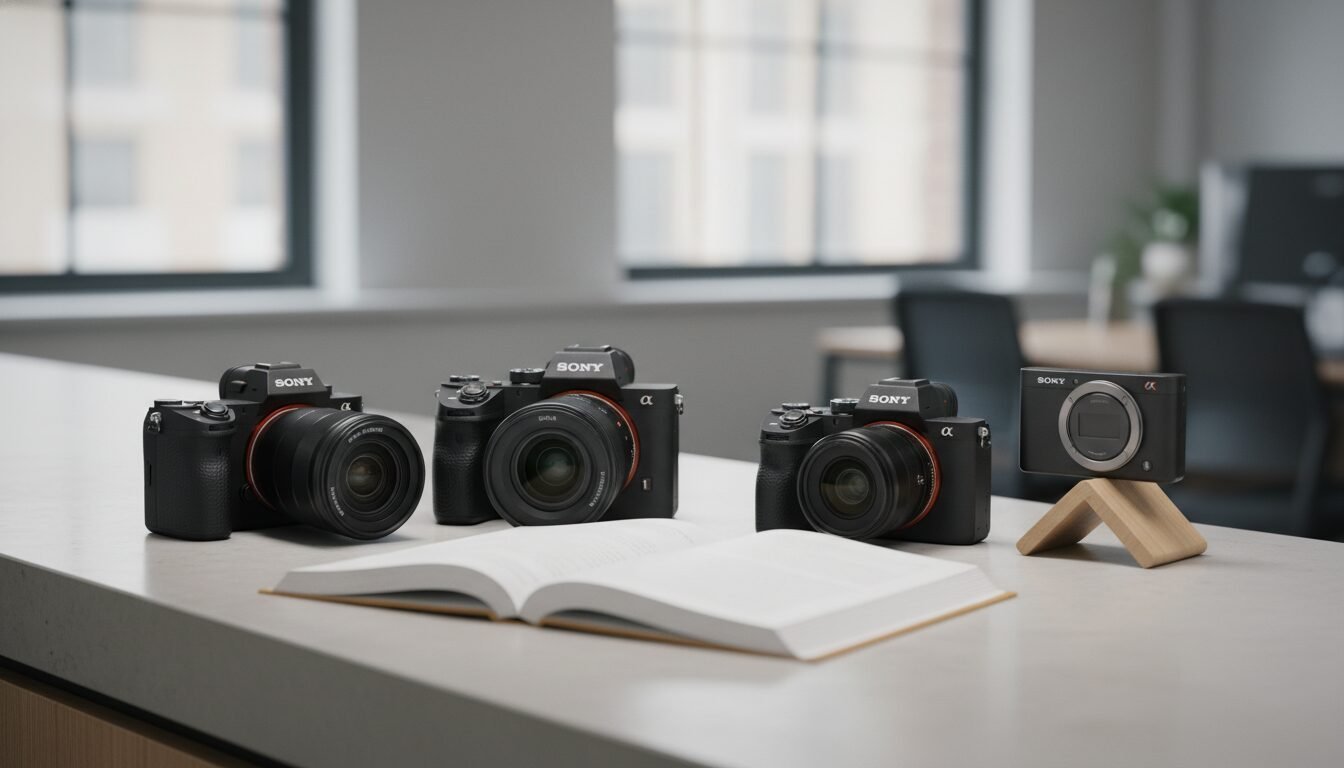
Sony organizes its digital camera lineup into three distinct categories, each targeting a different type of shooter.
Full-Frame Mirrorless Cameras
Full-frame sensors (35mm equivalent) offer the best low-light performance and dynamic range in Sony’s lineup. The Alpha 7, Alpha 9, and Alpha 1 lines all use this sensor size. The Alpha 7R VI packs 61 megapixels, while the Alpha 9 III shoots 30fps blackout-free, making it the go-to digital Sony camera for sports and wildlife professionals.
APS-C Mirrorless Cameras
APS-C sensors are smaller and more affordable, yet still deliver professional-grade results in the right hands. The Alpha 6700 and ZV-E10 II both feature 26MP resolution, real-time autofocus, and 4K video at up to 120fps. These cameras are lighter and consistently preferred for travel, street photography, and vlogging where portability matters more than maximum image quality.
Compact Point-and-Shoot Cameras
The Cyber-shot series, led by the RX100 VII, packs a 20.1MP 1-inch sensor into a pocketable body with a 24-200mm zoom lens. ZV-1F and ZV-1 models are purpose-built for content creators, with flip screens and advanced product-showcase autofocus that makes them genuinely useful tools rather than compromised compacts.
Key Features to Look for in a Sony Digital Camera
Not every spec on a digital Sony camera spec sheet matters equally. Focus on the features that actually affect your day-to-day shooting.
Sensor Size and Megapixels
Resolution determines how large you can print or how aggressively you can crop. The 50.1MP Alpha 1 II lets photographers crop deeply while retaining detail, while the 24.2MP Alpha 9 III prioritizes speed and low-light sensitivity over pixel count. Don’t chase megapixels blindly. Consider your actual output: social media, print, or commercial licensing each have different demands.
Autofocus and Speed
Sony’s real-time Eye AF and subject tracking are widely considered industry leaders, as noted by DPReview and imaging publications consistently since 2020. The Alpha 9 III achieves up to 120 AF calculations per second, while the Alpha 7 IV offers 10fps bursts with 759 phase-detect AF points. For action photography, prioritize maximum frame rate and buffer depth over resolution.
Video Capabilities
4K is now the baseline standard across Sony’s lineup. Many models shoot 4K/60p (Alpha 7 IV) or even 8K (Alpha 1 II). The ZV series includes dedicated vlogging features like Background Defocus and Product Showcase mode, while Cinema Line cameras such as the FX30 offer 16-bit RAW output for professional post-production workflows. If video is your primary output, the Cinema Line deserves serious attention alongside the Alpha series.
Weather Sealing and Durability
Weather sealing is a meaningful differentiator across Sony’s range. Full-frame Alpha bodies like the Alpha 7 IV, Alpha 7R VI, and Alpha 1 II carry dust and moisture resistance ratings suitable for outdoor professional work. APS-C bodies like the Alpha 6700 also include weather sealing, while the ZV and entry-level Cyber-shot lines generally do not. If you shoot outdoors regularly, confirm the IP rating before buying.
Top Sony Full-Frame Cameras Compared
Sony’s full-frame Alpha lineup covers three distinct performance tiers, each optimized for a different professional need.
Alpha 7 IV: The All-Rounder
The Alpha 7 IV is a 33MP hybrid camera that shoots 4K/60p video and 10fps stills. At $1,999.99 body-only, it’s the most popular choice for serious enthusiasts and working professionals who need one camera that handles everything. With 759 phase-detect AF points and in-body stabilization, it covers weddings, portraits, travel, and wildlife without compromise.
Alpha 7R VI: Resolution King
For photographers who need maximum detail, the Alpha 7R VI delivers 61MP images at $4,499.99. It includes pixel-shift multishot mode for composite 240MP files, a feature that puts it in direct competition with medium-format systems at a fraction of the cost. This is the digital Sony camera for studio, landscape, and fine-art work where speed is secondary to sharpness.
Alpha 1 II: Speed Meets Resolution
The Alpha 1 II is Sony’s flagship, combining a 50.1MP sensor with a 30fps electronic shutter at $6,999.99. It’s the tool professionals reach for when they need broadcast-quality stills and commercial video from the same body on the same assignment.
“The Sony Alpha 7 IV is widely regarded as the best full-frame camera for hybrid shooters under $2,500, balancing 33MP stills and 4K 60p video with class-leading autofocus.” DPReview
Best Sony APS-C Cameras for Enthusiasts and Content Creators
APS-C digital Sony camera models deliver the best value in the entire lineup, offering professional features at prices that don’t require a second mortgage.
Alpha 6700: Travel and Family Hybrid
The Alpha 6700 ($1,499.99) is a compact APS-C body with a 26MP sensor and 5-axis in-body stabilization. It records oversampled 4K up to 120fps and runs Sony’s latest BIONZ XR processor for improved subject recognition in complex scenes. For travel photographers who want full creative control without carrying full-frame weight, this is the smart choice.
ZV-E10 II: The Creator’s Tool
At $1,199.99, the ZV-E10 II is built specifically for vloggers and social media creators. It includes a 3-capsule directional microphone, a fully articulating flip-out screen, and cinematic vlog settings that reduce the learning curve significantly. The APS-C sensor creates natural background separation that makes talking-head content look genuinely cinematic.
Compact Digital Sony Camera Models: Cyber-shot and ZV Series
Compact digital Sony camera models prove that serious image quality doesn’t require a large bag. These bodies are built for creators who move fast.
Cyber-shot RX100 VII
The RX100 VII ($1,499.99) remains the benchmark for premium compacts. Even in 2026, its 20.1MP 1-inch sensor, 24-200mm f/2.8-4.5 lens, and real-time tracking make it the top choice when carrying a larger system isn’t practical. Travel journalists, event photographers, and street shooters all keep one in a jacket pocket.
ZV-1F and ZV-1
The ZV-1F ($599.99) is an entry-level vlogging compact with a fixed 20mm f/2.0 lens, ideal for wide-angle selfies and lifestyle content. The original ZV-1 ($749.99) adds a 24-70mm f/1.8-2.8 zoom and active stabilization, making it the better choice for handheld shooting in varied environments.
Sony’s Lens Ecosystem and Workflow Integration
The E-mount lens ecosystem is one of Sony’s most significant competitive advantages, and it’s worth understanding before you buy any digital Sony camera body.
As of 2026, Sony’s E-mount system supports over 300 native lenses from Sony, Tamron, Sigma, Zeiss, and a growing list of third-party manufacturers. Sony’s own G Master series represents the optical ceiling: lenses like the 85mm f/1.4 GM and 24-70mm f/2.8 GM II are reference-grade optics used in commercial and editorial work globally. For budget-conscious buyers, Tamron’s E-mount lineup offers lenses in the $300-$700 range that perform well above their price point, according to multiple independent optical bench tests.
On the software side, Sony’s Imaging Edge suite covers tethered shooting, remote control, and RAW processing. For professional workflows, Sony cameras integrate with Adobe Lightroom, Capture One, and DaVinci Resolve without friction. The Alpha 7 IV and newer models also support direct streaming via USB-C, removing the need for a separate capture card for live content creators.
Used and Refurbished Sony Camera Market
The used digital Sony camera market is one of the most active in the industry, and for good reason. Sony Alpha bodies hold their value well, which means used prices are predictable and the supply of well-maintained bodies is consistent.
The Alpha 7 III, Sony’s previous-generation full-frame hybrid, regularly sells in the $1,200-$1,500 range used, offering 24.2MP resolution and 4K video at a significant discount from the current Alpha 7 IV. Sony’s own certified refurbished store offers factory-reconditioned bodies with 90-day warranties, which is a lower-risk entry point than third-party resellers. For first-time buyers, starting with a refurbished Alpha 6400 or ZV-E10 at $600-$800 is a practical way to learn the Sony system before committing to a full-frame investment.
How to Choose the Right Digital Sony Camera: A 5-Step Guide
Picking the right digital Sony camera comes down to five honest questions. Answer these before you open a single product page.
Step 1: Determine Your Primary Use
Identify whether you mainly shoot stills, video, or a genuine mix of both. Hybrid shooters benefit most from the Alpha 7 series, while dedicated vloggers should start with the ZV line. Travelers who prioritize weight savings will find APS-C or compact bodies more practical than full-frame systems on long trips.
Step 2: Set Your Budget
Sony digital cameras range from $599 (ZV-1F) to $6,999 (Alpha 1 II). Budget realistically: a complete setup including lenses, memory cards, a bag, and spare batteries typically costs 1.5-2x the camera body price alone. CFexpress Type-A cards, required for high-speed shooting on flagship models, add $80-$200 to your initial investment.
Step 3: Select the Right Sensor Size
Full-frame delivers the best image quality and low-light performance, but adds weight and cost. APS-C hits a practical sweet spot: excellent quality at lower cost with a lighter body. The 1-inch sensors in Cyber-shot compacts are well-suited for social media content and 4K video where portability is the priority.
Step 4: Check Lens Compatibility
Sony E-mount lenses work on both full-frame and APS-C bodies, with a 1.5x crop factor on APS-C. If you’re starting from zero, consider kits like the Alpha 7 IV with 28-70mm (available around $2,199.99 on sale) to start shooting immediately without a separate lens purchase.
Step 5: Evaluate Extra Features
In-body stabilization, weather sealing, dual card slots, and recording limits all matter for professional work. The Alpha 9 III includes a global shutter that eliminates rolling shutter distortion entirely, a significant advantage for sports and fast-action work. The ZV-E10 II lacks a viewfinder but includes direct streaming features that make it a complete content creation station out of the box.
Frequently Asked Questions
What is a digital Sony camera?
A digital Sony camera is any camera manufactured by Sony that records images electronically rather than on film. This includes mirrorless interchangeable-lens models like the Alpha series, compact Cyber-shot cameras, and the ZV vlogging line.
How much does a Sony digital camera cost?
Prices range from $599 for the ZV-1F to $6,999 for the Alpha 1 II. Popular models like the Alpha 7 IV sell for $1,999 body-only, while entry-level APS-C options start around $849 for a ZV-E10 II kit. A complete setup with lenses and accessories typically runs 1.5-2x the body price.
Which Sony camera is best for beginners?
The ZV-E10 II ($1,199.99) and the Alpha a6400 (available around $849 with a kit lens) are both excellent starting points. They offer guided shooting modes, real-time autofocus, and 4K video without overwhelming complexity, and both use the E-mount system so your lenses carry forward as you upgrade.
Is Sony better than Canon or Nikon?
Sony leads in mirrorless autofocus performance and holds the number-one US full-frame mirrorless market share position, according to NPD Group data. Canon and Nikon offer competitive ergonomics and color science, and both have closed the autofocus gap significantly since 2022. The best choice depends on your existing lens collection and personal handling preference.
Do Sony digital cameras shoot video?
Yes. Virtually every modern digital Sony camera records at least 1080p video, and most current models support 4K. The Alpha 7 IV and ZV series have no 30-minute recording limit, making them practical for vlogging and filmmaking. The Alpha 1 II adds 8K recording for broadcast and commercial production work.
What memory cards do Sony digital cameras use?
Most newer Sony models use SD (UHS-II) or CFexpress Type-A cards. High-end bodies like the Alpha 1 II and Alpha 7R VI include dual slots for CFexpress Type-A and SD, ensuring fast write speeds during burst shooting. CFexpress Type-A cards cost $80-$200 depending on capacity and brand.
Enjoyed this article?
Contact Emin Media for a free brand consultation and let's create something amazing together.
Get in Touch