Digital SLR Camera Cost Guide 2026
Key Takeaways
- The digital SLR camera cost ranges from under $500 for entry-level kits to over $6,500 for professional bodies.
- Entry-level DSLRs like the Canon EOS Rebel T7 offer solid value at $579.99 (Best Buy), while flagship models like the Nikon D6 reach $6,499.95 (Nikon USA).
- Factor in essential accessories including lenses, memory cards, and bags, which can add 20–30% to your initial spend.
- Open-box and import models from retailers like Camera Wholesalers can save you up to 40% off MSRP.
- Brands like Canon, Nikon, and Pentax each maintain distinct lens ecosystems that shape your long-term investment.
Digital SLR camera cost in 2026 ranges from under $500 for entry-level kits to over $6,500 for flagship professional bodies. A mid-range DSLR with a lens typically runs between $500 and $1,500.
As photography educators often emphasize, “Your camera body is just the entry ticket. Lenses and accessories are the ongoing investment that truly shapes your photography.”
Understanding Digital SLR Camera Cost Ranges
Media” class=”wp-image-9905″ loading=”lazy” width=”1792″ height=”1024″ />A digital SLR camera cost is not a single number. It shifts dramatically based on sensor size, build quality, and what’s included in the box. A DSLR (Digital Single-Lens Reflex) uses a mirror and optical viewfinder to capture images, a design that remains popular for its optical clarity and exceptional battery life. Here’s how pricing breaks down by tier.
Entry-Level DSLR Costs
Entry-level DSLRs are the most affordable way into interchangeable-lens photography. These cameras feature APS-C sensors, capable autofocus systems, and comfortable ergonomics. Prices for this segment fall between $400 and $900 when purchased new with a kit lens.
The Canon EOS Rebel T100 with an 18-55mm lens sells for $488.77 at Camera Wholesalers. The popular Canon EOS Rebel T7 kit is priced at $579.99 at Best Buy, or $499.99 as a bundle with a memory card and backpack. The Nikon D5600 with an 18-55mm import model is available for $846.95 at Camera Wholesalers. A capable starter DSLR costs less than many premium smartphones.
Mid-Range DSLR Costs
Mid-range DSLRs add faster burst shooting, better weather sealing, and more sophisticated autofocus. Prices for this category span $900 to $1,600. The Nikon D7500 body (open-box) can be found for $894.95 at Camera Wholesalers, while the D7500 with an 18-140mm lens is $999.95 at Best Buy. The Canon EOS 80D body costs $1,199 at Camera Wholesalers, and the full-frame Canon EOS 6D Mark II body is available for $1,599 at the same retailer. At Nikon USA, the D780 starts at $1,549.95. These models hit a sweet spot of performance without pushing into pro-level territory.
Professional DSLR Costs
For working professionals, prices escalate quickly. These bodies offer full-frame sensors, tank-like construction, and serious speed. The Nikon D850 body sells for $2,499 at Camera Wholesalers, or $1,999.95 with a $600 saving at Nikon USA. The Canon EOS 5Ds R body is priced at $2,999. At the top end, the Nikon D6 commands $6,499.95 and the Canon EOS-1D X Mark III also costs $6,499. While the upfront spend is high, these cameras are engineered to last for hundreds of thousands of shots.
| Model | Type | Approximate Price | Retailer |
|---|---|---|---|
| Canon EOS Rebel T100 with 18-55mm | Entry-Level Kit | $488.77 | Camera Wholesalers |
| Canon EOS Rebel T7 with 18-55mm | Entry-Level Kit | $579.99 | Best Buy |
| Nikon D5600 with 18-55mm (Import) | Entry-Level Kit | $846.95 | Camera Wholesalers |
| Nikon D7500 Body (Open-Box) | Mid-Range Body | $894.95 | Camera Wholesalers |
| Nikon D7500 with 18-140mm | Mid-Range Kit | $999.95 | Best Buy |
| Canon EOS 80D Body | Mid-Range Body | $1,199 | Camera Wholesalers |
| Canon EOS 6D Mark II Body | Full-Frame Body | $1,599 | Camera Wholesalers |
| Nikon D850 Body | Professional Body | $2,499 | Camera Wholesalers |
| Canon EOS 5Ds R Body | Professional Body | $2,999 | Camera Wholesalers |
| Nikon D6 Body | Flagship Body | $6,499.95 | Nikon USA |
What Affects Your Digital SLR Camera Cost?
Beyond the model name, several factors shape what you’ll actually pay. Understanding them leads to smarter buying decisions.
Sensor Size and Resolution
The sensor is the heart of any DSLR. Cameras with larger full-frame sensors (35mm equivalent) cost significantly more than those with APS-C sensors. The full-frame Canon 6D Mark II body ($1,599) costs over three times as much as the APS-C Rebel T100 kit ($488.77). Resolution also plays a role: the 50-megapixel Canon 5Ds R ($2,999) demands a higher price than a 20-megapixel model, but the extra detail is essential for commercial and landscape work.
Brand and Lens Ecosystem
The brand you choose locks you into a specific lens mount. Canon and Nikon have the widest selections of lenses and accessories, which can reduce long-term spending by offering plentiful used options. Pentax delivers excellent value with weather-sealed bodies like the K-70 (open-box $999.95) but maintains a smaller lens library. According to CNET, the Canon EOS Rebel series and Nikon D3000/D5000 series are the most cost-effective entry points into DSLR photography. This brand influence extends to accessories like flashes and battery grips.
New vs. Open-Box vs. Import
Your spend can drop dramatically if you consider non-new products. An open-box item has been returned or used for display but is fully functional and sold at a discount. The Nikon D7500 body open-box costs $894.95, saving $402 off the new price. Import models (also called gray market) like the Nikon D5600 with lens ($846.95) can also reduce cost, though they may lack a U.S. warranty. Retailers like Camera Wholesalers clearly label these options, allowing you to save up to 40% compared to standard retail pricing.
Pros and Cons of Buying a DSLR in 2026
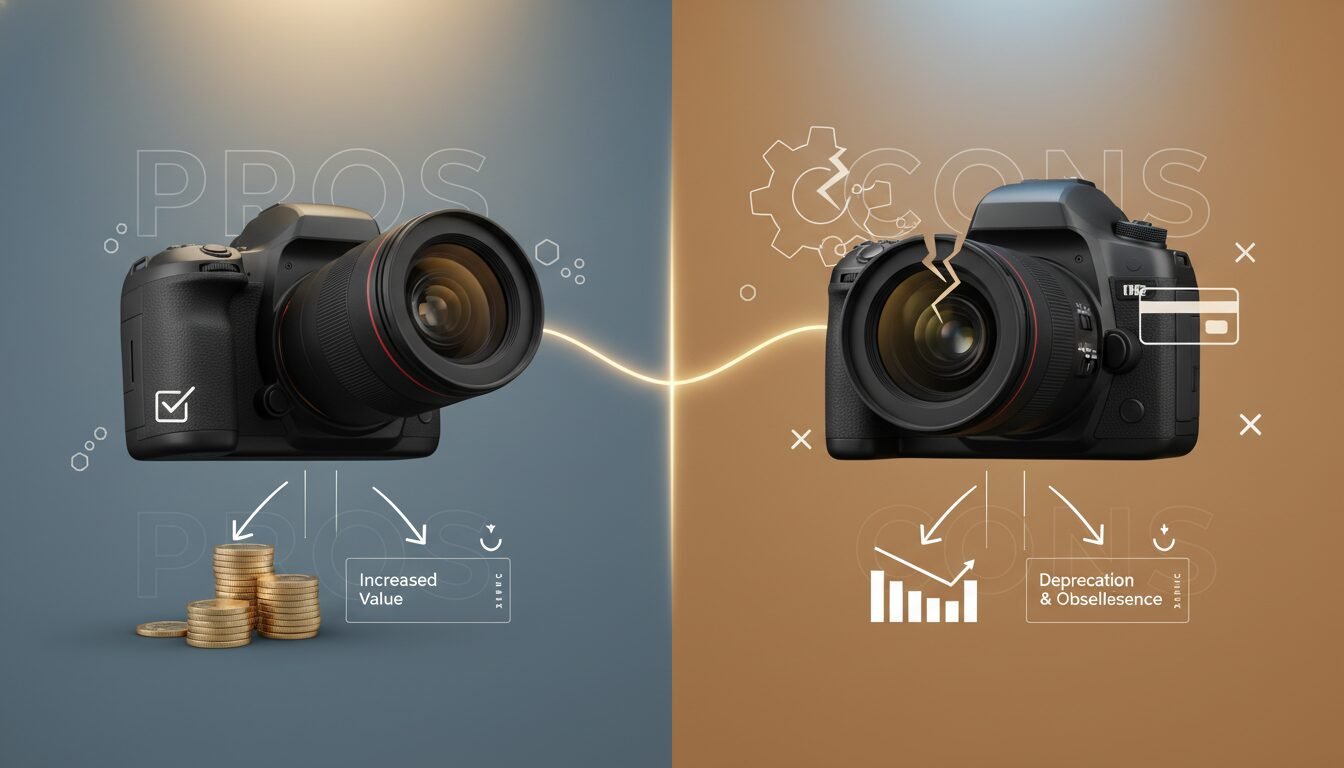
DSLRs still make a compelling case in 2026, but they’re not the right fit for everyone. Here’s an honest breakdown.
Pros
- Exceptional battery life: Most DSLR bodies deliver 600–1,200 shots per charge, far ahead of mirrorless equivalents.
- Affordable used market: Full-frame bodies like the Canon 5D Mark III can be found used for under $500.
- Optical viewfinder: Zero lag, no battery drain, and a natural shooting experience many photographers prefer.
- Vast lens selection: Canon’s EF mount and Nikon’s F-mount offer decades of compatible glass at every price point.
- Proven durability: Pro bodies like the Nikon D850 are rated for hundreds of thousands of shutter actuations.
Cons
- Heavier and bulkier: The mirror box adds size and weight compared to mirrorless alternatives.
- Limited video autofocus: Live-view AF on most DSLRs lags behind mirrorless systems for video work.
- Aging technology: Manufacturers are shifting R&D investment toward mirrorless, meaning fewer new DSLR releases.
- Depreciation risk: Entry-level DSLR bodies depreciate faster as mirrorless options reach similar price points.
How to Budget for Your Overall Spend
Smart budgeting goes beyond the camera body. The true cost of owning a DSLR includes everything you need to start shooting well.
Essential Accessories That Add to Your Spending
Most DSLR kits come with a basic lens and battery, but you’ll quickly need more. A typical accessories list includes: a fast memory card (32GB SD cards cost under $20), an extra battery ($50–$80), a camera bag ($30–$100), a tripod ($50–$200), and possibly a prime lens for low-light work ($100–$400). These items can easily add $200–$500 to your initial outlay. As reported by Petapixel, many first-time buyers are surprised by how quickly accessory costs stack up.
Maintenance, Sensor Cleaning, and Warranty Costs
Ownership costs don’t stop at accessories. Sensor cleaning, which is necessary when dust accumulates from lens changes, runs $50–$100 at a camera shop or $20–$40 with a DIY kit. Extended warranties from retailers like Best Buy typically add $50–$150 to your purchase. Camera insurance through providers like Athos or dedicated photo gear insurers costs roughly $100–$200 per year for a mid-range kit. Over a 3-year ownership period, these ongoing expenses can add $300–$600 to your total investment.
Step-by-Step Budget Planning
Follow these steps to keep your spending under control:
- Step 1: Define your photography goals: casual family snaps, travel, or professional work.
- Step 2: Allocate your budget: 60% to the camera body, 30% to lenses, and 10% to accessories.
- Step 3: Research current deals at authorized retailers like Best Buy, Camera Wholesalers, and Nikon USA.
- Step 4: Consider buying used, open-box, or import to stretch your budget by 20–40%.
- Step 5: Factor in ongoing costs like additional lenses, memory cards, and sensor cleaning, which can push lifetime spend well above the initial purchase price.
Best Places to Shop for Competitive Pricing
Retailers compete fiercely on price, often sweetening deals with bundles and free shipping that reduce your total outlay.
Authorized Retailers and Their Pricing
Best Buy offers the Canon Rebel T7 bundle with an 18-55mm lens, memory card, and backpack for $499.99, saving $30 over buying separately. Camera Wholesalers (Stamford, CT) provides aggressive open-box deals, like the Nikon D810 body for $1,499.95 (originally $2,996.95), and includes free expedited shipping on orders over $300. Nikon USA sells directly with free 2-day delivery on orders $399 or more and often runs promotions that trim hundreds off older models.
Rental vs. Purchase: When Renting Makes More Sense
Not every shoot justifies ownership. Renting a professional DSLR like the Nikon D850 typically costs $75–$150 per day through platforms like LensRentals or BorrowLenses. If you shoot fewer than 10 days per year with a specific body, renting is almost always cheaper than buying. For specialized lenses like a 70-200mm f/2.8 (which retails for $1,500–$2,500 new), renting at $40–$80 per day makes strong financial sense for occasional use. Renting also lets you test a system before committing to a full purchase.
Seasonal Sales and Bundle Offers
Timing your purchase around major sales events like Black Friday, Cyber Monday, and Memorial Day can slash prices by 15–25%. Amazon Prime Day and holiday bundles often include lenses and bags at no extra charge. Following retailers’ newsletters ensures you catch flash deals, as hundreds of DSLRs turn over quickly during these events.
Digital SLR Camera Cost: Canon vs. Nikon vs. Pentax
Each major brand prices its DSLRs differently, impacting your investment both now and over the long term.
Canon DSLR Camera Costs
Canon’s Rebel series dominates the entry-level market. The EOS Rebel T7 with 18-55mm costs $579.99 at Best Buy, while the older T5 with lens can be found for $599.95 at Camera Wholesalers. Stepping up, the full-frame 6D Mark II body is $1,599, a reasonable price for low-light enthusiasts. Canon’s vast EF lens library ensures affordable used glass for years to come, with popular primes like the 50mm f/1.8 available for around $125 new.
Nikon DSLR Camera Costs
Nikon’s D7500 offers exceptional value at $999.95 (kit) with weather sealing and 4K video. The D780 starts at $1,549.95, blending DSLR robustness with mirrorless-grade live view. On the professional end, the D850’s $1,999.95 sale price at Nikon USA makes it a strong option for high-resolution work, while the flagship D6 holds firm at $6,499.95. Nikon’s F-mount compatibility ensures a vast market of used lenses that soften the overall investment over time.
Pentax DSLR Camera Costs
Pentax appeals to those seeking durable, weather-sealed bodies without the mainstream premium. The K-70 open-box lists for $999.95, and the K-5 is available for $999. While lens options are fewer, Pentax’s in-body shake reduction works with any mounted lens, potentially lowering your accessory spend over time. For photographers who prioritize build quality over ecosystem breadth, Pentax delivers real value.
Hidden Expenses That Increase Your True Spend
Many buyers focus solely on the body. Lenses and accessories, though, often represent the bulk of what you’ll spend over time.
Lenses: The Biggest Recurring Cost
A kit lens is just a starting point. A fast portrait prime like a 50mm f/1.8 costs around $125, but a professional 70-200mm f/2.8 zoom can run $1,500–$2,500. Over a lifetime, a photographer may spend twice their body’s purchase price on glass alone. Buying used lenses from platforms like KEH or MPB, or renting for specific projects, keeps this manageable without sacrificing image quality.
Memory Cards, Batteries, and Camera Bags
These add-ons are essential and recurrent. A 64GB UHS-I SD card costs about $25, and a spare battery runs around $60. A sturdy bag protects your gear; inexpensive options start at $35. Over five years, these consumables and accessories can accumulate to roughly 25% of your original purchase price. Budget for them from day one rather than treating them as afterthoughts.
DSLR vs. Mirrorless: A Cost Comparison for 2026
Mirrorless technology is advancing fast, but the price gap with DSLRs is still real and worth examining before you commit.
Upfront Cost Differences
Entry-level mirrorless kits now start around $500, roughly comparable to entry DSLR pricing. However, used DSLR bodies and lenses flood the market, making it cheaper to build a complete system. A used Canon 5D Mark III full-frame body can be had for under $500, while equivalent full-frame mirrorless bodies still run $800 or more. DSLR lenses are also more affordable on the used market, often by a significant margin.
Long-Term Value and Resale
While mirrorless is clearly the industry’s direction, DSLRs still hold strong resale value, especially pro bodies. The Nikon D850, released in 2017, retains a substantial portion of its value on used markets. If you buy a DSLR now, your initial spend may be partially offset by selling it later when you transition. According to CIPA (Camera and Imaging Products Association), DSLR production continues to meet demand for optical viewfinders, ensuring parts and service availability for years ahead.
According to CIPA industry data, optical viewfinder cameras continue to serve a dedicated segment of the photography market, with production sustained to meet ongoing professional and enthusiast demand as of 2026.
Smart Shopping Tips to Stretch Your Budget
You can significantly reduce what you pay by adopting a few deliberate strategies before you click “buy.”
Consider Buying Used or Refurbished
Used DSLRs from reputable platforms like KEH, MPB, or B&H Photo can cut costs by 30–50%. A refurbished Canon 80D, for instance, sells for hundreds less than new. Always check shutter count and warranty coverage. This approach makes quality gear accessible to beginners who might otherwise feel priced out.
Stick to Older Models
Last-generation cameras like the Nikon D7100 or Canon 70D offer roughly 90% of the features of current models at a fraction of the price. A D7100 body can be found for around $400, delivering superb image quality without inflating your budget. By skipping minor generational upgrades, you can invest the savings directly into better lenses, which will improve your images far more than a newer body would.
Frequently Asked Questions
What is the average digital SLR camera cost for beginners?
Beginners can expect to pay between $450 and $600 for a new entry-level DSLR kit, such as the Canon Rebel T7 or Nikon D3500. These kits include a basic zoom lens and are ideal for learning the fundamentals without a heavy financial commitment.
Which DSLR brand offers the best value for money?
Canon and Nikon both offer excellent value at the entry and mid-range levels, with extensive used lens markets that reduce long-term costs. Pentax provides strong weather-sealing features at a lower price point compared to similarly equipped competitors.
Is it cheaper to buy a DSLR body and lens separately?
Often, buying a kit (body plus lens) is cheaper by $50–$100 than purchasing the body and lens individually. However, if you already own compatible lenses, a body-only purchase reduces your upfront spend considerably.
How much should I budget for lenses?
Plan to spend at least half of your camera body budget on lenses initially. Over time, many photographers invest one to two times the body cost in glass, so factor this into your total budget from the start.
Are DSLR cameras still worth buying in 2026?
Yes. DSLRs offer strong value on the used market, long battery life, and optical viewfinders that many photographers genuinely prefer. For beginners and budget-conscious buyers, the digital SLR camera cost compared to mirrorless alternatives makes them a smart, practical choice.
What is the cheapest DSLR camera available?
The Canon EOS Rebel T100 with an 18-55mm lens is often the most affordable new DSLR, available for under $490. Used older models can dip as low as $200 for body only, dramatically lowering your initial investment.
Enjoyed this article?
Contact Emin Media for a free brand consultation and let's create something amazing together.
Get in TouchRelated Articles
Digital Blue Camera: Vintage vs. Modern Guide 2026
Explore the digital blue camera world: from nostalgic 2000s Digital Blue toys to modern 44MP…
2nd Hand Digital SLR Camera: 2026 Buyer’s Guide
Shop a 2nd hand digital slr camera in 2026 and save 20-60% off retail. Compare…
Canon Digital ELPH Camera: Full Buyer’s Guide 2026
Canon digital elph camera models ranked, compared, and reviewed. Find the right ELPH for your…