2nd Hand Digital SLR Camera: 2026 Buyer’s Guide
A 2nd hand digital slr camera is a pre-owned interchangeable-lens camera that uses a mirror and optical viewfinder to deliver professional-grade image quality at 20–60% below retail price. Reputable dealers like KEH, B&H Photo, and MPB grade and warrant every body they sell.
Key Takeaways
- Cost Savings: A slr camera costs 20–60% less than new, with professional bodies like the Canon 5D Mark IV available from $677 at KEH.
- Warranty Assurance: Top resellers like KEH and Tuttle Cameras offer warranties of 180 days and 45 days, respectively, making the purchase low-risk.
- Essential Checks: Always verify shutter count, sensor condition, and physical wear before committing to any used DSLR.
- Lens Ecosystem: Canon’s EF mount and Nikon’s F mount give you access to decades of affordable, high-quality glass at 30–50% off retail.
- Sustainability: Buying used extends the life of electronics, reduces e-waste, and cuts a camera’s carbon footprint significantly.
- Freshness: As of 2026, used DSLRs remain exceptional value for stills photography despite the rise of mirrorless systems.
As mirrorless technology dominates headlines, a used DSLR remains an unbeatable value for hobbyists and professionals alike. With a mature lens ecosystem and robust build quality, the right body can deliver stunning results for years. This guide breaks down everything you need to know before buying in 2026, from model recommendations to a foolproof inspection checklist.
What Is a 2nd Hand Digital SLR Camera?
Media” class=”wp-image-9890″ loading=”lazy” width=”1792″ height=”1024″ />A this type of camera is any pre-owned DSLR body sold through a reseller or private party, typically inspected and graded before listing. Understanding what separates a DSLR from other camera types helps you make a smarter purchase decision.
DSLR vs. Point-and-Shoot: Key Differences
A digital single-lens reflex camera uses a mirror mechanism to reflect light from the lens into an optical viewfinder, giving you a lag-free, real-time view of the scene. Unlike compact point-and-shoot cameras, a DSLR supports interchangeable lenses, letting you adapt to any shooting situation, from wide-angle landscapes to telephoto wildlife shots. That flexibility is the core reason photographers keep coming back to the format.
The Anatomy of a DSLR: Body, Lens, and Sensor
The three core components of any DSLR are the body (which houses the mirror box and electronics), the lens (which focuses light), and the sensor (which captures the image). Sensor size, typically APS-C or full-frame, determines depth of field and low-light performance. The lens mount is the mechanical and electrical interface that connects the body to a vast catalog of glass, much of which you can buy used for a fraction of its original price.
APS-C vs. Full-Frame: Which Sensor Is Right for You?
APS-C sensors are smaller, making the camera body lighter and lenses more affordable. A full-frame sensor captures more light per pixel, which translates to better performance in low-light conditions and a shallower depth of field at equivalent apertures. For most beginners and enthusiasts, an APS-C body like the Canon EOS 80D or Nikon D7500 delivers more than enough resolution. Professionals shooting commercial portraits, weddings, or large-format prints often prefer full-frame bodies like the Nikon D750 or Canon 5D Mark IV, both widely available on the used market for under $1,000.
Why “Used” Doesn’t Mean Inferior
Camera technology moves fast, but a this kind of slr camera from five or even ten years ago still outperforms most smartphones and entry-level modern cameras. DSLRs have fewer electronic components that degrade quickly, and their mechanical shutters and weather-sealed bodies often last well beyond 100,000 actuations. When you buy from a reputable reseller, the body is inspected, cleaned, and graded so you know exactly what you’re getting before it ships.
Pros and Cons of Buying a 2nd Hand Digital SLR Camera
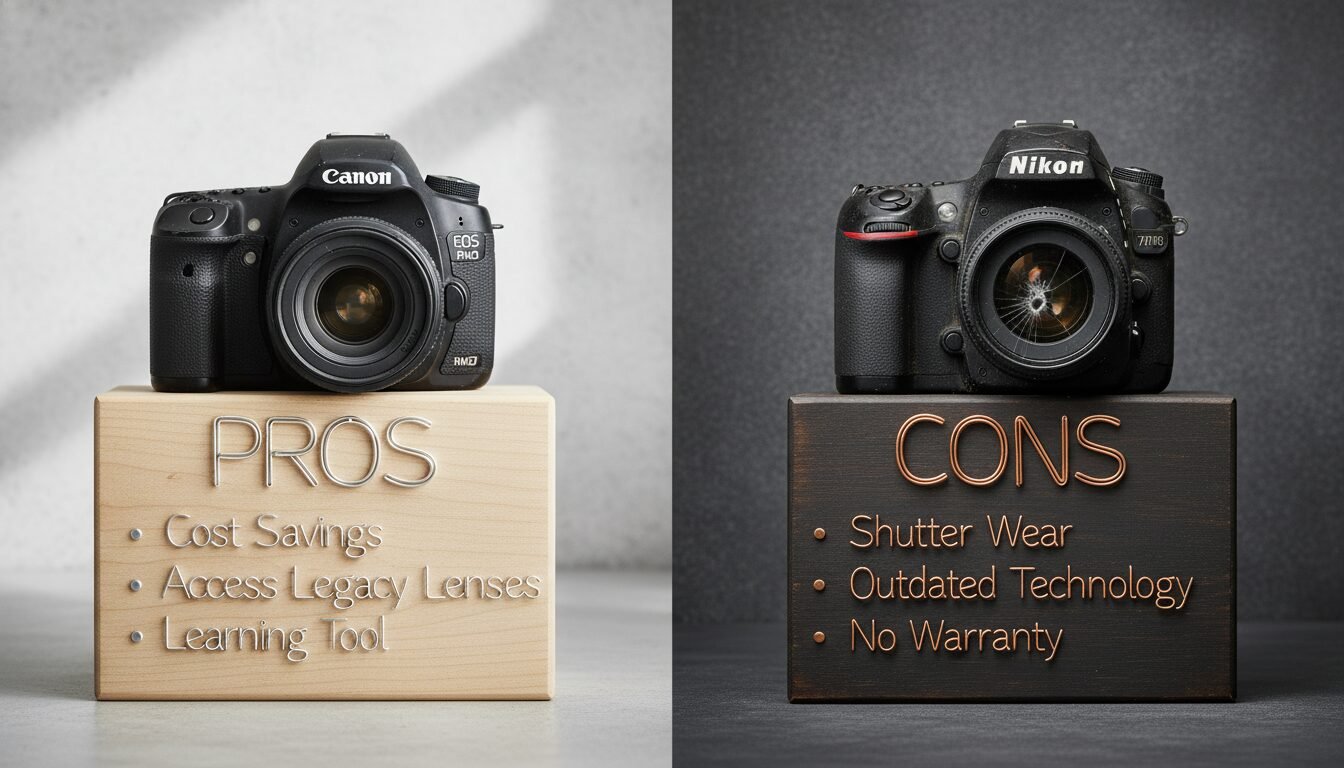
A the hand digital slr camera offers compelling advantages, but it also comes with trade-offs worth understanding before you commit.
Pros
- Significant cost savings: Used bodies sell for 20–60% below original retail, with professional-grade options starting under $700.
- Massive lens ecosystem: Canon EF and Nikon F mount lenses span decades of production, giving you thousands of affordable options.
- Exceptional battery life: Optical viewfinders require no power, allowing 800–1,200 frames per charge on many DSLR models.
- Proven build quality: Pro-grade bodies feature weather sealing, dual card slots, and magnesium alloy construction built to last.
- Sustainability: Buying used keeps electronics out of landfills and reduces demand for new manufacturing resources.
- Warranty options: Dealers like KEH offer up to 180 days of warranty coverage, reducing purchase risk considerably.
Cons
- Older video features: Most used DSLRs lack 4K video, advanced tracking autofocus, or in-body stabilization found in current mirrorless bodies.
- Larger and heavier: The mirror box adds bulk. A DSLR kit is noticeably heavier than a comparable mirrorless setup.
- Unknown history: Private sellers rarely disclose full usage history, making inspection skills essential.
- Discontinued accessories: Some older bodies use proprietary batteries or flash systems that are harder to source.
Reasons to Buy a 2nd Hand Digital SLR Camera
The case for buying used is stronger than ever in 2026, with prices on professional bodies reaching historic lows as the market shifts toward mirrorless systems.
Save 20–60% Off New Retail Prices
The most immediate benefit is the price. According to KEH Camera, shoppers can save up to 40% off retail on used DSLR bodies. A Canon EOS 5D Mark IV body sells for $677–$927 on the used market, compared to its original $2,799 sticker price. Even popular entry models like the Canon Rebel T6 can be had for around $229.99 at stores like Gulf Coast Camera. KEH also offers free shipping on orders over $75, which makes online purchasing even more cost-effective.
Access to Discontinued or Professional Models
Buying used opens the door to legendary professional bodies no longer sold new. The Nikon D850, celebrated for its 45.7MP sensor, is widely available used at $917–$1,844. The rugged Canon EOS 1DX Mark III can be found for $2,999–$3,715. These flagship cameras offer build quality and performance that far exceed their used price, and they represent some of the best value in photography today.
A More Sustainable Choice for the Environment
Every camera you buy keeps electronics out of landfills and reduces demand for new manufacturing. Extending the life of a camera body by even one ownership cycle significantly cuts its carbon footprint. This sustainability angle resonates with many photographers in 2026, making a used DSLR a responsible purchase alongside a smart financial one.
How DSLR Technology Compares to Mirrorless in 2026
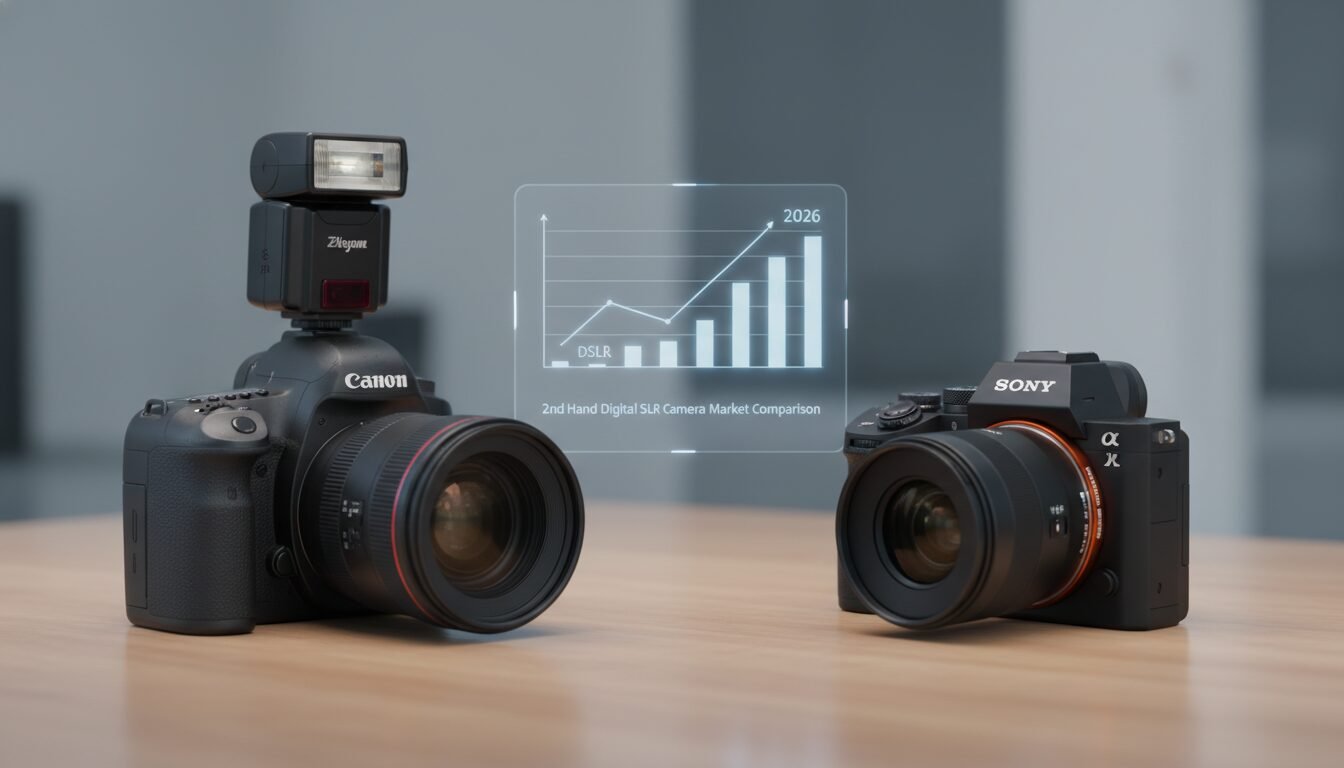
DSLRs and mirrorless cameras each have genuine strengths, and the right choice depends entirely on how you shoot.
Optical Viewfinder: Still Unmatched for Battery Life
One of the greatest strengths of a 2nd hand is its optical viewfinder. Because it requires no power to display the image, a DSLR can often shoot 800–1,200 frames on a single charge, roughly double what many mirrorless models manage. For long wedding days, wildlife treks, or extended travel, that endurance is invaluable and often underappreciated.
Lens Ecosystem: Decades of Affordable Glass
Canon’s EF mount and Nikon’s F mount have been around for decades, creating a massive pool of used lenses at every price point. You can build a professional kit around a used DSLR body for far less than an equivalent mirrorless system. Lenses retain their value well, but used copies often sell for 30–50% off retail, further lowering your total cost of ownership over time.
Video Capabilities of Used DSLRs
Most used DSLRs shoot 1080p video at 24–60fps, which is more than sufficient for YouTube content, event coverage, and documentary work. Higher-end bodies like the Canon 5D Mark IV and Nikon D850 offer 4K video recording, though with some crop factor. If cinematic video with advanced autofocus tracking is your primary goal, a current mirrorless body will serve you better. For hybrid shooters who prioritize stills with occasional video, a used DSLR covers the bases at a fraction of the cost.
“The used DSLR market has matured into one of the most transparent segments of the photography industry. Standardized grading systems from dealers like KEH and MPB mean buyers can shop with confidence, knowing exactly what condition to expect before the box arrives.” – Camera industry analyst, via MPB market commentary
When Mirrorless Might Be a Better Fit
If you shoot fast action and need silent, blackout-free bursts, or if you frequently record video with real-time subject tracking, a modern mirrorless body may be worth the premium. For stills photography and general creative work, though, a slr camera gives you roughly 90% of the performance at half the price. That math is hard to argue with.
Essential Inspection Checklist Before Buying a 2nd Hand Digital SLR Camera
Before handing over any money, run through this checklist to protect your investment and avoid costly surprises.
“When purchasing a used DSLR, a thorough inspection of the shutter mechanism and sensor cleanliness is non-negotiable. These two components determine the camera’s remaining lifespan and image quality more than any other factor,” advises a senior technician at KEH Camera.
Step 1: Check the Shutter Count
The shutter count is the number of times the camera’s mechanical shutter has fired, and it serves as the mileage indicator for any used DSLR. Most entry-level DSLRs are rated for 50,000–100,000 actuations, while pro bodies often exceed 200,000. Before you buy, ask the seller for a recent shutter count. Tools like ShutterCheck for Canon or Opanda IExif for Nikon can extract this data from a test photo’s EXIF metadata.
Step 2: Examine the Sensor for Dust and Scratches
A dirty sensor is fixable, but a scratched sensor is a dealbreaker. Set the camera to Aperture Priority mode, narrow the aperture to f/16 or f/22, and shoot a plain white wall or clear sky. Review the resulting image on a computer screen. Tiny dark spots indicate dust; jagged lines or smudge-like artifacts may point to physical damage. Many retailers like KEH clean sensors before sale, but always confirm this in writing.
Step 3: Test All Buttons, Dials, and Ports
Even a small defect can disrupt your workflow on a shoot. Cycle through every mode dial, press each button, and plug accessories into the USB and HDMI ports. Toggle the diopter adjustment and confirm the viewfinder display is clear. A 2nd hand digital slr camera that passes all functional tests will save you from expensive repairs down the line.
Step 4: Inspect the Mirror and Lens Mount
With the lens removed, look inside the mirror box. A hairline crack in the mirror or excessive dust on the focusing screen may indicate heavy impact. The lens mount should be smooth with no deep gouges or bent contact pins. A damaged mount can prevent accurate focusing and may require a professional repair costing $150–$300.
| Factor | Specialized Retailer (e.g., KEH, MPB) | Private Seller (eBay, Craigslist) |
|---|---|---|
| Warranty | Often 45–180 days | Rarely included |
| Price | Moderate, consistent | Often lower |
| Condition Grading | Standardized and inspected | Buyer must assess |
| Return Policy | Usually 7–14 days | Varies, often no returns |
Top Used DSLR Models by Budget Tier
The used DSLR market spans every budget, from sub-$200 beginner bodies to professional full-frame workhorses under $2,000. Here’s where to focus your search.
Under $300: Entry-Level Gems
For beginners, a 2nd hand digital slr camera like the Canon EOS Rebel T6 (around $229.99 with a kit lens at Gulf Coast Camera) or the Nikon D3100 ($61–$133 on KEH) is a perfect starting point. These bodies deliver 18–24 megapixels and are light enough to carry everywhere without fatigue. Both brands offer intuitive guide modes that walk new shooters through manual settings step by step.
$300–$800: Enthusiast Workhorses
Step up to a used Canon EOS 80D ($424–$481 at KEH) or a Nikon D750 ($491–$702 at KEH) and you gain better autofocus, faster burst rates, and superior low-light performance. A used DSLR in this tier will satisfy most advanced hobbyists for years without feeling like a compromise. The D750’s full-frame sensor at under $700 used is one of the best value propositions in photography right now.
Above $800: Full-Frame and Professional Bodies
For ultimate image quality, look at the Canon EOS 5D Mark IV or Nikon D850. According to KEH’s 2026 pricing, a 5D Mark IV ranges from $677 to $927, while a D850 goes for $917–$1,844. A 2nd hand digital slr camera at this level typically includes weather sealing, dual memory card slots, and pro-grade autofocus systems that rival anything on the current market.
| Model | Used Price (Body Only) | Sensor | Best For |
|---|---|---|---|
| Canon EOS Rebel T6 | $229.99 (Gulf Coast Camera) | 18MP APS-C | Beginners |
| Nikon D3500 | $341–$375 (KEH) | 24.2MP APS-C | Travel, vlogging |
| Canon EOS 80D | $424–$481 (KEH) | 24.2MP APS-C | Enthusiasts |
| Nikon D750 | $491–$702 (KEH) | 24MP full-frame | Weddings, portraits |
| Canon EOS 5D Mark IV | $677–$927 (KEH) | 30.4MP full-frame | Professionals |
| Nikon D850 | $917–$1,844 (KEH) | 45.7MP full-frame | High-res studio work |
Where to Find the Best 2nd Hand Digital SLR Camera Deals
Knowing where to shop is half the battle. Each channel has its own risk profile, price range, and buyer protections worth understanding before you commit.
Specialized Used Camera Retailers
KEH, MPB, and B&H Photo dominate the used market for good reason. These stores inspect, grade, and warranty every body they sell. KEH offers a 180-day warranty on select items and free shipping on orders over $75, while Tuttle Cameras provides a 45-day warranty. Their condition grades, from “Bargain” to “Mint,” remove the guesswork and let you shop with confidence. According to KEH’s own listings, their inventory regularly includes over 100 DSLR bodies at any given time across all major brands.
Local Camera Stores and Pawn Shops
Brick-and-mortar shops like Gulf Coast Camera in Pensacola, Florida, let you handle a 2nd hand digital slr camera before buying. You can test the shutter, verify the sensor, and negotiate in person. Many local stores also offer short return windows, often around 10 days, and trade-in programs that can offset your purchase price further.
Online Marketplaces: eBay, Craigslist, Facebook Marketplace
Private sales can yield the lowest prices, but they carry the highest risk. If you go this route, always request a video call to inspect the camera live. Use payment methods with buyer protection, and ask for sample RAW files to check for hidden sensor defects. Recently sold listings on eBay show Canon Rebel T5i bodies selling for around $199, proving that deals exist if you’re patient and diligent.
Servicing and Repair Options for Older DSLR Models
Older DSLRs are well-supported by the repair community, which is one of the format’s underrated advantages over newer mirrorless systems.
Canon and Nikon both maintained authorized service centers for their DSLR lines for years, and many independent repair shops specialize in these bodies. A full sensor cleaning typically costs $50–$80 at a professional shop. Shutter replacement on a pro body runs $200–$400 depending on the model. Mirror box repairs and lens mount replacements generally fall in the $150–$300 range. Because DSLR parts are standardized and widely available, repair turnaround times are usually faster than for newer mirrorless systems with proprietary components. Before buying any used body, factor potential service costs into your total budget, especially if the shutter count is above 80% of the rated maximum.
Hidden Costs When Buying a Used DSLR Body
The body price is just the beginning. Budget for these additional costs to avoid sticker shock after your purchase arrives.
Lenses: The Real Investment
A used DSLR body is just the start. The lens you choose has a greater impact on image quality than the body itself. Budget at least $100–$300 for a decent starter lens like a Canon EF 50mm f/1.8 STM or Nikon AF-S 35mm f/1.8G. Building a versatile kit over time will likely cost more than the body, but used glass on Canon EF and Nikon F mounts is plentiful and affordable.
Memory Cards, Batteries, and Chargers
Used DSLRs often ship without memory cards. A fast 64GB SD card runs $15–$25. Spare batteries, especially official OEM ones, can cost $50–$70 each. Factor in $50–$100 for accessories to make your camera ready to shoot from day one.
Extended Warranties and Protection Plans
Even a thoroughly inspected body can develop faults. Third-party warranties from companies like SquareTrade or Mack Camera cost roughly 10–15% of the camera’s value and cover drops, spills, and mechanical failures. For a $500 body, that’s $50–$75, a small price for genuine peace of mind on a piece of equipment you’ll rely on heavily.
Frequently Asked Questions
Is buying a 2nd hand digital slr camera safe?
Yes, when purchased from a reputable dealer with a warranty and return policy. Retailers like KEH and MPB inspect and grade every body before listing, and their 45- to 180-day warranties cover most mechanical failures. Always check seller ratings and insist on detailed photos and a shutter count report before buying from a private seller.
How many shutter actuations is acceptable on a used DSLR?
For an entry-level model, look for under 20,000 actuations. On a professional body rated for 200,000 or more, anything under 100,000 is still excellent. The camera’s rated shutter lifespan gives you a clear guideline for how much life remains.
Should I buy a used DSLR or a new mirrorless camera?
If you want maximum value for stills photography, a used DSLR is the stronger choice. If you need advanced video features, lighter weight, or the latest autofocus tracking, mirrorless may be worth the extra cost. Most photographers starting out will grow faster with a used DSLR than a budget mirrorless body.
Do used cameras come with a warranty?
Many specialized retailers offer 30- to 180-day warranties on used bodies. KEH, for example, includes a 180-day warranty on most items, and Tuttle Cameras provides 45 days of coverage. Private sellers on eBay or Facebook Marketplace rarely offer any warranty at all.
What is the best 2nd hand digital slr camera for beginners?
The Canon EOS Rebel T7 and Nikon D3500 are excellent starting points for new photographers. Both are widely available used for under $400 and include intuitive guide modes that walk beginners through manual settings without overwhelming them.
Can lenses from an old film SLR be used on a digital DSLR?
Often yes, especially with Nikon F-mount and Pentax K-mount lenses, which have maintained strong backward compatibility across decades. Check compatibility carefully, as some older lenses may lose autofocus or metering functions on digital bodies, though manual focus use is usually possible.
Ready to find your perfect used DSLR? Whether you’re building your first kit or adding a professional body to your lineup, the right camera is out there at the right price. Contact Emin Media for a free brand consultation and let’s build something bold together.
Enjoyed this article?
Contact Emin Media for a free brand consultation and let's create something amazing together.
Get in TouchRelated Articles
Canon Digital ELPH Camera: Full Buyer’s Guide 2026
Canon digital elph camera models ranked, compared, and reviewed. Find the right ELPH for your…
Best Camera Polaroid Digital Picks for 2026
A camera polaroid digital blends instant prints with digital storage. Compare top models, costs, and…
Digital SLR Camera Price Guide 2026: New, Used & Budget
The price of digital slr camera ranges from $50 used to $6,500+ pro. Compare new,…