Best Camera Polaroid Digital Picks for 2026
Key Takeaways
- A camera polaroid digital captures images electronically and produces physical prints on the spot.
- Top models include the Instax Mini Evo, Polaroid Snap, and Instax Mini LiPlay+.
- ZINK paper for the Polaroid Snap costs as little as $0.48 per print, far cheaper than traditional instant film.
- Hybrid cameras offer creative modes, smartphone connectivity, and preview screens so you never waste a shot.
- Consider print technology, portability, and connectivity before buying any hybrid instant camera.
What Is a Camera Polaroid Digital?
Media” class=”wp-image-9870″ loading=”lazy” width=”1792″ height=”1024″ />A camera polaroid digital is a hybrid imaging device that pairs an electronic sensor with a built-in printer, outputting physical pictures on ZINK paper or instant film in seconds.
According to Digital Camera World, these devices “take the best of analog instant photography and add the benefits of digital imaging and printing.” You get the tactile thrill of a real print without giving up digital storage or online sharing. It’s the best of both worlds, and the category has grown significantly since the early 2010s.
The Evolution of Instant Photography
The hybrid instant camera is a natural progression from the original Polaroid film cameras of the 20th century. Traditional Polaroid and Instax analog cameras remain popular for their retro appeal, but the digital hybrid category emerged to fix real pain points: wasted film, no shot preview, and zero ability to share images online. Today, models like the Polaroid Snap and Instax Mini Evo represent the latest iteration, merging nostalgia with modern technology.
How Does a Camera Polaroid Digital Work?
Unlike a pure film camera, a digital hybrid uses a sensor to capture the image first. That file is then either printed via ZINK (Zero Ink) technology, which activates dye crystals embedded in the paper using heat, or exposed onto traditional instant film if the camera uses a hybrid exposure system. This dual workflow lets you save a digital copy on a microSD card or internal memory, transfer it to your smartphone, and reprint the same photo multiple times. Analog-only cameras simply cannot do that.
Why Choose a Camera Polaroid Digital?
Choosing a hybrid instant camera makes sense for anyone who wants the fun of physical prints without the limitations of film-only shooting. The key advantages are instant gratification, long-term cost savings, and creative flexibility that pure analog devices cannot match.
Instant Gratification with Digital Flexibility
The primary draw is holding a print in your hands seconds after the shot. But unlike traditional instant cameras, you can preview the image on an LCD screen, apply filters, and decide whether to print at all, which eliminates wasted shots entirely. The Instax Mini Evo lets you preview and reprint photos multiple times, and even send pictures from your smartphone to the camera for printing on demand.
Cost Per Print Compared to Film
Over time, ZINK-based devices are dramatically cheaper to run. According to Amazon, a 50-pack of 2×3″ ZINK photo paper for the Polaroid Snap costs $24.23, working out to just $0.48 per print. By contrast, traditional Polaroid i-Type film often runs over $2.00 per shot, and Fujifilm Instax Mini film sits somewhere in between. Over 100 prints, a ZINK-based hybrid can save you $20 to $150 versus film alternatives, making it a smart pick for event photography or everyday creative use.
Eco-Friendly Considerations
Polaroid has embraced sustainability in its product line: the Polaroid Now Generation 3 camera is made of 40% recycled material. While that model is analog, its eco-conscious design philosophy aligns with the hybrid ethos of reducing waste. Because you only print the photos you actually want, you conserve paper and chemicals compared to shooting entire packs of film blindly.
Top Models of Camera Polaroid Digital in 2026
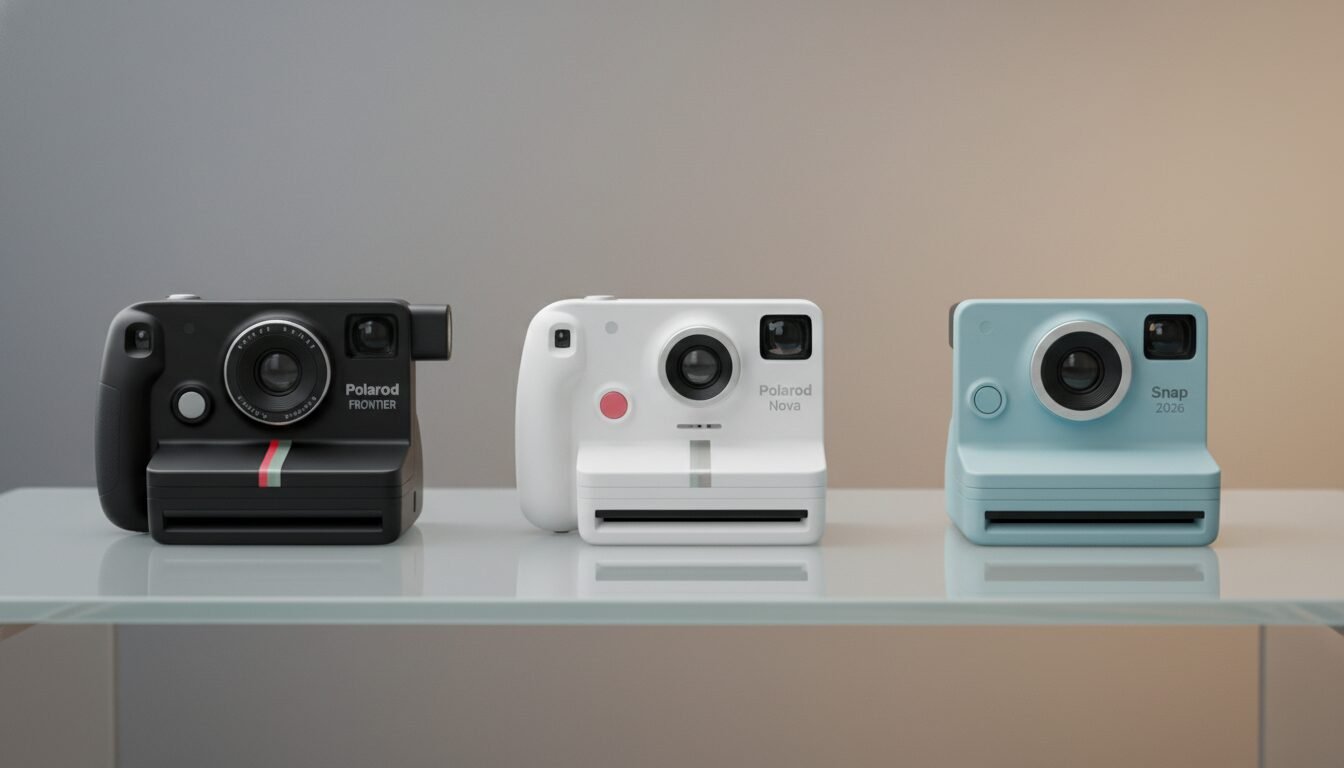
The market for hybrid instant cameras has matured, with several strong contenders offering distinct features. Below we compare three standout models that define the category as of 2026.
| Model | Type | Print Technology | Print Size | Key Features | Approx. Price |
|---|---|---|---|---|---|
| Instax Mini Evo | Hybrid | Instax Mini Film | 2.4 x 1.8 in | 10 lens effects, 10 film effects, selfie mirror, dual shutter, smartphone printing | $234.95 MSRP |
| Polaroid Snap | Digital with Printer | ZINK Zero Ink | 2 x 3 in | Instant print, digital preview, microSD storage, compact form factor | Used from $79.95 |
| Instax Mini LiPlay+ | Hybrid | Instax Mini Film | 2.4 x 1.8 in | Audio message QR codes, LCD screen, smartphone app connectivity, remote shooting | Check latest |
Instax Mini Evo Hybrid Camera
The Instax Mini Evo is widely considered the flagship hybrid instant camera because of its robust feature set. It offers 10 lens effects (soft focus, color shifts, and more) combined with 10 film effects (vivid, monochrome, and others), yielding 100 possible creative combinations. The built-in selfie mirror and dual shutter buttons make self-portraits effortless, all printed on credit-card-sized Instax Mini film at an MSRP of $234.95.
Polaroid Snap Instant Digital Camera
The Polaroid Snap is the most literal interpretation of a camera polaroid digital: a compact shooter that prints directly onto ZINK paper without ink cartridges. As noted in the Amazon listing, a 50-sheet pack costs $24.23, keeping per-print costs under $0.50. The Snap also saves full-resolution digital files to a microSD card, so you can reprint or share later. It’s a perfect blend of physical and digital in one pocket-sized device.
Instax Mini LiPlay+
The Mini LiPlay+ adds a genuinely unique twist: you can record a short audio message and embed it as a QR code directly on the print. Scan the code later and hear the voice memo attached to that moment. It also functions as a portable smartphone printer via Fujifilm’s INSTAX Link app, making it a hit at weddings, birthday parties, and corporate events where personalized keepsakes matter.
Pros and Cons of Camera Polaroid Digital Devices
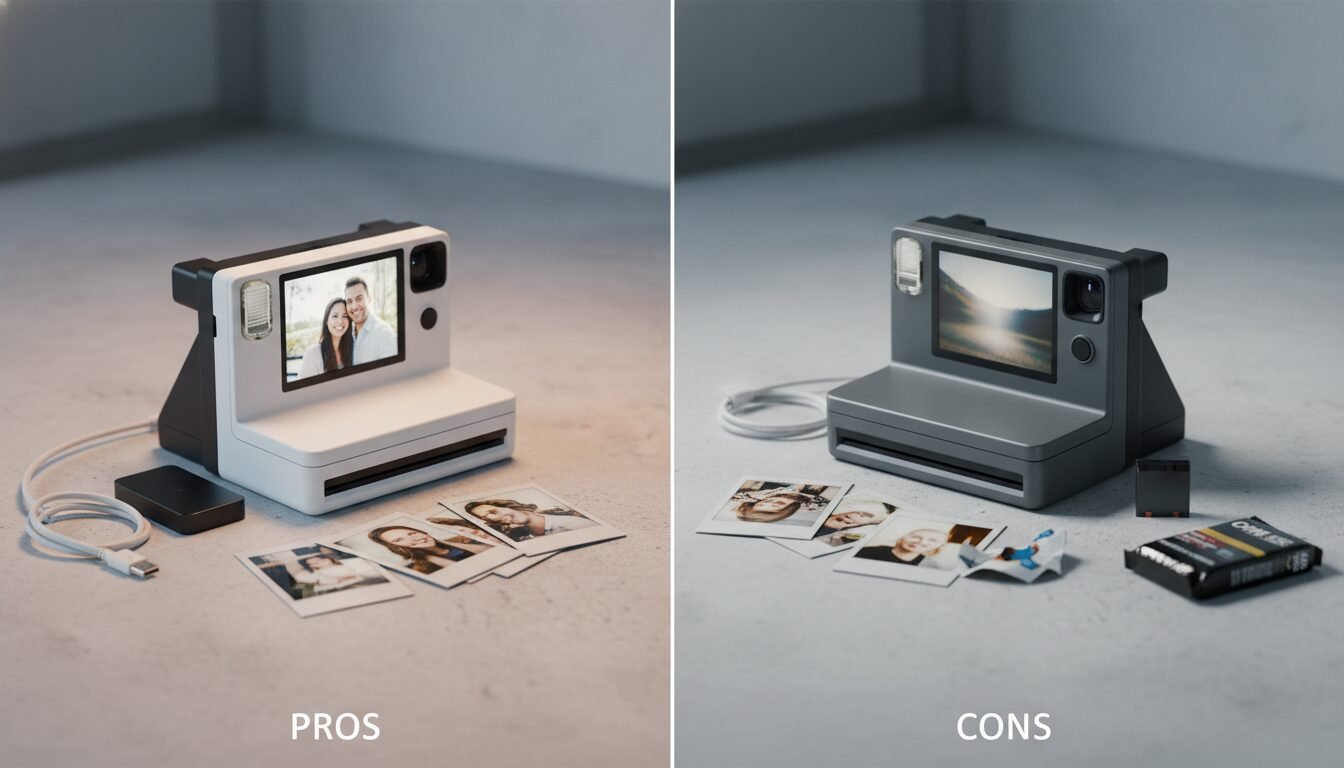
Every hybrid instant camera involves trade-offs. Here’s an honest look at what you gain and what you give up.
Pros
- Preview before printing: LCD screens eliminate wasted shots and wasted money on film or paper.
- Lower running costs: ZINK paper at $0.48 per print is a fraction of the $2.00+ cost of Polaroid i-Type film.
- Digital backup: Save every image to a microSD card or smartphone, then reprint anytime.
- Creative control: Built-in filters, effects, and app connectivity let you personalize every print.
- Dual-use as a printer: Print photos from your phone gallery without taking a new shot.
Cons
- Higher upfront cost: Hybrid models like the Instax Mini Evo start at $234.95, more than basic analog cameras.
- Smaller print sizes: Most hybrids top out at 2×3″ or 2.4×1.8″, limiting display options.
- Battery dependency: Digital components drain batteries faster than purely mechanical film cameras.
- Film compatibility limits: Film-based hybrids require brand-specific cartridges, locking you into one ecosystem.
Key Features to Look For in a Hybrid Instant Camera
Not all hybrid instant cameras are created equal. Here are the core features to evaluate before buying one.
Print Technology: Film vs. ZINK
The first decision is the printing method. ZINK-based devices like the Polaroid Snap offer low running costs at $0.48 per print and produce borderless, smudge-resistant output. Film-based hybrids such as the Instax Mini Evo use real instant film, which brings the iconic white border and retro color science but at a higher per-print price. Choose ZINK if you prioritize affordability and durability. Choose film if you value the classic instant aesthetic and richer tonal range.
Digital Capabilities and Connectivity
A strong hybrid should offer an LCD preview screen, internal memory or microSD slot, and Bluetooth or Wi-Fi pairing with your smartphone. This lets you transfer images, use the device as a portable printer, and apply creative filters before committing to a print. Models like the Mini Evo and LiPlay+ excel here. The Polaroid Snap has more basic connectivity but still stores full-resolution digital copies for later use.
Design and Portability
Since most users carry these cameras to events, size and weight matter. The Polaroid Snap is slim enough to slip into a jacket pocket. Instax hybrids tend to be slightly larger but still travel-friendly. Look for a camera that matches your carrying style, whether that’s a purse, backpack, or neck strap, so you actually have it on hand when spontaneous moments arrive.
Step-by-Step Guide: How to Use Your Camera Polaroid Digital
Getting the most from a camera polaroid digital is straightforward. Follow these steps to start printing instantly.
Step 1: Prepare Your Gear
Charge the battery fully and load either a ZINK paper pack or an Instax film cartridge depending on your model. For film cameras, insert the cartridge in the designated compartment and align the yellow markers. For ZINK, place the blue barcode calibration sheet face down first, then stack the photo paper on top. Getting this right prevents jams and color calibration errors.
Step 2: Capture the Perfect Shot
Turn on the camera and use the LCD or viewfinder to compose your image. Explore any built-in effects, such as lens filters or exposure adjustments. If your device has a preview function, review the shot to confirm lighting and composition before printing. Press the shutter when you’re satisfied.
Step 3: Print and Share
On ZINK models, printing starts automatically or with a single button press. The print emerges fully developed in about 60 seconds. On film hybrids, the exposure records onto the film and the print ejects immediately, but full image development takes 5 to 10 minutes. Save the digital file to a microSD card or transfer it to your phone via the companion app, then share online or keep the physical print as a keepsake.
The Creative Potential of Hybrid Instant Cameras
A hybrid instant camera is more than a point-and-shoot gadget. It’s a tool for artistic expression that blends digital manipulation with the irreplaceable physicality of a real print.
Add Effects and Filters
Hybrid models like the Instax Mini Evo offer a palette of lens and film simulations. You can combine soft vignettes with color pop effects to create dreamy portraits or gritty street scenes, all previewed in real time before printing. This makes these cameras a favorite among content creators who want retro-inspired visuals for Instagram or TikTok while also walking away with a physical souvenir.
Double Exposures and Creative Modes
Several hybrid options include special shooting modes worth exploring. The Polaroid Now+ (via its companion app) enables double exposure, layering two images in one frame, along with light painting using long exposures to capture light trails. Even without app support, many hybrids let you stack effects to achieve similar results, turning everyday scenes into something worth framing.
Using as a Portable Printer
Beyond the camera function itself, most hybrid instant cameras double as standalone printers. Connect your smartphone via the manufacturer’s app and print any photo from your gallery directly. This means transforming digital memories from your camera roll into instant prints, whether they’re professional portraits or saved Instagram stories. It’s the ultimate bridge between digital archives and physical media.
“The hybrid instant camera category represents a genuine shift in how people relate to their photos. Printing is no longer a commitment, it’s a choice.” – Digital Camera World, Hybrid Instant Camera Buying Guide
Camera Polaroid Digital vs. Traditional Instant: A Cost Comparison
Understanding the long-term value of any hybrid instant camera requires looking at the actual numbers side by side.
Per-Print Cost Analysis
Based on current retail data, ZINK paper for the Polaroid Snap costs $0.48 per 2×3″ print when bought in a 50-pack at $24.23. A single Instax Mini film exposure typically runs between $0.60 and $0.80, while premium Polaroid i-Type film can exceed $2.00 per shot. Over the course of 100 prints, a ZINK-based hybrid can save you $20 to $150 versus film alternatives. That’s a meaningful difference if you shoot frequently at parties, weddings, or brand activations.
Film and Paper Longevity
ZINK prints are water-resistant, tear-resistant, and fade-resistant, giving them a clear durability edge over traditional instant film, which can suffer from humidity and physical wear. Film enthusiasts argue that the chemical development process of Instax or Polaroid film creates a unique look that digital printing cannot fully replicate. The right choice balances these factors: if archival-quality aesthetics matter most, film wins. If everyday resilience and low cost are priorities, ZINK is the smarter pick.
“Instant photography has seen a genuine resurgence, with hybrid formats driving much of the growth among younger consumers who want both a digital file and a physical print from the same device.” – HubSpot Marketing Trends Report, Consumer Photography Behavior
Frequently Asked Questions
What is the difference between a camera polaroid digital and a traditional instant camera?
A camera polaroid digital captures images electronically and stores a digital file before printing, while a traditional instant camera exposes light directly onto film and produces only one physical copy with no digital backup. The hybrid approach gives you far more flexibility over what you print and when.
Can I save digital copies from my camera polaroid digital?
Yes. Most models include internal memory or a microSD card slot to store high-resolution JPEGs. Many also let you transfer files to a smartphone via a companion app, so your digital archive grows alongside your physical print collection.
Which hybrid instant camera has the best print quality?
The Instax Mini Evo delivers vibrant, contrasty prints on real Instax film, while the Polaroid Snap produces sharp, smudge-proof ZINK photos. The best choice depends on whether you prefer classic film borders and tonal richness or borderless, modern prints with lower running costs.
Is the Polaroid Snap compatible with all ZINK paper?
No. It requires 2×3″ ZINK Premium Photo Paper specifically. Using incompatible paper sizes or off-brand alternatives may result in jams or poor image quality, so stick to the recommended media.
How long does it take for a hybrid instant camera to print a photo?
ZINK printing takes roughly 60 seconds from press to finished print. Film-based hybrids eject the print immediately after exposure, but full image development requires 5 to 10 minutes depending on temperature and lighting conditions.
Enjoyed this article?
Contact Emin Media for a free brand consultation and let's create something amazing together.
Get in Touch