Digital Marketing News: 2026’s Biggest Shifts, Decoded
Digital marketing news is the ongoing coverage of shifts in advertising, search, social platforms, and brand strategy that shape how companies reach audiences. As of 2026, the headlines are dominated by one force: artificial intelligence rewriting the rules of visibility.
Key Takeaways
- marketing news in 2026 is dominated by AI integration across search, ads, and content creation, forcing marketers to rethink visibility and measurement.
- Major M&A activity, including Nielsen’s $2.15 billion acquisition of DoubleVerify, is reshaping ad tech and verification.
- Social platforms are cracking down on AI-generated content while investing in creator tools and e-commerce features.
- The creator economy is evolving into full-fledged entertainment studios, with brands funding episodic content.
- Measurement is shifting from clicks to “click worthiness” and AI citation share, as the zero-click future takes hold.
The Current Landscape of Digital Marketing News
The current landscape of this type of news is defined by AI’s takeover of search, ads, and content workflows all at once. Every day, platforms tweak algorithms, brands launch bold campaigns, and new technology rewires how we connect with consumers. Staying informed isn’t about keeping up for its own sake. It’s about spotting shifts early enough to actually do something about them. This roundup pulls from leading sources like Marketing Dive, Digiday, EMARKETER, and Search Engine Journal to give you a clear picture of what’s happening now and what’s coming next.
This year has already proven to be a turning point. From AI search visibility to the maturing creator economy, the changes we’re tracking are connected in ways that make isolated strategies risky. Below, we break down the key areas every marketer needs on their radar.
Major M&A Activity in Ad Tech and Measurement
The biggest M&A story in this kind of news right now is a wave of consolidation aimed at fixing advertising’s accountability problem. These deals signal a market that’s maturing fast, where scale and integrated data matter more than standalone tools.
Nielsen to Acquire DoubleVerify for $2.15 Billion
Nielsen announced it would take DoubleVerify private for approximately $2.15 billion, according to Marketing Dive. The deal pairs Nielsen’s audience measurement strength with DoubleVerify’s ad verification technology. Digiday reports that this merger directly targets the accountability gap in connected TV (CTV), where advertisers have long struggled to trust what they’re actually paying for. By linking verification to measurement under one roof, the combined company offers a fuller view of campaign effectiveness, a move that could reset expectations across the industry.
“Impression share ran the auction years. Citation share runs this one,” writes Jason Shafton in Search Engine Journal, describing the shift every performance marketer now has to plan around.
The Trade Desk Bets on Undisputed Measurement
The Trade Desk, meanwhile, is pivoting toward measurement that’s, as Digiday puts it, “nobody can argue with.” Facing a tougher ad market, the demand-side platform is investing in proprietary measurement tools built to deliver performance data that holds up under scrutiny. This mirrors a wider pattern: as third-party cookies fade and walled gardens tighten access, advertisers are hungry for numbers they can actually defend in a boardroom.
IAB Pushes for Measurement Standards
The Interactive Advertising Bureau (IAB) is stepping into the chaos. Marketing Dive notes the trade group is trying to bring a shared vocabulary and consistent standards to an industry flooded with measurement tools that rarely agree with each other. With so many platforms reporting different numbers for the same campaign, the IAB’s push could become a real step toward unifying how marketers define and track key performance indicators across channels.
AI’s Role in Search and Advertising Keeps Expanding
AI is now the engine behind nearly every digital marketing cycle, not a side conversation. In 2026, its clearest impact shows up in search, where generative engines are rewriting the old rules of visibility entirely.
AI Search Visibility and the Rise of “Click Worthiness”
Search Engine Journal’s Bill Hunt introduced the idea of “click worthiness,” arguing that search volume no longer predicts traffic when an AI answer captures the click before a user ever reaches a website. As AI Overviews and chatbot responses spread, brands have to earn citations and favorable sentiment, not just rankings. Hunt’s point is blunt: marketers need to ask whether their content is compelling enough to earn a click after someone’s already read an AI summary. That’s a real departure from the old SEO playbook.
OpenAI’s ChatGPT Ads Mature with CPC and Product Carousels
OpenAI is building out its advertising ecosystem inside ChatGPT at a fast clip. Digiday reports the company has turned on cost-per-click (CPC) ads and added product carousels, a clear signal that conversational AI is becoming a commercial channel. This shift is one of the more important threads in digital marketing news this year, because it bridges chatbot interactions with direct-response advertising in a way that didn’t exist twelve months ago.
AI-Generated Content Under Scrutiny on Social Platforms
Not all the AI headlines are flattering. LinkedIn is cracking down on AI-generated “slop,” according to Neil Patel’s blog, after years of integrating AI writing tools that ultimately flooded feeds with low-quality posts. TikTok, meanwhile, faces criticism over AI-created health content that can spread misinformation even with “AI-generated” labels attached, per EMARKETER. Both cases show the tightrope platforms are walking between empowering creators and protecting the audience’s trust in what they’re seeing.
Social Media Platforms React to User and Advertiser Demands
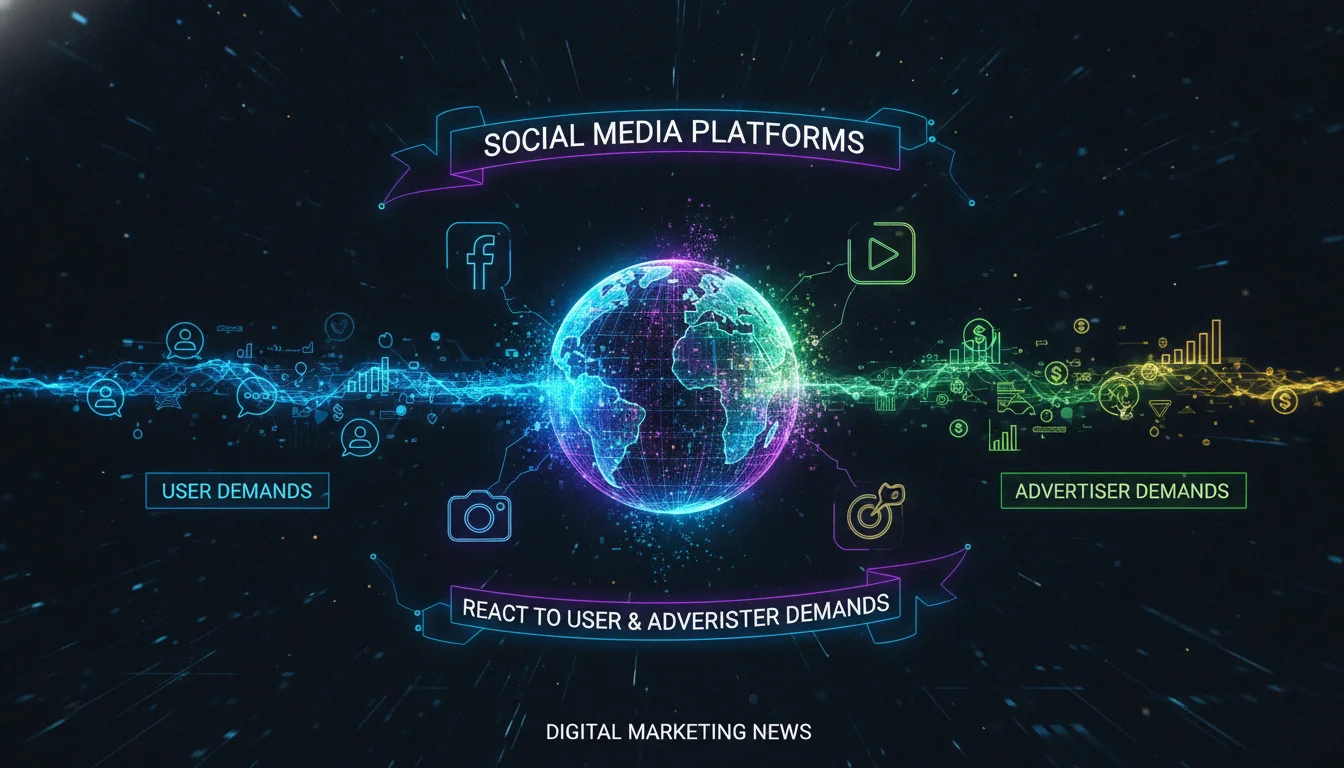
Social platforms are making bold, sometimes surprising moves right now to keep users engaged and advertisers spending. This corner of digital marketing news covers the latest from Meta, Snapchat, TikTok, and beyond.
Meta’s Ad Revenue Soars, But AI Skepticism Looms
Meta reported industry-leading ad revenue growth in Q2 2026, with CEO Mark Zuckerberg crediting the gains to AI investment. Not everyone’s convinced, though. Marketing Dive notes ongoing concern about whether Meta’s massive AI spending will keep paying off, especially with privacy shifts and economic headwinds still in play. For marketers, the takeaway is simple: Meta’s AI-driven ad products, like Advantage+, are delivering results, but leaning on one platform is still a gamble.
Snapchat Courts Brands with Humor Guide and Lead Gen Upgrades
Snapchat is taking a lighter touch with brand partnerships. Marketing Dive’s “Sociable” column reveals the app released guidance on teaching brands to be funny, a deliberate play to help marketers connect with younger users through comedy rather than polish. Snapchat is also integrating with HubSpot to strengthen lead generation ads, aiming to “meet our clients where they are,” according to a Snap VP. Together, these moves make the platform more business-friendly without losing its playful identity.
TikTok Partners with Disney While Battling Content Risks
In a notable collaboration, TikTok and Disney have partnered on content sharing, giving creators access to Marvel and Star Wars IP. Marketing Dive explains the deal gives Disney a pipeline for vertical video content while fueling TikTok’s creator ecosystem with premium intellectual property. At the same time, the platform is still wrestling with AI-generated health content, a reminder of how hard it is to moderate a massive, fast-moving content library at scale.
The Creator Economy Evolves into Entertainment Studios
The line between creator and traditional entertainment is disappearing fast. Digiday’s coverage of this shift is extensive, and it points to brands increasingly footing the bill for content that looks more like television than sponsored posts.
Creator Agencies Become Entertainment Studios
Digiday’s “Future of Marketing Briefing” reports that creator agencies are transforming into full entertainment studios, with brands covering production costs once reserved for TV budgets. Instead of one-off sponsored posts, creators are building episodic series and long-form content built for binge viewing. Gap Inc. and Staples are even inviting their own employees to become creators, according to Digiday, a sign of how democratized content production has become. This shift means marketers increasingly need to think like executive producers, not just media buyers.
Aéropostale’s Bet on Creator-Led Episodic Shows
Digiday’s “Future of TV Briefing” spotlights Aéropostale’s investment in creator-led episodic shows. Catalyst Brands EVP Marisa Thalberg describes how the retailer is moving beyond short-form clips into scripted series designed for deeper engagement. For a brand built on Y2K nostalgia, this modernizes its identity while reaching Gen Z through storytelling that feels native to the platform instead of bolted on.
The Complicated Ownership of Creator Content
As Hollywood courts creators, intellectual property ownership has become a real sticking point. Digiday notes that copyright claims and IP fights are slowing deals down as both sides negotiate who actually controls the finished content. Brands need to nail down rights upfront, especially when campaigns involve high-profile creators or licensed characters.
Measurement and Analytics: Navigating the Zero-Click Future
Measurement in the zero-click future means tracking whether AI systems cite your brand, not just whether users click your link. That single shift cuts across nearly every source in this roundup, and what’s being measured is changing faster than most teams can keep pace with.
From Impression Share to Citation Share
Search Engine Journal’s Jason Shafton, who helped scale Google Ads to billions in spend, argues that impression share defined the last era of search advertising while citation share defines this one. In an AI-driven search environment, brands need to track how often they’re cited in AI-generated responses, a metric Shafton calls “citation share.” His recommendation is a 90-day sprint that combines technical SEO with brand-building content built specifically to earn those citations.
AI Visibility Metrics That Actually Connect to Revenue
David Khim of Search Engine Journal warns that many popular AI visibility metrics are vanity numbers. Citations, sentiment, and LLM referral traffic make weak key performance indicators unless they’re tied directly to leads, pipeline, and closed revenue. His advice: focus on click worthiness and downstream conversion signals instead of raw mention counts. For B2B marketers, that might mean tracking how AI citations actually influence demo requests or contact form fills, not just how often a brand name shows up in a chatbot response.
Google Search Console Adds AI Search Data
Neil Patel’s blog reports that Google Search Console now includes AI search performance data, ending roughly two years of AI search operating as a black box. Brands can finally see how often their content shows up in AI Overviews and other AI-powered features. This transparency matters for SEOs trying to optimize for both traditional rankings and AI-driven queries at the same time.
Brand Strategies in a Shifting Cultural and Economic Landscape
Beyond the technology stack, digital marketing news is full of stories about brands adapting creative and media strategy to cultural moments and economic pressure. These snapshots show how strategy translates into real campaigns.
Kraft Heinz Increases Marketing Spend by Nearly $100 Million
Marketing Dive reports that Kraft Heinz is pouring nearly $100 million more into marketing to drive a turnaround. The added investment is aimed at revitalizing brands as inflation-weary consumers get pickier. This move reflects a pattern we see again and again: companies that hold or increase marketing spend during uncertain times tend to gain ground on rivals who pull back.
Foot Locker Reinforces Sneaker Culture with New Platform
Foot Locker’s “It Always Will Be Foot Locker” campaign, detailed by Marketing Dive, aims to reclaim the brand’s role in sneaker culture. CMO Brett O’Brien explains the retailer is leaning into authenticity and heritage while updating its creative approach for a modern audience. It’s a strong case study in balancing legacy brand equity with contemporary relevance, something a lot of heritage brands struggle to pull off without feeling dated or try-hard.
DoorDash’s ‘CringeMart’ Tackles Social Awkwardness
Marketing Brew highlights DoorDash’s playful new shopping section, “CringeMart,” which sells embarrassingly funny products and positions the brand as a solution to social discomfort. The campaign works because it taps a universal feeling, cringe, while still driving real utility. That combination of humor and usefulness is exactly what makes social content shareable instead of just seen.
According to the Digital Marketing Institute’s trends analysis, soft skills like strategic thinking, creativity, and adaptability are becoming more valuable precisely because AI is absorbing the repetitive data work marketers used to own.
Tools, Training, and the Marketer’s Evolving Skill Set
The marketer’s evolving skill set now leans heavily on AI literacy alongside classic creative and strategic thinking. Digital marketing news outlets are covering the human side of this shift more than ever: what professionals actually need to learn to stay relevant.
The Growing Value of Soft Skills and AI Literacy
The Digital Marketing Institute’s trends report emphasizes that soft skills, strategic thinking, creativity, adaptability, matter more now than in years past. AI handles the data crunching, but humans still have to supply the vision and emotional intelligence machines can’t fake. The Institute also stresses the need for genuine AI fluency: not just typing prompts into ChatGPT, but understanding prompt engineering, output evaluation, and AI ethics well enough to catch mistakes before they ship.
Neil Patel’s Resources Promote Hands-On AI Familiarity
Neil Patel’s blog offers practical, get-your-hands-dirty advice, like how to use the updated AnswerThePublic for content ideation or how to actually read AI search data inside Google Search Console. The underlying message across his content is consistent: marketers need to be comfortable experimenting with AI tools, not just reading about them from a distance.
EMARKETER’s AI Visibility Index Guides Financial Services
EMARKETER’s AI Visibility Index for financial services offers a model for how brands can benchmark performance in generative search. By analyzing factors like brand mentions in LLM outputs and the sentiment attached to them, companies like Ally Financial and Rocket Mortgage are adjusting their digital strategies in response. This kind of analysis is becoming a regular fixture in digital marketing news, giving competitive verticals something concrete to act on instead of guesswork.
What’s Missing From Most Digital Marketing News Roundups
Retail media networks, privacy regulation, and email marketing rarely get the spotlight they deserve, but they’re quietly reshaping budgets. Retail media is maturing into one of the largest ad categories as brands chase first-party data close to the point of purchase. Privacy regulation continues tightening data access across regions, pushing the measurement overhaul we cover above. And email marketing, unglamorous as it sounds, remains one of the few channels a brand fully owns, immune to algorithm changes and AI Overviews alike.
Pros and Cons of Chasing Every Digital Marketing News Cycle
Pros
- Staying current helps you spot platform shifts, like AI Overviews or ChatGPT ads, before competitors adjust their budgets.
- Early awareness of measurement changes, like citation share, lets you build tracking systems ahead of the curve.
- Following creator economy trends helps brands negotiate better terms before a format becomes oversaturated.
Cons
- Chasing every headline can lead to reactive strategy instead of a considered creative direction.
- Not every trend applies to every brand; a B2B software company doesn’t need a TikTok episodic series.
- Constant platform-hopping spreads budgets thin instead of building depth on channels that already work.
What Digital Marketing News Tells Us About the Future
Digital marketing news right now points to a few clear trajectories worth planning around. First, AI will keep embedding itself into every tool and platform, making AI literacy non-negotiable rather than a nice-to-have. Second, the zero-click future will force brands to design content for answer engines as much as for human visitors. Third, the creator economy will keep professionalizing, with brands acting less like sponsors and more like studios and incubators. Finally, measurement will keep evolving from vanity metrics toward outcomes tied to actual revenue, though the path there is still rocky and inconsistent across platforms.
For marketers, the real skill is staying agile without getting whiplash. Monitor trusted sources like Marketing Dive, Digiday, and EMARKETER regularly. Attend events like the Marketing Brew Summit or Neil Patel’s virtual conferences to learn from peers doing the same work. Most importantly, experiment: test CPC ads inside ChatGPT, partner with creators on episodic content, and start claiming your brand’s place in AI citations before your competitors do. Updated for 2026, this is the moment to build a measurement stack that actually reflects how people find you now.
| Source | Type | Focus Areas | Notable 2026 Coverage |
|---|---|---|---|
| Marketing Dive | News publication | Ad tech, brand strategy, mobile, creative | Nielsen/DoubleVerify; Foot Locker; Fossil AI ads |
| Digiday | Industry analysis | Media, marketing, creator economy, AI | Creator agencies as studios; OpenAI ads; measurement |
| EMARKETER | Data research | All digital marketing topics, global scope | AI visibility index; Gen Z gaming audio; India AI commerce |
| Search Engine Journal | Educational / news | SEO, PPC, content, social, AI | Click worthiness; citation share; AI search strategy |
| Neil Patel Blog | Practitioner blog | SEO, content marketing, tools | Google SCS AI data; LinkedIn AI slop; AnswerThePublic |
Want your brand’s story to show up in the next roundup of digital marketing news instead of getting buried by it? Let’s build something bold. Contact Emin Media for a free brand consultation, and let’s turn your next campaign into the case study everyone else is reading about.
Frequently Asked Questions
What is digital marketing news?
Digital marketing news is the ongoing reporting and analysis of changes in online marketing, including platform updates, ad tech mergers, AI advancements, and brand strategies. It covers everything from search algorithm shifts to creator economy deals.
Why should I follow digital marketing news regularly?
Following digital marketing news helps you stay ahead of algorithm shifts, new ad formats, and emerging tools, so you can adjust strategy proactively instead of scrambling after the fact. It also helps you spot competitor moves early.
Which are the best sources for digital marketing news?
Strong sources include Marketing Dive for breaking ad industry news, Digiday for in-depth media and marketing analysis, EMARKETER for data-driven insights, and Search Engine Journal for practical SEO and search coverage. Each brings a different angle worth checking regularly.
How is AI changing digital marketing news reporting?
AI is both the subject and the tool now. Outlets use AI to track trends and build data visualizations, while marketers read about AI’s growing impact on search, ads, and content creation across every platform.
How can I stay updated without being overwhelmed by digital marketing news?
Curate two or three trusted sources, subscribe to their newsletters, and set aside about 15 minutes daily to skim headlines and read only what’s genuinely relevant. Aggregators like Feedly can help filter by topic so you’re not drowning in noise.
What is the biggest trend in digital marketing news right now?
The biggest trend is the pivot to AI search visibility, with brands learning to optimize for generative engines and measure click worthiness rather than relying on traditional clicks and impressions alone.
Enjoyed this article?
Contact Emin Media for a free brand consultation and let's create something amazing together.
Get in TouchRelated Articles
Digital Marketing for Creatives: A Bold Guide
Digital marketing for creatives builds real visibility and sales. Learn strategies for social media, SEO,…
Video SEO for Creative Agencies: The 2026 Playbook
Video SEO for creative agencies is how you turn portfolio reels into search traffic. Get…
Creative Brand Photography: The Complete Guide
Creative brand photography is your visual voice. Learn how to plan shoots, find the right…